hero media

Forget cava, it’s cider you should be drinking in Spain

A culture of cider drinking with ancient Celtic origins is a surprising proposition in Spain. To find it, head north to Asturias. Writes Imogen Eveson.


Close your eyes and think of Spain. Do you see balmy evenings soaked in cava, sangria and street-side tapas, a Flamenco dancer flickering through your line of vision? Excuse the tired clichés, but they’re not without merit. And certainly what you don’t imagine is traditional folk music and cider.

Galicia and Asturias are two autonomous regions on the country’s wild and rugged north coast that feel unlike the Spain of popular imagination. Aside from differences in weather and landscape – frequent lashings of rain washed in from the Bay of Biscay give the regions their ‘Green Spain’ moniker – strong Celtic roots are still very much alive here and help to account for the cultural differences you can experience.
cider drinks food travel culture music fruit drinks alcohol
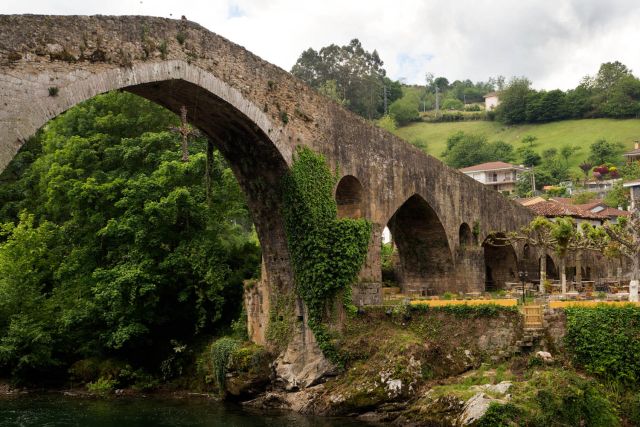
The iconic bridge at the town of Cangas de Onís.

We associate the ancient Celts – who lived in European areas north of the Mediterranean from the late Bronze Age onwards – commonly with Scotland, Ireland and Wales. But Galicia (alongside those already mentioned, Cornwall, the Isle of Mann and Brittany) is considered one of the original Celtic nations. This is telegraphed loudly to visitors by buskers playing the Galician bagpipes in the main square of the region’s capital, Santiago de Compostela. Festivals (like Magosto, in mid-November) that evolved from pagan rituals, and the presence of hórreos –elevated granaries that are believed to have originated in Celtic times – are more subtle indicators.

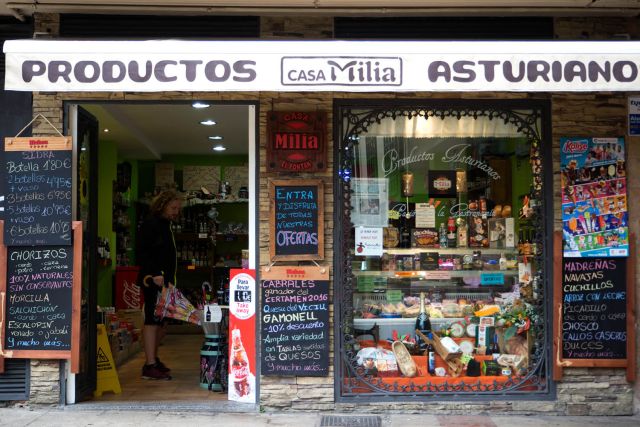
For a literal taste of Celtic culture in Spain, head straight for a sidrería (cider house) in neighbouring (and less-visited) Asturias. Here, as recorded by early Roman settlers in the first century BC, Asturians have long drunk fermented apple cider (the Romans preferred to grow grapes for their wine). “There’s a big cider culture here, it is like a religion," confirms local guide Marianne in the city of Avilés. “We are from the church of Ciderology!"
cider drinks food travel culture music fruit drinks alcohol
A culture of cider drinking with ancient Celtic origins is a surprising proposition in Spain.

There’s a fine art to drinking sidra in Asturias. Here’s your quick guide.

Where to find it

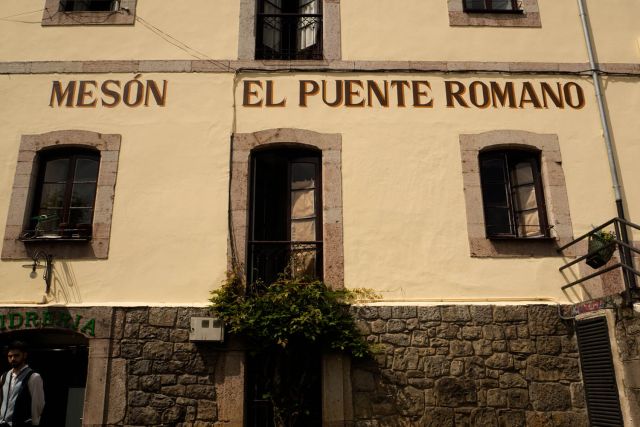
Today, there are cider houses all across Spain, but Asturias is the heartland of cider culture and you’ll have no trouble locating sidrerías in its towns and villages. Try the charming town of Cangas de Onís, at the foot of the Picos de Europa, where cider can be sampled underneath its iconic Roman Bridge at Mesón Puente Romano; or stroll the characterful old town of the steel-making city of Avilés. Head to historic Oviedo, the capital of Asturias, or coastal Gijón, the largest city in the region and also considered its cider capital.

What to expect

Cider drinking in Asturias is undertaken with great ceremony. Pull up a seat at your sidrería of choice and the bartender – or escanciador (from the verb escanciar, which is solely used to describe this method of pouring cider) – will appear with a green bottle and a single glass. Holding the bottle above their head and the glass below the waist, they will pour from a great height. This distance aerates the cider – making the otherwise still cider slightly fizzy – and releases its full flavour and freshness.

How to drink it

The first person in your group should down the measure of cider in one – except for the last drop, which is tipped onto the floor to ‘clean’ the rim of the glass. The escanciador repeats the theatrics for the next person, and so on – at a rapid pace – until the bottle is empty.

What to eat it with

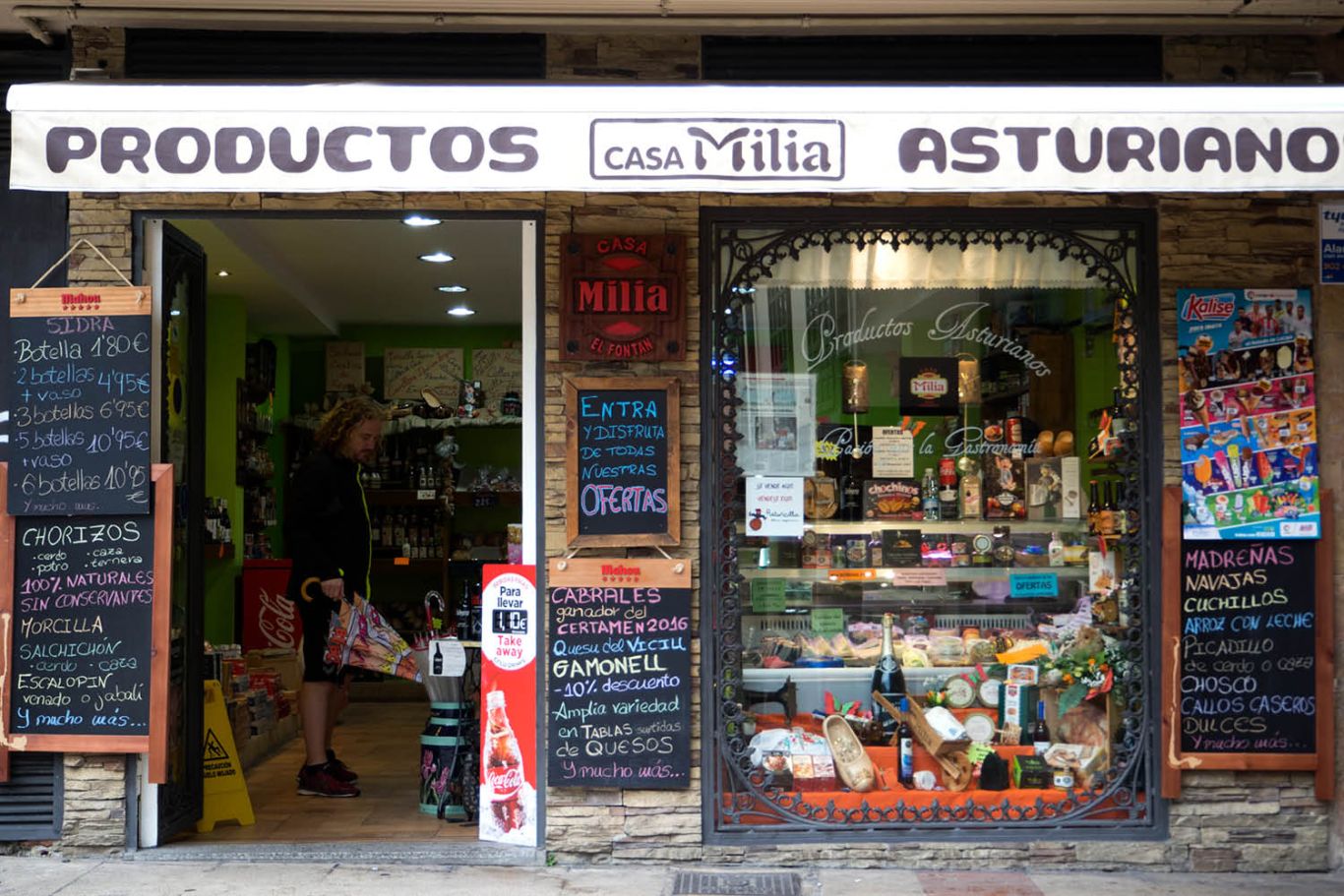
Typical dishes served with cider in Asturias include fabada, a heavy stew of beans and chorizo, and meat and cheese platters; the region is known for producing over 50 cheeses locally, including Cabrales (the tradition of making this pungent blue cheese – and maturing it in natural caves – dates back centuries).

How much is it?

Dangerously cheap. A bottle will set you back about two or three euros.

Weekly travel news, experiences
insider tips, offers,
and more.

Details

Getting there:

Qatar Airways flies to Madrid via Doha from Sydney, Melbourne, Adelaide and Perth. Oviedo, the capital city of Asturias, is around a 4.5-hour drive north-west from Madrid or a train journey of the same length.
cider drinks food travel culture music fruit drinks alcohol
In the city of Cangas de Onís, at the foot of the Picos de Europa, cider can be sampled underneath the iconic Roman Bridge at Mesón Puente Romano.


Looking for more to do in Spain? Check out:

– What is a Spanish paradors and how can we stay in one?

– Cadaqués: sublime seafood, wild winds and Dali’s ghost

– Retreat from party central to Ibiza’s designer farmhouse

Want to see more stories from International Traveller in your Google search results?

  1. Click here to set International Traveller as a preferred source.
  2. Tick the box next to "International Traveller". That's it.
hero media

What the European heatwave means for your summer travel plans

Temperatures are soaring this summer, breaking records across Europe and the UK. 

Euro summer is a feeling like no other. But when a heatwave hits? The dream trip quickly turns into a sweaty mess. Extreme heat is sweeping Europe and the UK this week, with record-high temperatures impacting travel plans across the continent.

And while Australian summers are typically hotter in absolute temperature, many European cities aren’t equipped for high temperatures, resulting in unbearable weather.

Why is it so hot in Europe?

Signs of a hot summer loomed in May, when the mercury hit unprecedented spring highs. Now, extreme high temperature warning alerts have been issued in countries such as Spain, Italy, France, England, the Netherlands and Germany.

France saw its hottest day on record on Wednesday, with an average temperature of 30°C across the day and night. This surpasses the average temperature for June, which is 15°C to 25°C. Dozens of people have died, including 40 from drowning.

In Spain, 212 deaths have been linked to the heatwave.

The UK recorded its hottest June day ever on Wednesday with temperatures soaring to 36.1°C. In an article published by the Met Office – the UK’s national meteorological service – Professor Stephen Belcher CBE, Met Office Chief Scientist, shared his concerns about June’s heat. “To see temperatures like this in the UK in June is sobering. Events like this bring home the implications of climate change, with very high temperatures and humidity bringing significant health implications from heat stress, as well as impacts to a range of sectors such as transport, energy and water supply,” he said.

Heatwaves are becoming increasingly common in Europe and the UK, neither of which is prepared for such extremes. The World Meteorological Organization reported that in 2025, at least 95% of Europe experienced above-average annual temperatures and that the continent was heating up twice as fast as the global average.

How travel is impacted

A pharmacy sign displaying 40 degrees Celcius
A pharmacy broadcasting local weather data. (Credit: Getty/Dragoncello)

During a heatwave, power grids, water systems and transport networks can be affected, resulting in disrupted itineraries for travellers. In France, power outages have left thousands without electricity and early closures have been implemented for two of Paris’s biggest attractions, the Eiffel Tower (early afternoon rather than late at night) and the Louvre (two hours early). Eurostar cancelled its London to Paris and Paris to London services from the 22nd to the 25th, and major UK rail companies have been advising travellers to avoid using trains where possible, or to travel during early hours.

If a heatwave is predicted, being flexible with your itinerary and having fully refundable/changeable tickets is key, as extreme heat can force the cancellation of outdoor activities, impact rail and flight services and change the opening hours of sites and eateries.

Why does summer in Europe often feel hotter than summer in Australia?

people swimming in the Canal Saint-Martin in Paris
People swimming in the Canal Saint-Martin in Paris to cool off. (Credit: Rachael Thompson)

With some of the highest UV levels in the world, Australians are no strangers to the heat, adapting well to intense weather. But our infrastructure is largely equipped to withstand soaring temperatures with climate-responsive passive design, refrigerated air conditioning or evaporative coolers, as well as swimming spots aplenty.

Buildings in Northern and Western Europe and the UK, however, are constructed to retain heat and handle frosty winters. The lack of universal air conditioning means it generally feels hotter even though the temperature on your app might not look it. During a heatwave, it can feel like you’re in a sauna as cities act like heat traps.

How to stay cool and prepare for another heatwave

Relief is expected across Europe and the UK later this week, but more heatwaves are still possible in the coming months. Summer heat typically peaks in July and August.

Public transport often doesn’t have air conditioning, and buses in particular can be swelteringly hot. If you’re heading outside or your accommodation has no air conditioning, it’s worth buying a spray bottle and a handheld fan from a pharmacy or tourist stand. Check ahead of time if restaurants and cafes have air conditioning and make a booking in advance. The highest temperatures typically hit between 3pm and 6pm, so aim to head outdoors outside of these hours.

Rising temperatures invite travellers to enter a more intentional era of seeing the world. Now more than ever is the time to embrace lower-impact “coolcations” and off-season getaways.