hero media

Thousands of free tickets to La Sagrada Família are up for grabs

Here’s your chance to see the inside of La Sagrada Família for free.

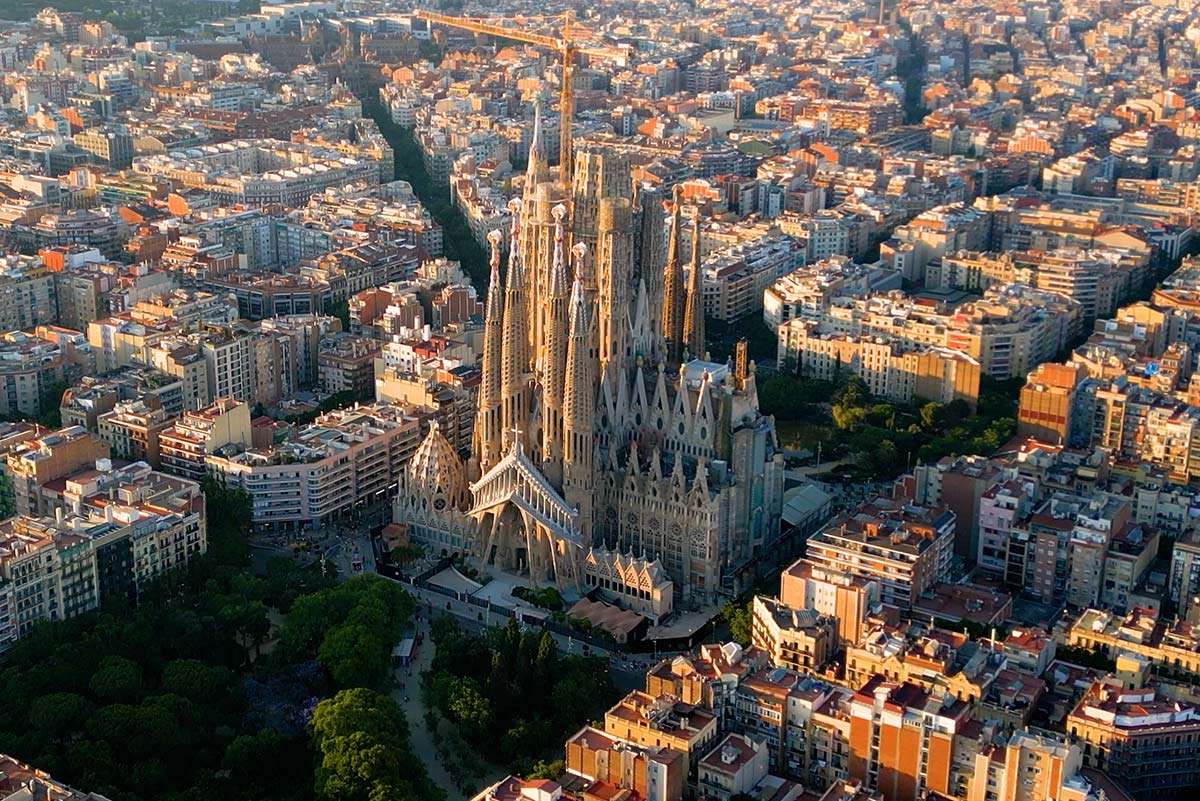
Over 10 years ago, on my uni-classic Euro trip, I was as excited as any other to lay eyes on the architectural splendour of La Sagrada Família in Barcelona. Like many other structures in this Spanish city crafted by famous architect Antoni Gaudí, the unique curves and lack of pointy edges were truly something to behold – even with much of it hidden behind a halo of unattractive scaffolding. And I wasn’t even allowed to enter at that time.

Now that the end of construction is finally in sight, the announcement of free tickets to La Sagrada Família is all the more exciting.

Why are there free tickets to La Sagrada Família?
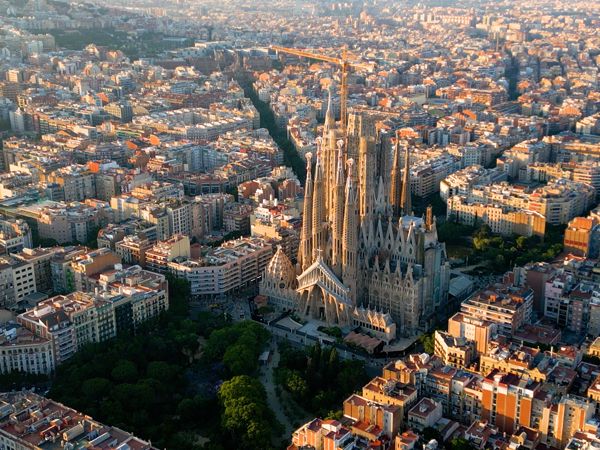
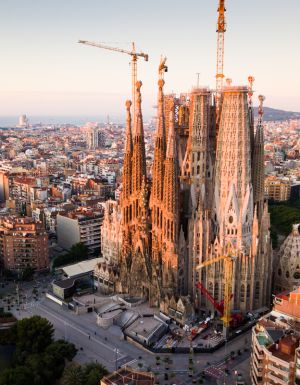
La Sagrada Família in Barcelona, Spain
La Sagrada Família is actually Antoni Gaudí’s final resting place. (Picture: Getty/Vunav V)

After more than a century of construction, La Sagrada Família is marked for completion in 2026, but that’s not why thousands of tickets are being given away to visitors. Instead, it’s to celebrate Barcelona’s annual Winter Festival – Festa Santa Eulàlia – in early February. The official online competition will raffle off 8,500 tickets to visit the Basilica, including the museum, which just opened a brand new immersive room last December.

How can you enter?
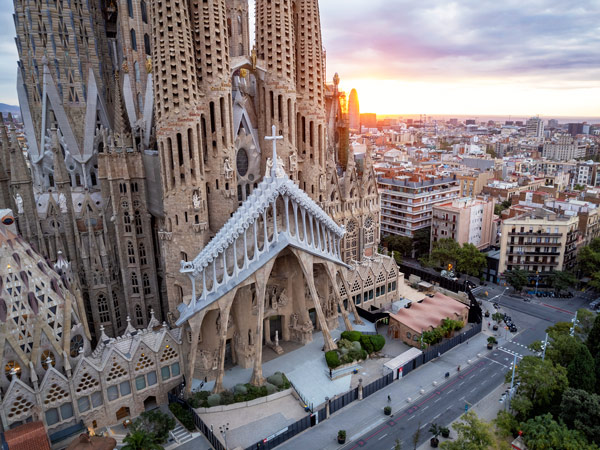
the unfinished structure of Sagrada Família in Barcelona, Spain
Sagrada Família is the largest unfinished Catholic church in Spain.

Anyone can enter the draw, just fill out the registration form via La Sagrada Família’s official website by 9pm local time on Sunday February 8 (That’s Monday 9 Feb at 7am AEDT).

The list of winners will be published on the same website the next day. Winners will be awarded up to four free tickets with a specific time slot allocated. Given that individual tickets normally start at about $44 for basic entry (including an audio guide) and up to about $61 for tickets that include a tower visit, that’s a few hundred dollars back in your pocket to be spent on sangria.

When can you visit with a free ticket?
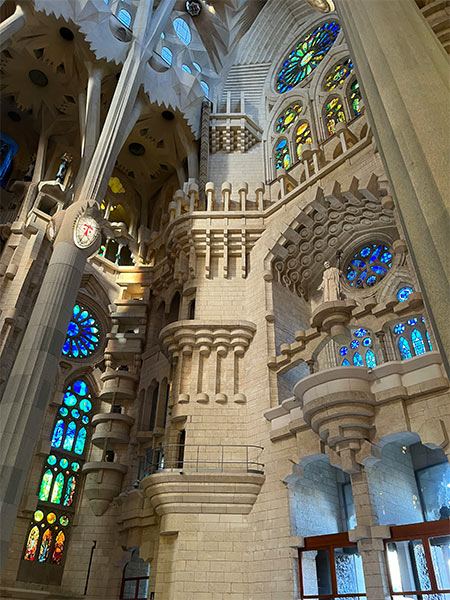
inside la sagrada familia
Step inside the famous church. (Credit: Jiawei Tang)

Those visitors lucky enough to score a free ticket will be able to redeem them on February 14 (romantic) and 15, with entry from 3pm – 5.30pm or 3pm – 7pm, depending on the ticket.

The history of La Sagrada Família
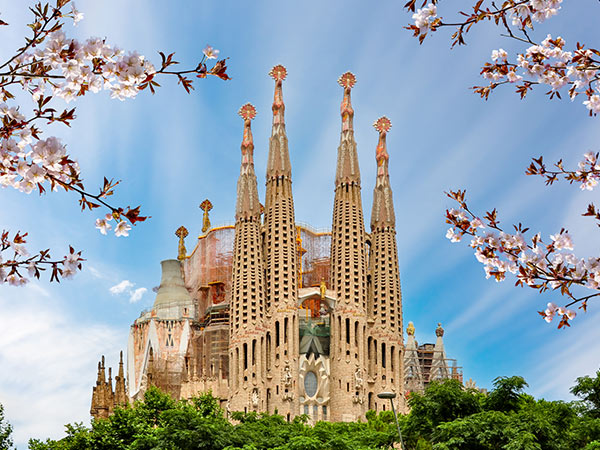
La Sagrada Familia in Barcelona
La Sagrada Familia is a one-of-a-kind architectural masterpiece. (Image: Getty Images/Vladislav Zolotov)

The majority of La Sagrada Família is already open to the public, with the final phase of construction (now underway) set to finish the building and fitting of the final of three towers, and it’s very nearly done.

Why did it take about 144 years to complete one (albeit very grand) church? Construction was already slow going when Gaudí was alive, as it relied on private donations to progress. But after the architect’s untimely death, the project timeline became what can only be described as a schamozzle.

Gaudí intentionally never finished his design blueprint, leaving it for future generations to use their own creative freedom to finish the structure. He also hoped that it would allow space to incorporate the use of new technologies and provide future funding opportunities.

A beautiful notion, but then during the Spanish Civil War, Gaudí’s workshop and the designs he had made were burned to the ground, making the task far more difficult than he could have imagined.

If you’re planning on being in Barcelona this February, register for your chance to win free tickets now!

Want to see more stories from International Traveller in your Google search results?

  1. Click here to set International Traveller as a preferred source.
  2. Tick the box next to "International Traveller". That's it.
Kassia Byrnes
Kassia Byrnes is the Native Content Editor for International Traveller. She's come a long way since writing in her diary about family trips to Grandma's. After graduating a BA of Communication from University of Technology Sydney, she has been writing about her travels (and more) professionally for over 10 years for titles like AWOL, News.com.au, Pedestrian.TV, Body + Soul and Punkee. She's addicted to travel but has a terrible sense of direction, so you can usually find her getting lost somewhere new around the world. Luckily, she loves to explore and have new adventures – whether that’s exploring the backstreets, bungee jumping off a bridge or hiking for days.
View profile and articles
hero media

What the European heatwave means for your summer travel plans

Temperatures are soaring this summer, breaking records across Europe and the UK. 

Euro summer is a feeling like no other. But when a heatwave hits? The dream trip quickly turns into a sweaty mess. Extreme heat is sweeping Europe and the UK this week, with record-high temperatures impacting travel plans across the continent.

And while Australian summers are typically hotter in absolute temperature, many European cities aren’t equipped for high temperatures, resulting in unbearable weather.

Why is it so hot in Europe?

Signs of a hot summer loomed in May, when the mercury hit unprecedented spring highs. Now, extreme high temperature warning alerts have been issued in countries such as Spain, Italy, France, England, the Netherlands and Germany.

France saw its hottest day on record on Wednesday, with an average temperature of 30°C across the day and night. This surpasses the average temperature for June, which is 15°C to 25°C. Dozens of people have died, including 40 from drowning.

In Spain, 212 deaths have been linked to the heatwave.

The UK recorded its hottest June day ever on Wednesday with temperatures soaring to 36.1°C. In an article published by the Met Office – the UK’s national meteorological service – Professor Stephen Belcher CBE, Met Office Chief Scientist, shared his concerns about June’s heat. “To see temperatures like this in the UK in June is sobering. Events like this bring home the implications of climate change, with very high temperatures and humidity bringing significant health implications from heat stress, as well as impacts to a range of sectors such as transport, energy and water supply,” he said.

Heatwaves are becoming increasingly common in Europe and the UK, neither of which is prepared for such extremes. The World Meteorological Organization reported that in 2025, at least 95% of Europe experienced above-average annual temperatures and that the continent was heating up twice as fast as the global average.

How travel is impacted

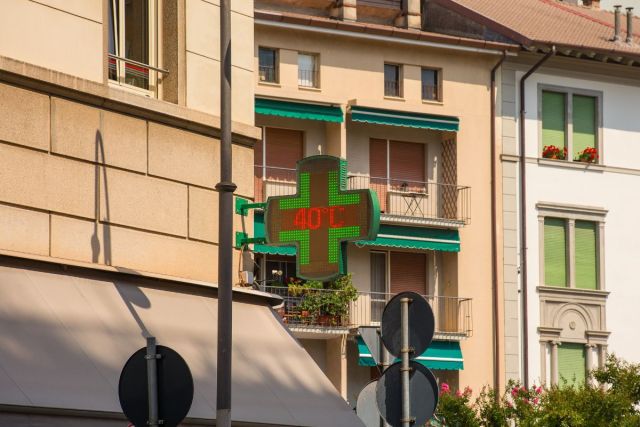
A pharmacy sign displaying 40 degrees Celcius
A pharmacy broadcasting local weather data. (Credit: Getty/Dragoncello)

During a heatwave, power grids, water systems and transport networks can be affected, resulting in disrupted itineraries for travellers. In France, power outages have left thousands without electricity and early closures have been implemented for two of Paris’s biggest attractions, the Eiffel Tower (early afternoon rather than late at night) and the Louvre (two hours early). Eurostar cancelled its London to Paris and Paris to London services from the 22nd to the 25th, and major UK rail companies have been advising travellers to avoid using trains where possible, or to travel during early hours.

If a heatwave is predicted, being flexible with your itinerary and having fully refundable/changeable tickets is key, as extreme heat can force the cancellation of outdoor activities, impact rail and flight services and change the opening hours of sites and eateries.

Why does summer in Europe often feel hotter than summer in Australia?

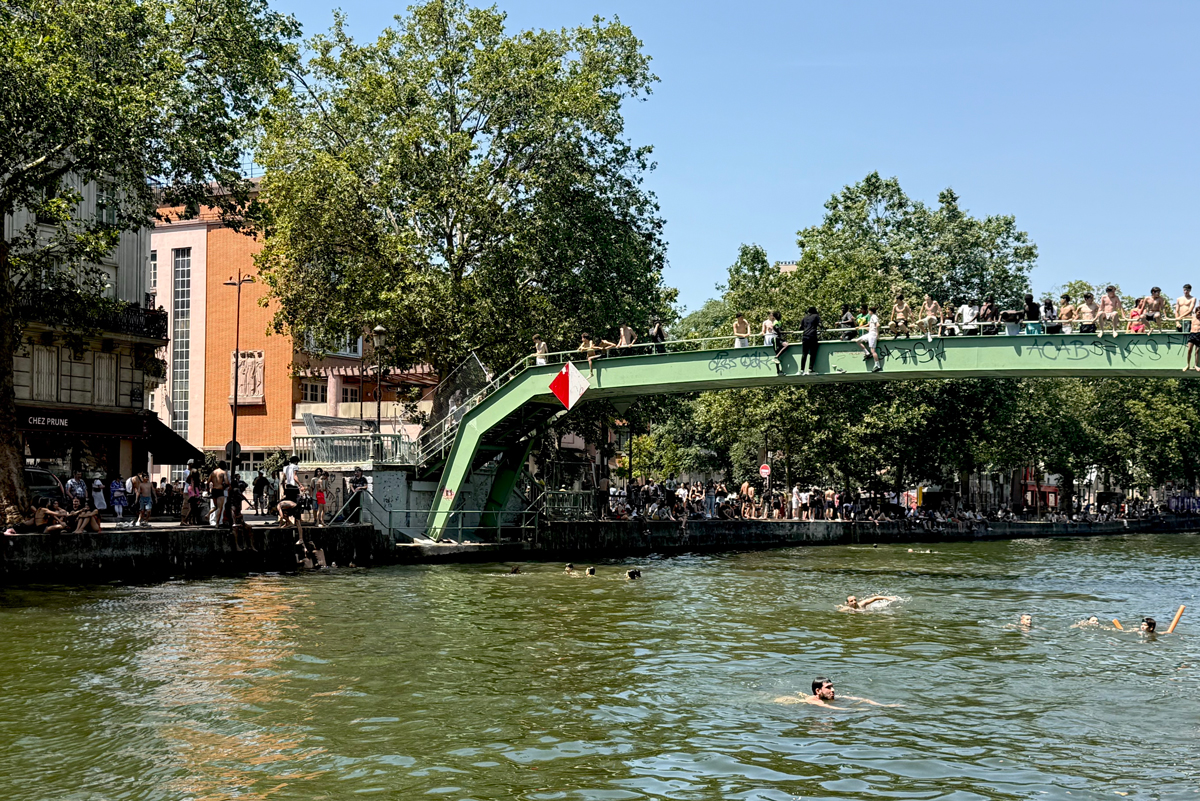
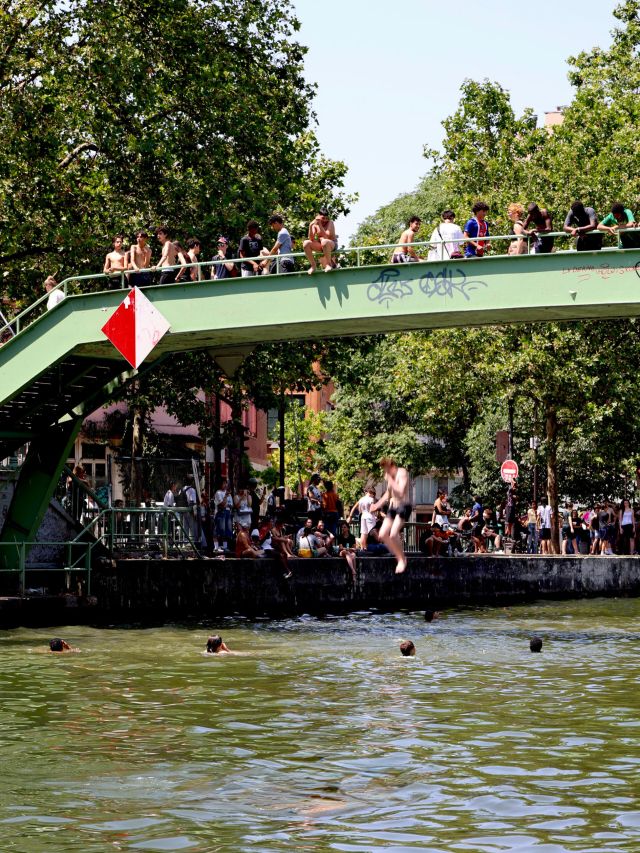
people swimming in the Canal Saint-Martin in Paris
People swimming in the Canal Saint-Martin in Paris to cool off. (Credit: Rachael Thompson)

With some of the highest UV levels in the world, Australians are no strangers to the heat, adapting well to intense weather. But our infrastructure is largely equipped to withstand soaring temperatures with climate-responsive passive design, refrigerated air conditioning or evaporative coolers, as well as swimming spots aplenty.

Buildings in Northern and Western Europe and the UK, however, are constructed to retain heat and handle frosty winters. The lack of universal air conditioning means it generally feels hotter even though the temperature on your app might not look it. During a heatwave, it can feel like you’re in a sauna as cities act like heat traps.

How to stay cool and prepare for another heatwave

Relief is expected across Europe and the UK later this week, but more heatwaves are still possible in the coming months. Summer heat typically peaks in July and August.

Public transport often doesn’t have air conditioning, and buses in particular can be swelteringly hot. If you’re heading outside or your accommodation has no air conditioning, it’s worth buying a spray bottle and a handheld fan from a pharmacy or tourist stand. Check ahead of time if restaurants and cafes have air conditioning and make a booking in advance. The highest temperatures typically hit between 3pm and 6pm, so aim to head outdoors outside of these hours.

Rising temperatures invite travellers to enter a more intentional era of seeing the world. Now more than ever is the time to embrace lower-impact “coolcations” and off-season getaways.