hero media

Gaudi’s Casa Batlló opens its hidden second floor to the public for the first time

Visitors can now explore this once-secret section of Casa Batlló, which will host contemporary art exhibitions.

The second floor of Gaudí’s UNESCO World Heritage Site, Casa Batlló in Barcelona, had been closed for decades until now. On 31 January, coinciding with the centenary of Gaudí’s death, this section of Casa Batlló opened to the public for the first time as part of Casa Batlló Contemporary, with plans to host two contemporary art exhibitions per year.
casa batllo's blue exterior
The iconic Gaudí building will open its second floor to the public for the first time.

Designed and renovated between 1904 and 1906 by the iconic Catalan architect, Casa Batlló is one of his most famous masterpieces and a prime example of Modernisme. The 230m² second floor has a long history as a private residence and functional building, and has been transformed into a contemporary art gallery by Barcelona-based architecture firm Mesura, creating a dynamic hub for contemporary art and public engagement. Mesura preserved the building’s original features, such as woodwork and stained glass, while introducing modern design elements like a curved metal ceiling with concentric ripples.
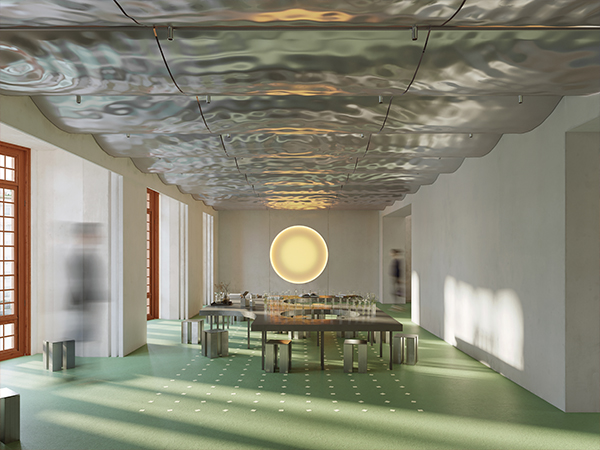
The modern Casa Batllo exhibition space.
The modern Casa Batlló exhibition space.

“Intervening in a Gaudí building is both a dream and an enormous responsibility. Our goal was to create an echo of his work, a whisper that adds to his universe without altering it," explains Carlos Dimas, partner at Mesura.

The project is part of the 2015 Master Plan, a strategic framework that was approved by UNESCO and local authorities, and has sensitively created a dialogue between Gaudí’s legacy and contemporary artistic creation. Maria Bernat, Director of Casa Batlló Contemporary, says, “Casa Batlló Contemporary aims to foster a dialogue between the past and future, situating Antoni Gaudí’s legacy within a contemporary framework. Through art and architecture, it explores his radical vision with present-day thinking, remaining faithful to his spirit of innovation and disruption while engaging with Barcelona’s dynamic artistic landscape."

Beyond the Façade exhibition at casa batllo contemporary
‘Beyond the Façade’ blends art, architecture and technology.

The opening exhibition, Beyond the Façade by United Visual Artists (London, founded by Matt Clark), blends art, architecture and technology to depict how life cycles through light and movement.  

“We aspire for Casa Batlló to remain a cultural beacon both locally and globally, a reference for how living heritage can evolve with purpose, sensitivity, and innovation. Opening this space in the centenary of Gaudí’s death and in the framework of Barcelona as World Capital of Architecture represents a significant milestone for the city, enriching its cultural landscape," says Gary Gautier, General Director of Casa Batlló. 
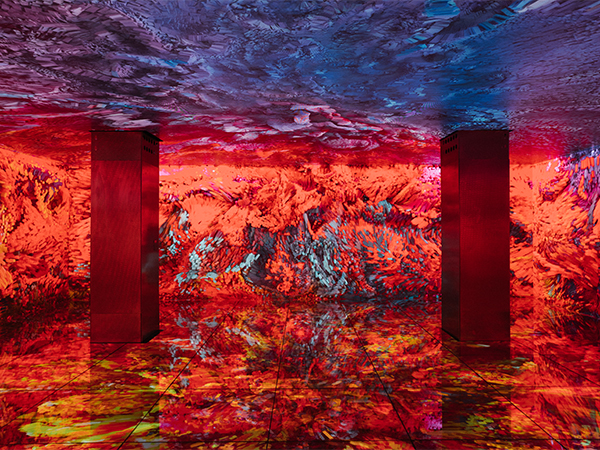
casa batllo contemporary
Casa Batlló Contemporary has plans to host two contemporary art exhibitions per year.

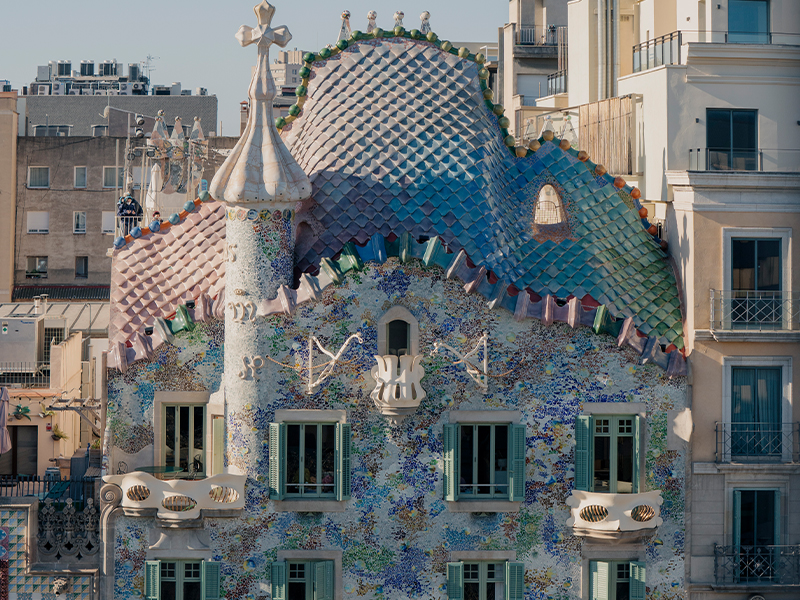
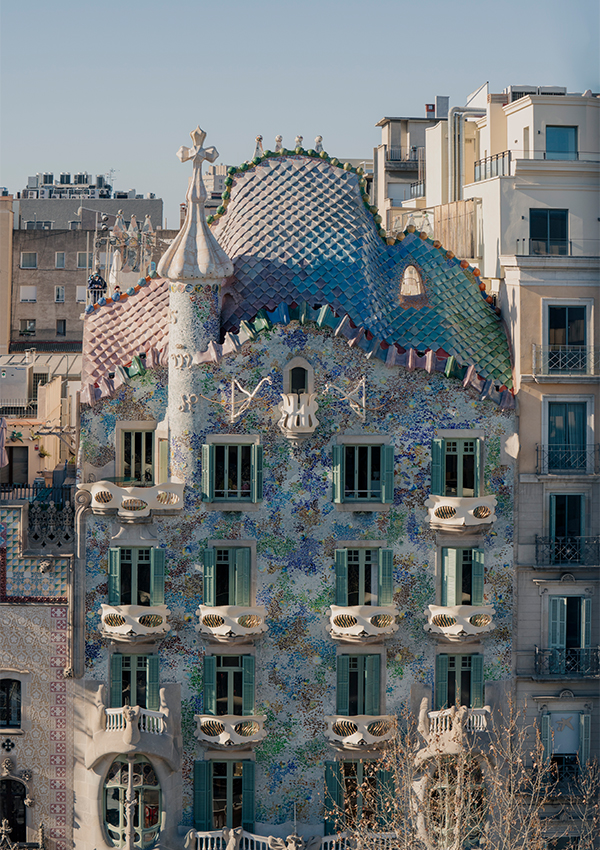
Long revered by visitors who can tour the main floors of the house, the building features a vibrant, organic façade covered in broken ceramic tiles in shades of blue, green, and purple. Inside, whimsical curves, flowing shapes, and abundant natural light create a truly immersive environment.

Need another reason to visit Barcelona in 2026? La Sagrada Família is finally set to be completed this summer.

Details

Where: Passeig de Gràcia, 43, 08007 Barcelona, Spain

Tickets: There are two ways to access the new second-floor gallery: either as part of the full Casa Batlló visit (from €35, approx $59.70 AUD) or with a standalone ticket  (from €15, approx $25.60 AUD) 

Exhibitions: Beyond the Façade will be exhibited from 31 January to 17 May 2026

Want to see more stories from International Traveller in your Google search results?

  1. Click here to set International Traveller as a preferred source.
  2. Tick the box next to "International Traveller". That's it.
Rachael Thompson
Rachael Thompson is a freelance travel journalist, editor and hotel addict based in the UK. She was formerly International Traveller's Evergreen Editor and was responsible for the foundational content ahead of its website relaunch, as well as managing and growing the brand’s destination guides. With a background in design and travel media, Rachael is dedicated to creating content that is as much informational as it is beautiful. She began her career at Belle magazine, before taking up editorial roles at Homes to Love and Bed Threads. Next on her travel wish list is Malta.
View profile and articles
hero media

What the European heatwave means for your summer travel plans

Temperatures are soaring this summer, breaking records across Europe and the UK. 

Euro summer is a feeling like no other. But when a heatwave hits? The dream trip quickly turns into a sweaty mess. Extreme heat is sweeping Europe and the UK this week, with record-high temperatures impacting travel plans across the continent.

And while Australian summers are typically hotter in absolute temperature, many European cities aren’t equipped for high temperatures, resulting in unbearable weather.

Why is it so hot in Europe?

Signs of a hot summer loomed in May, when the mercury hit unprecedented spring highs. Now, extreme high temperature warning alerts have been issued in countries such as Spain, Italy, France, England, the Netherlands and Germany.

France saw its hottest day on record on Wednesday, with an average temperature of 30°C across the day and night. This surpasses the average temperature for June, which is 15°C to 25°C. Dozens of people have died, including 40 from drowning.

In Spain, 212 deaths have been linked to the heatwave.

The UK recorded its hottest June day ever on Wednesday with temperatures soaring to 36.1°C. In an article published by the Met Office – the UK’s national meteorological service – Professor Stephen Belcher CBE, Met Office Chief Scientist, shared his concerns about June’s heat. “To see temperatures like this in the UK in June is sobering. Events like this bring home the implications of climate change, with very high temperatures and humidity bringing significant health implications from heat stress, as well as impacts to a range of sectors such as transport, energy and water supply,” he said.

Heatwaves are becoming increasingly common in Europe and the UK, neither of which is prepared for such extremes. The World Meteorological Organization reported that in 2025, at least 95% of Europe experienced above-average annual temperatures and that the continent was heating up twice as fast as the global average.

How travel is impacted

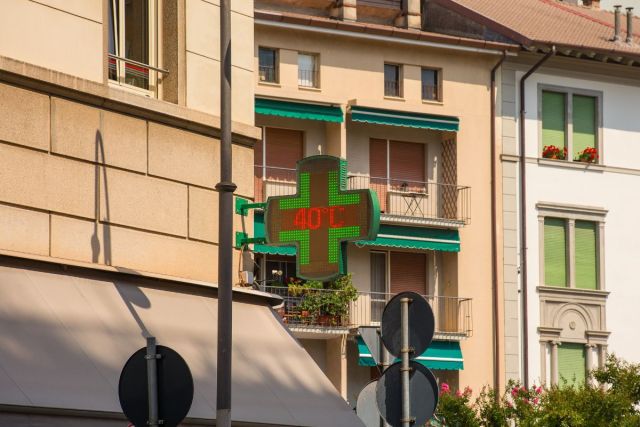
A pharmacy sign displaying 40 degrees Celcius
A pharmacy broadcasting local weather data. (Credit: Getty/Dragoncello)

During a heatwave, power grids, water systems and transport networks can be affected, resulting in disrupted itineraries for travellers. In France, power outages have left thousands without electricity and early closures have been implemented for two of Paris’s biggest attractions, the Eiffel Tower (early afternoon rather than late at night) and the Louvre (two hours early). Eurostar cancelled its London to Paris and Paris to London services from the 22nd to the 25th, and major UK rail companies have been advising travellers to avoid using trains where possible, or to travel during early hours.

If a heatwave is predicted, being flexible with your itinerary and having fully refundable/changeable tickets is key, as extreme heat can force the cancellation of outdoor activities, impact rail and flight services and change the opening hours of sites and eateries.

Why does summer in Europe often feel hotter than summer in Australia?

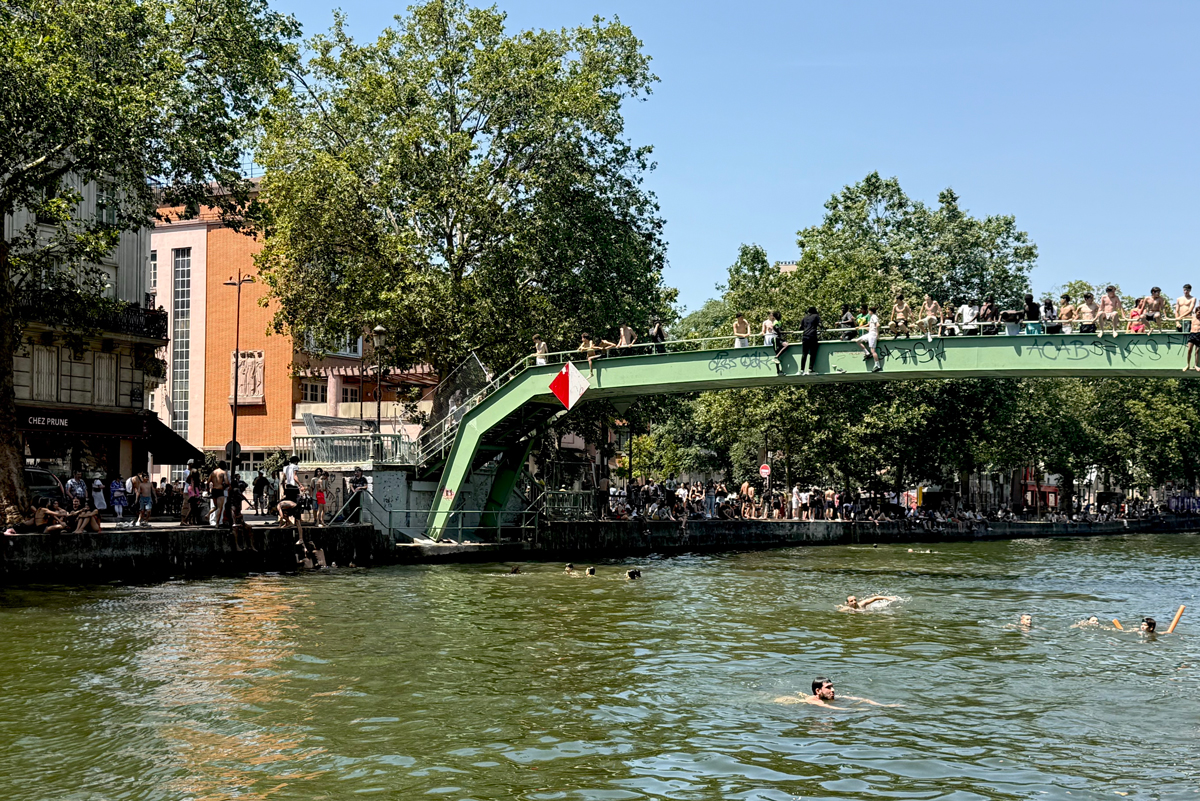
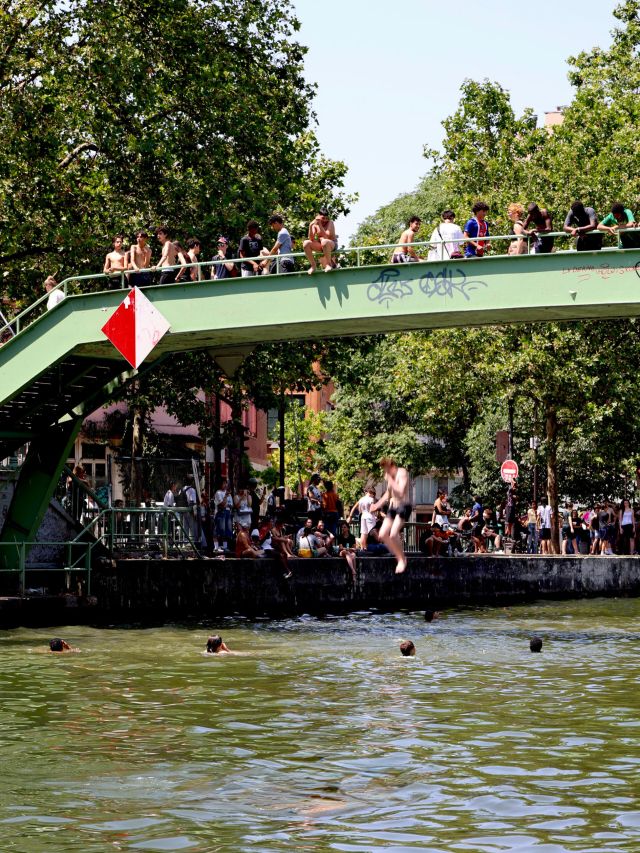
people swimming in the Canal Saint-Martin in Paris
People swimming in the Canal Saint-Martin in Paris to cool off. (Credit: Rachael Thompson)

With some of the highest UV levels in the world, Australians are no strangers to the heat, adapting well to intense weather. But our infrastructure is largely equipped to withstand soaring temperatures with climate-responsive passive design, refrigerated air conditioning or evaporative coolers, as well as swimming spots aplenty.

Buildings in Northern and Western Europe and the UK, however, are constructed to retain heat and handle frosty winters. The lack of universal air conditioning means it generally feels hotter even though the temperature on your app might not look it. During a heatwave, it can feel like you’re in a sauna as cities act like heat traps.

How to stay cool and prepare for another heatwave

Relief is expected across Europe and the UK later this week, but more heatwaves are still possible in the coming months. Summer heat typically peaks in July and August.

Public transport often doesn’t have air conditioning, and buses in particular can be swelteringly hot. If you’re heading outside or your accommodation has no air conditioning, it’s worth buying a spray bottle and a handheld fan from a pharmacy or tourist stand. Check ahead of time if restaurants and cafes have air conditioning and make a booking in advance. The highest temperatures typically hit between 3pm and 6pm, so aim to head outdoors outside of these hours.

Rising temperatures invite travellers to enter a more intentional era of seeing the world. Now more than ever is the time to embrace lower-impact “coolcations” and off-season getaways.