hero media

Experiencing Peru through the lens of a local

Exploring Peru and its famous sites is even more meaningful when the moments are shared with members of the local community.

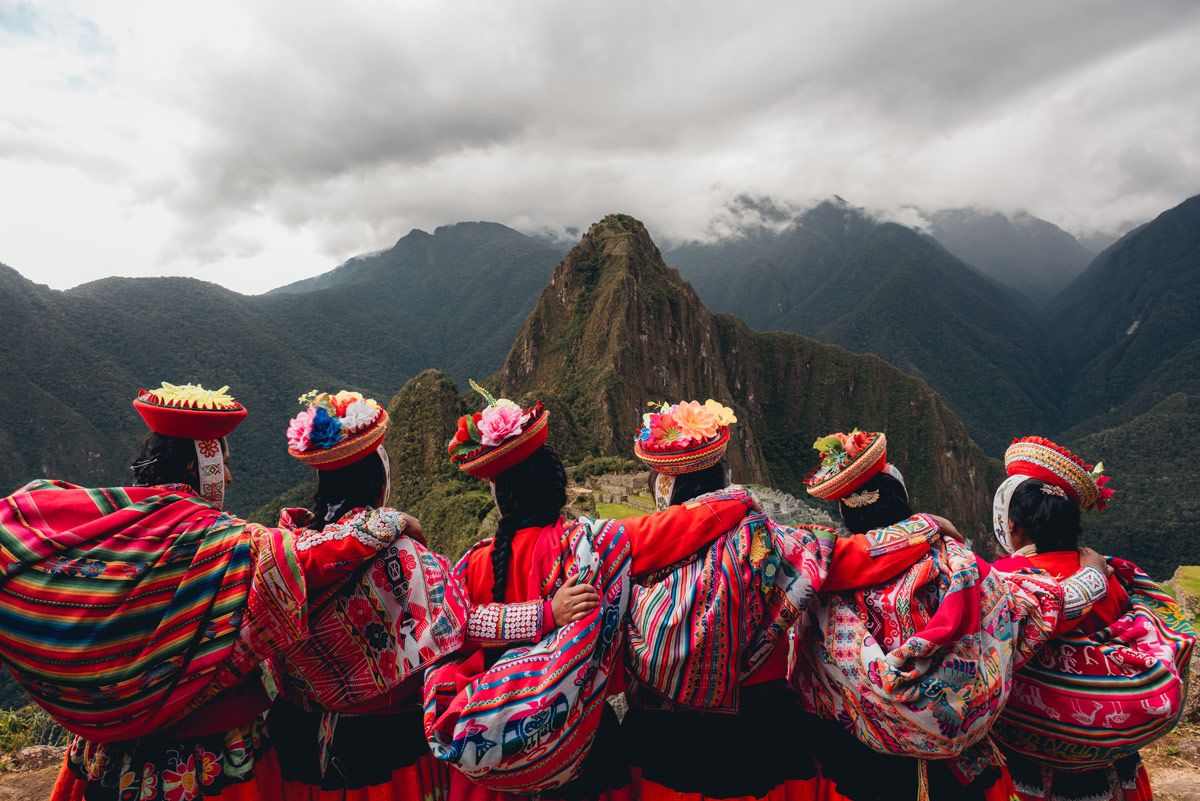
Arms linked, they stand together, a bright blaze of colour unfurled like a ribbon amid the muted green tones and ethereal mist of the cloud forest. A low rumble of thunder reverberates through the jungle-coated mountains, bouncing off Machu Picchu’s vertiginous terraces and threatening to shake the 15th-century fortress off its improbable perch and send it crumbling into the frothing brown Urubamba River, 600 metres below. But the 16 women from Huilloc Alto, a tiny mountain village high in Peru’s Sacred Valley, look completely at peace, gazing down silently – almost defiantly – on the famous citadel their ancestors built, a place they never thought they’d see with their own eyes. Today is their ultimate homecoming.

“The mamas were so happy when they learned they were going to Machu Picchu, they were jumping," says our Intrepid Travel guide Norma Caller who, like the ‘mamas’, speaks Quechua, the Indigenous language of the Inca Empire. It’s been almost 500 years since the Spanish conquest of Peru, but the cultural dislocation caused by colonisation is still felt acutely, especially here in the highlands. Machu Picchu is special because the Conquistadors never found it, so could never destroy it.

Managing the surging numbers of tourists wanting to visit the UNESCO World Heritage site is a hot-button topic in Peru. Daily visitor capacity has been raised to 5600 during peak season, but the cruel irony is that the Indigenous people to whom Machu Picchu means the most will likely never be able to afford to go there.
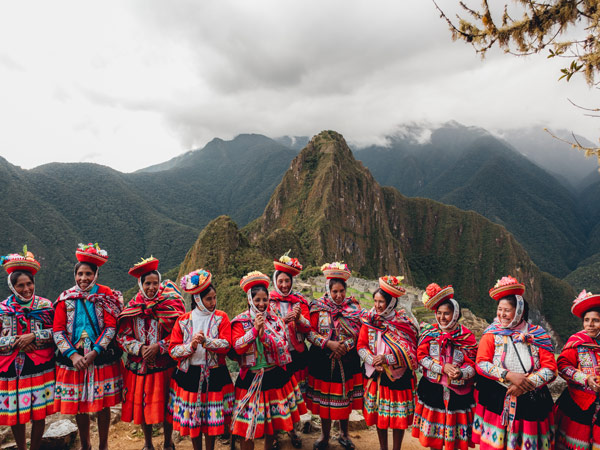
women from Peru’s Sacred Valley at Machu Picchu
Women from Peru’s Sacred Valley connect with their ancestry at Machu Picchu on an Intrepid Travel itinerary. (Image: Intrepid Travel/Ryan Bolton)

This is the first time Intrepid Travel has invited members of a local community to join a tour to Machu Picchu, but it won’t be the last. Experiencing Peru through the lens of the locals is at the heart of Intrepid’s nine-day Classic Peru itinerary, which takes in everything from cosmopolitan Lima to the remote, floating reed islands of the Uros people on Lake Titicaca.

Standing together at Machu Picchu, the mamas already feel like old friends. We met them the day before in their village above the town of Ollantaytambo, dressed as they are today in bright red jobona jackets, pollera skirts embroidered with patterns, hand-woven shawls called lliklla and basket-like montera hats filled with fabric flowers.

Everything they wear they’ve made themselves, woven on a backstrap loom with the aid of condor bones and wooden pegs, an ancient technique that’s been part of Andean culture for more than 5000 years.
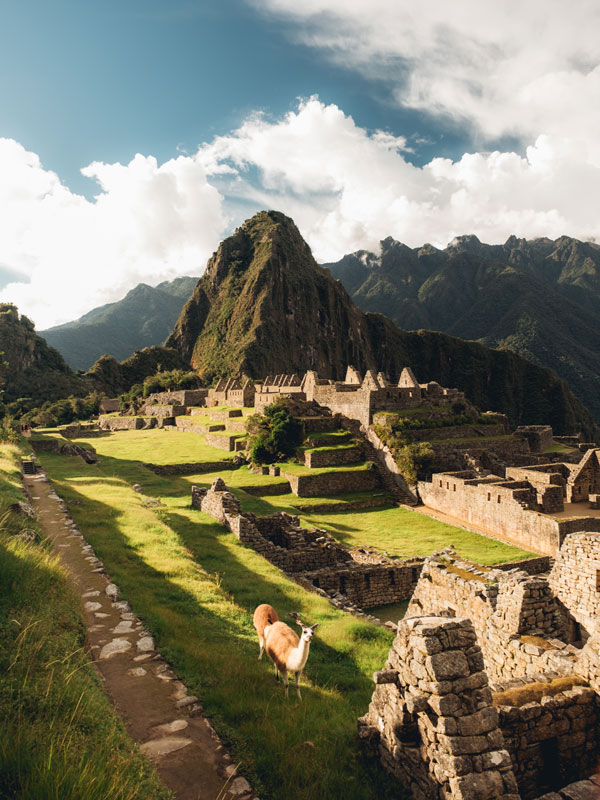
a scenic view of Machu Picchu citadel ruins Peru
An Incan citadel set high in the Andes Mountains. (Image: Intrepid Travel/Ryan Bolton)

The universal language of a mother’s love

We disembark our minivan to a soundtrack of roosters and donkeys, followed by a startling BANG! Norma glances casually over her shoulder. “Exploding stone," she explains. “Someone put the wrong rock in the pachamanca."
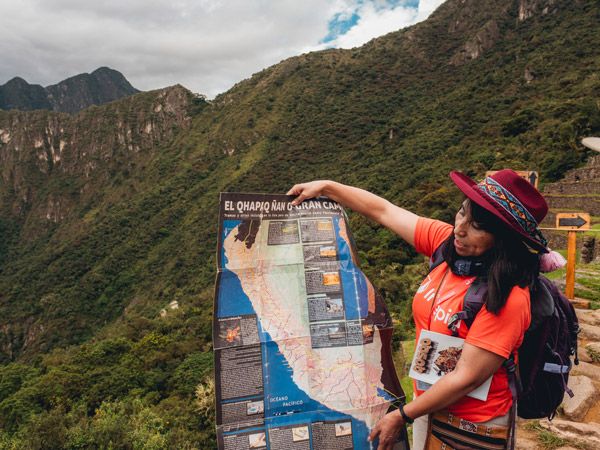
Guide Norma Caller at Machu Picchu
Guide Norma Caller speaks the Indigenous Quechua language of the region. (Image: Intrepid Travel/Ryan Bolton)

A pachamanca is an earth oven, similar to the Māori hangi I grew up with in New Zealand/Aotearoa. Chicken, potatoes, plantain and lima beans are arranged among fire-heated stones, covered with banana leaves and hessian, then left to cook while we get to know the mamas, who are part of a weaving collective run by a social enterprise called Awamaki, an Intrepid Foundation partner.
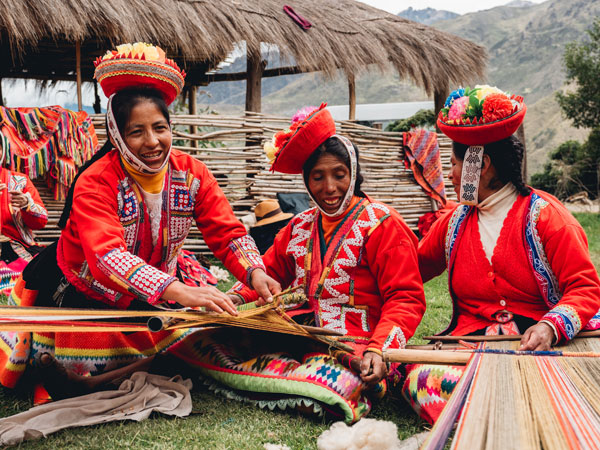
the Indigenous women of Huilloc weaving in Peru
Weaving with the Indigenous women of Huilloc. (Image: Intrepid Travel/Ryan Bolton)

The onomatopoeic word for children in Quechuan is wawa, and the mamas introduce themselves by declaring proudly how many wawas they have (some boast up to eight). Our tour group’s tallies are pathetic in comparison.

To secure the best possible future for their children, the mamas weave exquisite garments and textiles such as chumpi (a type of belt) bags, ponchos, rugs and more. A demonstration on how to spin alpaca wool into yarn, using a hand-held spindle called a pushka, follows. I’m terrified we’ll be asked to have a go, and of course we are. My efforts at spinning are predictably woeful, but my instructor Benita is patient (or at least amused) and waits at least two minutes before mercifully confiscating my pushka.

The colours of the textiles are rich and earthy, created from dyes derived entirely from natural sources such as flowers, minerals, moss and roots. The vivid red that dominates Peruvian patterns comes from the cactus-dwelling cochineal insect, which, once collected, is dried, ground into a fine powder and mixed with lemon, salt or fermented urine to tweak the tint. The little bugs don’t come cheap, either, with the mamas paying 280 sols (about $115) per kilogram. A simple scarf can take up to a month to make.

One of the mamas, Josefina Cruz, tells us that all the money she earns goes directly towards her children and her house. “I am so thankful you have come," she says, “because it’s making a huge difference to our lives."
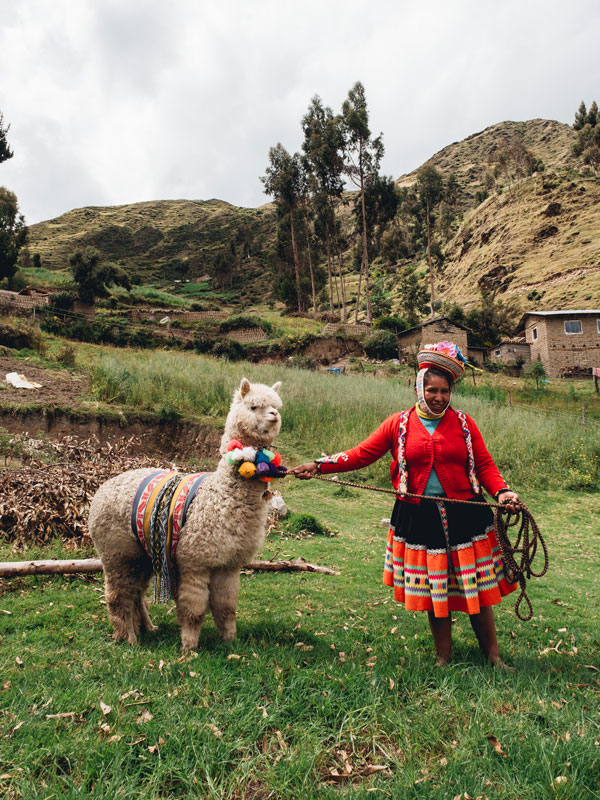
an Indigenous woman of Huilloc standing beside an alpaca
The Peruvian community express their appreciation of the natural world through textiles. (Image: Intrepid Travel/Ryan Bolton)

A new era for travel and tourism in Peru

A concerted effort by the Peruvian government is also being made to integrate locals and tourists in a more collaborative way and to provide opportunities for Peruvians to discover the wonders of their own country. We experience an unscripted example of this on the road from Cusco to Puno, at the archaeological site of Raqch’i, home to the ruins of the Temple of Wiracocha, built in the 1400s as a monument to the pre-Inca deity and creator of the universe. A battered stone wall 92 metres long stands behind a few crumbling columns, all that’s left after the Spanish destroyed the temple in the 16th century.
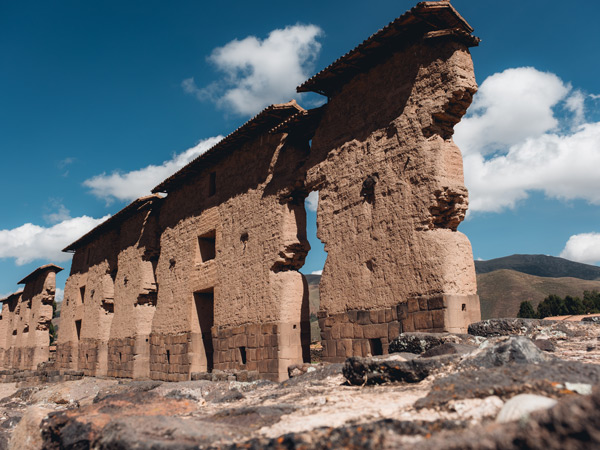
the Raqch’i archaeological site, Inca, Peru
Raqch’i is an Inca archaeological site in Peru. (Image: Intrepid Travel/Ryan Bolton)

As we stand around contemplating the ruins, a group of Peruvian women dressed in traditional clothing approaches us shyly but inquisitively. We learn they’re from an Indigenous community in Altiplano, the high plateau region near Puno, and are visiting tourist sites as part of a program run by the Ministry of Social Development and Inclusion.

The sight of ‘gringos’ is clearly a novelty to them, and they politely ask to take photos with us. It’s a charming reversal of the usual tourism routine and so fitting on a trip like this, where tourism norms and cultural barriers are being continually broken.
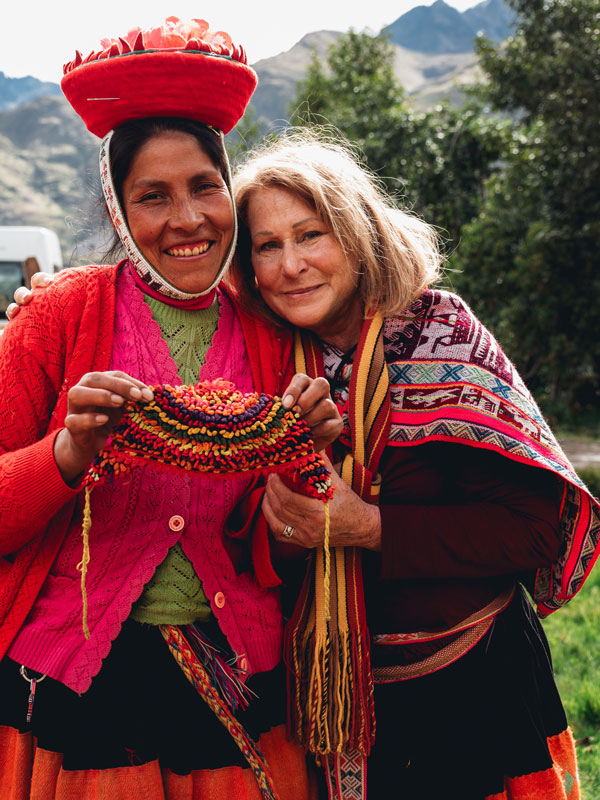
the Indigenous women of the Huilloc community
The Intrepid Travel tour weaves in a visit to the Huilloc community. (Image: Intrepid Travel/Ryan Bolton)

Connecting through cuisine: A homestay in Llachon

We leave the women to their sightseeing and continue south to the shores of Lake Titicaca for an overnight homestay with families from the village of Llachon. It’s a rewarding – and very hands-on – insight into the daily lives of the locals, as we help them harvest potatoes and prepare meals, which begin with a ritual offering to Mother Earth.
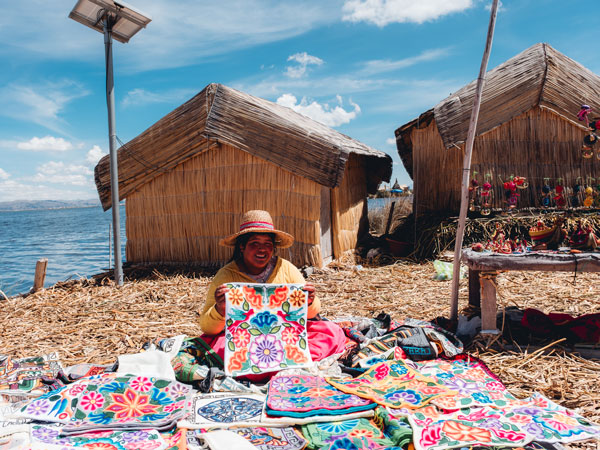
a woman sitting with textile art on display at Lake Titicaca
Lake Titicaca is known for its textile art. (Image: Intrepid Travel/Ryan Bolton)

Vegetables, tubers and cereals are the staple foods, supplemented by fish from the lake, and perhaps a llama sacrificed for a special occasion. We sit down for semolina soup with our host families as a full moon rises above the lake, casting a silver shimmer across the water, and life suddenly seems so simple.
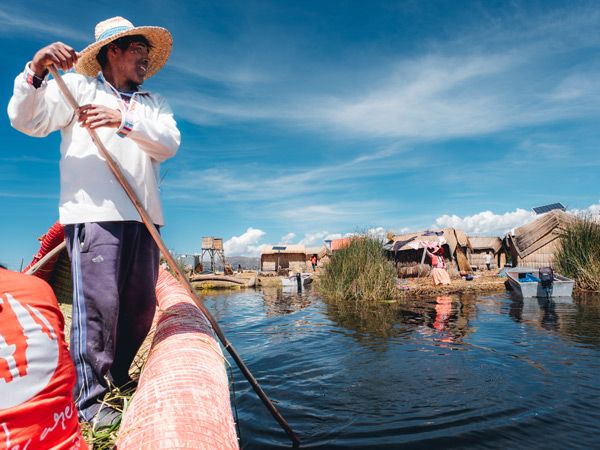
taking a reed boat at Lake Titicaca, Peru
The Intrepid Travel tour includes a ride in a reed boat. (Image: Intrepid Travel/Ryan Bolton)

Eating responsibly is a huge part of the Intrepid ethos. Back in Cusco, we enjoy a meal at Nuna Raymi, a restaurant that sources all its produce from family farms within 13 nearby provinces.
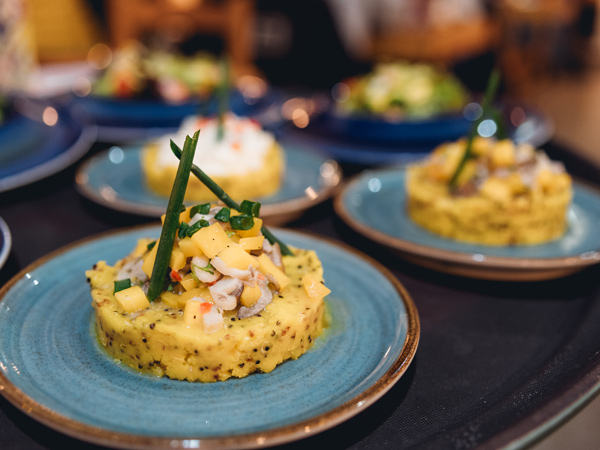
the dinner at Nuna Raymi
And dinner at Nuna Raymi which supports local Cusco farmers. (Image: Intrepid Travel/Ryan Bolton)

Chef Eric brings out four different types of potatoes as appetisers (there are more than 4000 varieties of potatoes in Peru), served with wild tomato and uchucuta, a spicy pepper sauce made from ground chillies. He explains how these organic potatoes, high in antioxidants and bursting with flavour, have been championed by top restaurants and chefs, leading to a surge in demand. “Fifteen years ago, you couldn’t find these potatoes in the markets in Cusco. Now they’re everywhere."
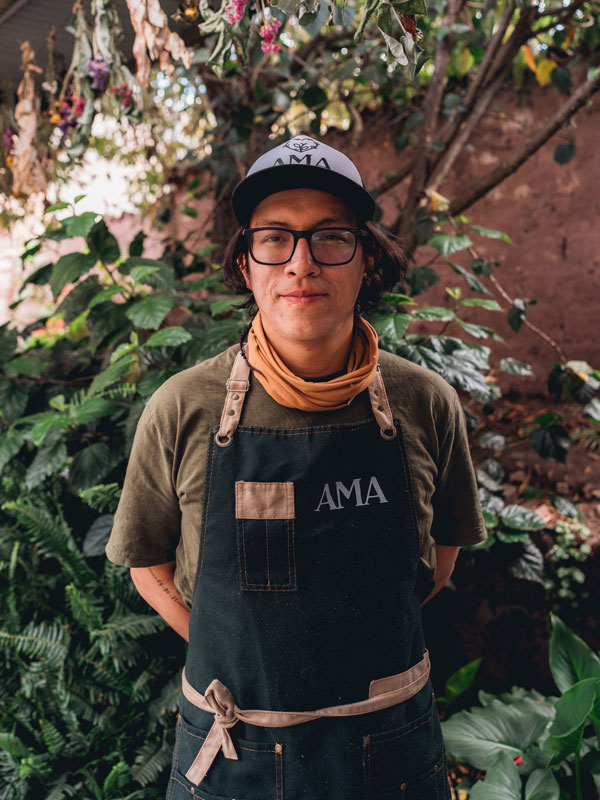
the Founder of Ama, Julio Chemi Sanchez Hernandez
Founder of Ama, Julio Chemi Sanchez Hernandez. (Image: Intrepid Travel/Ryan Bolton)

Eric introduces us to one of the farmers, Julio Cruz, who arrives at our table wearing a traditional poncho, handmade by his mother and embroidered with the ancient iconography of the area – llamas, flamingos, hummingbirds and pumas. He explains how partnerships with restaurants such as Nuna Raymi help ensure that farmers are paid a fair price for their produce, and that communities have a sustainable future.
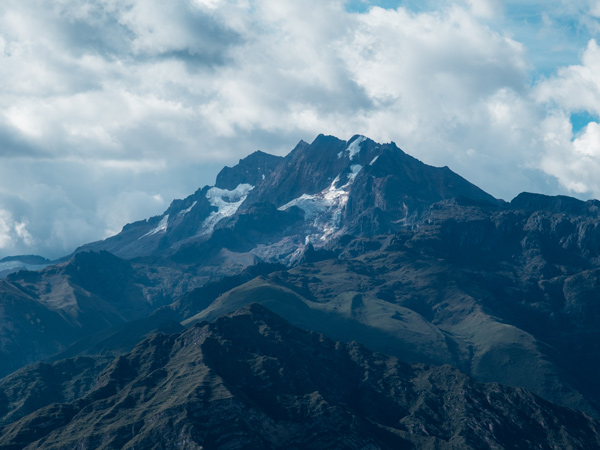
the scenic Urubamba mountains in the Sacred Valley, Peru
The eatery is in Urubamba in the mountainous Sacred Valley. (Image: Intrepid Travel/Ryan Bolton)

Our time at Machu Picchu comes to an end. Justina takes a final look over her shoulder at the wondrous, mysterious city in the cloud forest. “Coming here reminds us that we are Incas," she says, on behalf of the mamas. “We feel even more connected to our ancestors."

Back in Ollantaytambo we give a final hug to the mamas and watch them head off back into the mountains, where their wawas are waiting. It feels like goodbye, but it can’t be, because in Quechuan no such word exists. Instead, the mamas’ parting word is tupananchiskama. “Until life makes us meet again."
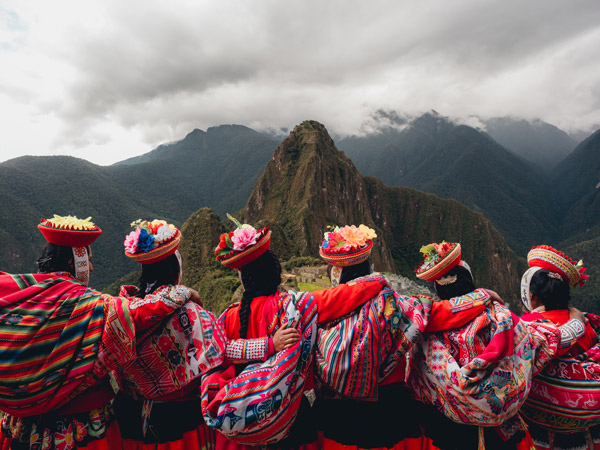
Quechua women from the Sacred Valley with arms linked
Quechua women from the Sacred Valley witness Machu Picchu for the first time as special guests on an Intrepid Travel tour of Peru. (Image: Intrepid Travel/Ryan Bolton)

Weekly travel news, experiences
insider tips, offers,
and more.

Want to see more stories from International Traveller in your Google search results?

  1. Click here to set International Traveller as a preferred source.
  2. Tick the box next to "International Traveller". That's it.
hero media

8 grand journeys across Latin America

    From camping along alpine meadows in Patagonia to cruising the Amazon, these are the best Latin America journeys to tick off your bucket list.

    1. The Q Circuit in Patagonia

    Travelling with: Emma Ventura

    the Torres del Paine mountains in Patagonia, Chile
    A turquoise lake surrounded by snow-capped peaks at Patagonia’s Torres del Paine National Park. (Image: Getty/ MBPROJEKT_Maciej_Bledowski)

    Tolkienian peaks, pristine lakes and snow-bloated rivers are highlights for most visitors spending a couple of days in Chile’s Torres del Paine National Park. But for the more intrepid, the real rewards come from a 10-day solo circumnavigation of the Q Circuit, camping along tracks that become more sparsely trodden the further you head into the park’s astonishingly diverse landscape – think glacial passes and granite spires, alpine meadows and forest paths. Five-star lodges might provide a break from Patagonia’s infamously feisty weather, but there’s nothing like carrying your own kit, a chance encounter with an elusive puma, and a crackling wood stove in a remote refugio for delivering the kind of fulfilment that money just can’t buy.

    2. The jungles of Central America

    Travelling with: Megan Arkinstall

    women traversing the Mistico Hanging Bridges in La Fortuna, Costa Rica
    The Mistico Hanging Bridges in La Fortuna are perched above the forest floor.

    Emerging from the seas millions of years ago, the isthmus that is Central America is a tropical sanctuary of jungle-clad volcanoes, thunderous waterfalls and mist-shrouded rainforests, fringed by coral reefs. At its heart, Costa Rica is the land of pura vida (pure life), a tiny country that is home to six per cent of the world’s biodiversity – think toucans, macaws, anteaters, tapirs, jaguars, sloths – with verdant rainforest carpeting more than half the country. It’s a land to explore on two feet, two wheels and with two paddles. Do all three on Intrepid Travel’s eight-day Costa Rica: Hike, Bike & Raft tour and G Adventures’ 16-day Costa Rica Adventure.

    a toucan in the rainforest of Costa Rica
    A rainbow-billed toucan in the rainforest of Costa Rica. (Image: Getty/Freder)

    3. Dance across Latin America

    Travelling with: Elizabeth Whitehead

    samba dancing in the street, Brazil
    Put on your dancing shoes in Latin America. (Image: Getty/Pollyana Ventura)

    Don your tassels and get flirty cha cha-ing in Havana. Feel the heat dancing Argentine tango at a milonga in Buenos Aires. Hear the pulse of percussion as you samba in Rio. In Latin America, movement is an expression of culture, celebration and passion. You don’t have to be a professional to partake, and there are plenty of dance schools where foreigners can learn the basics. It’s easy as one-step, two-step, cha-cha-cha.

    4. Hike to Colombia’s Lost City

    Travelling with: Sarah Reid

    the terraces of Lost City, Colombia
    The Lost City is Colombia’s best-kept secret. (Image: Getty/Charly Boillot)

    Reaching the ancient ciudad perdida (‘Lost City’) of Teyuna hidden within the steamy jungles of northern Colombia is a surreal moment, amplified by the challenging three-to-five-day return trek to get there. Built by the Indigenous Tairona People around 800 CE, this labyrinthine complex of stone staircases and circular platforms has only been partly excavated since treasure looters stumbled upon it in 1972. Limited tourism infrastructure adds to the Indiana Jones vibe. Intrepid Travel’s new Lost City Trekking in Colombia tour includes a respectful visit to a Wiwa community to learn more about their Tairona Ancestors and traditional way of life.

    5. The Galápagos Islands

    Travelling with: Carla Grossetti

    the Observation Lounge at the top of the Silversea ship
    Visit the remote Galápagos Islands on a Silversea cruise.

    Expect the brackish air around the Galápagos Islands to be mixed with the gritty odour of bird droppings and pungent tang of sea lion BO. Twist your binoculars until the black eye of the giant Galápagos tortoise fills the other end, and you might imagine yourself to be quite the adventurer centuries after the inhabitants of these islands inspired Charles Darwin’s theory of evolution. Get onboard a cruise with operators like Silversea, HX Expeditions, Celebrity Cruises and Metropolitan Touring to see the remote archipelago of 19 islands loom into view just 900 kilometres off the coast of mainland Ecuador.

    a blue-footed booby on the Galapagos Islands
    A blue-footed booby on the Galapagos Islands. (Image: Getty/Bruce Campos)

    6. Pantanal, Brazil

    Travelling with: Carla Grossetti

    a Jaguar walking on the banks of a river, South Pantanal, Brazil
    Spot a jaguar in the world’s largest tropical wetland. (Image: Getty/ Dgwildlife)

    Brazil’s Pantanal, the world’s largest tropical wetland and a UNESCO World Heritage site, is reportedly one of the best places on Earth to spot jaguars. This vast landscape of flooded plains and savannahs also shelters more than 650 species of birds (such as the toucan and hyacinth macaw) as well as various reptiles including the yellow anaconda and cold-blooded caiman (a type of crocodilian). Add capybaras, giant anteaters, maned wolves, giant river otters and South American tapirs to your wildlife bingo card, too. And find a tour that includes piranha fishing, if you dare.

    7. Salar de Uyuni in Bolivia

    Travelling with: Carla Grossetti

    the salt flats in Bolivia
    Immerse yourself in the world’s largest salt flats. (Image: Getty/ Olga Gavrilova)

    Bolivia’s Salar de Uyuni covers more than 10,500 square kilometres, making it the world’s largest salt flats. The salt flats of Uyuni were formed more than 40,000 years ago when several prehistoric lakes dried up and left a bed of rich minerals behind. Stay at Luna Salada, where the walls and furnishings are made from dense bricks of packed salt, so you can immerse yourself in this ethereal landscape. Visit southern Bolivia during the dry season when the salt crystallises into mesmerising shapes and patterns.

    8. The iconic sites of Peru

    Travelling with: Megan Arkinstall

    scarlet macaws at a cliff in the Amazon
    The Amazon is home to diverse birdlife such as wild scarlet macaws.

    Hiking the Andes. Cruising the Amazon. It’s the stuff of legends. From the vast expanses of Lake Titicaca to the archaeological wonder of Machu Picchu to the Amazon Basin, one of the greatest remaining wildernesses on Earth, you can stitch Peru’s epic sites together on tour with andBeyond or Abercrombie & Kent. To sweeten the experience, both luxury operators are launching new state-of-the-art vessels on the Amazon River in September 2025 and July respectively.

    the superior suite onboard andBeyond Amazon Explorer
    Stay in a superior suite onboard andBeyond Amazon Explorer.
    A Trip Through Peru With Intrepid Travel | International Traveller