hero media

Switzerland by train: the journey from Lucerne to Montreaux

Passing lakes, Alps and meadows, a Switzerland train journey through the Bernese Oberland allows you to sit back and watch the scenery roll by, writes Linda Moon


After taking in the delights of the fairytale lake city Lucerne, I’m standing at its train platform bound for my next adventure. My end destination is the Alpine village and ski resort of Gstaad, 134 kilometres to the west through the picturesque Bernese Oberland.

The GoldenPass Line, a rail route between Lucerne in Central Switzerland and Montreux in the Lake Geneva region, offers one of the best ways to get from Lucerne to Gstaad, taking about three hours.

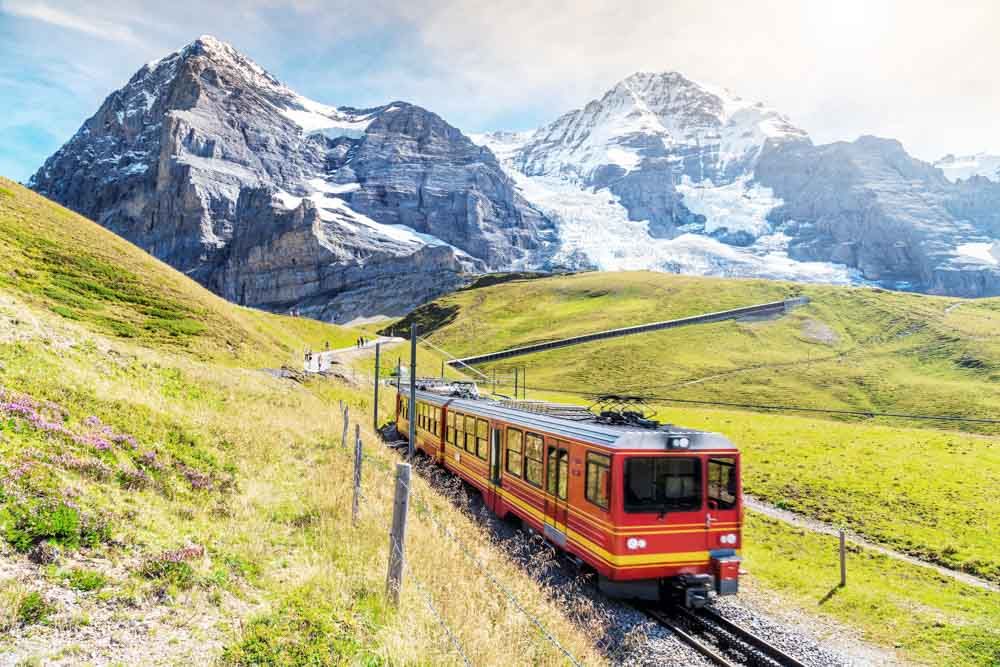
Named one of the country’s best train trips by Swiss Travel System CEO Maurus Lauber, the route promises panoramic vistas of hinterland lakes, dramatic mountains and more, all in laidback comfort.
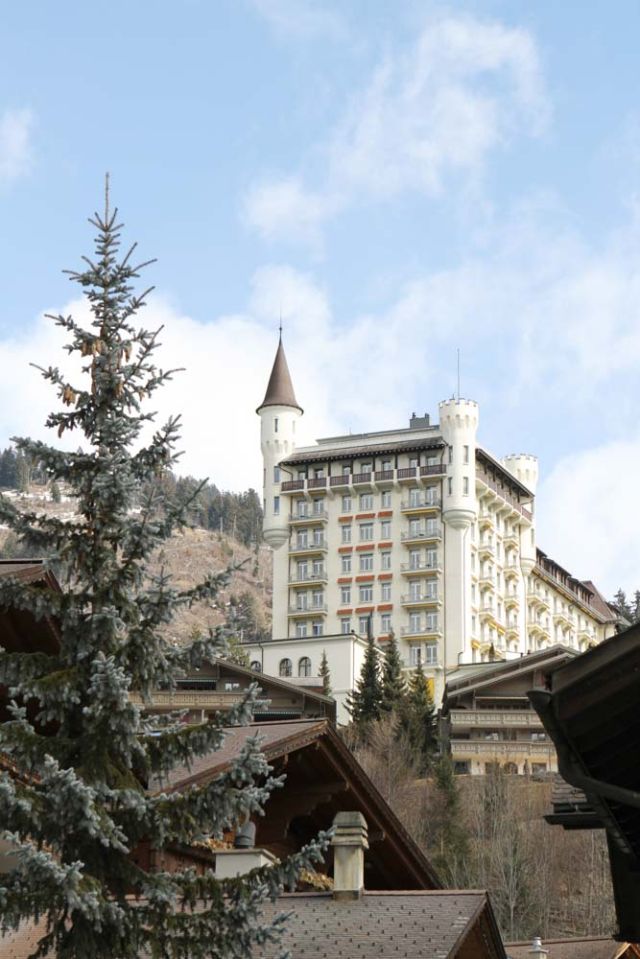
 

chalet attractions gstaad switzerland
Enchanting chalet in Gstaad, Switzerland.


As different railway companies operate the trains on the GoldenPass Line, I’ll be boarding three separate trains to reach my destination.

While it sounds tricky, the journey is made easier with the Swiss Travel Pass – this can be pre-ordered online or purchased at railway stations throughout the country.

According to Lauber, “it’s one ticket for the whole country" and the pass includes all bus, train and boat trips, plus 50 per cent off mountain railways (another bonus is that it provides free access to more than 490 museums around the country).

According to Lauber, the Swiss are in love with travelling by train: the Swiss Travel System boasts the densest public transport network in the world.

Working out my train itinerary proves fairly easy. This can be done at the tourist information offices at any major railway station or Bahnhof in the country, or you can plot your schedule online at the user-friendly Swiss Federal Railways site.

The first part of my journey starts on the Luzern-Interlaken Express, where a handsome employee helps me get my heavy suitcase aboard.

As the train glides away, I’m pleased by the immaculate, modern, air-conditioned interior. Expansive glass windows allow unfettered views to the outside. There’s a restaurant onboard and remarkably clean, roomy toilets.

Passing through the Brünig mountain pass and along the shores of lakes so blue they seem enchanted, we arrive at Interlaken – the first changeover point – almost two hours later.

Located in a valley between the lakes of Thun and Brienz, and shadowed by the Bernese Alps, Interlaken is one of the most striking parts of the country and the intersection of three major railway lines.
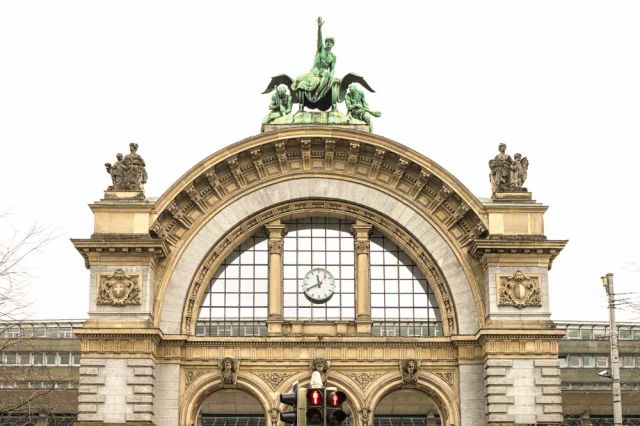
 

Lucerne train station
Lucerne’s grand train station. Switzerland.


There’s only five minutes to change platforms, and lugging my gigantic suitcase up and down staircases proves challenging. Puffing, I board the RegioExpress, a regular but still comfortable fast train.

Skirting the shores of Lake Thun and the hills of the Simmental valley, another hour or so passes easily.

At Zweisimmen I board the GoldenPass Panoramic Fast Train for the final stage. Beyond the window, church steeples rise and tiny villages lie in what seems precarious positioning beneath mountain peaks fringed with dark fir forest.

Dotted with apple trees and farmhouses, splashed with geraniums and torn by streams and rushing rivers, the green countryside is clothed in all its summer glory, but it is said to be equally lovely in any season – which I can easily believe.

Essentially a quick, fly-by overview of the region, trains are a mode of travel that best suits those who like to relax and enjoy the scenery, or travellers on a deadline who want to get from one part of the country to another in the easiest, quickest and most reliable manner possible.

Twenty-five minutes later I alight at Gstaad, a peaceful rural stop deep in the Swiss countryside far from the madding crowd where birds chatter in the sun amongst the flower boxes of its traditional chalet buildings.

A castle and great mountains (including the impressive 3237-metre Wildhorn), loom large over the village façade.

Stretching my legs and drawing in the country air, I walk towards my guide, relaxed and revitalised by my journey and ready to see what Gstaad has to offer.

Want to see more stories from International Traveller in your Google search results?

  1. Click here to set International Traveller as a preferred source.
  2. Tick the box next to "International Traveller". That's it.
hero media

What the European heatwave means for your summer travel plans

Temperatures are soaring this summer, breaking records across Europe and the UK. 

Euro summer is a feeling like no other. But when a heatwave hits? The dream trip quickly turns into a sweaty mess. Extreme heat is sweeping Europe and the UK this week, with record-high temperatures impacting travel plans across the continent.

And while Australian summers are typically hotter in absolute temperature, many European cities aren’t equipped for high temperatures, resulting in unbearable weather.

Why is it so hot in Europe?

Signs of a hot summer loomed in May, when the mercury hit unprecedented spring highs. Now, extreme high temperature warning alerts have been issued in countries such as Spain, Italy, France, England, the Netherlands and Germany.

France saw its hottest day on record on Wednesday, with an average temperature of 30°C across the day and night. This surpasses the average temperature for June, which is 15°C to 25°C. Dozens of people have died, including 40 from drowning.

In Spain, 212 deaths have been linked to the heatwave.

The UK recorded its hottest June day ever on Wednesday with temperatures soaring to 36.1°C. In an article published by the Met Office – the UK’s national meteorological service – Professor Stephen Belcher CBE, Met Office Chief Scientist, shared his concerns about June’s heat. “To see temperatures like this in the UK in June is sobering. Events like this bring home the implications of climate change, with very high temperatures and humidity bringing significant health implications from heat stress, as well as impacts to a range of sectors such as transport, energy and water supply,” he said.

Heatwaves are becoming increasingly common in Europe and the UK, neither of which is prepared for such extremes. The World Meteorological Organization reported that in 2025, at least 95% of Europe experienced above-average annual temperatures and that the continent was heating up twice as fast as the global average.

How travel is impacted

A pharmacy sign displaying 40 degrees Celcius
A pharmacy broadcasting local weather data. (Credit: Getty/Dragoncello)

During a heatwave, power grids, water systems and transport networks can be affected, resulting in disrupted itineraries for travellers. In France, power outages have left thousands without electricity and early closures have been implemented for two of Paris’s biggest attractions, the Eiffel Tower (early afternoon rather than late at night) and the Louvre (two hours early). Eurostar cancelled its London to Paris and Paris to London services from the 22nd to the 25th, and major UK rail companies have been advising travellers to avoid using trains where possible, or to travel during early hours.

If a heatwave is predicted, being flexible with your itinerary and having fully refundable/changeable tickets is key, as extreme heat can force the cancellation of outdoor activities, impact rail and flight services and change the opening hours of sites and eateries.

Why does summer in Europe often feel hotter than summer in Australia?

people swimming in the Canal Saint-Martin in Paris
People swimming in the Canal Saint-Martin in Paris to cool off. (Credit: Rachael Thompson)

With some of the highest UV levels in the world, Australians are no strangers to the heat, adapting well to intense weather. But our infrastructure is largely equipped to withstand soaring temperatures with climate-responsive passive design, refrigerated air conditioning or evaporative coolers, as well as swimming spots aplenty.

Buildings in Northern and Western Europe and the UK, however, are constructed to retain heat and handle frosty winters. The lack of universal air conditioning means it generally feels hotter even though the temperature on your app might not look it. During a heatwave, it can feel like you’re in a sauna as cities act like heat traps.

How to stay cool and prepare for another heatwave

Relief is expected across Europe and the UK later this week, but more heatwaves are still possible in the coming months. Summer heat typically peaks in July and August.

Public transport often doesn’t have air conditioning, and buses in particular can be swelteringly hot. If you’re heading outside or your accommodation has no air conditioning, it’s worth buying a spray bottle and a handheld fan from a pharmacy or tourist stand. Check ahead of time if restaurants and cafes have air conditioning and make a booking in advance. The highest temperatures typically hit between 3pm and 6pm, so aim to head outdoors outside of these hours.

Rising temperatures invite travellers to enter a more intentional era of seeing the world. Now more than ever is the time to embrace lower-impact “coolcations” and off-season getaways.

Switzerland rail journey - an iconic voyage - International Traveller