hero media

A 24-hour guide to Geneva in summer

The joy in Geneva is palpable in summer and you won’t want to waste a moment of it indoors.

It’s clear to see that Lake Geneva is the lifeblood of Switzerland’s small French-speaking city. From the moment you catch your first glimpse of the expansive Lac Léman (as it’s known in French) dotted with elegant swans and surrounded by the Alps and the Jura mountains, you get the sense that everything radiates out from it.


From the 140-metre-high Jet d’Eau (Water Jet) that’s turned on every morning by caretakers, to the locals soaking up the first taste of summer on the rock jetty that stretches out into the lake’s crystal clear waters, you can’t escape its magnetic pull.
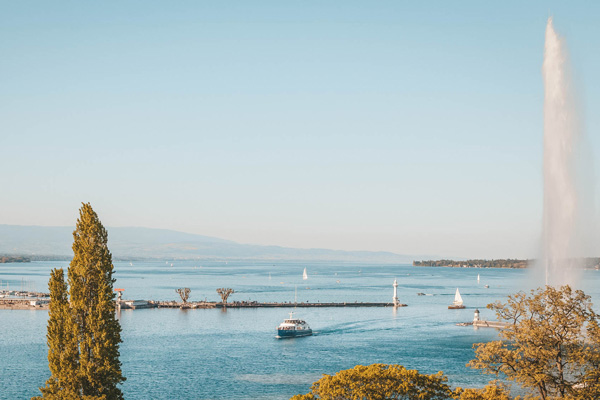
Lake Geneva
Lake Geneva is the lifeblood of the city.

As the headquarters of Europe’s United Nations and the Red Cross there are plenty of cultural activities available in Geneva that will tempt you indoors, but if you only have 24 hours to spare then experiencing Switzerland’s natural beauty needs to take precedence.

Start your day with a tai chi class overlooking Lake Geneva

One of the more relaxing ways to meet the first rush of water from the Jet d’Eau is with a tai chi class at the Baths of Paquis.


Follow along with Marianne as she guides you through the meditative moves before locals and tourists flock to the baths for a swim. Order breakfast at the baths’ restaurant (we’d recommend the bircher muesli, homemade bread with jam and a cup of steaming hot coffee) and take a moment to soak up the view.


Details: Tai Chi sessions run for an hour throughout June to September from 9.15am and October to May from 10am.

Cost: $3
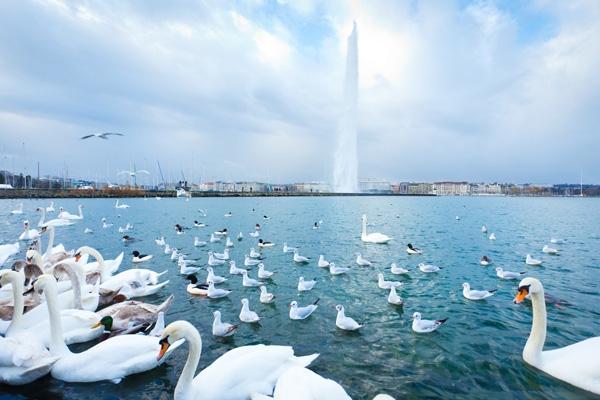
Lake Geneva
You won’t find a more picturesque spot.

Tour Geneva’s Old Town

Walk across the Mont Blanc Bridge, check the time on the flower clock at English Garden, climb Saint Peter’s Cathedral for expansive views of the city, stand before the towering Reformation Wall and wander over to Bastions Park.
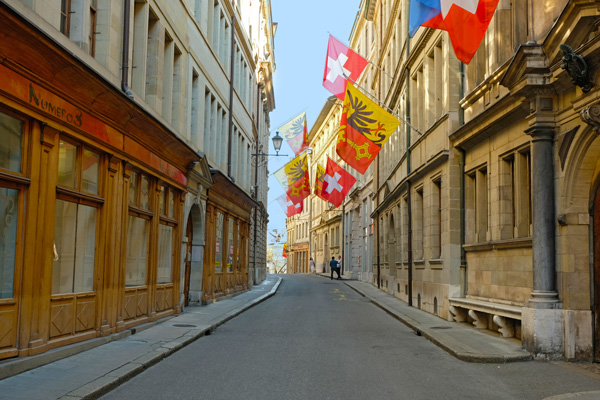
Old Town Geneva
A morning tour of Old Town Geneva will mean you get the streets to yourself.

The Old Town’s attractions can be easily admired on a self-guided walking tour but if you really want to fully appreciate the rich history hidden on every street corner you can book a two-hour walking tour with a guide for around $15 per person.


Details: Read more about available tours here.
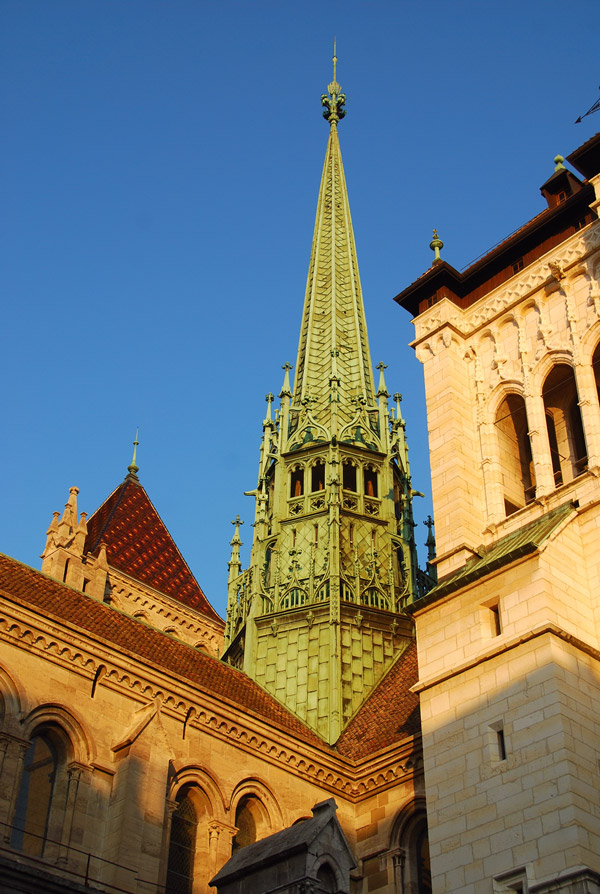
St Pierre Cathedral Geneva
St Pierre Cathedral striking spire in Geneva’s Old Town.

Indulge in a gourmet lunch cruise onboard a Belle Époque steamboat

Board the Savoie for lunch; it’s one of eight heritage steamboats in the Belle Époque Fleet that cruise along Lake Geneva. Not only will you enjoy a delicious three-course lunch in elegant surrounds but you’ll get the best view of the Jet d’Eau from the deck. Take advantage of being out on the water and lounge on the deckchairs in the sun for as long as possible in between courses.


Details: Coming in at just under $100, it isn’t cheap but it’s an experience you won’t forget.
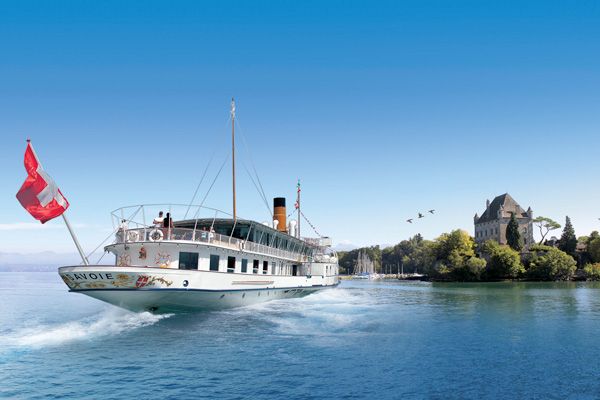
Savoie Steamboat Geneva
Indulge in a luxurious lunch cruise on board the Savoie steamboat.

Spend the afternoon cycling through Geneva’s countryside

It’s easy to fall into the trap of thinking it’s too hard to venture outside the well-worn city paths but Geneva’s countryside is a stone’s throw away. One of the more popular ways to explore it is on an e-bike tour through Geneva’s largest wine-producing regions, Satigny.

Ebike Geneva
Join an ebike tour of Geneva’s wine region.

Departing from Meyrin Village, you’ll cycle down lush green, winding country paths, travel off-road through the vineyards of Mandement in the shadow of the snow-capped Alps before ending your tour at Domaine des Pendus for a wine tasting and charcuterie board.

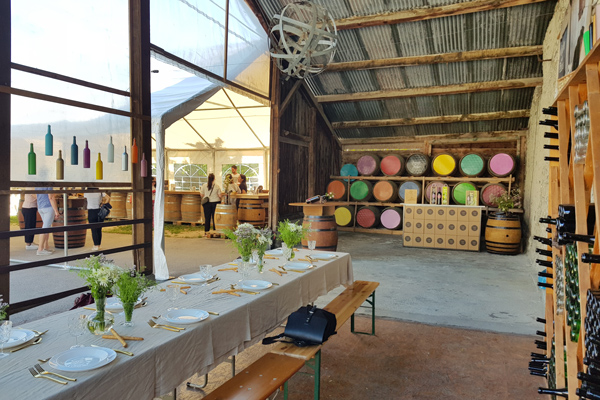
Domaine des Pendus
Stop by Domaine des Pendus for a wine tasting.
Domaine des Pendus
Enjoy the ambience at Domaine des Pendus.

Spend the night at Hotel N’vY

There is a plethora of hotel options in Geneva to choose from but if you’re after a more unique four-star experience with views of Lake Geneva, it doesn’t get much more modern and art-centric than Hotel N’vY. You are greeted with sculptures in the foyer, large graffiti artworks adorn the walls and each room comes with coloured lighting that can be adjusted to suit your mood.


The menu at the hotel’s Trilby Restaurant changes seasonally but a standout on the set summer menu is the sea-bass tartare with mango, avocado and yusu. It’s the perfect summer appetiser, best enjoyed with a glass of white wine. Stop by N’vY Bar Lounge to sample one of its signature cocktails before bed.


Address: Rue de Richemont 18, 1201 Geneva
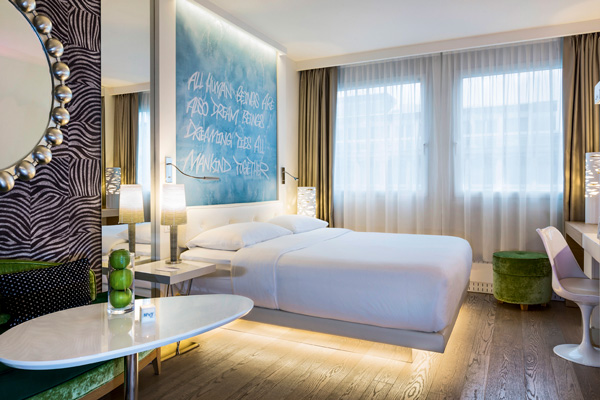
Hotel N'vY Geneva
The chic Hotel N’vY is perfectly located within walking distance to Lake Geneva.

Weekly travel news, experiences
insider tips, offers,
and more.

Getting there:

You can fly to Geneva from Sydney, Brisbane and Melbourne on Swissair with a stopover in Hong Kong or Singapore, followed by a domestic flight from Zurich to Geneva. Travel time is around 26 hours.

Getting around:

Free public transport is included when you book a hotel stay in Geneva. You’ll receive a Geneva Transport Card at check-in and this will give you complimentary rides on city buses and trams.


If you’re planning a longer stay in Switzerland we’d recommend purchasing a three, four, eight or 15-day Swiss Travel Pass. The pass will give you unlimited travel on trains, buses and boats on consecutive days.
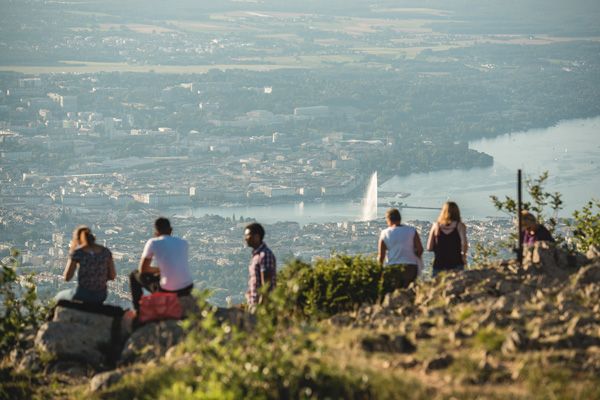
Lake Geneva
Find a vantage point to view Lake Geneva from up high.
Planning your dream trip to Switzerland? Don’t miss our ultimate travel guide to Switzerland here.

Want to see more stories from International Traveller in your Google search results?

  1. Click here to set International Traveller as a preferred source.
  2. Tick the box next to "International Traveller". That's it.
hero media

What the European heatwave means for your summer travel plans

Temperatures are soaring this summer, breaking records across Europe and the UK. 

Euro summer is a feeling like no other. But when a heatwave hits? The dream trip quickly turns into a sweaty mess. Extreme heat is sweeping Europe and the UK this week, with record-high temperatures impacting travel plans across the continent.

And while Australian summers are typically hotter in absolute temperature, many European cities aren’t equipped for high temperatures, resulting in unbearable weather.

Why is it so hot in Europe?

Signs of a hot summer loomed in May, when the mercury hit unprecedented spring highs. Now, extreme high temperature warning alerts have been issued in countries such as Spain, Italy, France, England, the Netherlands and Germany.

France saw its hottest day on record on Wednesday, with an average temperature of 30°C across the day and night. This surpasses the average temperature for June, which is 15°C to 25°C. Dozens of people have died, including 40 from drowning.

In Spain, 212 deaths have been linked to the heatwave.

The UK recorded its hottest June day ever on Wednesday with temperatures soaring to 36.1°C. In an article published by the Met Office – the UK’s national meteorological service – Professor Stephen Belcher CBE, Met Office Chief Scientist, shared his concerns about June’s heat. “To see temperatures like this in the UK in June is sobering. Events like this bring home the implications of climate change, with very high temperatures and humidity bringing significant health implications from heat stress, as well as impacts to a range of sectors such as transport, energy and water supply,” he said.

Heatwaves are becoming increasingly common in Europe and the UK, neither of which is prepared for such extremes. The World Meteorological Organization reported that in 2025, at least 95% of Europe experienced above-average annual temperatures and that the continent was heating up twice as fast as the global average.

How travel is impacted

A pharmacy sign displaying 40 degrees Celcius
A pharmacy broadcasting local weather data. (Credit: Getty/Dragoncello)

During a heatwave, power grids, water systems and transport networks can be affected, resulting in disrupted itineraries for travellers. In France, power outages have left thousands without electricity and early closures have been implemented for two of Paris’s biggest attractions, the Eiffel Tower (early afternoon rather than late at night) and the Louvre (two hours early). Eurostar cancelled its London to Paris and Paris to London services from the 22nd to the 25th, and major UK rail companies have been advising travellers to avoid using trains where possible, or to travel during early hours.

If a heatwave is predicted, being flexible with your itinerary and having fully refundable/changeable tickets is key, as extreme heat can force the cancellation of outdoor activities, impact rail and flight services and change the opening hours of sites and eateries.

Why does summer in Europe often feel hotter than summer in Australia?

people swimming in the Canal Saint-Martin in Paris
People swimming in the Canal Saint-Martin in Paris to cool off. (Credit: Rachael Thompson)

With some of the highest UV levels in the world, Australians are no strangers to the heat, adapting well to intense weather. But our infrastructure is largely equipped to withstand soaring temperatures with climate-responsive passive design, refrigerated air conditioning or evaporative coolers, as well as swimming spots aplenty.

Buildings in Northern and Western Europe and the UK, however, are constructed to retain heat and handle frosty winters. The lack of universal air conditioning means it generally feels hotter even though the temperature on your app might not look it. During a heatwave, it can feel like you’re in a sauna as cities act like heat traps.

How to stay cool and prepare for another heatwave

Relief is expected across Europe and the UK later this week, but more heatwaves are still possible in the coming months. Summer heat typically peaks in July and August.

Public transport often doesn’t have air conditioning, and buses in particular can be swelteringly hot. If you’re heading outside or your accommodation has no air conditioning, it’s worth buying a spray bottle and a handheld fan from a pharmacy or tourist stand. Check ahead of time if restaurants and cafes have air conditioning and make a booking in advance. The highest temperatures typically hit between 3pm and 6pm, so aim to head outdoors outside of these hours.

Rising temperatures invite travellers to enter a more intentional era of seeing the world. Now more than ever is the time to embrace lower-impact “coolcations” and off-season getaways.