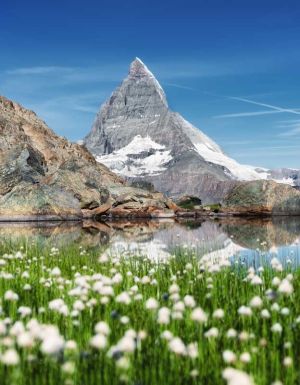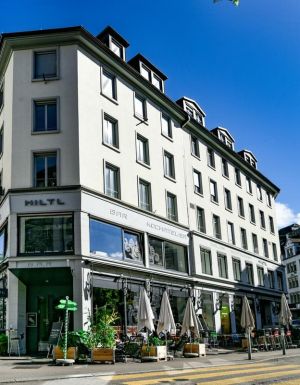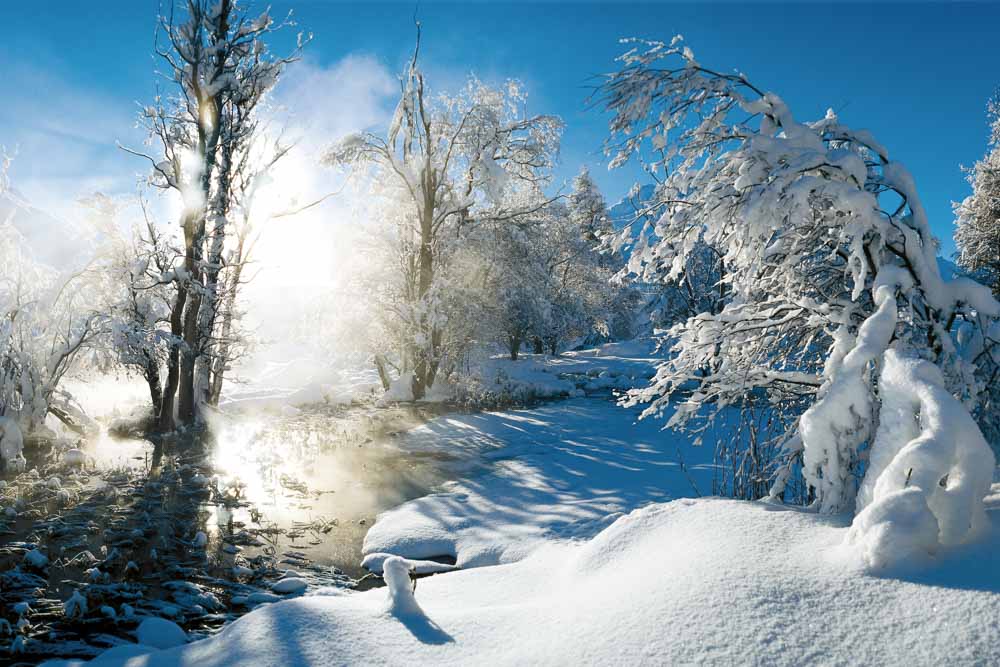
We check in to one of the Switzerland’s best thermal spas to discover its health-giving benefits – all in the name of research, of course.
St Moritz
As far back as the Bronze Age, people flocked to St. Moritz to soak in its mineral springs – the highest in Switzerland.
Combining the iron-rich waters, filtered through the alpine moors, with the invigorating mountain climate was said to be so beneficial that entire royal households came to take the waters.
Today St. Moritz is still a first-class health resort.
Mineral Bath & Spa Samedan
While active types head out to conquer the surrounding mountains, I’m heading eight kilometres along the floor of the Engadin Valley – via the famously efficient Swiss railway system – to Samedan, the village that’s home to the Mineral Bath & Spa Samedan.
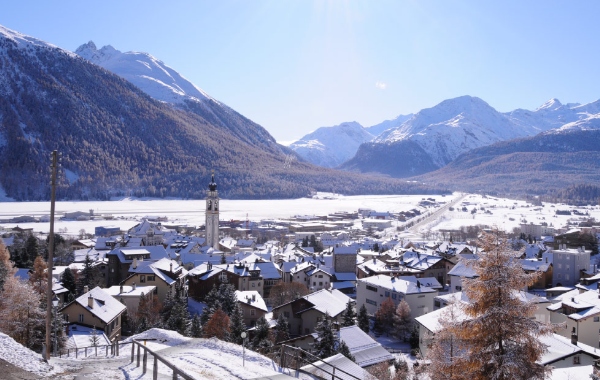
I’m drawn to this spa in particular because it’s known as the country’s first vertical spa – but I’m not prepared for its striking location.
Attached to the rear of an historic church, it’s possible to lounge in the tiny rooftop bath directly under the Chapel of Saint Anthony’s landmark tower – considered the daintiest baroque tower in the country.
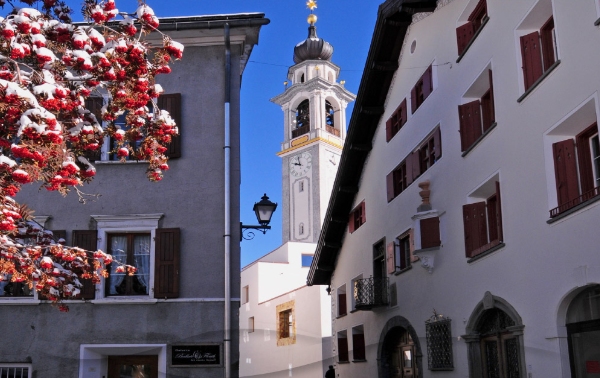
Unfortunately, a storm is brewing. As soon as the first forks of lightning flash across the sky, we’re ushered inside to explore the rest of the complex.
The baths
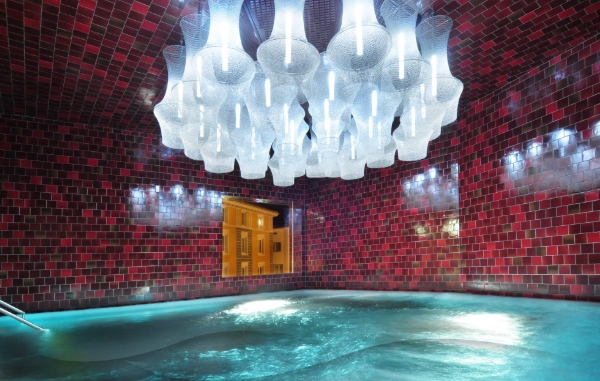
Each of the baths has a cosy, cave-like ambience, thanks to the clever use of richly coloured glazed mosaic tiles on the walls, floors and ceilings.
There’s dramatic up-lighting from the floors of the pools, and soft, barely-there down-lighting courtesy of centrepiece light fixtures that would look more at home in a mansion or art gallery.
Design
There are shafts of natural light, too, thanks to judiciously placed windows that allow bathers to contemplate Samedan’s main square while lounging in the warm waters (the spa’s waters come from a geothermal, mineral-rich vein that runs beneath the complex).
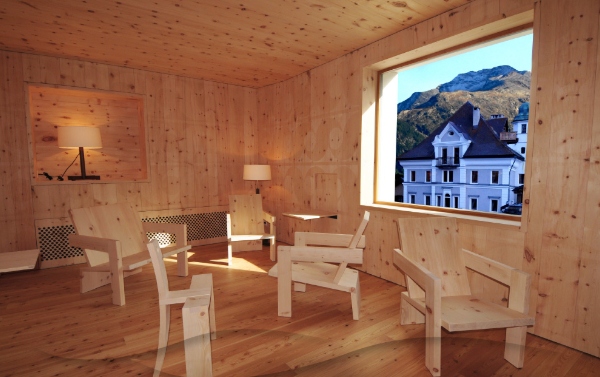
These windows are framed on the building’s exterior with the same glazed tiles that dominate the spa’s interiors – the only hint that the minimalist extension has nothing to do with religion.
The architects have thought of everything: built into the pools are dark alcoves and long underwater benches.
Much consideration also went into the colour scheme: the valley’s autumnal larch forests inspired the yellow hues of one bath, while a fiery red envelops the steam baths.
It’s a wrench to leave, but Badrutt’s Palace Hotel’s own spa is waiting for me back in St. Moritz. It seems I’m spoilt for choice when it comes to spoiling myself.
Spa options in St Moritz
From beer to bathing
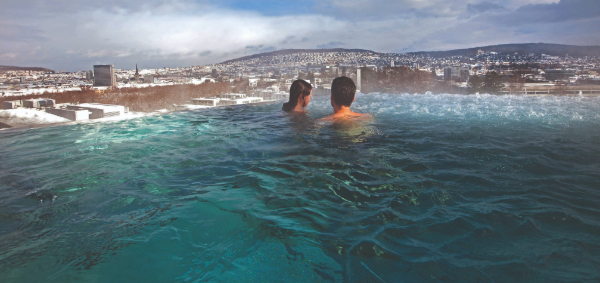
A former brewery featuring century-old stone vaults, Thermal Bath & Spa Zurich is one of the country’s most stunning spas.
Fresh thermal water offers guests purest relaxation with valuable minerals in 35 to 41 degree warm water. Here you have the choice of a thermal bathing world or Irish-Roman spa ritual – both of which invite you to sink into a world of wellness inside the unique architecture and matchless building structure of a very special place to bathe.
Address: Brandschenkestrasse 150, 8002 Zürich, Switzerland
Weekly travel news, experiences
insider tips, offers, and more.
Starry nights
Splash around under the stars at Les Bains de Lavey, 30 kilometres from Montreux. At night the largest outdoor pool is illuminated. The two outdoor pools and the indoor pool are open all year at a temperature of 33°C to 36°C.
Address: Route des Bains 48, 1892 Lavey-Morcles, Switzerland
Now and zen
The thermal baths are a magnificent, internationally acclaimed architectural masterpiece created by Peter Zumthor. Made from 60,000 slabs of Vals quartzite, the thermal baths were classified as a listed building shortly after completion. The unique atmosphere and the highly mineralised water that comes out of St. Peter’s spring at a pleasant 30° celsius makes the time you spend in the baths a deeply relaxing experience. You’ll find this spa at the 7132 Hotel.
Address: 7132 Vals, Switzerland
Liquid gold
Tamina Therme in Bad Ragaz calls its thermal waters “36.5-degree blue gold". A modern sauna village on more than 1300 square meters well as a wide range of beauty and massage offers make your stay an unforgettable Tamina Therme sensory experience.
Bad Ragaz is located in Eastern Switzerland about an hour’s drive from Zurichand three hours by car from Munich. The railway station at Bad Ragaz is very close.
Address: Hans Albrecht-Strasse, 7310 Bad Ragaz, Switzerland
Peak bathing
The mountaintop setting of Rigi Kaltbad Mineral Baths & Spa offers an unbeatable view of the Alps. The Rigi Kaltbad Mineral Baths & Spa was designed by renowned Swiss architect Mario Botta. Its tranquil and contemplative ambience makes it the perfect place for rest and relaxation. The large indoor pool with its deep niches leads directly into the outdoor pool, where bathers are greeted by a sweeping Alpine panorama.
Address: 6356 Rigi Kaltbad, Switzerland
If a little R&R at a Swiss spa sounds just what the doctor ordered, check out our comprehensive Switzerland travel guide.
Want to see more stories from International Traveller in your Google search results?
- Click here to set International Traveller as a preferred source.
- Tick the box next to "International Traveller". That's it.