hero media

Underrated Christmas markets in Europe: home to Switzerland

There’s nothing better to get you into the spirit of the season than a good Christmas market in Europe. Brian Johnston finds Switzerland is an oft overlooked gem when it come to festive stalls.


Nothing captures the season of good cheer more than the light-twinkled Christmas markets that enliven Swiss towns throughout December. They’re an atmospheric alternative to shopping malls, tempting with handicrafts, candles and Christmas-tree ornaments.

They set your stomach growling with the scent of roasting chestnuts, mustard-slathered sausages and hot wine, and make your toes tap to the sounds of carolling buskers. If snow falls, you’ll feel as if you’ve stepped into a pop-up Christmas card.

Best of all, Christmas markets bring warmth to the winter in a lovely slice of European tradition that has survived since the Middle Ages.

Every city and town in Switzerland has its Christmas markets great and small, but Zurich is a good place to start your tinsel tour.
 

christmas switzerland festivals
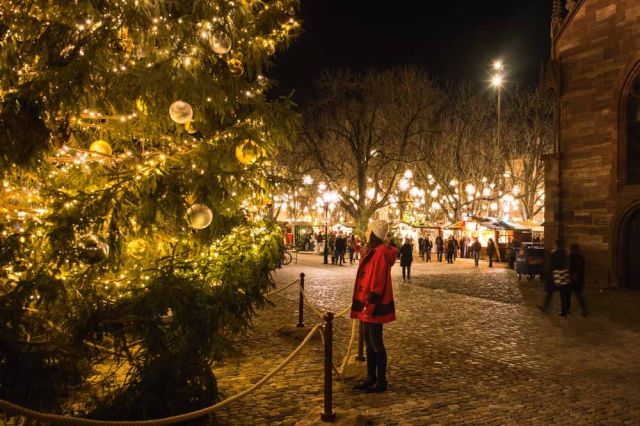
This decorated tree at Basel’s Christmas market looks like it came straight out of a fairy tale.


You don’t even have to go beyond the train station, whose market is the largest indoor Christmas market in Switzerland, with some 150 mini-chalet stalls presided over by a Swarovski-decorated tree.

There are also markets in old-town Niederdorf and Sechselaeutenplatz, and on Buerkliplatz you can make your own candles: popular both with kids and adults, who give them as gifts. But my favourite might be the little market on Werdmuehlerplatz with its ‘singing’ Christmas tree of carollers.

Basel spills its biggest Christmas market across Barfüsserplatz and around the nearby church, adding to the appeal of an already lovely old town.

As well as small gift and food stalls there are usually craft workshops for children and pop-up bars for adults decorated with chandeliers, disco balls and lights.

It’s a short walk to a smaller, very atmospheric market on Münsterplatz beside the cathedral, presided over by one of Switzerland’s largest Christmas trees.

 

christmas switzerland festivals
Star-shaped lights adorn a Christmas tree in Switzerland.


Kids can make gingerbread in the Fairytale Forest, though the traditional nibble is actually a Graettimann, a man-shaped brioche studded with almonds and raisins.

Christmas markets are generally more modest in French-speaking destinations such as Geneva, Lausanne and Morges, where you can swap your Glühwein for vin chaud.

Montreux is an exception, with half a million people each season flocking to 150 stalls spread along the town’s Alp-gazing, lakefront promenades.

It’s particularly good because there are other seasonal activities nearby too, including a Christmas village in Caux; a mountain-train ride to Santa’s lair atop the spectacular Rochers-de-Naye; and medieval mummery at Chillon Castle.
 

christmas switzerland festivals
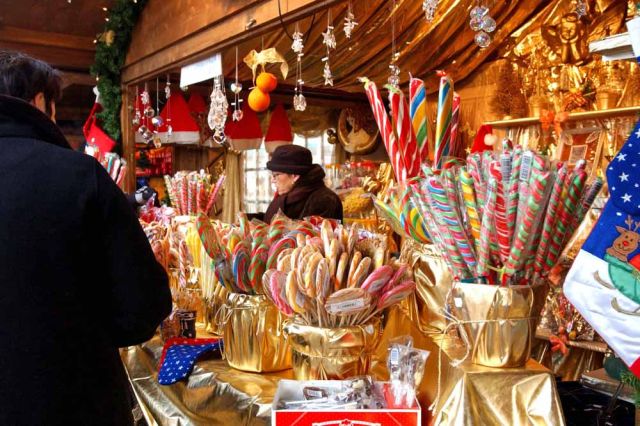
Candy galore; brightly coloured sweets and festive decorations at the Christmas markets in Switzerland.


St. Gallen is swathed in star-shaped lights and has a market jammed into its old town beneath its famous abbey.

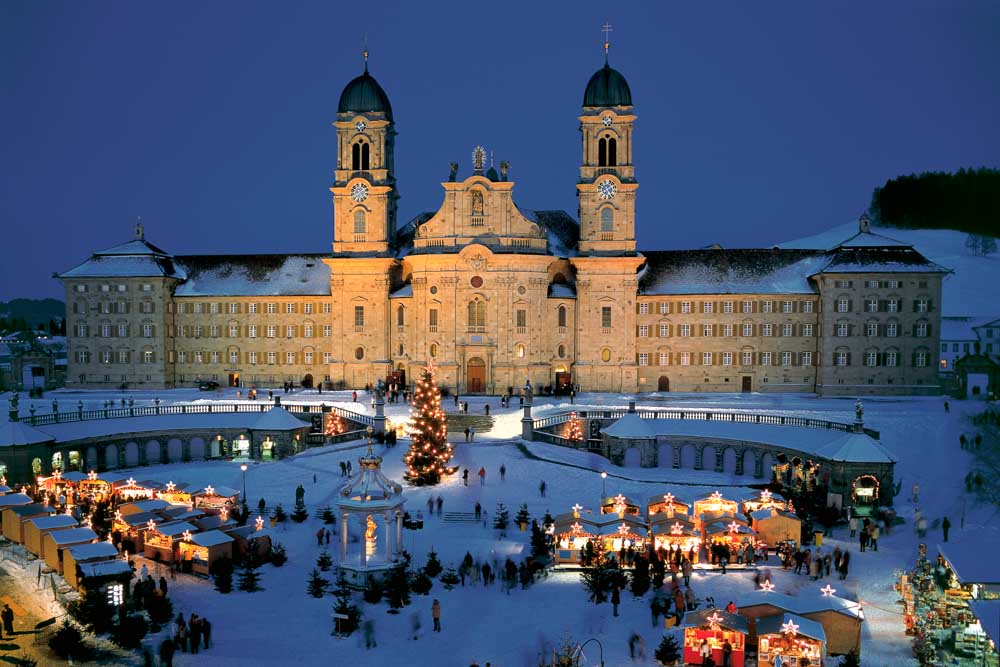
Another famous monastery and its baroque church supplies the backdrop to a Christmas market in Einsiedeln, whose higher altitude makes it likely that snow will provide the true winter wonderland feel.

Stein am Rhein themes its market on a different fairytale each year, and the market in Lucerne’s Franziskanerplatz resounds with oompah bands.

And in the capital of Bern the delightful market is held beneath the cathedral, where rounds of gingerbread the size of platters offer sustenance to push on until every last bauble has been browsed.

Want to see more stories from International Traveller in your Google search results?

  1. Click here to set International Traveller as a preferred source.
  2. Tick the box next to "International Traveller". That's it.
hero media

What the European heatwave means for your summer travel plans

Temperatures are soaring this summer, breaking records across Europe and the UK. 

Euro summer is a feeling like no other. But when a heatwave hits? The dream trip quickly turns into a sweaty mess. Extreme heat is sweeping Europe and the UK this week, with record-high temperatures impacting travel plans across the continent.

And while Australian summers are typically hotter in absolute temperature, many European cities aren’t equipped for high temperatures, resulting in unbearable weather.

Why is it so hot in Europe?

Signs of a hot summer loomed in May, when the mercury hit unprecedented spring highs. Now, extreme high temperature warning alerts have been issued in countries such as Spain, Italy, France, England, the Netherlands and Germany.

France saw its hottest day on record on Wednesday, with an average temperature of 30°C across the day and night. This surpasses the average temperature for June, which is 15°C to 25°C. Dozens of people have died, including 40 from drowning.

In Spain, 212 deaths have been linked to the heatwave.

The UK recorded its hottest June day ever on Wednesday with temperatures soaring to 36.1°C. In an article published by the Met Office – the UK’s national meteorological service – Professor Stephen Belcher CBE, Met Office Chief Scientist, shared his concerns about June’s heat. “To see temperatures like this in the UK in June is sobering. Events like this bring home the implications of climate change, with very high temperatures and humidity bringing significant health implications from heat stress, as well as impacts to a range of sectors such as transport, energy and water supply,” he said.

Heatwaves are becoming increasingly common in Europe and the UK, neither of which is prepared for such extremes. The World Meteorological Organization reported that in 2025, at least 95% of Europe experienced above-average annual temperatures and that the continent was heating up twice as fast as the global average.

How travel is impacted

A pharmacy sign displaying 40 degrees Celcius
A pharmacy broadcasting local weather data. (Credit: Getty/Dragoncello)

During a heatwave, power grids, water systems and transport networks can be affected, resulting in disrupted itineraries for travellers. In France, power outages have left thousands without electricity and early closures have been implemented for two of Paris’s biggest attractions, the Eiffel Tower (early afternoon rather than late at night) and the Louvre (two hours early). Eurostar cancelled its London to Paris and Paris to London services from the 22nd to the 25th, and major UK rail companies have been advising travellers to avoid using trains where possible, or to travel during early hours.

If a heatwave is predicted, being flexible with your itinerary and having fully refundable/changeable tickets is key, as extreme heat can force the cancellation of outdoor activities, impact rail and flight services and change the opening hours of sites and eateries.

Why does summer in Europe often feel hotter than summer in Australia?

people swimming in the Canal Saint-Martin in Paris
People swimming in the Canal Saint-Martin in Paris to cool off. (Credit: Rachael Thompson)

With some of the highest UV levels in the world, Australians are no strangers to the heat, adapting well to intense weather. But our infrastructure is largely equipped to withstand soaring temperatures with climate-responsive passive design, refrigerated air conditioning or evaporative coolers, as well as swimming spots aplenty.

Buildings in Northern and Western Europe and the UK, however, are constructed to retain heat and handle frosty winters. The lack of universal air conditioning means it generally feels hotter even though the temperature on your app might not look it. During a heatwave, it can feel like you’re in a sauna as cities act like heat traps.

How to stay cool and prepare for another heatwave

Relief is expected across Europe and the UK later this week, but more heatwaves are still possible in the coming months. Summer heat typically peaks in July and August.

Public transport often doesn’t have air conditioning, and buses in particular can be swelteringly hot. If you’re heading outside or your accommodation has no air conditioning, it’s worth buying a spray bottle and a handheld fan from a pharmacy or tourist stand. Check ahead of time if restaurants and cafes have air conditioning and make a booking in advance. The highest temperatures typically hit between 3pm and 6pm, so aim to head outdoors outside of these hours.

Rising temperatures invite travellers to enter a more intentional era of seeing the world. Now more than ever is the time to embrace lower-impact “coolcations” and off-season getaways.

The Underrated Christmas Markets of Europe - International Traveller