hero media

What you really need to know before visiting the Amalfi Coast

International Traveller
The Amalfi Coast is wondrous, and while it brims with plenty of beautiful surprises, other surprises can hinder your travel there. Here’s what to know before visiting.

One of Italy’s most desired destinations, the Amalfi Coast attracts approximately five million visitors annually. It’s easy to see why – otherworldly coastlines, whole societies built into impossible cliff faces, a luxurious yachting scene and sensational seafood. Whether you’re considering a trip or are well into planning your itinerary, here are key things to be mindful of.

When is the best time to go?

The Amalfi Coast has a reputation of being exorbitantly expensive, but this certainly isn’t the case all year round. Outside of the peak months of June to August, accommodation is extremely reasonable, perhaps due to the fact of how much accommodation exists along the coast. If you’re assuming the coast is out of your budget, investigate going in May or September, when the weather is still generally pleasant.

Be particularly mindful of travelling in peak season and during specific holidays, such as Republic Day (2 June) and the August school holidays. The Amalfi Coast is an extremely popular spot for domestic travellers during these times, impacting traffic and congestion. With narrow town streets and many travellers, the over-tourism during these times may impact how much you relax and your ability to enjoy all the coast has to offer. Instead, schedule visiting Italy’s bigger cities during these national holiday times; as they usually experience an exodus.
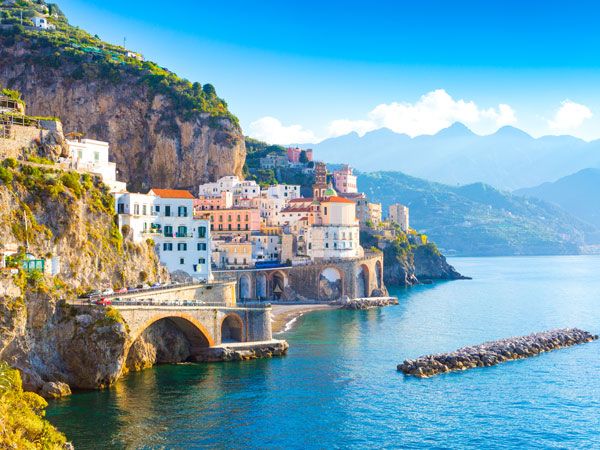
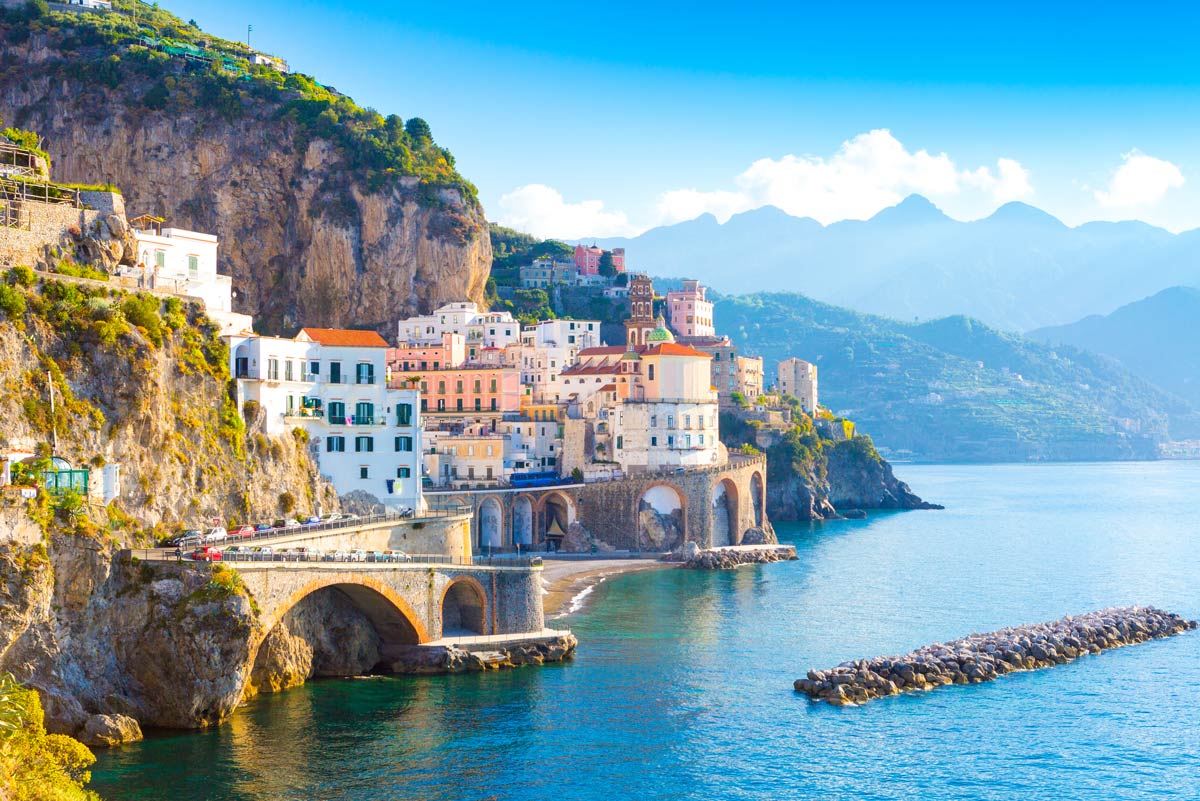
Morning view of Amalfi cityscape on coast line of mediterranean sea, Italy
Amalfi is one of the most popular towns on the coast.

How to narrow down where to stay

There are an inordinate number of accommodation options on the Amalfi Coast. First, it’s best to ask what kind of experience you’re after. An agricultural homestay, something more luxurious, or renting a classic Amalfitana apartment. From there, look at key things you’d like to do – whether it’s boat cruises, cooking classes, or visiting restaurants on your bucket list. The most popular towns of Positano and Amalfi are undoubtedly stunning but are extremely busy during peak season. If travelling between June and August, consider staying more inland or at an underrated town such as Tramonti or Vietri sul Mare, and making day trips to the renowned towns.
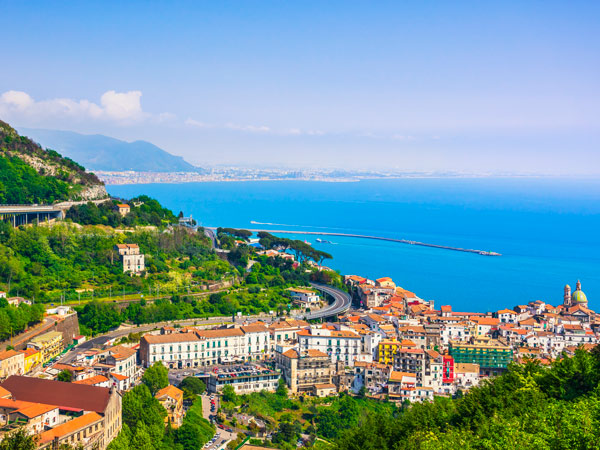
Vietri sul Mare town in Amalfi coast, panoramic view
Vietri sul Mare is a good place to stay in peak season.

It’s also wise to research the accessibility of your chosen destination. Taxis to more remote towns are expensive, so be prepared to pay. If convenience and budget are key factors, consider towns that are accessible by ferry or bus.

Sometimes the best base is not actually on the Amalfi Coast. Sorrento, which is tucked around the corner on the Sorrento Coast, makes for an ideal launchpad. It’s located at the end of the Circumvesuviana train line which connects Naples to the Sorrento Coast. The train is extremely affordable and, one of the best perks, it dodges any traffic on the one road that winds along the coastline. It also passes through some more underrated towns and villages, such as Castellammare di Stabia and Vico Equense, if you’d like to experience some lower-key places.
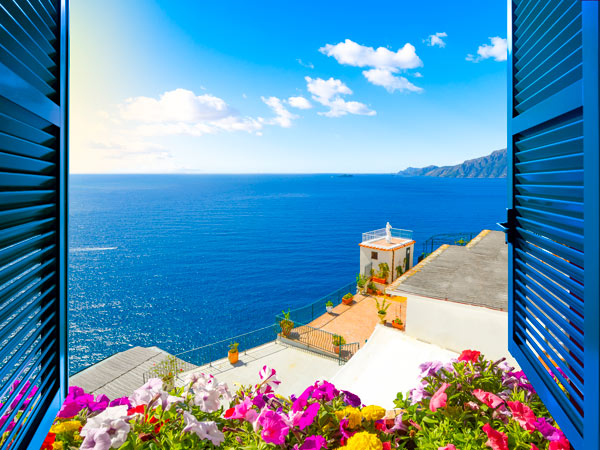
Scenic open window view of the Mediterranean Sea from a luxury resort room along the Amalfi Coast near Sorrento, Italy
Sorrento is another great place to stay.

Another great base is Salerno, which is to the east of the Amalfi Coast. Salerno is a bigger city, it’s more affordable than staying at neighbours Amalfi and Positano and is well connected via ferry.
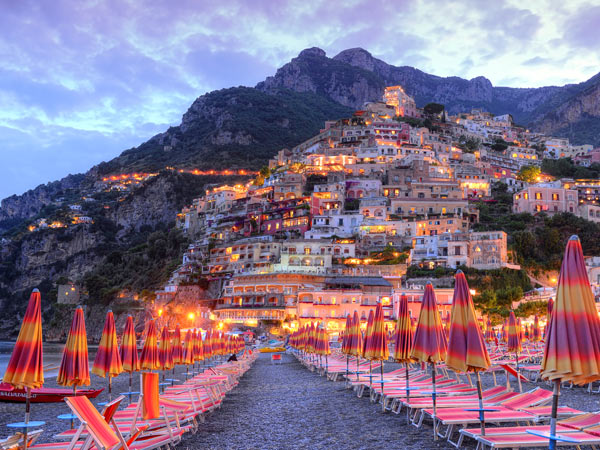
Day beds on Positano beach.
Positano is an incredible beach spot.

Amalfi is best by boat

There is nothing better than enjoying the coast from the water. Exploring the towering coastlines and its old fortresses, the petite islands speckled along and pulling into kaleidoscopic, sun-kissed cliffside towns make for some of the most memorable moments.

There are a few ways to enjoy the water. First is via the ferries that connect the towns and villages. This is one of the best ways to travel around – it’s affordable and avoids road traffic. It’s best to book your ferry tickets in advance, particularly important during peak season to guarantee you a spot. There are plenty of websites selling ferries, some fraudulent, so to be safe, use what the locals do. Ferries travel to highlight destinations such as Capri, Amalfi and Positano. However, even if you have booked a ferry ticket, you’ll still need to have it verified at the port. In peak, the port lines can be lengthy, so as a rule of thumb, try to get there one hour prior to your ferry departure time.
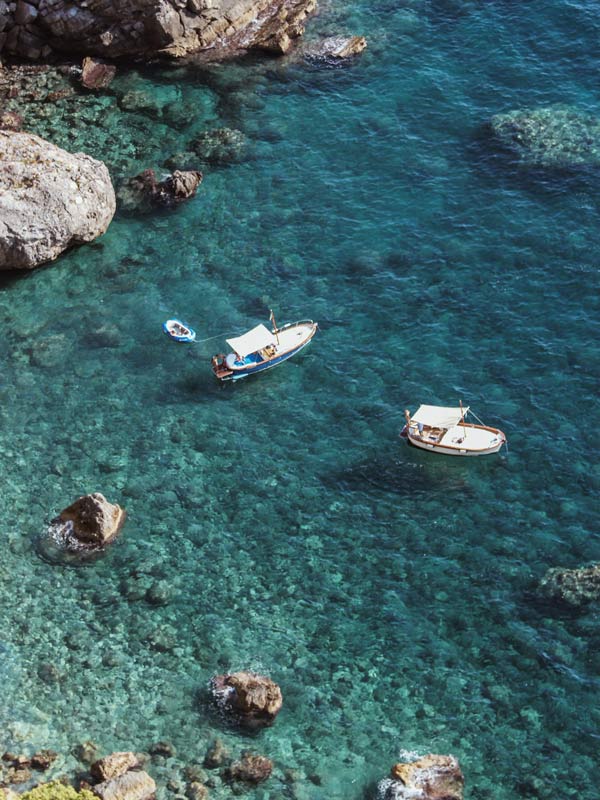
Aerial shot of Turquoise Sea in the Amalfi Coast.
The best way to see Amalfi is by boat.

You can also opt for a semi-private boat tour, which usually comprises a beautiful, leather-lined and mahogany-clad boat that hosts 12–15 people. It’s an intimate way to get to know other travellers and a peaceful way to enjoy the water. These boat tours travel several locations on the coast, including swimming spots and one or two towns.

Know that the price of your day tour ticket most likely won’t include the entry fee to key sites, such as Capri’s Blue Grotto. There is also a boat tax that is charged in addition to the ticket fee; make sure you always have some cash on hand for these additional expenses.
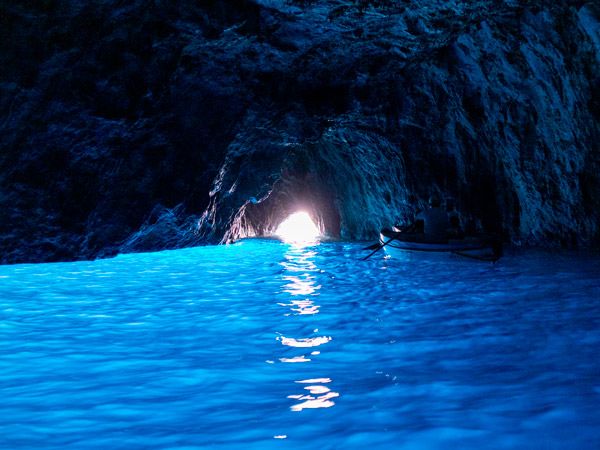
Inside Capri's Blue Groto
Capri’s Blue Grotto is a must-see.

Weekly travel news, experiences
insider tips, offers,
and more.

Drinking and eating

Ensure you spend enough time enjoying the produce of the coast. In this part of Italy, lemons are worshipped. You’ll see them on everything from kitchen tiles to swimwear. Fittingly, it’s the home of limoncello, so try and get your hands on a bottle from a local producer. Sip slowly if you want to enjoy the taste, but a shot is said to assist with digestion.
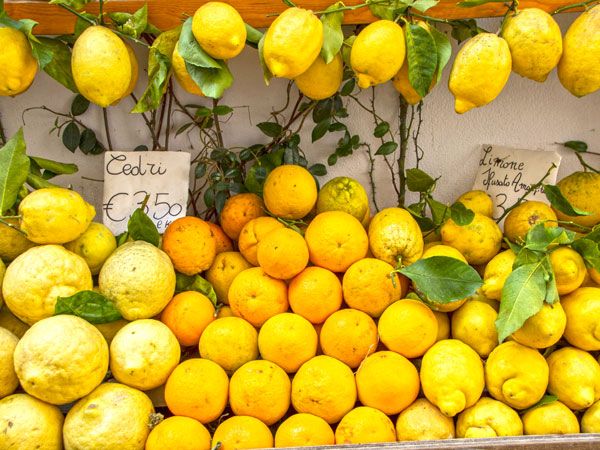
Lemons in the Amalfi Coast
There are lemons everywhere on the Amalfi Coast.

The seafood is extremely fresh, perfect when it’s grilled, served with linguine or in a risotto. A classic way of sampling the seafood is by ordering Insalata di Mare (seafood salad), which usually combines calamari, octopus, mussels and clams.

Restaurant bills in Italy usually include a cover charge, which accounts for a tip. However, if you are extremely satisfied with the service you’ve received, you can leave an additional tip. In this case, locals will usually leave a few euros on the table.

Cake stores can be overwhelming with choice, but be sure to crunch into a sfogliatella, a shell-shaped pastry filled with semolina and ricotta. Enjoy one standing at the bar with an espresso.

Aerial view of freshly baked Sfogliatella
You’ll be dreaming of Sfogliatella.

To really acquaint yourself with the coast’s produce and dishes, book yourself into a cooking class. There are many family-run cooking schools along the coast, some of which use their farm or property’s produce as part of the classes. Head home with secrets from nonnas and nonnos and cook for your loved ones back home.

Want to see more stories from International Traveller in your Google search results?

  1. Click here to set International Traveller as a preferred source.
  2. Tick the box next to "International Traveller". That's it.
hero media

5 things every hotel needs for a more restorative stay

    Kate Bettes Kate Bettes
    Wellbeing means different things to different travellers. Here’s how to pick a hotel that gets it right for you.

    The best wellness holidays aren’t necessarily spent wrapped in a spa robe. Sometimes they’re found around a dinner table in Cambodia, on a hiking trail in New Zealand or after finally beating jet lag on the other side of the world. The hotel you choose is what makes them happen.

    1. Easy access to good food

    meals from Novotel Bangkok Sukhumvit 20
    Taste delicious meals at Novotel Bangkok Sukhumvit 20.

    One of the quickest ways to derail healthy habits on holiday is to spend half of it working out where to eat instead of digging into the culture around you. Thankfully, Novotel has done much of the hard work already, with chefs building menus that lean into the flavours, ingredients and traditions of each destination.

    In Sihanoukville, Cambodia, Korkor soup – often dubbed ‘Cambodian ratatouille’ – sits alongside raw blue crab dressed with lime and chilli, best enjoyed with views across the Gulf of Thailand.

    In the lovingly chaotic city of Bangkok, the presence of food cranks up the sociability. At Novotel Bangkok Sukhumvit 20, you can settle in with mango sticky rice and stranger-turned-friends beside the pool at Sky on 20 rooftop bar, or bring them along to tackle river prawns and stir-fried crab with holy basil at the buzzing Crab Paradise Dinner Buffet.

    Then Novotel Dubai Al Barsha welcomes you with a laidback twist on the level of indulgence the Middle Eastern city is best known for up on Deck Se7en. Looking towards Burj Al Arab, the rooftop lounge has everything from Mediterranean-style dishes like seabass ceviche to Italian prosecco sundowners.

    At the other end of the scale, in the hills that surround the Novotel Bali Ubud Resort, calm comes from nature. At Siralada restaurant, Balinese traditions shape the menu while thunder rumbles over the surrounding jungle – proving the setting is as nourishing as the food itself.

    While at Novotel Nha Trang, chef Kieu Thi My Hanh and her team showcase Vietnam’s knack for balancing freshness, texture and fragrant herbs. Pho remains a favourite, while seafood salad with pomelo and mango brings those flavours together in one bright dish.

    It’s all an approach backed by partnerships with expert food creators such as Alfie Steiner, whose plant-forward recipes prove healthy food should never taste plain.

    2. Better sleep options

    Novotel Bali Ubud Resort room
    Sleep deeply with Novotel.

    There are few travel experiences more disappointing than arriving in a new country, determined to seize the day, only to fall asleep fully clothed by 3pm.

    For Australian travellers, jet lag is often an unavoidable part of the journey. That’s one reason Novotel runs sleep-focused initiatives that help guests adjust quickly without compromising on health. We’re talking partnerships with Sydney-based sleep specialist Olivia Arezzolo, known for her advice on everything from better sleep habits to beating jet lag, alongside features like pillow menus, in-room yoga content and tailored sleep guidance.

    The sooner you’re operating on local time, the sooner you can get back to more pressing matters – like deciding which spa treatment to book.

    3. More ways to move

    woman hiking around queenstown new zealand
    Stay at Novotel Queenstown Lakeside and explore local hiking trails. (Credit: GettyI mages/ naruedom)

    Every place in the world has its own way of getting you moving: whether that’s hiking up ice-bitten mountains before a sauna or gentle stretching by the pool before a facial. From fitness centres to spas, Novotel recognises that wellbeing rarely looks the same.

    At Novotel Queenstown Lakeside, activity is inescapable. Here, hiking trails, ski fields, bungee jumps, and white-water rafting have made the region famous. The hotel’s location on the shores of Lake Wakatipu means less time spent organising yourself and more time out there experiencing them. To top it all off, you can book a private hot tub for the evening before heading back into the wilderness tomorrow.

    Bali, of course, takes a softer approach. At Novotel Bali Ubud Resort or Novotel Bali Nusa Dua, movement is less about conquering a mountain and more about a dance class between the tropical gardens and lagoon pools. Afterwards, the spa takes over, with traditional treatments like a Lulur body scrub: a combination of rice, turmeric, sandalwood, ginger and jasmine that’ll soothe muscles already relaxed by the Balinese heat.

    4. Better connections

    Novotel Sharm El Sheikh
    Kids will love a stay at Novotel Sharm El Sheikh.

    One of the best things about travel is that it gives your family stories you’ll be telling for years. Novotel helps create them with activities that bring everyone together, whether that’s trying something new, learning a local skill, or simply spending more time together.

    Go for a distinctly Thai twist at Novotel Phuket Vintage Park, where many of the family activities draw on local culture. Kids can try everything from beginner Thai boxing and language lessons to umbrella painting and – a pastime beloved by children the world over – pool foam parties. Everyone is welcome to join in, whether that’s getting splashed, covered in paint, or simply watching their children discover a new side of Thailand during the dedicated Family & Kids Day.

    A different adventure awaits at Novotel Sharm El Sheikh. Kids could be perfectly content with discos, drawing classes and new holiday friends, but the Red Sea has other ideas. Sitting on the edge of Naama Bay, days here might involve snorkelling colourful reefs, taking a boat trip to Ras Mohammed National Park or heading into the desert by quad bike or camel for a Bedouin-style dinner beneath the stars.

    5. Location is everything

    Surin Beach, Choeng Thale, Thalang District, Phuket, Thaiföld
    Explore Phuket’s gorgeous beaches. (Credit: Bence Biczo)

    Everyone’s idea of wellness looks a little different. With more than 600 hotels across 65 countries, Novotel gives guests the freedom to choose the destination that suits them best. Whether that’s a beachside escape in Phuket, an alpine expedition in Queenstown or a city break in Bangkok, there’s a good chance a Novotel isn’t far away.

    All that’s left? Choosing your version of wellbeing.

    Discover stays to inspire your everyday at novotel.accor.com.