hero media

The world’s best foodie destination proves carbs are a love language

Where long lunches turn every meal into an act of love.

If carbs are your love language, congratulations. You and International Traveller readers agree, and you’ve just found your soulmate destination.

Italy has officially been crowned the world’s best foodie destination in the 2025 International Traveller Readers’ Choice Awards, and honestly, was there ever any doubt? From bowls of pasta that change lives to pizza so good it ruins you for life, readers voted overwhelmingly for a country where food is not just eaten, but worshipped.

This is the land where lunch can stretch into dinner, where nonnas guard family recipes like national secrets, and where a simple plate of pasta can spark a full-blown emotional response. Italy doesn’t do rushed meals or sad desk lunches. It does long tables, loud conversations, extra parmesan and the absolute belief that food should make you feel something.
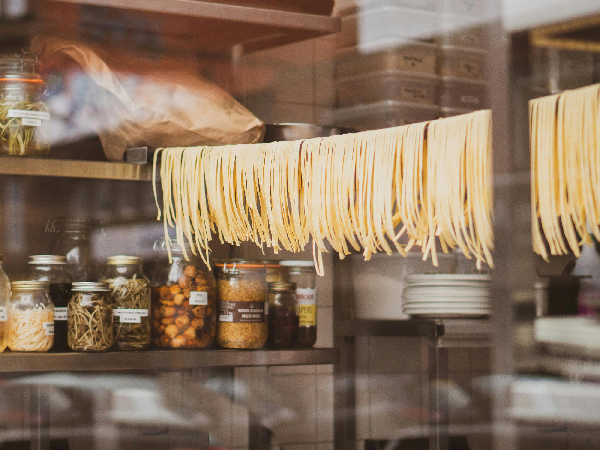
Pasta hanging
In Italy, food is not just eaten, but worshipped. (Image: Eilis Garvey)

Readers praised Italy for its everyday excellence. Not just Michelin stars or once-in-a-lifetime meals, but the fact that you can wander into a tiny local trattoria, order something you can’t pronounce and leave convinced it’s the best thing you’ve ever eaten. Rome’s cacio e pepe. Naples’ blistered pizza. Bologna’s silky ragù. Florence’s ribollita. Sicily’s cannoli. Every region feels like its own edible love letter.

What really sets Italy apart is how deeply food is woven into daily life. Markets are social hubs. Aperitivo is sacred. Bread is never optional. And carbs are not feared, restricted or replaced with lettuce. They are embraced, celebrated and generously served.

Readers also loved how food in Italy connects you instantly to place. A dish tells you exactly where you are. Pasta shapes change from town to town. Sauces follow seasons. Wine tastes different even a few kilometres down the road. Eating well here feels less like indulgence and more like participation in a centuries-old tradition.

Friends enjoy a dinner party with pizza and rose wine in a bar or a restaurant.
Italian food differs by region. (Image: Getty Images / Gregory Lee)

Italy wasn’t the only destination to earn foodie praise. Japan followed closely behind, with readers raving about everything from precision-made sushi to comfort bowls of ramen and late-night convenience store snacks that somehow slap harder than full restaurant meals. France also ranked highly, because obviously, baguettes, butter and cheese will never not win hearts. Vietnam and Singapore rounded out the list, proving that travellers are just as obsessed with street food as they are with fine dining. Pho breakfasts, hawker centre feasts and chilli-heavy curries all earned passionate votes.

But in the end, Italy took the crown because it offers something rare. Food that feels joyful, generous and deeply human. Meals that turn strangers into friends. Dishes that linger in your memory long after the trip ends. The verdict from readers is clear. When it comes to travel, culture and cuisine, carbs are a love language. And Italy speaks it fluently.

Want to see more stories from International Traveller in your Google search results?

  1. Click here to set International Traveller as a preferred source.
  2. Tick the box next to "International Traveller". That's it.
Emily Murphy
Emily Murphy is International Traveller's Email & Social Editor, and in her time at the company, through various roles, she has been instrumental in crafting compelling narratives that inspire others to explore the world. Her previous job was a journalist at Prime Creative Media and before that she was freelancing in publishing, content creation and digital marketing – equipping her with a diverse skill set that enhances her storytelling and audience engagement. When she's not creating scroll-stopping travel content, Em is a devoted 'bun mum' and enjoys spending her spare time by the sea, reading, binge-watching a good TV show and exploring under-the-radar destinations. Next on her travel wish list? Mexico and an African safari.
View profile and articles
hero media

What the European heatwave means for your summer travel plans

Temperatures are soaring this summer, breaking records across Europe and the UK. 

Euro summer is a feeling like no other. But when a heatwave hits? The dream trip quickly turns into a sweaty mess. Extreme heat is sweeping Europe and the UK this week, with record-high temperatures impacting travel plans across the continent.

And while Australian summers are typically hotter in absolute temperature, many European cities aren’t equipped for high temperatures, resulting in unbearable weather.

Why is it so hot in Europe?

Signs of a hot summer loomed in May, when the mercury hit unprecedented spring highs. Now, extreme high temperature warning alerts have been issued in countries such as Spain, Italy, France, England, the Netherlands and Germany.

France saw its hottest day on record on Wednesday, with an average temperature of 30°C across the day and night. This surpasses the average temperature for June, which is 15°C to 25°C. Dozens of people have died, including 40 from drowning.

In Spain, 212 deaths have been linked to the heatwave.

The UK recorded its hottest June day ever on Wednesday with temperatures soaring to 36.1°C. In an article published by the Met Office – the UK’s national meteorological service – Professor Stephen Belcher CBE, Met Office Chief Scientist, shared his concerns about June’s heat. “To see temperatures like this in the UK in June is sobering. Events like this bring home the implications of climate change, with very high temperatures and humidity bringing significant health implications from heat stress, as well as impacts to a range of sectors such as transport, energy and water supply,” he said.

Heatwaves are becoming increasingly common in Europe and the UK, neither of which is prepared for such extremes. The World Meteorological Organization reported that in 2025, at least 95% of Europe experienced above-average annual temperatures and that the continent was heating up twice as fast as the global average.

How travel is impacted

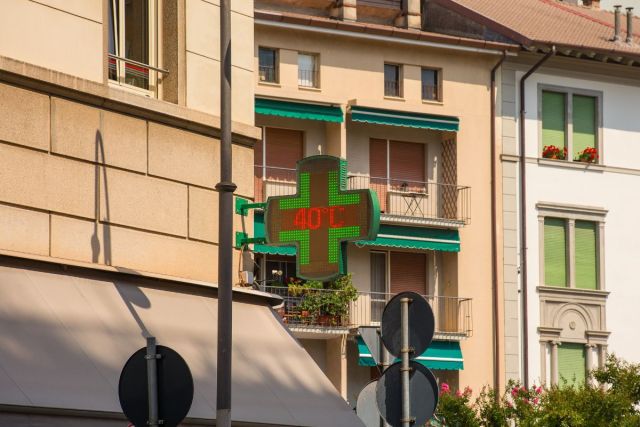
A pharmacy sign displaying 40 degrees Celcius
A pharmacy broadcasting local weather data. (Credit: Getty/Dragoncello)

During a heatwave, power grids, water systems and transport networks can be affected, resulting in disrupted itineraries for travellers. In France, power outages have left thousands without electricity and early closures have been implemented for two of Paris’s biggest attractions, the Eiffel Tower (early afternoon rather than late at night) and the Louvre (two hours early). Eurostar cancelled its London to Paris and Paris to London services from the 22nd to the 25th, and major UK rail companies have been advising travellers to avoid using trains where possible, or to travel during early hours.

If a heatwave is predicted, being flexible with your itinerary and having fully refundable/changeable tickets is key, as extreme heat can force the cancellation of outdoor activities, impact rail and flight services and change the opening hours of sites and eateries.

Why does summer in Europe often feel hotter than summer in Australia?

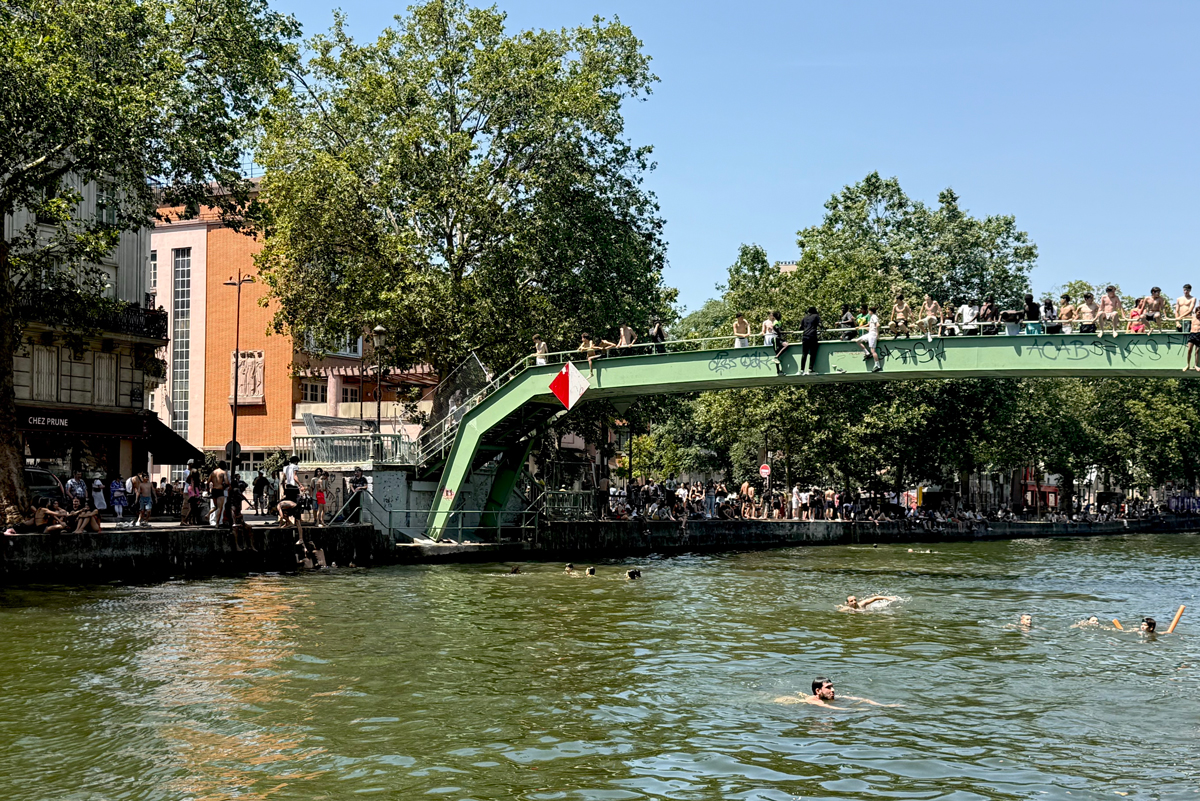
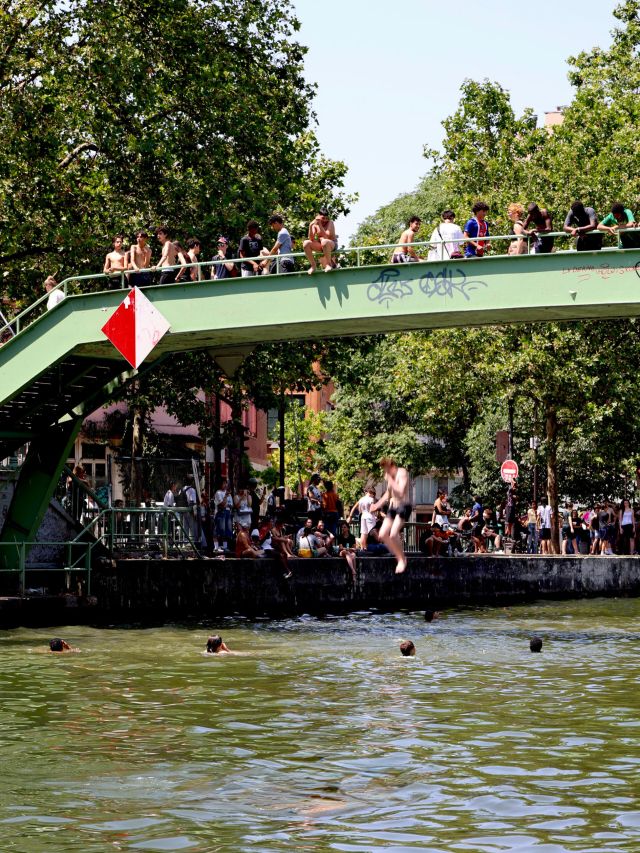
people swimming in the Canal Saint-Martin in Paris
People swimming in the Canal Saint-Martin in Paris to cool off. (Credit: Rachael Thompson)

With some of the highest UV levels in the world, Australians are no strangers to the heat, adapting well to intense weather. But our infrastructure is largely equipped to withstand soaring temperatures with climate-responsive passive design, refrigerated air conditioning or evaporative coolers, as well as swimming spots aplenty.

Buildings in Northern and Western Europe and the UK, however, are constructed to retain heat and handle frosty winters. The lack of universal air conditioning means it generally feels hotter even though the temperature on your app might not look it. During a heatwave, it can feel like you’re in a sauna as cities act like heat traps.

How to stay cool and prepare for another heatwave

Relief is expected across Europe and the UK later this week, but more heatwaves are still possible in the coming months. Summer heat typically peaks in July and August.

Public transport often doesn’t have air conditioning, and buses in particular can be swelteringly hot. If you’re heading outside or your accommodation has no air conditioning, it’s worth buying a spray bottle and a handheld fan from a pharmacy or tourist stand. Check ahead of time if restaurants and cafes have air conditioning and make a booking in advance. The highest temperatures typically hit between 3pm and 6pm, so aim to head outdoors outside of these hours.

Rising temperatures invite travellers to enter a more intentional era of seeing the world. Now more than ever is the time to embrace lower-impact “coolcations” and off-season getaways.