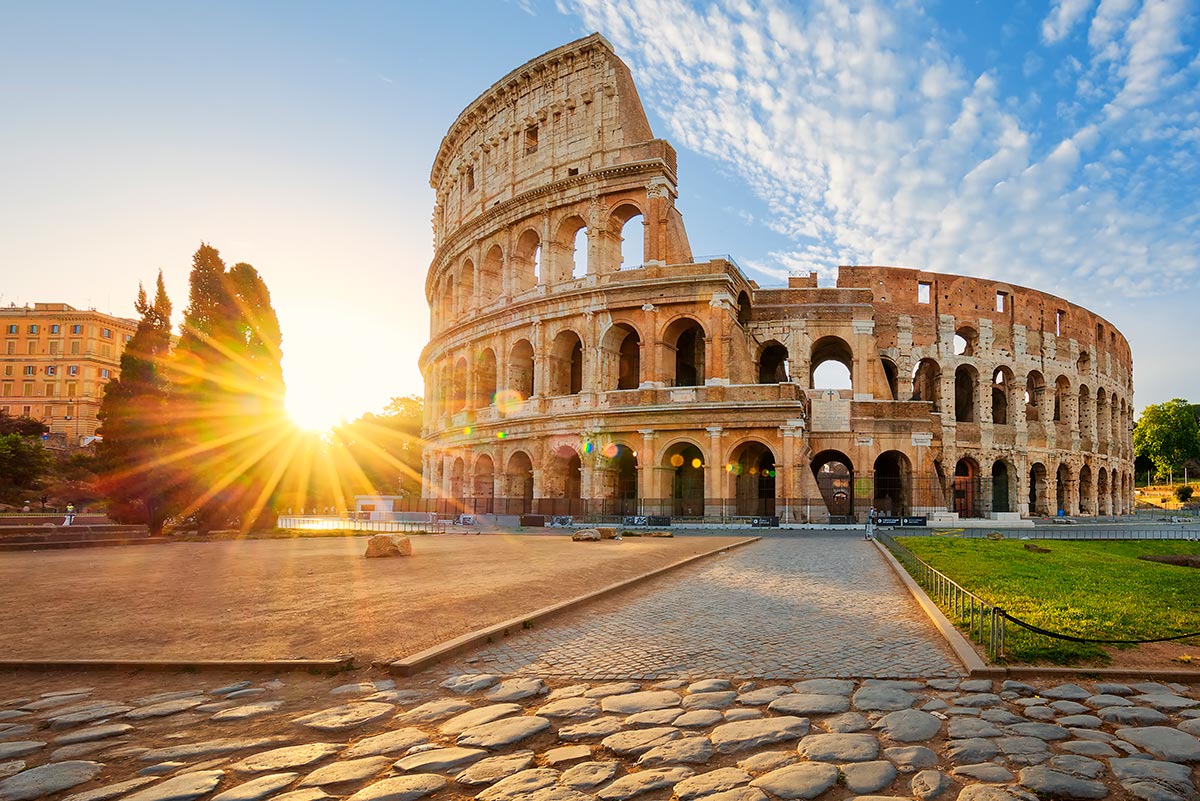
hero media

The Colosseum is set to host live music and performances – here’s what we know

The Colosseum is set to become an entertainment hub for the first time in centuries (sans gladiator fights to the death).

While a modern iteration of performances in the Colosseum will (thankfully) not include live animal slayings or gladiators locked in a battle to the death, the newly appointed director of the Archaeological Park of the Colosseum – Simone Quilici – has confirmed that it could include a range of musical acts and live performances within the next two years.

According to Quilici, that could include the likes of acoustic and jazz concerts, poetry readings, dance performances and historically-inspired reenactments. But why is the announcement so specific and so early? AI-generated images of multicoloured light beams shooting from this almost 2000-year-old amphitheatre have been circulating online via multiple media accounts, leading to rumours that there were plans to host wild raves at the Colosseum. A rumour that Quilici was quick to squash.
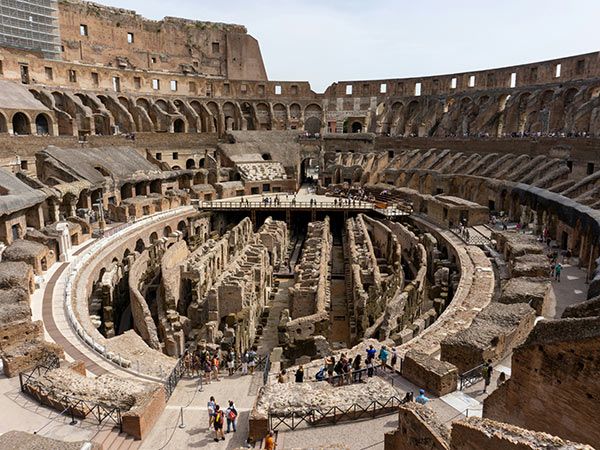
inside the Colloseum in rome
Despite AI-generated images fuelling rumours, performances in the Colosseum will be respectful events. (Image: Andrei Popescu)

While we can all agree the Colosseum would be an incredible rave venue (and I don’t even like raves), it’s also not surprising that archaeologists and ordinary Romans viewed the unconfirmed plans as a desecration of this cultural heritage site. The unfounded rumours came from a misunderstanding of Quilici’s earlier statements. Speaking to the Associated Press, Quilici clarified, “the music must be carefully controlled…because the important thing is that it’s not a wild crowd".

“I joked about rock in moderation – I meant, a more subdued kind of music. But it was reported the opposite of what I said."

Beyond the music, Quilici also suggested historical reenactments of gladiatorial battles could be a possibility, albeit with no deaths and deeply rooted in academic research (and not at all like the buskers who accost visitors as they line up to get in, asking for money in exchange for pictures).

“There are people who are extremely knowledgeable about daily life in past eras, with a remarkable level of scientific accuracy. So these activities are very welcome within the Colosseum park," Quilici said.

A history of performances in the Colosseum
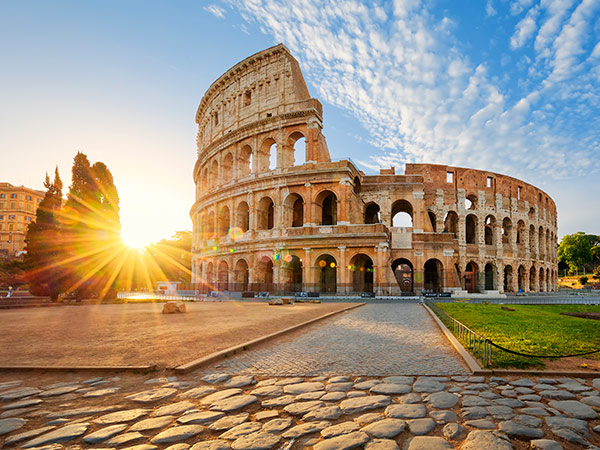
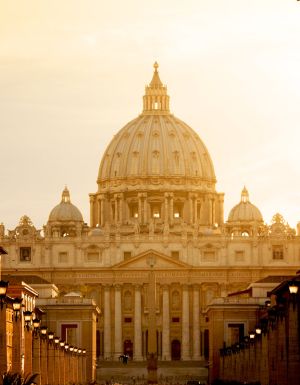
in front of the the Colloseum in rome at sunset
The last performance inside the Colosseum was in the early 2000s. (Image: Getty Images/ VWalakte)

While the Colosseum hasn’t been used as a stadium for entertainment in centuries, it has hosted a small handful of notable, one-off performances.

In the early 2000s, some of the biggest musical names in the world did play at the venue, as one-off, special events with a very exclusive guest list. That started in 2002 when Ray Charles performed as part of a two-hour concert for peace. A year later, Paul McCartney performed an acoustic set to a small audience, followed by Elton John just in front of the Colosseum in 2005. In 2009 and again in 2017, Andrea Bocelli joined this elite list of inside-the-Colloseum performers. More recently, Icelandic blues-rock band Kaleo recorded a live performance just outside the venue.

While some were inside and others out, all report having amazing acoustics, courtesy of the ancient Romans, who clearly knew what they were doing when they built it.

Exploring further afield
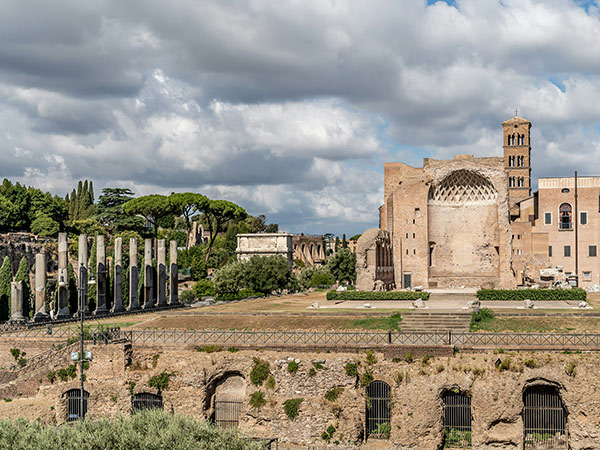
Palatine Hill in rome
Book one ticket to see three historic destinations. (Image: Tamal Mukhopadhyay)

While we await more details on upcoming concerts, there’s plenty to explore around the Archaeological Park of the Colosseum – which also includes the Roman Forum (once the heart of the ancient city’s society) and Palatine Hill (where Rome was founded, and site of the emperor’s palace).

“Last year, tourists in Rome didn’t stay just two and a half days; their visits increased to four days. So there’s also the opportunity to use the Colosseum as a starting point for exploring less-visited places," said Quilici, who hopes to encourage travellers to explore further afield.

Considering you can purchase one ticket that includes all three sites and lasts for 24 hours, you’d be foolish not to. While there is an official ticketing website, it does seem to have regular tech issues, so purchasing this ticket once you’ve landed in Rome can be easier. Or you can purchase through a third-party website, but be prepared for inflated prices.

Want to see more stories from International Traveller in your Google search results?

  1. Click here to set International Traveller as a preferred source.
  2. Tick the box next to "International Traveller". That's it.
Kassia Byrnes
Kassia Byrnes is the Native Content Editor for International Traveller. She's come a long way since writing in her diary about family trips to Grandma's. After graduating a BA of Communication from University of Technology Sydney, she has been writing about her travels (and more) professionally for over 10 years for titles like AWOL, News.com.au, Pedestrian.TV, Body + Soul and Punkee. She's addicted to travel but has a terrible sense of direction, so you can usually find her getting lost somewhere new around the world. Luckily, she loves to explore and have new adventures – whether that’s exploring the backstreets, bungee jumping off a bridge or hiking for days.
View profile and articles
hero media

What the European heatwave means for your summer travel plans

Temperatures are soaring this summer, breaking records across Europe and the UK. 

Euro summer is a feeling like no other. But when a heatwave hits? The dream trip quickly turns into a sweaty mess. Extreme heat is sweeping Europe and the UK this week, with record-high temperatures impacting travel plans across the continent.

And while Australian summers are typically hotter in absolute temperature, many European cities aren’t equipped for high temperatures, resulting in unbearable weather.

Why is it so hot in Europe?

Signs of a hot summer loomed in May, when the mercury hit unprecedented spring highs. Now, extreme high temperature warning alerts have been issued in countries such as Spain, Italy, France, England, the Netherlands and Germany.

France saw its hottest day on record on Wednesday, with an average temperature of 30°C across the day and night. This surpasses the average temperature for June, which is 15°C to 25°C. Dozens of people have died, including 40 from drowning.

In Spain, 212 deaths have been linked to the heatwave.

The UK recorded its hottest June day ever on Wednesday with temperatures soaring to 36.1°C. In an article published by the Met Office – the UK’s national meteorological service – Professor Stephen Belcher CBE, Met Office Chief Scientist, shared his concerns about June’s heat. “To see temperatures like this in the UK in June is sobering. Events like this bring home the implications of climate change, with very high temperatures and humidity bringing significant health implications from heat stress, as well as impacts to a range of sectors such as transport, energy and water supply,” he said.

Heatwaves are becoming increasingly common in Europe and the UK, neither of which is prepared for such extremes. The World Meteorological Organization reported that in 2025, at least 95% of Europe experienced above-average annual temperatures and that the continent was heating up twice as fast as the global average.

How travel is impacted

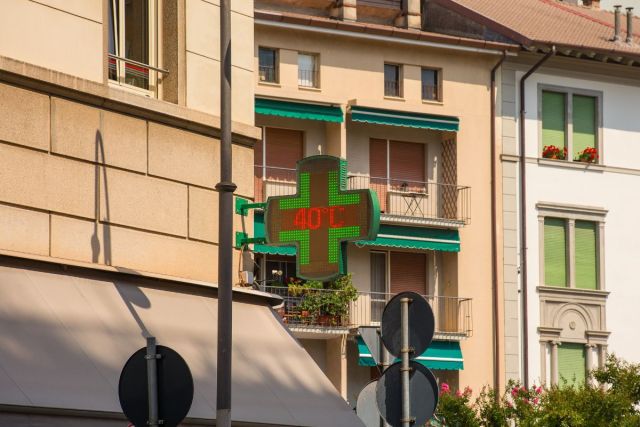
A pharmacy sign displaying 40 degrees Celcius
A pharmacy broadcasting local weather data. (Credit: Getty/Dragoncello)

During a heatwave, power grids, water systems and transport networks can be affected, resulting in disrupted itineraries for travellers. In France, power outages have left thousands without electricity and early closures have been implemented for two of Paris’s biggest attractions, the Eiffel Tower (early afternoon rather than late at night) and the Louvre (two hours early). Eurostar cancelled its London to Paris and Paris to London services from the 22nd to the 25th, and major UK rail companies have been advising travellers to avoid using trains where possible, or to travel during early hours.

If a heatwave is predicted, being flexible with your itinerary and having fully refundable/changeable tickets is key, as extreme heat can force the cancellation of outdoor activities, impact rail and flight services and change the opening hours of sites and eateries.

Why does summer in Europe often feel hotter than summer in Australia?

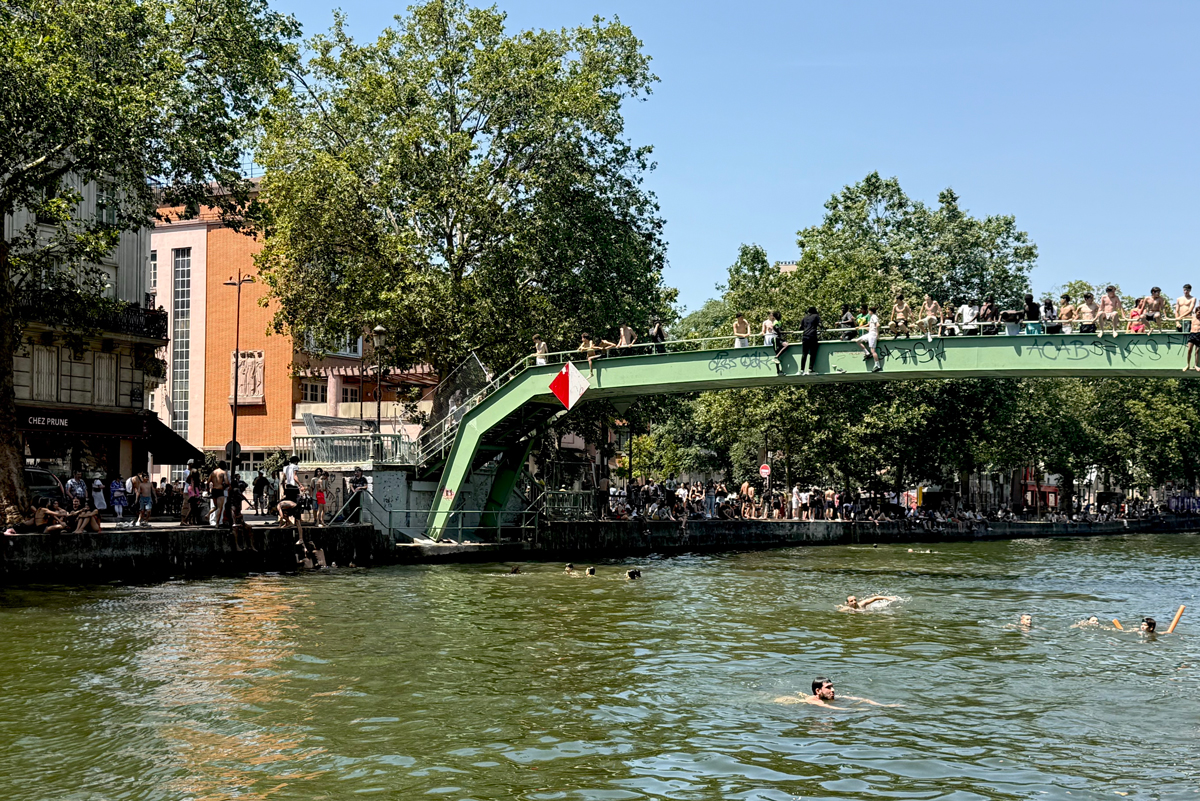
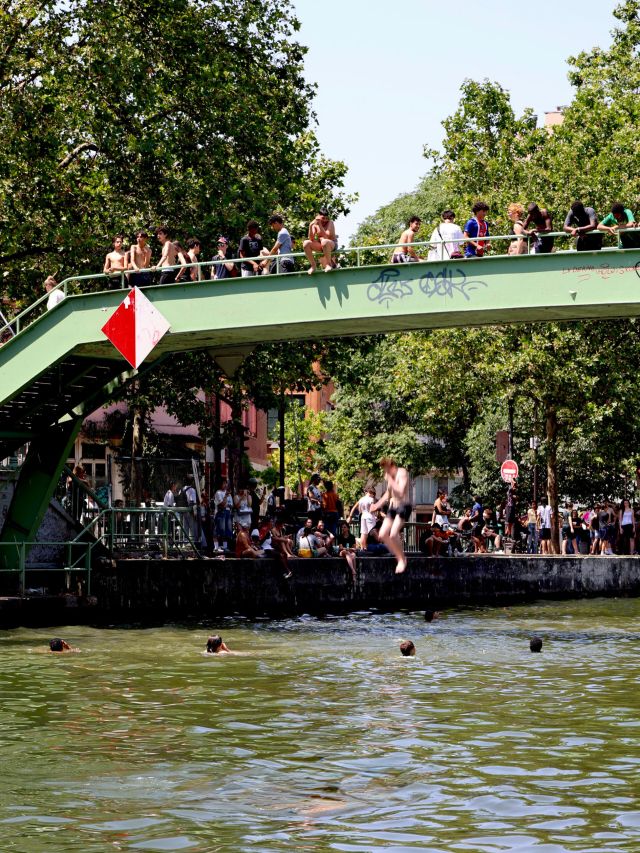
people swimming in the Canal Saint-Martin in Paris
People swimming in the Canal Saint-Martin in Paris to cool off. (Credit: Rachael Thompson)

With some of the highest UV levels in the world, Australians are no strangers to the heat, adapting well to intense weather. But our infrastructure is largely equipped to withstand soaring temperatures with climate-responsive passive design, refrigerated air conditioning or evaporative coolers, as well as swimming spots aplenty.

Buildings in Northern and Western Europe and the UK, however, are constructed to retain heat and handle frosty winters. The lack of universal air conditioning means it generally feels hotter even though the temperature on your app might not look it. During a heatwave, it can feel like you’re in a sauna as cities act like heat traps.

How to stay cool and prepare for another heatwave

Relief is expected across Europe and the UK later this week, but more heatwaves are still possible in the coming months. Summer heat typically peaks in July and August.

Public transport often doesn’t have air conditioning, and buses in particular can be swelteringly hot. If you’re heading outside or your accommodation has no air conditioning, it’s worth buying a spray bottle and a handheld fan from a pharmacy or tourist stand. Check ahead of time if restaurants and cafes have air conditioning and make a booking in advance. The highest temperatures typically hit between 3pm and 6pm, so aim to head outdoors outside of these hours.

Rising temperatures invite travellers to enter a more intentional era of seeing the world. Now more than ever is the time to embrace lower-impact “coolcations” and off-season getaways.