hero media

Insider’s secrets: the Italian Riviera (Cinque Terre)

Ready, set… GO.

Lucio Galletto of LUCIO’S restaurant, Sydney, wants you to know a few things before you book your Cinque Terre dream break. Here’s his insider’s guide to the Italian Riviera.

What is the one thing people should know about the Mediterranean before visiting so they can get the most out of it?

As we explain in Coastline (Murdoch Books, $59.95), the western Mediterranean is many countries but also one country – The Land of Olive Oil.


There should be no borders between eastern Spain, southern France and western Italy because their cuisines and their cultures all grew from the Greek traders who landed there 2500 years ago, plus later influences from the Romans, Arabs and the Vikings.


So when you’re travelling along that coastline, it’s fun to spot the similarities and differences, and go to the villages that show how the area used to be.


You’ll be enchanted by the recurring image of olive trees, vineyards, pine forests, solitary houses and fishing villages.
Cinque Terre and Levanto van vanlife campervan Italy sites towns food
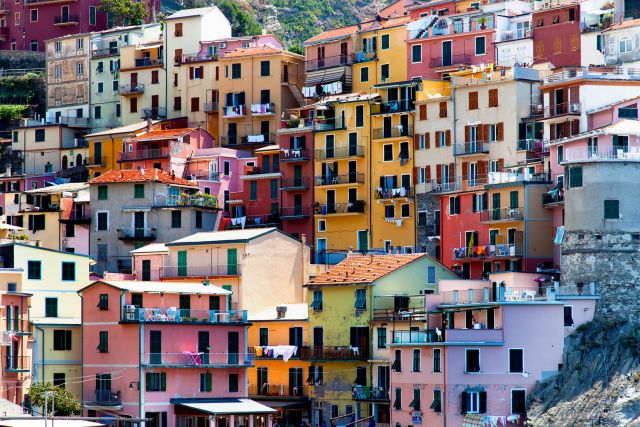
Manarola colorful houses dazzle in the Cinque Terra sun.

Name three lesser known towns that visitors should see to really own the claim that they have seen the best of this part of Italy.


Of course I’d have to say Bocca di Magra, the fishing village where my family built a restaurant on the seashore in 1950 and where I grew up.


Bocca di Magra means ‘mouth of the Magra River’, and that area was once a magnificent Roman city called Luni, built with the marble from nearby Carrara.


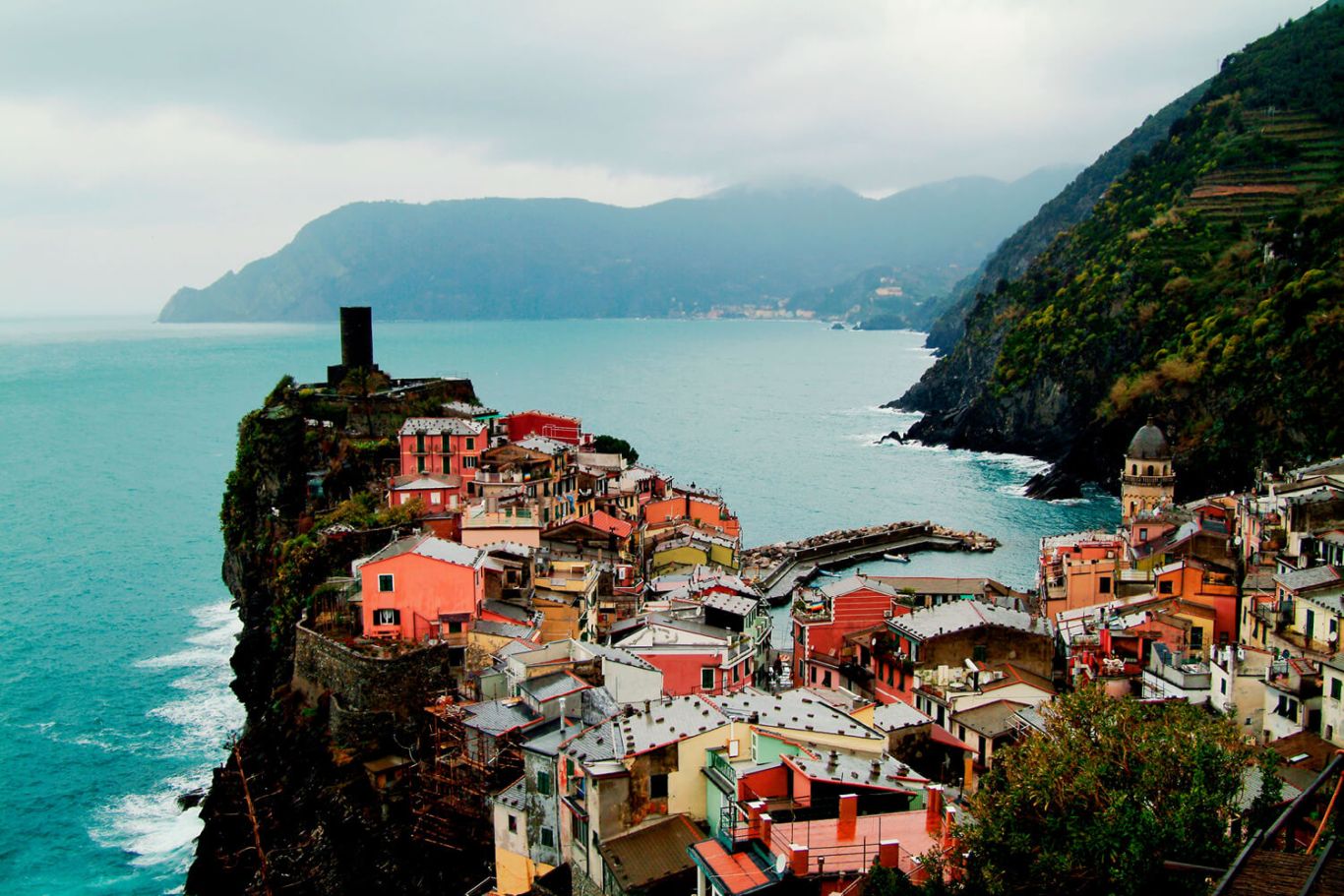
Then I’d say Riomaggiore, one of the five villages of the Cinque Terre, with vineyards and brightly coloured cottages cascading down the cliff-face to the port.


And then I’d say Camogli, a beautiful fishing port where many of the buildings have ‘trompe l’oeil’ façades, painted to look like balconies and shutters and elaborate window frames (some with painted cats sitting on a fictitious windowsill).

Is there an experience that only locals from these parts know about, and that visitors should search out?

Visitors usually seek out the path called Via dell’Amore, which connects the villages of the Cinque Terre, but locals now find that too crowded. I would recommend walking a forest trail called the Via Francigena, which took pilgrims from France to Rome 1000 years ago.


You can get onto that trail near the town of Aulla, on the Magra River. And while you are there try the testaroli. Not to be missed is the beautiful coastal walk from Lerici to Bocca di Magra via Montemarcello.
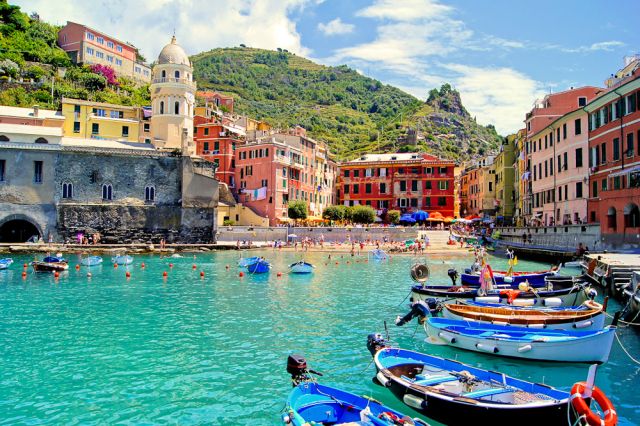
Cinque Terre, Italy
Each one of the five towns that comprise the Cinque Terre is a gorgeous jumble of houses

What do locals like to eat and drink here that must be tried beyond the usual fare?

In Coastline, we give recipes for Cuculli Genovesi – a kind of dumpling made with potatoes, pine nuts and parmesan; Gattafin, a kind of fried ravioli stuffed with wild greens and ricotta (which is also the national dish of Monaco, under the name Barbajuan); and cheese-stuffed focaccia, which is a speciality of the village of Recco, near Genoa.


Also the beautiful red prawns, often eaten raw from San Remo and the Tigullio Gulf. The most popular local wine is a white called Vermentino.

Do you have a favourite restaurant on the Italian Riviera?

I’m biased, but I’d have to say my family’s restaurant in Bocca di Magra, which is still run by my cousin Mario Guelfi.


It’s called Capannina Ciccio and it specialises in locally caught seafood (and sometimes the dishes I mention above). When you go, please say hello to Mario for me.

Weekly travel news, experiences
insider tips, offers,
and more.

What do you recommend doing for the perfect Sunday in Liguria?

For locals Sunday is the day of the long family lunch, in your own garden or in the garden of a restaurant, ideally with a view of the sea. It would be a good day to take a ferry ride past the villages of the Cinque Terre, to get a proper perspective on this rugged coastline.

What is the one thing visitors should take home after a visit to the Italian Riviera?

A sealed jar of locally made pesto sauce, since this is an area that is obsessed with growing the world’s best basil.


And a visit to the Carrara town of Colonnata will result in a number of beautiful white marble pieces, not least of which is the classic mortar with olive wood pestle – heavy to carry but well worth the effort. You may even be lucky enough to find an antique one in one of the many markets.


Want to get more out of the Mediterranean? Cinque Terre like a local… sweet, boutique, unique

Want to see more stories from International Traveller in your Google search results?

  1. Click here to set International Traveller as a preferred source.
  2. Tick the box next to "International Traveller". That's it.
hero media

What the European heatwave means for your summer travel plans

Temperatures are soaring this summer, breaking records across Europe and the UK. 

Euro summer is a feeling like no other. But when a heatwave hits? The dream trip quickly turns into a sweaty mess. Extreme heat is sweeping Europe and the UK this week, with record-high temperatures impacting travel plans across the continent.

And while Australian summers are typically hotter in absolute temperature, many European cities aren’t equipped for high temperatures, resulting in unbearable weather.

Why is it so hot in Europe?

Signs of a hot summer loomed in May, when the mercury hit unprecedented spring highs. Now, extreme high temperature warning alerts have been issued in countries such as Spain, Italy, France, England, the Netherlands and Germany.

France saw its hottest day on record on Wednesday, with an average temperature of 30°C across the day and night. This surpasses the average temperature for June, which is 15°C to 25°C. Dozens of people have died, including 40 from drowning.

In Spain, 212 deaths have been linked to the heatwave.

The UK recorded its hottest June day ever on Wednesday with temperatures soaring to 36.1°C. In an article published by the Met Office – the UK’s national meteorological service – Professor Stephen Belcher CBE, Met Office Chief Scientist, shared his concerns about June’s heat. “To see temperatures like this in the UK in June is sobering. Events like this bring home the implications of climate change, with very high temperatures and humidity bringing significant health implications from heat stress, as well as impacts to a range of sectors such as transport, energy and water supply,” he said.

Heatwaves are becoming increasingly common in Europe and the UK, neither of which is prepared for such extremes. The World Meteorological Organization reported that in 2025, at least 95% of Europe experienced above-average annual temperatures and that the continent was heating up twice as fast as the global average.

How travel is impacted

A pharmacy sign displaying 40 degrees Celcius
A pharmacy broadcasting local weather data. (Credit: Getty/Dragoncello)

During a heatwave, power grids, water systems and transport networks can be affected, resulting in disrupted itineraries for travellers. In France, power outages have left thousands without electricity and early closures have been implemented for two of Paris’s biggest attractions, the Eiffel Tower (early afternoon rather than late at night) and the Louvre (two hours early). Eurostar cancelled its London to Paris and Paris to London services from the 22nd to the 25th, and major UK rail companies have been advising travellers to avoid using trains where possible, or to travel during early hours.

If a heatwave is predicted, being flexible with your itinerary and having fully refundable/changeable tickets is key, as extreme heat can force the cancellation of outdoor activities, impact rail and flight services and change the opening hours of sites and eateries.

Why does summer in Europe often feel hotter than summer in Australia?

people swimming in the Canal Saint-Martin in Paris
People swimming in the Canal Saint-Martin in Paris to cool off. (Credit: Rachael Thompson)

With some of the highest UV levels in the world, Australians are no strangers to the heat, adapting well to intense weather. But our infrastructure is largely equipped to withstand soaring temperatures with climate-responsive passive design, refrigerated air conditioning or evaporative coolers, as well as swimming spots aplenty.

Buildings in Northern and Western Europe and the UK, however, are constructed to retain heat and handle frosty winters. The lack of universal air conditioning means it generally feels hotter even though the temperature on your app might not look it. During a heatwave, it can feel like you’re in a sauna as cities act like heat traps.

How to stay cool and prepare for another heatwave

Relief is expected across Europe and the UK later this week, but more heatwaves are still possible in the coming months. Summer heat typically peaks in July and August.

Public transport often doesn’t have air conditioning, and buses in particular can be swelteringly hot. If you’re heading outside or your accommodation has no air conditioning, it’s worth buying a spray bottle and a handheld fan from a pharmacy or tourist stand. Check ahead of time if restaurants and cafes have air conditioning and make a booking in advance. The highest temperatures typically hit between 3pm and 6pm, so aim to head outdoors outside of these hours.

Rising temperatures invite travellers to enter a more intentional era of seeing the world. Now more than ever is the time to embrace lower-impact “coolcations” and off-season getaways.