hero media

8 grand journeys in Scandinavia and the UK

Explore Northern Europe through Scandinavia and the UK — from Norway’s fjords to Iceland’s Ring Road, Scandi design hubs, and more unforgettable adventures.

1. Cruise the coastline of Norway

Travelling with: Imogen Eveson
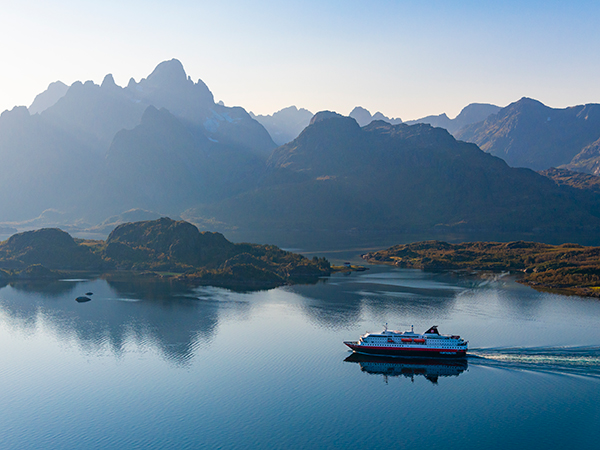
Cruising through Norway’s Lofoten Islands, a ship drifts between towering cliffs and calm seas in Northern Europe and the UK.
Explore Norway on Hurtigruten’s original coastal voyage. (Image: Stian Klo)

Hurtigruten’s original Norwegian coastal voyage has been weaving together fjords, towns and communities since 1893. Today, travellers can step into this tradition aboard the Coastal Express route, which takes in everything from the Art Nouveau beauty of Ålesund in western Norway to the dramatic splendour of the fjordlands, the fishing villages of the Lofoten archipelago and the shimmering phenomenon of the northern lights. En route, feast on regional specialties drawn fresh from both land and sea. Or join a new culinary and drink-themed itinerary that combines cruising with overnight stays at farms and a distillery.

2. Iceland’s Ring Road

Travelling with: Rachael Thompson
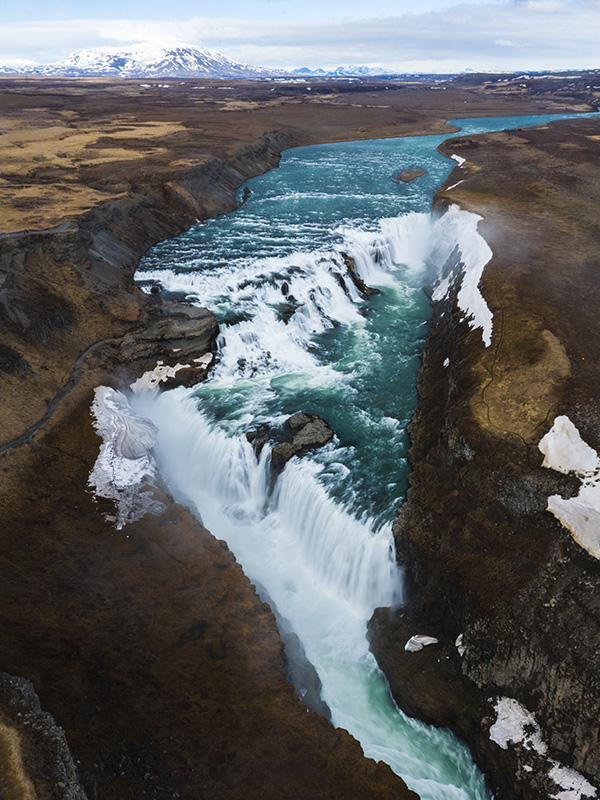
Aerial view of Gullfoss waterfall cascading through a canyon in south Iceland.
Witness the roaring beauty of Gullfoss Falls in Iceland. (Image: Getty/Misha Martin)

A self-drive journey around Iceland’s Ring Road offers a front-row seat to the dramatic beauty of the ‘Land of Fire and Ice’. Circle the island’s most dramatic natural wonders, discovering thundering waterfalls, black-sand beaches, glaciers and steaming lava fields. Witness the roaring beauty of Gullfoss Falls, watch thousands of puffins soar at Dyrhólaey, and descend into the icy depths of Katla’s striking ice cave.

3. The design cities of Scandinavia

Travelling with: Rachael Thompson

The elegant simplicity of Danish modern furniture.
Dive into Scandinavian design. (Image: Getty/Luka Hesselberg)

Good design is a way of life in Scandinavia, where form meets function in the most uplifting ways. In Reykjavík, admire the basalt-inspired Hallgrímskirkja church and browse local design studios. In Copenhagen, cycle to Designmuseum Danmark to see iconic Danish design pieces before scoring vintage finds in edgy Nørrebro. In Stockholm, go beyond IKEA’s iconic blue-and-yellow doors to uncover storybook streets and sleek Scandi modernism at the Nordic Museum.

4. Finland’s sauna ferry

Travelling with: Carla Grossetti
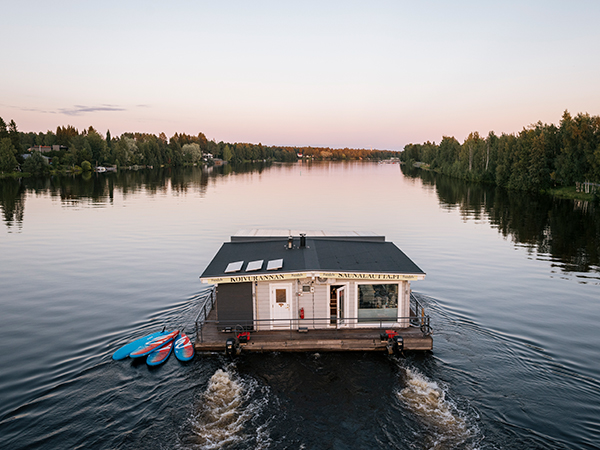
The cosy charm of a sauna ferry drifting along Finland’s tranquil rivers.
Glide along on a sauna ferry. (Image: Visit Finland/Harri Tarvainen)

Have you even been to Finland if you haven’t had a sauna? Start trawling the interweb for vintage furs and #vikingcore so you can arrive at Löyly in style. Löyly, which refers to the steam rising off hot stones, has two saunas and direct access to the icy Baltic Sea. Board a sauna ferry while cruising on a river over summer or combine a dip in the icy waters of Norvajarvi Lake with a steam in a traditional wood-burning sauna amid the Lapland landscape.

5. A luxury sleeper train from England to Wales

Travelling with: Imogen Eveson
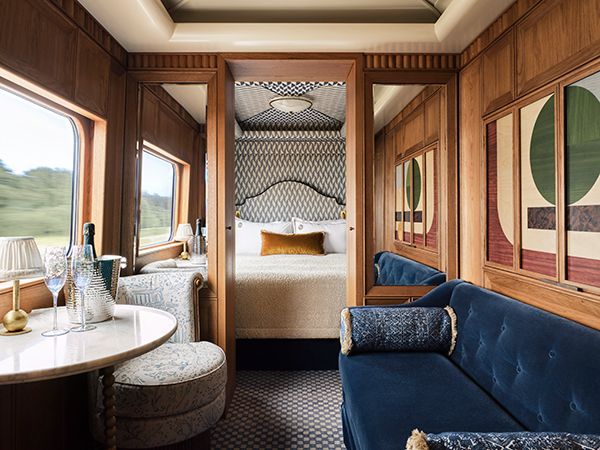
The elegant interior of a luxury sleeper train bedroom from England to Wales in Northern Europe and the UK.
Discover England & Wales by luxury sleeper.

England and Wales’ first luxury sleeper train launched this year, tracing three distinct routes through bucolic countryside from Cornwall to the Lake District and deep into the Welsh heartlands. Departing from London Victoria station on three-night itineraries, Britannic Explorer, A Belmond Train celebrates modern British identity and heritage in its interiors, which nod to the landscapes outside the window, and in its farm-to-fork menus crafted by three Michelin-starred chef Simon Rogan. Off-train excursions are equally immersive, from exploring the artistic haven of St Ives to whiling away an afternoon at the Victorian estate where Beatrix Potter once summered or wandering through a spectacular Welsh lavender farm.

6. The UK’s South West Coast Path

Travelling with: Carla Grossetti
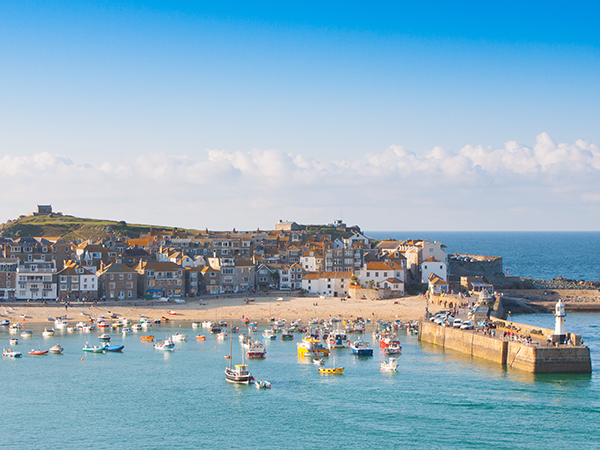
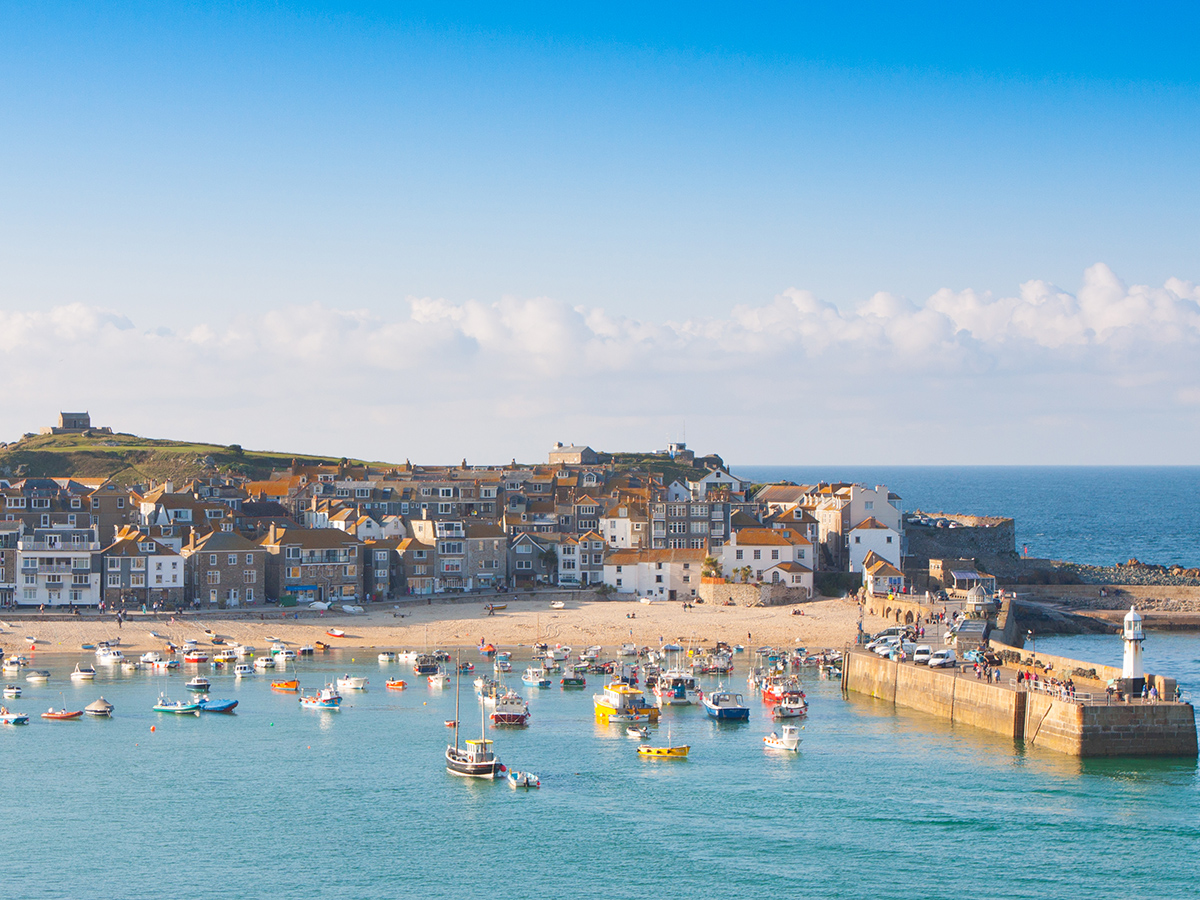
The charming boats and golden sands of St Ives Harbour in Northern Europe and the UK.
Discover tales and views along the UK’s Salt Path. (Image: Getty/G-Frame)

The Salt Path by Raynor Winn may have courted controversy. But it’s also inspired travellers to trace the route of one of England’s most beloved walking trails. The best-selling memoir is the author’s account of walking the UK’s South West Coast Path with her husband, Moth. Plodding along the 1014-kilometre trail is one of the most popular self-guided walking holidays offered by UTracks.

Weekly travel news, experiences
insider tips, offers,
and more.

7. A whisky tour of Scotland

Travelling with: Elizabeth Whitehead

A person holding a glass of whisky against sweeping views of Scotland in Northern Europe and the UK.
Sip your way through Scotland’s wild West Coast isles.

Peat. Sea spray. Heather. Moss. These are some of the most coveted tasting notes in the world of Scotch whisky. It’s fair to say you’re getting a taste of place, especially when you’re talking about the distilleries located on Scotland’s wild, rugged West Coast isles. Bounce between islands, stopping for a dram in the region’s many distilleries. And keep an eye out for family-owned and independents – some have proudly been passed through hands since the 1700s. Slàinte!

8. Ireland’s Wild Atlantic Way

Travelling with: Carla Grossetti
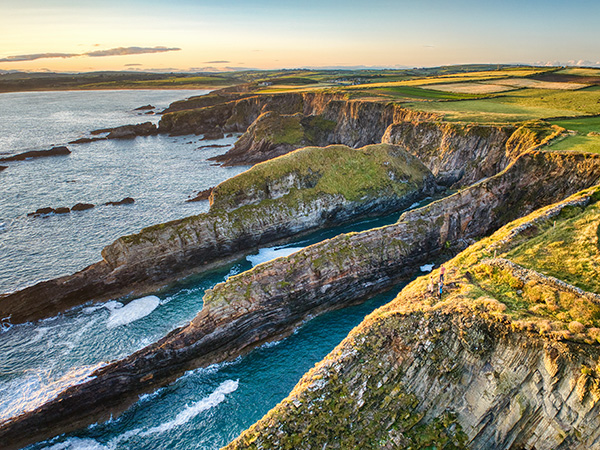
The Cliffs of Moher, where dramatic rock faces plunge into the Atlantic in Northern Europe and the UK.
Fall in love with the views at Ireland’s Cliffs of Moher.

There are plenty of opportunities to stop and enjoy the scenery along the Wild Atlantic Way in west Ireland. The 2600-kilometre-long coastal driving route stretches from the Inishowen Peninsula in County Donegal to Kinsale in County Cork. Visit the crumbling ruins of Carrigogunnell Castle. See the wild Atlantic clawing at the coastline at the craggy Cliffs of Moher. Wander off the beaten path to find a weather-worn pub to split the G. And be treated like royalty at Dromoland Castle.

Want to see more stories from International Traveller in your Google search results?

  1. Click here to set International Traveller as a preferred source.
  2. Tick the box next to "International Traveller". That's it.
hero media

What the European heatwave means for your summer travel plans

Temperatures are soaring this summer, breaking records across Europe and the UK. 

Euro summer is a feeling like no other. But when a heatwave hits? The dream trip quickly turns into a sweaty mess. Extreme heat is sweeping Europe and the UK this week, with record-high temperatures impacting travel plans across the continent.

And while Australian summers are typically hotter in absolute temperature, many European cities aren’t equipped for high temperatures, resulting in unbearable weather.

Why is it so hot in Europe?

Signs of a hot summer loomed in May, when the mercury hit unprecedented spring highs. Now, extreme high temperature warning alerts have been issued in countries such as Spain, Italy, France, England, the Netherlands and Germany.

France saw its hottest day on record on Wednesday, with an average temperature of 30°C across the day and night. This surpasses the average temperature for June, which is 15°C to 25°C. Dozens of people have died, including 40 from drowning.

In Spain, 212 deaths have been linked to the heatwave.

The UK recorded its hottest June day ever on Wednesday with temperatures soaring to 36.1°C. In an article published by the Met Office – the UK’s national meteorological service – Professor Stephen Belcher CBE, Met Office Chief Scientist, shared his concerns about June’s heat. “To see temperatures like this in the UK in June is sobering. Events like this bring home the implications of climate change, with very high temperatures and humidity bringing significant health implications from heat stress, as well as impacts to a range of sectors such as transport, energy and water supply,” he said.

Heatwaves are becoming increasingly common in Europe and the UK, neither of which is prepared for such extremes. The World Meteorological Organization reported that in 2025, at least 95% of Europe experienced above-average annual temperatures and that the continent was heating up twice as fast as the global average.

How travel is impacted

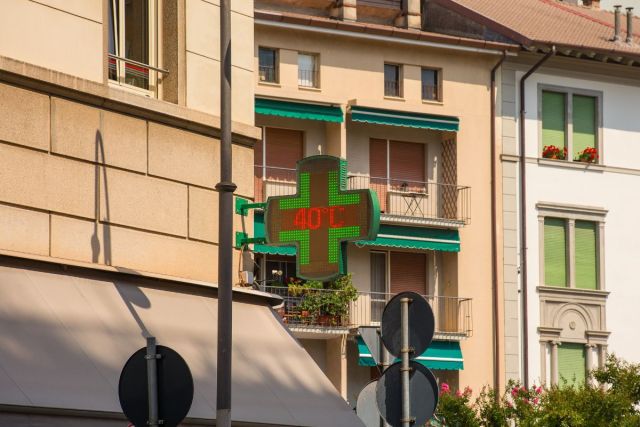
A pharmacy sign displaying 40 degrees Celcius
A pharmacy broadcasting local weather data. (Credit: Getty/Dragoncello)

During a heatwave, power grids, water systems and transport networks can be affected, resulting in disrupted itineraries for travellers. In France, power outages have left thousands without electricity and early closures have been implemented for two of Paris’s biggest attractions, the Eiffel Tower (early afternoon rather than late at night) and the Louvre (two hours early). Eurostar cancelled its London to Paris and Paris to London services from the 22nd to the 25th, and major UK rail companies have been advising travellers to avoid using trains where possible, or to travel during early hours.

If a heatwave is predicted, being flexible with your itinerary and having fully refundable/changeable tickets is key, as extreme heat can force the cancellation of outdoor activities, impact rail and flight services and change the opening hours of sites and eateries.

Why does summer in Europe often feel hotter than summer in Australia?

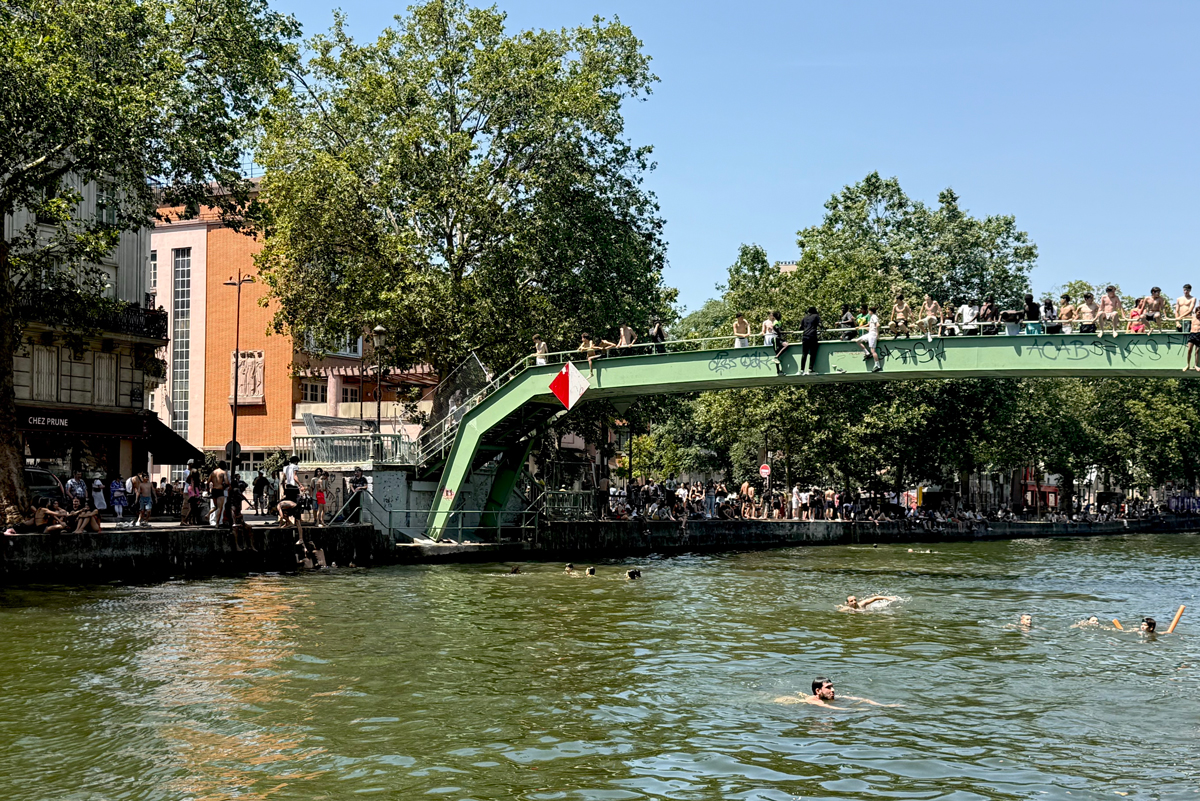
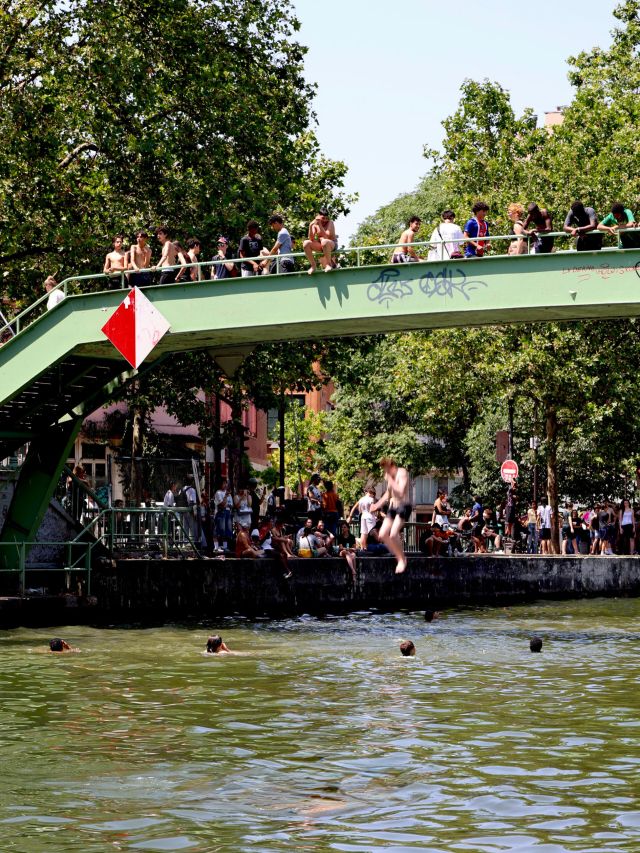
people swimming in the Canal Saint-Martin in Paris
People swimming in the Canal Saint-Martin in Paris to cool off. (Credit: Rachael Thompson)

With some of the highest UV levels in the world, Australians are no strangers to the heat, adapting well to intense weather. But our infrastructure is largely equipped to withstand soaring temperatures with climate-responsive passive design, refrigerated air conditioning or evaporative coolers, as well as swimming spots aplenty.

Buildings in Northern and Western Europe and the UK, however, are constructed to retain heat and handle frosty winters. The lack of universal air conditioning means it generally feels hotter even though the temperature on your app might not look it. During a heatwave, it can feel like you’re in a sauna as cities act like heat traps.

How to stay cool and prepare for another heatwave

Relief is expected across Europe and the UK later this week, but more heatwaves are still possible in the coming months. Summer heat typically peaks in July and August.

Public transport often doesn’t have air conditioning, and buses in particular can be swelteringly hot. If you’re heading outside or your accommodation has no air conditioning, it’s worth buying a spray bottle and a handheld fan from a pharmacy or tourist stand. Check ahead of time if restaurants and cafes have air conditioning and make a booking in advance. The highest temperatures typically hit between 3pm and 6pm, so aim to head outdoors outside of these hours.

Rising temperatures invite travellers to enter a more intentional era of seeing the world. Now more than ever is the time to embrace lower-impact “coolcations” and off-season getaways.