hero media

If there is one place to embrace sauna culture it’s Finland; they have over 3 million

Unwind, Finnish style.

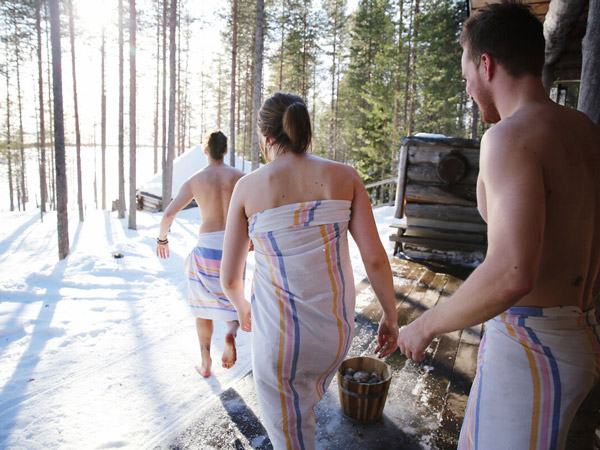
The air was thick with steam as I stepped into the warm embrace of the wood-panelled Finnish sauna, the heat wrapping around me like a blanket. Situated right on the edge of the water at Pukka Resort Rovaniemi in Finland, the sauna’s windows offered a stunning view of the frozen lake, its surface a sparkling white expanse.

As the scent of birchwood filled the air and the stove crackled rhythmically, I could feel the sweat begin to form on my skin, each drop easing the stress of a long flight. After a few minutes, I took my first plunge into the lake’s icy waters. A hole had been carved into the ice, just big enough for me to slip into the frigid water, the coldness first taking my breath away and then invigorating me.

This is why I’d come to Finland. For me and many other visitors to the Nordic nation, stepping into a sauna is more than just a chance to get warm during the long, cold winters; it’s an invitation into a centuries-old ritual that’s woven deeply into the country’s cultural fabric.
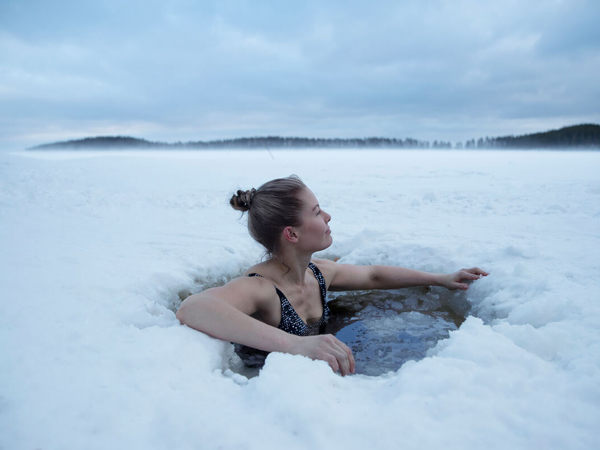
Woman swimming in the ice after a sauna in Finland
Ice swimming is all part of the heat, cool, rest rhythm of sauna culture in Finland. (Image: Visit Karelia)

The history and traditions of Finnish sauna culture

A sauna ferry in Oulu, Finland
Finnish sauna culture has evolved over the years to even include floating saunas on ferries. (Image: Juho Kuva/Visit Finland)

The Finnish sauna dates back over 2,000 years. Early saunas were simple pits dug into the ground, where water was tossed onto heated stones to generate heat, promote hygiene, and even facilitate childbirth in some rural communities.

Over time, the sauna evolved into a wood-built staple of every Finnish home, becoming more refined, but just as essential. The country boasts over three million saunas – there are more saunas than there are cars. Nearly every Finn has access to one, whether it’s in their home, at a lake cabin, or in a public sauna. They remain a place to go to heal and reflect, either individually or with friends and family.
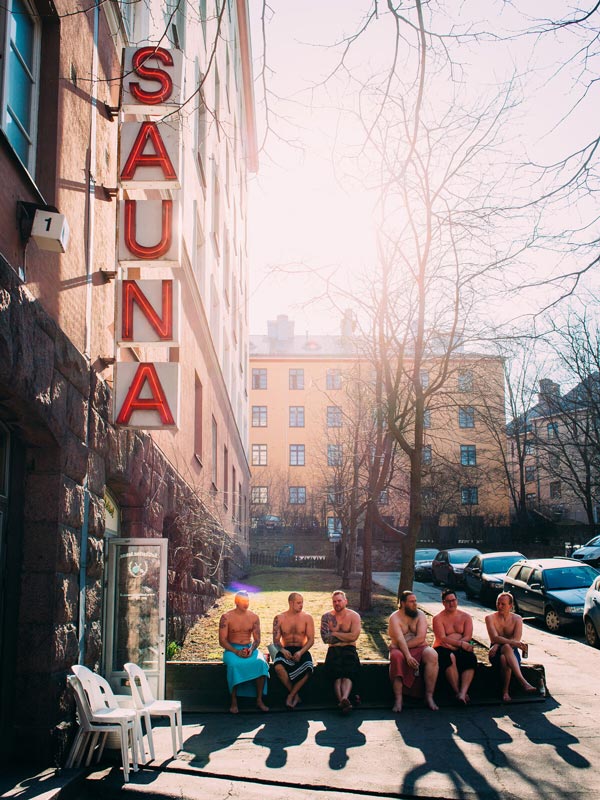
Men gather outside Kotiharju sauna to cool off in Helinski
Kotiharju sauna is the only public sauna in Helsinki that is heated with wood. (Image: Jussi Hellsten/Hellinski Marketing)

Sauna etiquette

A group carrying buckets to the sauna in Ruka Kuusamo through the snow
Brush up on sauna etiquette beforehand. (Image: Harri Tarvainen/Visit Finland)

Sauna time in Finland follows a familiar rhythm – one that locals barely think about, but visitors should know. First things first: shower. Always. It’s expected, and it keeps the sauna clean for everyone. Then, strip down (nudity is the norm, and it is viewed as a natural part of the experience, not something to feel self-conscious about, though in some public saunas, swimsuits or towels are okay – just check the rules). Bring a small towel to sit on – both for hygiene and comfort – and enter the sauna quietly. Settle in on a bench (the higher you sit, the hotter it gets), breathe deep, and sweat it out.

After 10 to 15 minutes, cool off. That could mean stepping outside, taking a cold shower, or – if you’re lucky – a plunge into a frozen lake. Then repeat. The full experience is hot, cold, rest, and maybe even a beer in between rounds.

Just remember, in Finland, the sauna experience is a communal activity, often shared with friends or family. For locals, this means a true moment of connection – there are no distractions, no phones, just conversation or quiet contemplation.
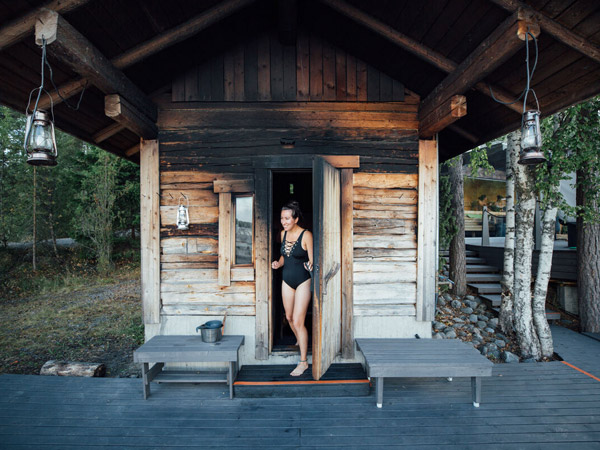
A woman exiting the sauna in Lehmonkarki Resort in Lahti
Some larger saunas allow bathers. (Image: Julia Kivela/Visit Finland)

Modern-day saunas

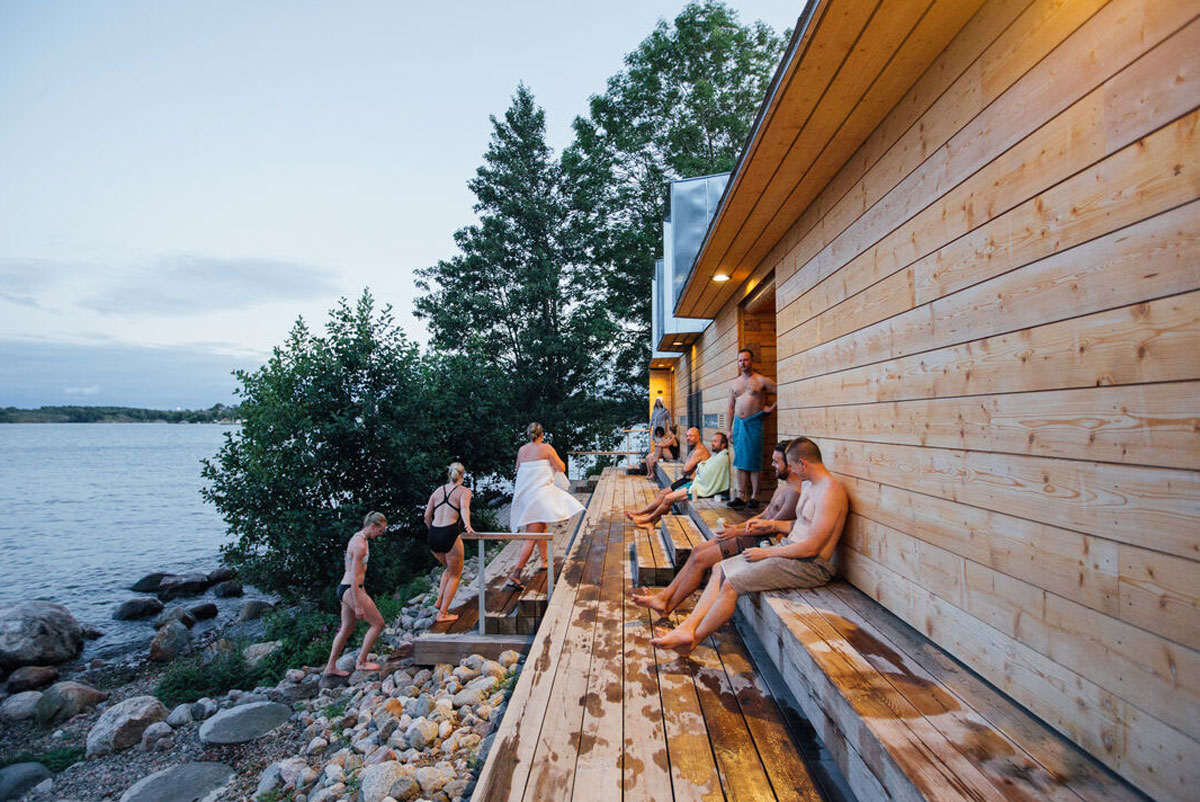
As a traveller in Finland, your first sauna experience might come with a sea breeze and a skyline view. In cities like Helsinki and Tampere, public saunas have evolved into boutique establishments – think clean-lined architecture, craft beer bars, and rooftop cold plunge pools. In Helsinki, design-forward public saunas like Löyly and Allas Sea Pool draw both locals and travellers in search of that post-sauna glow.

Many hotels offer private saunas you can book by the hour, complete with forest views or instructions for a DIY ice plunge. And while the sauna has long been known for its therapeutic benefits – improving circulation, detoxifying the body, and soothing tired muscles – there’s a growing trend of wellness retreats that integrate sauna bathing into holistic health practices.

Many resorts across Finland are offering sauna experiences as part of a broader wellness journey, from yoga and meditation to forest walks and traditional Finnish herbal treatments.

Whether high-design or humble, electric or wood-fired, the sauna remains a non-negotiable part of Finnish life.
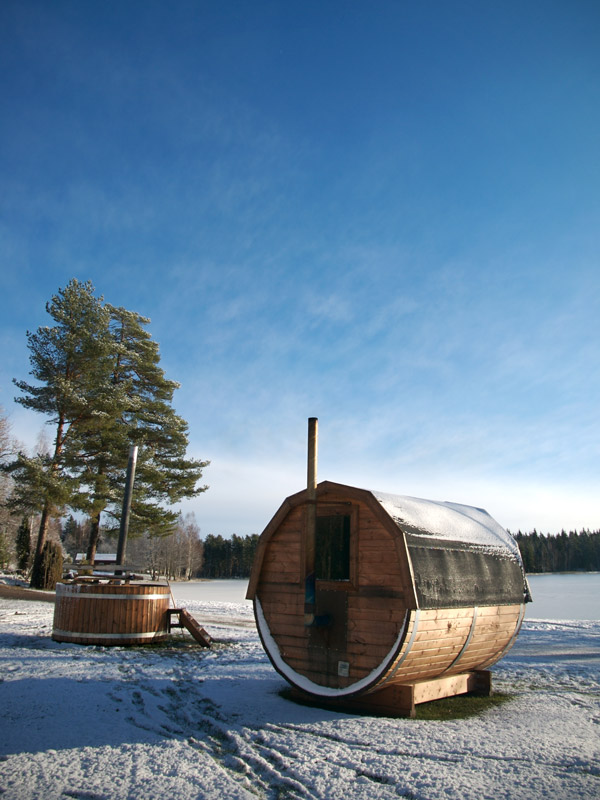
a Finnish Sauna in winter
Saunas are an essential part of Finnish culture and a place for connection, free from distractions. (Image: Getty/ferrantraite)

Want to see more stories from International Traveller in your Google search results?

  1. Click here to set International Traveller as a preferred source.
  2. Tick the box next to "International Traveller". That's it.
hero media

What the European heatwave means for your summer travel plans

Temperatures are soaring this summer, breaking records across Europe and the UK. 

Euro summer is a feeling like no other. But when a heatwave hits? The dream trip quickly turns into a sweaty mess. Extreme heat is sweeping Europe and the UK this week, with record-high temperatures impacting travel plans across the continent.

And while Australian summers are typically hotter in absolute temperature, many European cities aren’t equipped for high temperatures, resulting in unbearable weather.

Why is it so hot in Europe?

Signs of a hot summer loomed in May, when the mercury hit unprecedented spring highs. Now, extreme high temperature warning alerts have been issued in countries such as Spain, Italy, France, England, the Netherlands and Germany.

France saw its hottest day on record on Wednesday, with an average temperature of 30°C across the day and night. This surpasses the average temperature for June, which is 15°C to 25°C. Dozens of people have died, including 40 from drowning.

In Spain, 212 deaths have been linked to the heatwave.

The UK recorded its hottest June day ever on Wednesday with temperatures soaring to 36.1°C. In an article published by the Met Office – the UK’s national meteorological service – Professor Stephen Belcher CBE, Met Office Chief Scientist, shared his concerns about June’s heat. “To see temperatures like this in the UK in June is sobering. Events like this bring home the implications of climate change, with very high temperatures and humidity bringing significant health implications from heat stress, as well as impacts to a range of sectors such as transport, energy and water supply,” he said.

Heatwaves are becoming increasingly common in Europe and the UK, neither of which is prepared for such extremes. The World Meteorological Organization reported that in 2025, at least 95% of Europe experienced above-average annual temperatures and that the continent was heating up twice as fast as the global average.

How travel is impacted

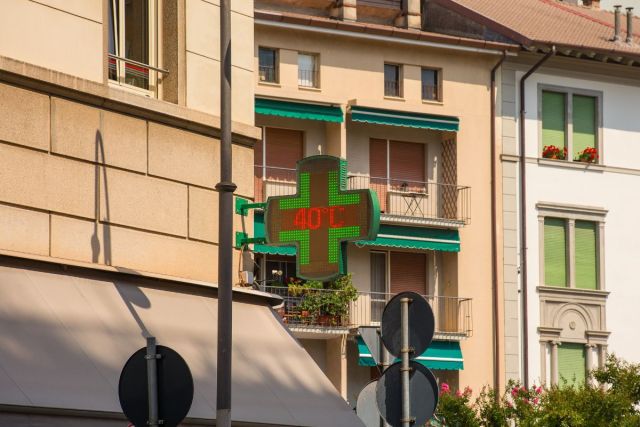
A pharmacy sign displaying 40 degrees Celcius
A pharmacy broadcasting local weather data. (Credit: Getty/Dragoncello)

During a heatwave, power grids, water systems and transport networks can be affected, resulting in disrupted itineraries for travellers. In France, power outages have left thousands without electricity and early closures have been implemented for two of Paris’s biggest attractions, the Eiffel Tower (early afternoon rather than late at night) and the Louvre (two hours early). Eurostar cancelled its London to Paris and Paris to London services from the 22nd to the 25th, and major UK rail companies have been advising travellers to avoid using trains where possible, or to travel during early hours.

If a heatwave is predicted, being flexible with your itinerary and having fully refundable/changeable tickets is key, as extreme heat can force the cancellation of outdoor activities, impact rail and flight services and change the opening hours of sites and eateries.

Why does summer in Europe often feel hotter than summer in Australia?

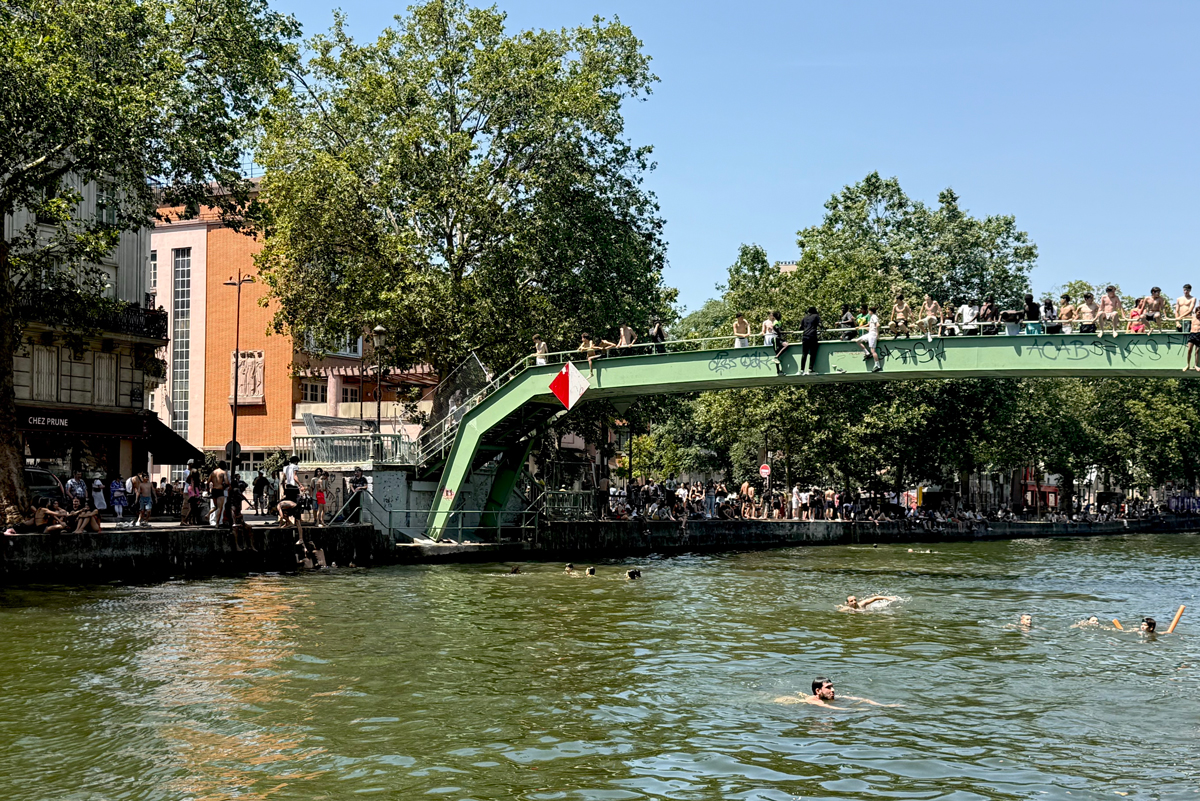
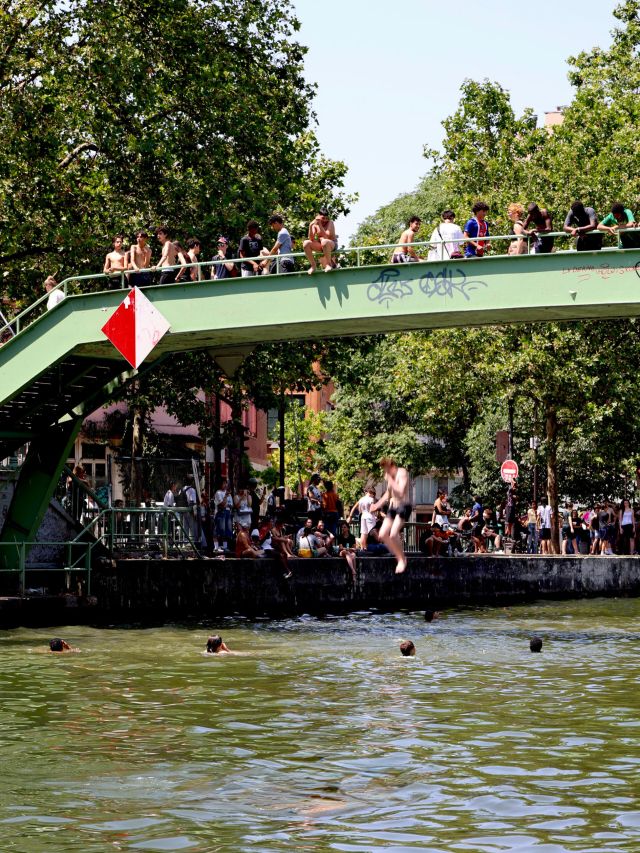
people swimming in the Canal Saint-Martin in Paris
People swimming in the Canal Saint-Martin in Paris to cool off. (Credit: Rachael Thompson)

With some of the highest UV levels in the world, Australians are no strangers to the heat, adapting well to intense weather. But our infrastructure is largely equipped to withstand soaring temperatures with climate-responsive passive design, refrigerated air conditioning or evaporative coolers, as well as swimming spots aplenty.

Buildings in Northern and Western Europe and the UK, however, are constructed to retain heat and handle frosty winters. The lack of universal air conditioning means it generally feels hotter even though the temperature on your app might not look it. During a heatwave, it can feel like you’re in a sauna as cities act like heat traps.

How to stay cool and prepare for another heatwave

Relief is expected across Europe and the UK later this week, but more heatwaves are still possible in the coming months. Summer heat typically peaks in July and August.

Public transport often doesn’t have air conditioning, and buses in particular can be swelteringly hot. If you’re heading outside or your accommodation has no air conditioning, it’s worth buying a spray bottle and a handheld fan from a pharmacy or tourist stand. Check ahead of time if restaurants and cafes have air conditioning and make a booking in advance. The highest temperatures typically hit between 3pm and 6pm, so aim to head outdoors outside of these hours.

Rising temperatures invite travellers to enter a more intentional era of seeing the world. Now more than ever is the time to embrace lower-impact “coolcations” and off-season getaways.