hero media

Review: 58 Tour Eiffel, Paris

Tourist fare or tour de force? Tiana Templeman takes a chance on a dining experience at the iconic Eiffel Tower.

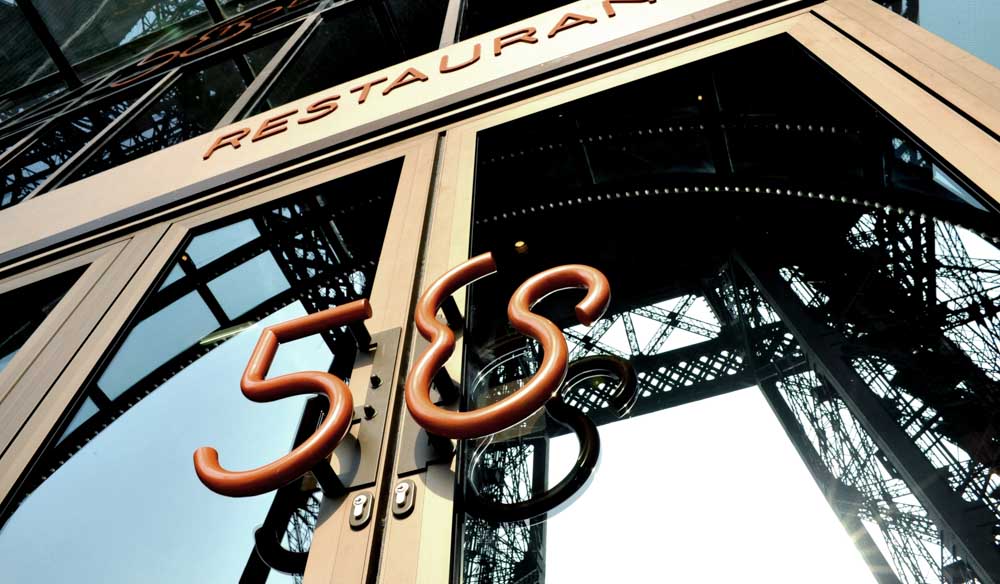
It is hard not to feel just a little bit smug as we stroll past the enormous lift queues and join the small line for those dining at 58 Tour Eiffel restaurant.


My husband and I are heading to the first floor of the Eiffel Tower for an evening of French wine, fine cuisine and romance. Or, at least that’s what we hope.


We could also be heading for two hours of dining hell with bad function food, cheap vino and every tour group in Paris.

Anticipation

With the iconic wrought iron structure towering above us, it’s impossible not to get caught up in the excitement as everyone in the restaurant’s exclusive lift jostles for position, eager to catch a glimpse of Paris and tonight’s dining venue.
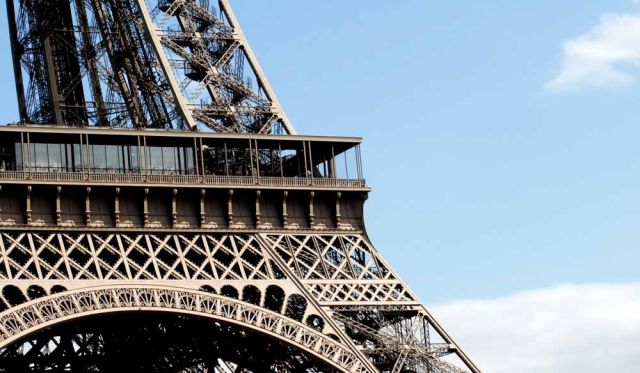
Paris france food Eiffel tower tour
The famous Eiffel Tower, with 58 Tour Eiffel located on the first flour (photo: Dominique Milherou).

Our sense of expectation (and impatience) builds as we mill around the grand double doors that open with a flourish at precisely 6.30pm; everyone is seated across the restaurant’s two levels in minutes, with tour groups allocated a separate area, away from the intimate tables for two and four.

Cost

58 Tour Eiffel offers three pre-booked options for dinner, priced from $118 to $165, depending on the table location and whether wine is included.

Seating and atmosphere

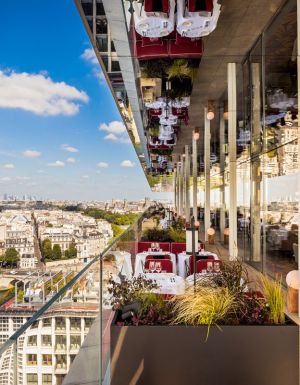
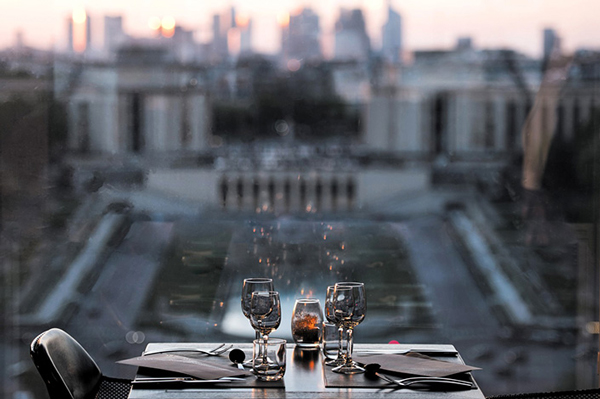
It’s our lucky night because our mid-priced ‘privileged seating in the main room’ booking ends up having the same Trocadéro view as the most expensive tables, albeit one row back from the window. The overall vibe of the restaurant at night can best be described as an elegant brasserie set against the beauty of the City of Lights. Minimalist furnishings and soft lighting only enhance the experience of the view.
58 Tour Eiffel
Trocadero view at 58 Tour Eiffel.

Service

With two two-hour seatings per night, 58 Tour Eiffel runs with military precision, although our friendly waiter manages to give the illusion that his guests have all the time in the world.

Food

We have just finished our welcome glass of Champagne when the entrée of spiced king prawns arrives, served atop a colourful scattering of avocado, grapefruit and sweet edible blooms.


The dish is far better than we expected from what is essentially a tourist restaurant.
58 Tour Eiffel Dinner
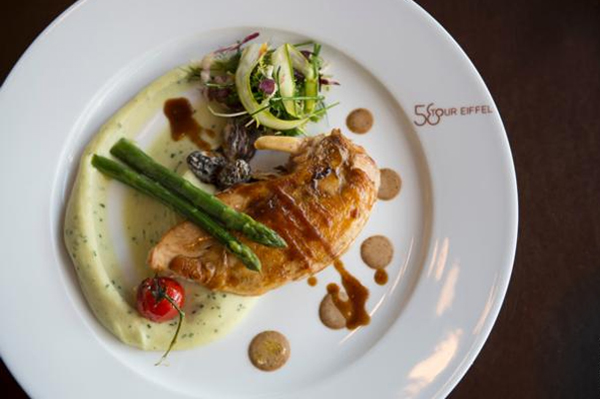
The roast herbed guinea fowl breast at 58 Tour Eiffel (photo: Photopointcom).

The roast herbed guinea fowl breast that follows, with mashed potato, green asparagus and mushroom cream is quintessentially French and equally impressive, as is my husband’s choice of grilled lamb.


Fortunately, there is a break before the rich chocolate marquise for dessert, which leaves us time to enjoy the view and another glass of wine before we end our evening with a trip to the top of the Eiffel Tower, bien sûr.

Details

58 Tour Eiffel, Eiffel Tower, Champ de Mars, Paris, France.

The IT Verdict


With food and service that exceeds expectations, this iconic dining experience delivers.

Location: 10 / 10
Dining atop the Eiffel Tower is hard to top.


Style / character: 6 / 10
The food and the view beat the bland, beige décor.


Service: 8 / 10
Friendly and professional.


Atmosphere: 8 / 10
Bustling and lively with a touch of romance.


Value for money: 8 / 10
Better than expected given the exchange rate.


Notes:
You can also visit for a picnic-style lunch without a reservation.


Weekly travel news, experiences
insider tips, offers,
and more.

All IT reviews are conducted anonymously and our writers pay their own way – so we experience exactly what you would.
For more information on where to eat in Paris, read our ultimate guide to the city of love here.

Want to see more stories from International Traveller in your Google search results?

  1. Click here to set International Traveller as a preferred source.
  2. Tick the box next to "International Traveller". That's it.
hero media

What the European heatwave means for your summer travel plans

Temperatures are soaring this summer, breaking records across Europe and the UK. 

Euro summer is a feeling like no other. But when a heatwave hits? The dream trip quickly turns into a sweaty mess. Extreme heat is sweeping Europe and the UK this week, with record-high temperatures impacting travel plans across the continent.

And while Australian summers are typically hotter in absolute temperature, many European cities aren’t equipped for high temperatures, resulting in unbearable weather.

Why is it so hot in Europe?

Signs of a hot summer loomed in May, when the mercury hit unprecedented spring highs. Now, extreme high temperature warning alerts have been issued in countries such as Spain, Italy, France, England, the Netherlands and Germany.

France saw its hottest day on record on Wednesday, with an average temperature of 30°C across the day and night. This surpasses the average temperature for June, which is 15°C to 25°C. Dozens of people have died, including 40 from drowning.

In Spain, 212 deaths have been linked to the heatwave.

The UK recorded its hottest June day ever on Wednesday with temperatures soaring to 36.1°C. In an article published by the Met Office – the UK’s national meteorological service – Professor Stephen Belcher CBE, Met Office Chief Scientist, shared his concerns about June’s heat. “To see temperatures like this in the UK in June is sobering. Events like this bring home the implications of climate change, with very high temperatures and humidity bringing significant health implications from heat stress, as well as impacts to a range of sectors such as transport, energy and water supply,” he said.

Heatwaves are becoming increasingly common in Europe and the UK, neither of which is prepared for such extremes. The World Meteorological Organization reported that in 2025, at least 95% of Europe experienced above-average annual temperatures and that the continent was heating up twice as fast as the global average.

How travel is impacted

A pharmacy sign displaying 40 degrees Celcius
A pharmacy broadcasting local weather data. (Credit: Getty/Dragoncello)

During a heatwave, power grids, water systems and transport networks can be affected, resulting in disrupted itineraries for travellers. In France, power outages have left thousands without electricity and early closures have been implemented for two of Paris’s biggest attractions, the Eiffel Tower (early afternoon rather than late at night) and the Louvre (two hours early). Eurostar cancelled its London to Paris and Paris to London services from the 22nd to the 25th, and major UK rail companies have been advising travellers to avoid using trains where possible, or to travel during early hours.

If a heatwave is predicted, being flexible with your itinerary and having fully refundable/changeable tickets is key, as extreme heat can force the cancellation of outdoor activities, impact rail and flight services and change the opening hours of sites and eateries.

Why does summer in Europe often feel hotter than summer in Australia?

people swimming in the Canal Saint-Martin in Paris
People swimming in the Canal Saint-Martin in Paris to cool off. (Credit: Rachael Thompson)

With some of the highest UV levels in the world, Australians are no strangers to the heat, adapting well to intense weather. But our infrastructure is largely equipped to withstand soaring temperatures with climate-responsive passive design, refrigerated air conditioning or evaporative coolers, as well as swimming spots aplenty.

Buildings in Northern and Western Europe and the UK, however, are constructed to retain heat and handle frosty winters. The lack of universal air conditioning means it generally feels hotter even though the temperature on your app might not look it. During a heatwave, it can feel like you’re in a sauna as cities act like heat traps.

How to stay cool and prepare for another heatwave

Relief is expected across Europe and the UK later this week, but more heatwaves are still possible in the coming months. Summer heat typically peaks in July and August.

Public transport often doesn’t have air conditioning, and buses in particular can be swelteringly hot. If you’re heading outside or your accommodation has no air conditioning, it’s worth buying a spray bottle and a handheld fan from a pharmacy or tourist stand. Check ahead of time if restaurants and cafes have air conditioning and make a booking in advance. The highest temperatures typically hit between 3pm and 6pm, so aim to head outdoors outside of these hours.

Rising temperatures invite travellers to enter a more intentional era of seeing the world. Now more than ever is the time to embrace lower-impact “coolcations” and off-season getaways.