hero media

Beyond the Eiffel Tower: 7 beautiful hidden spots in Paris

Avoid the crowds at these lesser-known spots.

When you’ve had the chance to visit the can’t-miss, quintessential Paris sights, there is much more to discover beyond the Eiffel Tower.

It’s time to dive into the quieter, lesser-known gems well away from the tourist haze. Think: overlooked parks, small museums, tucked away courtyards and other favourite local spots.
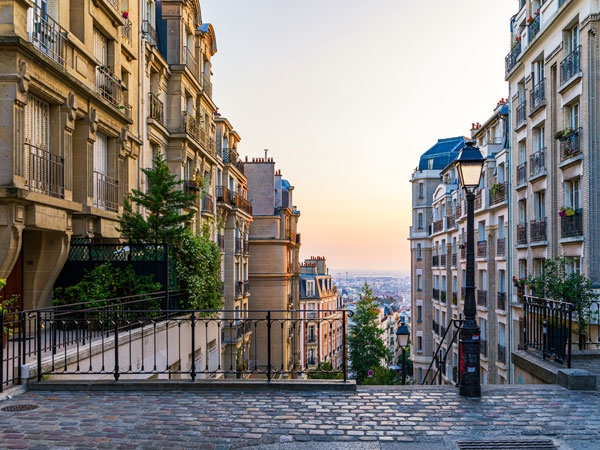
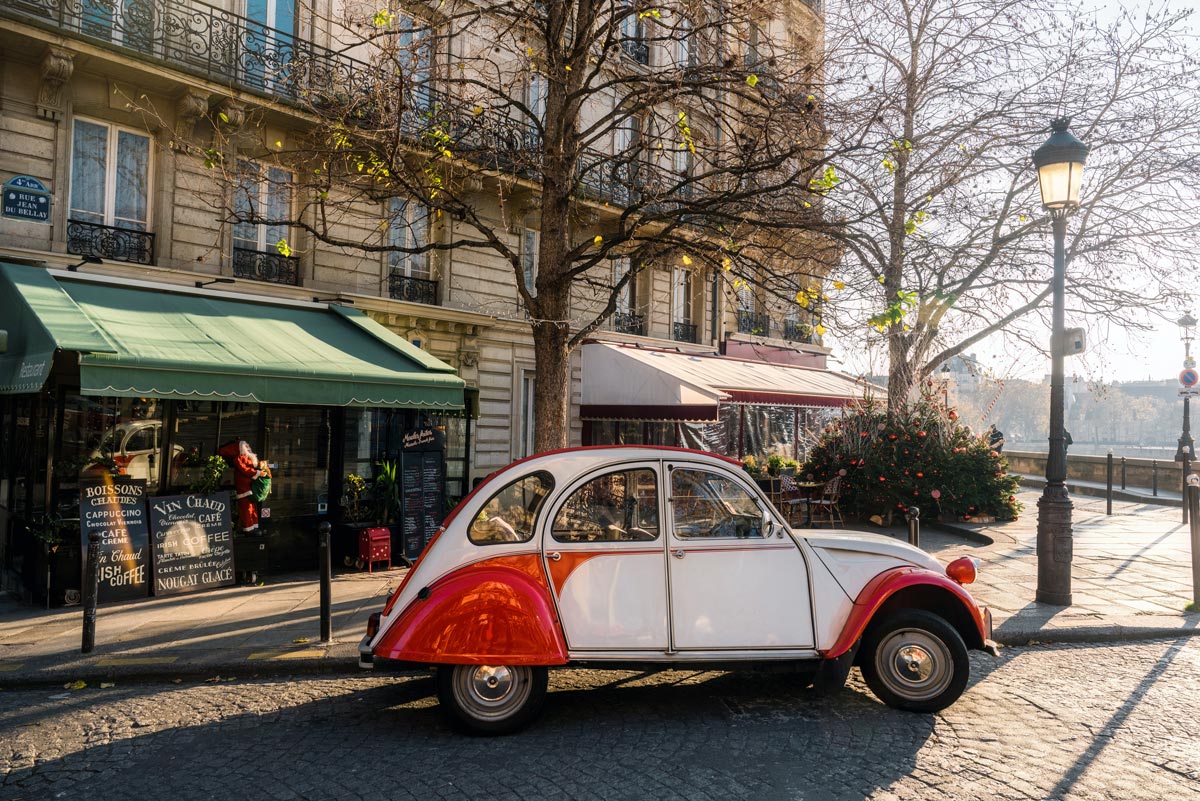
View of cozy street in quarter Montmartre in Paris, France.
There’s much more to discover beyond the Eiffel Tower. (Image: DaLiu via Getty Images)

1. Stroll along La Coulée Verte René-Dumont

One of Paris’ greatest virtues is its many green spaces, offering a multitude of opportunities to embody the classic Parisian flâneur (a person who lounges or strolls around in a seemingly aimless way).
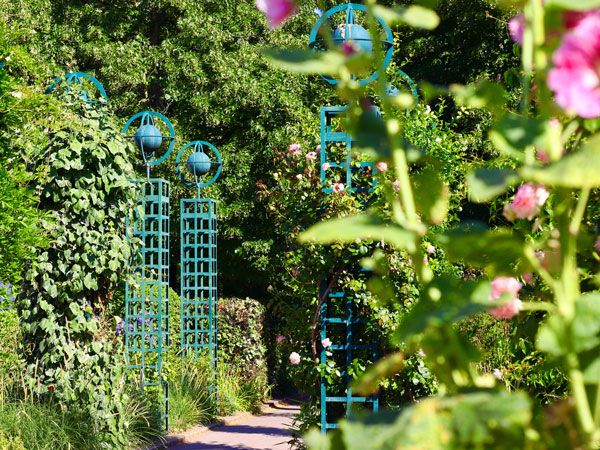
lush greenery at La Promenade Plantée in Paris
La Coulée Verte René-Dumontis is a walkway and park built on old train tracks. (Image: Vivian Song via Getty Images)

La Coulée Verte René-Dumont, formerly known as the Promenade Plantée, is a walkway and park built on old train tracks from the Bastille to the Bois de Vincennes. The free stroll covers 4.5 kilometres of greenery, from wild vegetation to manicured landscaping, lined with lime and hazelnut trees.

Its location in the 12th arrondissement provides the opportunity to observe a local way of life, as well as enjoy nature.
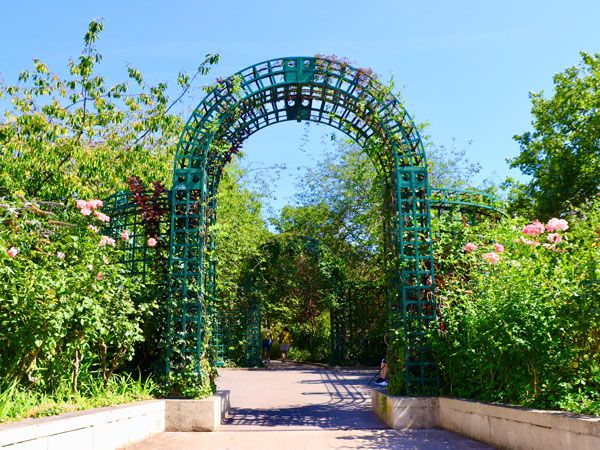
the entranceway above the Viaduc des Arts, La Promenade Plantée in Paris
Stroll along the elevated manicured gardens. (Image: Vivian Song via Getty Images)

2. Stop at the oldest cafe in Paris

The oldest cafe in Paris, Procope, is tucked away along a cobblestone walking path in the heart of Saint-Germain des Prés and has been operating since 1686.
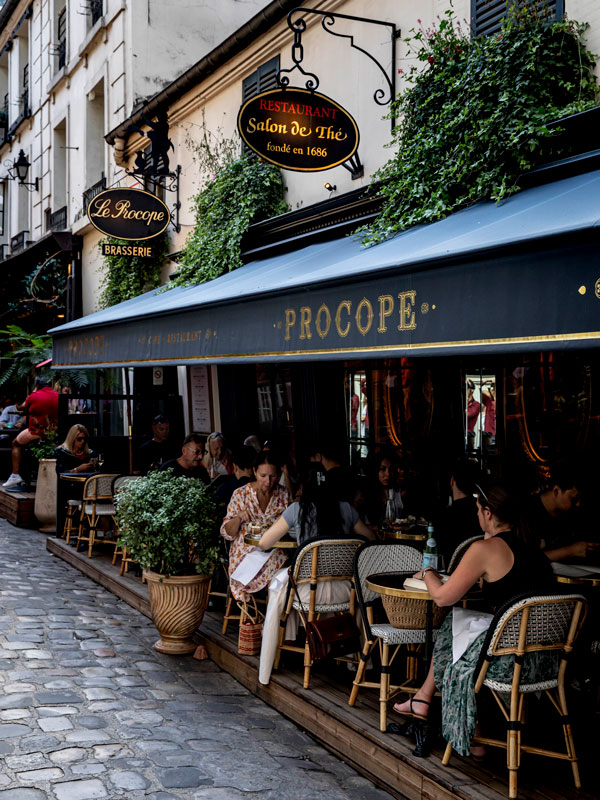
dining outside Procope café in Paris
Have coffee at Procope.

Legendary thinkers – such as Voltaire, Rousseau and Diderot – frequented the cafe in their day. It was even a political hot spot during the French Revolution, where Robespierre. Jacobins and the like met and swapped ideas.
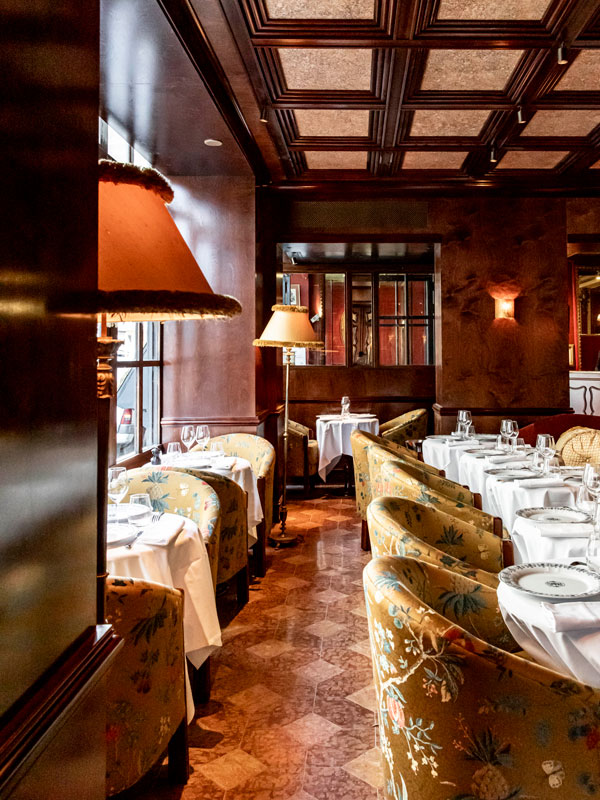
the cafe interior at Procope, Paris
Step into the elegant dining at Procope.

Take a moment to enjoy an espresso or lunch at the cafe, surrounded by a mind-blowing historical legacy.
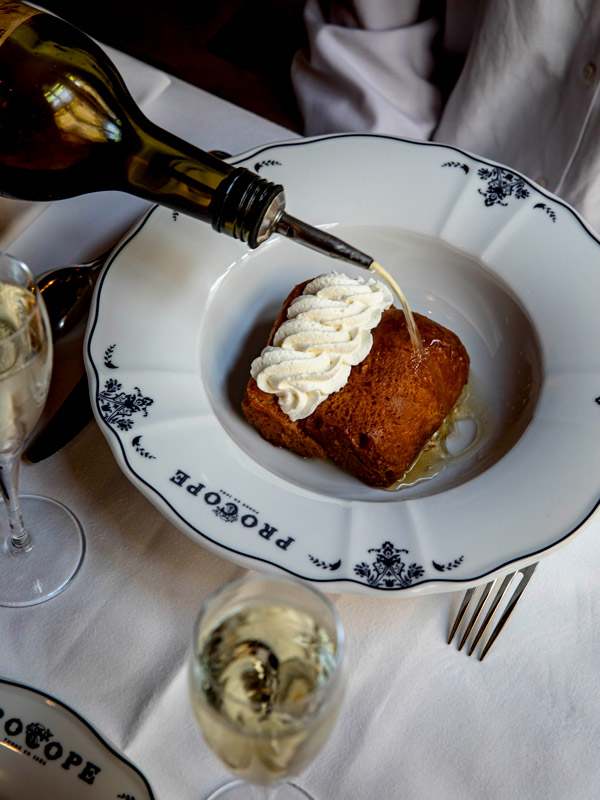
pouring liquid over food on a plate at Procope, Paris
Treat yourself to a Parisian meal at Procope.

3. Visit the Bibliothèque Nationale’s Small Museum

Bibliothèque Nationale de France (aka the National Library of France) is a gorgeous and historic library in the Louvre-Opéra district. The library is over 300 years old but was recently restored and reopened in 2022.
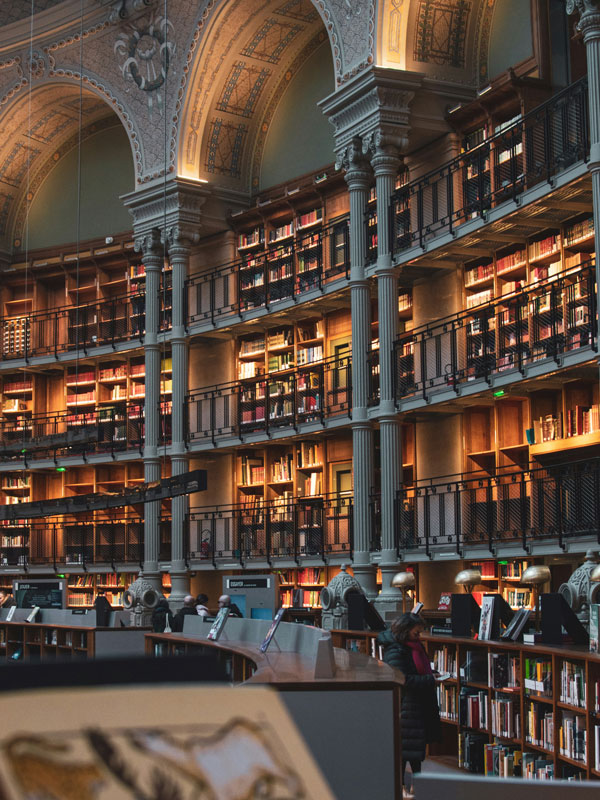
a look inside the Bibliothèque Nationale de France
Be in awe at the largest repository of manuscripts and publications in Paris. (Image: Alf Redo)

The public is free to enjoy the Salle Ovale, a grand oval-shaped atrium lined with more than 20,000 books, and the ground’s beautiful gardens.
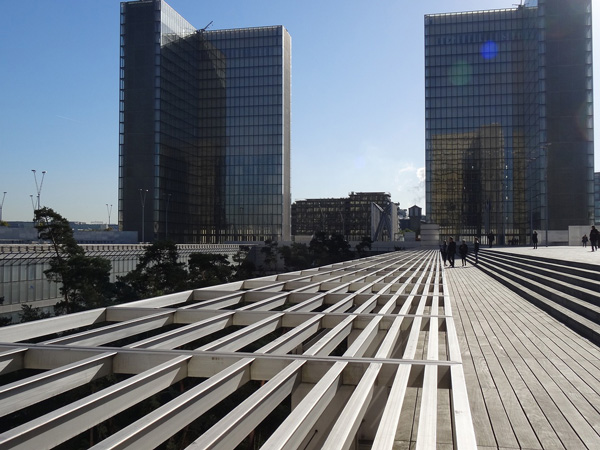
the National Library of France
The library is over 300 years old.

The architecture alone warrants a visit, but we recommend also paying 10 euros for entry to Le Musée de la BNF, a museum within the library with a small but mighty collection of historical artifacts. On display, you’ll see antiquities like a 1st-century Greek tablet depicting a scene from Homer’s Iliad, gilded prayer books and bibles from Louis IX, and original handwritten manuscripts from Mozart’s Don Giovanni.
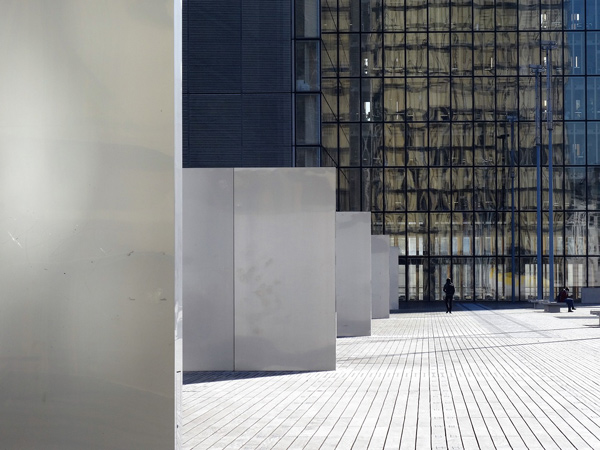
architectural details of the National Library of France
Bibliothèque Nationale de France is considered an example of minimalist modern architecture.

4. See a show at Théâtre du Vieux Colombier

This small theatre in Saint-Germain-des-Prés carries on a long legacy of French performance history. It is one of only three stages for the prestigious Comédie-Française, the oldest active theatre company in the world.

Originally founded in 1680, the Comédie-Française was once an expensive luxury in the 18th century, enjoyed by the French nobility. Today, the stage is open to all of us commoners.

The Théâtre du Vieux-Colombier is a more intimate option to enjoy the troupe’s performances, in comparison to their primary venue, the Salle Richelieu. The century-old theatre now hosts productions all season long, which alternate between classic and contemporary works. Stop by the theatre’s bar and cafe before or after to enjoy a drink and discuss the show.
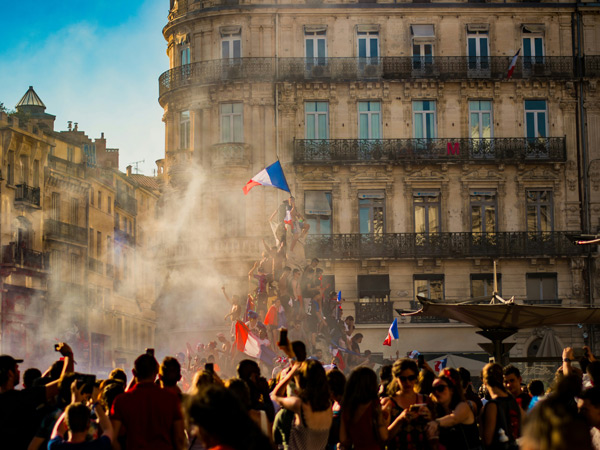
a French crowd during a Comédie performance the streets of Paris
La Marseillaise is sung on the streets of Paris. (Image: Pierre Herman)

5. Shop for local goods at Marché de l’Olive

Marché de l’Olive is a friendly local market with fresh produce, cheese and dry-aged meats. Located in the 18th arrondissement, this covered outdoor market lives on the periphery of the city, just out of reach from where most tourists typically wander. As a result, it’s less busy and more local.

Take your time to browse the stands and ask the vendors about their wares. In your exploration, you may find an excellent French butler adjacent to an organic fruit and vegetable stand across from a tiny flower shop.
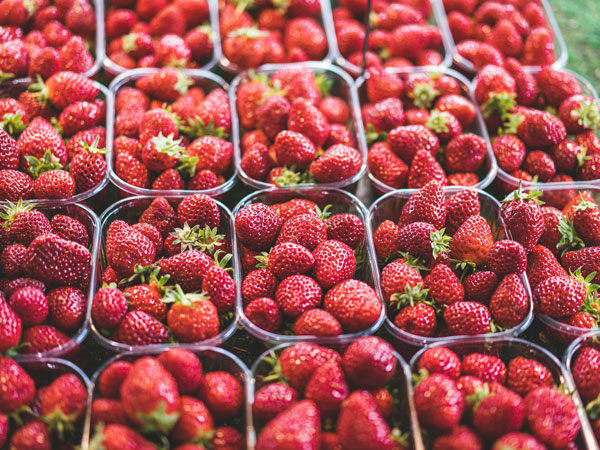
strawberries at Marché de l’Olive
Stop by Marché de l’Olive on your quest to find the best strawberries in Paris. (Image: Big Dodzy)

Weekly travel news, experiences
insider tips, offers,
and more.

6. Explore the past at Château de Fontainebleau

When you’ve already visited the opulent Palace of Versailles, a trip outside of the city to Château de Fontainebleau is in order. The 1500-room château provides a journey back in time to the extravagant lives of French royalty just an hour outside Paris.
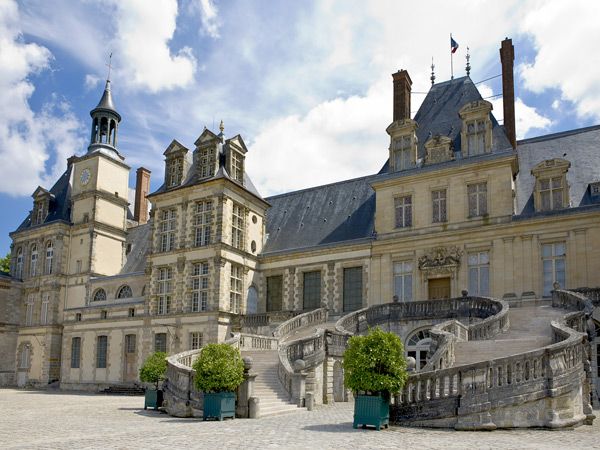
the castle at Château de Fontainebleau in Paris
Generations of French royalty have resided in the Château de Fontainebleau. (Image: CaraMaria via Getty Images)

Thirty-four kings and two emperors once resided at Fontainebleau and left their marks in various ways. During your visit, you’ll see the major projects of Henri IV, the refined decoration of Marie Antoinette, Napoleon I’s apartment and the splendour of Napoleon III.
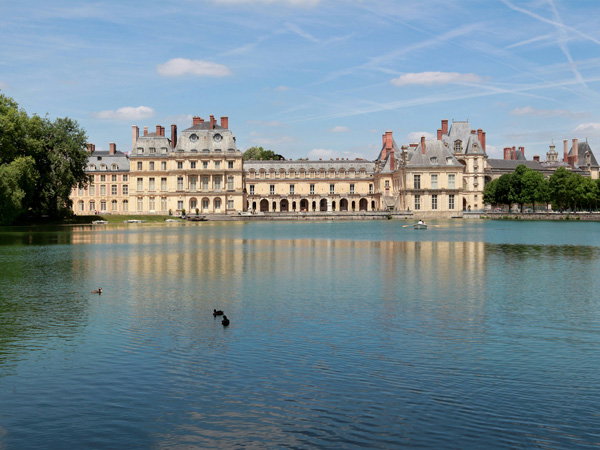
the Château de Fontainebleau fronting a huge body of water
Château de Fontainebleau has been a major royal residence for four centuries. (Image: Stefan K)

Aside from the stunning Renaissance-style architecture of the house and its many royal furnishings, Fontainebleau’s 130 hectares include four main courtyards, three gardens and the largest European parterre (an ornamental garden with paths weaving through the beds). Whether you are a fan of history, art, or architecture, this is the perfect place to spend a half day of exploration.
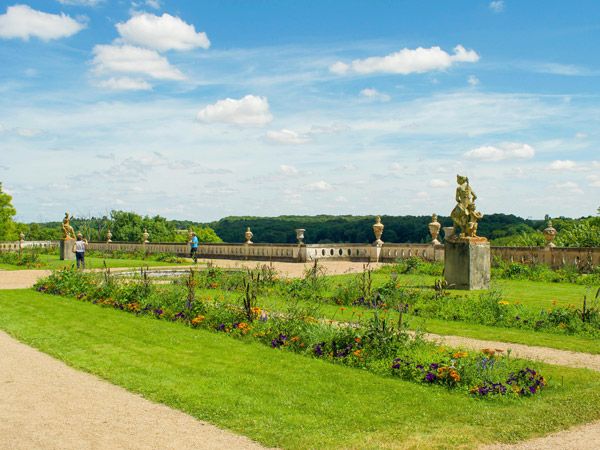
a lush parkland surrounding Château de Fontainebleau
Surrounded by greenery, the château is steeped in nature. (Image: Nazreen Banu)

7. Enjoy the Sculpture Garden at Musée Rodin

Whether you are an art enthusiast or simply seeking a tranquil escape in the heart of the city, the Musée Rodin delivers on both.

The museum highlights renowned sculptor Auguste Rodin’s extensive collection of works. His sculptures flow seamlessly indoors to outdoors, spilling out of the galleries into the beautiful gardens. The Thinker, perhaps his most iconic work, is on display here as well as pieces by other notable artists, like Vincent Van Gogh and Camille Claudel.
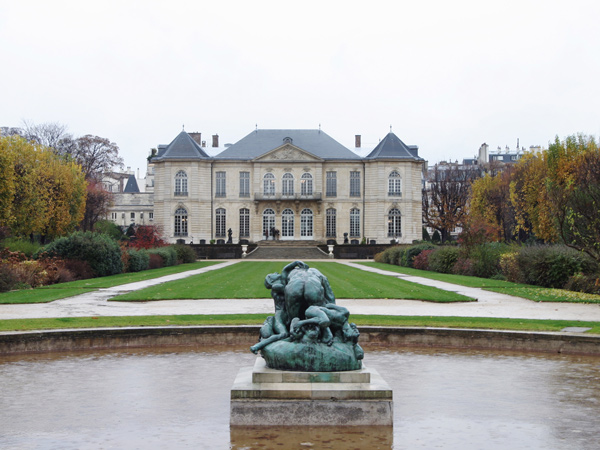
the Sculpture Garden at Musée Rodin
There’s no other museum like the Musée Rodin in Paris. (Image: lillisphotography via Getty Images)

The 18th-century rococo museum building was once a hotel that Rodin himself stayed at. He rented the four ground-floor rooms before taking over the whole building in 1911, laying the foundations for what would become the Musée Rodin in 1919.

The museum is centrally located in the bustling 7th arrondissement, but the peaceful nature of the building and French gardens feel like a world away.

a small bronze replica of Rodin's The Thinker statue sitting under the tree
In this tranquil oasis, you’ll find the sculptures of the French artist Auguste Rodin. (Image: wesvandinter via Getty Images)

Want to see more stories from International Traveller in your Google search results?

  1. Click here to set International Traveller as a preferred source.
  2. Tick the box next to "International Traveller". That's it.
hero media

What the European heatwave means for your summer travel plans

Temperatures are soaring this summer, breaking records across Europe and the UK. 

Euro summer is a feeling like no other. But when a heatwave hits? The dream trip quickly turns into a sweaty mess. Extreme heat is sweeping Europe and the UK this week, with record-high temperatures impacting travel plans across the continent.

And while Australian summers are typically hotter in absolute temperature, many European cities aren’t equipped for high temperatures, resulting in unbearable weather.

Why is it so hot in Europe?

Signs of a hot summer loomed in May, when the mercury hit unprecedented spring highs. Now, extreme high temperature warning alerts have been issued in countries such as Spain, Italy, France, England, the Netherlands and Germany.

France saw its hottest day on record on Wednesday, with an average temperature of 30°C across the day and night. This surpasses the average temperature for June, which is 15°C to 25°C. Dozens of people have died, including 40 from drowning.

In Spain, 212 deaths have been linked to the heatwave.

The UK recorded its hottest June day ever on Wednesday with temperatures soaring to 36.1°C. In an article published by the Met Office – the UK’s national meteorological service – Professor Stephen Belcher CBE, Met Office Chief Scientist, shared his concerns about June’s heat. “To see temperatures like this in the UK in June is sobering. Events like this bring home the implications of climate change, with very high temperatures and humidity bringing significant health implications from heat stress, as well as impacts to a range of sectors such as transport, energy and water supply,” he said.

Heatwaves are becoming increasingly common in Europe and the UK, neither of which is prepared for such extremes. The World Meteorological Organization reported that in 2025, at least 95% of Europe experienced above-average annual temperatures and that the continent was heating up twice as fast as the global average.

How travel is impacted

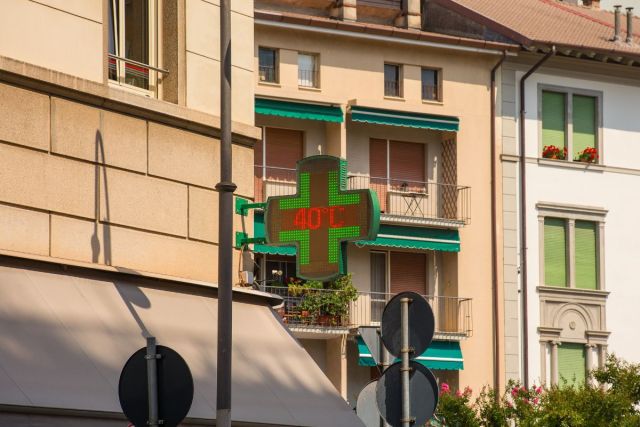
A pharmacy sign displaying 40 degrees Celcius
A pharmacy broadcasting local weather data. (Credit: Getty/Dragoncello)

During a heatwave, power grids, water systems and transport networks can be affected, resulting in disrupted itineraries for travellers. In France, power outages have left thousands without electricity and early closures have been implemented for two of Paris’s biggest attractions, the Eiffel Tower (early afternoon rather than late at night) and the Louvre (two hours early). Eurostar cancelled its London to Paris and Paris to London services from the 22nd to the 25th, and major UK rail companies have been advising travellers to avoid using trains where possible, or to travel during early hours.

If a heatwave is predicted, being flexible with your itinerary and having fully refundable/changeable tickets is key, as extreme heat can force the cancellation of outdoor activities, impact rail and flight services and change the opening hours of sites and eateries.

Why does summer in Europe often feel hotter than summer in Australia?

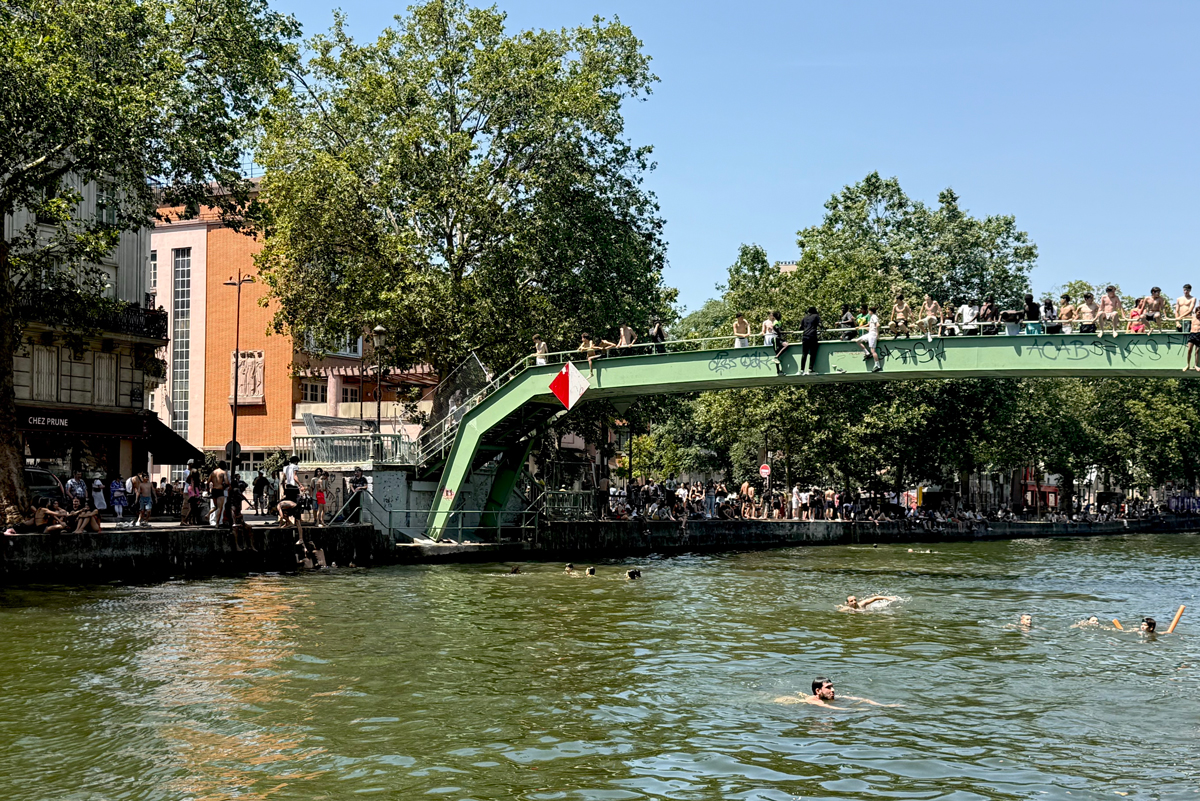
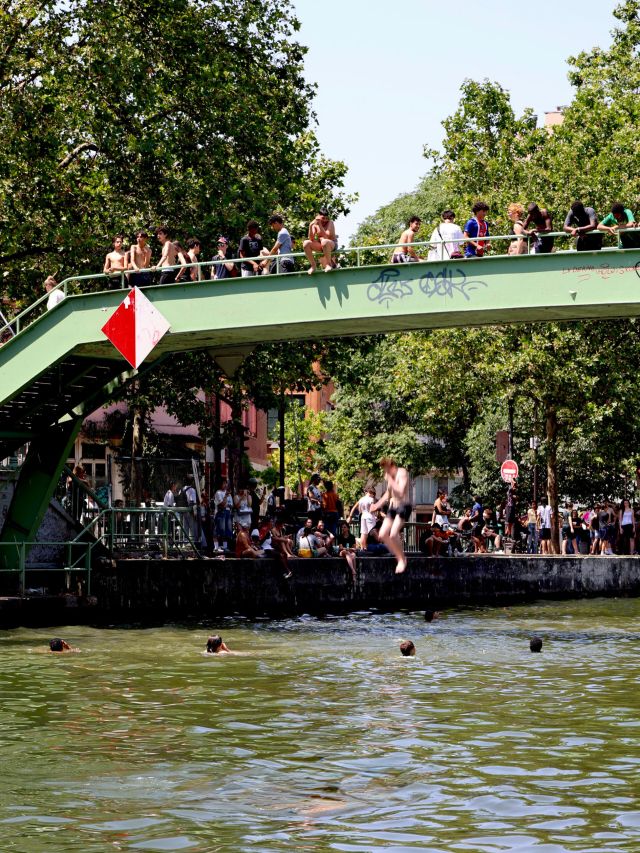
people swimming in the Canal Saint-Martin in Paris
People swimming in the Canal Saint-Martin in Paris to cool off. (Credit: Rachael Thompson)

With some of the highest UV levels in the world, Australians are no strangers to the heat, adapting well to intense weather. But our infrastructure is largely equipped to withstand soaring temperatures with climate-responsive passive design, refrigerated air conditioning or evaporative coolers, as well as swimming spots aplenty.

Buildings in Northern and Western Europe and the UK, however, are constructed to retain heat and handle frosty winters. The lack of universal air conditioning means it generally feels hotter even though the temperature on your app might not look it. During a heatwave, it can feel like you’re in a sauna as cities act like heat traps.

How to stay cool and prepare for another heatwave

Relief is expected across Europe and the UK later this week, but more heatwaves are still possible in the coming months. Summer heat typically peaks in July and August.

Public transport often doesn’t have air conditioning, and buses in particular can be swelteringly hot. If you’re heading outside or your accommodation has no air conditioning, it’s worth buying a spray bottle and a handheld fan from a pharmacy or tourist stand. Check ahead of time if restaurants and cafes have air conditioning and make a booking in advance. The highest temperatures typically hit between 3pm and 6pm, so aim to head outdoors outside of these hours.

Rising temperatures invite travellers to enter a more intentional era of seeing the world. Now more than ever is the time to embrace lower-impact “coolcations” and off-season getaways.