hero media

The ultimate Paris restaurant guide, by arrondissement

Dining out in Paris has never been so easy.

Embarking on a culinary pilgrimage to Paris is a rite of passage for food enthusiasts worldwide. From the historic cobblestone streets of the Marais to the chic boulevards of the 7th arrondissement, each neighbourhood boasts its own unique Paris restaurants.

Whether you’re seeking traditional bistro fare, a local fromagerie, or elaborate pastries, these are some of the best places to eat in each of Paris’ arrondissements.

1st and 2nd arrondissement: The Heart of Paris

1. Le Souffle

Le Souffle has been dishing out souffles from their charming baby blue storefront since 1961. Their menu ranges from foie gras to wild sea bass with artichoke cream, but the stars of the show, as you may guess, are the sweet and savoury souffles.
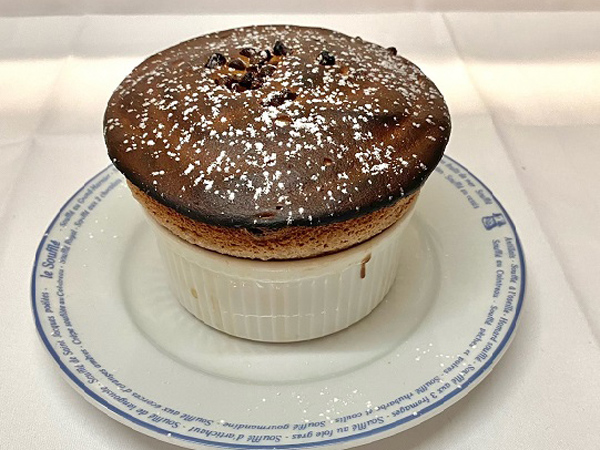
a Chocolate Soufflé at Le Souffle
Order a fluffy Soufflé Chocolat at Le Souffle.

2. Cafe Verlet

Just steps away from the Louvre and Palais Royal, Cafe Verlet is the oldest Parisian coffee company still in operation. Head upstairs for a cozy nook for breakfast, lunch or even afternoon tea.
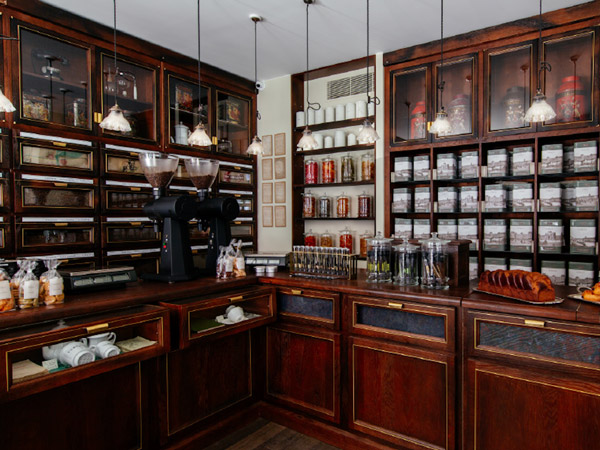
the interior of Cafe Verlet in Paris
Cafe Verlet is the oldest Parisian coffee company still in operation.

3. Angelina

Angelina is an iconic 1903 tearoom on Rue de Rivoli. Be sure to stop by after going to the Louvre for one of their refined pastries and famous hot chocolate.
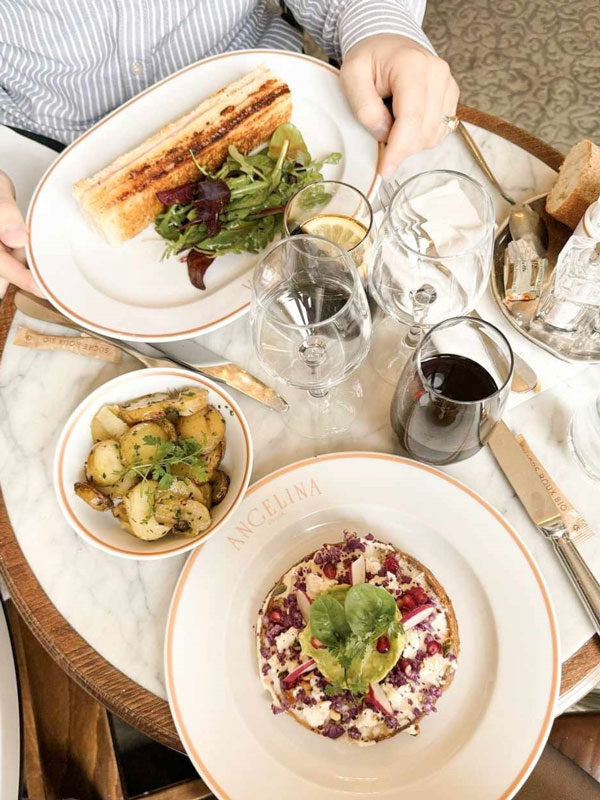
a table-top view of food on the table at Angelina, Paris
Stop by Angelina after visiting the Louvre.

3rd and 4th arrondissement: The Marais

4. L’As du Fallafel

If you’re surprised to see a falafel spot on a Paris food guide, then you definitely haven’t yet been to L’As du Fallafel.

Thick pitas are filled with crisp, flavourful falafel and topped with all sorts of goodies: the marinated eggplant being my personal favourite.
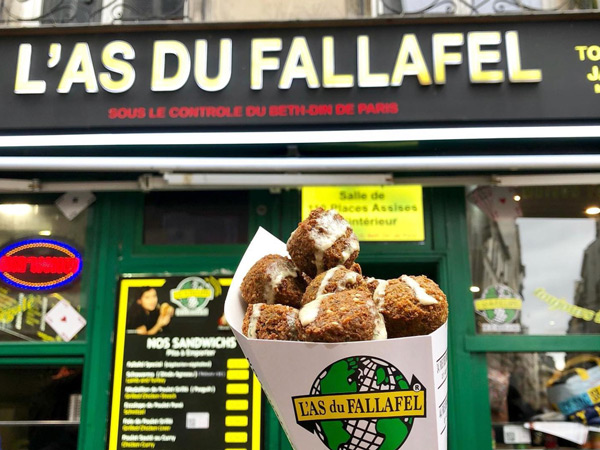
holding a falafel in front of L'As du Fallafel, Paris
L’As du Fallafel is a famed falafel spot in Paris.

5. Le Cafe des Musées

Founded in 1924, Le Cafe des Musées is a time capsule of a 1930s Parisian cafe, with its mosaic, woodwork, and open kitchen. It’s well-known for its bœuf bourguignon served with a pile of creamy mashed potatoes.

a table-top view of a dish at Le Cafe des Musées, Paris
Dine and travel back to the 1930s at Le Cafe des Musées.

5th arrondissement: Latin Quarter

6. La Pie Noir

La Pie Noir is a hidden, local French spot with Breton influences. The razor clams in snail butter are a must-order and the andouillette sausage is a regional, family recipe handed down to the chef.
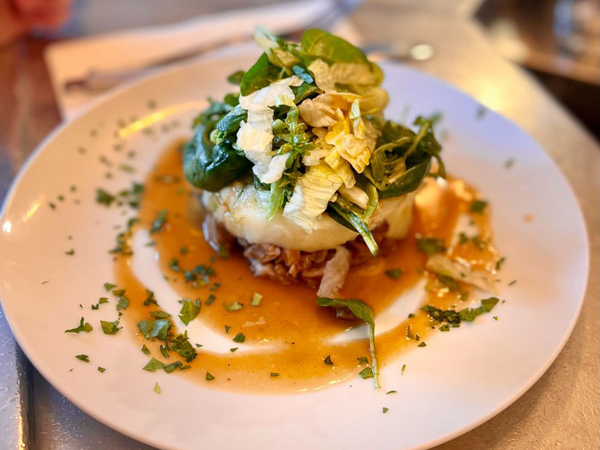
a close-up of a dish at La Pie Noir, Paris
La Pie Noir is a hidden, local French spot with Breton influences.

7. Le Petit Châtelet

Located on a cobbled street by the River Seine, Le Petit Châtelet is a great spot for lunch (and a little people-watching) after visiting Notre Dame. Be sure to end your meal with one of their excellent crème brûlées.
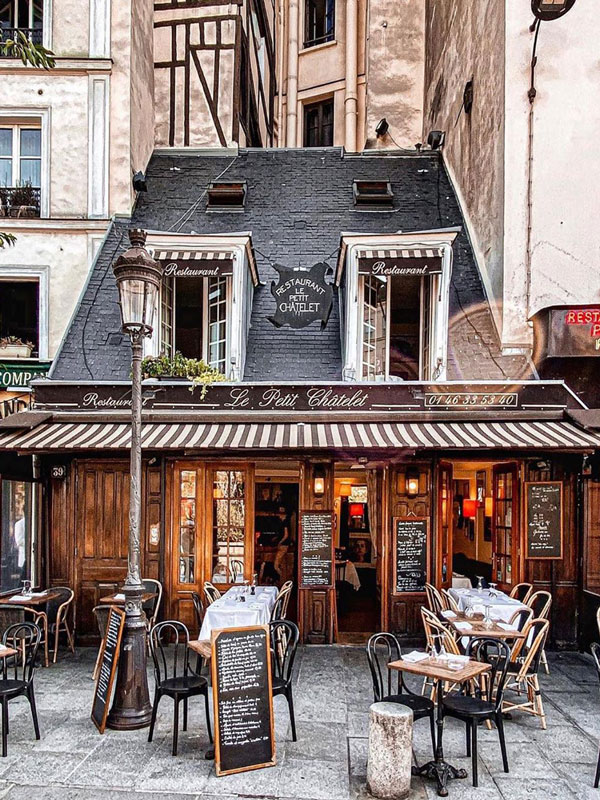
the al fresco space at Le Petit Châtelet, Paris
Le Petit Châtelet is ideal for people-watching. (Image: @dr_difilippo)

6th arrondissement: St. Germain-des-Prés

8. Semilla Paris

Semilla offers contemporary, bright French cuisine with Mediterranean accents surrounded by exposed brick.
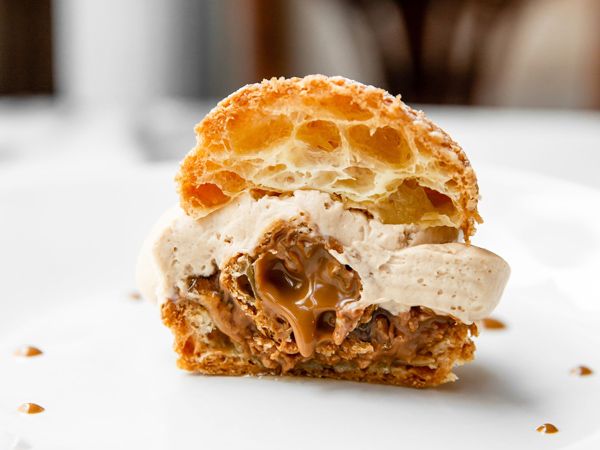
a close-up of pastry at Semilla Paris
Hit up Semilla Paris for indulgent desserts.

There are a few course options to choose from: the two-course, three-course and recommended five-course tasting menu. Plus, it’s open on Sunday.
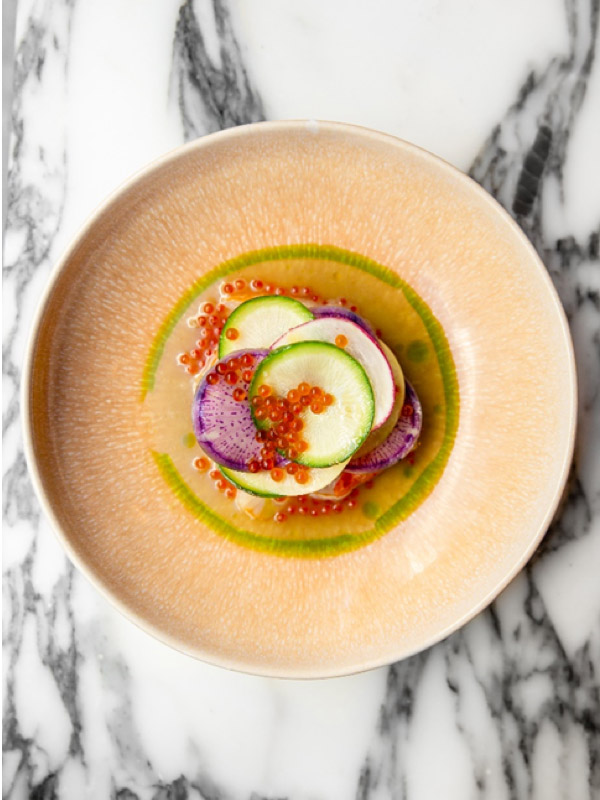
a table-top view of a plated dish at Semilla Paris
Indulge in two-, three- or five-course menus at Semilla Paris.

9. Cafe de Flore

Cafe de Flore is a storied, corner cafe with a long history of famous patrons, from Ernest Hemingway to Karl Lagerfeld.

10. Michalak

Michalak is a contemporary patisserie serving showstopping, creative treats. Check out the glossy mango filled with soft coconut biscuit, mango guava passion fruit confit, and crispy almond or the play on a classic Paris-Brest with peanut praline mousseline cream. There are three Paris locations.

7th arrondissement: Eiffel Tower

11. La Fontaine de Mars

La Fontaine de Mars, a few steps away from the Eiffel Tower, is an old-world cafe with checkered tablecloths, red leather benches, and retro tiled floors.

The perfect place to enjoy some Paris classics, such as steak frites or escargot, preferably with a large glass of red wine.
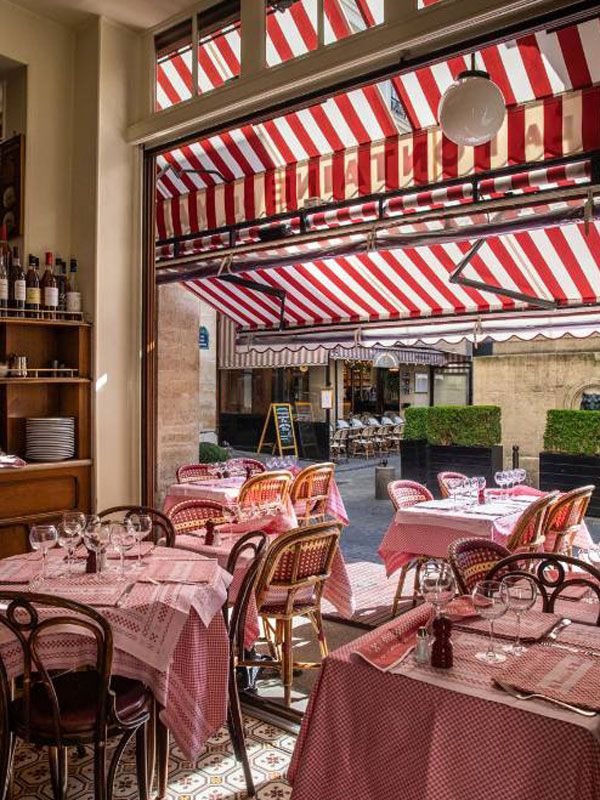
red checkered tables and retro tiled floors at the dining of La Fontaine de Mars
Settle into the iconic La Fontaine de Mars.

8th arrondissement: Champs Elysées

12. Le Relais de l’Entrecôte

Le Relais de l’Entrecôte is a famous, somewhat kitschy restaurant that has just one item on the menu: steak frites. A green salad with walnuts is followed by an extra-tender sirloin of beef and its legendary secret sauce, accompanied by thin golden French fries. There are two other locations in Paris– this one is located between the avenue Georges V and the Avenue des Champs-Elysées in the heart of Paris’ Golden Triangle.

9th arrondissement: Opéra/Pigalle

13. Pétrelle

Pétrelle is a small, quaint restaurant with a romantic, candle-lit setting decorated with flea-market pieces. Chef Lucie Boursier-Mougenot and sommelier Luca Danti serve delicate and healthy market-fresh cuisine paired with fantastic wine.
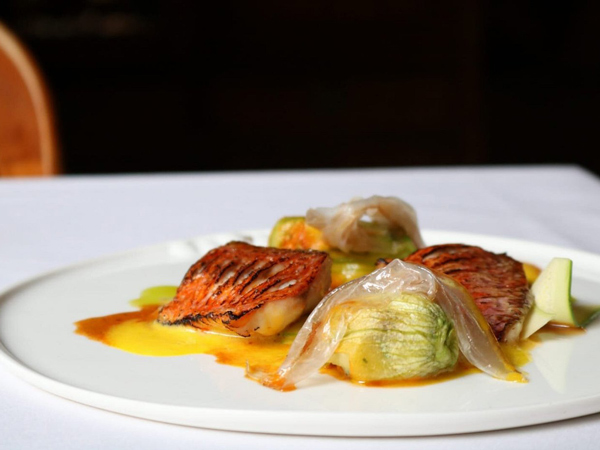
Red Mullet, or Rouget Barbet at Petrelle, Paris
Red Mullet or Rouget Barbet is a staple dish at Pétrelle.

Get the four-course menu with the wine pairing for the full experience.
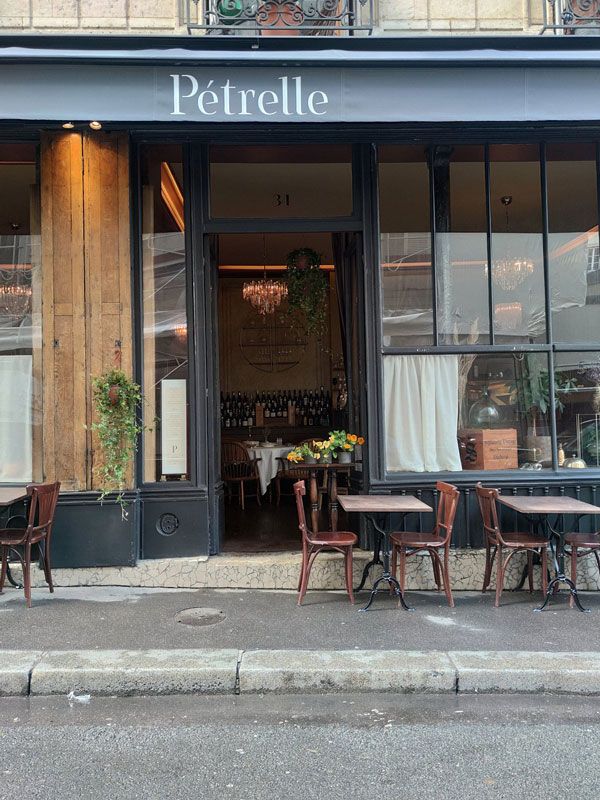
the terrace of Petrelle restaurant in Paris
Head to Pétrelle for a romantic meal.

Weekly travel news, experiences
insider tips, offers,
and more.

14. Le Pantruche

Awarded with Michelin’s Bib Gourmand award, Le Pantruche offers classic French dishes like soufflés and beef in red wine at a reasonable price.

15. Fromagerie Crèmerie Frescolet

This artisan cheese shop in Pigalle is the perfect place to pop into to select cheeses for a picnic. Ask which ones are from the owner’s family farm!
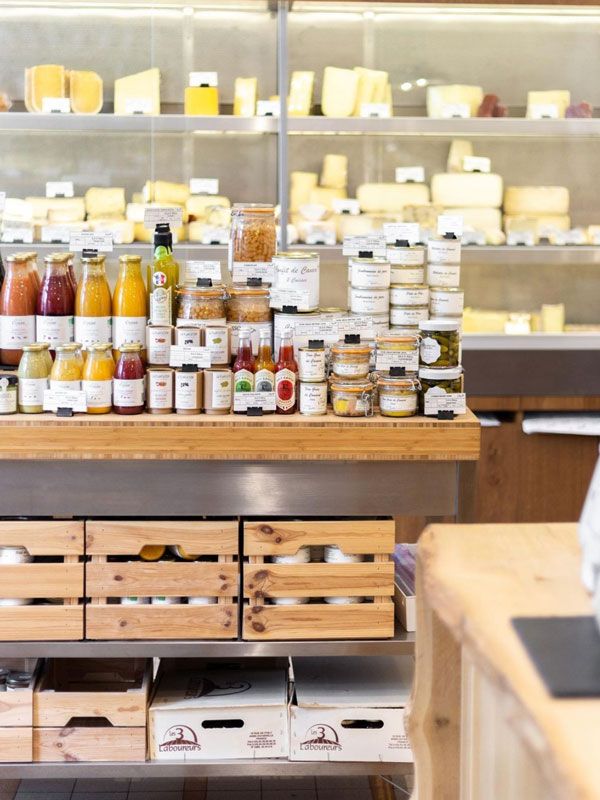
cheese and other products on display at Fromagerie Crèmerie Frescolet
Pop into Fromagerie Crèmerie Frescolet to select cheeses for a picnic.

10th arrondissement: Canal Saint-Martin

16. Du Pain et des Idées

This internationally beloved bakery is a must-stop for those looking to experience the best in Parisian bread (and aren’t we all?).
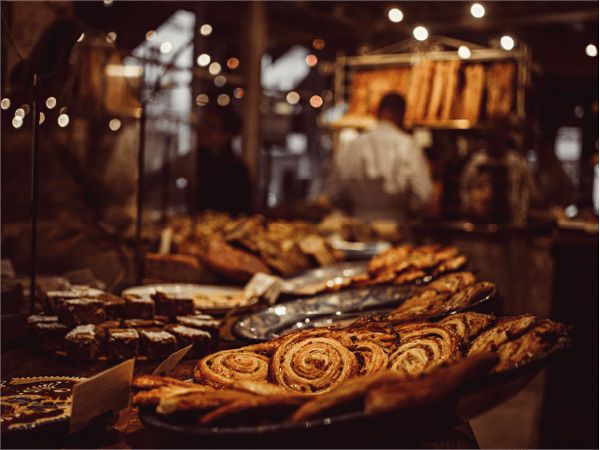
Parisian breads at Du Pain et des Idées
Try one of the best Parisian breads at Du Pain et des Idées.

From the hand-painted glass ceiling to their signature Pain des Amis, this place is truly special from your first step into the shop to your first bite.
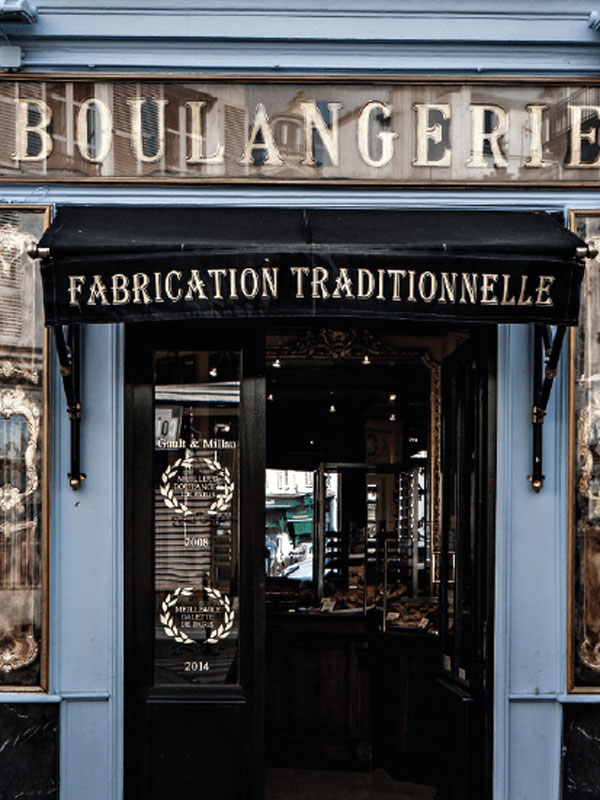
the boulangerie at Du Pain et des Idées, Paris
Step into the beloved boulangerie.

17. Ten Belles

Ten Belles is a sustainable sourdough bakery and specialty coffee roaster. There are two other Paris locations as well, but this little corner shop in Canal Saint-Martin is the original location.

18. Viande et Chef

This butcher shop offers high quality meat with an ethos of respect for animals, breeders and the environment. The shop works directly with small farmers and breeders to source delicacies like lamb from the salt meadows of Mont-Saint-Michel, beef from Aubrac, and Kintoa pigs from the Basque Country.

18th arrondissement: Montmartre

19. Les Choupettes de Chouchou

This store does one thing and does it well: chouquettes (aka choux puffs). The little balls of choux pastry are filled with fresh whipped cream when you order. Chocolate, lemon and coffee flavored whipped creams are available as well!

es Choupettes de Chouchou's chouquettes in Paris
Head to Les Choupettes de Chouchou for chouquettes.

20. Le Grenier à Pain

Le Grenier à Pain is a bakery that has several locations around the outskirts of Paris. Make sure you stop into one of them for the perfect croissant. It’s flaky and crisp, yet soft and chewy. Incredibly buttery, yet not a bit greasy.

Want to see more stories from International Traveller in your Google search results?

  1. Click here to set International Traveller as a preferred source.
  2. Tick the box next to "International Traveller". That's it.
hero media

What the European heatwave means for your summer travel plans

Temperatures are soaring this summer, breaking records across Europe and the UK. 

Euro summer is a feeling like no other. But when a heatwave hits? The dream trip quickly turns into a sweaty mess. Extreme heat is sweeping Europe and the UK this week, with record-high temperatures impacting travel plans across the continent.

And while Australian summers are typically hotter in absolute temperature, many European cities aren’t equipped for high temperatures, resulting in unbearable weather.

Why is it so hot in Europe?

Signs of a hot summer loomed in May, when the mercury hit unprecedented spring highs. Now, extreme high temperature warning alerts have been issued in countries such as Spain, Italy, France, England, the Netherlands and Germany.

France saw its hottest day on record on Wednesday, with an average temperature of 30°C across the day and night. This surpasses the average temperature for June, which is 15°C to 25°C. Dozens of people have died, including 40 from drowning.

In Spain, 212 deaths have been linked to the heatwave.

The UK recorded its hottest June day ever on Wednesday with temperatures soaring to 36.1°C. In an article published by the Met Office – the UK’s national meteorological service – Professor Stephen Belcher CBE, Met Office Chief Scientist, shared his concerns about June’s heat. “To see temperatures like this in the UK in June is sobering. Events like this bring home the implications of climate change, with very high temperatures and humidity bringing significant health implications from heat stress, as well as impacts to a range of sectors such as transport, energy and water supply,” he said.

Heatwaves are becoming increasingly common in Europe and the UK, neither of which is prepared for such extremes. The World Meteorological Organization reported that in 2025, at least 95% of Europe experienced above-average annual temperatures and that the continent was heating up twice as fast as the global average.

How travel is impacted

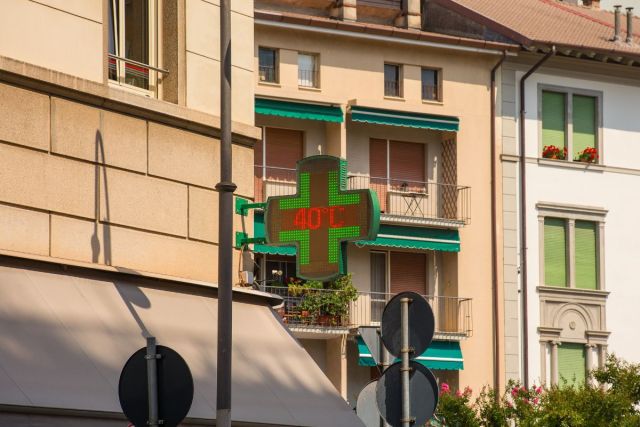
A pharmacy sign displaying 40 degrees Celcius
A pharmacy broadcasting local weather data. (Credit: Getty/Dragoncello)

During a heatwave, power grids, water systems and transport networks can be affected, resulting in disrupted itineraries for travellers. In France, power outages have left thousands without electricity and early closures have been implemented for two of Paris’s biggest attractions, the Eiffel Tower (early afternoon rather than late at night) and the Louvre (two hours early). Eurostar cancelled its London to Paris and Paris to London services from the 22nd to the 25th, and major UK rail companies have been advising travellers to avoid using trains where possible, or to travel during early hours.

If a heatwave is predicted, being flexible with your itinerary and having fully refundable/changeable tickets is key, as extreme heat can force the cancellation of outdoor activities, impact rail and flight services and change the opening hours of sites and eateries.

Why does summer in Europe often feel hotter than summer in Australia?

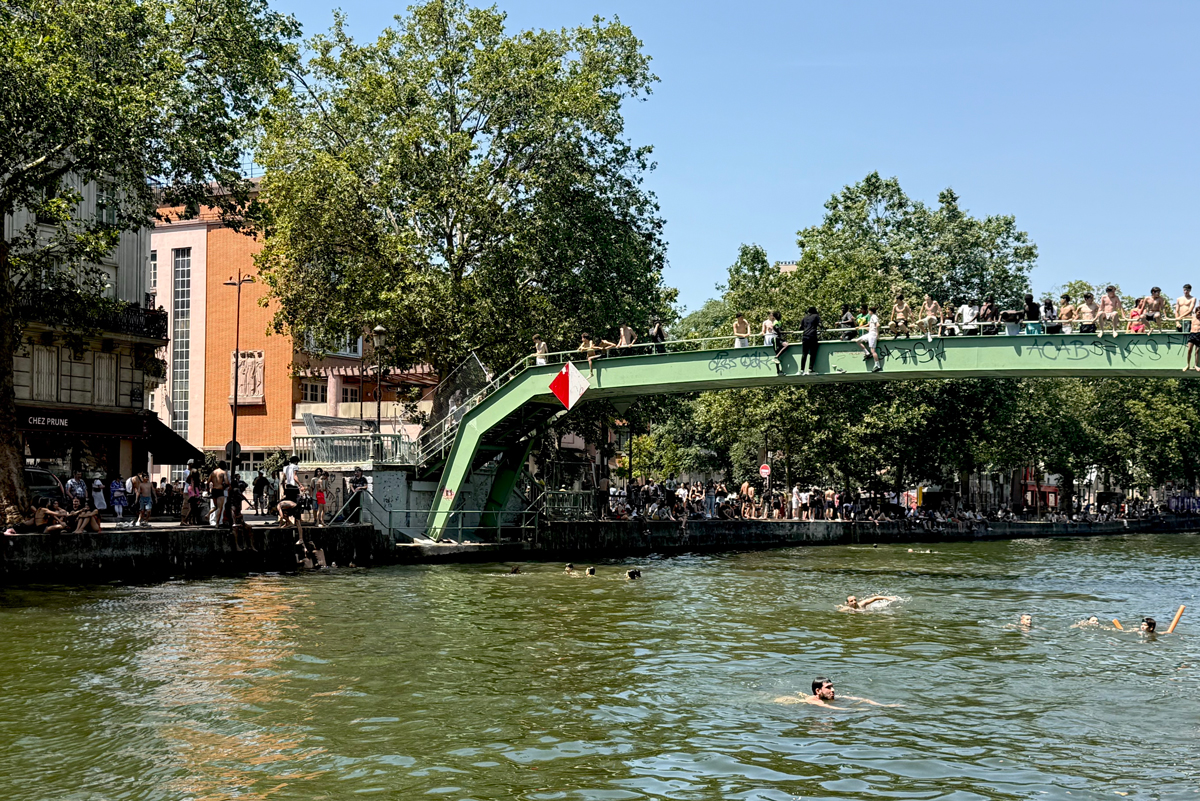
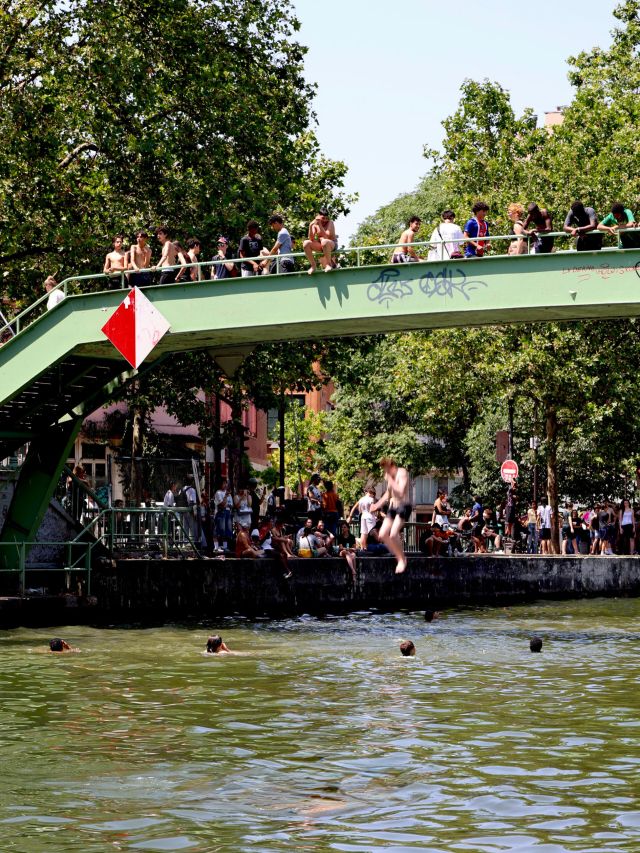
people swimming in the Canal Saint-Martin in Paris
People swimming in the Canal Saint-Martin in Paris to cool off. (Credit: Rachael Thompson)

With some of the highest UV levels in the world, Australians are no strangers to the heat, adapting well to intense weather. But our infrastructure is largely equipped to withstand soaring temperatures with climate-responsive passive design, refrigerated air conditioning or evaporative coolers, as well as swimming spots aplenty.

Buildings in Northern and Western Europe and the UK, however, are constructed to retain heat and handle frosty winters. The lack of universal air conditioning means it generally feels hotter even though the temperature on your app might not look it. During a heatwave, it can feel like you’re in a sauna as cities act like heat traps.

How to stay cool and prepare for another heatwave

Relief is expected across Europe and the UK later this week, but more heatwaves are still possible in the coming months. Summer heat typically peaks in July and August.

Public transport often doesn’t have air conditioning, and buses in particular can be swelteringly hot. If you’re heading outside or your accommodation has no air conditioning, it’s worth buying a spray bottle and a handheld fan from a pharmacy or tourist stand. Check ahead of time if restaurants and cafes have air conditioning and make a booking in advance. The highest temperatures typically hit between 3pm and 6pm, so aim to head outdoors outside of these hours.

Rising temperatures invite travellers to enter a more intentional era of seeing the world. Now more than ever is the time to embrace lower-impact “coolcations” and off-season getaways.

20 Unmissable Paris Restaurants - International Traveller