hero media

5 alternative Paris neighbourhoods to explore

Get off the beaten tourist track in Paris and you’ll see the City of Love in an invigorating new light.

Away from the obvious visitor magnets – you know, the Eiffel Tower, the Louvre Museum and Montmartre’s Sacré-Coeur Basilica – the French capital has so many intriguing neighbourhoods to explore, full of quintessential and contemporary Parisian charms and enticing places in which to eat, drink, shop and browse.

Here are five to get you started. Transport-wise, they’re well-connected and easy to reach, with Metro stations on the doorstep and docking points if you’re using the city-wide Velib’ bike-hire scheme.
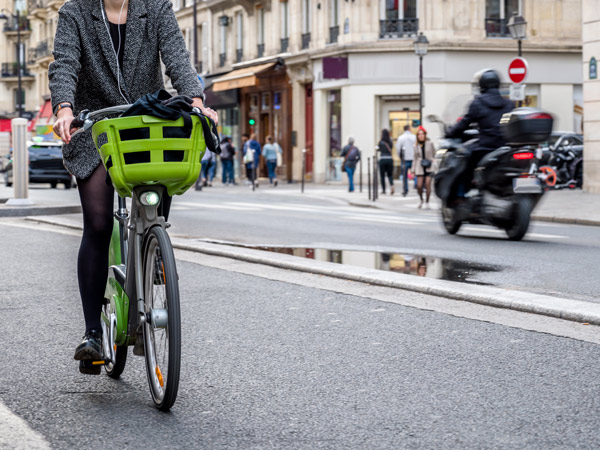
woman riding Velib bike in paris
Stay active by getting around Paris on a Velib bike.

1. Butte-aux-Cailles

With its narrow, undulating lanes, cute low-rise houses and pretty domed church (Église Sainte-Anne), there is a slight air of Montmartre about this quaint, village-like enclave, a short walk from bustling Place d’Italie in the 13th arrondissement.
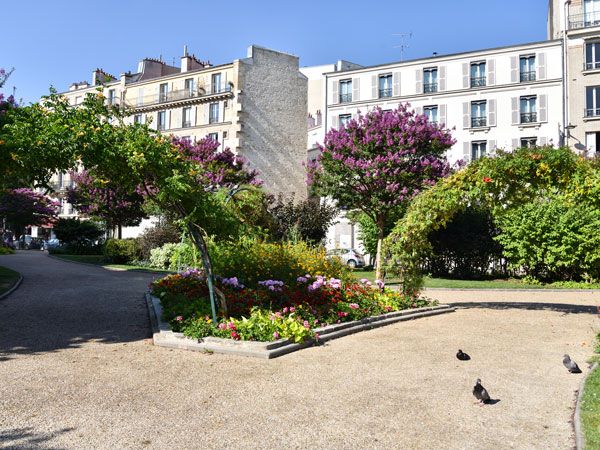
a serene landscape with buildings at Place d’Italie in Paris
Place d’Italie is a lovely green space worth exploring.

Unlike Montmartre, however, you might be the only tourist here. A lovely, tranquil place to potter round, Butte-aux-Cailles has cosy pavement cafes and bars, galleries and ateliers where you might glimpse painters and craftspeople at work, and a colourful array of graffiti and murals, including the stencil art of Miss. Tic – a well-known French female artist.
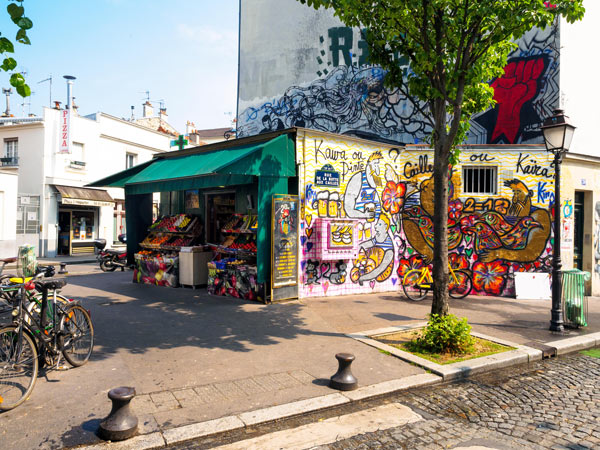
street art occupying the walls of the structures along Butte-aux-Cailles
Get absorbed in the Nouveau architecture and street art along the cobbled lanes.

Her etchings adorn the facade of Chez Gladines, a popular local restaurant serving stews and other classic dishes from the Basque region of southwestern France.

It’s possible to sign up for guided walking tours that explain the hidden meanings behind the street art of Butte-aux-Cailles and beyond.
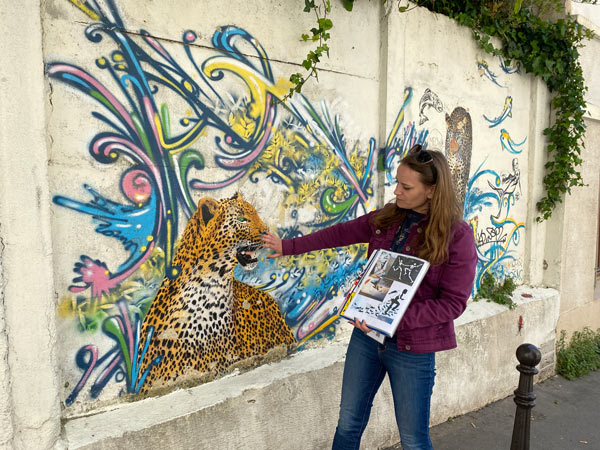
Mosko and Anis street art in paris
Take a Street Art Tour to see artworks around the city. (Artwork: Mosko and Anis)

2. Belleville

Spray-painted walls will also catch the eye in the hilly streets of Belleville, which, like Butte-aux-Cailles (and Montmartre) was an independent commune until 1860 when it was swallowed into the capital’s expanding sprawl.
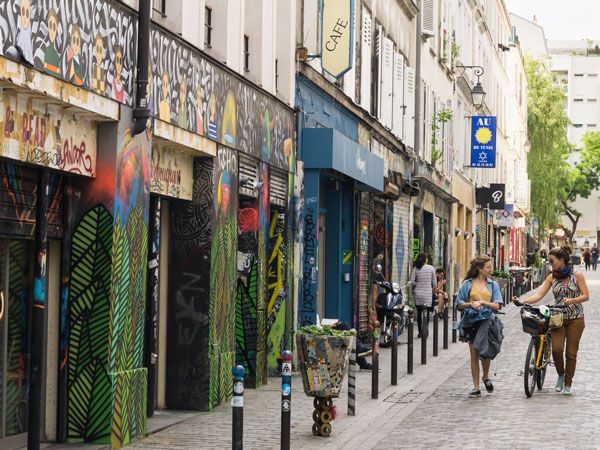
people strolling along Belleville neighbourhood in Paris
Marvel at the bustling neighborhood in Paris.

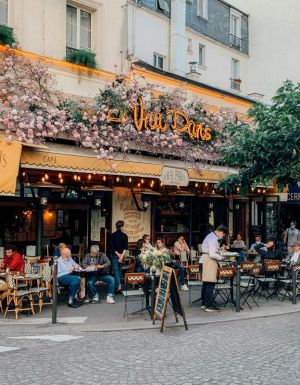
Located in the 20th arrondissement, in Paris’ northwest, Belleville was the birthplace of the legendary singer Edith Piaf, whose tunes are still sung and played on the accordion at timeless neighbourhood haunts like Le Vieux Belleville.

Traditionally home to working-class Parisians, and later immigrants from Africa and Asia, Belleville is now a hotbed for affluent creatives nicknamed Bobos (bourgeois bohemians). You’ll see them mingling at trendy bistros like Moncoeur Belleville, whose tables and chairs spill out onto a pavement looking back towards central Paris, with Eiffel’s so-called “metal asparagus" looming in the distance.
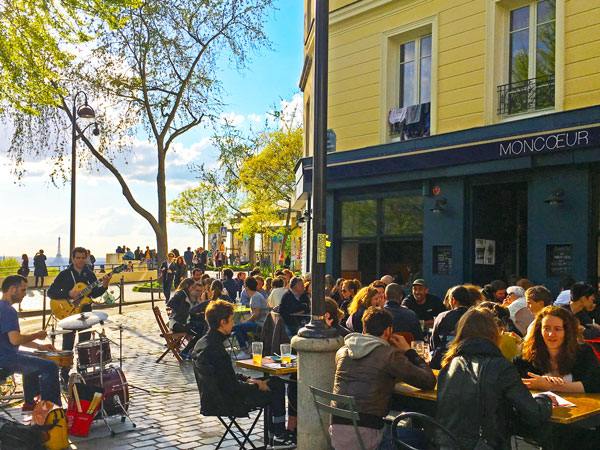
customers sitting outside Moncoeur Belleville with Parisian street performers on the side
Catch Parisian street performers at sundown.

Steps lead down into Parc de Belleville, a hillside green space with picnic-friendly lawns, floral displays and vines (Belleville folk have been producing wine for generations).
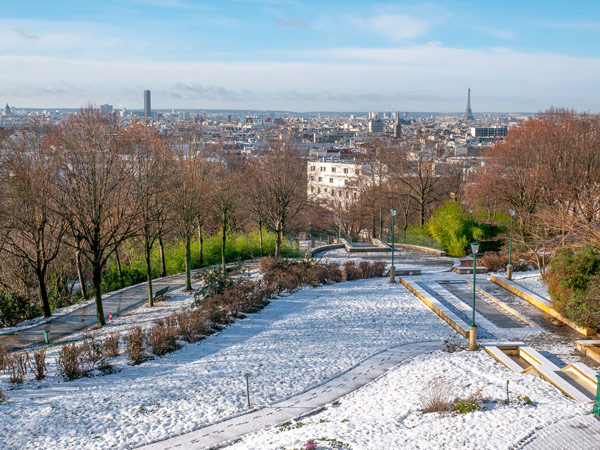
an aerial view of Parc de Belleville in Paris
Parc de Belleville overlooks the city skyline.

3. Chateau d’Eau

Taking its name from an elaborate fountain that gushed here in the 19th century, Chateau d’Eau – meaning water tower or palace – springs off Place de la Republique, a vast square where skateboarders clatter about and protesters congregate for demonstrations.
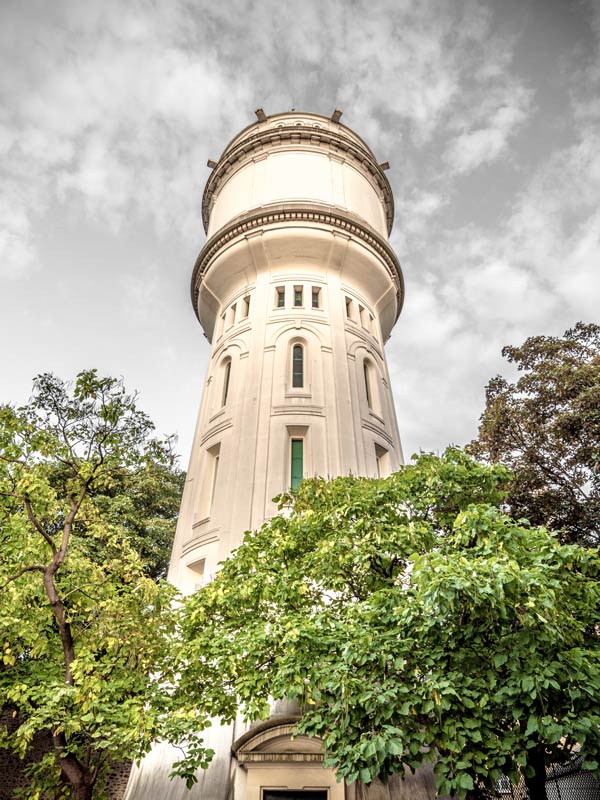
the towering structure of Chateau d’Eau
Gaze in awe at the Chateau d’Eau Water Tower.

Much calmer, Rue du Chateau d’Eau is home to discreet addresses, including Sergeant Paper, which has cool retro posters, and Mamamushi, a “slow fashion" store specialising in hand-picked clothes, jewellery and homewares.
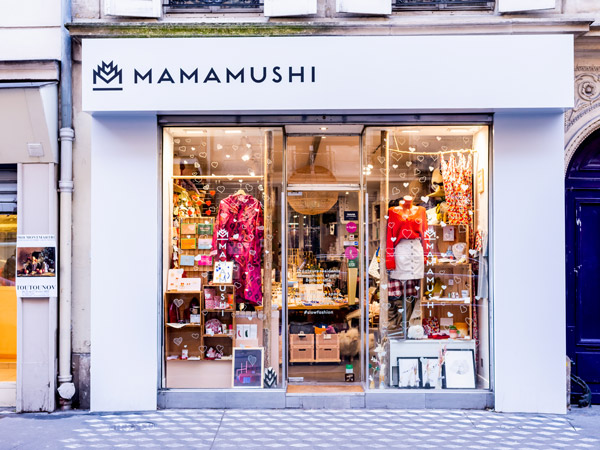
front view entrance of Mamamushi boutique shop in Paris
Shop fashionable items at Mamamushi.

Delectable scents drift from corner boulangerie Mamiche. Atmospheric neighbourhood stalwart Marche Saint-Martin sells fresh produce and takeaway snacks in a striking 1880s-built hall, while Les Resistants is a rustic-chic newcomer that champions sustainable seasonal organic food and wines.
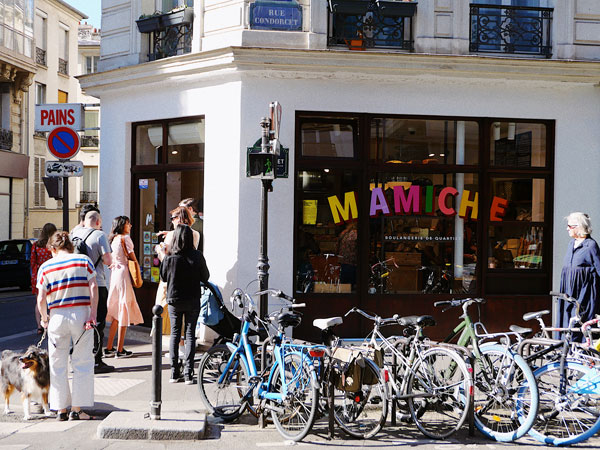
bicycles parked outside Mamiche bakery in Paris
Grab a bite of delectable French pastries at Mamiche.

Particularly good value are its three-course lunch menus, priced €24 ($37), and featuring dishes like butternut squash veloute with Corsican chestnut honey cream, and pollack with turnips and beetroot.

Afterwards, take a stroll by nearby Canal Saint-Martin, a waterway that snakes a picturesque path through eastern Paris.
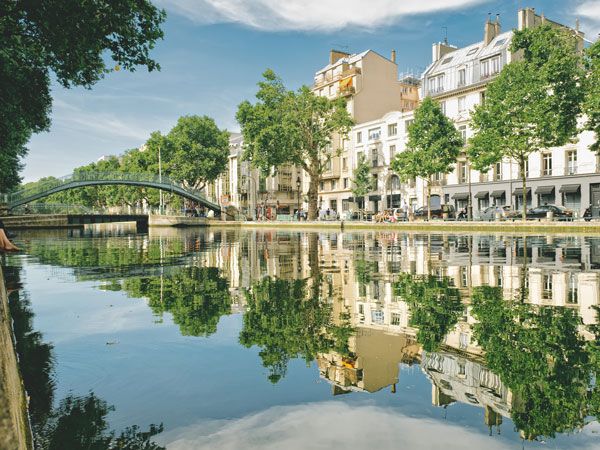
a typical day at Canal Saint-Martin, Paris
Wade your way through the Canal Saint-Martin.

4. South Pigalle

Sloping south of the unmistakable Moulin Rouge, South Pigalle has experienced quite the change in fortunes over the years.
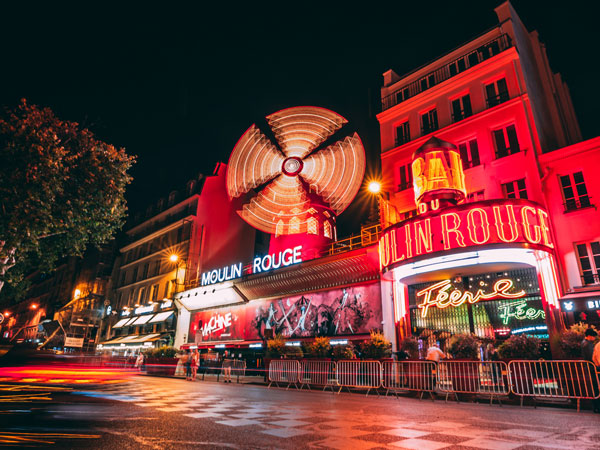
the vibrant and lively Moulin Rouge in Paris
Moulin Rouge comes alive at night. (Image: Vadim Sadovski)

Booming during the Belle Epoque – the era between 1871 and 1914 – it later fell into the doldrums, becoming a notorious red-light zone. Gentrification has swept through, however, even delivering a hip new neighbourhood moniker, SoPi.
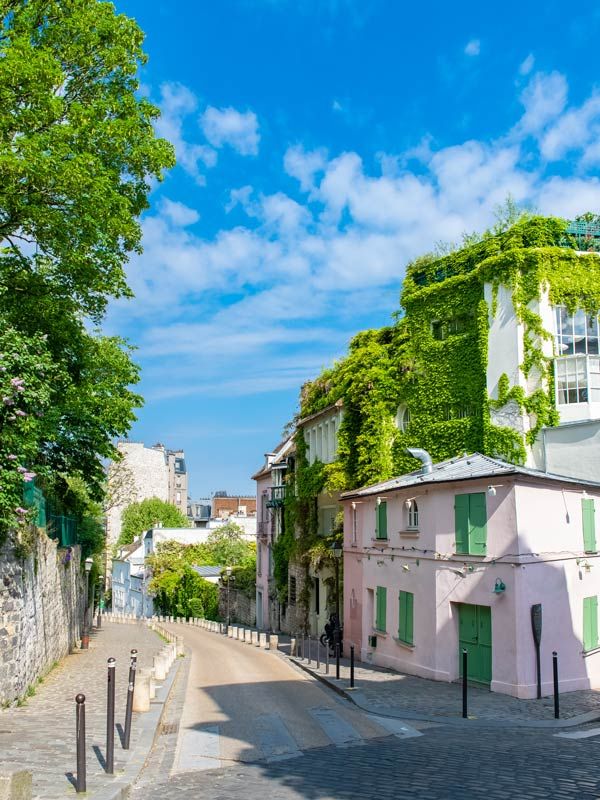
South Pigalle on a bright, sunny day
South Pigalle is a former red-light district but is now lined with boutique shops.

Enjoy a flat white from KB Coffee Roasters – run by a Frenchman who “discovered" artisan coffee in Australia – and wander down the historic thoroughfare, Rue des Martyrs.

It’s lined with everything from North African greengrocers and old-school patisseries to stylish fashion stores, bistros and an upscale chocolate shop by Michelin-feted chef Alain Ducasse.

Glorious neoclassical architecture can be seen in the side streets (the area was once dubbed “New Athens"), while one townhouse, sporting lime-green shaded shutters, is now the Museum of Romantic Life.

Decked out with period furniture and paintings, it’s the former home of 19th-century Dutch-French painter Ary Scheffer, who would entertain writers and artists like Charles Dickens, George Sand and Eugene Delacroix here.

Weekly travel news, experiences
insider tips, offers,
and more.

5. La Defense

The forest of futuristic high rises that shimmer on the western limits of Paris, comprising Europe’s biggest purpose-built business district, hide some pleasant surprises.

Among them is France’s largest open-air gallery. Adding colour to the glass, steel and concrete surrounds are almost 70 sculptures, including a fantastical blue, red and yellow piece by Joan Miro, perched outside a Westfield mall, and a giant bronze thumb by Cesar Baldaccini, a friend of Pablo Picasso.
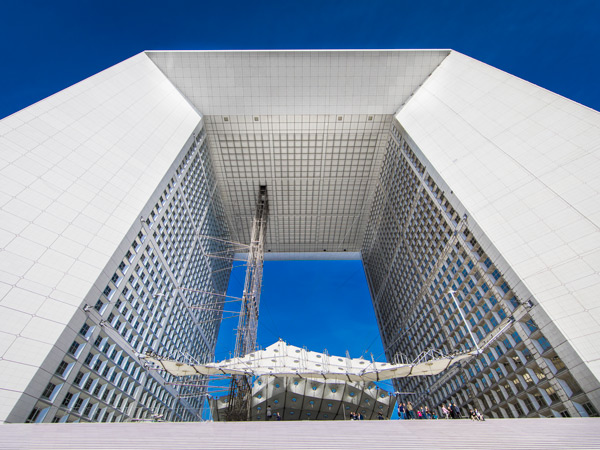
the towering structure of Grande Arche de La Défense in Paris
Grande Arche de La Défense majestically sits on the outskirts of Paris. (Image: Johan Otto Von Spreckelsen)

Events pop up throughout the year on La Defense’s central promenade, including a summer jazz festival, DJ-led concerts and Christmas markets. The backdrop is the Grande Arche de la Defense, a huge cube-like landmark that sits arrow-straight in line with the Arc de Triomphe, which is visible five kilometres away.

You can take a lift up to the rooftop terrace-restaurant for wining, dining and Parisian panoramas. Or enjoy views of the French capital, while rubbing shoulders with the after-work office crowd, at sleek cocktail joint Octopus or Mama’s Penthouse, a flamboyantly-decorated retreat on the 14th floor of Mama Shelter, one of the latest hotels to mushroom in this ever-evolving district.
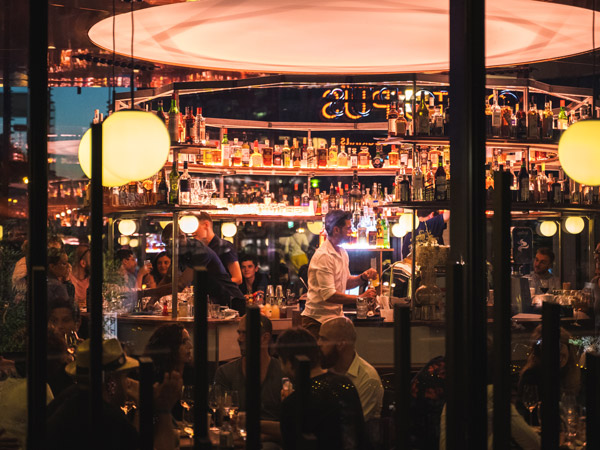
a crowded bar inside Octopus Paris
Cap off your day with a glass of cocktail at Octopus Paris.
For more insider tips to the City of Lights, read our travel guide to Paris.

Want to see more stories from International Traveller in your Google search results?

  1. Click here to set International Traveller as a preferred source.
  2. Tick the box next to "International Traveller". That's it.
hero media

What the European heatwave means for your summer travel plans

Temperatures are soaring this summer, breaking records across Europe and the UK. 

Euro summer is a feeling like no other. But when a heatwave hits? The dream trip quickly turns into a sweaty mess. Extreme heat is sweeping Europe and the UK this week, with record-high temperatures impacting travel plans across the continent.

And while Australian summers are typically hotter in absolute temperature, many European cities aren’t equipped for high temperatures, resulting in unbearable weather.

Why is it so hot in Europe?

Signs of a hot summer loomed in May, when the mercury hit unprecedented spring highs. Now, extreme high temperature warning alerts have been issued in countries such as Spain, Italy, France, England, the Netherlands and Germany.

France saw its hottest day on record on Wednesday, with an average temperature of 30°C across the day and night. This surpasses the average temperature for June, which is 15°C to 25°C. Dozens of people have died, including 40 from drowning.

In Spain, 212 deaths have been linked to the heatwave.

The UK recorded its hottest June day ever on Wednesday with temperatures soaring to 36.1°C. In an article published by the Met Office – the UK’s national meteorological service – Professor Stephen Belcher CBE, Met Office Chief Scientist, shared his concerns about June’s heat. “To see temperatures like this in the UK in June is sobering. Events like this bring home the implications of climate change, with very high temperatures and humidity bringing significant health implications from heat stress, as well as impacts to a range of sectors such as transport, energy and water supply,” he said.

Heatwaves are becoming increasingly common in Europe and the UK, neither of which is prepared for such extremes. The World Meteorological Organization reported that in 2025, at least 95% of Europe experienced above-average annual temperatures and that the continent was heating up twice as fast as the global average.

How travel is impacted

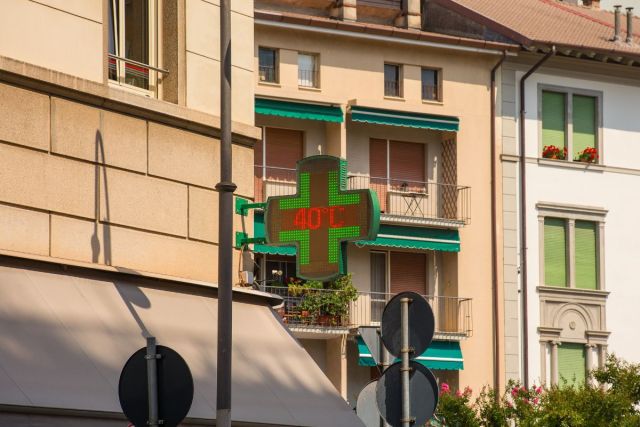
A pharmacy sign displaying 40 degrees Celcius
A pharmacy broadcasting local weather data. (Credit: Getty/Dragoncello)

During a heatwave, power grids, water systems and transport networks can be affected, resulting in disrupted itineraries for travellers. In France, power outages have left thousands without electricity and early closures have been implemented for two of Paris’s biggest attractions, the Eiffel Tower (early afternoon rather than late at night) and the Louvre (two hours early). Eurostar cancelled its London to Paris and Paris to London services from the 22nd to the 25th, and major UK rail companies have been advising travellers to avoid using trains where possible, or to travel during early hours.

If a heatwave is predicted, being flexible with your itinerary and having fully refundable/changeable tickets is key, as extreme heat can force the cancellation of outdoor activities, impact rail and flight services and change the opening hours of sites and eateries.

Why does summer in Europe often feel hotter than summer in Australia?

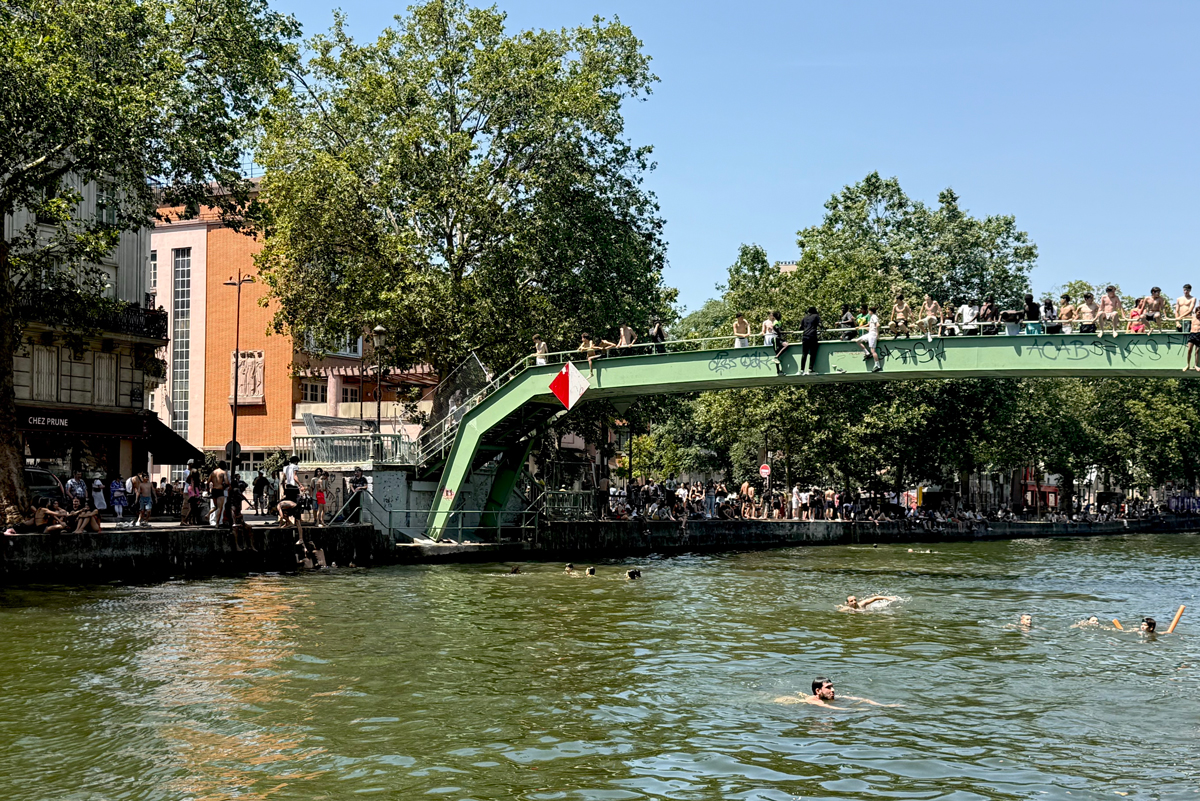
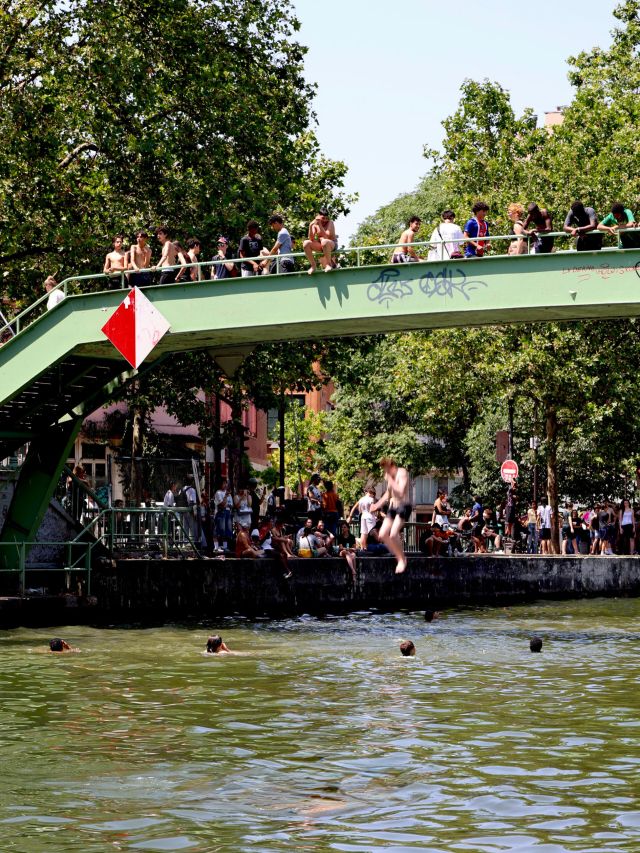
people swimming in the Canal Saint-Martin in Paris
People swimming in the Canal Saint-Martin in Paris to cool off. (Credit: Rachael Thompson)

With some of the highest UV levels in the world, Australians are no strangers to the heat, adapting well to intense weather. But our infrastructure is largely equipped to withstand soaring temperatures with climate-responsive passive design, refrigerated air conditioning or evaporative coolers, as well as swimming spots aplenty.

Buildings in Northern and Western Europe and the UK, however, are constructed to retain heat and handle frosty winters. The lack of universal air conditioning means it generally feels hotter even though the temperature on your app might not look it. During a heatwave, it can feel like you’re in a sauna as cities act like heat traps.

How to stay cool and prepare for another heatwave

Relief is expected across Europe and the UK later this week, but more heatwaves are still possible in the coming months. Summer heat typically peaks in July and August.

Public transport often doesn’t have air conditioning, and buses in particular can be swelteringly hot. If you’re heading outside or your accommodation has no air conditioning, it’s worth buying a spray bottle and a handheld fan from a pharmacy or tourist stand. Check ahead of time if restaurants and cafes have air conditioning and make a booking in advance. The highest temperatures typically hit between 3pm and 6pm, so aim to head outdoors outside of these hours.

Rising temperatures invite travellers to enter a more intentional era of seeing the world. Now more than ever is the time to embrace lower-impact “coolcations” and off-season getaways.