
China has long been a destination many foreign travellers are curious about, but few actually visit.
For a place we hear so much about, China still isn’t somewhere many Australian travellers have actually been.
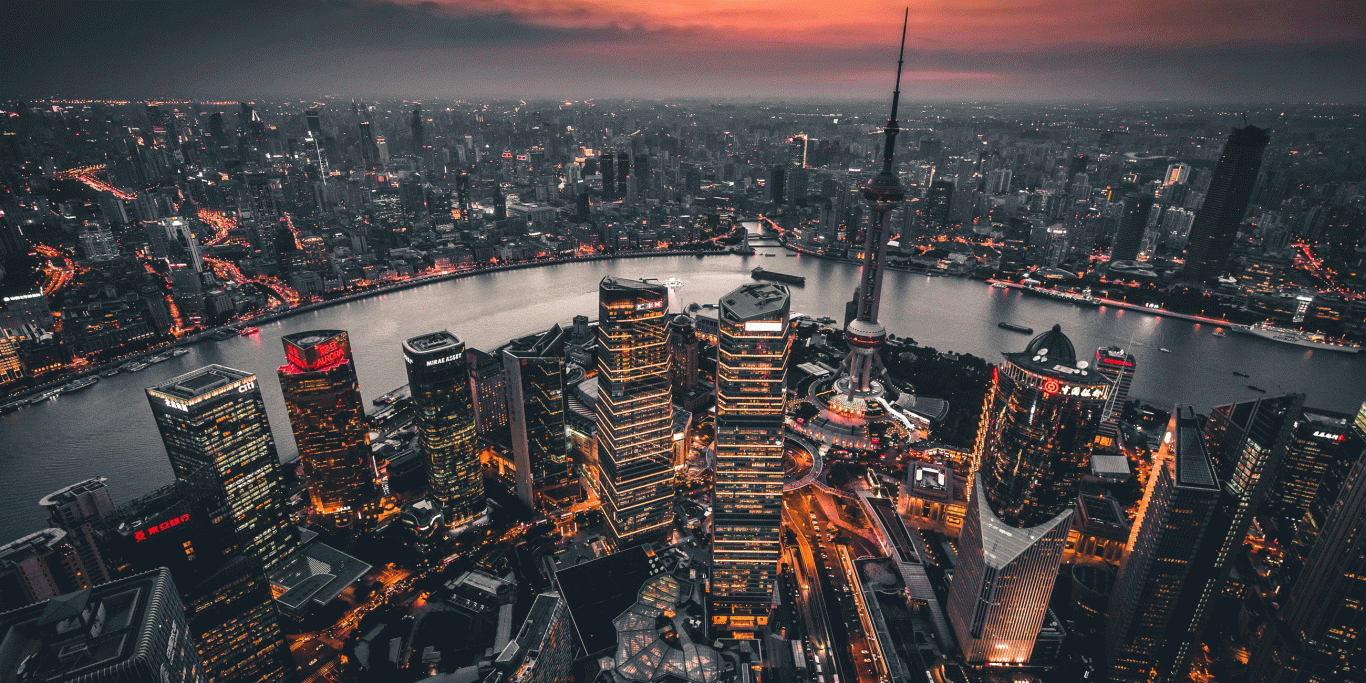
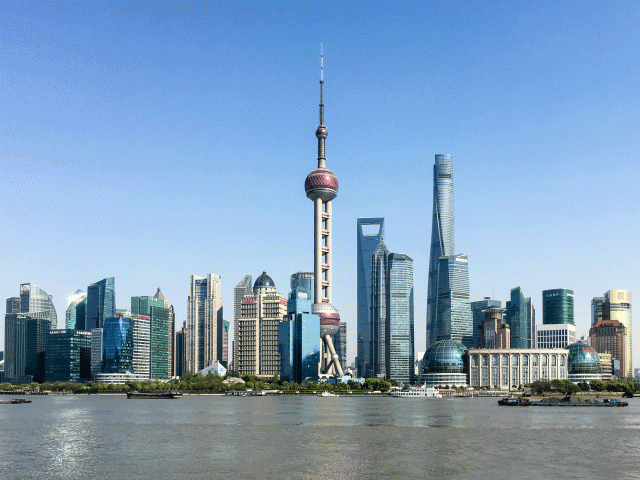
We know the landmarks. We know the food. We recognise the Shanghai skyline and the sweep of the Great Wall. We’ve seen photos of the Forbidden City and eaten some version of Chinese cuisine, yet, 60 per cent of Australians have never visited mainland China, according to a report from Cathay Pacific.
Until recently, I was one of them. Not because I wasn’t curious; China had always fascinated me. It was just one of those destinations that lived permanently in the ‘one day’ category. Somewhere I’d eventually get to, after the bigger trips had been ticked off.
Then I spent four days in Beijing and started wondering whether Australian travellers are making the same mistake.
What to expect when visiting Beijing
Before arriving, I expected language barriers, complicated logistics, and the frustration of navigating a digital ecosystem built on apps I didn’t know how to use. I’m not alone in that thinking. Cathay’s research notes that safety concerns (32.7 per cent) and language barriers (26.8 per cent) remain primary deterrents for Australians.
But somewhere between my first bowl of braised beef noodles and a morning walk in the city, those assumptions unravelled.
Beijing is surprisingly easy to settle into because of its automation. The language barrier doesn’t matter when the entire city operates on a frictionless digital grid. You order, navigate and pay via local apps without needing to speak a word. It’s a level of digital convenience that is uncomfortable at first, then strangely intuitive.
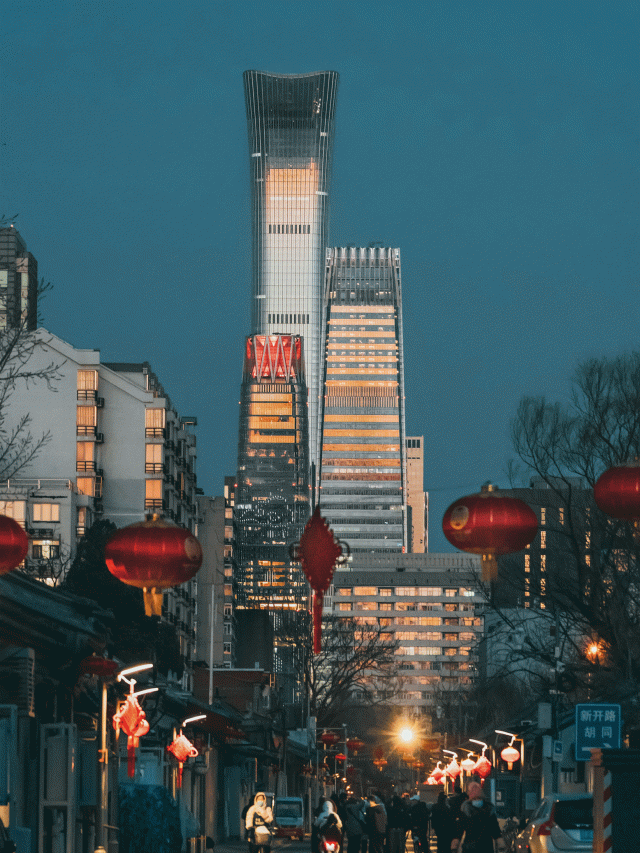
And for a capital of 20 million people, Beijing is deceptively empty, or at least it can feel that way. When wandering through the hutongs (traditional residential laneways) I expected it to be chaotic and dense with people, but for majority of the morning, it was empty.
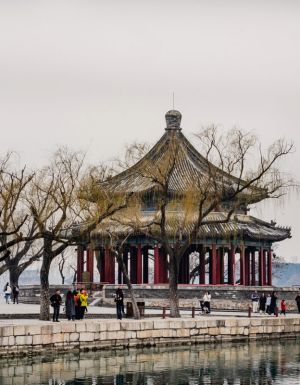
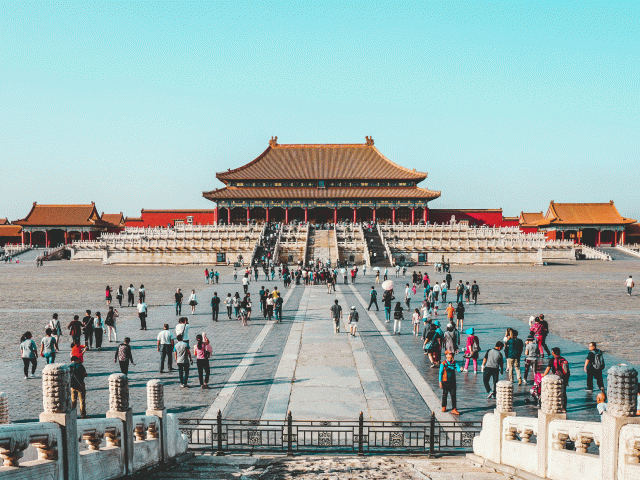
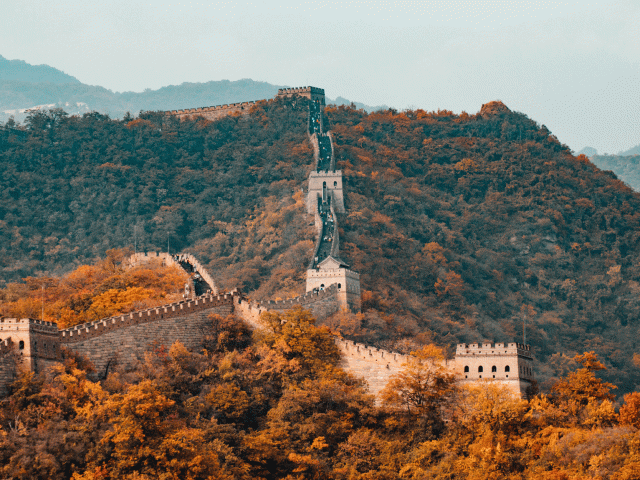
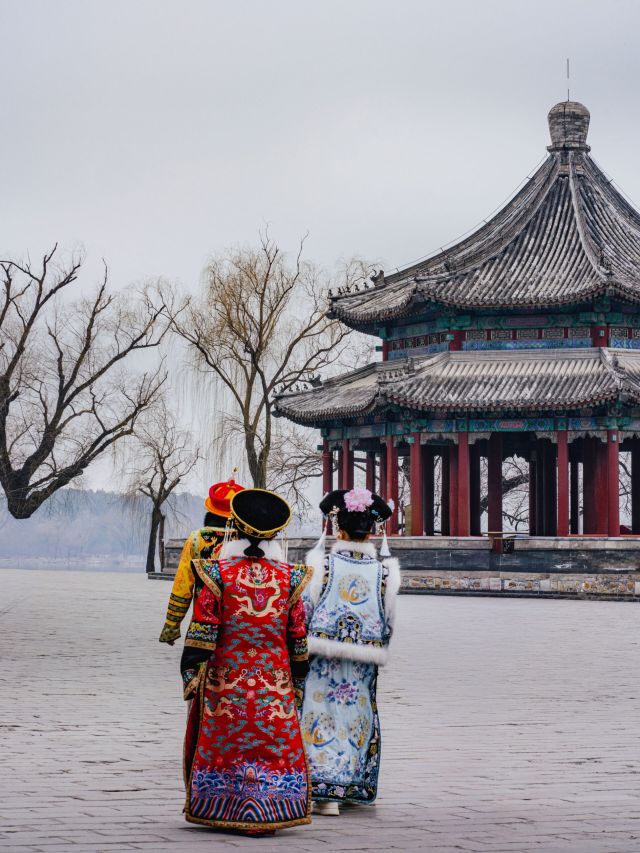
That’s not to say Beijing lacks spectacle (our 48-hour Beijing guide is proof). The Forbidden City is every bit as impressive as you’d hope. Tiananmen Square’s scale is difficult to comprehend until you’re standing in it, and the big-ticket attractions, like the Great Wall of China are where you’ll find the crowds you imagined.
But some of my favourite memories happened in the time between the major sights and my luxe hotel, when I wasn’t doing anything beyond wandering around. And eating. Lots of eating.
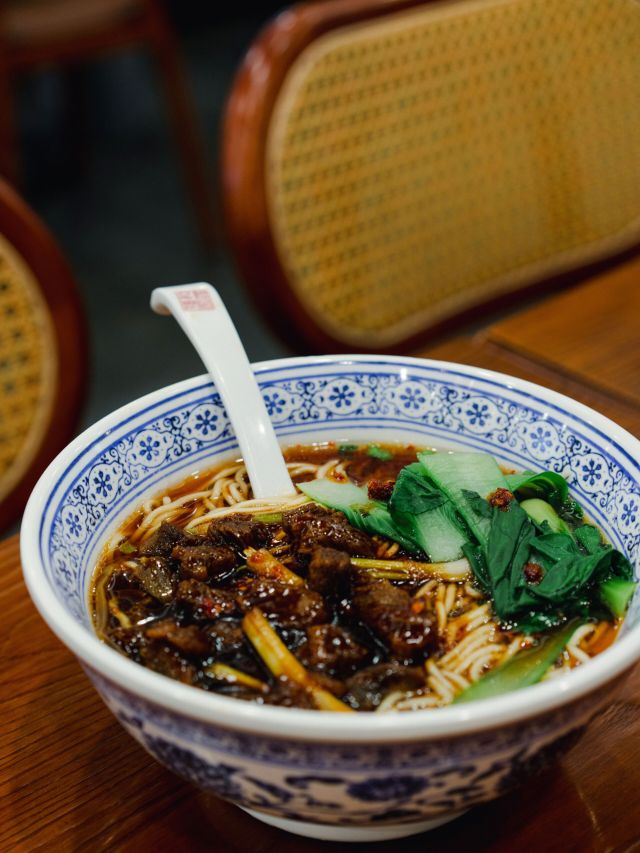
The great joy of Beijing is that Peking duck isn’t considered a special occasion dinner. My first proper duck feast arrived glistening and lacquered, carved tableside at Li Qun Roast Duck Restaurant, served with the usual duck pancake condiments, and crispy eggplant.
One morning, I joined Garth, an expatriate Australian who arrived on a gap year a decade ago and never left, for a breakfast tour through the alleyways. Over four hours, he took us through the city’s breakfast staples, including jianbing (a crisp, savoury crepe), dumplings, soups and local sweet treats.
Why China is an emerging tourist destination
Having watched the country evolve firsthand, Garth says one of the biggest changes has been China’s investment in making travel easier and more accessible. The country already operates the world’s largest high-speed rail network, with plans to add a further 160 trains by 2030.
And while Australians might still be hesitating, the rest of the world has already caught on. International visitor numbers topped 68 million in 2025 (a 15.5 per cent jump, year-on-year), putting China on track to overtake the USA as the world’s leading travel economy.
So, the question is no longer whether China has enough to offer travellers. It clearly does. The bigger question is whether travellers are ready to look beyond the assumptions that have kept them away.
Weekly travel news, experiences
insider tips, offers, and more.
Getting to China is easier than ever
The bureaucratic barriers are falling, too. The visa paperwork that used to deter casual travellers has been replaced by a 30-day visa-free entry policy for citizens of 50 countries, including Australia.
Even the journey home offered a glimpse of how quickly China’s travel infrastructure is evolving. Flying with Cathay Pacific, I passed through the airline’s newly renovated Beijing business lounge before my flight home. While more compact than Cathay’s flagship lounges in Hong Kong, it delivers the signature service the airline is known for, including the famous Noodle Bar, dishing steaming bowls of wonton soup and dan dan noodles that are considerably better than most airport meals have any right to be.
China isn’t a monoculture, and it isn’t for everyone. No destination is. But for Australians who say they want history, culture, food and the jolt of discovering somewhere that feels distinct from the West, it may be time to question why China is still sitting on the ‘maybe one day’ list.
Because after finally going, it feels a lot more like a ‘why-not-now’ destination.
Want to see more stories from International Traveller in your Google search results?
- Click here to set International Traveller as a preferred source.
- Tick the box next to "International Traveller". That's it.