hero media

8 iconic dishes to try in New Orleans

A visit to New Orleans is a treat for the taste buds. Embark on a journey through the Deep South’s multicultural culinary influences with these eight iconic dishes.

New Orleans is a bustling, multicultural melting pot of people from all over the globe who have been influencing the city’s food culture for hundreds of years. It is also widely considered to be the only place in the USA to get real Cajun and Creole Louisiana-style cooking.

The difference between Creole and Cajun

In the most basic of terms, when referring to cuisine, Creole is often referred to as ‘city food’ and Cajun as ‘country food’. It goes far deeper than that since Creole and Cajun are two very distinct people groups with their own unique cultural differences. French Colonial settlers, Spanish, African and First Nation Americans


The Creole are descendants of French colonial settlers, Spanish, African and First Nation Americans.


While Cajuns, who are also of French decent, are historically referred to as Acadians, French Canadians who were forced out of Canada into Louisiana. They each have their own unique dialect, ceremonies and of course, food.


Cajuns were not rich people, and most of what they cooked and ate was caught or grown by themselves in the bayous, swamps and marshlands of the state. With less access to modern luxuries such as iceboxes, large kitchens and international spices, the Cajun people tended to use the entire animal and large pots to minimise waste and found ways to use salt and smoke as preservatives. Many of the same ingredients are found in both Creole and Cajun dishes, but the most obvious distinction is that Creole cuisine uses tomatoes and Cajun does not. Creole roux is made with butter and flour, while Cajun roux uses flour and oil. Cajun food does not traditionally mix game and seafood.


The blending of these cultures and their dishes means that today you’re likely to find Cajun and Creole dishes on many menus, with more than one Cajun jambalaya featuring a tomato or some chicken mixed with shrimp (previously a big no-no).


History lesson aside, you’re bound to find New Orleans tantalising to the taste buds and these eight iconic dishes are the perfect place to start your culinary journey through the Deep South.

1. Gumbo

To visit New Orleans and not taste gumbo would be like travelling to Japan and not tasting sushi.


The hearty soup is so famous in Louisiana that is has been crowned the state cuisine. You can bet your bottom dollar that everyone has an opinion on where to get the best gumbo.


There’s chicken gumbo, shrimp gumbo, andouille sausage gumbo, duck gumbo, vegetable gumbo and everything in between. Usually containing the ‘holy trinity’ of celery, onions and green capsicum (bell peppers), thickened with a dark roux file or okra powder. Generally speaking, Cajun gumbo packs a bit more punch when it comes to the spice factor if heat is something you’re searching for. Otherwise, follow your nose and try gumbo wherever you go.

Where to get it

-Seafood and okra gumbo at Gumbo Shop: 630 Saint Peter Street

-Gumbo Ya Ya at Mr B’s Bistro: 201 Royal Street

-Dark quail gumbo at Gabrielle: 2441 Orleans Avenue
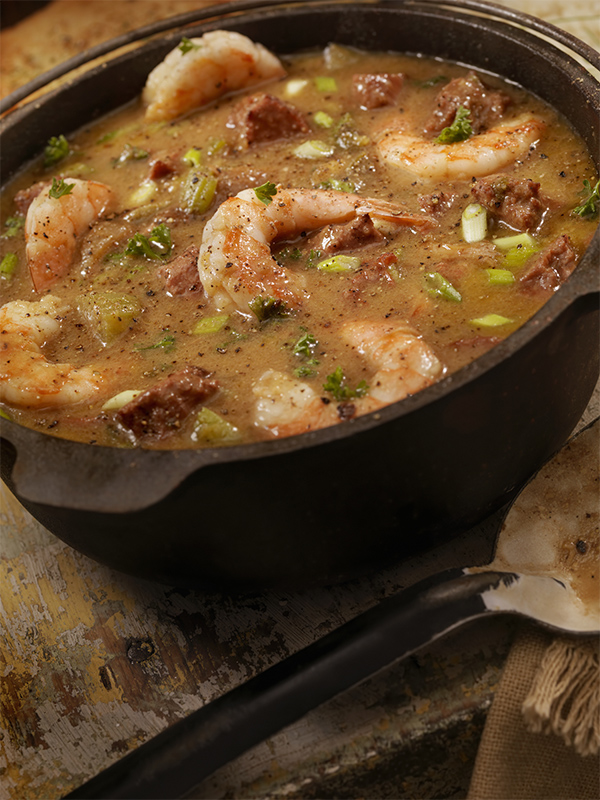
Gumbo new orleans
Gumbo is so famous in Louisiana that is has been crowned the state cuisine

2. Turtle soup

A popular Creole delicacy made from the plentiful (locals assure us) Louisiana snapping turtle. Turtle soup does have a minor stigma surrounding it with some purveyors replacing the majority of the turtle with veal, where it should be instead titled ‘mock turtle soup’.


At first glance, the bowl of dark brown liquid may not look particularly appetising, however the image belies the taste. Turtle meat is very tender with a mild flavour that is best described as tasting similar to pork with a hint of game, while the dark broth is rich and buttery by comparison. In short, it’s delicious and relatively inexpensive to give it a try.

Where to get it

Tableau: 616 St. Peter Street

Commanders Palace: 1403 Washington Avenue
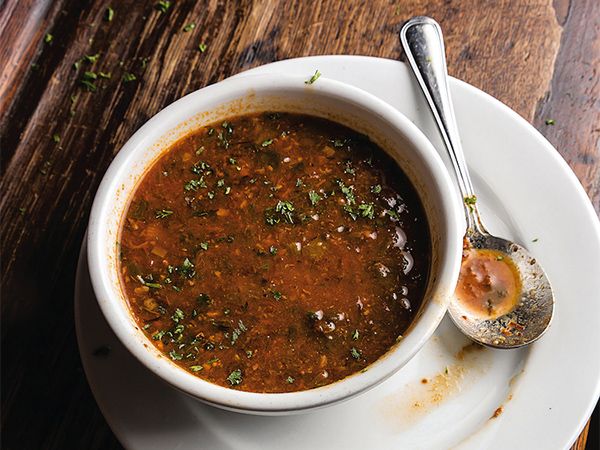
Turtle soup is a popular Creole delicacy

3. Jambalaya

The popular rice, meat and vegetable dish is a blend of Spanish, French and African cuisines and is reminiscent of a Spanish paella or Italian risotto. The ingredients in a jambalaya don’t vary greatly from a gumbo (minus the liquid), it arguably has more meat, gravy and spices and is often served in large scooped balls atop a plate.


The most common kind of jambalaya you’ll find in New Orleans is the red Creole version, which of course contains tomatoes.

Where to get it:

-Jerry’s Jambalaya at Mother’s: 401 Poydras Street

-Rabbit and sausage jambalaya at Coop’s Place: 1109 Decatur Street
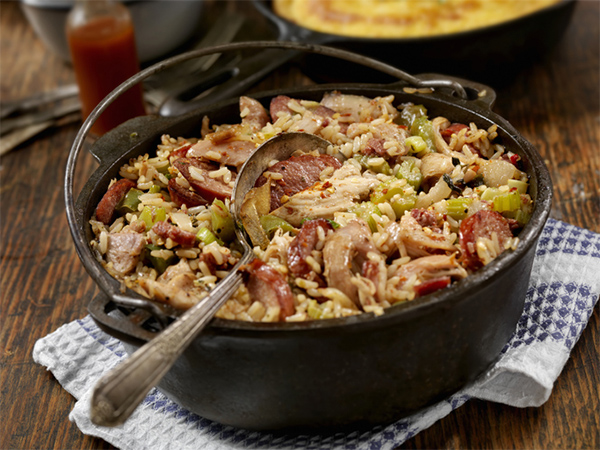
The popular rice, meat and vegetable dish is a blend of Spanish, French and African cuisines

4. Po-boy sandwich

The people of New Orleans know how to make a sandwich, and the Po-boy is the king of them all.


The po-boy might be short for ‘poor boy’ but the richness of the fillings within in it isn’t so. They almost always contain meat that is a choice of (but not limited to) fried shrimp, oysters, soft shell crab, catfish, crawfish, hot sausage, fried chicken breast or roast beef. You can dress or undress your Po-boy, the ‘dressed’ version contains lettuce, tomato, pickles and mayonnaise, while the ‘undressed’ version is meat only. Expect the finished product to arrive on an over-stuffed New Orleans baguette that is quite possibly enough for two to share – if you’re so inclined.


A po-boy can be enjoyed at breakfast, lunch or dinner and can even be consumed into the wee hours of the morning. You’ll be surprised at how many po-boy-serving hole in the walls are hidden in the back of clubs and bars with naught more than a small kitchen window to order from. Always remember that fresh is best and a pre-made po-boy should be shunned.

Where to get it

-Fried catfish sandwich at the Faubourg Bistro (at the back of a club): 700 Burgundy Street

-Fried shrimp po-boy at Guy’s Po Boys (lunch only): 5259 Magazine Street

-Glazed pork belly po-boy at Killer Po Boys: 219 Dauphine Street
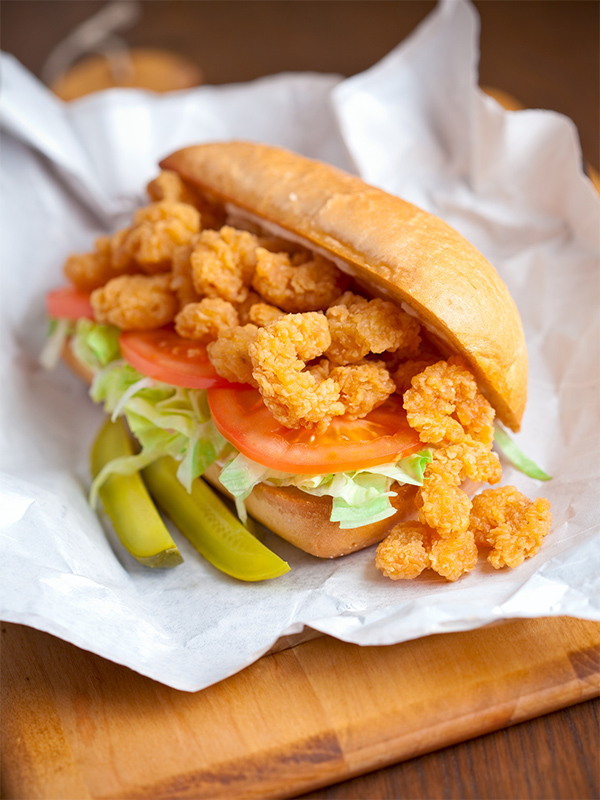
The people of New Orleans know how to make a sandwich

5. Muffuletta sandwich

A muffuletta is practically a wheel of a sandwich made out of a 25-centimetre (in diameter) loaf of Sicilian sesame bread that is said to originate from Italian migrants to New Orleans in the early 1900s. Very few people would be able to consume an entire muffuletta by themselves. It contains layers of marinated olive salad, mortadella, salami, mozzarella, ham and provolone… and it is simply one of the most delicious things you will ever eat.


The sandwich comes wrapped in wax paper and you’ll be mopping up every drop of oil that escapes from the signature olive-based salad with the slightly sweet, slightly dense muffuletta bread. You won’t need to eat more than a quarter of the sandwich for a meal and it’s generally ordered cold and eaten on the go with one hand, as the sandwich gods intended.

Where to get it

Central Grocery: 923 Decatur Street

Cochon Butcher: 930 Tchoupitoulas Street
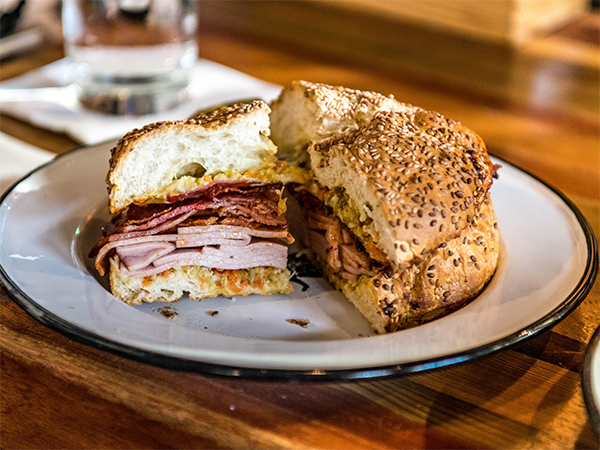
A muffuletta sandwich is simply one of the most delicious things you will ever eat

6. Blackened fish (and alligator)

A popular Cajun method of cooking is to blacken the meat. Literally burned black.


The flesh of a firm fish or white meat is dipped into butter, rubbed with a mixture of herbs and spices that could be (but are not limited to) thyme, oregano, chilli pepper, peppercorns, salt, garlic and onion powder and cooked on a fiery cast-iron skillet. The end result is an intensely flavoured piece of meat, with a crusty outside and a buttery-soft inside that should flake off in your mouth. Catfish, redfish and alligator all hold up well in this dish.


It might look like you’ve been served a burnt piece of meat but don’t let that scare you off. The meat itself isn’t burnt, it’s the spice-crusted outside that is expertly darkened to the point of making this dish really sing.

Weekly travel news, experiences
insider tips, offers,
and more.

Where to get it

-Blackened alligator at Mulates: 201 Julia Street

-Blackened catfish at K Paul’s Louisiana Kitchen: 416 Chartres street

7. Oysters

Oyster bars are as synonymous with New Orleans as Mardi Gras and jazz music and while there are as many people who hate oysters as there are those who love them, you don’t want to pass up the chance to taste oysters in New Orleans.


Even if you’re not a fan of oysters, it is highly recommended that you don’t pass up the chance to sample a few in New Orleans. They are lacking in that overtly salty taste you’d regularly associate with oysters as they are grown in the Louisiana Mississippi River, and as a result, they get their distinctive flavour from a combination of marsh, salt and freshwater.


Be sure to try them raw with naught more than a lemon or vinaigrette to dress them up, chargrilled and soaked in butter for a rich and barbecue-style taste, or plopped in a Bloody Mary, with an oyster shooter for breakfast.

Where to get it

-Freshly shucked and chargrilled at Felix’s Oyster Bar: 739 Iberville Street

-Seasonal oysters at Bourbon House: 144 Bourbon Street

-Happy-hour oysters at Samuels Blind Pelican: 1628 Charles Avenue
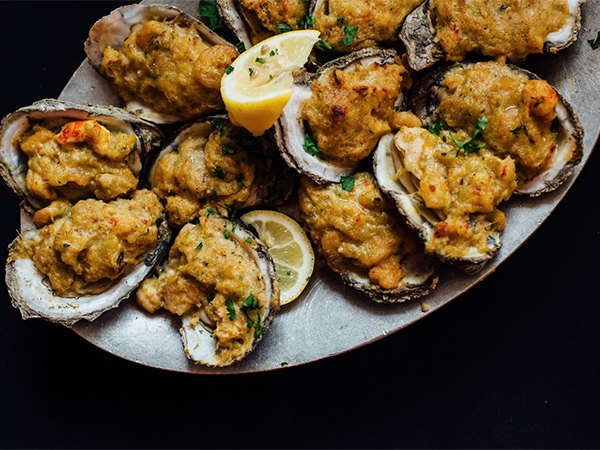
Oysters new orleans
Freshly shucked and chargrilled at Felix’s Oyster Bar

8. Crawfish Etoufee

Sometimes called crawdads, crayfish, or in Australia ‘yabbies’, the crawfish is at the heart of Louisiana cooking. These small, freshwater crustaceans are available in the thousands throughout mid-January to early July and you’ll find them in everything from gumbo and jambalaya to seafood boil. But it’s the crawfish etouffee in either Creole or Cajun that is the standout at this time of year.


The miniature shellfish are served in a slightly sweet blond roux over rice. The meat has been lightly smothered or braised in the sauce to become just cooked, retaining its delightfully vibrant seafood taste. Drool-worthy indeed.

Where to get it

Jacques Imo’s: 8324 Oak Street

Atchafalaya: 901 Louisiana Avenue


Of course, there are also the famous New Orleans alligator sausages, shrimp and grits, red beans and rice, beignets, pralines, the Sazerac and Bloody Mary cocktails. The list could go on for eternity without even getting close to the bottom of the bounty.


In no uncertain terms, the biggest struggle you’ll have in New Orleans with food is being spoiled for choice.

Want to see more stories from International Traveller in your Google search results?

  1. Click here to set International Traveller as a preferred source.
  2. Tick the box next to "International Traveller". That's it.
hero media

12 grand journeys throughout North America

    Discover North America’s epic adventures — from Route 66 and Alaska cruises to Hawai‘i road trips, NYC culture, Mexico trails and more.

    1. Route 66, the Main Street of America

    Travelling with: Ricky French

    Sunset on Route 66 in the California Mojave Desert.
    Hit the open road and trace America’s legendary highway. (Image: Getty/Der_Thomasa)

    Dubbed the Main Street of America, Route 66 radiates serious main character energy, cemented into popular culture through everything from John Steinbeck’s novel The Grapes of Wrath to the Disney Pixar film Cars. Spanning nearly 4000 kilometres from Chicago to Los Angeles, the historic highway celebrates its centenary next year, a timely invitation to take the mother of all road trips along the Mother Road. Allow two to three weeks to tackle the full length, or bite off a smaller chunk at either end, cruising the dramatic deserts of California or the more pastoral landscapes of Illinois, lined with neon-lit diners, retro gas stations and quirky roadside attractions.

    2. Mexico’s Día de los Muertos

    Travelling with: Carla Grossetti

    emblematic catrina of mexico with flowers and necklace with sempasuchil flowers
    Celebrate life and honour loved ones in vibrant style. (Image: Getty/Fabian Pacheco)

    You might know Oaxaca as the birthplace of mole and mezcal. But the state in southern Mexico is also where the Día de los Muertos (Day of the Dead) began. Time your visit to coincide with the colourful holiday, on 1–2 November, which honours and celebrates loved ones who have passed away. Oaxaca is also Mexico’s Michelin-starred culinary capital, with 18 restaurants and a humble taco stand listed in the 2025 guide.

    3. Museum-hop in New York City

    Travelling with: Carla Grossetti

    The Guggenheim Museum’s iconic spiralling exterior, a highlight of North America Epic Adventures.
    Step inside and marvel at bold, world-class art. (Image: Damiano Fiore)

    Your map app will look like it’s been scattered with confetti after you’ve dropped pins on all the museums you want to visit in New York City. Must-sees are the Solomon R. Guggenheim Museum, the Metropolitan Museum of Art aka the Met, and the Museum of Modern Art. The American Museum of Natural History is also a draw. It’s also worth venturing into the boroughs to browse institutions such as the Brooklyn Museum, which has a huge permanent collection categorised by culture.

    4. The USA’s music scene

    Travelling with: Elizabeth Whitehead

    The Seattle skyline at night, aglow with city lights on North America Epic Adventures.
    Soak up skyline views and dive into the city’s coffee culture. (Image: Abigail Boone)

    If you’re a muso, chances are you’ve wanted to make a pilgrimage to the United States, the epicentre of so many beloved genres. Whether you’re head-banging your way around the Grunge Circuit in Seattle, chasing the twang of the pedal steel through Tennessee or bouncing between blues bars in the Mississippi Delta, the USA’s rich music culture has something that’ll strike a chord.

    5. Road-tripping Hawai‘i

    Travelling with: Carla Grossetti

    A woman surfing in Hawaii, gliding across turquoise waves on North America Epic Adventures.
    Catch the waves and ride Hawaii’s iconic swells. (Image: Ben Ono)

    Hawai‘i is one of the most diverse US states to road trip around. Of the six major islands to visit, the Island of Hawai‘i packs in everything from the snowy summits of Mauna Kea and Mauna Loa to black-sand beaches and lava fields frozen in the act of flowing forward. Change down a few gears on the island of O‘ahu, too, where you can find your own patch of sand on Waimanalo Beach. Visit poi and pineapple plantations. And hang ten on beginner-friendly waves on the North Shore.

    6. Cruising Alaska

    Travelling with: Carla Grossetti

    Explora Journeys ship cruising in Alaska.
    Sail past glaciers and spot whales in pristine waters.

    Seeing Alaska from the sea allows you to cover a lot of distance quickly. This immersive frontier now beckons more than ever before with Explora Journeys adding the American state to its global destination portfolio. Best of all are the pre-and post-journey immersions that connect the luxury of a cruise onboard Explora III with the rugged grandeur of the Alaskan interior. UnCruise Adventures also weaves in access to remote national parks, legendary wildlife corridors and authentic cultural experiences on its Alaskan itineraries.

    7. The Wixárika Route in Mexico

    Travelling with: Elizabeth Whitehead

    People journeying through the Wixarika Route.
    Journey deep into sacred Huichol traditions and art.

    For generations, the Indigenous Wixárika People of Mexico have walked a sacred path known as Tatehuarí Huajuyé, or ‘The Path of Our Grandfather Fire’. The annual pilgrimage route spans 500 kilometres, taking in significant sites in Wixárika spirituality and cosmology. The route passes through the deserts, mountains and forests of northern Mexico before reaching Wirikuta, believed to be the place the sun first emerged. The route is a living cultural landscape of Indigenous culture pre-Columbian influence and, in July this year, was formally inscribed into UNESCO’s World Heritage List.

    8. Drive the Iceberg Coast in Canada

    Travelling with: Carla Grossetti

    Iceberg off the east coast of Canada
    Chase icebergs along Expedition 51 on Canada’s east coast. (Image: Canadian Tourism Commission/ Chris Hendrickson)

    Download the icebergfinder.com map to better plan your road trip along Canada’s Iceberg Coast. The new highway, which has been nearly 25 years and CAD$1.1 billion in the making, threads through the country’s pleated coastlines around Quebec, Newfoundland, Labrador, Nova Scotia and New Brunswick before looping in the French islands of St Pierre and Miquelon. As well as chasing icebergs along Expedition 51, travellers will have the opportunity to engage with cultures that have thrived in the pristine provinces for thousands of years.

    9. A foodie tour of Nova Scotia

    Travelling with: Katie Carlin

    Lunenberg Nova Scotia
    Try lobster rolls in Lunenburg on the east coast of Canada in Nova Scotia. (Image: Natalia Kvitovska/ Unsplash)

    World-famous for its lobster, Nova Scotia is a Canadian province best savoured through its culinary clout shaped by sea and terroir. Bite into lobster rolls at historic Lunenburg’s Salt Shaker Deli & Inn and sip maple rum at Ironworks Distillery. Winery-hop around Wolfville’s rising vineyards (don’t miss Lightfoot & Wolfville). Take a maple syrup tour at Sugar Moon Farm near Earltown. And pull up a seat at waterfront Bar Sofia in Halifax, where Nova Scotia oysters aguachile arrive bright with cucumber, lime and pickled onion.

    10. Soak up the sun in the Caribbean

    Travelling with: Carla Grossetti

    Overwater bungalows off a beach in the Caribbean
    Experience the white-sand beaches and cerulean seas of the Caribbean on board a cruise.

    The Caribbean is on the radar for seasoned cruisers. And it’s easy to see why, with white-sand beaches, cerulean seas and swaying palms so picture-perfect they look AI-generated. Cruise with Windstar, Royal Caribbean, and Celebrity on its inaugural Xcel season to the Caribbean to enjoy action-packed excursions such as snorkelling coral reefs and shopping for local trinkets. And those sea days? Spectacular.

    11. Red Chair Hikes of Canada

    Travelling with: Kassia Byrnes

    Red Adirondack chairs overlooking Lake Minnewanka in Canada
    Take a seat at Lake Minnewanka, one of more than 400 red Adirondack chairs scattered across Canada’s hiking routes. (Image: Getty Images/ Autumn Sky Photography)

    No one appreciates the great outdoors more than Canadians, emerging from snow-covered winters to tread glacial rivers and snowshoe through forests, or to hike mighty mountains and wildflower-strewn valleys come spring. Along popular hikes around the country, more than 400 red Adirondack chairs have been placed in peaceful, breathtaking locations. What started as a social media contest now sees hikers soaking in classic Canadian lake and mountain vistas, overlooking historic sites or gazing down on the mountainous path they just travelled.

    12. Ride the Rocky Mountaineer from Denver to Moab, USA

    Travelling with: Carla Grossetti

    Sweeping views from the Rocky Mountaineer.
    The Rocky Mountaineer will continue as the Canyon Spirit in 2026, seen here carving through Ruby Canyon.

    Sighting wild animals is one of many incredible thrills along the two-day luxury Rockies to the Red Rocks route onboard the Rocky Mountaineer across America’s Southwest between mid-April and mid-October. In addition to the lone bear, we spot bighorn sheep, elk, beavers, pronghorn antelope, bald eagles and ospreys. Riding the rails onboard the luxury train, which was founded in Canada in 1990 and has been awarded the prestigious World’s Leading Travel Experience by Train several times, has never been about just getting from A to B. Ride the train from Denver to Moab and you will see the scenery change from snow-capped peaks to meadows, red-rock canyons and soaring cliffs that resemble ornate Gaudí-esque cathedrals. But it’s not until you get off the train that you can produce the ultimate Venn diagram, with nature and adventure in the intersecting spheres.