hero media

Your ultimate guide to Hawai‘i Volcanoes National Park

Discover Hawai‘i Volcanoes National Park’s essential sights, travel tips and the best ways to experience its active lava flows, lush rainforests and sacred volcanic terrain.

One of the world’s most active volcanoes, Kīlauea has been erupting episodically roughly every two weeks since December 2024, with no indication of slowing. It’s the kind of natural spectacle travellers dream of witnessing – but timing, as ever, is everything.

While lava fountains may be the headline act at Hawai‘i Volcanoes National Park, its surreal, shifting landscapes ensure the experience remains unforgettable at any time.

Here’s everything you need to know before visiting Hawai‘i Volcanoes National Park, one of the best things to do on the island.

Why visit Hawai‘i Volcanoes National Park?
a scenic view of Hawai‘i Volcanoes National Park
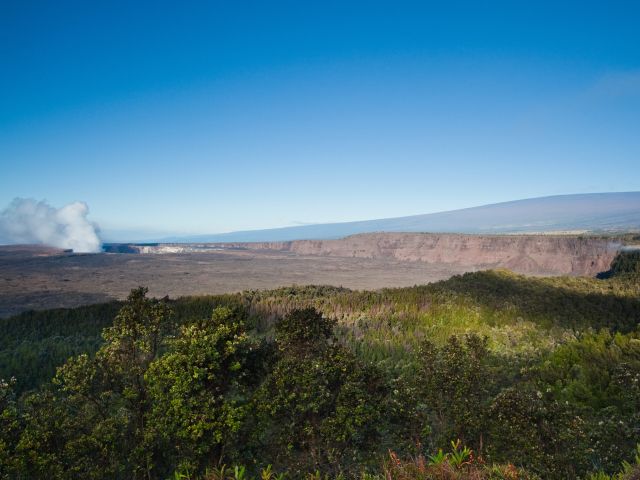
Hawai‘i Volcanoes National Park protects the summits of two of the world’s most active volcanoes: Kīlauea and Mauna Loa. (Credit: Hawaii Tourism Authority (HTA) / Tor Johnson)

To experience some of the world’s most dramatic volcanic landscapes and, if you’re lucky, witness an eruption or glowing lava flows.

How to see Hawai‘i Volcanoes National Park

Hiking
hiking in Hawaii Volcanoes National Park
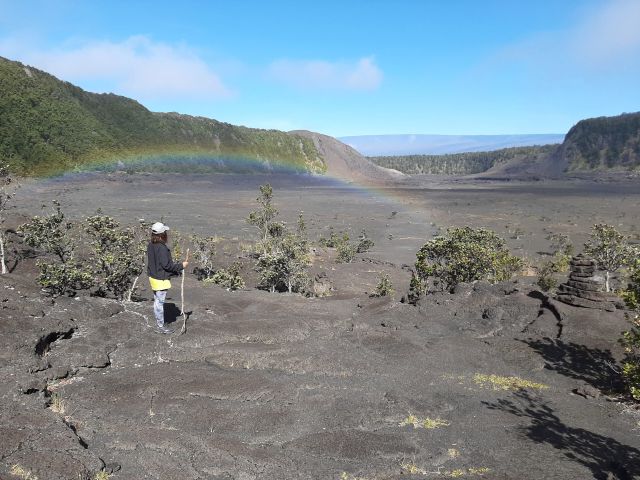
Panoramic views and ancient Hawaiian rock carvings await. (Credit: Hawaii Tourism Authority (HTA) / Kirk Aeder)

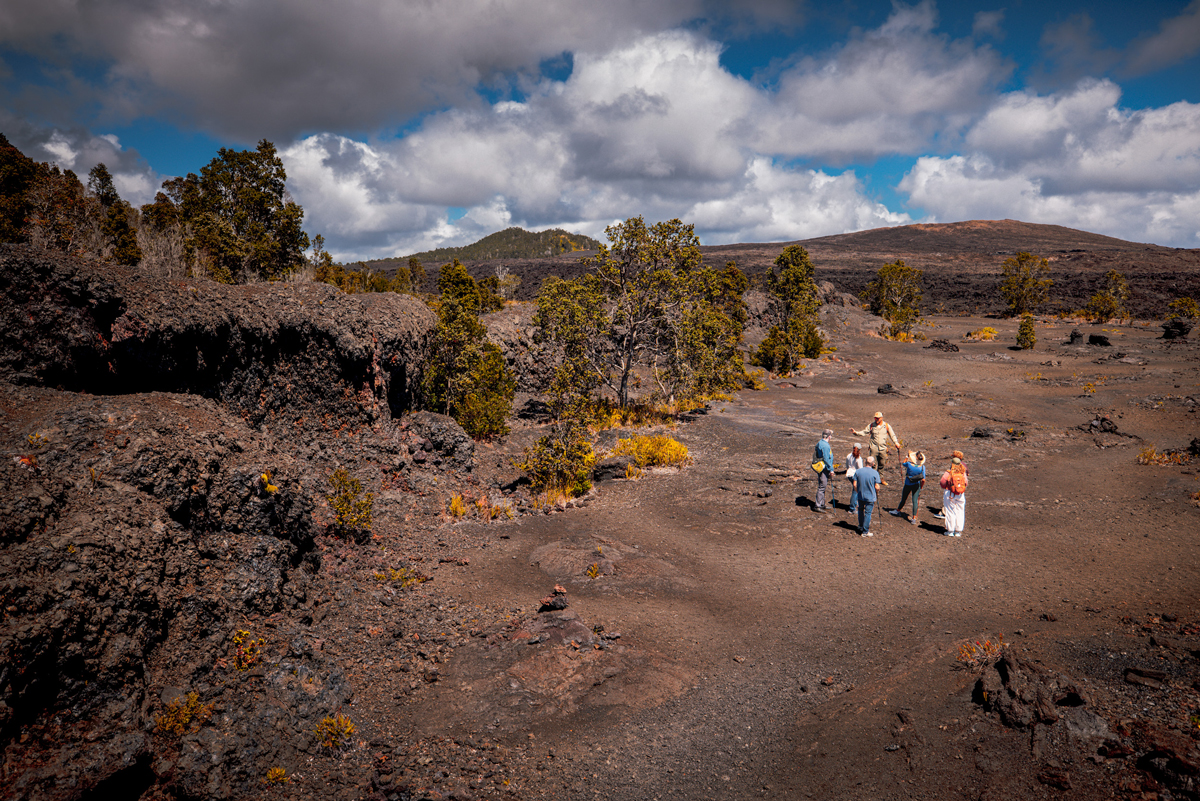
Hiking here feels like walking on another planet. Standout routes include the Crater Rim Trail and Kīlauea Iki, where dense rainforest gives way to steaming crater floors, alongside shorter walks like Devastation Trail and lava-etched paths along Chain of Craters Road.

Driving
Chain of Craters Road, Hawaii Volcanoes National Park
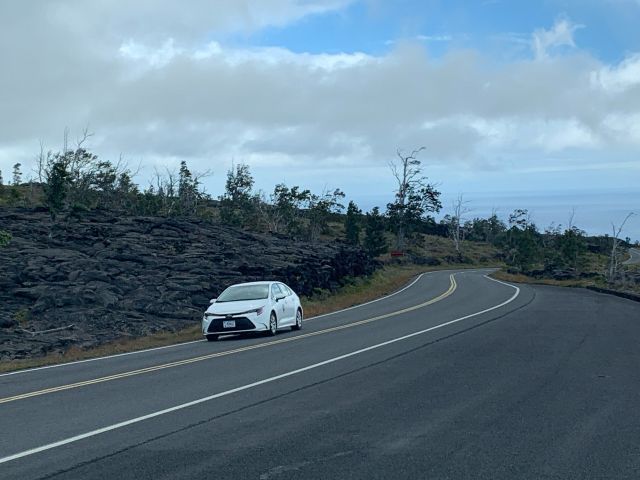
Drive just less than an hour near the Kīlauea summit to Hōlei Sea Arch. (Credit: Angela Saurine)

Along the winding roads near Kīlauea and down the cinematic sweep of Chain of Craters Road, the landscape shifts from lush green to elemental stone. Fuel up in Hilo or Volcano Village before entering the park, as services are limited and long stretches can feel remote, with road conditions and closures changing in response to volcanic activity.

Tours
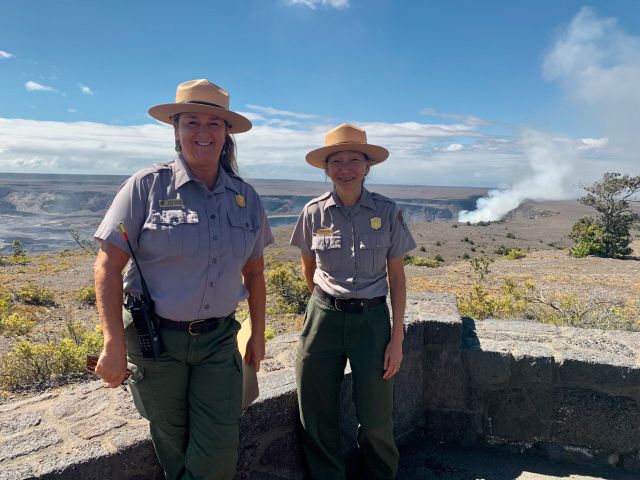
the US National Park Service in Hawaii Volcanoes National Park
Jessica Ferracane and Rhonda Loh of the US National Park Service in Hawaii Volcanoes National Park. (Credit: Angela Saurine)

Operators like Hawai‘i Forest and Trail offer naturalist-led journeys that weave together geology, culture and storytelling. These tours often take you beyond the main viewpoints into lava fields, crater rims and rainforest pockets, offering a more intimate and informed encounter.

How long should you plan to visit?

A minimum of one full day is essential, but to truly do the park justice, two to three days is the sweet spot.

Essential experiences and sights

Steam vents and sulphur banks
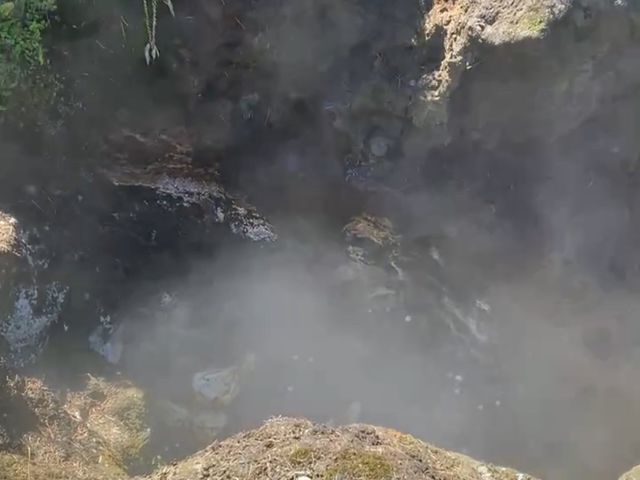
Steam vents in Hawaii Volcanoes National Park
The volcanic rocks heated by magma return as billowing steam. (Credit: Angela Saurine)

A short, well-marked walk along the caldera rim reveals dozens of fissures quietly venting volcanic steam, specifically at Steaming Bluff (Wahinekapu) and the Sulphur Banks (Haʻakulamanu). It’s best to visit in the morning when the plumes are most visible. Be warned – the sulphur-rich air lends the area a distinct rotten-egg tang.

Pu‘u Loa Petroglyphs
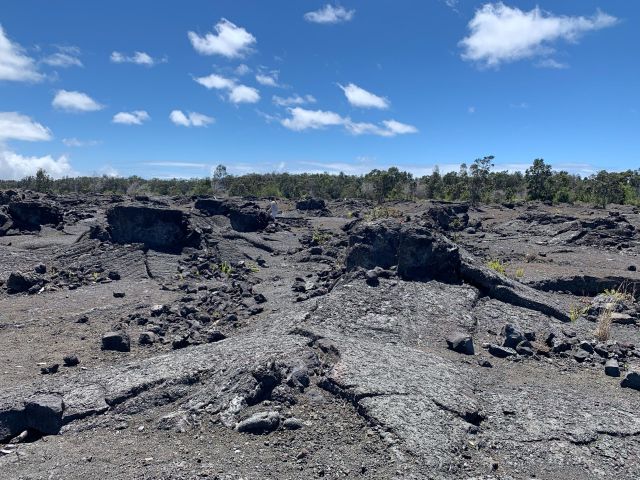
Chain of Craters Road in Hawaii Volcanoes National Park
Traverse uneven, rocky pāhoehoe lava. (Credit: Angela Saurine)

Follow the turnoff along Chain of Craters Road to Pu‘u Loa, where a short but exposed walk across a 550-year-old lava field reveals more than 23,000 petroglyphs enigmatic figures and geometric carvings etched into the rock. Go early or late to avoid the worst of the heat, take water and pause at the boardwalk sections for the best-preserved carvings.

Hōlei Sea Arch
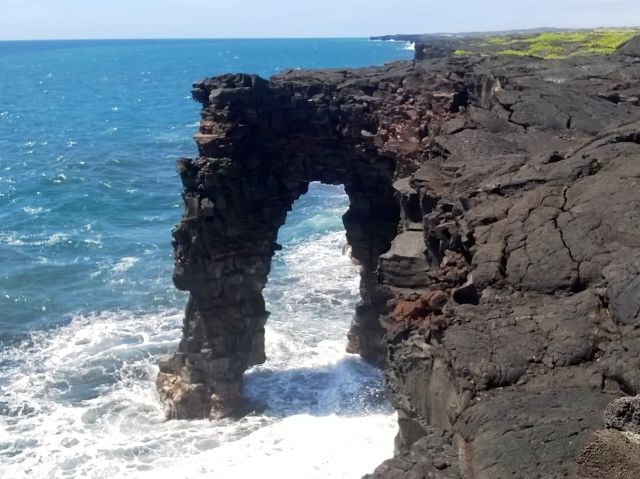
Hōlei Sea Arch at Hawaii Volcanoes National Park
Hōlei Sea Arch is a dramatic endpoint after a scenic drive. (Credit: Getty / CrisRG)

At the end of the Chain of Craters Road, the Hōlei Sea Arch rises like a sculptural flourish from black lava cliffs, a 27-metre basalt bridge carved by relentless Pacific surf over centuries. Arrive early or late for softer light and fewer crowds.

Mauna Ulu
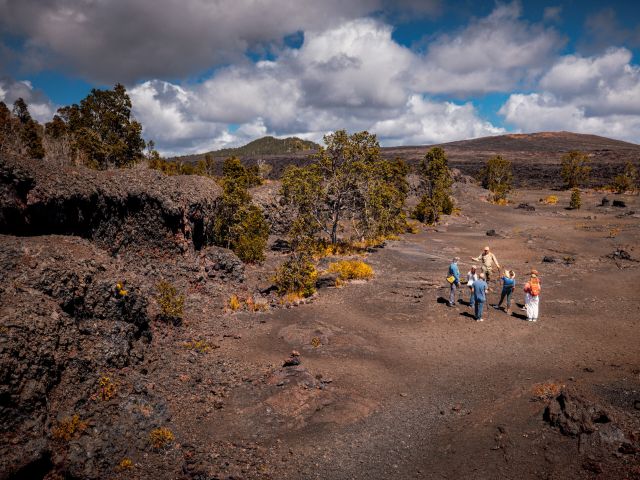
Mauna Ulu at Hawaii Volcanoes National Park
Look for lava trees at Mauna Ulu. (Credit: Hawaii Forest & Trail)

Also along Chain of Craters Road, Mauna Ulu is a brooding volcanic shield born from its last eruption in 1974, which spread 44 square kilometres of solidified lava and sculpted surreal formations including lava trees mushroom-like rock shapes created as molten flows cooled and hardened around standing forest. Take a short walk across this small volcano and continue to nearby Puʻu Huluhulu for incredible views over the terrain.

Crater Rim Trail
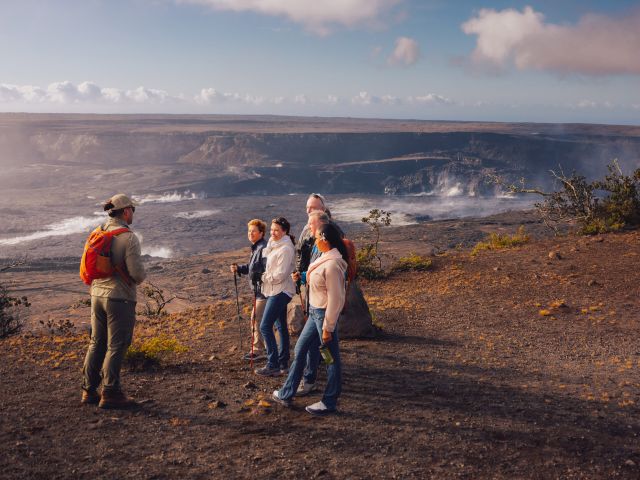
Halemaʻumaʻu crater at Hawaii Volcanoes National Park
Halemaʻumaʻu crater is surrounded by active steam vents. (Credit: Hawaii Forest & Trail)

Tracing the dramatic caldera edge, the Crater Rim Trail reveals a shifting tapestry of volcanic landscapes, from steam vents and sulphur banks to sweeping views into the vast Halemaʻumaʻu crater. Dip into shorter sections rather than tackling the full loop.

Nāhuku (Thurston Lava Tube)
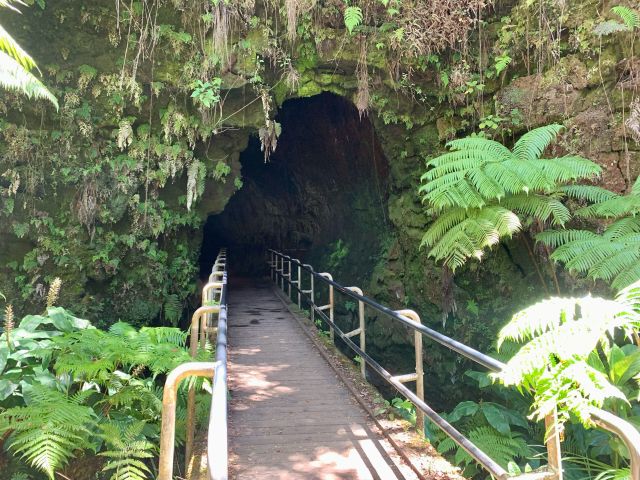
Nahuku Thurston Lava Tube in Hawaii Volcanoes National Park
The 500-year-old lava tube is accessible via a short, easy walk through rainforest. (Credit: Angela Saurine)

A cathedral-like passage carved by a river of molten lava, now softened by fern-draped rainforest and filtered light. Step inside and the temperature drops as the forest’s green hush replaces the fire that once forged this subterranean corridor, offering one of the park’s most atmospheric encounters.

Wildlife spotting
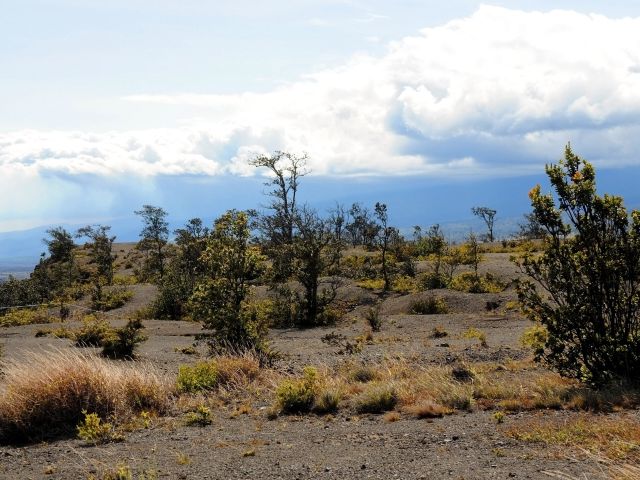
Kilauea volcano on Big Island, Hawaii
The park is a sanctuary for threatened and endangered species. (Credit: Getty / apollob66)

It’s surprising how much life thrives inside Hawaiʻi Volcanoes National Park, where you’d expect only barren lava fields. The secret is the island’s extreme range of microclimates, from steaming rainforest to windswept alpine desert. Take your time exploring at different elevations and you’ll find that what looks inhospitable at first glance is actually one of the most ecologically diverse corners of the islands.

Hawksbill turtle
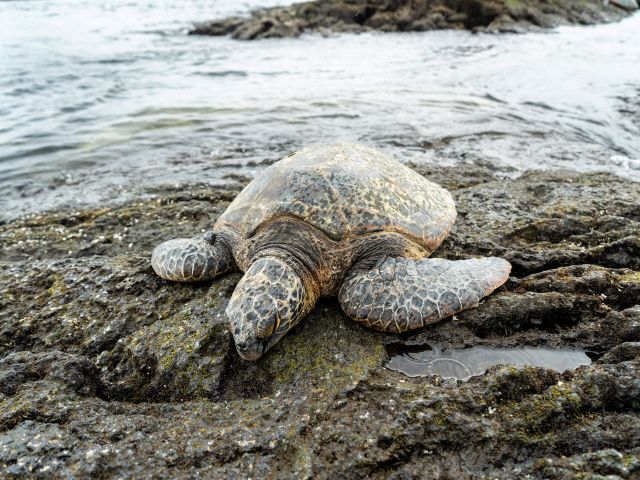
a Hawksbill turtle on Big Island, Hawaii
Remote black-sand beaches serve as the primary nesting ground of the Hawaiian Hawksbill turtle. (Credit: Getty / mphillips007)

Where volcanic craters and rainforest slopes of Hawaiʻi Volcanoes National Park tumble all the way to the Pacific, the endangered hawksbill turtle returns to shore to nest on remote black-sand beaches. These turtles nest at only a few beaches in the Hawaiian Islands, and from June through December you may be fortunate enough to witness a female laying her eggs at Halapē, Apua Point or Keauhou. Keep a safe distance of at least three metres to avoid disturbing these critically endangered animals, as per local, state and federal laws.

Hawaiian honeycreeper
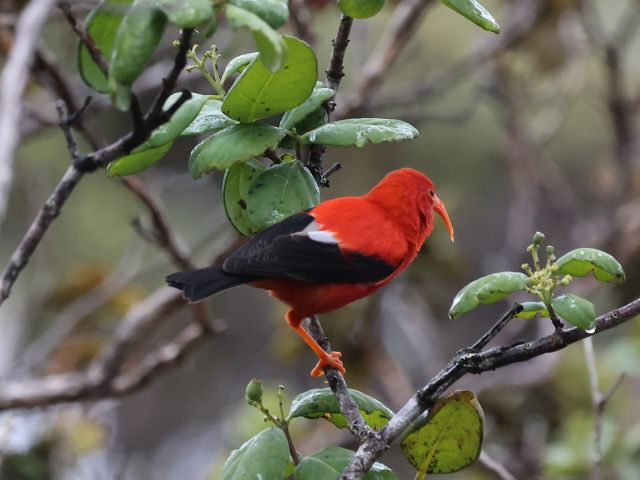
the Hawaiian honeycreeper on Big Island, Hawaii
A rare Hawaiian honeycreeper resting on a branch. (Credit: Getty / artiste9999)

In the park’s misty upland forests, the jewel-toned Hawaiian honeycreepers flit through the canopy like living confetti, their varied beaks telling the evolutionary story of isolation and survival in one of the world’s most remarkable birding destinations. For the best chance of spotting these elusive endemics, head out just after dawn along quieter trails such as the Crater Rim backroads or kipuka pockets of old-growth forest.

Weekly travel news, experiences
insider tips, offers,
and more.

Nēnē
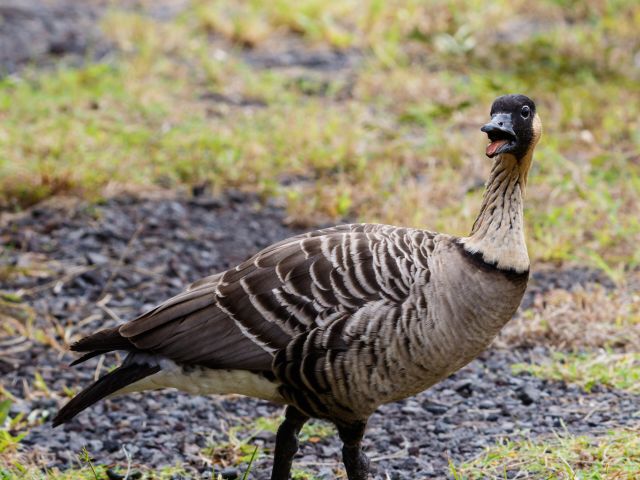
the endangered Nēnē in Hawaii
The Nēnē (Hawaiian goose) is the official state bird of Hawaiʻi and the rarest goose in the world. (Credit: Getty / DGHayes)

The endangered ʻnēnē, or Hawaiian goose, pads calmly through volcanic landscapes that feel more primordial than pastoral, perfectly adapted to life on hardened basalt and high-altitude scrub. Slow down along Chain of Craters Road at dawn or late afternoon, when these charismatic birds often wander surprisingly close to the roadside, unbothered by passing visitors.

Accommodation in Hawai‘i Volcanoes National Park
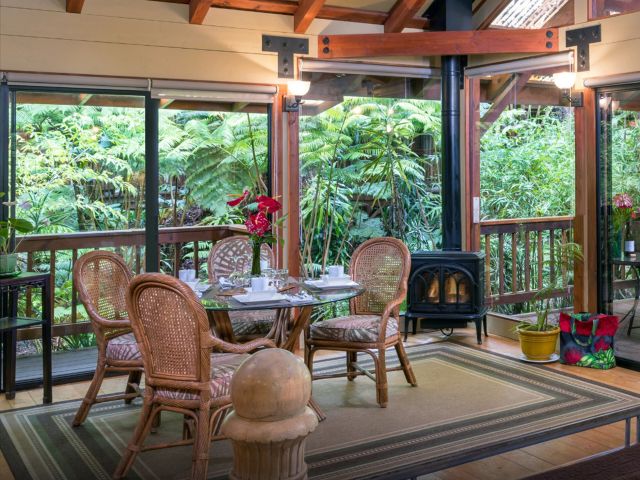
Volcano Village Lodge in Hawaii
Come home to a cosy lodge after a day exploring the lava fields. (Credit: Volcano Village Lodge)

The historic Volcano House offers the rare chance to sleep on the rim of an active volcano. Book well ahead for crater-facing rooms and time dinner for after dark when the glow of the volcano (if active) turns the park into a living, breathing spectacle. Opt for nearby Volcano Village Lodge for a more low-key rainforest retreat just minutes from the park entrance.

Is it accessible?
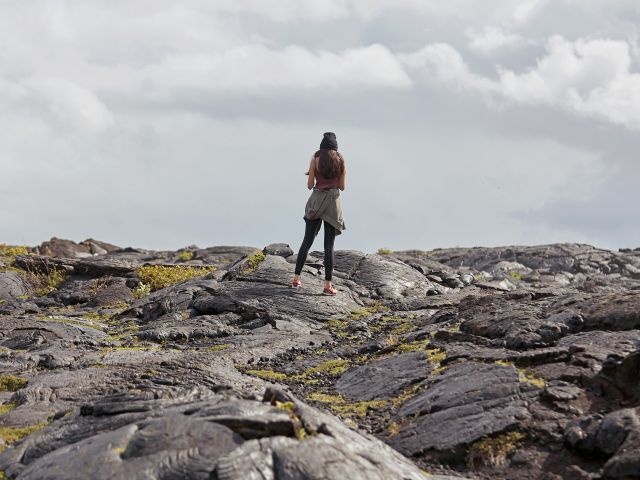
a hiker at Hawaii Volcanoes National Park
Experience some of the world’s most dramatic volcanic landscapes. (Credit: Getty / Mirnet)

Paved overlooks along Crater Rim Drive, wheelchair-friendly sections at key viewpoints and visitor centre facilities make the park more inclusive than its rugged terrain might suggest. For more information, visit nps.gov/havo/planyourvisit/accessibility.htm

What to wear
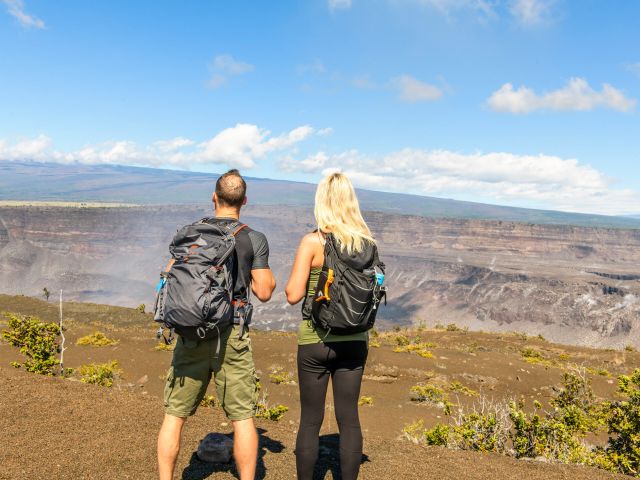
hikers at Hawaii Volcanoes National Park
Wear breathable layers to handle temperature shifts. (Credit: Getty / LSOphoto)

After an eruption, the summit of Kīlauea is often draped in tephra – a scattering of ash, cinders and rock fragments that settles across the landscape. In exposed areas where volcanic debris lingers, it’s wise to dress the part, including eye protection, a dust mask, long sleeves, long pants and sturdy closed-toe shoes or boots.

For the latest updates, visit nps.gov/havo/index.htm

Don’t skip
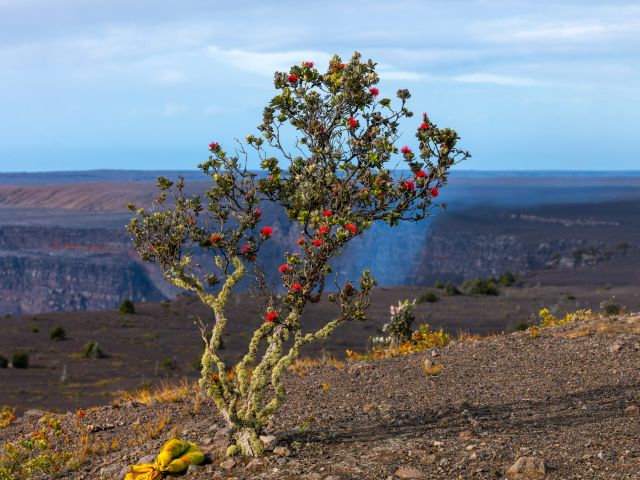
Halemaʻumaʻu Crater in Hawaiʻi Volcanoes National Park
Halemaʻumaʻu is an active pit crater within the massive Kīlauea summit caldera. (Getty / RugliG)

Seeing Halemaʻumaʻu Crater from the Kīlauea Overlook.

Give it a miss

If you’re short on time, skip the Devastation Trail hike and take in the otherworldly terrain from the Puʻupuaʻi Overlook instead.

My top tip for first-timers

Leave your itinerary flexible and plan your visit for when an eruption is predicted. Check the United States Geological Survey website for forecast short-term eruption windows or subscribe to its Volcano Notification Service.

Most memorable moment

Peering into Steaming Bluff (Wahinekapu) vent getting a natural facial from water vapour rising from beneath the surface.

Want to see more stories from International Traveller in your Google search results?

  1. Click here to set International Traveller as a preferred source.
  2. Tick the box next to "International Traveller". That's it.
Angela Saurine
Angela Saurine is a freelance writer based on Bundjalung Country in the village of Bangalow, in the Byron Bay hinterland. She began her career as a copykid at The Daily Telegraph in Sydney before setting off to explore the world – spending a few months as a ski bum in Whistler and living the expat life in London. On returning home, Angela climbed the ranks to land her dream role as national travel reporter at News Corp Australia. She’s since journeyed everywhere from Arnhem Land to Antarctica, and from Christmas Island to Easter Island, with a particular passion for Indigenous tourism, islands, snow, food and expedition cruising. Swimming with whale sharks at Ningaloo is at the top of her Aussie bucket list.
View profile and articles
hero media

5 things every hotel needs for a more restorative stay

    Kate Bettes Kate Bettes
    Wellbeing means different things to different travellers. Here’s how to pick a hotel that gets it right for you.

    The best wellness holidays aren’t necessarily spent wrapped in a spa robe. Sometimes they’re found around a dinner table in Cambodia, on a hiking trail in New Zealand or after finally beating jet lag on the other side of the world. The hotel you choose is what makes them happen.

    1. Easy access to good food

    meals from Novotel Bangkok Sukhumvit 20
    Taste delicious meals at Novotel Bangkok Sukhumvit 20.

    One of the quickest ways to derail healthy habits on holiday is to spend half of it working out where to eat instead of digging into the culture around you. Thankfully, Novotel has done much of the hard work already, with chefs building menus that lean into the flavours, ingredients and traditions of each destination.

    In Sihanoukville, Cambodia, Korkor soup – often dubbed ‘Cambodian ratatouille’ – sits alongside raw blue crab dressed with lime and chilli, best enjoyed with views across the Gulf of Thailand.

    In the lovingly chaotic city of Bangkok, the presence of food cranks up the sociability. At Novotel Bangkok Sukhumvit 20, you can settle in with mango sticky rice and stranger-turned-friends beside the pool at Sky on 20 rooftop bar, or bring them along to tackle river prawns and stir-fried crab with holy basil at the buzzing Crab Paradise Dinner Buffet.

    Then Novotel Dubai Al Barsha welcomes you with a laidback twist on the level of indulgence the Middle Eastern city is best known for up on Deck Se7en. Looking towards Burj Al Arab, the rooftop lounge has everything from Mediterranean-style dishes like seabass ceviche to Italian prosecco sundowners.

    At the other end of the scale, in the hills that surround the Novotel Bali Ubud Resort, calm comes from nature. At Siralada restaurant, Balinese traditions shape the menu while thunder rumbles over the surrounding jungle – proving the setting is as nourishing as the food itself.

    While at Novotel Nha Trang, chef Kieu Thi My Hanh and her team showcase Vietnam’s knack for balancing freshness, texture and fragrant herbs. Pho remains a favourite, while seafood salad with pomelo and mango brings those flavours together in one bright dish.

    It’s all an approach backed by partnerships with expert food creators such as Alfie Steiner, whose plant-forward recipes prove healthy food should never taste plain.

    2. Better sleep options

    Novotel Bali Ubud Resort room
    Sleep deeply with Novotel.

    There are few travel experiences more disappointing than arriving in a new country, determined to seize the day, only to fall asleep fully clothed by 3pm.

    For Australian travellers, jet lag is often an unavoidable part of the journey. That’s one reason Novotel runs sleep-focused initiatives that help guests adjust quickly without compromising on health. We’re talking partnerships with Sydney-based sleep specialist Olivia Arezzolo, known for her advice on everything from better sleep habits to beating jet lag, alongside features like pillow menus, in-room yoga content and tailored sleep guidance.

    The sooner you’re operating on local time, the sooner you can get back to more pressing matters – like deciding which spa treatment to book.

    3. More ways to move

    woman hiking around queenstown new zealand
    Stay at Novotel Queenstown Lakeside and explore local hiking trails. (Credit: GettyI mages/ naruedom)

    Every place in the world has its own way of getting you moving: whether that’s hiking up ice-bitten mountains before a sauna or gentle stretching by the pool before a facial. From fitness centres to spas, Novotel recognises that wellbeing rarely looks the same.

    At Novotel Queenstown Lakeside, activity is inescapable. Here, hiking trails, ski fields, bungee jumps, and white-water rafting have made the region famous. The hotel’s location on the shores of Lake Wakatipu means less time spent organising yourself and more time out there experiencing them. To top it all off, you can book a private hot tub for the evening before heading back into the wilderness tomorrow.

    Bali, of course, takes a softer approach. At Novotel Bali Ubud Resort or Novotel Bali Nusa Dua, movement is less about conquering a mountain and more about a dance class between the tropical gardens and lagoon pools. Afterwards, the spa takes over, with traditional treatments like a Lulur body scrub: a combination of rice, turmeric, sandalwood, ginger and jasmine that’ll soothe muscles already relaxed by the Balinese heat.

    4. Better connections

    Novotel Sharm El Sheikh
    Kids will love a stay at Novotel Sharm El Sheikh.

    One of the best things about travel is that it gives your family stories you’ll be telling for years. Novotel helps create them with activities that bring everyone together, whether that’s trying something new, learning a local skill, or simply spending more time together.

    Go for a distinctly Thai twist at Novotel Phuket Vintage Park, where many of the family activities draw on local culture. Kids can try everything from beginner Thai boxing and language lessons to umbrella painting and – a pastime beloved by children the world over – pool foam parties. Everyone is welcome to join in, whether that’s getting splashed, covered in paint, or simply watching their children discover a new side of Thailand during the dedicated Family & Kids Day.

    A different adventure awaits at Novotel Sharm El Sheikh. Kids could be perfectly content with discos, drawing classes and new holiday friends, but the Red Sea has other ideas. Sitting on the edge of Naama Bay, days here might involve snorkelling colourful reefs, taking a boat trip to Ras Mohammed National Park or heading into the desert by quad bike or camel for a Bedouin-style dinner beneath the stars.

    5. Location is everything

    Surin Beach, Choeng Thale, Thalang District, Phuket, Thaiföld
    Explore Phuket’s gorgeous beaches. (Credit: Bence Biczo)

    Everyone’s idea of wellness looks a little different. With more than 600 hotels across 65 countries, Novotel gives guests the freedom to choose the destination that suits them best. Whether that’s a beachside escape in Phuket, an alpine expedition in Queenstown or a city break in Bangkok, there’s a good chance a Novotel isn’t far away.

    All that’s left? Choosing your version of wellbeing.

    Discover stays to inspire your everyday at novotel.accor.com.