hero media

Is Canada’s wilderness being threatened by Instagram?

In this digital age, where travel has become synonymous with social media and selfies, what are our responsibilities to the places we photograph and post about? Alissa Jenkins recently found out first hand in Canada’s BC wilderness.

“Bear spray? Of course we can buy some, but I doubt we’ll need it," reassures my hiking buddy as we drive into Pemberton, a rural township near Whistler, dwarfed by snow-capped mountains in British Columbia’s Sea to Sky Corridor.

“I’ve hiked here a bunch of times over the years and I’ve never had an issue."

We pass a road sign warning hikers, like ourselves, that they’ve entered into “Grizzly territory."  It’s early spring, wildlife is emerging out of hibernation, and I’m too young to die. We get the bear spray.

After another hour spent driving along rutted logging roads, we finally reach the trailhead that leads to a series of hot springs. Like natural hot tubs on the banks of the Upper Lillooet River, it’s the kind of riverside nirvana that’s worth the four-hour journey from Vancouver. But halfway into what is usually a 40-minute walk there, a wide-eyed hiker appears from behind a fir trunk.

“There’s a bear in there," he warns. He’s not singing the intro to Play School, either. Somewhere between us and the hot springs is a mother black bear and her two cubs.

“They’re getting into someone’s food at the campsite; they didn’t hang it up properly," he continues. “Best give them 15 minutes or so to pass."

Half an hour and several pep talks later, we gingerly follow the trail towards the springs, with hopes that enough time has passed for the family to move on. So much for not needing spray here because there, in the middle of a clearing less than 15 metres away, is Mumma Bear, still feasting on leftovers.

She sees us, I freeze. This is far too close. With our stomachs lodged firmly in our throats, we stumble forward beyond the snacking zone without needing to resort to the spray trigger. Thankfully, this Australian morsel isn’t worth ditching the packet of cookies for.

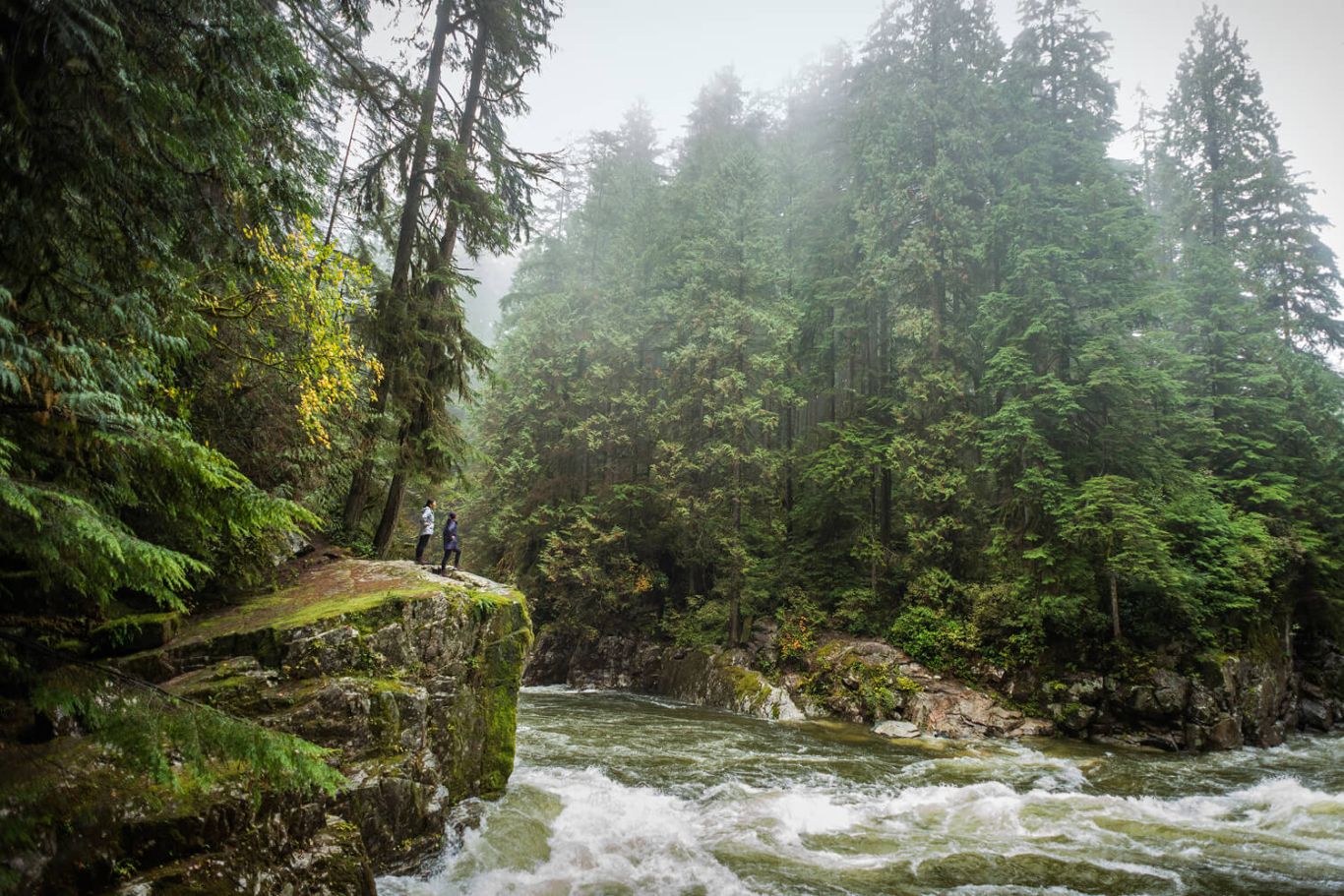
We arrive at the hot springs which, despite the close encounter en route, are breathtaking in the best possible way. Submerging this racing heart in the broiling waters, soothed by the gushing river below and the towering fir trees that surround, we’re not the only ones who’ve come to soak in it today.

“I’ve never seen this place with so many people," whispers my hiking buddy as another couple arrives, joining a handful of other spring dwellers.

Up until the last couple years, he explains, these springs were a relative secret, primarily frequented by Pemberton locals and hikers in the know. That was until a couple of blog posts revealed the name and location of the springs, which spread like wildfire across social media. But in opening the doors to a whole new population of curious visitors, it has also ignited a clash between social media and social responsibility.

On one hand, many may argue that it’s positive to see more and more people appreciating and accessing the natural beauty that British Columbia has to offer. But on the flipside, this widened demographic isn’t necessarily equipped with the information and know-how to protect such secluded sites that have been thrown into the media spotlight. Today is a prime example of how it only takes one ill-informed person to cause a potentially dangerous situation. The night before we arrived, two backpackers had stayed in the nearby campsite but failed to store and hang their food properly, which had lured the bears unusually close. It’s not the first time this has happened either.

Two days later, the trail is officially closed to the public, for the safety of everyone (and has remained closed at the time of publication).

It’s a predicament that’s been seen far too many times, not just in BC, but across the globe; isolated destinations that have remained famously pristine due to their low profile, which ironically, is then diminished once high volumes of people learn about them.

So as travellers, where do we draw the line between encouraging our peers to experience just how beautiful this world is, or remaining tight-lipped so as to avoid further environmental damage?

In June 2017, another BC locale fell victim to too many people with too little information (or perhaps respect). Joffre Lake, which has also seen a traffic explosion in recent years thanks to its stunning surrounds and accessibility for Vancouverites, made headlines for all the wrong reasons. Two local hikers were so horrified to find an abundance of rubbish that had accumulated on the popular trail that they collected 15 kilograms worth alone. It’s these kinds of incidents that overshadow the magnificent landscapes of BC, and how lucky we are to be able to experience them.

So where does that leave us, the nature-loving, smartphone-wielding travellers of 2018? It would be hypocritical to suggest that these places should remain a secret, kept by a privy few, and unrealistic to put a blanket social media ban on them. What we can do, however, is find a middle ground where we still experience these destinations in all their Instagrammable glory, but in a way that protects their longevity. It’s time for us to wise up, do it right, and spread the good word, not the damage.

PACK IT IN, PACK IT OUT
It’s crazy that in 2018 we’re still having this conversation about litter, but it still happens and it adds up. With every single item you bring into a campsite/hiking trail/really anywhere that isn’t a rubbish bin, be sure it goes back out with you and is disposed of responsibly. In this day and age, we all know better.

GET SERIOUS ABOUT FOOD STORAGE
In Canada, wildlife is a serious consideration when you’re camping. Do your research and learn how to properly store and hang your food. Even if you’re not staying overnight, it doesn’t take long for wildlife to be attracted to the smell and lives to be put at risk.

BE BEAR AWARE
Sure, in the scheme of things, your chances of having a run-in with a bear are slim, but that doesn’t mean you can remain ignorant when venturing into the Canadian wilderness. Find out what bear species live in the area you’re exploring, and how to best deal with them, if the occasion arises. Best practices do vary between bear species.

GEOTAG MINDFULLY
When we explore spectacular places, like those in BC, our default move is often to whip out the smartphone, take a photo, and add to the online fanfare. But let’s keep a little mystery for these lesser-known gems, and encourage fellow explorers do their research. Try to avoid geotagging the exact location on Instagram, and opt for a more general description nearby.

MAKE SOME NOISE
Avoid surprising wildife by warning them of your presence with speaking, singing and making general noise. Experts suggest that when bears can hear you coming, they’re more likely to exit the area. It’s often when they’re surprised that they get defensive and attacks are more likely.


Discover more about Canada:

6 news stories that will make you say ‘Oh Canada!’

– 8 things that surprise every Australian traveller in Canada

Want to see more stories from International Traveller in your Google search results?

  1. Click here to set International Traveller as a preferred source.
  2. Tick the box next to "International Traveller". That's it.
hero media

12 grand journeys throughout North America

    Discover North America’s epic adventures — from Route 66 and Alaska cruises to Hawai‘i road trips, NYC culture, Mexico trails and more.

    1. Route 66, the Main Street of America

    Travelling with: Ricky French

    Sunset on Route 66 in the California Mojave Desert.
    Hit the open road and trace America’s legendary highway. (Image: Getty/Der_Thomasa)

    Dubbed the Main Street of America, Route 66 radiates serious main character energy, cemented into popular culture through everything from John Steinbeck’s novel The Grapes of Wrath to the Disney Pixar film Cars. Spanning nearly 4000 kilometres from Chicago to Los Angeles, the historic highway celebrates its centenary next year, a timely invitation to take the mother of all road trips along the Mother Road. Allow two to three weeks to tackle the full length, or bite off a smaller chunk at either end, cruising the dramatic deserts of California or the more pastoral landscapes of Illinois, lined with neon-lit diners, retro gas stations and quirky roadside attractions.

    2. Mexico’s Día de los Muertos

    Travelling with: Carla Grossetti

    emblematic catrina of mexico with flowers and necklace with sempasuchil flowers
    Celebrate life and honour loved ones in vibrant style. (Image: Getty/Fabian Pacheco)

    You might know Oaxaca as the birthplace of mole and mezcal. But the state in southern Mexico is also where the Día de los Muertos (Day of the Dead) began. Time your visit to coincide with the colourful holiday, on 1–2 November, which honours and celebrates loved ones who have passed away. Oaxaca is also Mexico’s Michelin-starred culinary capital, with 18 restaurants and a humble taco stand listed in the 2025 guide.

    3. Museum-hop in New York City

    Travelling with: Carla Grossetti

    The Guggenheim Museum’s iconic spiralling exterior, a highlight of North America Epic Adventures.
    Step inside and marvel at bold, world-class art. (Image: Damiano Fiore)

    Your map app will look like it’s been scattered with confetti after you’ve dropped pins on all the museums you want to visit in New York City. Must-sees are the Solomon R. Guggenheim Museum, the Metropolitan Museum of Art aka the Met, and the Museum of Modern Art. The American Museum of Natural History is also a draw. It’s also worth venturing into the boroughs to browse institutions such as the Brooklyn Museum, which has a huge permanent collection categorised by culture.

    4. The USA’s music scene

    Travelling with: Elizabeth Whitehead

    The Seattle skyline at night, aglow with city lights on North America Epic Adventures.
    Soak up skyline views and dive into the city’s coffee culture. (Image: Abigail Boone)

    If you’re a muso, chances are you’ve wanted to make a pilgrimage to the United States, the epicentre of so many beloved genres. Whether you’re head-banging your way around the Grunge Circuit in Seattle, chasing the twang of the pedal steel through Tennessee or bouncing between blues bars in the Mississippi Delta, the USA’s rich music culture has something that’ll strike a chord.

    5. Road-tripping Hawai‘i

    Travelling with: Carla Grossetti

    A woman surfing in Hawaii, gliding across turquoise waves on North America Epic Adventures.
    Catch the waves and ride Hawaii’s iconic swells. (Image: Ben Ono)

    Hawai‘i is one of the most diverse US states to road trip around. Of the six major islands to visit, the Island of Hawai‘i packs in everything from the snowy summits of Mauna Kea and Mauna Loa to black-sand beaches and lava fields frozen in the act of flowing forward. Change down a few gears on the island of O‘ahu, too, where you can find your own patch of sand on Waimanalo Beach. Visit poi and pineapple plantations. And hang ten on beginner-friendly waves on the North Shore.

    6. Cruising Alaska

    Travelling with: Carla Grossetti

    Explora Journeys ship cruising in Alaska.
    Sail past glaciers and spot whales in pristine waters.

    Seeing Alaska from the sea allows you to cover a lot of distance quickly. This immersive frontier now beckons more than ever before with Explora Journeys adding the American state to its global destination portfolio. Best of all are the pre-and post-journey immersions that connect the luxury of a cruise onboard Explora III with the rugged grandeur of the Alaskan interior. UnCruise Adventures also weaves in access to remote national parks, legendary wildlife corridors and authentic cultural experiences on its Alaskan itineraries.

    7. The Wixárika Route in Mexico

    Travelling with: Elizabeth Whitehead

    People journeying through the Wixarika Route.
    Journey deep into sacred Huichol traditions and art.

    For generations, the Indigenous Wixárika People of Mexico have walked a sacred path known as Tatehuarí Huajuyé, or ‘The Path of Our Grandfather Fire’. The annual pilgrimage route spans 500 kilometres, taking in significant sites in Wixárika spirituality and cosmology. The route passes through the deserts, mountains and forests of northern Mexico before reaching Wirikuta, believed to be the place the sun first emerged. The route is a living cultural landscape of Indigenous culture pre-Columbian influence and, in July this year, was formally inscribed into UNESCO’s World Heritage List.

    8. Drive the Iceberg Coast in Canada

    Travelling with: Carla Grossetti

    Iceberg off the east coast of Canada
    Chase icebergs along Expedition 51 on Canada’s east coast. (Image: Canadian Tourism Commission/ Chris Hendrickson)

    Download the icebergfinder.com map to better plan your road trip along Canada’s Iceberg Coast. The new highway, which has been nearly 25 years and CAD$1.1 billion in the making, threads through the country’s pleated coastlines around Quebec, Newfoundland, Labrador, Nova Scotia and New Brunswick before looping in the French islands of St Pierre and Miquelon. As well as chasing icebergs along Expedition 51, travellers will have the opportunity to engage with cultures that have thrived in the pristine provinces for thousands of years.

    9. A foodie tour of Nova Scotia

    Travelling with: Katie Carlin

    Lunenberg Nova Scotia
    Try lobster rolls in Lunenburg on the east coast of Canada in Nova Scotia. (Image: Natalia Kvitovska/ Unsplash)

    World-famous for its lobster, Nova Scotia is a Canadian province best savoured through its culinary clout shaped by sea and terroir. Bite into lobster rolls at historic Lunenburg’s Salt Shaker Deli & Inn and sip maple rum at Ironworks Distillery. Winery-hop around Wolfville’s rising vineyards (don’t miss Lightfoot & Wolfville). Take a maple syrup tour at Sugar Moon Farm near Earltown. And pull up a seat at waterfront Bar Sofia in Halifax, where Nova Scotia oysters aguachile arrive bright with cucumber, lime and pickled onion.

    10. Soak up the sun in the Caribbean

    Travelling with: Carla Grossetti

    Overwater bungalows off a beach in the Caribbean
    Experience the white-sand beaches and cerulean seas of the Caribbean on board a cruise.

    The Caribbean is on the radar for seasoned cruisers. And it’s easy to see why, with white-sand beaches, cerulean seas and swaying palms so picture-perfect they look AI-generated. Cruise with Windstar, Royal Caribbean, and Celebrity on its inaugural Xcel season to the Caribbean to enjoy action-packed excursions such as snorkelling coral reefs and shopping for local trinkets. And those sea days? Spectacular.

    11. Red Chair Hikes of Canada

    Travelling with: Kassia Byrnes

    Red Adirondack chairs overlooking Lake Minnewanka in Canada
    Take a seat at Lake Minnewanka, one of more than 400 red Adirondack chairs scattered across Canada’s hiking routes. (Image: Getty Images/ Autumn Sky Photography)

    No one appreciates the great outdoors more than Canadians, emerging from snow-covered winters to tread glacial rivers and snowshoe through forests, or to hike mighty mountains and wildflower-strewn valleys come spring. Along popular hikes around the country, more than 400 red Adirondack chairs have been placed in peaceful, breathtaking locations. What started as a social media contest now sees hikers soaking in classic Canadian lake and mountain vistas, overlooking historic sites or gazing down on the mountainous path they just travelled.

    12. Ride the Rocky Mountaineer from Denver to Moab, USA

    Travelling with: Carla Grossetti

    Sweeping views from the Rocky Mountaineer.
    The Rocky Mountaineer will continue as the Canyon Spirit in 2026, seen here carving through Ruby Canyon.

    Sighting wild animals is one of many incredible thrills along the two-day luxury Rockies to the Red Rocks route onboard the Rocky Mountaineer across America’s Southwest between mid-April and mid-October. In addition to the lone bear, we spot bighorn sheep, elk, beavers, pronghorn antelope, bald eagles and ospreys. Riding the rails onboard the luxury train, which was founded in Canada in 1990 and has been awarded the prestigious World’s Leading Travel Experience by Train several times, has never been about just getting from A to B. Ride the train from Denver to Moab and you will see the scenery change from snow-capped peaks to meadows, red-rock canyons and soaring cliffs that resemble ornate Gaudí-esque cathedrals. But it’s not until you get off the train that you can produce the ultimate Venn diagram, with nature and adventure in the intersecting spheres.