The Venice Simplon-Orient-Express is the world’s most storied train – and every passenger has a starring role.
A Champagne-fuelled bubble of luxury and joy; no wonder Agatha Christie called it “the train of her dreams".
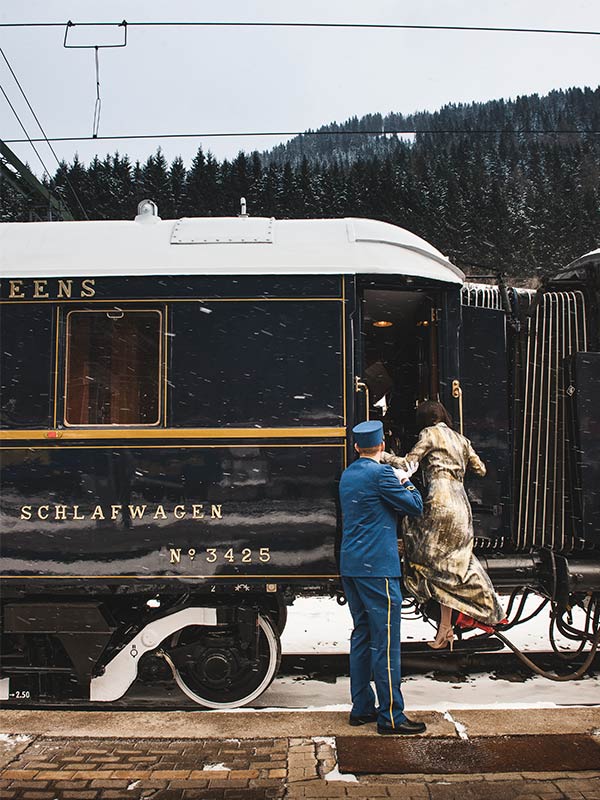
Arriving by water taxi at Venice’s Santa Lucia station, a steward in a blue uniform and kepi hat stands ready to welcome me aboard the Venice Simplon-Orient-Express (VSOE). On the platform, onlookers are admiring the gleaming blue and white livery and brass insignia of this legendary train as it prepares to depart on its classic Venice to Paris route.
Following introductions, I’m escorted onboard, passing through perfectly polished timber corridors to my cabin – the Vienna Grand Suite. It’s in Sleeping Car 3309 – the same one that, in 1929, was stranded in the snow for 10 days just outside Istanbul, inspiring British author Agatha Christie to write the bestselling Murder on the Orient Express.
Waiting for me on a small table clothed in white linen is a tin of caviar and a bottle of Champagne, which are duly opened and served as the train pulls out of the station.
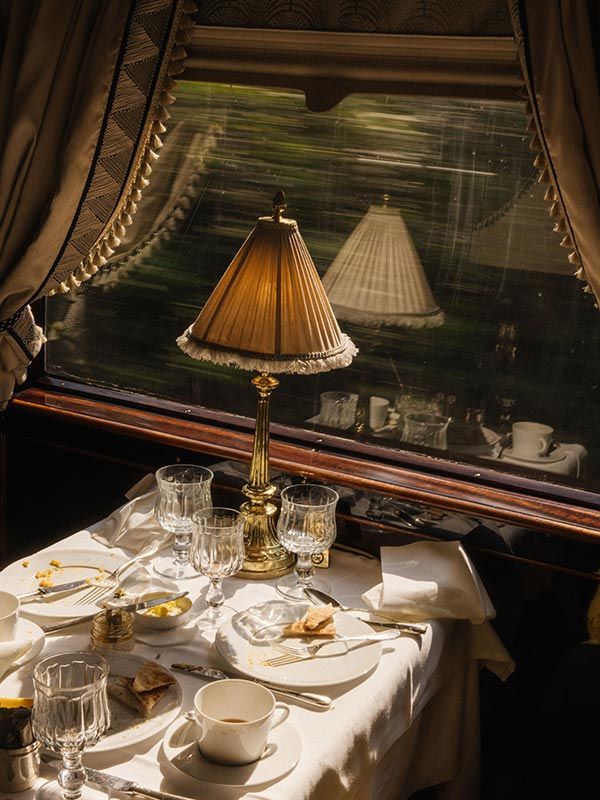
Over the next 24 hours, I revel in a Champagne-fuelled bubble of joy, dining on Michelin-quality meals and sipping cocktails at the piano bar as we pass spectacular alpine lakes and snow-capped mountains on our journey from Italy through Switzerland to France.
Being in close quarters with the rich and glamorous makes for great people watching, and fellow passengers readily swap tales on this trip of a lifetime on what could be the world’s longest stage. The friendly, festive mood is facilitated by the incredibly charming staff, who attend to just about any whim with a smile and twinkle in their eye.
A train steeped in history and legend
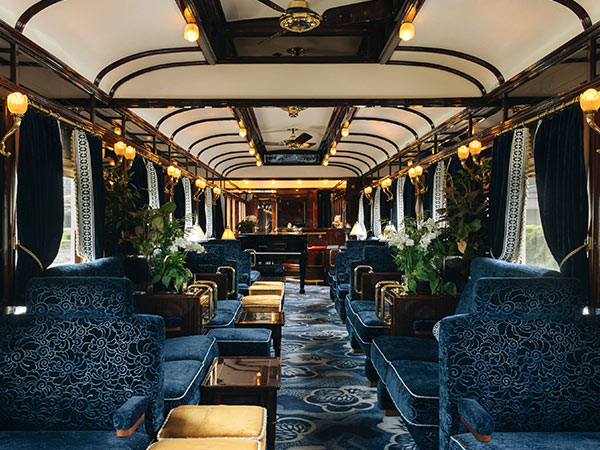
Welcome aboard the world’s most famous train, one possibly more renowned than the many celebrities who have travelled on it. Originally founded in the 1880s as the Orient Express, an intra-continental luxury train that criss-crossed Europe, the service has undergone several iterations, owners and name changes. Currently, the best known is the VSOE, owned by Belmond, operators of iconic hotels like the Splendido in Portofino and Cipriani in Venice. It’s not to be confused with an Orient Express train launching in 2026, with overlapping routes.
Christie was a fan of the service, describing it as “the train of my dreams," but she wasn’t alone. A stream of rich and famous have hitched a ride, including the Beckhams, Kate Moss and Beyonce, and it’s starred in films from James Bond to Mission Impossible.
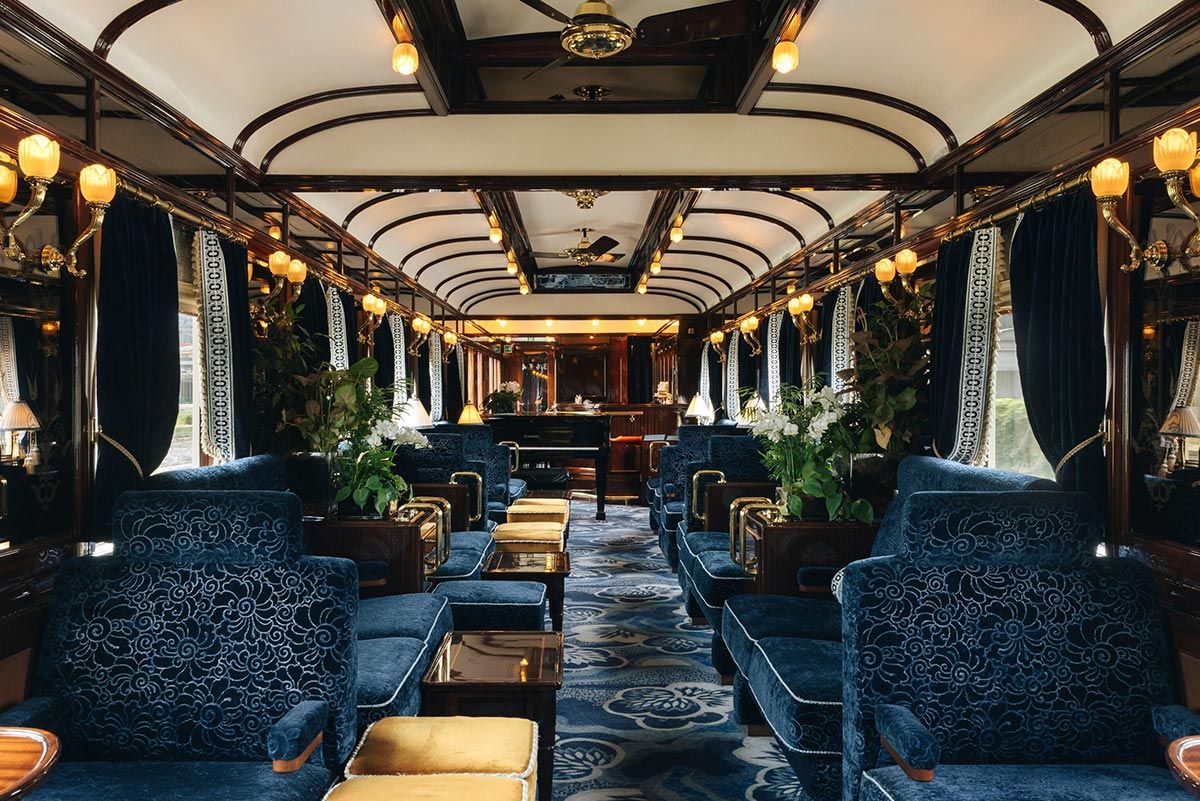
Each of the 17 individually numbered carriages, mostly built in the 1920s and 1930s, is an opulent jewel box of art deco style, a time warp to more carefree days. Look for brass plaques in each carriage, which provide details of when and where it was constructed and fascinating stories about it.
The sleeping cars
Four categories of accommodation are available on the VSOE. Top of the heap is the L’Observatoire, an entire carriage designed by Brazilian contemporary artist JR. It houses a bedroom with a standalone bathtub, a library with books by French publisher Gallimard, a record player and vinyl collection, a hidden tearoom with a fireplace, and an oculus for sky and stargazing.
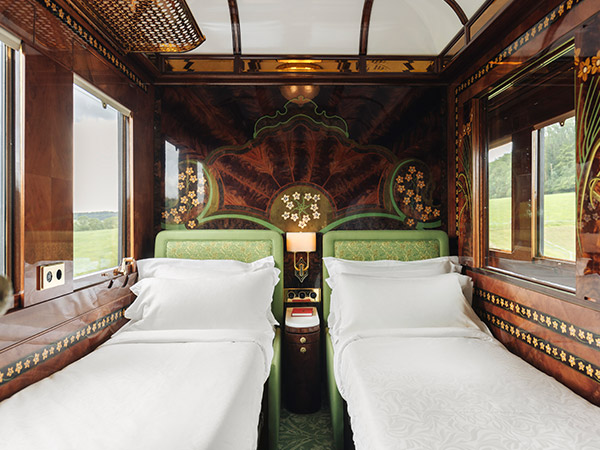
Six Grand Suites (Budapest, Istanbul, Paris, Prague, Venice and Vienna) feature double beds with hand-carved headboards, a lounge and dining area, ensuite bathrooms, free-flow champagne, and 24-hour butler service.
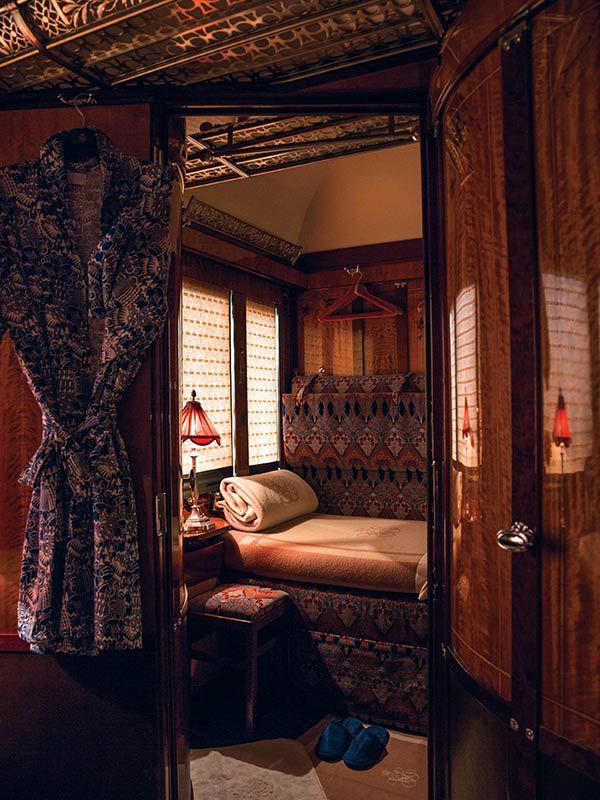
Slightly smaller Suites come with sofa beds and ensuite bathrooms, and the cosiest of all the Historic Cabins. These are closest to the original style of accommodations, with banquette seats that convert to bunk beds, and passengers using shared restrooms.
Weekly travel news, experiences
insider tips, offers, and more.
The dining cars and Bar Car 3674
Dining is an occasion, so remember the mantra “you can never be overdressed on the VSOE." That means smart attire (no jeans) for lunch and black tie or formal wear for dinner. Guests are allocated times in one of three dining cars, with first preference given to suite guests. The green Etoile du Nord dining car, with its illustrious history and immaculate marquetry, is highly sought after, as is the Côte d’Azur, famed for its Mediterranean blue interiors and Lalique carved glass and crystal panels. But the L’Oriental car is no consolation prize, with its golden aura and Chinoiserie lacquer panels adorned with scenes of fauna and flora.
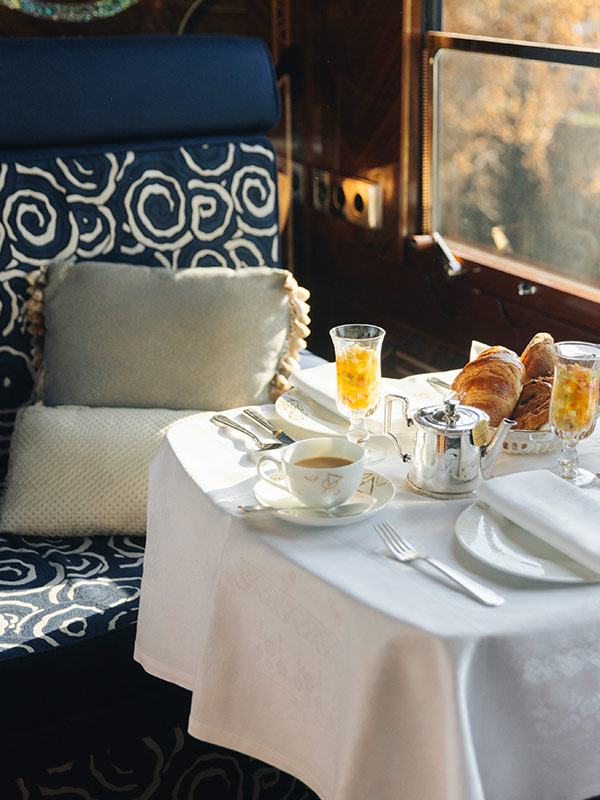
Star French chef Jean Imbert consults on the menu, and the team do a remarkable job of turning out fine-dining creations from such a tiny kitchen. Depending on the journey and season, dishes may include lobster with grilled vegetables and marigold flowers, turbot in Champagne sauce with caviar, veal chop in a chanterelle sauce, and strawberry tiramisu. Breakfast or brunch is served in your cabin and will likely include fluffy scrambled eggs with more caviar.
The physical and metaphorical heart of the train is Bar Car 3674, perfect for pre- and post-prandials of Champagne, martinis, negronis and spritzes accompanied by the sounds of a resident pianist tinkling away on a baby grand piano. Midnight brunch with toasted sandwiches is a thing, as is dancing, and the bar stays open until the last guest slinks to bed.
The European journeys
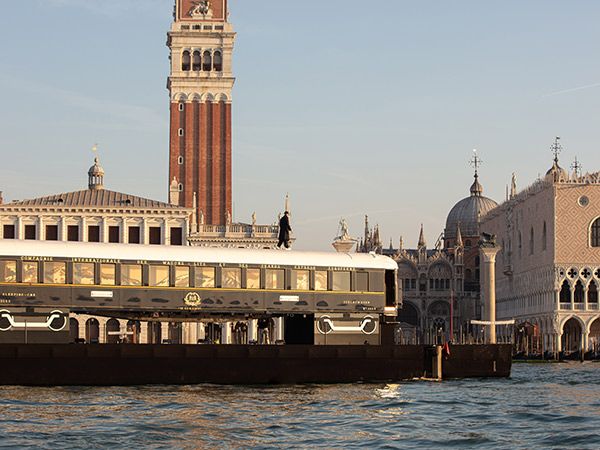
Overnight journeys run between Europe’s most romantic cities (think names of the Grand Suites), as well as Amsterdam, Brussels, Rome, Florence, Cannes, and special seasonal routes like Portofino. The longest journey, from Paris to Istanbul or vice versa, takes five nights, two nights of which are in hotels in Budapest and Bucharest. On single-night journeys, trains will stop at border stations to change gauge and complete paperwork, though passengers remain onboard. No matter the route, expect stunning scenery, from the Swiss Alps to the Mediterranean Sea.
Want to see more stories from International Traveller in your Google search results?
- Click here to set International Traveller as a preferred source.
- Tick the box next to "International Traveller". That's it.