hero media

The UK cities you’re most likely to experience a White Christmas

Recent probability statistics have laid out which cities in the UK are most likely to experience a White Christmas.

A White Christmas is a bucket-list experience. Especially for those living in the Southern Hemisphere, having spent many a Christmas sweating at a backyard barbecue, on a cramped beach or fighting siblings for a spot in front of the air conditioner.

If you’re keen to see snow this festive season but don’t know where to go, we’ve got the place for you. And it’s not based on beauty or bias, we’ve got the stats.

Online betting experts at OLBG have profiled the latest betting odds and statistics surrounding the chances of a White Christmas in the UK this year.

From Scottish burghs and Irish metropoles to cities across England, here’s a definitive list of UK cities that are most likely to experience a White Christmas.

1. Edinburgh

Coming in at number one with the highest probability of snowfall this Christmas is… drum roll, please… Edinburgh!
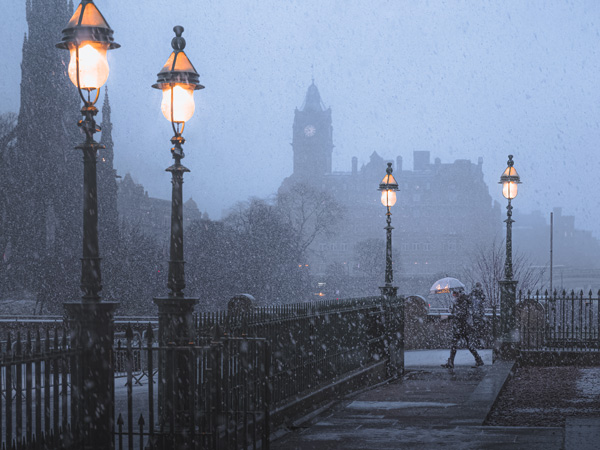
Edinburgh while snowing
The capital city of Scotland has a 33.33 per cent chance of seeing snow this Christmas.

The capital city of Scotland is one of the most beautiful cities in the UK. And it has a 33.33 per cent chance of seeing snow this Christmas.
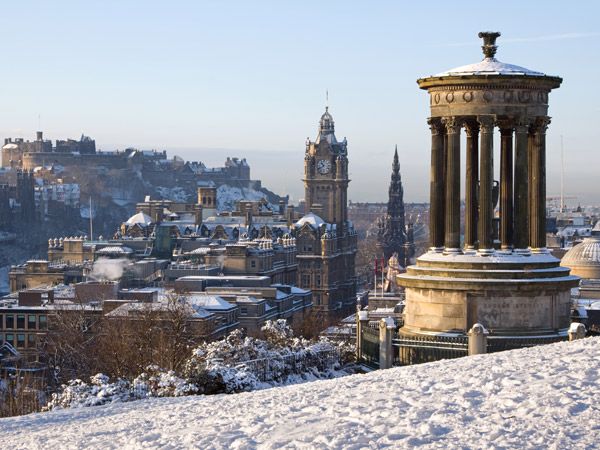
a scenic view of Edinburg covered with snow
Edinburgh is one of the most beautiful cities in Scotland.

Edinburgh is full of history, with something to learn about around every corner. Think cobblestone streets, castles and an underground city. Get lost in the Old Town, wander bookshops, climb Arthur’s Seat or explore Edinburgh Castle.
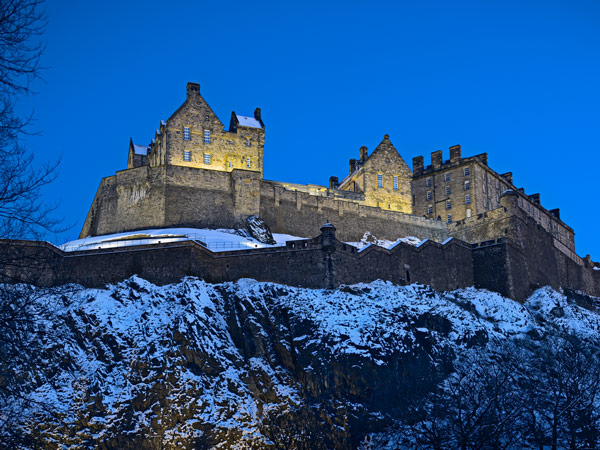
Edinburgh Castle at dusk with winter snow
The iconic Edinburgh Castle is a must-visit.

2. Glasgow

Edinburgh’s neighbour Glasgow also has a 33.33 per cent chance of seeing snow this Christmas. The up-and-coming cultural capital of Europe has plenty of museums, art galleries and lively venues to keep you warm over the festive season.
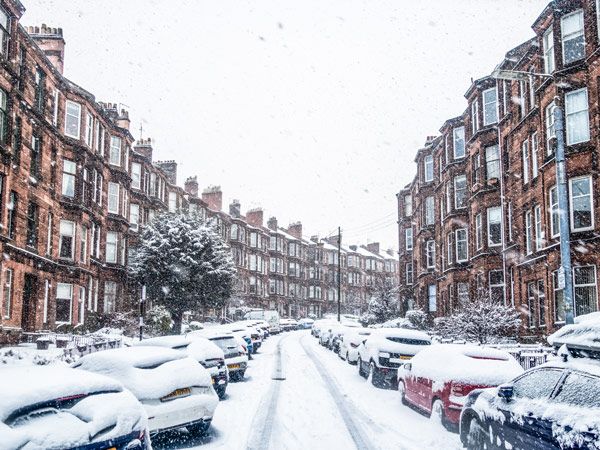
a snow-covered street in Glasgow
Experience snow in Glasgow.

But make sure you also grab a pint at Drygate Brewery, check out a gig at the Barrowland Ballroom or discover the Riverside Museum.
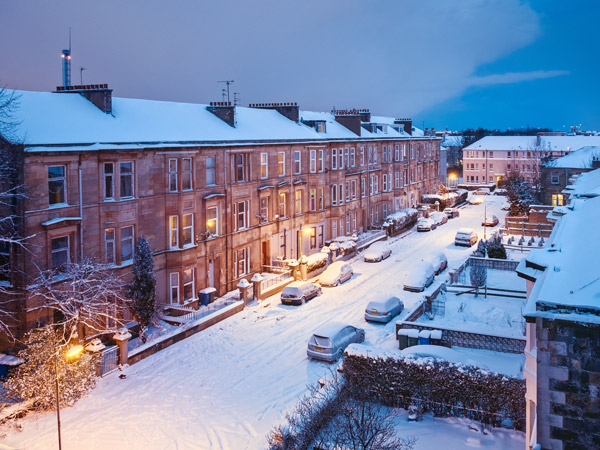
the view from the top of the evening courtyard of the city of Glasgow in winter
The city of Glasgow transforms into a winter wonderland.

3. Leeds

Coming in third is Leeds in West Yorkshire, England, with a 25 per cent chance of Christmas snowfall.
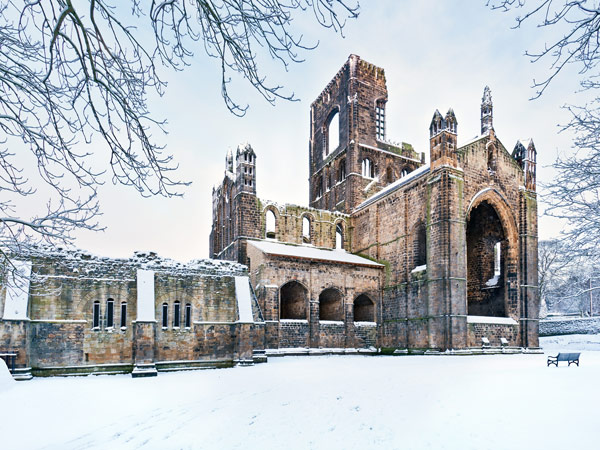
the Kirkstall Abbey covered in snow, Leeds
Wander through the snow-covered Kirkstall Abbey.

Leeds is another exciting, up-and-coming city in the UK. The city is known for its diversity and cultural scene, and if you’re planning to head to Leeds, there’s plenty to see and do.
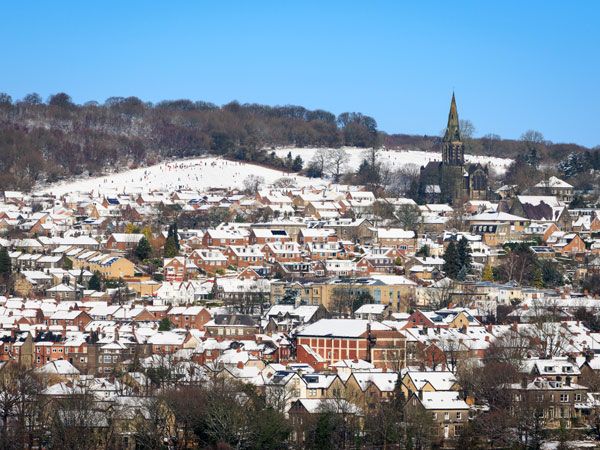
the suburban area of Leeds, UK
The houses are covered with snow in Leeds.

From the Royal Armouries Museum and Kirkstall Abbey to Roundhay Park and Lotherton, there’s something for everyone to enjoy. Including the likelihood of snow come Christmas time!
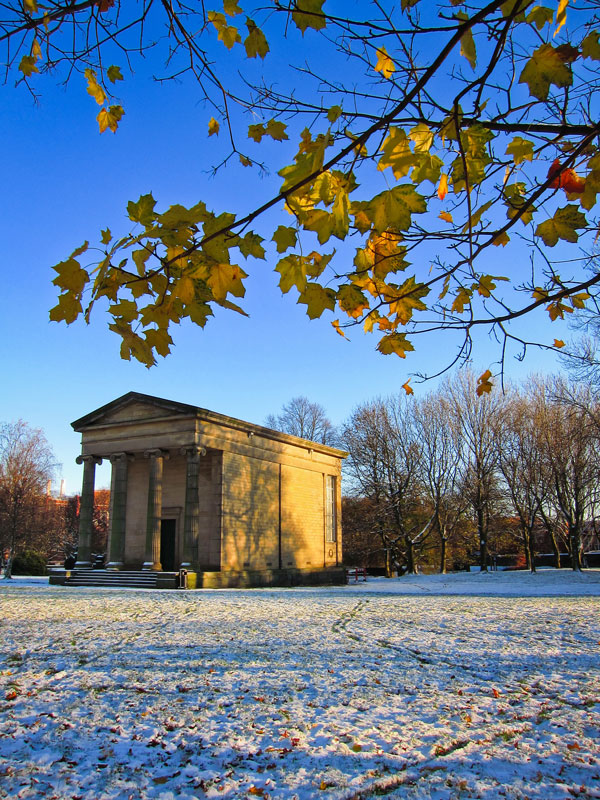
a historic structure in the snow-covered Leeds Park
Soak up the cold air in Leeds Park.

4. Belfast

Not far behind Leeds is Belfast in Northern Ireland, which has a 22.22 per cent probability of experiencing a White Christmas. In fact, historically, Northern Ireland is a great bet for a snowy Christmas.
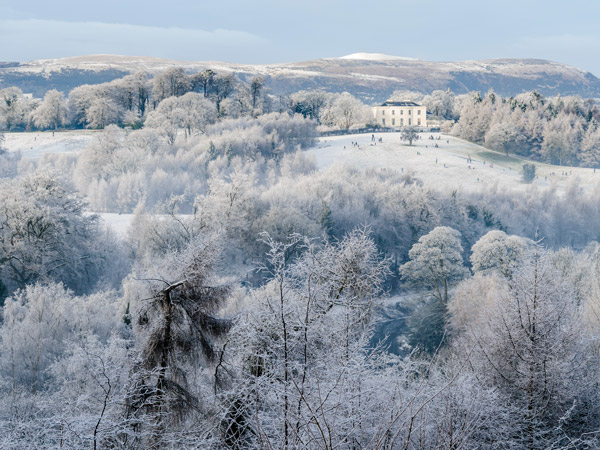
the Barnetts Demesne covered in snow, Belfast
Belfast is a dreamy destination for White Christmas.

In 2010, County Down in Northern Ireland (just over 30 kilometres from Belfast) was responsible for one of the top four deepest snow depths recorded on 25 December since records began. It saw 17 centimetres of snow, preceded by 45 centimetres in Gwynedd, Wales.
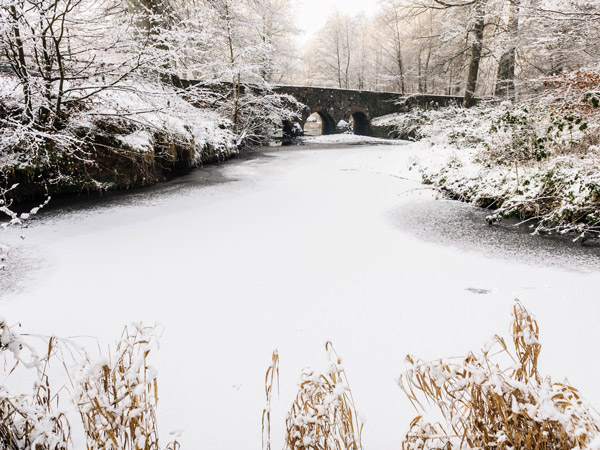
a snow-covered landscape in Belfast
The snow is deep on the ground in Belfast.

Famously, Belfast is the birthplace of the RMS Titanic, which can be felt from the renovated dockyards’ Titanic Quarter, which includes the Titanic Belfast Museum and shipbuilder Harland and Wolff’s Drawing Offices. The iconic slipways, where the boat was once launched, now also plays host to open-air concerts.

a Christmas display in Belfast
Christmas in Belfast is guaranteed to entertain kids and families.

Visitors can also explore the Crumlin Road Gaol, Ulster Museum, St. George’s Market, the Belfast Peacewall and Cavehill.
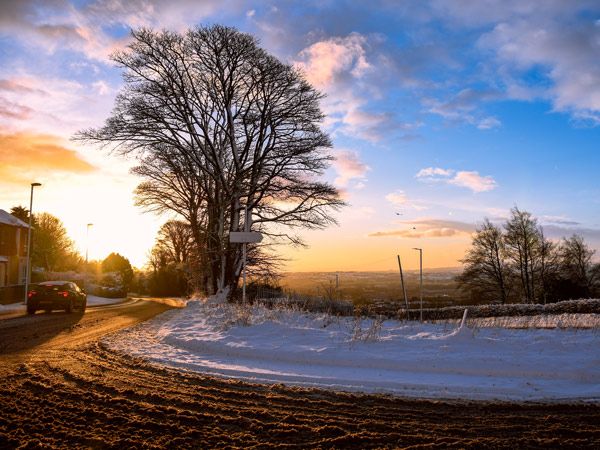
sunset on a snowy hill in Belfast
Capture an enchanting sunset on a snowy hill in Belfast.

Weekly travel news, experiences
insider tips, offers,
and more.

5. Manchester

Manchester is one of the UK’s most exciting cities, with a thriving music scene and a budding swell of art, design, culture and history. And this December, it has a 20 per cent chance of seeing snow grace its streets on Christmas.

Manchester is studded with museums and art galleries, some of the best being the Manchester Art Gallery, the People’s History Museum and the Science and Industry Museum.

Football lovers will also love it here; two of the English Premier League’s biggest teams, Manchester United and Manchester City, call the city home. Visit the National Football Museum or, during the winter season, catch a game at Etihad Stadium.
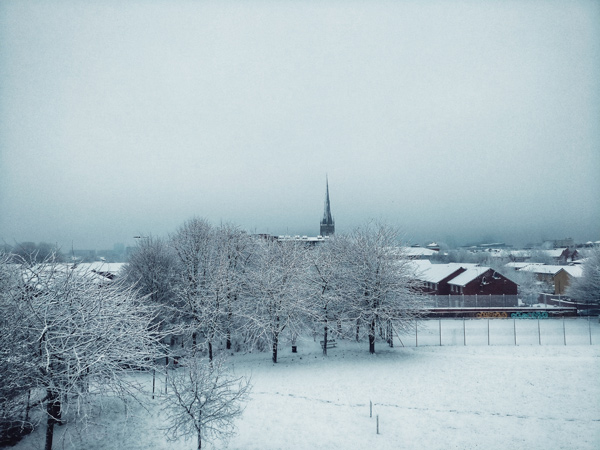
Manchester covered in snow
Snow visits the thriving arts centre of Manchester. (Image: Merve Selcuk Simsek)

Other UK destinations on the list include Birmingham (14.29 per cent chance of snowfall), Cardiff (9.09 per cent chance of snowfall) and London (8.33 per cent chance of snowfall). Bristol, Aberdeen, Liverpool and Newcastle all have a 4.76 per cent chance of snowfall.
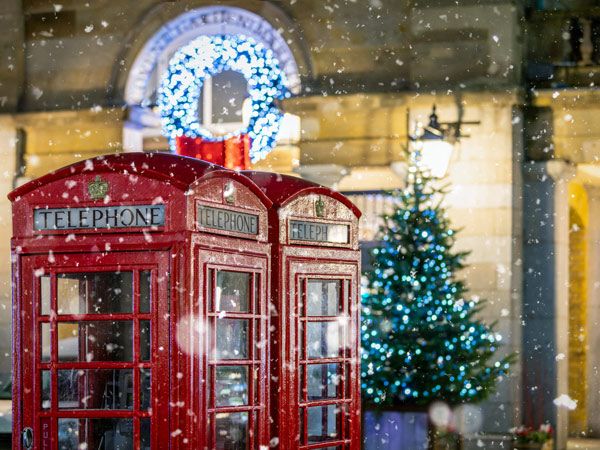
red telephone booths in front of Christmas decorations lights in London, United Kingdom
Visit the iconic telephone booths in London.

So, if you’re keen for snow this festive season, the UK is the place to be. But if you’re betting on it, head up to Edinburgh or Glasgow in Scotland and you may just have yourself a very merry White Christmas.
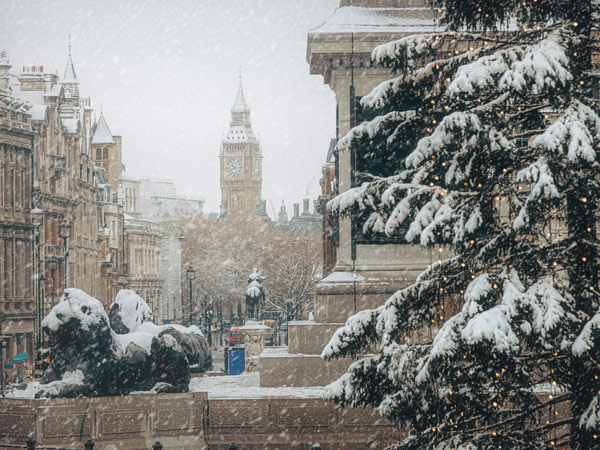
Trafalgar Square on a snowy Christmas day
Stroll along the Trafalgar Square on a snowy Christmas day.

Want to see more stories from International Traveller in your Google search results?

  1. Click here to set International Traveller as a preferred source.
  2. Tick the box next to "International Traveller". That's it.
hero media

What the European heatwave means for your summer travel plans

Temperatures are soaring this summer, breaking records across Europe and the UK. 

Euro summer is a feeling like no other. But when a heatwave hits? The dream trip quickly turns into a sweaty mess. Extreme heat is sweeping Europe and the UK this week, with record-high temperatures impacting travel plans across the continent.

And while Australian summers are typically hotter in absolute temperature, many European cities aren’t equipped for high temperatures, resulting in unbearable weather.

Why is it so hot in Europe?

Signs of a hot summer loomed in May, when the mercury hit unprecedented spring highs. Now, extreme high temperature warning alerts have been issued in countries such as Spain, Italy, France, England, the Netherlands and Germany.

France saw its hottest day on record on Wednesday, with an average temperature of 30°C across the day and night. This surpasses the average temperature for June, which is 15°C to 25°C. Dozens of people have died, including 40 from drowning.

In Spain, 212 deaths have been linked to the heatwave.

The UK recorded its hottest June day ever on Wednesday with temperatures soaring to 36.1°C. In an article published by the Met Office – the UK’s national meteorological service – Professor Stephen Belcher CBE, Met Office Chief Scientist, shared his concerns about June’s heat. “To see temperatures like this in the UK in June is sobering. Events like this bring home the implications of climate change, with very high temperatures and humidity bringing significant health implications from heat stress, as well as impacts to a range of sectors such as transport, energy and water supply,” he said.

Heatwaves are becoming increasingly common in Europe and the UK, neither of which is prepared for such extremes. The World Meteorological Organization reported that in 2025, at least 95% of Europe experienced above-average annual temperatures and that the continent was heating up twice as fast as the global average.

How travel is impacted

A pharmacy sign displaying 40 degrees Celcius
A pharmacy broadcasting local weather data. (Credit: Getty/Dragoncello)

During a heatwave, power grids, water systems and transport networks can be affected, resulting in disrupted itineraries for travellers. In France, power outages have left thousands without electricity and early closures have been implemented for two of Paris’s biggest attractions, the Eiffel Tower (early afternoon rather than late at night) and the Louvre (two hours early). Eurostar cancelled its London to Paris and Paris to London services from the 22nd to the 25th, and major UK rail companies have been advising travellers to avoid using trains where possible, or to travel during early hours.

If a heatwave is predicted, being flexible with your itinerary and having fully refundable/changeable tickets is key, as extreme heat can force the cancellation of outdoor activities, impact rail and flight services and change the opening hours of sites and eateries.

Why does summer in Europe often feel hotter than summer in Australia?

people swimming in the Canal Saint-Martin in Paris
People swimming in the Canal Saint-Martin in Paris to cool off. (Credit: Rachael Thompson)

With some of the highest UV levels in the world, Australians are no strangers to the heat, adapting well to intense weather. But our infrastructure is largely equipped to withstand soaring temperatures with climate-responsive passive design, refrigerated air conditioning or evaporative coolers, as well as swimming spots aplenty.

Buildings in Northern and Western Europe and the UK, however, are constructed to retain heat and handle frosty winters. The lack of universal air conditioning means it generally feels hotter even though the temperature on your app might not look it. During a heatwave, it can feel like you’re in a sauna as cities act like heat traps.

How to stay cool and prepare for another heatwave

Relief is expected across Europe and the UK later this week, but more heatwaves are still possible in the coming months. Summer heat typically peaks in July and August.

Public transport often doesn’t have air conditioning, and buses in particular can be swelteringly hot. If you’re heading outside or your accommodation has no air conditioning, it’s worth buying a spray bottle and a handheld fan from a pharmacy or tourist stand. Check ahead of time if restaurants and cafes have air conditioning and make a booking in advance. The highest temperatures typically hit between 3pm and 6pm, so aim to head outdoors outside of these hours.

Rising temperatures invite travellers to enter a more intentional era of seeing the world. Now more than ever is the time to embrace lower-impact “coolcations” and off-season getaways.