hero media

Visiting London? These gorgeous bluebell woods are blooming just one hour away

Don’t miss this fairyland day trip from London before it’s too late.

Japan has cherry blossoms. The Netherlands has tulips. The UK’s answer? Bluebells, a stunning woodland flower that erupts into a sea of vibrant blue between April and May.

For city-slickers in need of a nature hit or travellers visiting London, now is the perfect time to head to Dockey Wood on Ashridge Estate. Its bluebell fields usually peak between mid-April and the first week of May. Bluebells are not only visually stunning, but their presence signifies that the woodland it lies in has been around for at least 400 years.  

Where is the best place to view bluebells near London?
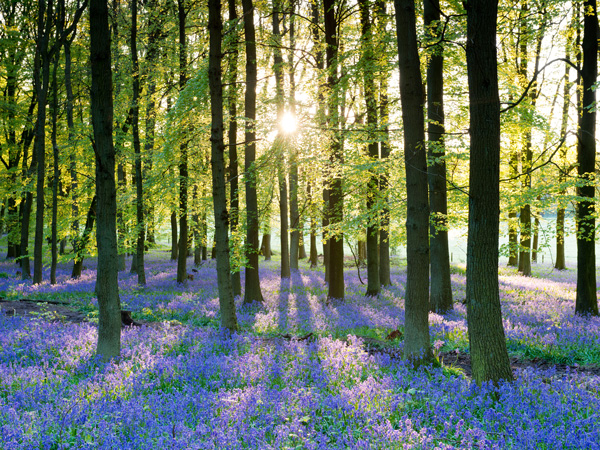
bluebells uk
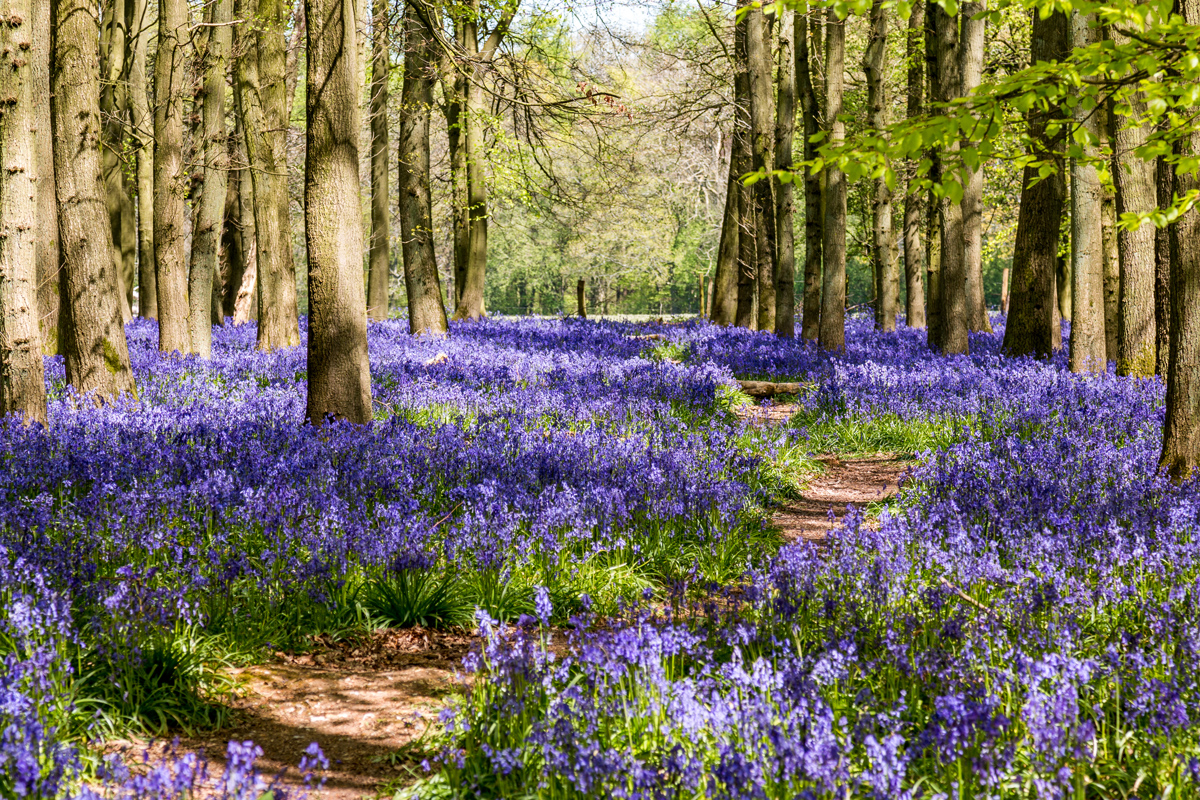
Dockey Woods are located on Ashridge Estate, just outside London. (Credit: Getty/krzych-34)

One of the top spots for bluebell flower viewing in the UK is Dockey Wood on Ashridge Estate, Hertfordshire – just over an hour’s drive from London.  

While the blooms are evidently the main drawcard, Ashridge Estate has more than 2000 hectares of stunning woodlands waiting to be explored. Visit the historic Pitsone Windmill, take in views from the towering granite Bridgewater Monument and watch out for butterflies, birds and deer. 

How to get to Dockey Wood

The car park at Dockey Wood has space for 40 cars. Do not park along the roadside as this can block emergency vehicle access. During peak visiting period, the National Trust recommends parking at the Visitor Centre on Monument Drive and walking along the approximately 2.5-kilometre marked path to Dockey Wood. 

Responsible visiting

bluebell flower
Bluebells are delicate and take years to recover from damage. (Credit: Unsplash/Yoksel Zok)

While the blooms are well worth a visit, the large numbers of visitors they attract places pressure on the woodland’s flora. Bluebells don’t spread to new areas easily or quickly, so it is vital to protect them. It can take bluebells around seven years to recover from damage.  

“The delicate soft leaves of bluebells are easily damaged, and this stops them from being able to photosynthesise, meaning they die back," the National Trust’s website explains. “In turn, this means they can’t put food back into their bulbs, reducing their ability to produce flowers and seeds. Watch your step and the bluebells will continue to flower for years to come." 

If you choose to visit, ensure you stick to the following guidelines: 

  • Do not under any circumstances touch, pick or step on the flowers 
  • Stick to the main visitor paths and watch out for ‘faux’ paths created by resident badgers that can be mistaken for human paths 
  • Keep dogs on a leash and do not allow them to run into the bluebell fields 
  • While stepping into the sea of flowers can be tempting for a photo opportunity, this is strictly forbidden 

How much does it cost to visit Dockey Wood bluebells?
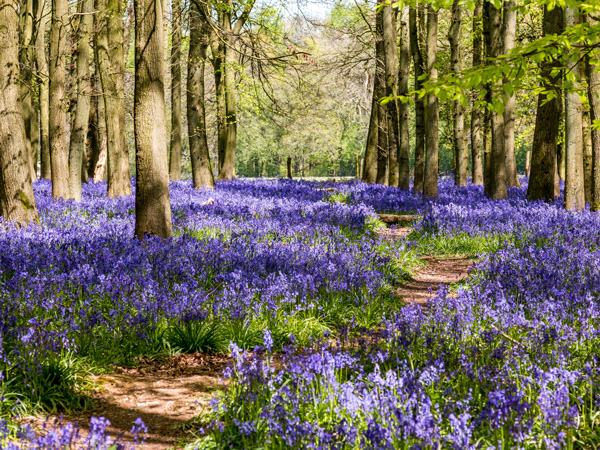
hertfordshire bluebells woods
Visit Dockey Wood between April and May. (Credit: Getty/tigermad)

On the weekend dates below, the National Trust charges visitors a small entry fee of £3.50 per adult and £1.50 per child (or free for National Trust members): 

  • 18 and 19 April 
  • 25 and 26 April 
  • 2, 3 and 4 May 

Weekly travel news, experiences
insider tips, offers,
and more.

Other places to see bluebells in England

  • Kew Gardens, London 
  • Micheldever Woods, Hampshire 
  • Wendover Woods, Chiltern Hills, Buckinghamshire 
  • Badbury Clump, Oxfordshire 
  • Boxley Wood and Rochester Forest, Kent 

Want to see more stories from International Traveller in your Google search results?

  1. Click here to set International Traveller as a preferred source.
  2. Tick the box next to "International Traveller". That's it.
Eleanor Edström
Eleanor Edström is International Traveller’s Associate Editor. El began her career writing for national magazines including Signature Luxury Travel & Style and Vacations & Travel, and has since developed a soft spot for wild landscapes, thoughtful design and the human stories that bring them to life. She holds an honours degree in English and philosophy from the University of Sydney, and has lived abroad in both Switzerland and France – ostensibly to sharpen her French, though the pastries made a strong supporting case. One day, she hopes to swim with humpback whales off the coast of Mo'orea.
View profile and articles
hero media

What the European heatwave means for your summer travel plans

Temperatures are soaring this summer, breaking records across Europe and the UK. 

Euro summer is a feeling like no other. But when a heatwave hits? The dream trip quickly turns into a sweaty mess. Extreme heat is sweeping Europe and the UK this week, with record-high temperatures impacting travel plans across the continent.

And while Australian summers are typically hotter in absolute temperature, many European cities aren’t equipped for high temperatures, resulting in unbearable weather.

Why is it so hot in Europe?

Signs of a hot summer loomed in May, when the mercury hit unprecedented spring highs. Now, extreme high temperature warning alerts have been issued in countries such as Spain, Italy, France, England, the Netherlands and Germany.

France saw its hottest day on record on Wednesday, with an average temperature of 30°C across the day and night. This surpasses the average temperature for June, which is 15°C to 25°C. Dozens of people have died, including 40 from drowning.

In Spain, 212 deaths have been linked to the heatwave.

The UK recorded its hottest June day ever on Wednesday with temperatures soaring to 36.1°C. In an article published by the Met Office – the UK’s national meteorological service – Professor Stephen Belcher CBE, Met Office Chief Scientist, shared his concerns about June’s heat. “To see temperatures like this in the UK in June is sobering. Events like this bring home the implications of climate change, with very high temperatures and humidity bringing significant health implications from heat stress, as well as impacts to a range of sectors such as transport, energy and water supply,” he said.

Heatwaves are becoming increasingly common in Europe and the UK, neither of which is prepared for such extremes. The World Meteorological Organization reported that in 2025, at least 95% of Europe experienced above-average annual temperatures and that the continent was heating up twice as fast as the global average.

How travel is impacted

A pharmacy sign displaying 40 degrees Celcius
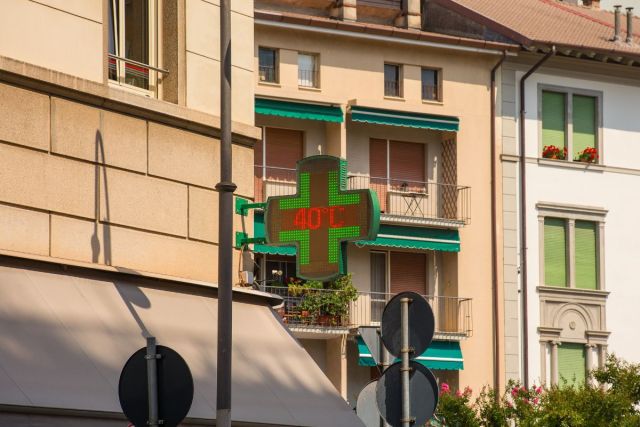
A pharmacy broadcasting local weather data. (Credit: Getty/Dragoncello)

During a heatwave, power grids, water systems and transport networks can be affected, resulting in disrupted itineraries for travellers. In France, power outages have left thousands without electricity and early closures have been implemented for two of Paris’s biggest attractions, the Eiffel Tower (early afternoon rather than late at night) and the Louvre (two hours early). Eurostar cancelled its London to Paris and Paris to London services from the 22nd to the 25th, and major UK rail companies have been advising travellers to avoid using trains where possible, or to travel during early hours.

If a heatwave is predicted, being flexible with your itinerary and having fully refundable/changeable tickets is key, as extreme heat can force the cancellation of outdoor activities, impact rail and flight services and change the opening hours of sites and eateries.

Why does summer in Europe often feel hotter than summer in Australia?

people swimming in the Canal Saint-Martin in Paris
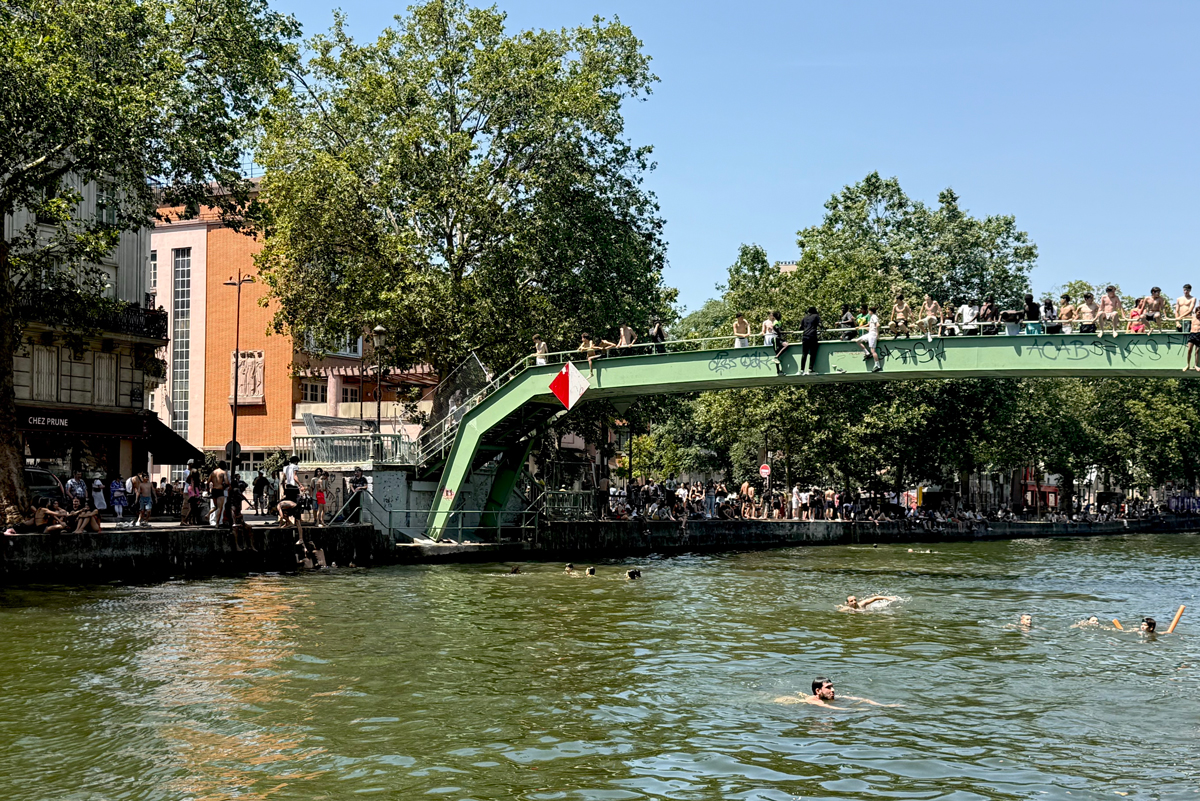
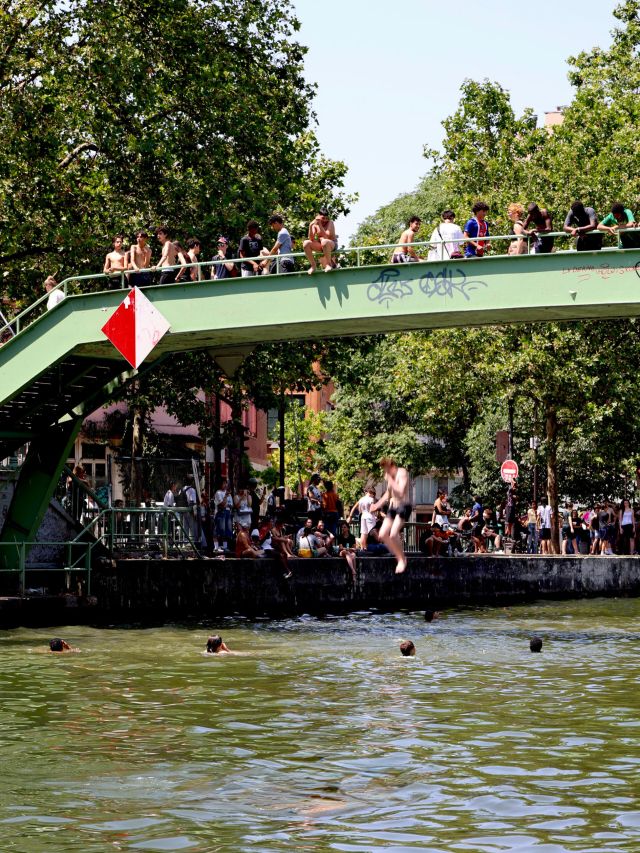
People swimming in the Canal Saint-Martin in Paris to cool off. (Credit: Rachael Thompson)

With some of the highest UV levels in the world, Australians are no strangers to the heat, adapting well to intense weather. But our infrastructure is largely equipped to withstand soaring temperatures with climate-responsive passive design, refrigerated air conditioning or evaporative coolers, as well as swimming spots aplenty.

Buildings in Northern and Western Europe and the UK, however, are constructed to retain heat and handle frosty winters. The lack of universal air conditioning means it generally feels hotter even though the temperature on your app might not look it. During a heatwave, it can feel like you’re in a sauna as cities act like heat traps.

How to stay cool and prepare for another heatwave

Relief is expected across Europe and the UK later this week, but more heatwaves are still possible in the coming months. Summer heat typically peaks in July and August.

Public transport often doesn’t have air conditioning, and buses in particular can be swelteringly hot. If you’re heading outside or your accommodation has no air conditioning, it’s worth buying a spray bottle and a handheld fan from a pharmacy or tourist stand. Check ahead of time if restaurants and cafes have air conditioning and make a booking in advance. The highest temperatures typically hit between 3pm and 6pm, so aim to head outdoors outside of these hours.

Rising temperatures invite travellers to enter a more intentional era of seeing the world. Now more than ever is the time to embrace lower-impact “coolcations” and off-season getaways.