
Travelling to the UK just changed forever. Here’s what it means for Australian passport holders and dual citizens.
The UK now requires all visitors from Australia to have the new Electronic Travel Authorisation (ETA).
What does it mean if you only have an Australian passport?
For sole Australian passport holders heading to the UK for short-term stays, transit, tourism or business, this simply means applying for the digital travel permission online before getting on that flight. An approved ETA stays valid for two years, or until your passport expires, whichever comes first.
The application process is very simple, and if you have ever applied for the US ESTA or the Canadian eTA, it will be nothing new.
The UK ETA costs £16 (A$31) and, like the ESTA, is approved within three days or quicker. BUT make sure you apply at least three days before departure.
For any British-born or children of British citizens living in Australia, there are new laws that make the whole process a little bit more complex. Here’s the breakdown.
New rules for dual citizens
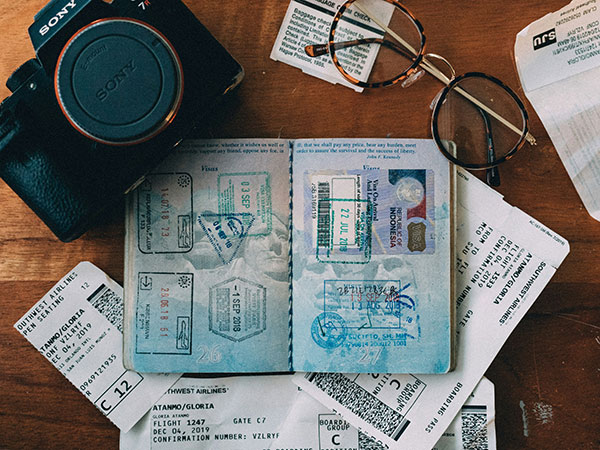
The new UK ETA rules mean that, technically, British citizens cannot apply for the ETA, no matter where they currently live. Therefore, all British citizens must use a British passport to enter the UK or a Certificate of Entitlement (COE), but more on that later.
I was born to British parents outside Britain. Am I a British citizen?
Most likely yes. There are some additional conditions, like what year you were born and whether your parents had valid passports at the time. In typical British bureaucratic style, they have a page if you were born outside the UK to British parents for you to figure it out.
There are some examples where it is not automatic. For example, if your parent was a British citizen born outside Britain but was confirmed a British citizen because their parents were British citizens, then you are not necessarily a British citizen. Confused? You’re not alone.
It is important to know that you are a citizen, whether you like it or not

If you qualify as a British citizen, you are by default a British citizen until you renounce your British citizenship. This is different to Australia, where you need to claim your right to citizenship.
So by the letter of the law, if you qualify, you need to act by either getting a British passport OR renouncing your citizenship.
Renouncing citizenship
If you no longer want a British passport, you have the option to denounce your dual citizenship – but be prepared to pay more than the £100 (A$197) it costs to renew a British passport.
Common questions

As straightforward as that appears on the surface, some practical questions have been posed by dual citizens that are harder to answer until more case studies have attempted to travel under the new rules.
Which passport do I show when checking in at an Australian airport before a flight to the UK?
Australian Border Force has said dual citizens will still need to use their Australian passport when departing or entering Australia. So you should carry both your Australian and British passports when travelling between Australia and the UK.
International Traveller co-founder Quentin Long’s interpretation is somewhat convoluted.
“Give the check-in agent your UK passport so they know you have the right to land in the UK and will clear you to board the flight," Long says.
“Give the Australian Border Force your Australian passport so you leave as an Australian citizen and can therefore return as an Australian citizen, as opposed to a UK citizen without a specific visa. Then enter the UK on your UK passport."
He admits this is conjecture at this point in time, and we will update this advice if we hear differently.
What do I do if I’m also visiting other countries when flying to/from the UK to Australia, especially places like the USA, which is currently serving up its own high levels of confusion at Border Patrol?
Again, Long has advice that will be qualified in time – enter the US on an Australian passport with a valid ESTA, as this is where you reside. It will be more conducive to the US Border Force if your passport and country of residence are the same.
International Traveller has reached out to the British Embassy, who use the standard bureaucratic advice – “we can not advise you not to," which means we will find out in due course.
The only thing we can safely advise is to make sure that you either have an up-to-date British passport, and/or a valid COE for your Australian passport.
Weekly travel news, experiences
insider tips, offers, and more.
If I am caught out, will travel insurance cover me?
There is a growing number of dual passport holders with travel plans in the near future who have had their entire trip impacted because their expired British passport makes it impossible to enter the country and abide by the new rules (although we are intrigued to see if any throw caution to the wind and try their luck with an ETA on their Australian passport).
And the news doesn’t get any better with local trade press suggesting that travel insurance providers will offer no cover or reimbursement if your travel is impacted.
We will always advise that you contact your travel insurance provider directly, and as soon as you become aware of any potential issues, as each individual case will be different.
The COE alternative
Another option for dual citizens travelling to the UK is to apply for a COE for your Australian passport. This acts similarly to the ETA and costs about £500 (A$986).
Where to find individualised help
To find out more information and get answers for your individual situation, try these resources:
HM Passport Office
Advice for dual citizens
Common questions answered by Deputy High Commissioner, Dr Brian Jones
Updated ETA stakeholder pack
Apply for a COE
Renounce British citizenship
UKVI webchat for individual enquiries
Want to see more stories from International Traveller in your Google search results?
- Click here to set International Traveller as a preferred source.
- Tick the box next to "International Traveller". That's it.