hero media

Explora Journeys’ newest ship delivers luxury cruising at its best

A luxury voyage from Southampton to Edinburgh gives us the chance to discover why Explora Journeys has been making a big splash since it launched.

I must admit a cruise along the east coast of the UK has never been high on my to-do list. The Mediterranean? Yes, please. The Caribbean? For sure. But cloudy skies and occasional rain across the North Sea are not ideal for kicking back or topping up your tan. Yet stepping aboard EXPLORA I, I became so immersed in its luxury and sophistication that I barely noticed what was going on outside the nearest porthole.

Subtle neutral tones and plush Italian furnishings in the central lobby immediately set the scene for a lavish experience. And a flute of Moët & Chandon on arrival was the perfect way to start an unforgettable journey.

Onboard, guests are invited to discover an ‘ocean state of mind’. That means visiting new destinations while enjoying fine food and wine, upscale shopping, or simply relaxing in the spa or by the pool.

The 248-metre EXPLORA I is the first of six ships to be launched by the MSC Group as part of its new upscale Explora Journeys portfolio. The number of guests is limited to 1000 and the ratio of staff to guest is one of the highest in the world.
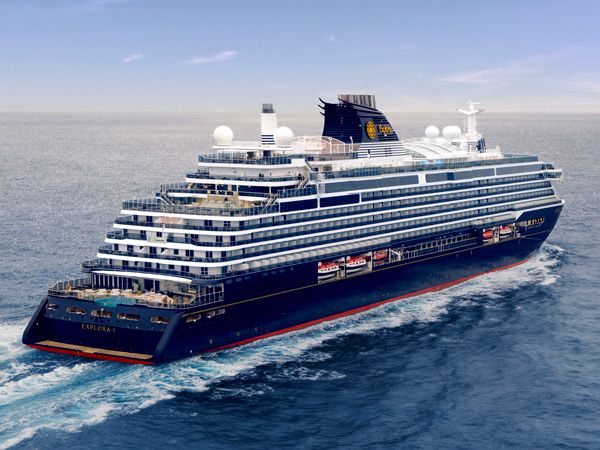
the Explora I at sea
Explora I boasts 461 ocean-facing suites.

Built by Italian company Fincantieri, the vessel has been specially designed for the brand and nothing has been left to chance in outfitting the ship and its 461 suites. British designer Martin Francis, De Jorio Design International and other firms have given the vessel’s interior the feel of a superyacht. Rooms range from a 35-square-metre Ocean Terrace suite to the Owner’s Residence, which covers a vast 280 square metres. All boast a private terrace and floor-to-ceiling windows that gave me ample opportunity to gaze at the waves.

All the bathrooms have heated floors and are decorated in black and white marble. Italian furniture from Molteni&C and Manutti speak to the quality of design. Dyson hairdryers, espresso machines and binoculars are among the accessories in each room.
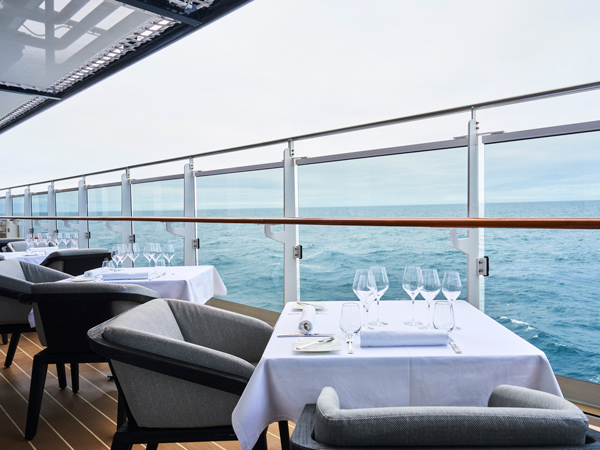
the Explora I Anthology restaurant with sea views
Anthology showcases a series of global chefs and cuisines.

French chef Franck Garanger heads the culinary team, which sources fine meats, fish, fruit and vegetables for the ship’s six restaurants, 12 bars and lounges. At Marble & Co I tasted the restaurant’s mouthwatering signature dish of crushed fingerling potatoes and caviar followed by a perfectly cooked French beef filet aged for 20 days. Complimentary wines include a French chenin blanc, a pinot grigio and an Australian shiraz, which was perfect for my filet.

The Fil Rouge restaurant features a delicate tuna tataki signature dish and a raspberry soufflé from executive pastry chef Christophe Sapy, which was another highlight. For a special occasion there is the Anthology restaurant. It hosts world-class chefs such as Mauro Uliassi, who has a three-Michelin-star restaurant in Italy, and Emma Bengtsson, a two-Michelin-star chef and executive chef at the acclaimed Aquavit restaurant in New York.
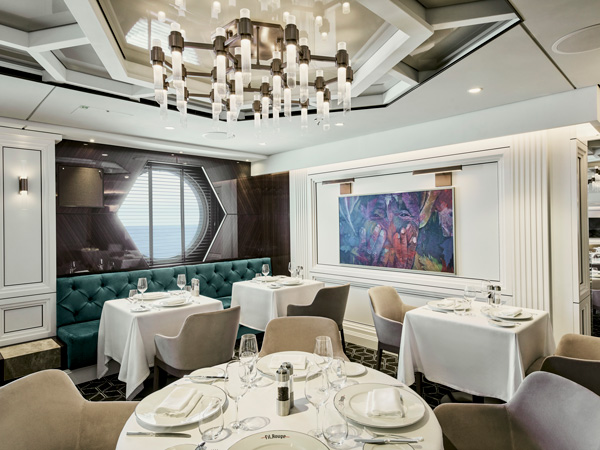
the elegant dining at Fil Rouge restaurant, Explora I
Fil Rouge restaurant has a French-inspired menu.

For rest and recreation, the ship’s three heated outdoor pools offer spectacular views of the sea and the indoor pool has a retractable glass roof as well as indoor and outdoor whirlpools. Anxious to get rid of those unwanted kilojoules, I enjoyed early yoga and Pilates at the fitness centre, which also has the latest Technogym machines and attentive personal trainers.

Shoppers will find boutiques including Rolex and Piaget onboard but EXPLORA I also showcases artisanal designers from Italy, France and elsewhere, and sell their clothing, handbags, sunglasses and fragrances at aptly named The Journey.

A massage at the wellness spa was the perfect way to recharge before the ship docked in Edinburgh for a spectacular performance of the Military Tattoo and fireworks above the city’s legendary castle.
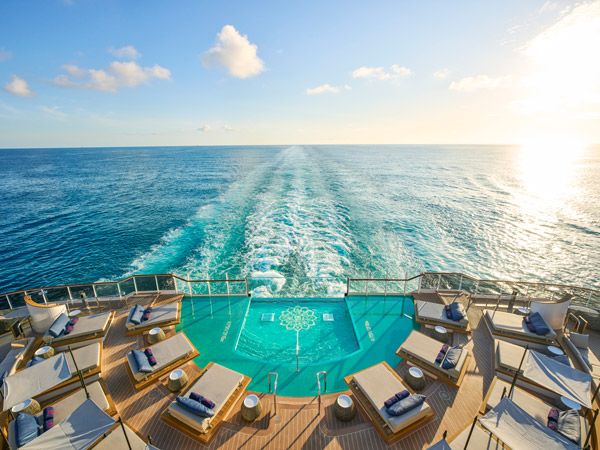
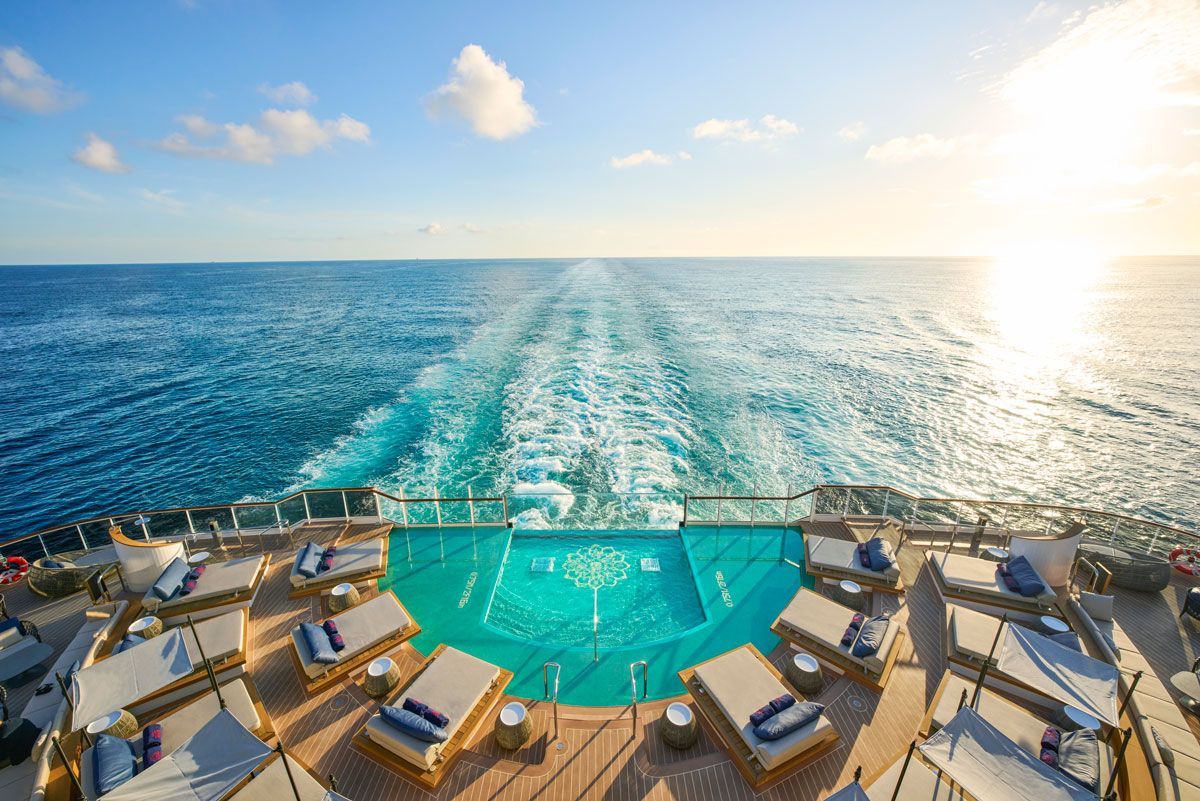
the Astern Pool onboard Explora I
The Astern Pool is one of four pools onboard.

The details

EXPLORA I will conduct a number of voyages in North America, the Caribbean and Hawai‘i until May 2024. It will then travel along the Pacific Coast to Vancouver before returning to Europe in summer 2024.

The IT Verdict

Promising an ‘ocean state of mind’, EEXPLORA I certainly delivers. It offers fine food and wine in a plush setting and plenty of opportunities for rest and relaxation onboard.

We loved

A select number of guests on a large ship means there is plenty of space to get away from the crowd and enjoy a soothing and tranquil onboard experience.

Weekly travel news, experiences
insider tips, offers,
and more.

We’d change

The garish video screen overlooking the indoor pool promoting onshore experiences felt out of step with the sophisticated setting.

Green credentials

The vessel has installed energy saving heating and ventilation systems, advanced waste water treatment and reduced underwater noise systems, while Selective Catalytic Reduction (SCR) technology enables a 90 per cent reduction in the ship’s nitrogen emissions.

Accessibility

Explora Journeys offers Accessible Suites onboard and certain Destination Experiences are wheelchair-accessible.

Want to see more stories from International Traveller in your Google search results?

  1. Click here to set International Traveller as a preferred source.
  2. Tick the box next to "International Traveller". That's it.
hero media

What the European heatwave means for your summer travel plans

Temperatures are soaring this summer, breaking records across Europe and the UK. 

Euro summer is a feeling like no other. But when a heatwave hits? The dream trip quickly turns into a sweaty mess. Extreme heat is sweeping Europe and the UK this week, with record-high temperatures impacting travel plans across the continent.

And while Australian summers are typically hotter in absolute temperature, many European cities aren’t equipped for high temperatures, resulting in unbearable weather.

Why is it so hot in Europe?

Signs of a hot summer loomed in May, when the mercury hit unprecedented spring highs. Now, extreme high temperature warning alerts have been issued in countries such as Spain, Italy, France, England, the Netherlands and Germany.

France saw its hottest day on record on Wednesday, with an average temperature of 30°C across the day and night. This surpasses the average temperature for June, which is 15°C to 25°C. Dozens of people have died, including 40 from drowning.

In Spain, 212 deaths have been linked to the heatwave.

The UK recorded its hottest June day ever on Wednesday with temperatures soaring to 36.1°C. In an article published by the Met Office – the UK’s national meteorological service – Professor Stephen Belcher CBE, Met Office Chief Scientist, shared his concerns about June’s heat. “To see temperatures like this in the UK in June is sobering. Events like this bring home the implications of climate change, with very high temperatures and humidity bringing significant health implications from heat stress, as well as impacts to a range of sectors such as transport, energy and water supply,” he said.

Heatwaves are becoming increasingly common in Europe and the UK, neither of which is prepared for such extremes. The World Meteorological Organization reported that in 2025, at least 95% of Europe experienced above-average annual temperatures and that the continent was heating up twice as fast as the global average.

How travel is impacted

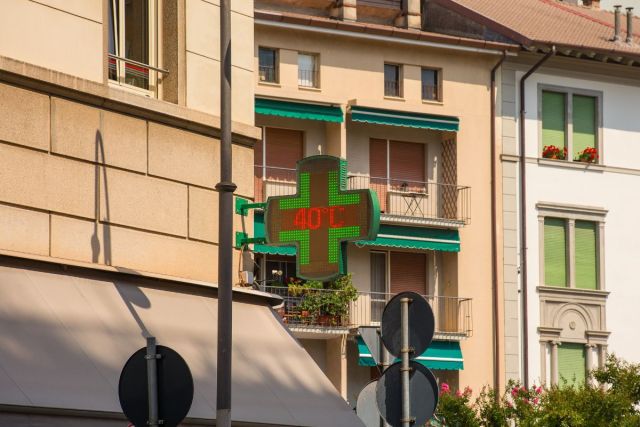
A pharmacy sign displaying 40 degrees Celcius
A pharmacy broadcasting local weather data. (Credit: Getty/Dragoncello)

During a heatwave, power grids, water systems and transport networks can be affected, resulting in disrupted itineraries for travellers. In France, power outages have left thousands without electricity and early closures have been implemented for two of Paris’s biggest attractions, the Eiffel Tower (early afternoon rather than late at night) and the Louvre (two hours early). Eurostar cancelled its London to Paris and Paris to London services from the 22nd to the 25th, and major UK rail companies have been advising travellers to avoid using trains where possible, or to travel during early hours.

If a heatwave is predicted, being flexible with your itinerary and having fully refundable/changeable tickets is key, as extreme heat can force the cancellation of outdoor activities, impact rail and flight services and change the opening hours of sites and eateries.

Why does summer in Europe often feel hotter than summer in Australia?

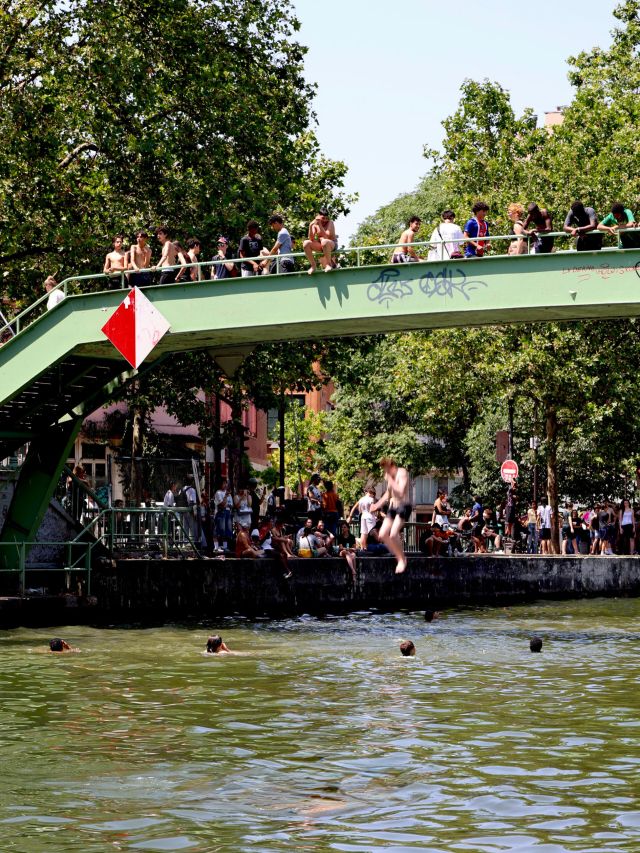
people swimming in the Canal Saint-Martin in Paris
People swimming in the Canal Saint-Martin in Paris to cool off. (Credit: Rachael Thompson)

With some of the highest UV levels in the world, Australians are no strangers to the heat, adapting well to intense weather. But our infrastructure is largely equipped to withstand soaring temperatures with climate-responsive passive design, refrigerated air conditioning or evaporative coolers, as well as swimming spots aplenty.

Buildings in Northern and Western Europe and the UK, however, are constructed to retain heat and handle frosty winters. The lack of universal air conditioning means it generally feels hotter even though the temperature on your app might not look it. During a heatwave, it can feel like you’re in a sauna as cities act like heat traps.

How to stay cool and prepare for another heatwave

Relief is expected across Europe and the UK later this week, but more heatwaves are still possible in the coming months. Summer heat typically peaks in July and August.

Public transport often doesn’t have air conditioning, and buses in particular can be swelteringly hot. If you’re heading outside or your accommodation has no air conditioning, it’s worth buying a spray bottle and a handheld fan from a pharmacy or tourist stand. Check ahead of time if restaurants and cafes have air conditioning and make a booking in advance. The highest temperatures typically hit between 3pm and 6pm, so aim to head outdoors outside of these hours.

Rising temperatures invite travellers to enter a more intentional era of seeing the world. Now more than ever is the time to embrace lower-impact “coolcations” and off-season getaways.