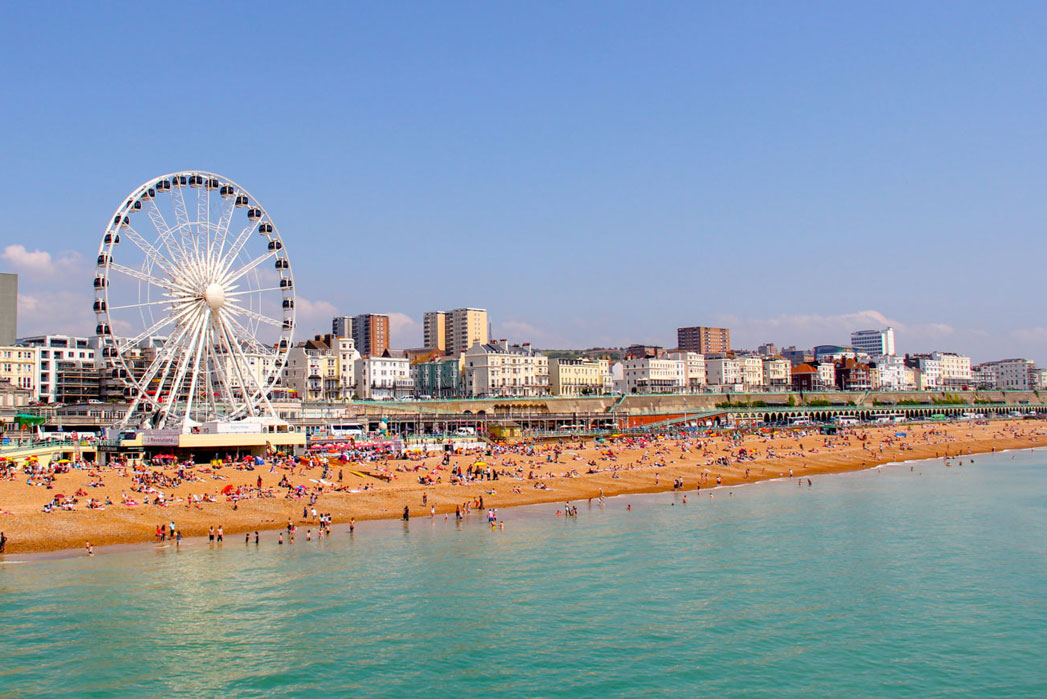
For many, a holiday in a quaint idyllic English seaside village is top of the bucket list.
To travel to England in the summer season and not visit any of the typical English coastal towns would be a travesty. Tick off five of the best Ol’ Blighty has for a glorious British Summer.
1. St Ives, Cornwall
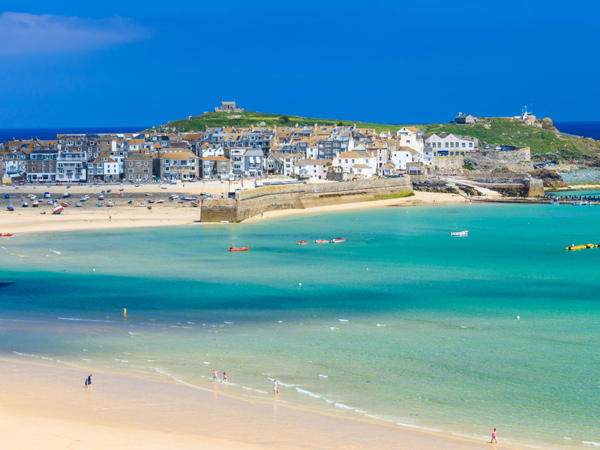
The spectacular crescent-shaped Porthmeor Beach is the focal point for all visitors to St Ives, from families with their buckets and spades to romantic couples and surfers. You only have to stroll along its rippled sands on a sunny day, with the ever-changing light bouncing off the Atlantic surf, to realise why this once busy pilchard-fishing village has become the hub of the country’s art scene.
The jewel of the art crown is the Tate St Ives that stands proudly on the hillside behind the beach. Peruse the works of celebrated local artists like Barbara Hepworth and Patrick Heron before enjoying an alfresco lunch on the stylish rooftop terrace with picture-postcard views. More of Barbara Hepworth’s sculptures can be seen dotted around town and her larger works are on display at the Barbara Hepworth Museum and Sculpture Garden on Barnoon Hill.
In the heart of town, the fusion of traditional seaside elements and boutique chic makes for an interesting mix: there is a network of cobbled lanes crammed with art studios, surf shops, brasseries and several bakeries selling hearty Cornish pasties.
And although it can get busy in peak season, St Ives remains an essential Cornish tour stop. But, if the summer crowds become too much, walk a small section of the huge 1013-kilometre South West Coast Path for a taste of Cornwall’s stunning coastal scenery. The 11-kilometre stretch from St Ives to Zennor features a series of plunging descents into rocky coves and steep ascents to headlands offering panoramic views of the turquoise waters below.
Where to stay
Primrose Valley: Stylish, award-winning Edwardian eco-hotel with individually furnished rooms and great sea views, just a stone-throw from the beach.
Treliska: Attractive, modern and relaxed guesthouse just steps from the town centre.
Best pub for a pint
The Sloop Inn: One of Cornwall’s oldest and most famous pubs (circa 1312) has retained much of its atmosphere from times long past. It is a favourite hangout for artists, fishermen and travellers alike.
2. Whitby, North Yorkshire
Much of Whitby’s wide-ranging appeal stems not only from its rich seafaring history and idyllic setting but from the two sides of its character – one as a working fishing port and the other as a traditional seaside resort. The imposing ruins of the 13th-century abbey dominate the skyline above the town where narrow cobbled lanes and red-bricked houses spill down the slopes of the headland to a natural harbour below.
Along the harbour, amusement arcades ring with the sounds of one-armed bandit machines, while the sea air is tinged with the sweet aroma of candy floss and toffee apples. Brightly-painted fishing boats line the quayside where salty characters load off their catch destined for the town’s fish market and numerous fish and chip shops. One of the best known is the Magpie Café on Pier Road, where people queue outside to buy crisp battered haddock or cod, with chips and mushy peas.
Whitby has managed to retain much of its 18th-century character. And the fact that Captain James Cook, the town’s most famous adopted son, completed his apprenticeship there as a seaman (between 1747 and 1755) and sailed from this tiny harbour, is a strong drawcard. Visit the house in Grape Lane where Cook studied, which today is a museum in his honour, and take the pilgrimage stroll to the West Cliff, where a bronze statue of the great navigator stands, for panoramic views over the town and the Esk River.
On the opposite headland, the famous 199 steps to the ruins of the abbey straggle the hillside and its sombre graveyard of ancient tombstones. This haunting setting was the inspiration for Dracula by Victorian novelist Bram Stoker who wrote the classic 1897 yarn in a B&B in the old part of town. Fans wanting more can visit the walk-through Dracula Experience on Marine Parade and the tourist office sells an excellent Dracula Trail leaflet to visit some of the featured sites.
Where to stay
Marine Hotel: Situated in a prime position on Whitby’s harbourside, the Marine Hotel features four luxurious rooms with sea views (two with private balconies) and specialises in hand-picked local seafood.
White Horse and Griffin: Quality affordable accommodation and restaurant in a 322-year-old building. Ask about the Boat House, a romantic little hideaway over a gangplank in the middle of Whitby Harbour.
Best pub for a pint
Station Inn: Atmospheric watering hole offering an extensive range of cask-conditioned ales.
3. Brighton, East Sussex
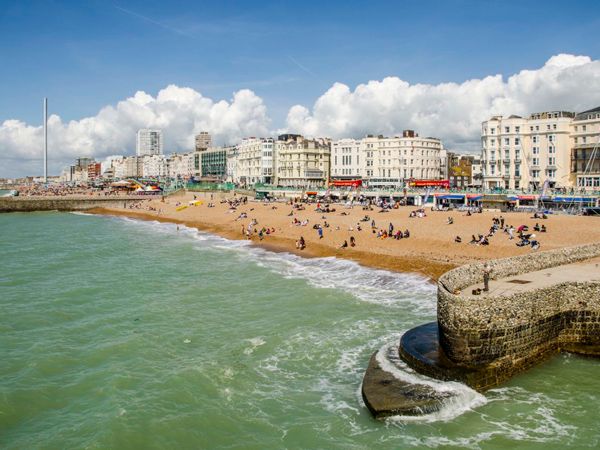
Brighton first established itself as a seaside resort in the mid-18th century due to the developing trend in sea-bathing. It cemented its reputation further when the hedonistic Prince of Wales (the future George IV) began visiting the town in the 1780s with his mistress, helping to establish the ‘naughty weekend’ away.
Fast forward to present times and this is the scene. It’s a sunny summer morning and the seafront is abuzz with joggers, dog walkers and people practising Tai Chi, while others enjoy gourmet breakfasts and sip mochas at outdoor cafés. Further along towards the pier, seafood vendors serve mussels, shrimps and jellied eels from their beachside kiosks as beach attendants rent out deckchairs to holiday-makers.
In recent years, the place that evokes images of car rallies from London, beach raves, Mods and Rockers, and a lively gay scene has undergone a transformation – out are the dingy B&Bs and tatty seafront, replaced by cutting-edge bars, classy restaurants, slick hotels and a cool bohemian vibe.
The Grade II listed Brighton Pier is still the place to go for some classic seaside fun with its amusement halls and iconic fairground rides, like the ghost train, helter-skelter and golden carousel. Just back from the beach are other quintessential experiences – get lost in the atmospheric maze of streets that make up the Brighton Lanes, once a fishing village and now a cornucopia of designer boutiques, restaurants and antique shops. Close by is the Royal Pavilion, home of King George IV and one of the most exotic, extravagant royal palaces in Europe.
Where to stay
The Grand: For those with deep pockets, this is the place to stay, where rooms overlooking the sea, old-fashioned glamour, afternoon tea and cocktails are the order of the day.
Drakes: This elegant seafront townhouse with sleek rooms and a top-notch restaurant is an excellent choice for that ‘naughty weekend’ away.
Best pub for a pint
Evening Star: Tucked away near the station, this cosy gem of a pub (no football, no music and no food) has an extensive menu of award-winning real ales, Belgian beers and real ciders.
4. Blackpool, Lancashire
Blackpool is England’s archetypal fun-by-the-sea resort. Love it, loathe it or both, the ‘Las Vegas of the Lancashire Coast’ may be tacky and cheesy, but it continues to attract people year after year. Especially since the arrival of the railway in 1846, which ultimately turned the town into one of the country’s first seaside resorts for the working classes.
From the mid-19th century, whole Lancashire mill towns would descend on Blackpool for the ‘Wakes Weeks’ annual holiday, spending their hard-earned cash living the good life for a few days, strolling its three piers and watching the likes of Frank Sinatra, Judy Garland and Bob Hope perform at the Grand Theatre.
Perhaps Blackpool’s best-known attraction – and the reason for its continued popularity – is Pleasure Beach, which evolved from a gypsy encampment in the early years of the 20th century. Today, this wonderful theme park houses a marvellous collection of old-style wooden rollercoasters such as the world’s first Big Dipper (1923) along with modern high-tech rides like the Pepsi Max Big One.
If the pier is Brighton’s trademark, then Blackpool’s is its 157-metre tall tower, modelled on the Eiffel Tower and opened in 1894. In addition to offering tower top views, it also houses the Tower Circus and the magnificent Tower Ballroom. After the summer months, when other English seaside resorts begin to wind down, Blackpool extends its holiday season with another star attraction, the world-famous Blackpool Illuminations where over eight kilometres of the promenade is illuminated with half a million coloured light bulbs (open from August to November 2013).
Weekly travel news, experiences
insider tips, offers, and more.
Where to stay
Number One: This aptly named luxury five-star boutique accommodation overlooking the new South Beach Promenade is Blackpool’s number one place to stay.
Big Blue Hotel: This modern four-star hotel ticks all the right boxes when it comes to price, comfort and style. As an added bonus for families with children, it’s situated at the southern entrance to Pleasure Beach.
Where to drink
The Dutton Arms: Relaxed traditional pub with outdoor seating near Pleasure Beach and a range of cask ales perfect for a cold one on a summer’s day.
5. Margate, Kent
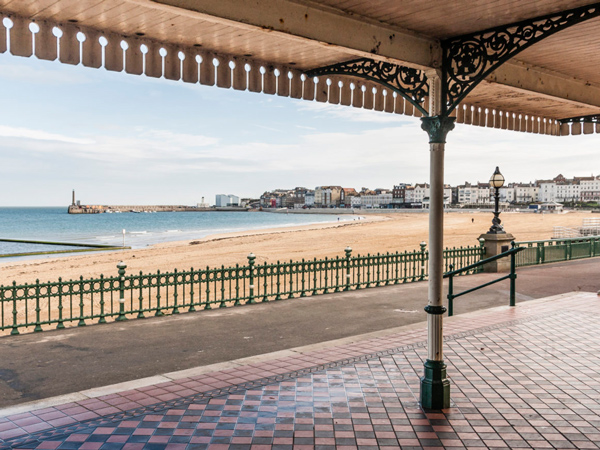
The fortunes of this popular English seaside holiday town have ebbed and flowed since artist JMW Turner produced seascapes here in the 19th century. Tourism numbers dwindled in the second half of last century, but recently Margate has firmly stepped back on the tourist map, thanks to a programme of major cultural regeneration projects. In particular, the Turner Contemporary gallery, which highlights the town’s links with the famous artist and the plans to reopen the iconic Grade II listed Dreamland amusement park in 2013.
The long stretches of clean, sandy beaches and the 44-kilometre Viking Coastal Trail are still the main attractions and the Old Town and Harbour Arm have a distinctive arty feel, with quirky shops, galleries and great places to eat. Open-air live music, art exhibitions and festivals all bring Margate to life throughout the summer months.
Other activities providing year-round entertainment include amusement arcades, the Hornby Visitor Centre (featuring model railways and cars) and the mysterious Shell Grotto. Discovered in 1835, this subterranean world is a collection of winding passages leading to an oblong chamber, its walls decorated with strange symbols and mosaics made completely out of shells. Situated about 1.5 kilometres along the seafront heading east is the Tom Thumb Theatre, thought to be the world’s smallest working theatre.
Where to stay
The Reading Rooms: A luxury five-star gold boutique B&B in a recently restored Grade II listed Georgian townhouse. Situated just a five-minute walk from the sea and Old Town cultural quarter.
Best pub for a pint
The Lifeboat Ale & Cider House: This CAMRA (Campaign for Real Ale) pub serves locally-sourced Kentish ales and ciders, a range of Kent cheeses, Mrs Moxham pickles and Ramsgate sausages.
England is obviously calling your name. Read up on our ultimate travel guide to learn the in’s and out’s.
Want to see more stories from International Traveller in your Google search results?
- Click here to set International Traveller as a preferred source.
- Tick the box next to "International Traveller". That's it.