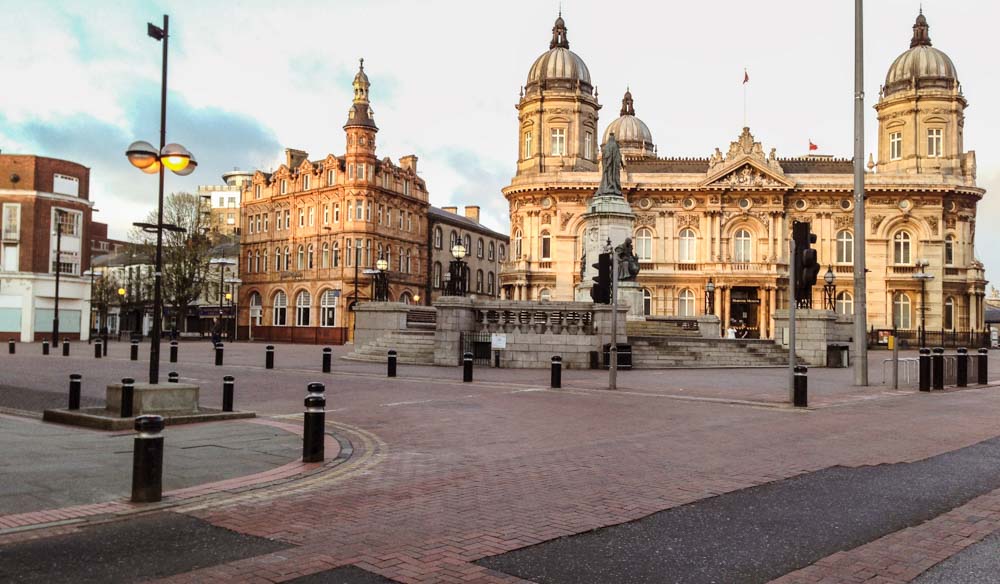
hero media

City guide to Hull, England

It’s still gritty, but the northern English port city of Hull (or, officially, Kingston-upon-Hull) is having a cultural renaissance. 


Hull, England is known for

Its port, art in 2017, poet Philip Larkin

Hull’s Eat streets

Head to Humber Street, with newly laid cobblestones, in the Fruit Market cultural quarter for good meals in cool, repurposed industrial spaces.

Try gourmet tapas at Ambiente and an experimental menu at bistro-style Butler Whites.

Nearby, you’ll also find Indian fine diner Tapasya@Marina, (tapasya.org.uk).

Local institutions Cerutti’s, a family-run seafood restaurant that’s been doing its thing on the site of Hull’s old pier since 1974, and pub and steakhouse Humber Dock Bar & Grill (known as The Green Bricks until recently) offer a thread of tried-and-tasted continuity to this rapidly changing area.
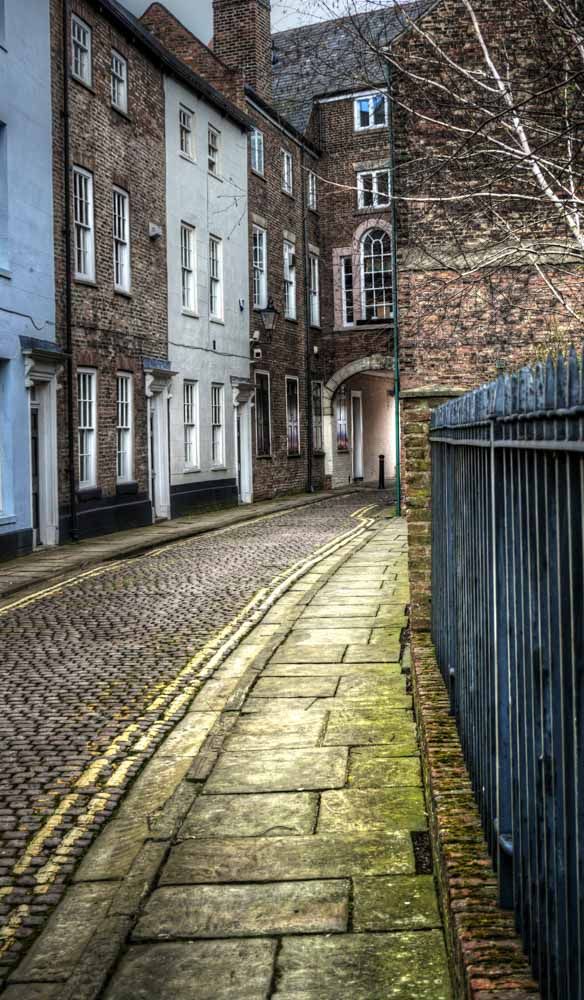
Hull city England
Prince Street, Hull, United Kingdom

Out & about

The British public was bemused when it was announced, four years ago, that Hull would be the UK City of Culture in 2017: in 2003 it was voted number one Crap Town in Britain.

But serious money and creative nous has gone into regenerating this ancient, gritty port city whose number one attraction before now has been its huge aquarium, The Deep.

Those looking to engage in some world-class culture can let the Hull 17 program be their guide.

Much activity is focused on the old fruit market’s redevelopment, and the Ferens Art Gallery (based in the Old Town, which has its own charm) will host the Turner Prize this year.

Insider’s secret

If you’re getting cool-new-art-space overload, head to residential West Hull for a gig at the city’s alternative music institution, The Adelphi Club. Once a three-bedroom terrace house, this tiny and insalubrious-looking venue has seen Radiohead, The Stone Roses, Pulp and many more grace its stage, and is where local band The Housemartins started life.

Retail reconnaissance

Look out for the Humber Street Market on the third Sunday of every month at Fruit: arts, crafts, records and vintage clothes plus craft beer, street food and live music.

Weekly travel news, experiences
insider tips, offers,
and more.

The ultimate experience

visit multifaceted new venues like humber street gallery, a three-storey contemporary arts space that exhibits visual art, film, photography and more and also houses a cafe and rooftop bar.

Caffeine hits

Thieving Harry’s is based in the Fruit Market quarter, overlooking Hull’s marina, and makes coffee using beans from a local specialty roasters.

It does a great line in brunch and grilled cheese too. Coffee nook Caffeinated in Trinity Market and hidden-away Liquid Jade in the Old Town will hit the spot too.
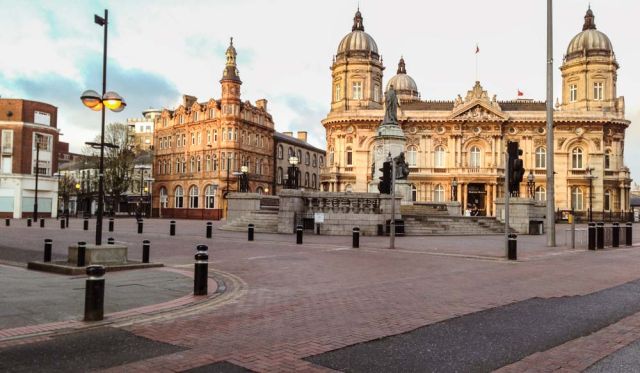
Hull city England
The Kingston upon Hull city maritime museum. This museum is situated on Little Queen street on the city centre and it explores the seafaring heritage of the city and its environs.

Where to stay & play

Affordable
Book the Olde Town Victorian Hideaway, 1869 through Airbnb for a cosy base that’s next to ‘England’s smallest window’.

Moderate
A Victorian-era hotel in the Old Town, Kingston Theatre Hotel offers classic rooms and full English breakfasts.

Luxe
Occupying two floors of a townhouse that dates back to the 17th century, the boutique Arthouse Apartment merges vintage and modern stylings.

Want to see more stories from International Traveller in your Google search results?

  1. Click here to set International Traveller as a preferred source.
  2. Tick the box next to "International Traveller". That's it.
hero media

What the European heatwave means for your summer travel plans

Temperatures are soaring this summer, breaking records across Europe and the UK. 

Euro summer is a feeling like no other. But when a heatwave hits? The dream trip quickly turns into a sweaty mess. Extreme heat is sweeping Europe and the UK this week, with record-high temperatures impacting travel plans across the continent.

And while Australian summers are typically hotter in absolute temperature, many European cities aren’t equipped for high temperatures, resulting in unbearable weather.

Why is it so hot in Europe?

Signs of a hot summer loomed in May, when the mercury hit unprecedented spring highs. Now, extreme high temperature warning alerts have been issued in countries such as Spain, Italy, France, England, the Netherlands and Germany.

France saw its hottest day on record on Wednesday, with an average temperature of 30°C across the day and night. This surpasses the average temperature for June, which is 15°C to 25°C. Dozens of people have died, including 40 from drowning.

In Spain, 212 deaths have been linked to the heatwave.

The UK recorded its hottest June day ever on Wednesday with temperatures soaring to 36.1°C. In an article published by the Met Office – the UK’s national meteorological service – Professor Stephen Belcher CBE, Met Office Chief Scientist, shared his concerns about June’s heat. “To see temperatures like this in the UK in June is sobering. Events like this bring home the implications of climate change, with very high temperatures and humidity bringing significant health implications from heat stress, as well as impacts to a range of sectors such as transport, energy and water supply,” he said.

Heatwaves are becoming increasingly common in Europe and the UK, neither of which is prepared for such extremes. The World Meteorological Organization reported that in 2025, at least 95% of Europe experienced above-average annual temperatures and that the continent was heating up twice as fast as the global average.

How travel is impacted

A pharmacy sign displaying 40 degrees Celcius
A pharmacy broadcasting local weather data. (Credit: Getty/Dragoncello)

During a heatwave, power grids, water systems and transport networks can be affected, resulting in disrupted itineraries for travellers. In France, power outages have left thousands without electricity and early closures have been implemented for two of Paris’s biggest attractions, the Eiffel Tower (early afternoon rather than late at night) and the Louvre (two hours early). Eurostar cancelled its London to Paris and Paris to London services from the 22nd to the 25th, and major UK rail companies have been advising travellers to avoid using trains where possible, or to travel during early hours.

If a heatwave is predicted, being flexible with your itinerary and having fully refundable/changeable tickets is key, as extreme heat can force the cancellation of outdoor activities, impact rail and flight services and change the opening hours of sites and eateries.

Why does summer in Europe often feel hotter than summer in Australia?

people swimming in the Canal Saint-Martin in Paris
People swimming in the Canal Saint-Martin in Paris to cool off. (Credit: Rachael Thompson)

With some of the highest UV levels in the world, Australians are no strangers to the heat, adapting well to intense weather. But our infrastructure is largely equipped to withstand soaring temperatures with climate-responsive passive design, refrigerated air conditioning or evaporative coolers, as well as swimming spots aplenty.

Buildings in Northern and Western Europe and the UK, however, are constructed to retain heat and handle frosty winters. The lack of universal air conditioning means it generally feels hotter even though the temperature on your app might not look it. During a heatwave, it can feel like you’re in a sauna as cities act like heat traps.

How to stay cool and prepare for another heatwave

Relief is expected across Europe and the UK later this week, but more heatwaves are still possible in the coming months. Summer heat typically peaks in July and August.

Public transport often doesn’t have air conditioning, and buses in particular can be swelteringly hot. If you’re heading outside or your accommodation has no air conditioning, it’s worth buying a spray bottle and a handheld fan from a pharmacy or tourist stand. Check ahead of time if restaurants and cafes have air conditioning and make a booking in advance. The highest temperatures typically hit between 3pm and 6pm, so aim to head outdoors outside of these hours.

Rising temperatures invite travellers to enter a more intentional era of seeing the world. Now more than ever is the time to embrace lower-impact “coolcations” and off-season getaways.