hero media

The best British street food – ranked

Because England is more than just fish and chips.

Let’s get to it. The UK is not particularly renowned for its street food. Rather than lounging outside Southeast Asian style, or strolling with a calzone down winding Italian city streets, the UK’s drizzly weather often prevents this.

But there is still a particular cuisine in the UK that is eaten by its residents both on the go or in back-to-basic cafes. And here they are – worst to best.

13. Mr Whippy ice cream

This British ice cream brand is well-known to small kids with its off-kilter speakers that pump out ‘Green Sleeves’ that lure them in, sticky hands bulging with small change. It’s a soft-serve ice cream, best served with a chocolate Flake or an unknown, brightly coloured, sticky sauce.

Rumour has it in my friendship group that one of us got food poisoning from one once. Is it true? Not sure. Do I want to risk it? Absolutely not. For that dubious reason, Mr Whippy is very much an unlucky 13.
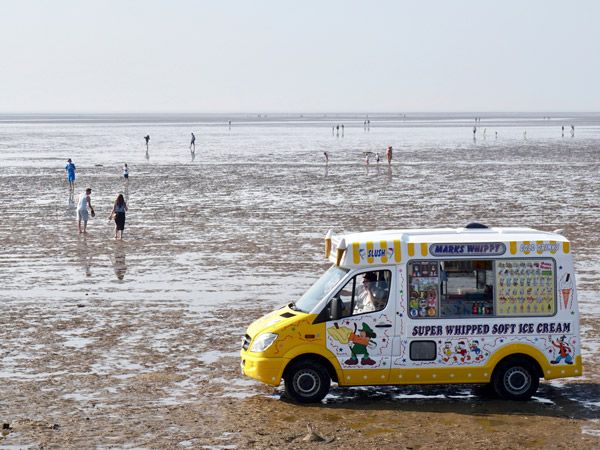
Mr Whippy ice cream van on the beach
Mr Whippy is a go-to summer treat. (Image: Gavin Allanwood)

12. Greggs sausage roll

It smells so good that it’s hard to resist your feet inexorably dragging themselves to the store door. All it takes is to drop your pound coins in the hand of the cashier, and you’ll be leaving with a grease-spotted paper bag before you know what’s happening. Unless you’re in that perfect sweet spot of mid-range hungover, the next stage is queasiness.

11. Sandwich

A classic go-to when you’re walking the famous ‘British High Street’. Flavours such as Leicester cheese and red onion, ham and butter, egg mayonnaise and BLT might have been supplanted in recent years by fancier recipes, but with these prices? Hard to beat. However, when it’s the cheapest option, and I get it more than two days in a row, I find my stomach bloating like no tomorrow.
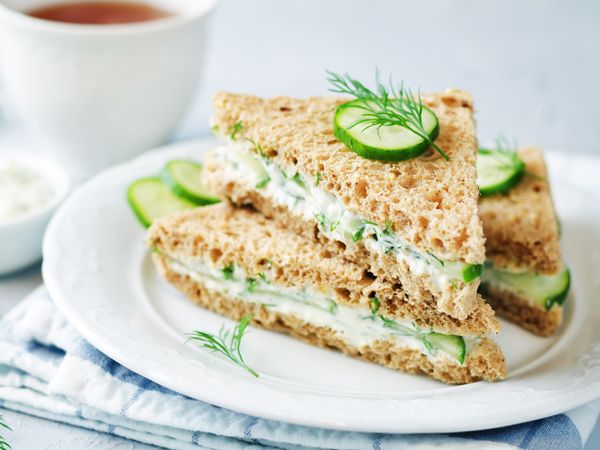
cream cheese cucumber sandwiches on a white plate
You can’t go wrong with a sandwich. (Image: nata_vkusidey via Getty Images)

10. Scotch egg

I am a big fan of scotch eggs. When I was a kid growing up in the UK, it was my go-to from a service station (that’s a ‘servo’ to you). But with adulthood comes self-actualisation. And for me, that was realising that, unless it is freshly made, ready-made scotch eggs in plastic wrapping are dry enough to suck up any moisture you might have in your mouth.
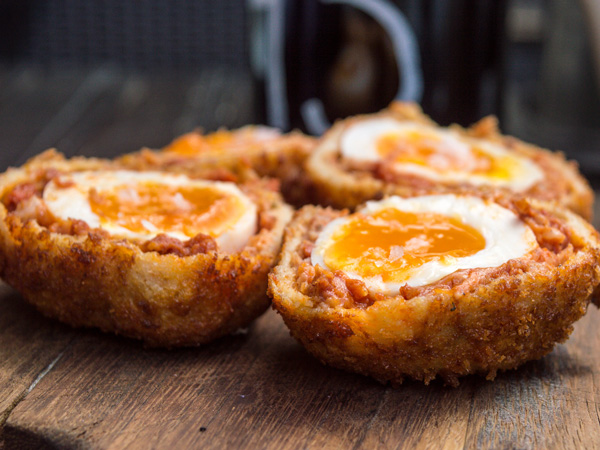
a close-up shot of scotch eggs
Scotch eggs are a popular street food in the UK. (Image: Snopik via Getty Images)

9. Deep-fried Mars Bar

Walking past a fish and chip shop in the north of England, you might see this sign. You might even think, surely that’s worth a go. And, dear reader, it very much is. Once. After that, the appeal of the sticky, gooey deliciousness wears off a bit. But 100 per cent worth a try.

8. Cheesy chips with gravy

It might be the unclassy version of the Canadian curd-laden poutine, but cheesy chips and gravy still have that je ne sais wot quality. Add together the northern England habit of adding gravy to your chips with some melted cheese, and you have a stunning, winning combination.
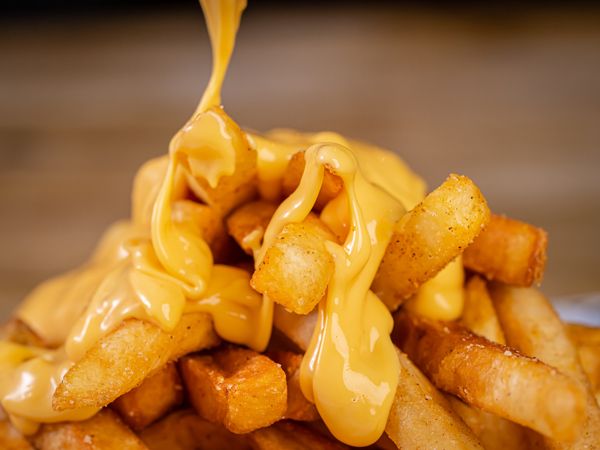
fries topped drizzled with cheese
The unclassy version of poutine is still a win in our books. (Image: 7713Photography via Getty Images)

7. Pie

A cheap staple that dates back centuries, the humble British pie was once filled with Thames eels. Today there are as many varieties as you can imagine, but steak and ale, chicken and mushroom, and cheese and onion are some of the most common – and way more appetising – modern recipes.
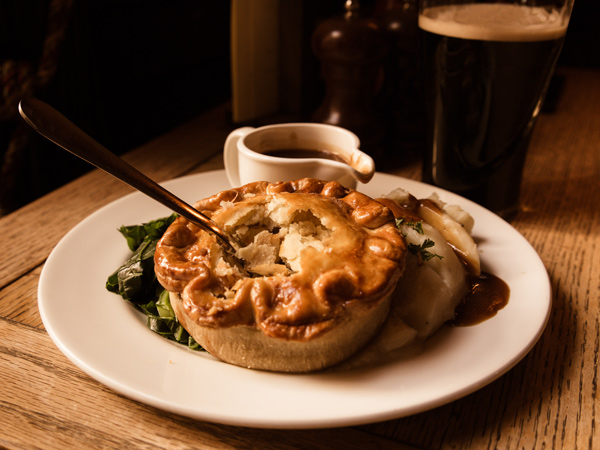
chicken pot pie on a plate with sauce on the side
This pie may not be exactly what you’d find on the street corner, but you get the drift. (Image: littleny via Getty Images)

6. Jacket (baked) potatoes

Higher in nutrients than some of the other options on this list, this street food nudges closer to the top. The ‘jacket’ potato is named by the Brits because the potato skin is left on. Walking and eating a whole potato can be a bit of a challenge though, especially with the range of toppings available: baked beans and cheese, chilli con carne, tuna and simple salt and butter.
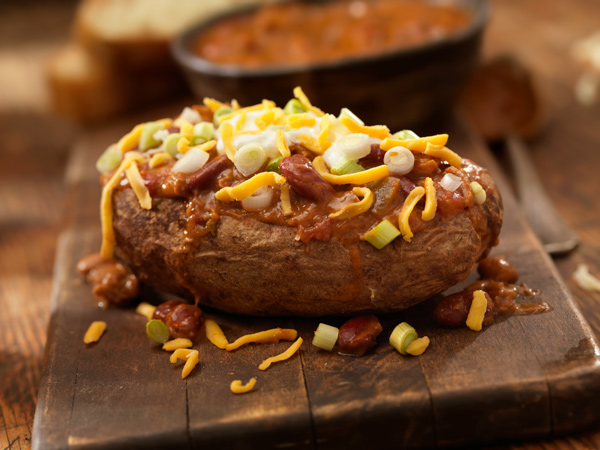
a baked potato with chili
Walking and eating a whole potato can be a bit of a challenge. (Image: Lauri Patterson via Getty Images)

5. Yorkshire pudding wrap or Yorkshire burrito

For some it’s a travesty, for others, it’s heaven on Earth. I am in the latter group. An indulgent creation that has come into the world in recent years, it starts with the common Sunday roast dinner accompaniment of a Yorkshire pudding, made of batter and baked into an almost bread-type puff. Take this, fill it with beef, stuffing, roast potatoes, vegetables and gravy, and you have the UK’s homegrown erosion of a burrito.

a hand holding a Yorkshire Pudding Wrap
A Yorkshire pudding wrap just hits the spot. (Image: Souvik Roy via Getty Images)

Weekly travel news, experiences
insider tips, offers,
and more.

4. Cup of tea (AKA the ‘cuppa’)

Whether you have no sugar or three, milk added first or last, there is never any argument that tea is the common love language of the UK. And while not exactly a street food, it doesn’t matter if you’re asking someone if they want a cup of tea made, have just put on the tea or are on a tea break, the theme is the same. Tea.

afternoon tea with pastries on the table
You can’t beat a cup of tea. (Image: Eva Katalina via Getty Images)

3. Fish and chips

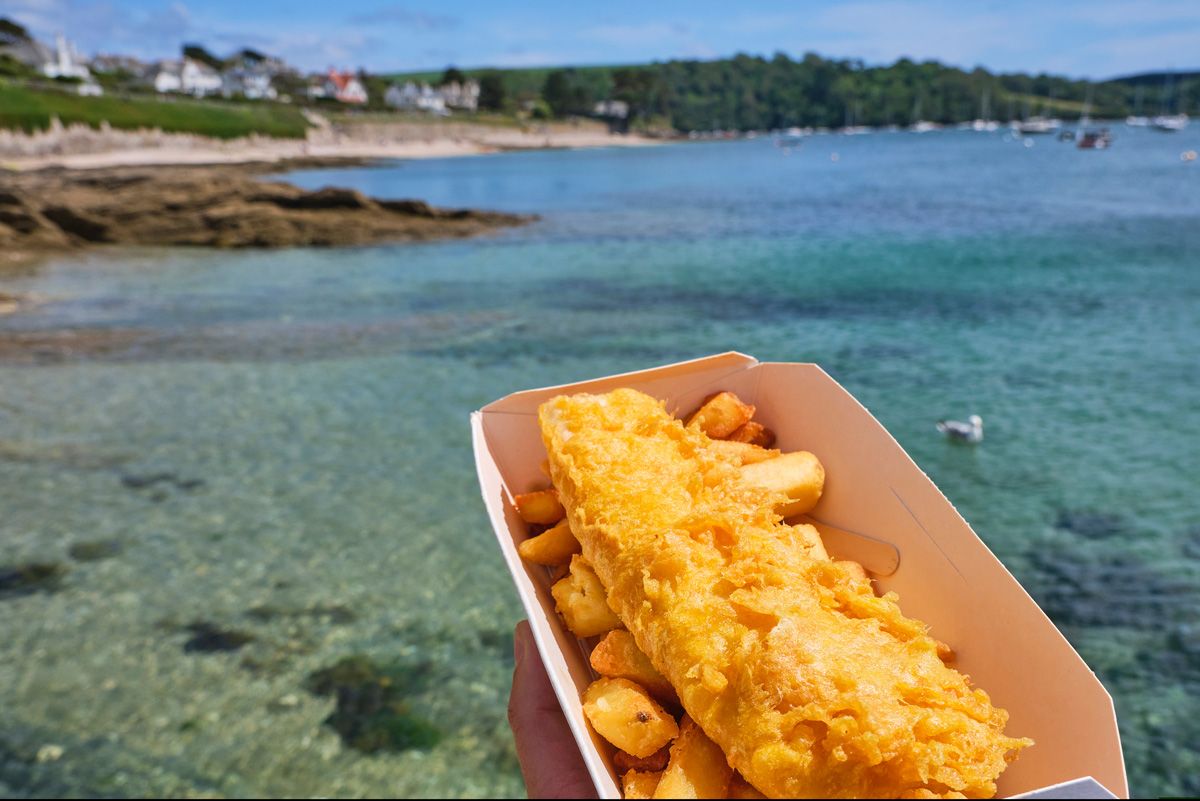
For a lot of Brits, this national dish is a shared memory of growing up. There always seemed to be a ‘chippy’ on the street corner, with the vinegar and salt placed invitingly on the corner of the counter. The fish is often cod or hake and is battered and fried before being lovingly wrapped in a tantalisingly hot bundle, along with a few generous handfuls of chips.
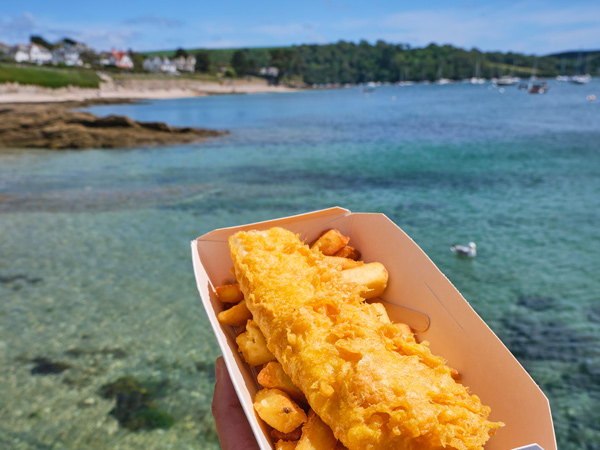
fish and chips in St. Mawes, Cornwall
Fish and chips are a classic. (Image: creacart via Getty Images)

2. Cornish pasties

Having grown up in the south-west of England, my family would disown me if this didn’t make high placement. Luckily, it is one of my lifelong favourites. A folded-over pastry shell with crimped edges, the Cornish pasty is usually filled with beef, potatoes, turnips and/or swedes, onion, salt and pepper. This pastry is so iconic, that the EU gave it the Protected Geographical Indication.

a little girl eating pasty in Polperro Village
Cornish pasties are a top-tier British street food. (Image: Sol Stock via Getty Images)

1. Bacon bap/butty

The drifting smell of a soft crispy white roll, melting butter and sizzling bacon from an unseen barbecue was pretty much the only thing I looked forward to when I went to watch my dad play rugby as a small kid. The butter was, and still is, essential, as the bacon makes it melt just so.

If you’re in Scotland, level up with the addition of a tattie scone, which is made from mashed potato mixed with butter, before being griddled. If you’re vegetarian, take out the bacon completely and replace it with chips (a ‘chip butty’).
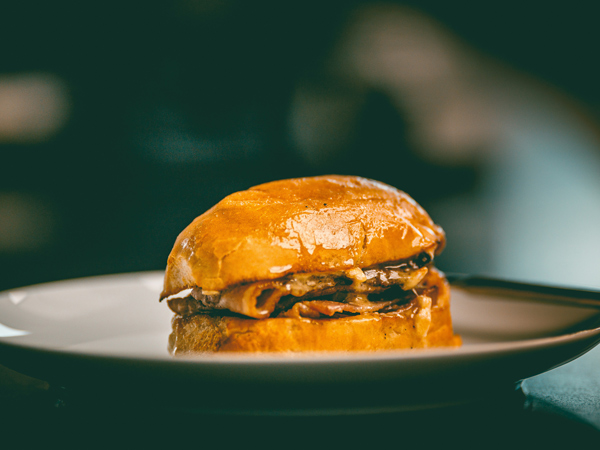
a close-up shot of bacon bap on a plate
You can’t miss a bacon bap in the UK. (Image: Rob Wicks)

Want to see more stories from International Traveller in your Google search results?

  1. Click here to set International Traveller as a preferred source.
  2. Tick the box next to "International Traveller". That's it.
hero media

What the European heatwave means for your summer travel plans

Temperatures are soaring this summer, breaking records across Europe and the UK. 

Euro summer is a feeling like no other. But when a heatwave hits? The dream trip quickly turns into a sweaty mess. Extreme heat is sweeping Europe and the UK this week, with record-high temperatures impacting travel plans across the continent.

And while Australian summers are typically hotter in absolute temperature, many European cities aren’t equipped for high temperatures, resulting in unbearable weather.

Why is it so hot in Europe?

Signs of a hot summer loomed in May, when the mercury hit unprecedented spring highs. Now, extreme high temperature warning alerts have been issued in countries such as Spain, Italy, France, England, the Netherlands and Germany.

France saw its hottest day on record on Wednesday, with an average temperature of 30°C across the day and night. This surpasses the average temperature for June, which is 15°C to 25°C. Dozens of people have died, including 40 from drowning.

In Spain, 212 deaths have been linked to the heatwave.

The UK recorded its hottest June day ever on Wednesday with temperatures soaring to 36.1°C. In an article published by the Met Office – the UK’s national meteorological service – Professor Stephen Belcher CBE, Met Office Chief Scientist, shared his concerns about June’s heat. “To see temperatures like this in the UK in June is sobering. Events like this bring home the implications of climate change, with very high temperatures and humidity bringing significant health implications from heat stress, as well as impacts to a range of sectors such as transport, energy and water supply,” he said.

Heatwaves are becoming increasingly common in Europe and the UK, neither of which is prepared for such extremes. The World Meteorological Organization reported that in 2025, at least 95% of Europe experienced above-average annual temperatures and that the continent was heating up twice as fast as the global average.

How travel is impacted

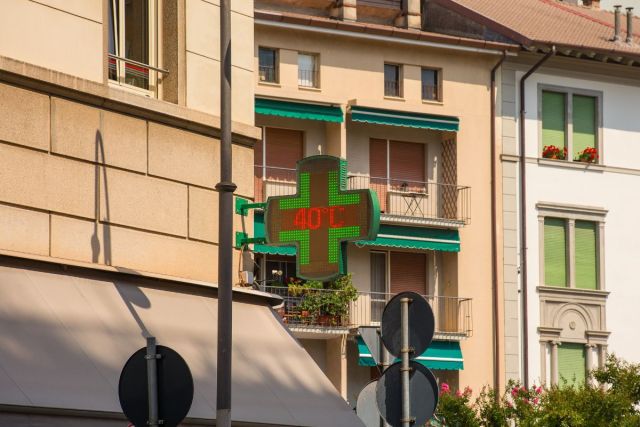
A pharmacy sign displaying 40 degrees Celcius
A pharmacy broadcasting local weather data. (Credit: Getty/Dragoncello)

During a heatwave, power grids, water systems and transport networks can be affected, resulting in disrupted itineraries for travellers. In France, power outages have left thousands without electricity and early closures have been implemented for two of Paris’s biggest attractions, the Eiffel Tower (early afternoon rather than late at night) and the Louvre (two hours early). Eurostar cancelled its London to Paris and Paris to London services from the 22nd to the 25th, and major UK rail companies have been advising travellers to avoid using trains where possible, or to travel during early hours.

If a heatwave is predicted, being flexible with your itinerary and having fully refundable/changeable tickets is key, as extreme heat can force the cancellation of outdoor activities, impact rail and flight services and change the opening hours of sites and eateries.

Why does summer in Europe often feel hotter than summer in Australia?

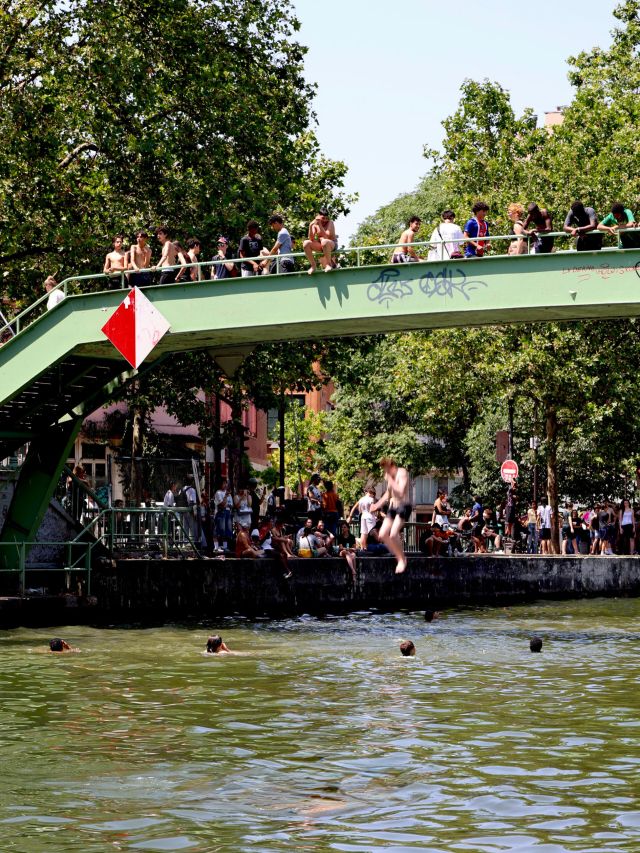
people swimming in the Canal Saint-Martin in Paris
People swimming in the Canal Saint-Martin in Paris to cool off. (Credit: Rachael Thompson)

With some of the highest UV levels in the world, Australians are no strangers to the heat, adapting well to intense weather. But our infrastructure is largely equipped to withstand soaring temperatures with climate-responsive passive design, refrigerated air conditioning or evaporative coolers, as well as swimming spots aplenty.

Buildings in Northern and Western Europe and the UK, however, are constructed to retain heat and handle frosty winters. The lack of universal air conditioning means it generally feels hotter even though the temperature on your app might not look it. During a heatwave, it can feel like you’re in a sauna as cities act like heat traps.

How to stay cool and prepare for another heatwave

Relief is expected across Europe and the UK later this week, but more heatwaves are still possible in the coming months. Summer heat typically peaks in July and August.

Public transport often doesn’t have air conditioning, and buses in particular can be swelteringly hot. If you’re heading outside or your accommodation has no air conditioning, it’s worth buying a spray bottle and a handheld fan from a pharmacy or tourist stand. Check ahead of time if restaurants and cafes have air conditioning and make a booking in advance. The highest temperatures typically hit between 3pm and 6pm, so aim to head outdoors outside of these hours.

Rising temperatures invite travellers to enter a more intentional era of seeing the world. Now more than ever is the time to embrace lower-impact “coolcations” and off-season getaways.