hero media

The 10 most Instagrammed places in the world

Because if it doesn’t look good instagrammed, what’s the point?

Instagram is the traveller’s social media of choice these days and we’ve found the 10 hottest digital travel spots in the world. Here are the 10 most Instagrammed places on earth right now (with thanks to the tag-crunchers at Instagram). How many have you geo-tagged or hash-tagged?


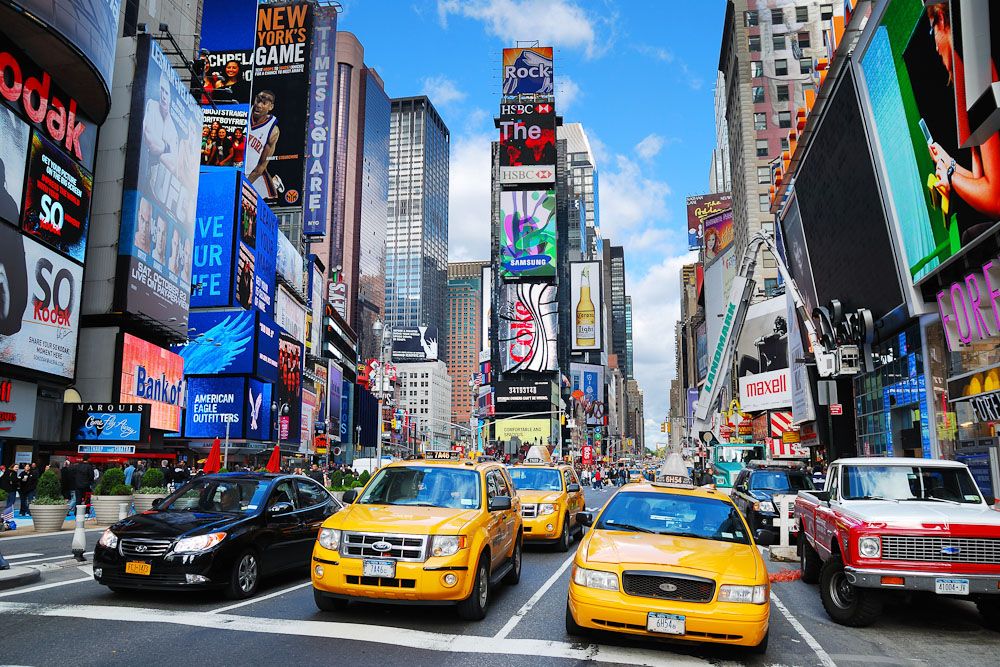
1. Times Square, New York

New York was always destined to be on this list, but its centrepiece, Times Square, takes the number one most-Instagrammed title. Being one of the globe’s go-to New Year’s Eve focal points helps, with around one million people watching the ball drop live.

2. Eiffel Tower, Paris

We’re a little surprised that one of the world’s most recognisable man-made structures, at the centre of possibly the world’s most amazing city, didn’t top the Instagram list. The trick is to get a new angle on Gustave’s wrought-iron icon. The ‘make the tower look like a toy by putting it between your fingers’ ’gram is as popular as ever.

3. Tower Bridge, London

London is a lively city but, with its overcast skies and muddled skyline it’s sometimes difficult to find that photographic focal point. It’s a void happily filled by instantly recognisable Tower Bridge; not to be confused with the blander-looking London Bridge a shade down river. The turreted Victorian structure sits close to many of the capital’s historic curiosities too.

A post shared by Alex On The Road (@a_ontheroad) on

4. Red Square, Moscow

The fact that Moscow’s central square appears on the list shows just how much Russia is opening up as a tourist destination, but equally how much young Russian digital natives have embraced Instagram. The storybook St Basil’s Cathedral is often the focus of the huge public space – which, for the record, is not actually the colour red.

5. Dodgers Stadium, Los Angeles

Well, there’s a curve ball… What do you get when you cross America’s second most populous city, its favourite game and a historic stadium full of phone-waving fans? The fifth most Instagrammed spot in the world, that’s what.

A post shared by @dodgerstadiumfood on

6. İstiklal Caddesi, Istanbul

It’s the Turkish capital’s go-to place for a stroll, one-and-a-half kilometres of everything you could ever want in a European city, from boutiques, galleries and cinemas to night clubs and chocolatiers. A glut of late-Ottoman architecture plus quirky old red trams help the pedestrianised street make it on the list.

7. Parque Ibirapuera, Sao Paolo

It’s not much of a mystery why a massive, beautiful parkland, servicing a city with a population of over 11 million, may just sneak onto the list. The 545-acre Parque Ibirapuera is equally popular with the active-wear crowd and the cultural elite, thanks to it housing plenty of museums and Brazilian cultural institutions.

Weekly travel news, experiences
insider tips, offers,
and more.

8. Vondelpark, Amsterdam

Yes, indeed, the Instagram crowd love parks; second case in point is Amsterdam’s escape of choice, Vondelpark. The 120-acre central spot once hit the headlines because authorities said it was okay to have sex within the boundaries, as long as it was at night. Apparently, the local police don’t necessarily agree, and we’ve seen no such related posts on Instagram.

A post shared by N A N C Y (@avocadofairy) on

9. Park Guell, Barcelona

Rounding out our Instagram park trilogy is incomparable Park Guell in Barcelona’s Gràcia district. It’s more than just your average public space and epically Instagrammable for a number of reasons, mainly because the UNESCO World Heritage Site is home to plenty of uber cool works and works by Antoni Gaudí, including El Drac, a mosaic dragon (lizard).

10. San Francisco – Golden Gate Bridge

No prizes for guessing why the Golden Gate Bridge is so widely shot. It’s difficult to comprehend how a simple metal structure can show so many diverse personalities, changing moods depending on season, time and amount of fog around.


MORE… The 10 most Instagrammed Places in Australia

JOIN US… See International Traveller’s Instagram community

Want to see more stories from International Traveller in your Google search results?

  1. Click here to set International Traveller as a preferred source.
  2. Tick the box next to "International Traveller". That's it.
hero media

What the European heatwave means for your summer travel plans

Temperatures are soaring this summer, breaking records across Europe and the UK. 

Euro summer is a feeling like no other. But when a heatwave hits? The dream trip quickly turns into a sweaty mess. Extreme heat is sweeping Europe and the UK this week, with record-high temperatures impacting travel plans across the continent.

And while Australian summers are typically hotter in absolute temperature, many European cities aren’t equipped for high temperatures, resulting in unbearable weather.

Why is it so hot in Europe?

Signs of a hot summer loomed in May, when the mercury hit unprecedented spring highs. Now, extreme high temperature warning alerts have been issued in countries such as Spain, Italy, France, England, the Netherlands and Germany.

France saw its hottest day on record on Wednesday, with an average temperature of 30°C across the day and night. This surpasses the average temperature for June, which is 15°C to 25°C. Dozens of people have died, including 40 from drowning.

In Spain, 212 deaths have been linked to the heatwave.

The UK recorded its hottest June day ever on Wednesday with temperatures soaring to 36.1°C. In an article published by the Met Office – the UK’s national meteorological service – Professor Stephen Belcher CBE, Met Office Chief Scientist, shared his concerns about June’s heat. “To see temperatures like this in the UK in June is sobering. Events like this bring home the implications of climate change, with very high temperatures and humidity bringing significant health implications from heat stress, as well as impacts to a range of sectors such as transport, energy and water supply,” he said.

Heatwaves are becoming increasingly common in Europe and the UK, neither of which is prepared for such extremes. The World Meteorological Organization reported that in 2025, at least 95% of Europe experienced above-average annual temperatures and that the continent was heating up twice as fast as the global average.

How travel is impacted

A pharmacy sign displaying 40 degrees Celcius
A pharmacy broadcasting local weather data. (Credit: Getty/Dragoncello)

During a heatwave, power grids, water systems and transport networks can be affected, resulting in disrupted itineraries for travellers. In France, power outages have left thousands without electricity and early closures have been implemented for two of Paris’s biggest attractions, the Eiffel Tower (early afternoon rather than late at night) and the Louvre (two hours early). Eurostar cancelled its London to Paris and Paris to London services from the 22nd to the 25th, and major UK rail companies have been advising travellers to avoid using trains where possible, or to travel during early hours.

If a heatwave is predicted, being flexible with your itinerary and having fully refundable/changeable tickets is key, as extreme heat can force the cancellation of outdoor activities, impact rail and flight services and change the opening hours of sites and eateries.

Why does summer in Europe often feel hotter than summer in Australia?

people swimming in the Canal Saint-Martin in Paris
People swimming in the Canal Saint-Martin in Paris to cool off. (Credit: Rachael Thompson)

With some of the highest UV levels in the world, Australians are no strangers to the heat, adapting well to intense weather. But our infrastructure is largely equipped to withstand soaring temperatures with climate-responsive passive design, refrigerated air conditioning or evaporative coolers, as well as swimming spots aplenty.

Buildings in Northern and Western Europe and the UK, however, are constructed to retain heat and handle frosty winters. The lack of universal air conditioning means it generally feels hotter even though the temperature on your app might not look it. During a heatwave, it can feel like you’re in a sauna as cities act like heat traps.

How to stay cool and prepare for another heatwave

Relief is expected across Europe and the UK later this week, but more heatwaves are still possible in the coming months. Summer heat typically peaks in July and August.

Public transport often doesn’t have air conditioning, and buses in particular can be swelteringly hot. If you’re heading outside or your accommodation has no air conditioning, it’s worth buying a spray bottle and a handheld fan from a pharmacy or tourist stand. Check ahead of time if restaurants and cafes have air conditioning and make a booking in advance. The highest temperatures typically hit between 3pm and 6pm, so aim to head outdoors outside of these hours.

Rising temperatures invite travellers to enter a more intentional era of seeing the world. Now more than ever is the time to embrace lower-impact “coolcations” and off-season getaways.