hero media

6 of Switzerland’s most romantic stays

From fairytale towns to vertiginous heights, these just might be the most romantic destinations in not just Switzerland but all of Europe.

1. An igloo stay

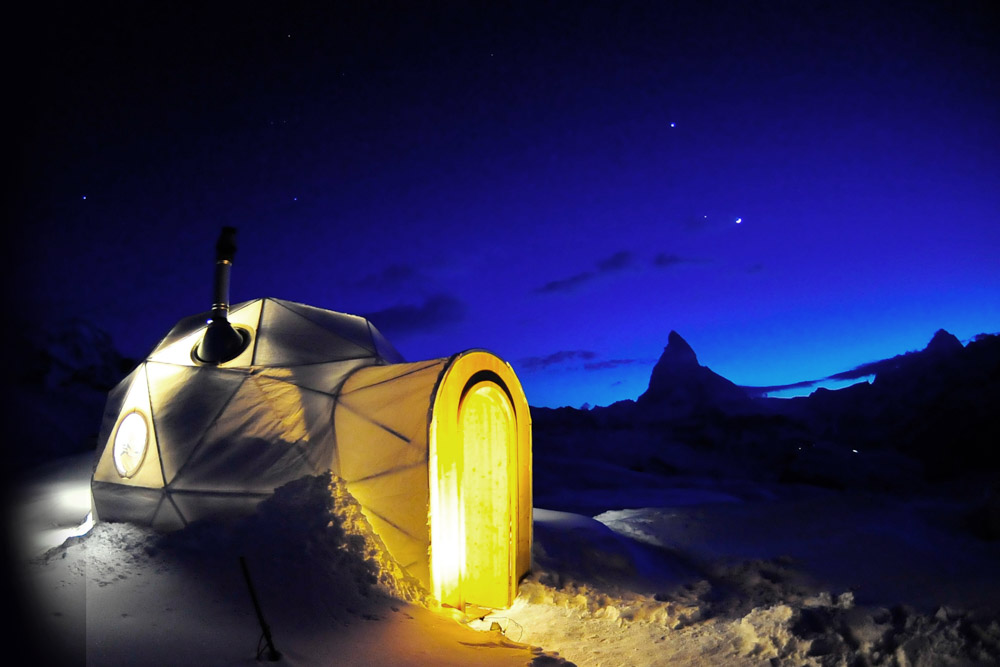
One of the most romantic forms of accommodation in a country with an abundance of grand hotels is an igloo stay. What could be cosier than snuggling up with your significant other in a room made entirely from ice and situated in a winter wonderland of white?


There are various Igloo Villages scattered around the country, including in the resort town of Gstaad and in Engelberg, near Trübsee Lake at the foot of the mighty Titlis.


Book the Romantic Igloo, which features unique snow art, two-person sleeping bag, and thick sheep skin rugs.

2. Restaurant Schloss Bottmingen

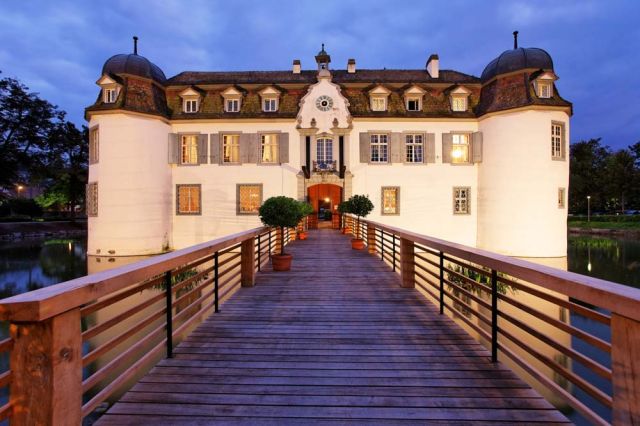
Located 15 minutes from Basel, the Restaurant Schloss Bottmingen is the ultimate candlelit-dinner location. It’s a 13th-century castle surrounded by a moat and rambling gardens where you dine on the finest French cuisine.
Romantic Switzerland french cuisine
Entrance to Restaurant Schloss Bottmingen, it’s a 13th-century castle in Switzerland that serves French cuisine.

It is after dark that the castle really sets hearts aflutter, when intricately draped fairy lights sparkle and reflect off the still waters of the castle moat.

3. Wildflowers spotting

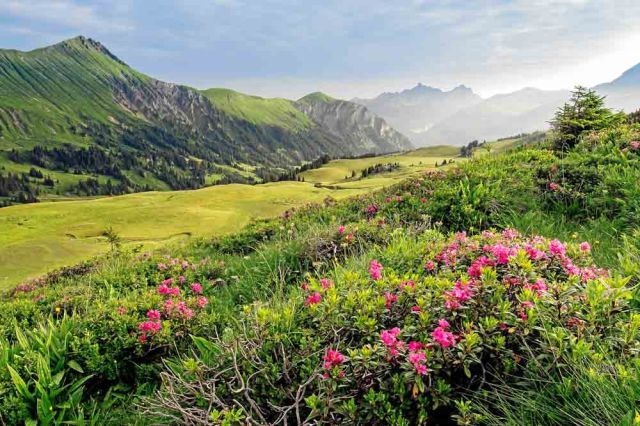
Each year from mid-June to mid-August the spectacular Bernese Oberland erupts in a blanket of colour and fragrance.
Romantic Switzerland
Blanket of fragrant and pretty wildflowers in Bernese Oberland, Switzerland.

To really indulge in the beauty of it all, base yourself in the lovely town of Grindelwald and hike to surrounding towns like Meiringen and Adelboden.

4. Stiftsbibliothek St. Gallen

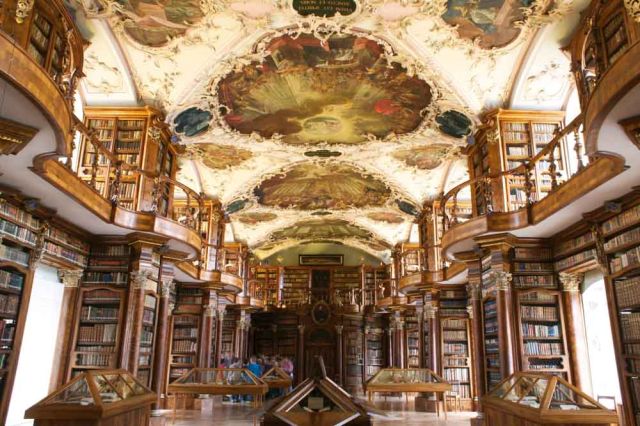
Book-lovers will swoon at the sight of the Abbey Library at St. Gallen.
Romantic Switzerland
Majestic ceiling and soaring book shelves of Switzerland’s Abbey Library at St. Gallen.

While the Abbey itself dates back to the eighth century, the sublime Rococo library was constructed between 1758–67. It is widely considered one of the best in the world, with burnished woodwork and delightful ceiling frescoes.


Among its roughly 170,000 priceless pieces are illuminated texts, prayer books and biographies of the saints dating from the ninth century.


The Abbey precinct, including the library, is listed as a UNESCO World Heritage Site.

5. Mount Pilatus

Mount Pilatus is regularly listed as one of the best places to propose in all of Europe. It certainly makes for a memorable experience: the peak is traversed via the steepest cog railway track in the world (or you can take a gondola).
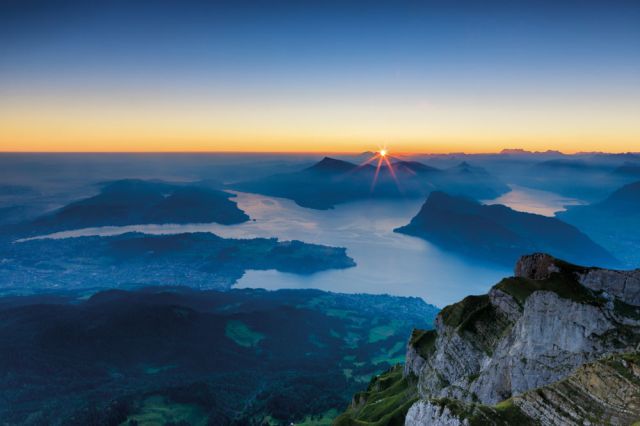
Romantic Switzerland
View of a romantic sunset from Mount Pilatus over the Lake Lucerne.

Once at the top, the panoramic view, which has been marveled at by the likes of Richard Wagner and Queen Victoria, takes in 73 peaks and stretches on forever.


True romance requires Champagne: book a table at Hotel Pilatus-Kulm’s outdoor terrace for lunch.

Weekly travel news, experiences
insider tips, offers,
and more.

6. Water Castles

Water castles, as the name implies, are moated castles; what isn’t hinted at from the name is how evocative and ethereal they are.


Chillon Castle, located on a rock on the banks of Lake Geneva near Montreux, is the most visited historic building in the country but, for a less crowded experience, try Hallwyl Castle near Seengen.
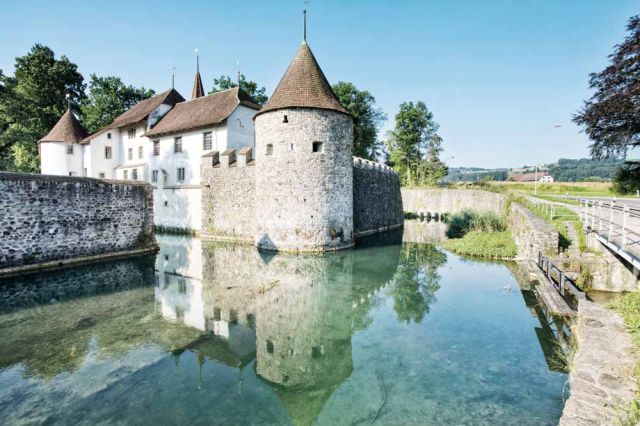
Romantic Switzerland
Ethereal Hallwyl Castle in Seengen, Switzerland.

Easily accessible from Zurich, every three years an opera is held here on the grounds, with the floodlit castle as a spectacular backdrop.


Meanwhile Castle Hagenwil in Amriswil, another impeccably preserved castle, has an à la carte restaurant for dinners à deux and its annual festival in August has a roster of theatre and events in the delightful castle courtyard.

Want to see more stories from International Traveller in your Google search results?

  1. Click here to set International Traveller as a preferred source.
  2. Tick the box next to "International Traveller". That's it.
hero media

What the European heatwave means for your summer travel plans

Temperatures are soaring this summer, breaking records across Europe and the UK. 

Euro summer is a feeling like no other. But when a heatwave hits? The dream trip quickly turns into a sweaty mess. Extreme heat is sweeping Europe and the UK this week, with record-high temperatures impacting travel plans across the continent.

And while Australian summers are typically hotter in absolute temperature, many European cities aren’t equipped for high temperatures, resulting in unbearable weather.

Why is it so hot in Europe?

Signs of a hot summer loomed in May, when the mercury hit unprecedented spring highs. Now, extreme high temperature warning alerts have been issued in countries such as Spain, Italy, France, England, the Netherlands and Germany.

France saw its hottest day on record on Wednesday, with an average temperature of 30°C across the day and night. This surpasses the average temperature for June, which is 15°C to 25°C. Dozens of people have died, including 40 from drowning.

In Spain, 212 deaths have been linked to the heatwave.

The UK recorded its hottest June day ever on Wednesday with temperatures soaring to 36.1°C. In an article published by the Met Office – the UK’s national meteorological service – Professor Stephen Belcher CBE, Met Office Chief Scientist, shared his concerns about June’s heat. “To see temperatures like this in the UK in June is sobering. Events like this bring home the implications of climate change, with very high temperatures and humidity bringing significant health implications from heat stress, as well as impacts to a range of sectors such as transport, energy and water supply,” he said.

Heatwaves are becoming increasingly common in Europe and the UK, neither of which is prepared for such extremes. The World Meteorological Organization reported that in 2025, at least 95% of Europe experienced above-average annual temperatures and that the continent was heating up twice as fast as the global average.

How travel is impacted

A pharmacy sign displaying 40 degrees Celcius
A pharmacy broadcasting local weather data. (Credit: Getty/Dragoncello)

During a heatwave, power grids, water systems and transport networks can be affected, resulting in disrupted itineraries for travellers. In France, power outages have left thousands without electricity and early closures have been implemented for two of Paris’s biggest attractions, the Eiffel Tower (early afternoon rather than late at night) and the Louvre (two hours early). Eurostar cancelled its London to Paris and Paris to London services from the 22nd to the 25th, and major UK rail companies have been advising travellers to avoid using trains where possible, or to travel during early hours.

If a heatwave is predicted, being flexible with your itinerary and having fully refundable/changeable tickets is key, as extreme heat can force the cancellation of outdoor activities, impact rail and flight services and change the opening hours of sites and eateries.

Why does summer in Europe often feel hotter than summer in Australia?

people swimming in the Canal Saint-Martin in Paris
People swimming in the Canal Saint-Martin in Paris to cool off. (Credit: Rachael Thompson)

With some of the highest UV levels in the world, Australians are no strangers to the heat, adapting well to intense weather. But our infrastructure is largely equipped to withstand soaring temperatures with climate-responsive passive design, refrigerated air conditioning or evaporative coolers, as well as swimming spots aplenty.

Buildings in Northern and Western Europe and the UK, however, are constructed to retain heat and handle frosty winters. The lack of universal air conditioning means it generally feels hotter even though the temperature on your app might not look it. During a heatwave, it can feel like you’re in a sauna as cities act like heat traps.

How to stay cool and prepare for another heatwave

Relief is expected across Europe and the UK later this week, but more heatwaves are still possible in the coming months. Summer heat typically peaks in July and August.

Public transport often doesn’t have air conditioning, and buses in particular can be swelteringly hot. If you’re heading outside or your accommodation has no air conditioning, it’s worth buying a spray bottle and a handheld fan from a pharmacy or tourist stand. Check ahead of time if restaurants and cafes have air conditioning and make a booking in advance. The highest temperatures typically hit between 3pm and 6pm, so aim to head outdoors outside of these hours.

Rising temperatures invite travellers to enter a more intentional era of seeing the world. Now more than ever is the time to embrace lower-impact “coolcations” and off-season getaways.