A historic landmark turned design-led stay with huge, quirky rooms and serious personality.
Set inside a striking former shipping company headquarters on Amsterdam’s eastern docks, The Hoxton, Lloyd Amsterdam is anything but your typical canal-side hotel. Expect soaring ceilings, bold design choices, unexpected room layouts and a strong sense of history woven into every corner. I stayed in a Biggy room, and the space was enormous, playful and full of character – exactly the kind of stay that makes you feel like you’ve discovered somewhere special.
Where is The Hoxton, Lloyd Amsterdam?
The location feels distinctly local rather than touristy. (Credit: Ralph Reniers)
The Hoxton, Lloyd Amsterdam sits in the Eastern Docklands (Oostelijk Havengebied), a quieter waterfront area about 10 minutes by tram from the city centre. It’s right on the IJ river and surrounded by striking modern architecture, converted warehouses, an original Dutch windmill and leafy promenades.
This location feels distinctly local rather than touristy. You’re close to creative neighbourhoods, waterside walking paths and excellent public transport links, making it easy to reach the canals, museums and nightlife while still retreating somewhere calm at the end of the day.
What is the style and character of The Hoxton, Lloyd Amsterdam?
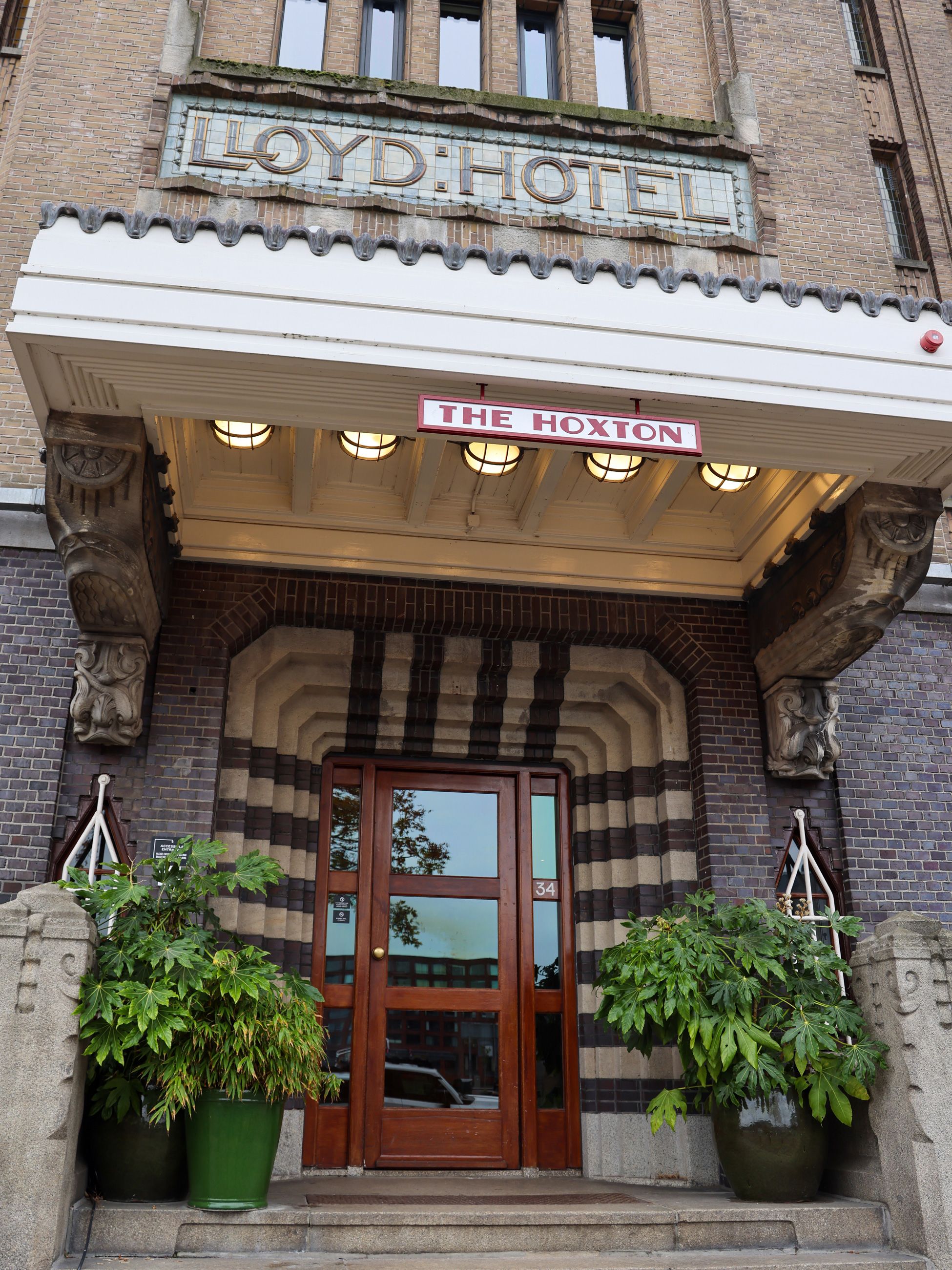
The building has been a shipping company HQ, prison, youth detention centre, artist studios, and then a hotel. (Credit: Emily Murphy)
The design blends heritage and modern playfulness.
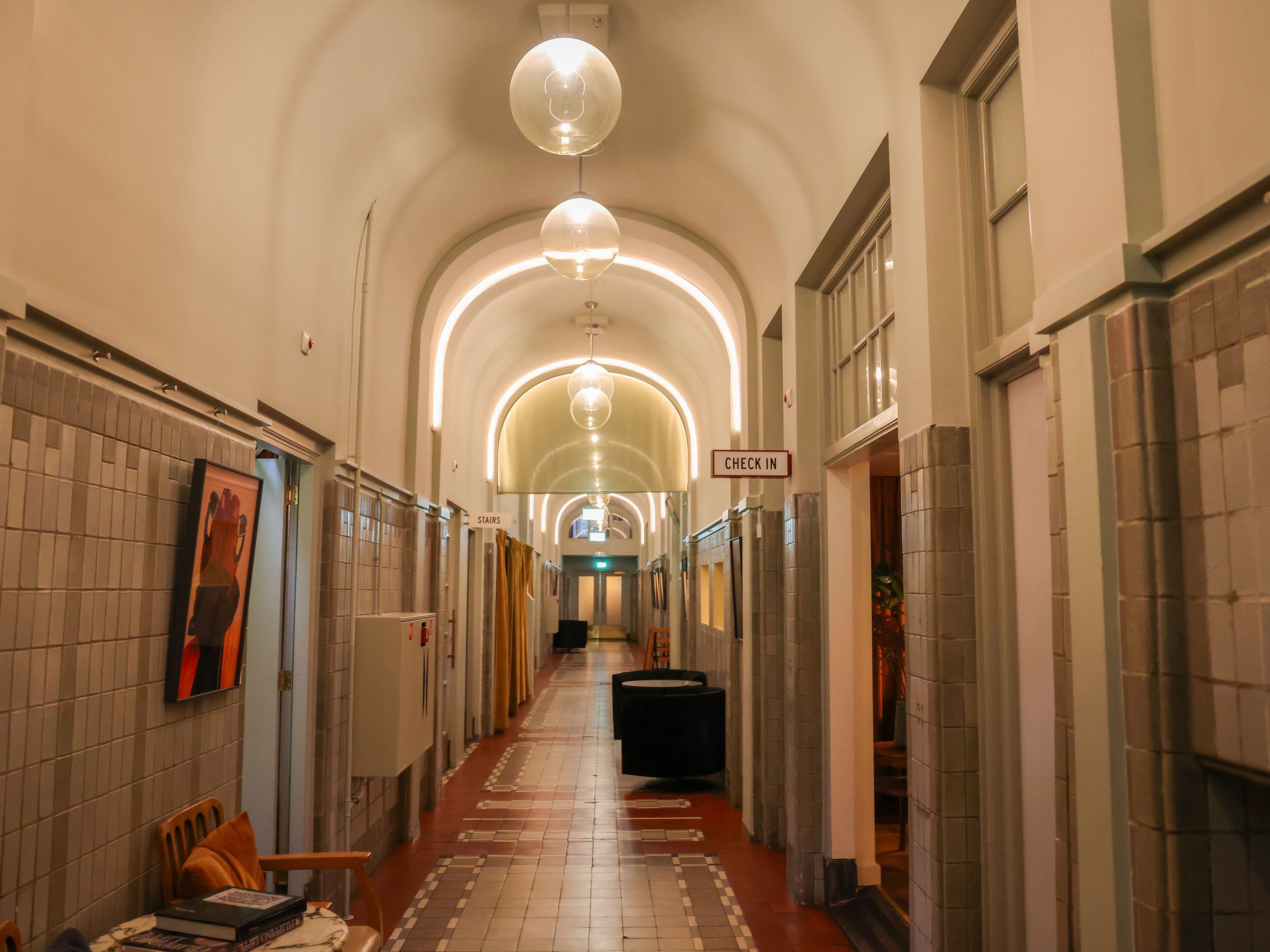
The hallway reflects the original industrial architecture. (Credit: Emily Murphy)
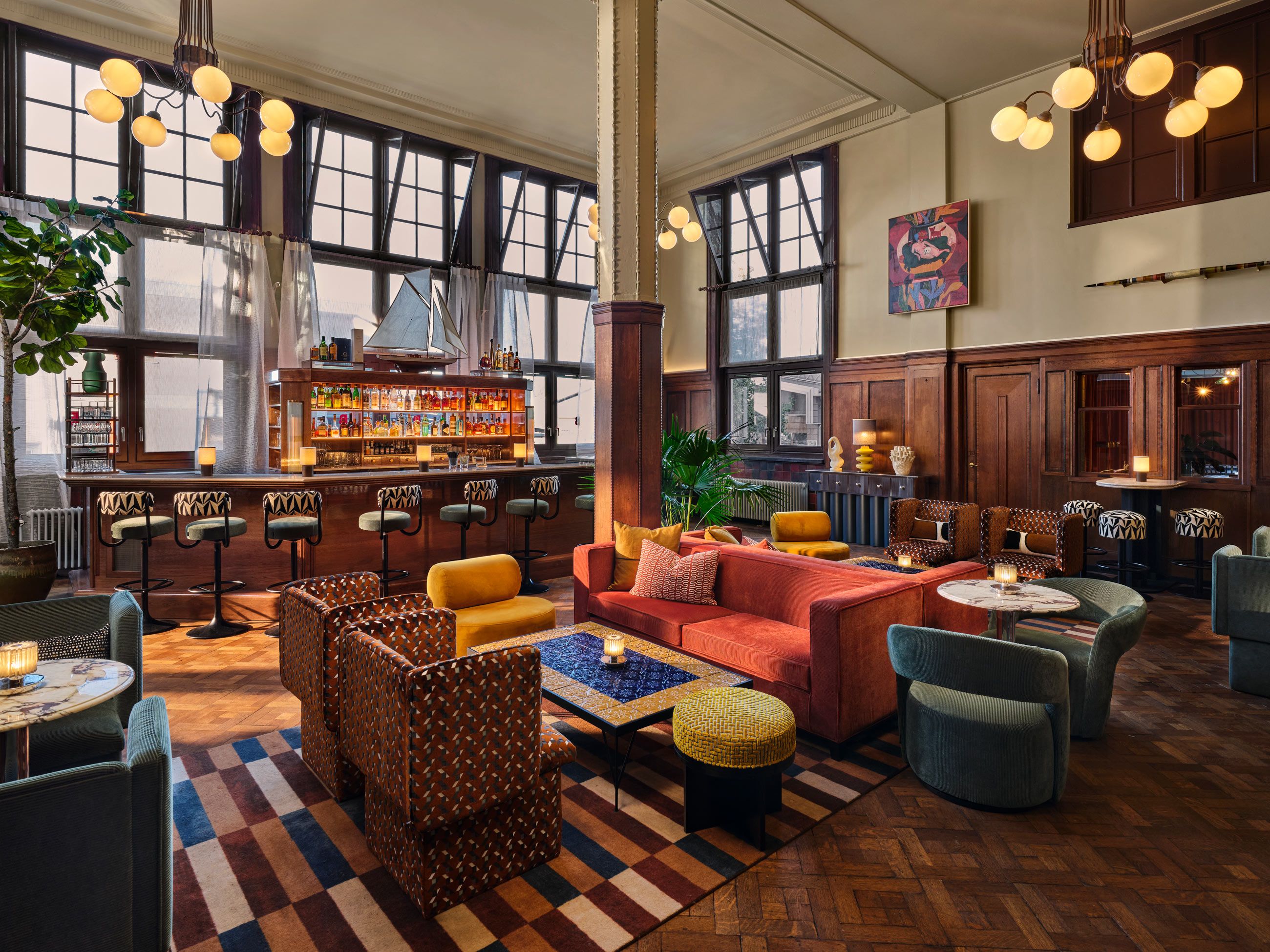
The building itself is the star. Originally built in 1921 as the headquarters of the Royal Dutch Lloyd shipping company, it later served as a prison, youth detention centre and then artist studios before becoming a hotel.
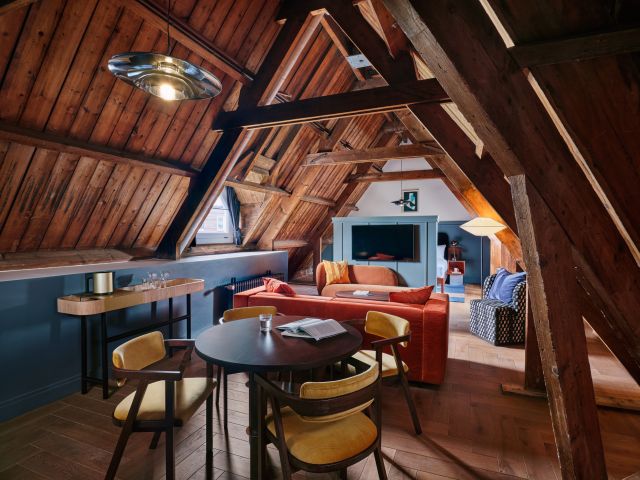
Inside, the design blends heritage and modern playfulness. Original architectural details, bold colours, eclectic furniture and art-filled spaces combine to make a truly unique hotel. No two rooms are alike, with distinctive layouts, ceiling heights and quirky angles that reflect the building’s layered past. It feels creative, slightly unconventional and very Amsterdam.
What facilities does The Hoxton, Lloyd Amsterdam have?
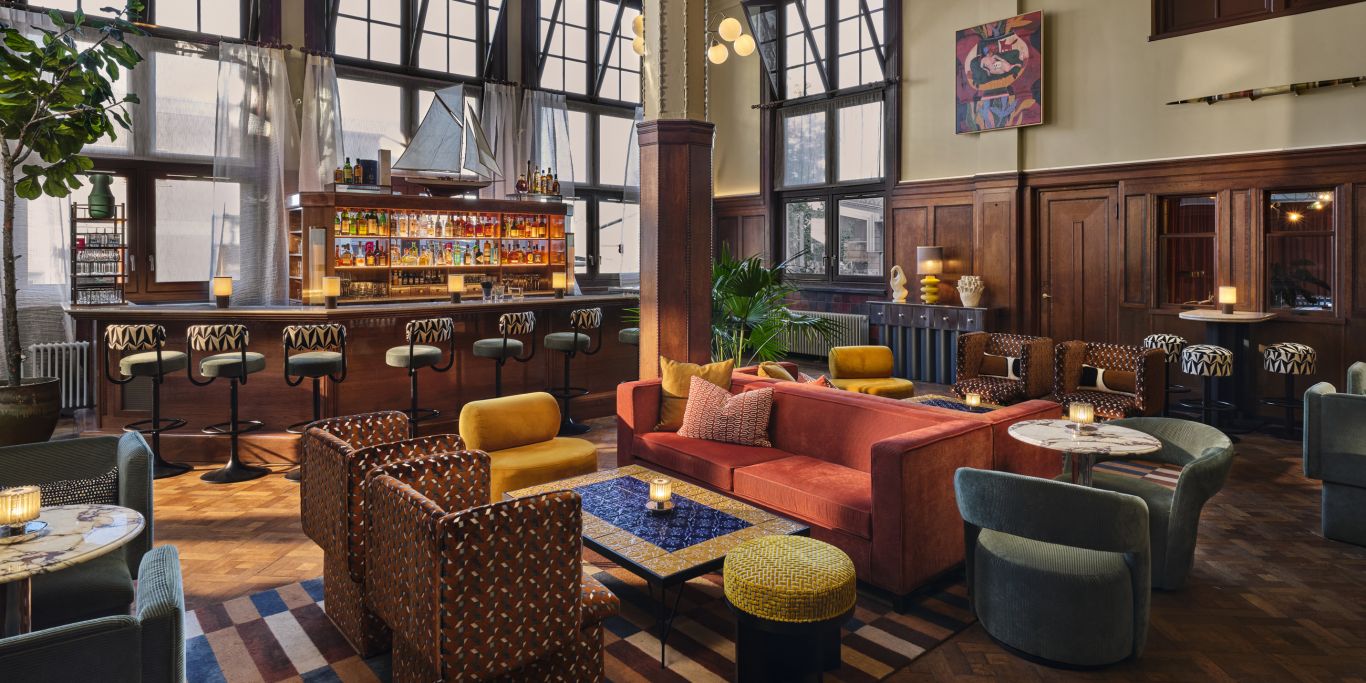
The property centres around its lively restaurant and bar.
The Terrace catches the sun all day.
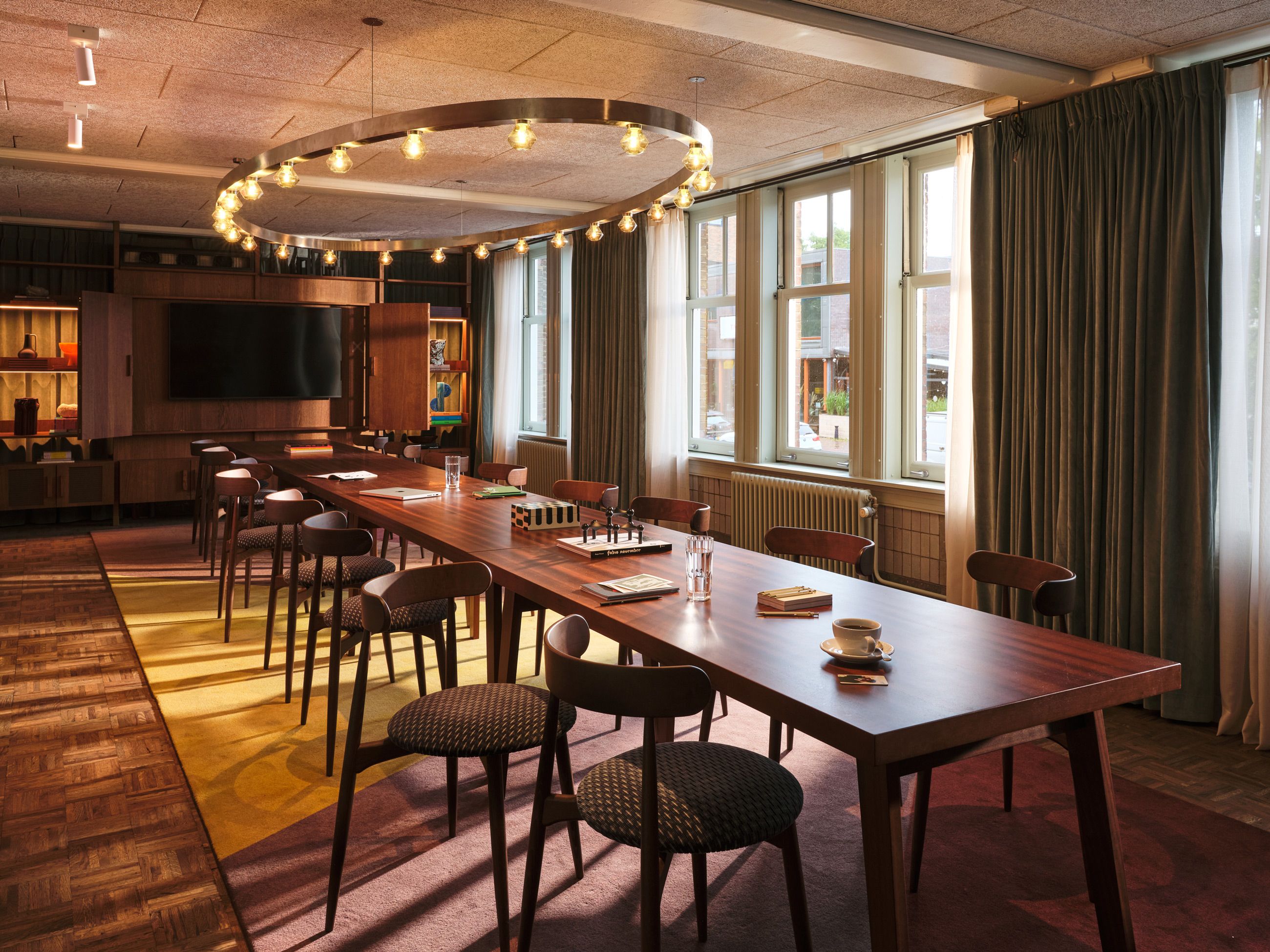
There are meeting and event rooms throughout the hotel.
Facilities here are geared more toward lifestyle and atmosphere than traditional hotel extras. The property centres around its lively restaurant and bar, along with stylish communal lounges that double as relaxed work and social spaces. Guests can hire bikes to explore Amsterdam like a local, and there are also meeting and event rooms tucked within the historic building. It’s not a hotel with pools or a spa, but it delivers exactly what you want in a design-led city stay: characterful spaces to eat, drink, work and unwind.
What are the rooms like at The Hoxton, Lloyd Amsterdam?
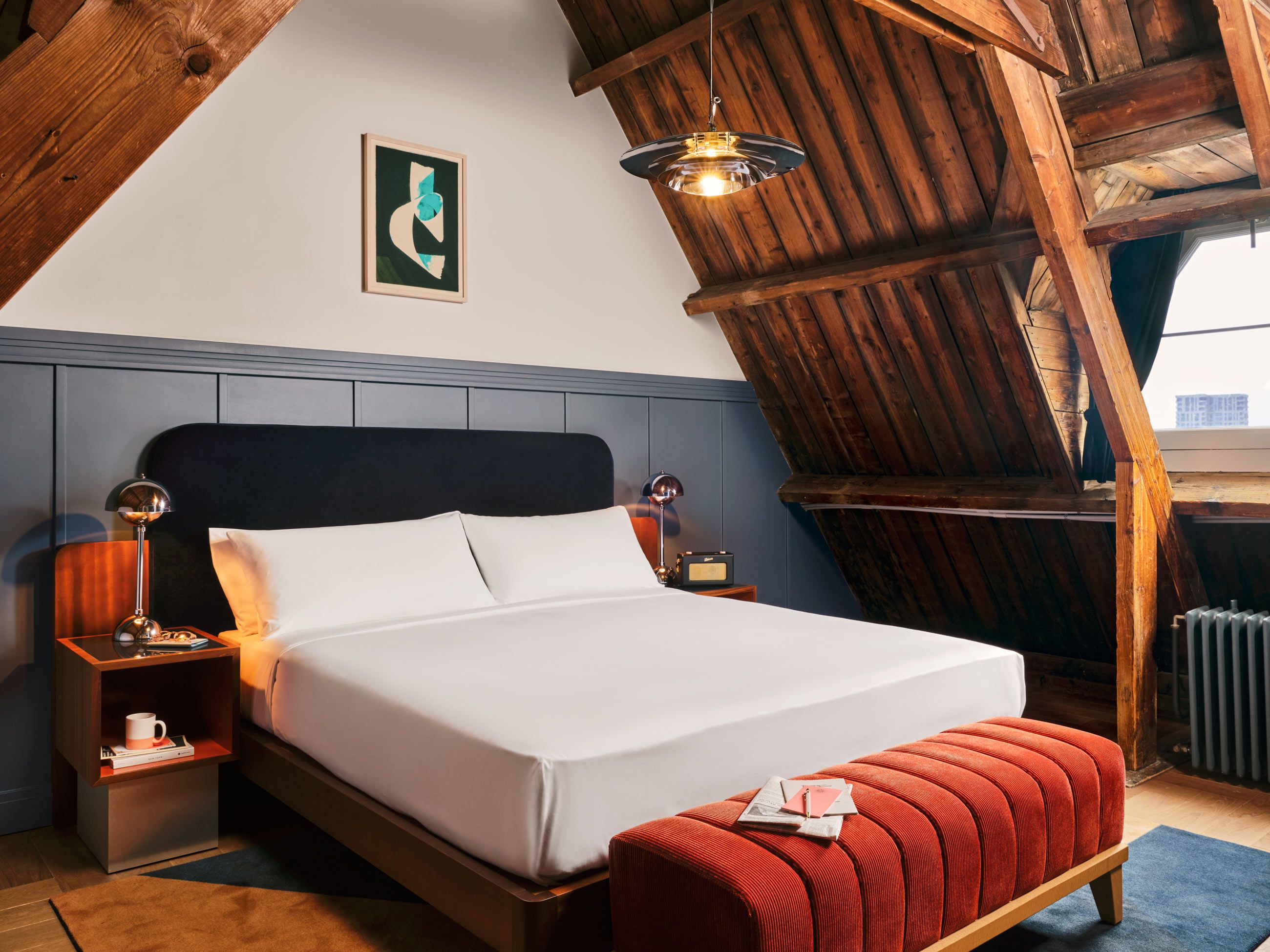
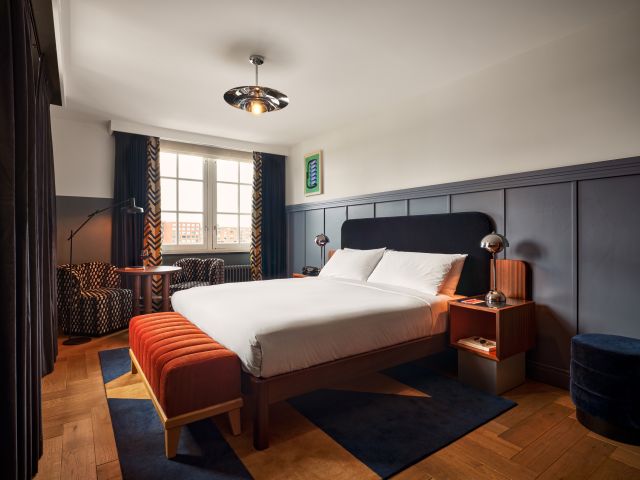
Expect high ceilings and distinctive layouts. (Credit: Ralph Reniers)
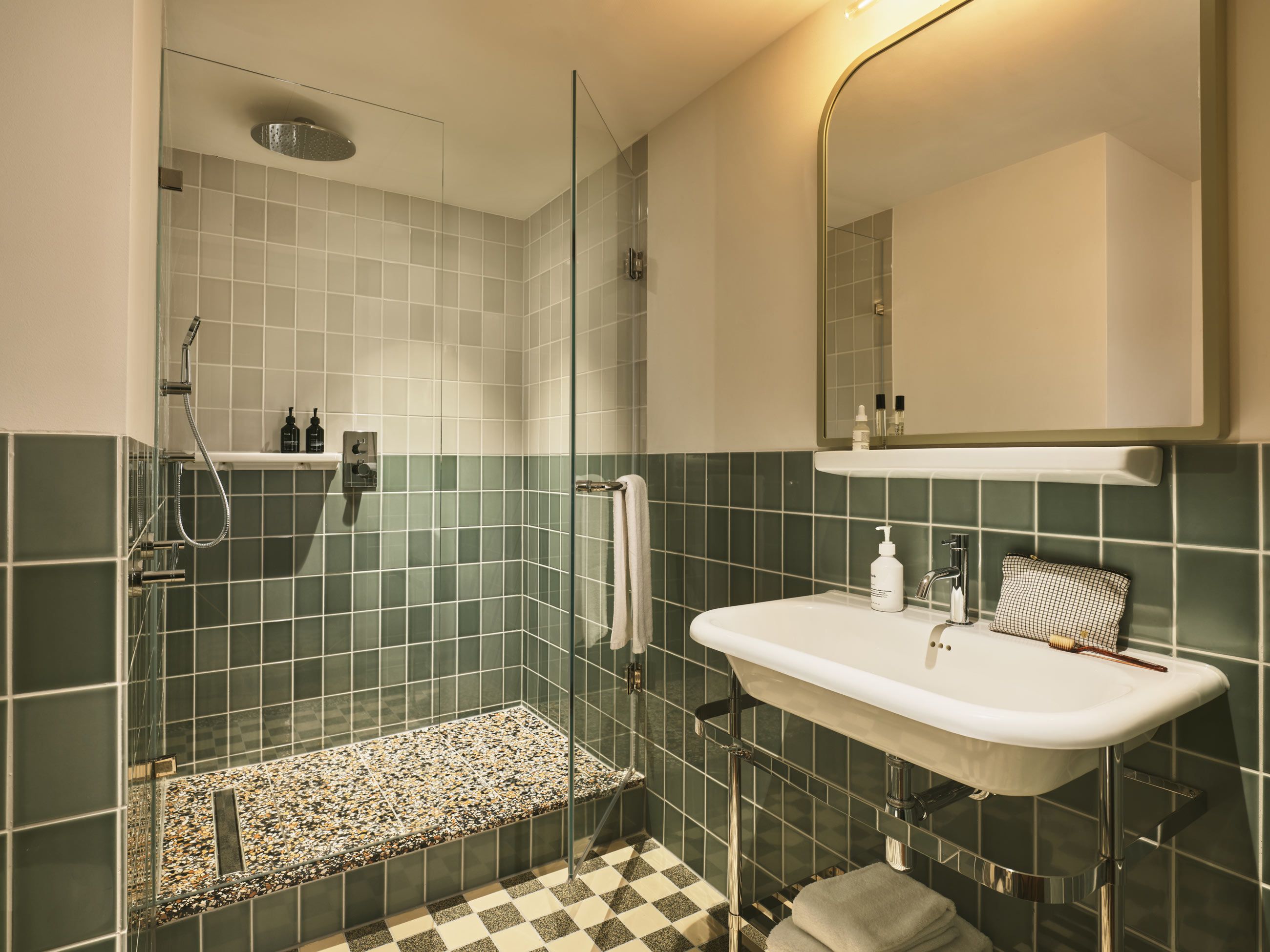
The industrial roots are present in the bathroom design. (Credit: Ralph Reniers)
Rooms vary widely due to the historic structure, ranging from Cosy to Studio categories.
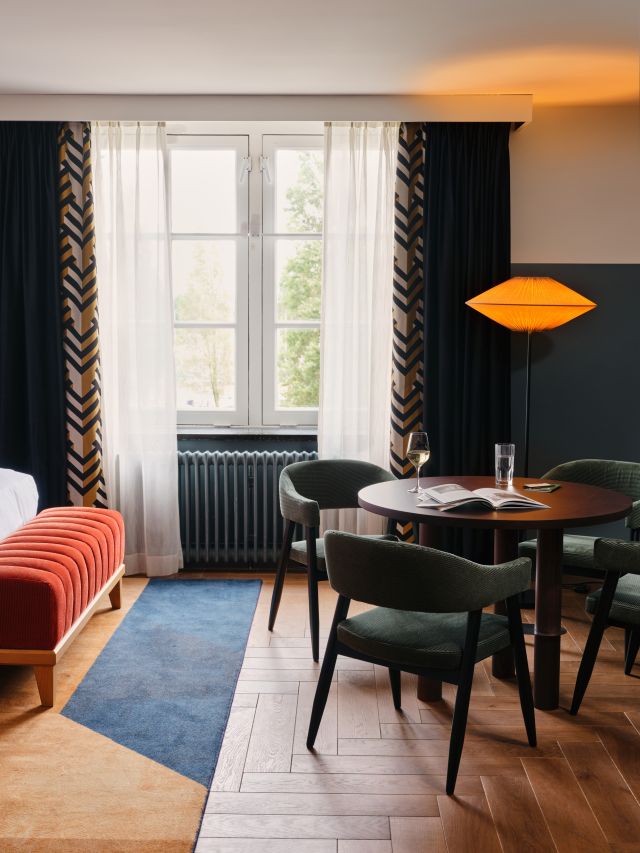
I stayed in a Biggy room after being upgraded from a Cosy, and it was huge, airy and wonderfully quirky. Expect high ceilings, distinctive layouts, vintage-inspired furniture and thoughtful design touches that feel personal. The rotary phone and analogue radio were nice touches, and I loved that the radio was playing in my room as I arrived; it really set the mood, and I used it pretty much the entire time I was in there.
The bed is comfortable, and the space feels creative. The only drawback was the shower design. The glass door lacked an internal handle, so opening it meant pushing the door toward the basin, leaving a small gap that forced me to brush against it. In winter, that made me instantly chilly. Still, it was a minor inconvenience in an otherwise memorable room.
What is the dining like at The Hoxton, Lloyd Amsterdam?
Have a drink at Barbue. (Credit: Ralph Reniers)
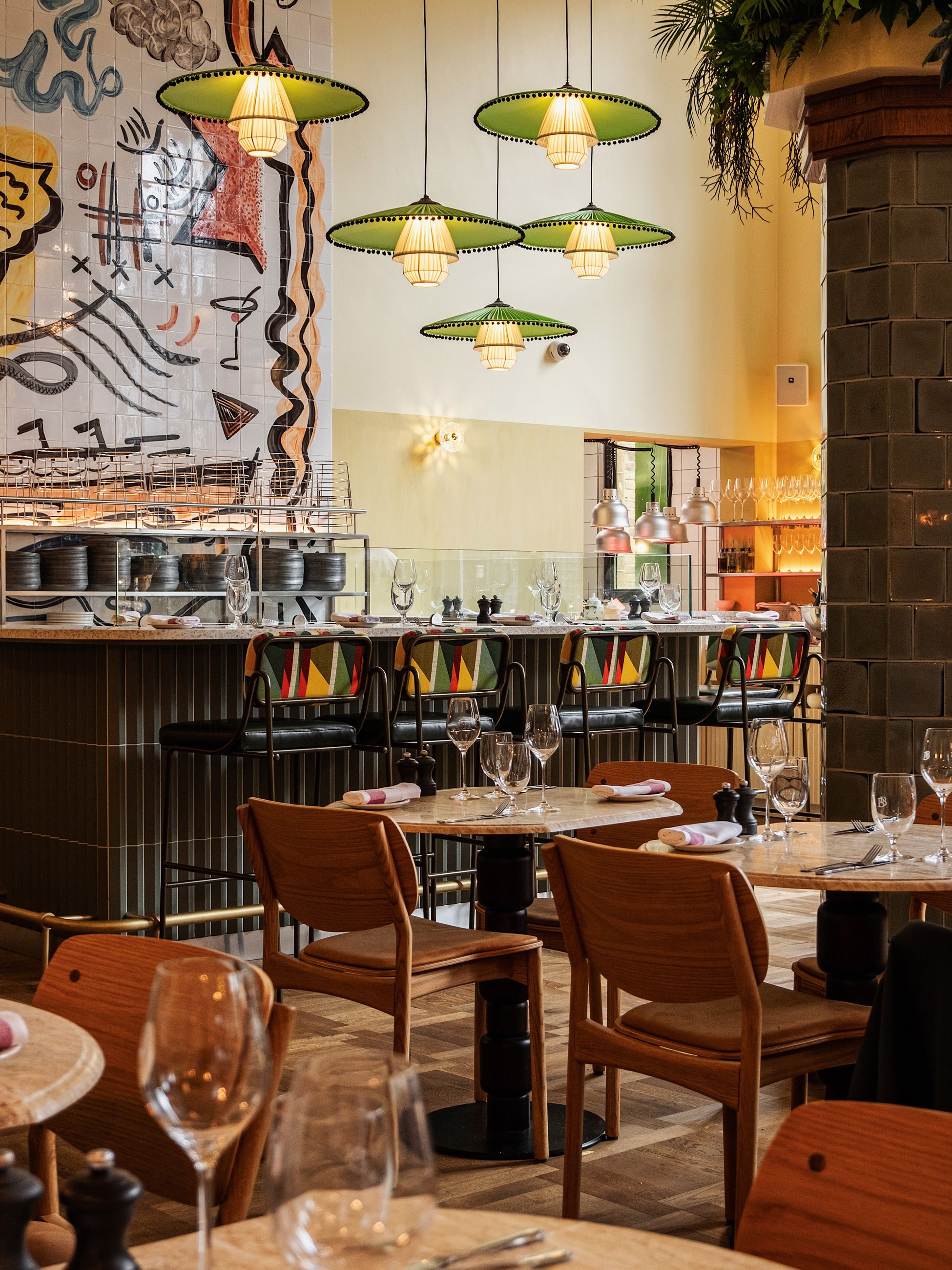
Breman Brasserie serves European-inspired dishes.
Chat to fellow guests at the bar.
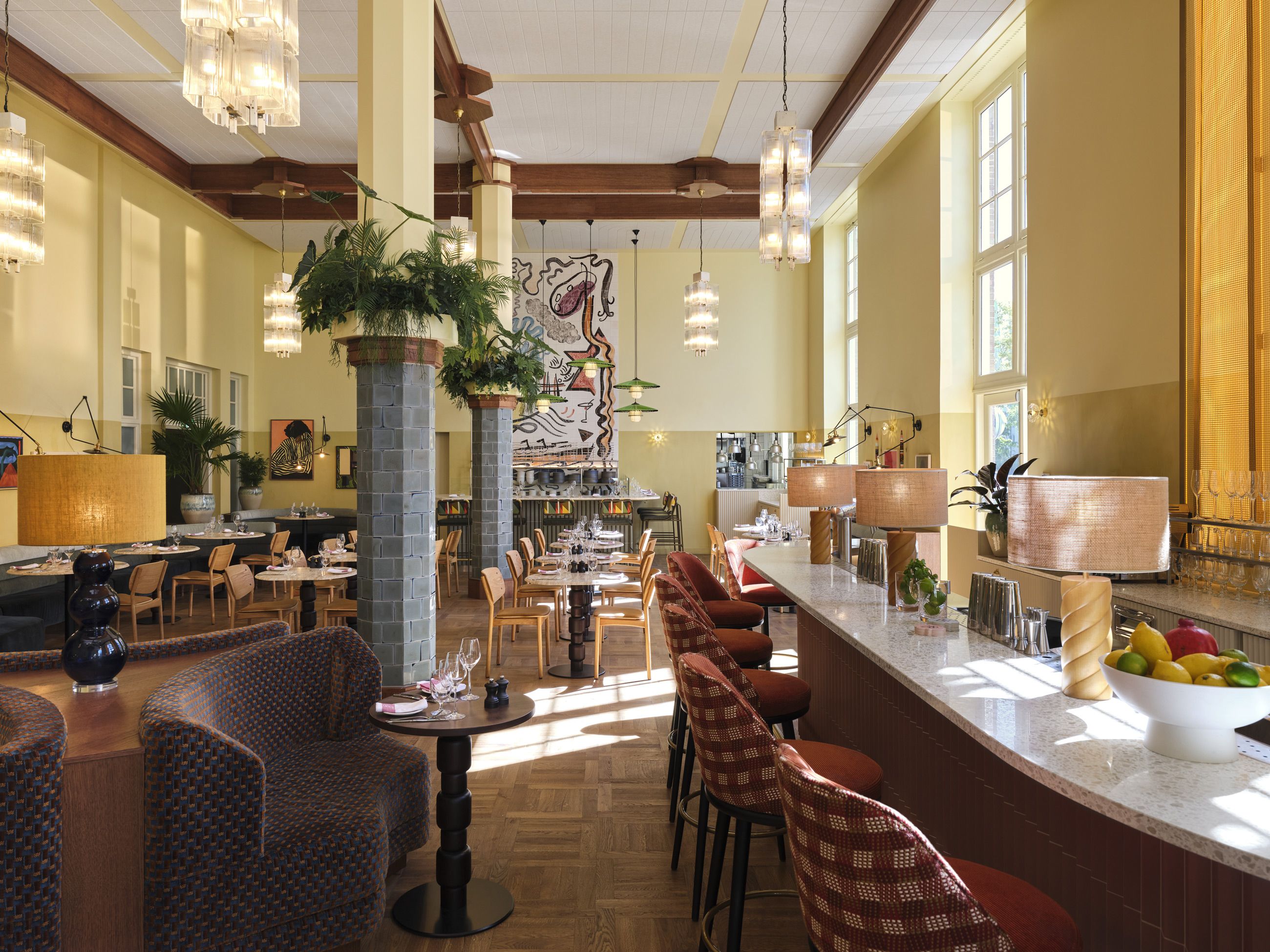
The hotel’s main restaurant is Breman Brasserie, a bright, relaxed space serving European-inspired dishes.
Breakfast here is generous, with a buffet offering both hot and cold options, fresh juices and filter coffee. Espresso coffees are available for an extra charge. I paid €4.50 (about A$7.50) each morning for a pretty average coffee. As an Australian, I do have high standards for coffee, but they were still preferable to filter coffee.
Each room also includes a breakfast bag option. Simply fill in the form, hang the bag outside your door, and you’ll receive a light breakfast of a granola bar, juice and a banana in the morning for a small fee.
Does The Hoxton, Lloyd Amsterdam have access for guests with disabilities?
The hotel offers accessible rooms and lifts.
Yes. The hotel offers accessible rooms and lifts, and staff can assist with accessibility needs. Given the historic nature of the building, the front entrance isn’t accessible, and some areas have structural limitations, but there is an alternate entrance that is accessible, and overall accessibility has been integrated.
Weekly travel news, experiences insider tips, offers, and more.
Is The Hoxton, Lloyd Amsterdam family-friendly?
Larger room categories can accommodate families. (Credit: Ralph Reniers)
While it’s not specifically designed for families, the larger room categories can accommodate parents travelling with children. The spacious layouts and relaxed atmosphere make it suitable for older kids, though it feels more geared toward couples and solo travellers.
The verdict
The Hoxton, Lloyd Amsterdam is a stay for travellers who value personality.
The Hoxton, Lloyd Amsterdam is a stay for travellers who value personality over polish. The historic setting, creative design and truly unique rooms make it far more memorable than standard city hotels. If you love character, space and a sense of place, this is one of Amsterdam’s most distinctive stays.
Details
Best for: Design lovers, creative travellers and couples seeking something unique
Tick the box next to "International Traveller". That's it.
Emily Murphy is International Traveller's Email & Social Editor, and in her time at the company, through various roles, she has been instrumental in crafting compelling narratives that inspire others to explore the world. Her previous job was a journalist at Prime Creative Media and before that she was freelancing in publishing, content creation and digital marketing – equipping her with a diverse skill set that enhances her storytelling and audience engagement. When she's not creating scroll-stopping travel content, Em is a devoted 'bun mum' and enjoys spending her spare time by the sea, reading, binge-watching a good TV show and exploring under-the-radar destinations. Next on her travel wish list? Mexico and an African safari.
Temperatures are soaring this summer, breaking records across Europe and the UK.
Euro summer is a feeling like no other. But when a heatwave hits? The dream trip quickly turns into a sweaty mess. Extreme heat is sweeping Europe and the UK this week, with record-high temperatures impacting travel plans across the continent.
And while Australian summers are typically hotter in absolute temperature, many European cities aren’t equipped for high temperatures, resulting in unbearable weather.
Why is it so hot in Europe?
Signs of a hot summer loomed in May, when the mercury hit unprecedented spring highs. Now, extreme high temperature warning alerts have been issued in countries such as Spain, Italy, France, England, the Netherlands and Germany.
France saw its hottest day on record on Wednesday, with an average temperature of 30°C across the day and night. This surpasses the average temperature for June, which is 15°C to 25°C. Dozens of people have died, including 40 from drowning.
In Spain, 212 deaths have been linked to the heatwave.
The UK recorded its hottest June day ever on Wednesday with temperatures soaring to 36.1°C. In an article published by the Met Office – the UK’s national meteorological service – Professor Stephen Belcher CBE, Met Office Chief Scientist, shared his concerns about June’s heat. “To see temperatures like this in the UK in June is sobering. Events like this bring home the implications of climate change, with very high temperatures and humidity bringing significant health implications from heat stress, as well as impacts to a range of sectors such as transport, energy and water supply,” he said.
Heatwaves are becoming increasingly common in Europe and the UK, neither of which is prepared for such extremes. The World Meteorological Organization reported that in 2025, at least 95% of Europe experienced above-average annual temperatures and that the continent was heating up twice as fast as the global average.
How travel is impacted
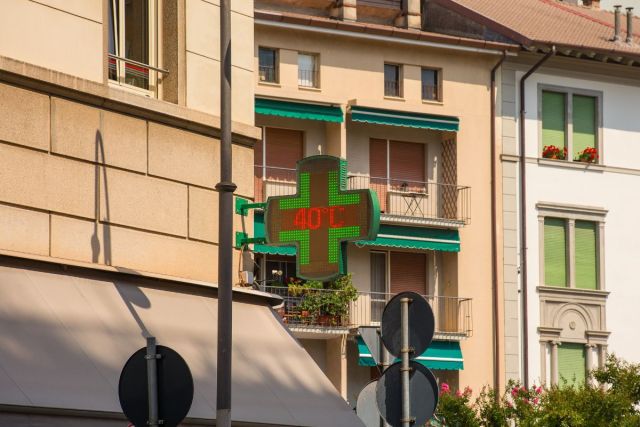
A pharmacy broadcasting local weather data. (Credit: Getty/Dragoncello)
During a heatwave, power grids, water systems and transport networks can be affected, resulting in disrupted itineraries for travellers. In France, power outages have left thousands without electricity and early closures have been implemented for two of Paris’s biggest attractions, the Eiffel Tower (early afternoon rather than late at night) and the Louvre (two hours early). Eurostar cancelled its London to Paris and Paris to London services from the 22nd to the 25th, and major UK rail companies have been advising travellers to avoid using trains where possible, or to travel during early hours.
If a heatwave is predicted, being flexible with your itinerary and having fully refundable/changeable tickets is key, as extreme heat can force the cancellation of outdoor activities, impact rail and flight services and change the opening hours of sites and eateries.
Why does summer in Europe often feel hotter than summer in Australia?
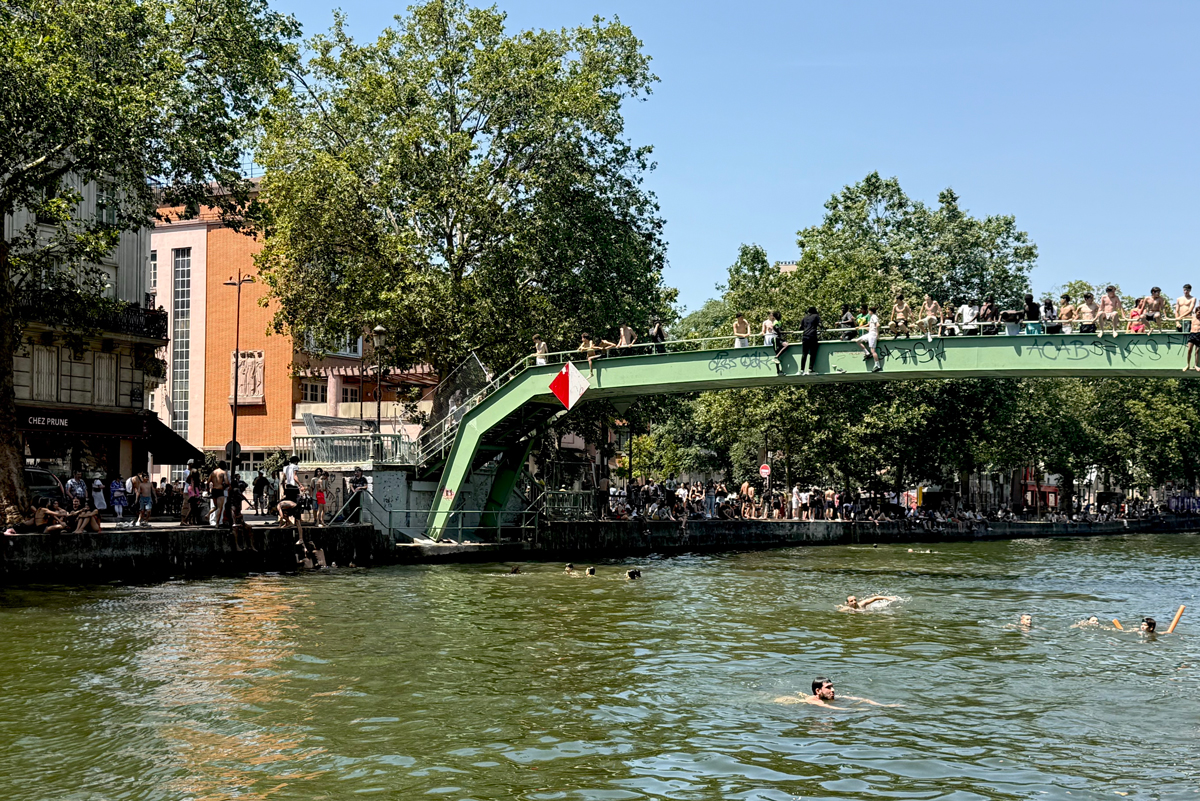
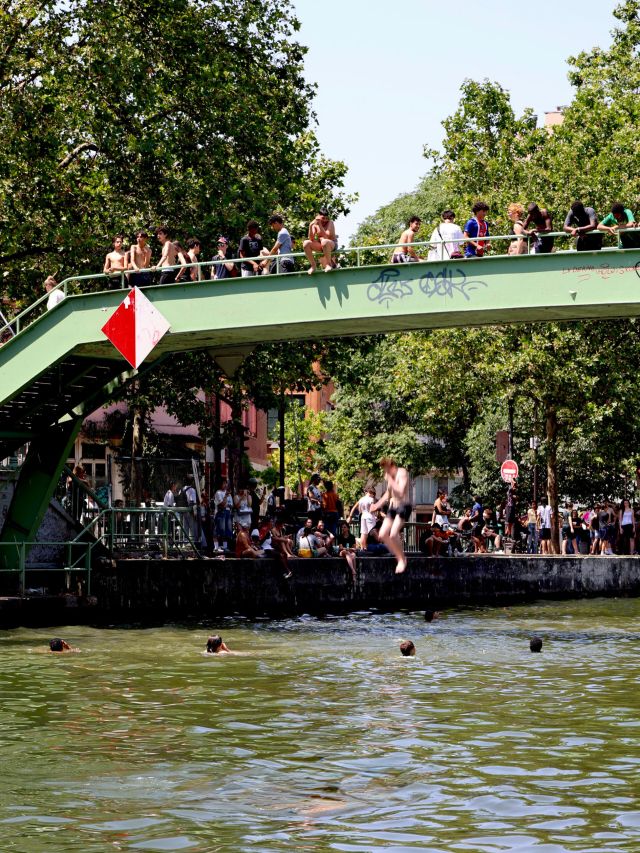
People swimming in the Canal Saint-Martin in Paris to cool off. (Credit: Rachael Thompson)
With some of the highest UV levels in the world, Australians are no strangers to the heat, adapting well to intense weather. But our infrastructure is largely equipped to withstand soaring temperatures with climate-responsive passive design, refrigerated air conditioning or evaporative coolers, as well as swimming spots aplenty.
Buildings in Northern and Western Europe and the UK, however, are constructed to retain heat and handle frosty winters. The lack of universal air conditioning means it generally feels hotter even though the temperature on your app might not look it. During a heatwave, it can feel like you’re in a sauna as cities act like heat traps.
How to stay cool and prepare for another heatwave
Relief is expected across Europe and the UK later this week, but more heatwaves are still possible in the coming months. Summer heat typically peaks in July and August.
Public transport often doesn’t have air conditioning, and buses in particular can be swelteringly hot. If you’re heading outside or your accommodation has no air conditioning, it’s worth buying a spray bottle and a handheld fan from a pharmacy or tourist stand. Check ahead of time if restaurants and cafes have air conditioning and make a booking in advance. The highest temperatures typically hit between 3pm and 6pm, so aim to head outdoors outside of these hours.
Rising temperatures invite travellers to enter a more intentional era of seeing the world. Now more than ever is the time to embrace lower-impact “coolcations” and off-season getaways.