In Venice, the crowds and queues are almost as famous as the gondolas. To avoid the masses, it’s wise to head to some of Venice’s lesser-known landmarks. We asked Academy Travel’s Robert Veel for the insider info.
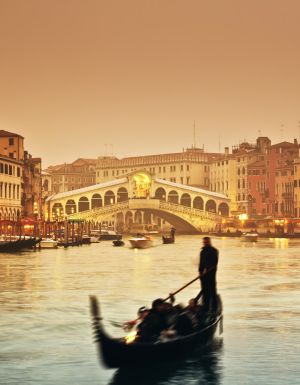
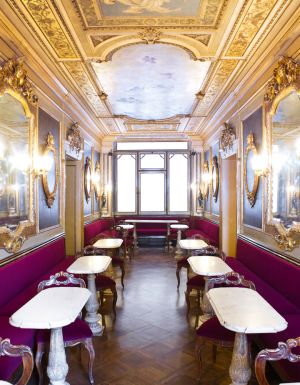
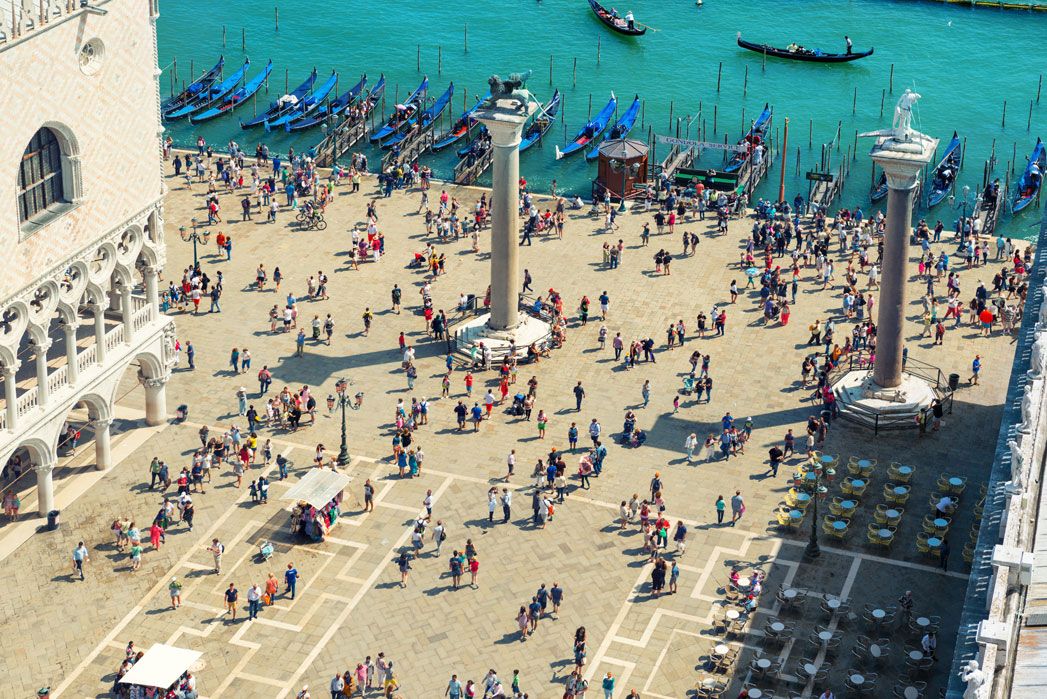
As many as five cruise ships sail up to the dock in Venice each day, unfettering up to 20,000 fun-seeking daytrippers, with an equal number regularly arriving by bus. The itinerary is almost always the same: walk to the Rialto, browse the markets, pop over to Saint Mark’s Square and Caffè Florian, wander around the piazza, and visit the Basilica and Doge’s Palace. Local guides have gone so far as to name this well-trodden route il cammello – likening the conga line of punters making their way from site to site to the camel trains of desert travellers of old.
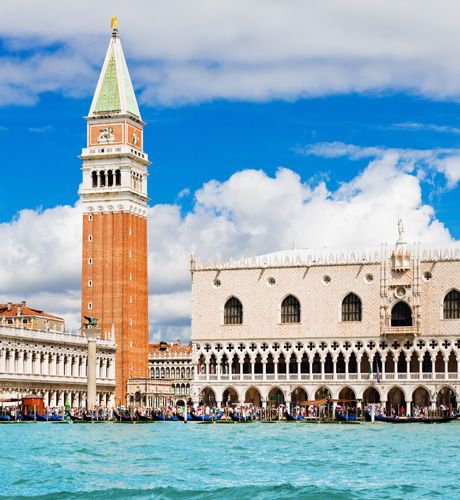
For the more informed visitors willing to go beyond the tourist trail, it’s conceivable to unearth a different Venice – one with less sightseers and even the occasional living, breathing Venetian. Here, ten of my personal favourites.
San Giorgio Maggiore
‘Hidden in plain sight’ best describes San Giorgio. The island, dwarfed by Andrea Palladio’s church of the same name, sits directly opposite the Doge’s Palace in the heart of Venice. To get there, catch the Number 2 ferry from San Zaccaria, close to Piazza San Marco. Marvel at the multi-layered classical facade outside, and Italian painter Tintoretto’s masterful collection of artworks inside.
Walk the church grounds via the small yacht marina, stopping at the cafe here for some of the best views in Venice, or head to the Giorgio Cini Foundation – located in the former San Giorgio Monastery – to see one of the visiting exhibitions. You can also tour the Benedictine monastery (another Palladio design), once a sanctuary for foreign dignitaries and celebrities including Cosimo de’ Medici.
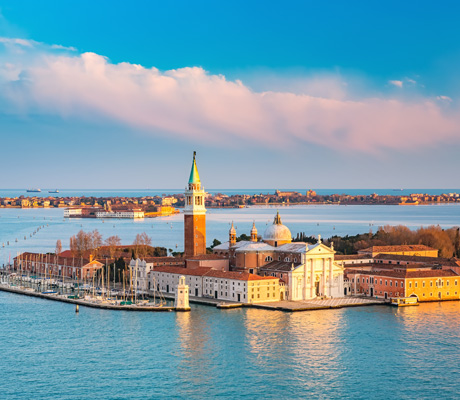
The only time you might see a small crowd is at the bell tower (accessed from inside the church), but it’s worth it for the views of the city, the Grand Canal, and out to the Lido and the Adriatic beyond.
San Lazzaro degli Armeni
If you want to get a sense of Venice’s connection to the Orient, there is no better place than the island of San Lazzaro degli Armeni, just west of the Lido. Catch the Number 20 ferry from San Zaccaria and join the daily morning tour, which is held to coincide with the morning ferry schedule. The tour doesn’t require a reservation, but phone (+39 041 526 0104) the day before to confirm that it’s on.
The island’s name reflects two parts of its history: it was first a leper colony, then a refuge for an Armenian religious community fleeing Turkish persecution in the 18th century. Many priceless treasures of Armenian civilisation, such as medieval manuscripts and historical artefacts, are still stored here.
Sant’Erasmo
For some of the freshest vegetables in Italy, head to Sant’Erasmo in the Venetian Lagoon. Like a portal into the past, Sant’Erasmo is the Venice of yesteryear, when it was nothing more than a scattered collection of fishing and farming villages. Take the Number 13 ferry from Fondamente Nove on the north side of Venice’s main islands and spend half a day here.

Giudecca Island
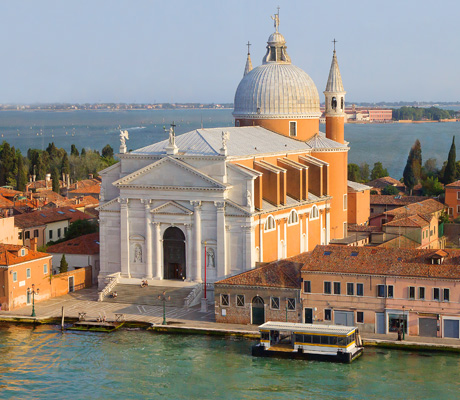
Serviced by the Number 2 ferry, Giudecca Island is a great place to see ordinary Venetians going about their lives. While here, visit Palladio’s impressive church of Redentore and the nearby palace, Casa dei Tre Oci (House of Three Eyes). Designed in a neo-Gothic style by Bolognese painter Mario de Maria, Tre Oci is a cultural institution, with many events and rotating art and photography exhibits held here. In the laneways off the Giudecca waterfront you’ll find a number of simple local eateries, noticeably cheaper than those in central Venice.
Ca’ Pesaro
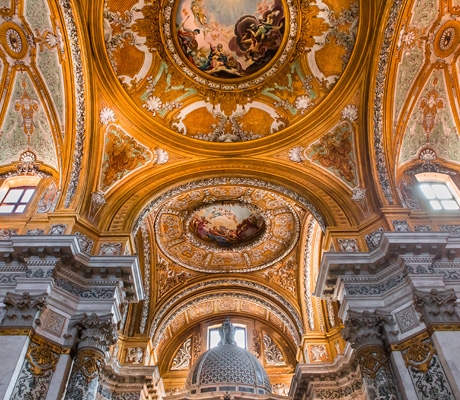
Take the Number 1 ferry to the San Stae stop to visit this imposing Baroque palace, once the home of the aristocratic Pesaro family. It houses the modern-art collection of the city of Venice, with much of the collection acquired at Venice Biennales since 1896 and many prominent Italian artists’ works on display. Look up to admire 18th-century ceiling frescoes by Tiepolo and climb to the upper floor to peruse an eclectic collection of Asian art including samurai swords, ceramics, paintings, furniture and more.
Ca’ Rezzonico
Another fine Baroque palace on the Grand Canal, Ca’ Rezzonico is Venice’s museum of 18th-century art and life. A double-sized palace and two courtyards serve as reminders of the nouveau-riche Rezzonico family’s wealth at a time when Venice was in sharp decline. Enter via the grand staircase and two-storey ballroom, and enjoy room after room of Tiepolo ceilings, paintings by Rosalba Carriera and Francesco Guardi, and entertaining miniatures of everyday life by Pietro Longhi.
Weekly travel news, experiences
insider tips, offers, and more.
I Gesuiti
It’s unclear why this architectural gem isn’t better known. An 18th-century Jesuit church, you’ll find I Gesuiti in a reasonably remote corner of the city, close to the Fondamente Nove ferry stop. The church’s sober Baroque facade gives way to a spectacular interior, with green and white marble creating a stone carpet from the entrance to the high altar. The church closes in the middle of the day, so plan to visit in the morning or after 3pm.
Confraternity of San Giorgio Degli Schiavoni
Venice’s confraternities were an essential part of the social fabric of the city, where non-nobles and foreigners could meet, network, and seek and give charity. Looking after the sick, the injured and the widowed of their community was a big part of the confraternity’s work. The confraternity of San Giorgio is close to the Arsenale, in the district where the Esclavonian (or Croatian) community lived. The intimate confraternal hall is decorated by a celebrated series of paintings by Vittorio Carpaccio from the early 1500s, telling the story of Saint George, Saint Augustine and the little-known Saint Tryphon (another dragon-slaying saint from the East).
Confraternity of San Rocco
The 16th-century confraternity of Saint San Rocco (patron of plague sufferers) is a testament to the inflated self-worth of the ‘brothers of the bench’ – the senior members of the confraternity. Having acquired great wealth through donations and bequests, the confraternity set out to build a magnificent headquarters, with a grand facade, marble staircases and a dazzling geometric marble pavement on the upper floor. A competition was held to choose an artist to decorate the interior, leading to an easy victory for Tintoretto, who spent the next 23 years painting more than 60 large-scale canvases.
Fondazione Querini Stampalia
This 18th-century aristocratic house is a double delight. It offers a glimpse into the life of the privileged classes in the final century of the Venetian Republic, while the lower floor and the adjoining research library present a modern example of the work of Italian architect Carlo Scarpa (1908-78). The Querini Stampalia is also home to one of the best gift shops in Venice.
Robert Veel designed Academy Travel’s Venice residential tour, held every year since 2006, which visits many of these sites. For more information about the tour or to book, visit Academy Travel
Want to see more stories from International Traveller in your Google search results?
- Click here to set International Traveller as a preferred source.
- Tick the box next to "International Traveller". That's it.