Sample some of the best castle and manor house hotels in Ireland to help you find just the right retreat for an indulgent stay. It’s a tough job, but someone has to do it!
The old joke that you don’t travel to Ireland for the weather is entirely true. Ireland is not the kind of place that a ‘sun-worshipping, cocktails-by-the-pool-from-11am-till-late’ wife like mine would naturally seek out. So to convince her to spend a valuable week of her European travel time on the Atlantic Ocean’s eastern break wall required a compelling itinerary.
Hence my ‘Great Castle and Manor Hotel Stays of Ireland’ itinerary, featuring a series of properties that stretch from the approachable and affordable to those of the more wallet-busting once-in-a-lifetime variety. But no matter how stately or opulent, they all reveal the heart and history of Ireland and its people.
Ballyfin, County Laois
105 kilometres; a 90-minute drive south-west of Dublin
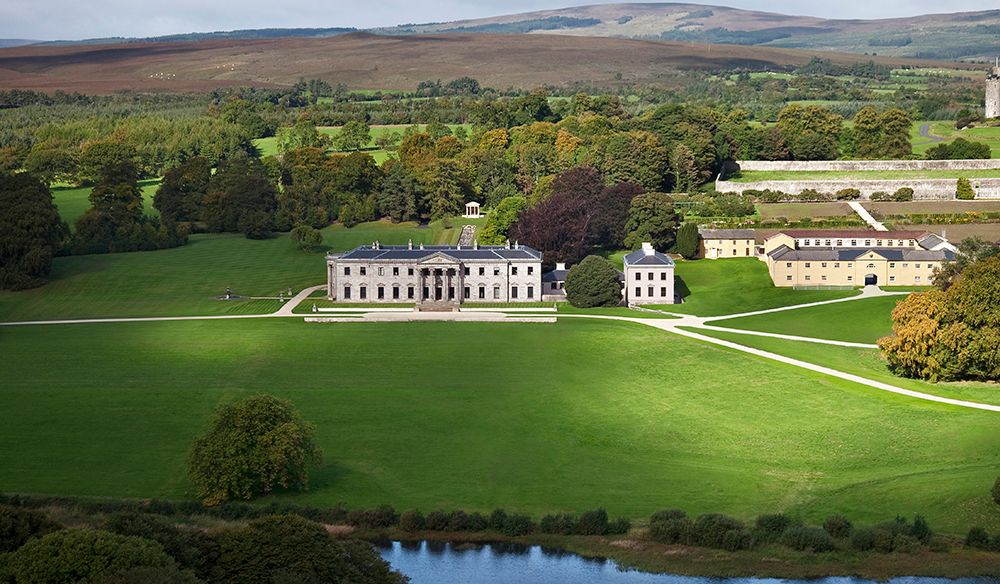
Talk about a sense of arrival: two butlers wait on the steps of this magnificent Georgian manor house as we edge the car gently over the driveway that divides it from the lawn, the helipad and the man-made lake.
After soaking in the vista, we enter the foyer. Underfoot is an ancient Roman mosaic, purchased in 1822 by the home’s then owner, Sir Charles Coote. His family’s unofficial motto ‘cost what it may’ explains a lot about Ballyfin’s grandeur.
With a glass of Billecart in hand we pass under two enormous Irish elk antlers as we enter the reception room; each antler is perhaps two metres from tip to tip. Some 10,000 years old, having been petrified in an Irish bog, the antlers were bought by Ballyfin’s current owners.
With check-in completed, we are presented with a bewildering array of civilised leisure activities to indulge in. The sun is shining so boating on the lake may be just the trick; or perhaps a horse and cart tour of the grounds? The walk to the castle ruins at the top of the hill, with views to seven different counties seems a little too strenuous so we can opt to take the golf cart instead. Clay pigeon shooting might be too noisy, while a tour of the vegetable garden requires more energy than everything else put together thanks to the endless rows of pampered veggies.
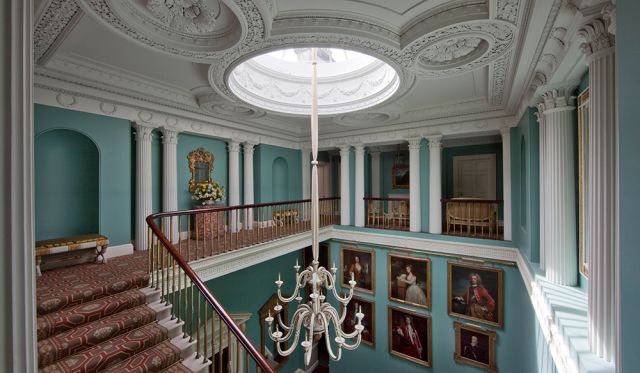
Instead we opt for a dozy read, but yet again we are faced with options. The Gold Room is remarkable, but the shimmer from Napoleon’s sister’s chandelier (no kidding) is a little distracting. The fireplace in the Saloon is comfy but there are no windows to take in views of the grounds. We settle for the Library with its outlook to the fountain. Tea and home-made biscuits are served.
This remarkable grand home, set on over 248 hectares, is a refined sanctuary indeed. It survives today as a 20-room hotel thanks to a meticulous eight-year restoration by its new American owners. Or perhaps patrons would be a more accurate description.
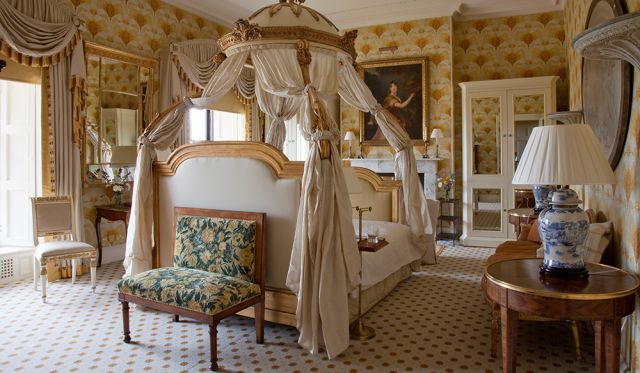
The effort that went into not only rescuing the house from abandonment and decay, but also into elevating it to its original glory is breathtaking. It’s hardly surprising that it took out Condé Nast Traveler’s best hotel in the world in 2016. But it’s not the rare artefacts, four-poster beds or fine linens that make a hotel of this calibre, it’s the sense of place in landscape and in time. Everything is true to the property’s heritage; the owners even found, purchased and reinstalled many of the original family’s portraits.
A great example of this craftsmanship and devotion can be found in the Conservatory. Over a traditional Irish lunch of smoked salmon potato salad and gammon, I crane my neck to admire the 3000-plus unique panes of glass painstakingly measured and cut to fit each slightly different frame.
Staying at Ballyfin is a privilege; nowhere else in the world has so much been done to preserve an experience, place and style. Cost what it may indeed.
Ashford Castle, County Mayo
241 kilometres; a 2.5-hour drive west of Dublin
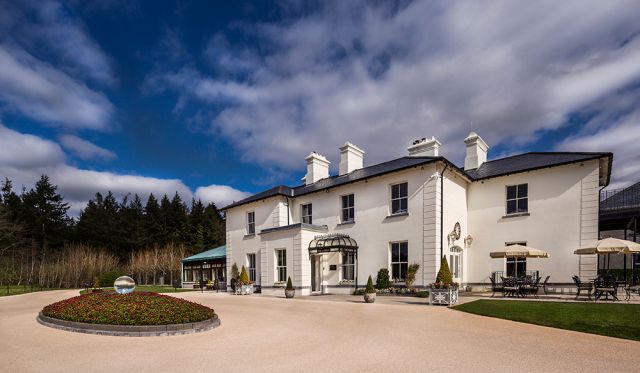
Ashford is probably the most famous of the castle hotels in Ireland. Once the home of the mighty Guinness family, the estate has been operating as a hotel since 1939.
Now part of Red Carnation Hotels, the castle is more a Disneyland of posh adventures than mere accommodation, where you can live the life of the landed gentry, if only for a day.
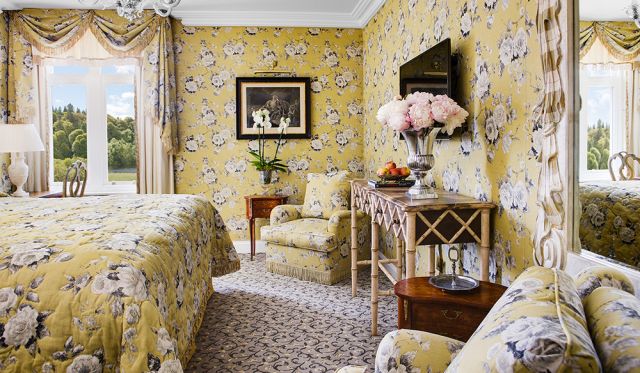
Visitors and guests alike come to enjoy the myriad experiences: the castle, the lodge, golf course, a tea boutique, a falconry school, equestrian centre, clay pigeon shooting, fishing centre, spa, zip line, a tree-climb park. The estate sits between the shoreline of the country’s largest lake, Lough Corrib, and the beguiling village of Cong.
The castle itself is a maze of rooms filled with porcelain and silver collections. It’s the kind of place where finding a billiards room complete with a cigar terrace is par for the course. The walls are decorated with images of the countless celebrities who have either visited, stayed or been married here, from presidents (Ronald Reagan) to rock stars (John Lennon).
There are three restaurants that cater to guests and the public, who mostly come to admire the magical gardens and the castle itself.
We sleep and dine in the castle’s more ‘approachable’ (read: affordable) accommodation, Ashmore Lodge, as the castle is booked out; it’s a tough ask to get a room in the middle of summer. The lodge is more modern-American than Irish-heritage. Our suite has a fireplace and is homelier than the much more ornate rooms of the castle.
At Wilde’s, the lodge’s restaurant, the food is fabulous with quirky touches: the dough for our bread is smoked, adding an extra five hours to the baking time; the duck arrives in the pan in which it has been cooked with sprigs of pine needles and orange in an aniseed jus.
Ashford Castle is faultless, but with 60 per cent of its guests coming from America, it sometime presents like a little slice of the US in Ireland.
Gregans Castle Hotel, County Clare
238 kilometres; a three-hour drive west of Dublin
More country home than castle, Gregans is a cosy hotel in one of my favourite regions of Ireland, the Burren (pronounced the ‘burn’). A geological marvel in County Clare, the Burren is a stark landscape of grey limestone pavement that looks beaten by the Atlantic gales; it was in fact carved by glaciers 60 million years ago. Gregans sits at the very bottom of the test-tube-shaped Ballyvaughan valley, with views across Galway Bay to the city itself.
The hotel, compact in size with a bar, library and dining room, is a refined and calming experience of luscious interiors and beautiful food operated by the second generation of owners, husband and wife Simon Haden and Frederieke McMurray.
Locally, the restaurant is famous for being one of the best in the Burren. We feast on local smoked salmon with crème fraîche and chocolate mousse while lounging in the bar. An elegant meal, it betrays the deep quality of everything at Gregans; the food, wine list, service and interiors are all sumptuous.
Our room has views down the valley to the bay. A subtle green and white colour palette is understated and muted (Frederieke’s career as a textile designer shows in the beautiful textures and exquisite fabrics that cover all the surfaces), resulting in a soothing aesthetic. Simon’s cats can often be found sleeping on the lounges and chairs throughout the hotel.
In fact, Gregans is so intimate and seductive that it’s hard to tear yourself away to explore the Burren.
Weekly travel news, experiences
insider tips, offers, and more.
Ballynahinch, County Galway
275 kilometres; just over three hours’ drive west of Dublin
Ballynahinch is a snug and refined castle hotel set on the Salmon River below the Twelve Bens mountain range in what is a gorgeous slice of Ireland, Connemara. A castle has been standing on the grounds here since 1546, when the husband of Grace O’Malley, Ireland’s Pirate Queen, built a defence-orientated abode.
But the turreted roof on today’s building is all for show; it was largely built in 1756 and then renovated in 1813 by ‘Humanity Dick’, AKA Richard Martin who was famous for duelling and introducing the first animal protection bill into the Irish parliament. In 1923 the estate was bought by Maharaja and cricket legend Ranjitsinhji, better known as ‘Ranji, the Prince of Cricketers’, a fishing enthusiast who would arrive each summer with five cars and then gift them to locals when he left in October.
Today Ballynahinch is everything you imagine a castle hotel should be. Our elegant cream-carpeted suite with cinnamon and grey tartan throws against salmon and white striped wallpaper has large windows that deliver exquisite views of the lawn, forest and river beyond.
The rustic Fisherman’s Pub and Ranji Room are the heart of Ballynahinch, where guests mingle on wooden tables and benches, sip Guinness and enjoy hearty Irish fare; the seafood chowder is comfort food at its best.
The fine-dining option, the Owenmore, takes full advantage of the vista, with its terraces overlooking the river making it the place to be come summer.
Of course, Ballynahinch’s reputation is based on its fishing. Angling addicts flock here, but beginners like me can get their first taste of the regal art of fly-fishing under the learned tutelage of experienced guides; with the assistance of my guide Sean, I actually land a small trout.
Castle Durrow, County Laois
108 kilometres; a 1.5-hour drive south-west of Dublin
At the heart of Castle Durrow is a warm and unaffected Irish welcome that draws thousands from across the world. Husband and wife owners Peter and Shelly Stokes rescued the building in the 1990s, and after a three-year restoration of love, care and determination, opened it in 2002 as an approachable country escape.
Shelly’s unique aesthetic could best be described as quirky. In the bar it’s the battle of the taxidermy; animal skins compete with gleaming silver deer heads on the walls, while the bar itself is pure Art Deco, with stacked crystal lamps reminiscent of New York’s Chrysler Building. The green tea-coloured Chinese wallpaper in the waiting room, which is stuffed with lounges, contrasts brilliantly with everything else. It is all so unpretentious and whimsical.
Our room, Lady Hannah, named after one of Peter and Shelly’s daughters, comes complete with a four-poster bed and stylish en suite filled with Molton Brown’s finest.
The grounds cater to the lucrative weddings market; the walled garden, grotto and lawn are designed with wedding albums in mind. And on Sundays locals pile in for ‘the best Sunday lunch in the county’ in the bar, with the convivial atmosphere making guests feel a part of village life.
Of all the castle stays, Castle Durrow is one of my favourites for its unaffected welcome. It’s like going home for the weekend, just to a really, really big house.
Want to see more stories from International Traveller in your Google search results?
- Click here to set International Traveller as a preferred source.
- Tick the box next to "International Traveller". That's it.