
On a voyage shaped by science along Norway’s west coast, the aurora borealis imparts a lesson of its own: sometimes understanding is only half of the equation.
I’ve always trusted the science of things. I like explanations, origin stories. The certainty that comes from the how and the why. I like it when things make sense. But the ironic thing about certainty is how easily it can be dislodged; how a single unexpected moment can tilt the axis of everything you thought you knew.
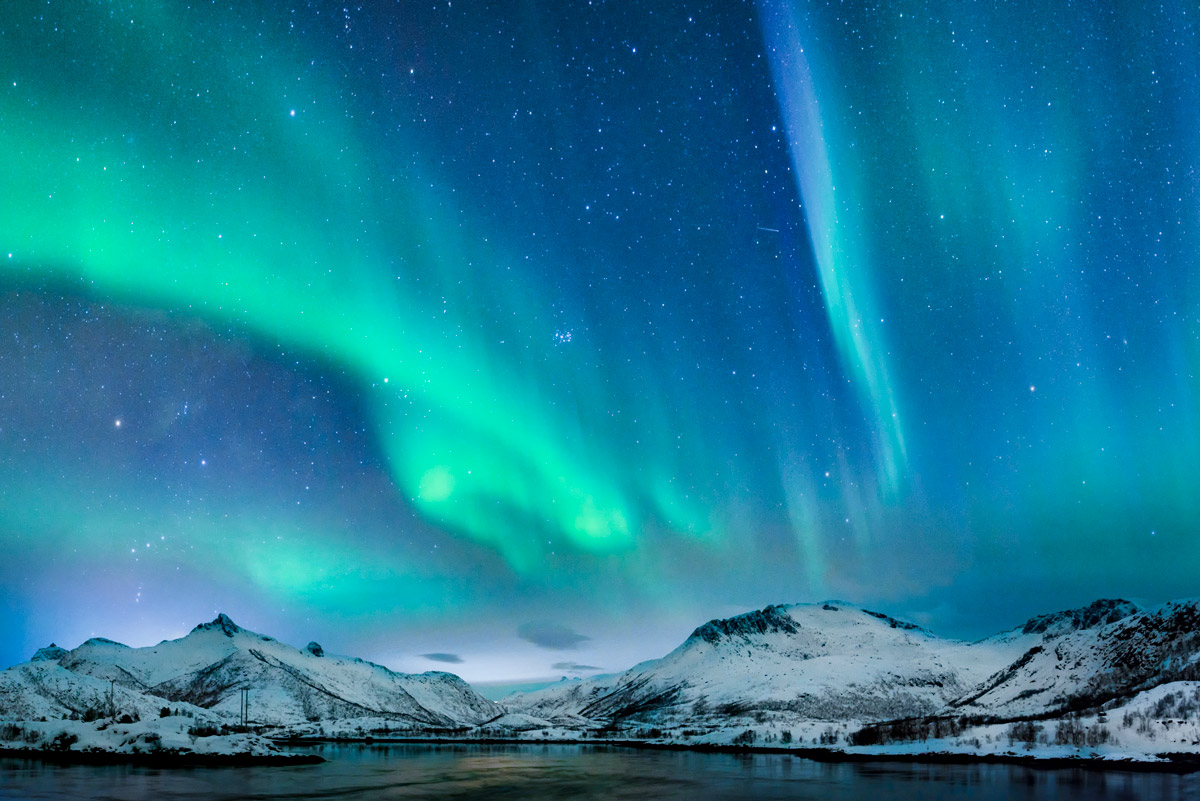
For me, it happened on a blisteringly cold Friday evening, standing on the ice-shackled deck of a ship somewhere off Norway’s coast; above me, the aurora borealis rippling across a cloudless night sky.
Everything I had learnt about what I was seeing was instantly and inexplicably driven into the depths of my subconscious. Logic seemed an insufficient simplification. It may have accounted for what I was looking at, but what I was feeling suddenly transcended the boundaries of my own understanding. There was only one word for it: magic.
The history of Hurtigruten: coastal route to aurora expedition
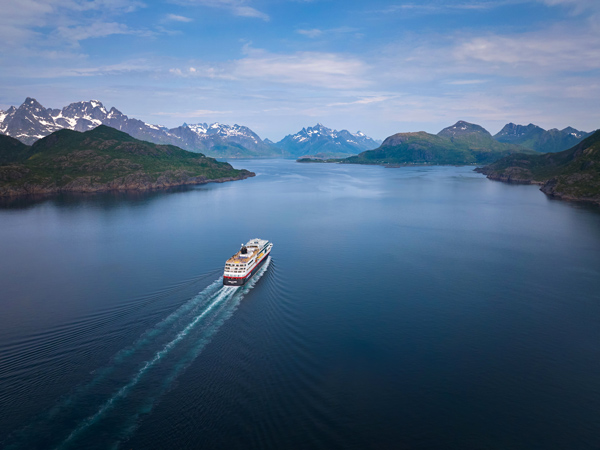
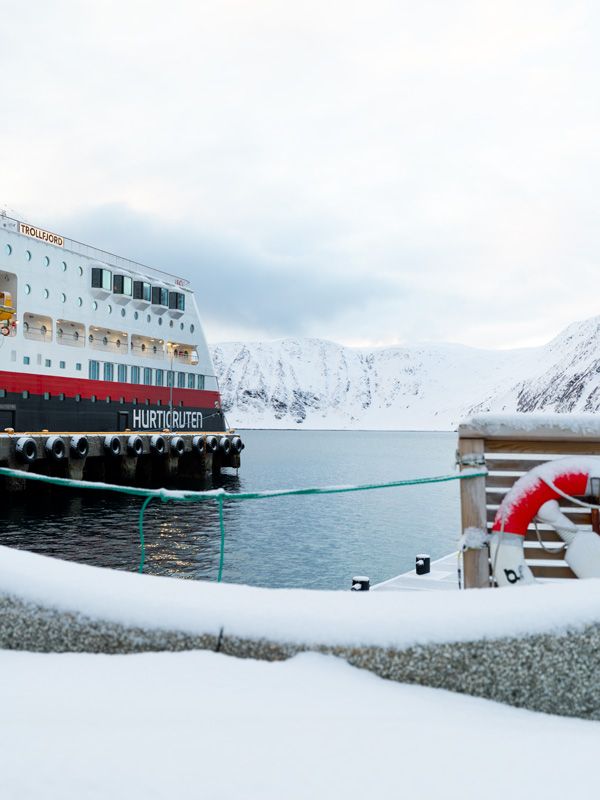
Like most things in life, it happened slowly – then all at once. It began almost imperceptibly as I took my seat in the lecture hall on deck five of MS Trollfjord, the flagship vessel for Hurtigruten’s Signature voyages along the west coast of Norway.
I’d boarded the ship just a few hours earlier in Tromsø, 350 kilometres above the Arctic Circle. Known as the gateway to the Arctic, it marks the halfway point of the North Cape Line and the beginning of its southbound itinerary.
Founded in Norway during the 19th century by Captain Richard With, Hurtigruten was originally established as a maritime service for Norwegians travelling along the coast. As the second longest coastline in the world behind Canada, it was a long and difficult journey, with no single continuous route to connect its principal ports.
In 1893, after meticulous planning by Captain With and nautical charts prepared by experienced local sailor Anders Holte, steamship DS Vesteraalen embarked on the maiden Hurtigruten voyage, or the fast (hurtig) route (ruten).
While Hurtigruten has since evolved into a premium cruise company for the modern traveller, it’s this ethos that still underscores every journey it takes – to provide passengers with access to some of the country’s most incredible and isolated destinations.
But accessibility and connection are only part of the appeal; its location delivers something far more remarkable – one of the highest probabilities of witnessing the aurora borealis in the world.
So confident is Hurtigruten in these odds that in 2014, it introduced the Northern Lights Promise: if the aurora fails to appear within sight of your ship during an 11-day voyage in auroral season, you’re invited back on the company’s dime. It’s no surprise then that the cruise line has long offered a range of aurora-based expeditions.
However, my journey marks the beginning of something different – I’m onboard for the inaugural Astronomy Voyage on Signature, a 15-day return itinerary from Oslo with one purpose: to chase the northern lights.
Meet the aurora chaser guiding northern lights voyages
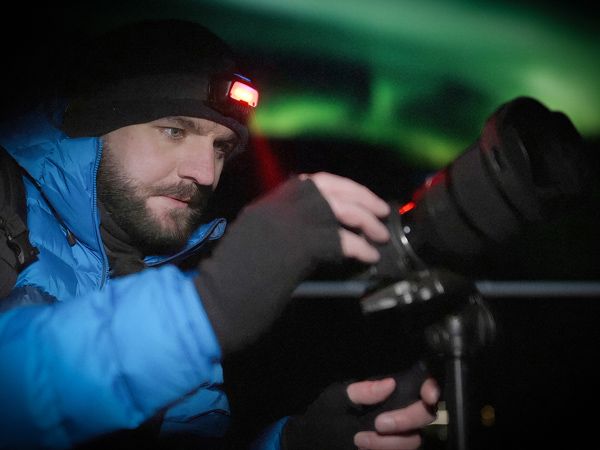
The bespoke journey caters to both beginner and expert, attracting amateur astronomers and seasoned scientists alike. The main drawcard? The eight lectures and two masterclasses that punctuate the itinerary between ports, delivered by Hurtigruten’s very own chief aurora chaser, who stands at the front of the lecture hall this evening. And if there was ever a man for the job, it’s Tom Kerss.
“Having worked in many places in the Arctic over the years as an astrotourism professional, I personally believe Norway is the best place to see the northern lights. I also believe it’s best experienced with Hurtigruten," he assures us.
“The great thing about sailing on its ships is that we spend so long immersed in the Arctic that the odds are always eventually tipped in our favour – and that’s why Hurtigruten can offer its unique Northern Lights Promise. It takes a certain confidence to be able to do that, and that confidence comes not only from the experience that Hurtigruten has developed sailing the Norwegian coast, but now, the experience it has invested into our new astronomy team."
With an extensive background in astrophysics and spacecraft engineering, Tom is an elected Fellow of the Royal Astronomical Society, having spent more than six years working at London’s Royal Observatory Greenwich, and my evenings onboard quickly come to revolve around his lessons.
Over our 10 sessions together, Tom works through a methodical translation of the auroral phenomenon, transforming complex astrophysical data into enthralling bite-sized nuggets of information that feed my appetite for understanding.
If he wasn’t an aurora chaser, he could easily be a teacher. As he paces the room in front of graphs and charts, touching on everything from excitation and emissions to solar flares and electromagnetic fields, his passion is palpable, his enthusiasm contagious. He slowly brings the northern lights to life, explaining not only why we see it, but how to emotionally prepare for when we do, speaking of it as though it is a living, breathing entity. Aurora, Tom calls it. No prefix or qualifier, just a name and a knowingness.
Arctic adventures abound along Norway’s coastline
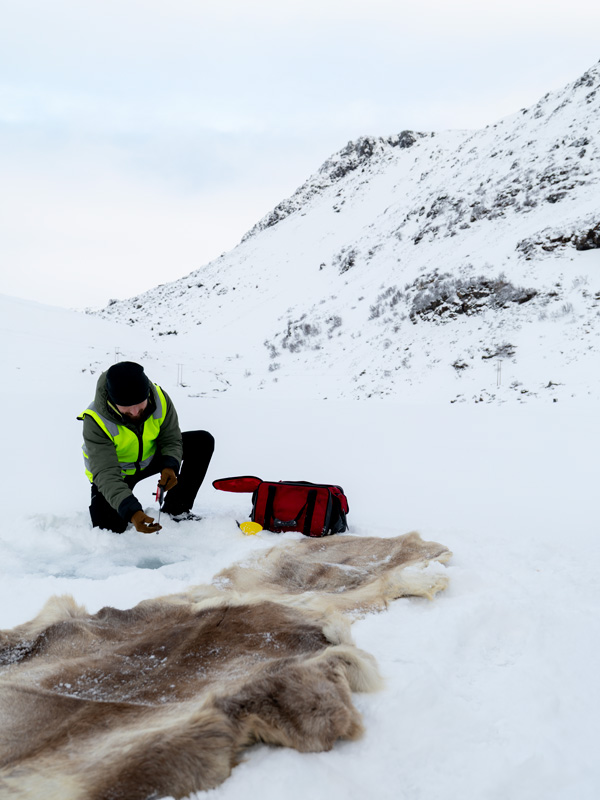
As anticipation builds over the following few days, Hurtigruten’s shore excursions do an excellent job of distracting us. It’s not difficult either; Norway delivers a masterclass in natural beauty at every port of call, and MS Trollfjord takes full advantage. I drop a line in Honningsvåg, one of the world’s northernmost towns, on an Arctic ice-fishing escapade.
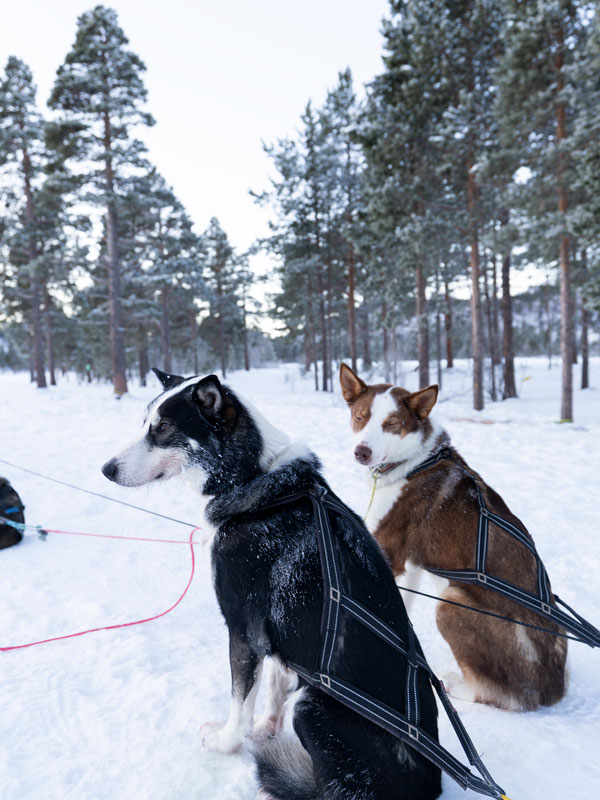
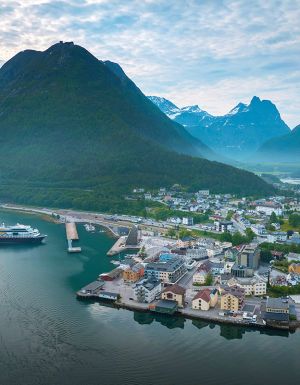
In Alta, I’m whisked away on a dog-sledding adventure with Parken Gård Husky and the 40 pups that steal our hearts, snow claiming prime real estate on their snouts and whiskers. From Åndalsnes, I board The Golden Train to the tiny ski village of Bjorli – an experience twice voted by Lonely Planet as the most scenic rail journey in continental Europe.
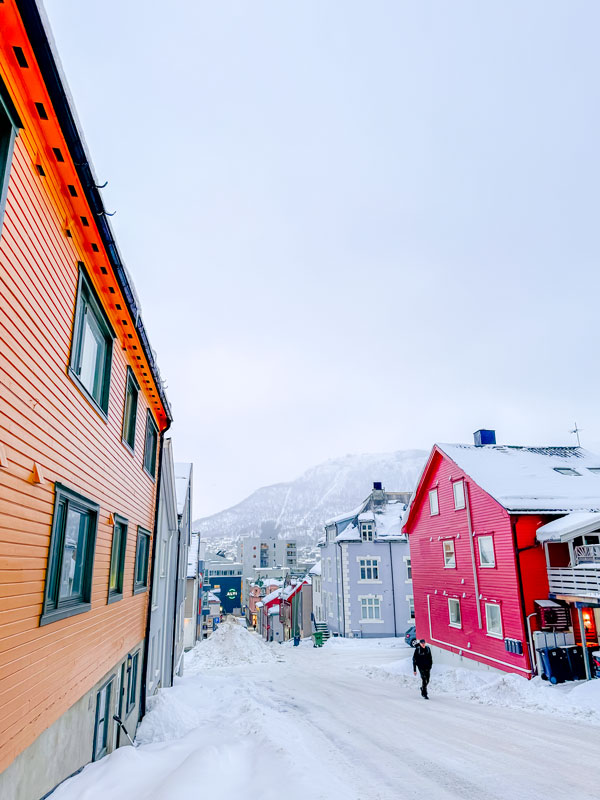
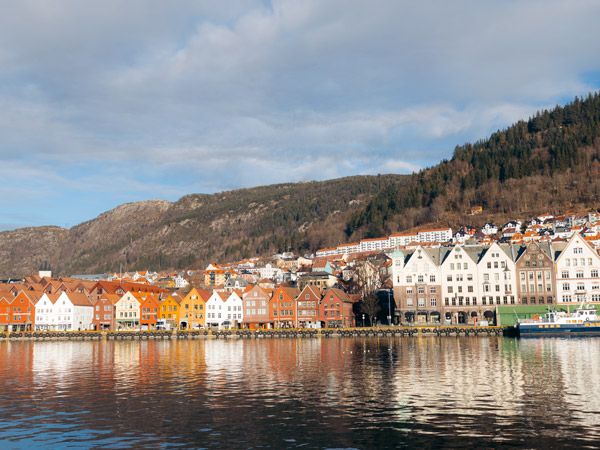
And in Bergen, it’s a heritage tour of the city with its narrow lanes and colourful wooden facades, history stitched into every crooked beam and cobblestone.
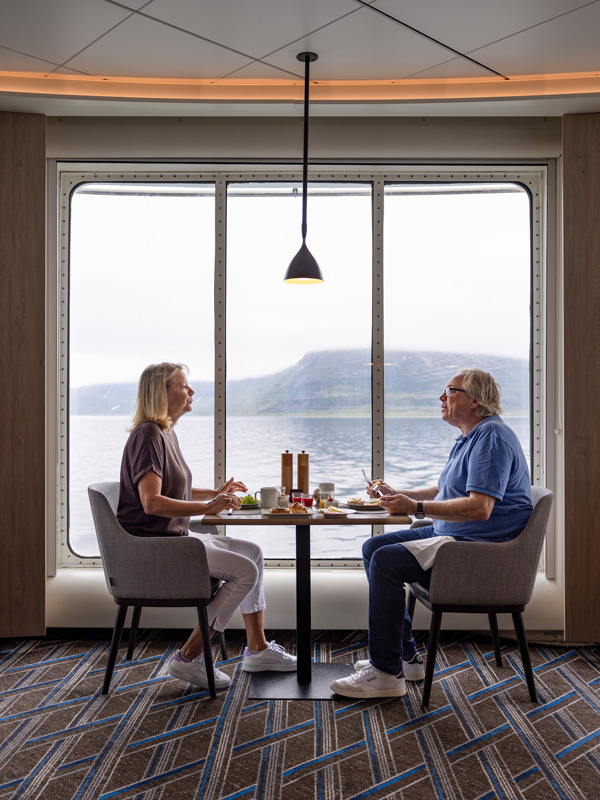
Although it’s not just the shore excursions that shine. Back onboard, indulgence takes many forms. Dinner is a nightly showcase that champions fresh sustainable seafood and traditional Nordic flavours, from a menu that changes with the destination at Flora to a dry-aged degustation at Arran and an exclusive booking at Røst.
A Baileys on the rocks in Bar 1893 as we pull away from port. An afternoon postcard-making workshop that connects guests through creativity. And, of course, our lectures with Tom.
Yet no matter how full the days become, the sky remains a constant undercurrent. In idle moments, eyes drift upwards. Phones check forecasts. Conversations circle back to solar activity. Our 25-strong astronomy group reconvenes regularly, touching base with our chief aurora chaser to get the latest updates.
Even though we’re here during the solar maximum, the most aurora-active phase in the sun’s 11-year cycle, I still find myself looking to Tom for reassurance that with patience, our time will come.
“I have had the opportunity to witness the best that Norway has to offer in terms of aurora experiences," he reminds us. “My role here is to bottle that knowledge so that everybody who sails with us during the auroral season can drink richly from the source that is Norway’s night sky."
When clouds part: the night the aurora arrives
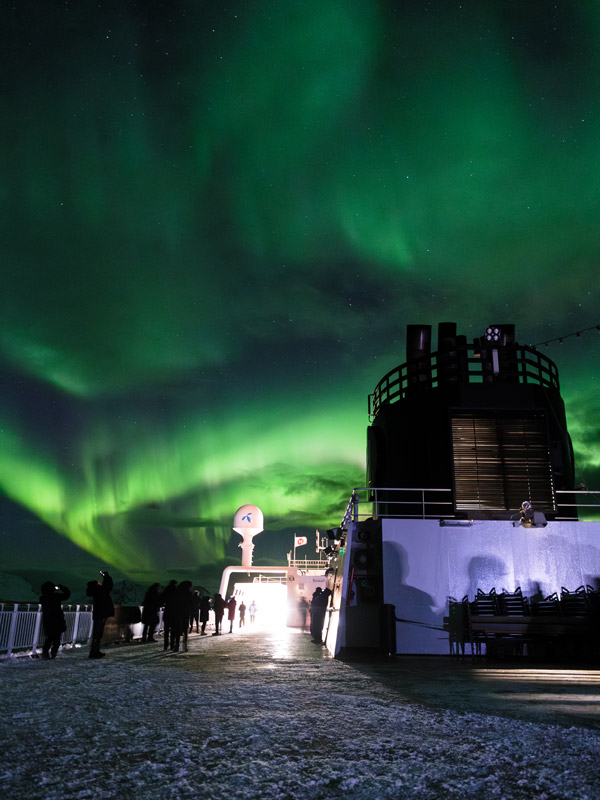
When 10pm rolls around on that Friday evening, it is this hope that draws me into my thermals and up to the top deck following a message from Tom that suggests our chances are high. The aurora has been elusive over the past few days due to relentless cloud cover, but today’s clear sky has had Tom monitoring solar activity like a hawk on the hunt.
We left Alta only hours ago and among the group, its title as the official ‘City of the Northern Lights’ still lingers like an unspoken promise. All across the ice-riddled deck, tripods are planted, cameras dangle around necks and an excited chatter cuts through the bitter Arctic air. Immune to our aching anticipation, MS Trollfjord continues to carve a quiet line through the fjords and into the Norwegian Sea.
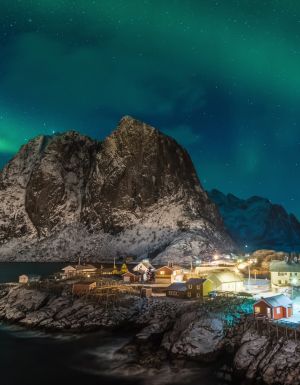
I’m standing with Tom when it happens, slowly – and then all at once. It’s only a tentative flicker at first, maybe just a trick of the light to an untrained eye. But Tom has done his job; by now, we are anything but unversed. The faint glimmer of green flashes once again before transforming into a vibrant emerald glow, a ribbon of iridescent light that unfurls itself directly above us.
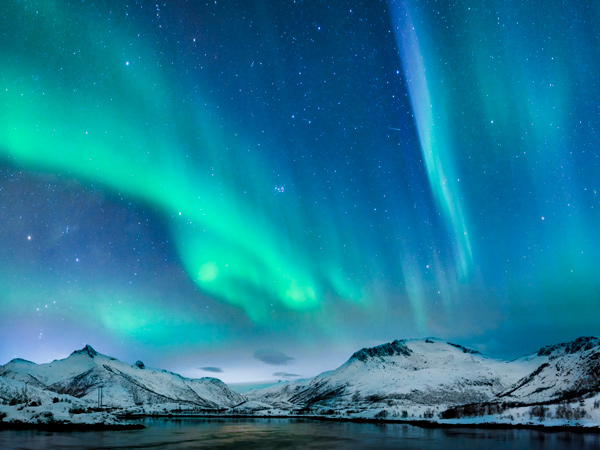
It rolls its way towards the star-studded horizon, splitting the sky open in an ever-changing eddy of green, purple and blush pink. What began as a hushed whisper is now a full-blown ballroom waltz that seems almost oxymoronic; fluid yet deliberate, graceful yet erratic, orchestrated and unpredictable all at once.
Despite learning that the cosmic event occurs at least 80 kilometres above the Earth’s surface, it appears so vivid it feels almost within reach, and I finally understand why Tom speaks of it like a real-life being, an old friend, a companion.
The solar charges, the atomic particles, the atmospheric gases – I’m aware of the roles they play in the performance. But the bands of billowing light command the stage so powerfully that it feels like a one-woman show. Behind the curtains, there is theory and there is physics. But as Aurora dances into the night, there is no other way to describe it. She is magic in its purest form.
Weekly travel news, experiences
insider tips, offers, and more.
The magic beyond the science
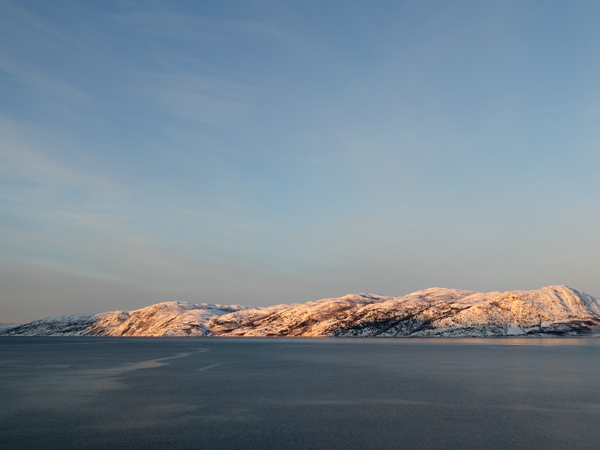
In the days that follow my aurora encounter, I begin to notice it everywhere. The magic; she must have left some behind. I find it in the stillness of the fjords at dusk, the sorbet-hued shades of a 3pm sunset, the snowflakes that dust my hair like glitter.
I still believe in the science of things, I think I always will. But in reality, knowing the way it all works doesn’t actually make it any easier to understand.
Somewhere in the Arctic dark, beneath a sky alive with impossible light, it dawns on me that sometimes, the most rational response to uncertainty is acceptance. Perhaps that’s what magic has always been – not the absence of an explanation, but the presence of wonder despite it.
Capturing the northern lights
Capturing high-quality shots of the northern lights and Nordic landscapes is part of the adventure. Armed with the Canon R5 II camera and RF 15-35mm lens, as well as a few tips from Tom’s Expert Aurora Photography masterclass, I managed to create a personalised collection of photos that will truly last a lifetime.
Need to know
Arrive
As a codeshare partner with Qantas, Finnair operates daily flights from most Australian capital cities to Helsinki, with a stopover in Singapore. From Helsinki, it’s a 1.5-hour flight to Oslo. Catch the Flytoget Airport Express to Oslo Central, a 15-minute walk to the port.
Explore
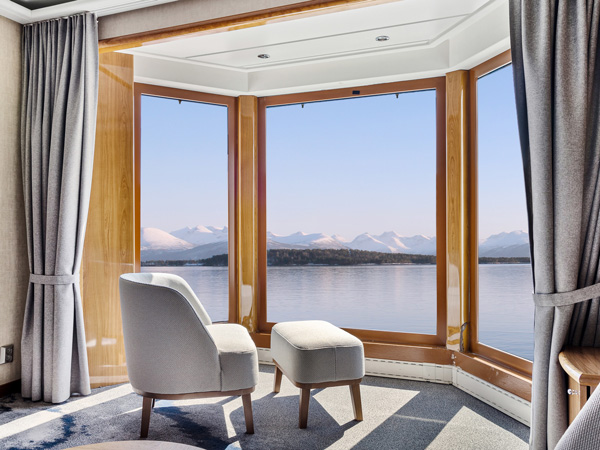
Hurtigruten’s 12-day Astronomy Voyage on Original runs October and November 2026, as well as sailings in January, February and March 2027. Fares start at $4713, departing Bergen.
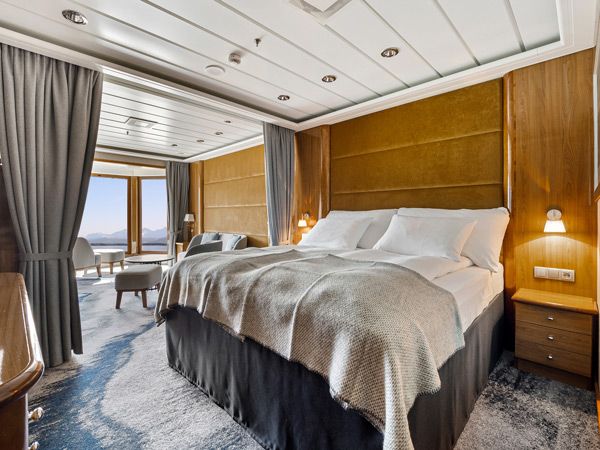
The new 15-day Astronomy Voyage on Signature onboard MS Trollfjord departs from Oslo. The roundtrip includes onboard accommodation, two shore excursions, eight lectures and two masterclasses with chief aurora chaser Tom Kerss, and all meals and beverages at Flora and Arran restaurants, with dining at Røst reserved for suite guests only.
In total, the voyage features 25 optional shore excursions, from dog-sledding in Alta to a walking tour of Bergen, available at an additional cost. Dates for the 2026/27 sailing season to be announced soon.
Want to see more stories from International Traveller in your Google search results?
- Click here to set International Traveller as a preferred source.
- Tick the box next to "International Traveller". That's it.