
Steeped in history, myths and legends, and blessed with storybook scenery and dramatic landscapes, these small towns and villages are some of the most charming across Europe.
Monteriggioni, Italy
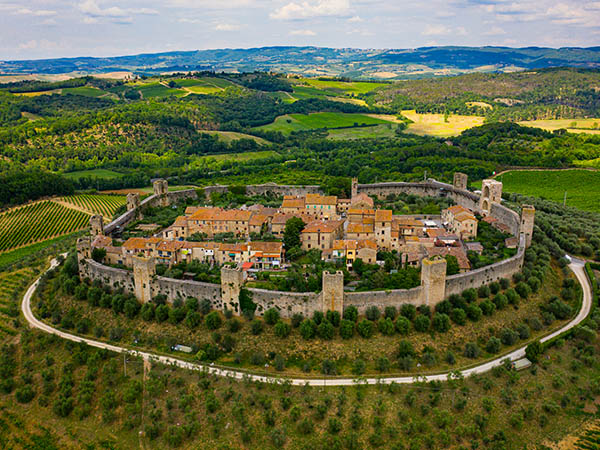
Built in the 13th century as a defensive fortification, Monteriggioni is one of Tuscany’s most impressive towns for its extremely well-preserved medieval features. Perched on a hilltop in the province of Siena, the town comprises ancient buildings, their shuttered windows decorated with bright flowerpots, cobblestoned streets and piazzas lined with cosy restaurants and alfresco diners. Situated as it is, in verdant winemaking country, you’ll also come across several vino stores touting the region’s drops such as chianti.
Must-do
Before you sample the local wines, walk the fortress walls, from where you’ll have spectacular views of the Tuscan countryside, which is blanketed in olive groves and vineyards. Entry to the walls will also give you access to the Monteriggioni in Arme, which displays armour and weaponry from the Middle Ages.
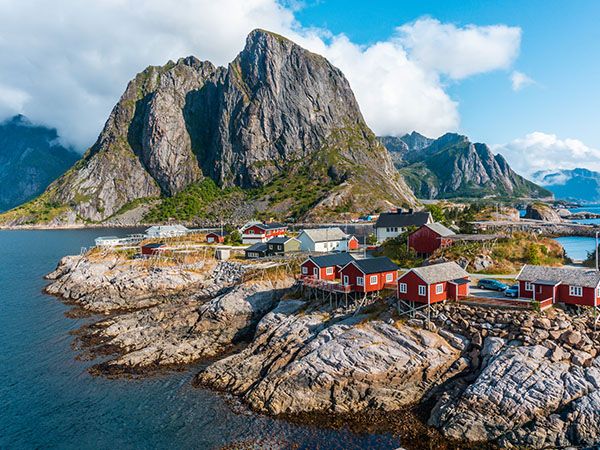
Reine, Norway
Above the Arctic Circle, in the far-flung Norwegian Lofoten Islands, the small fishing town of Reine is quite the destination catch. The archipelago is known for its rugged, wild landscape of jagged mountains, white pristine beaches and the phenomenal Northern Lights that swirl overhead between September and March. Reine itself is a series of small islands connected by bridges, each dotted with traditional red fisherman’s cottages and girdled by snow-capped mountains.
Must-do
Join a guided kayak tour to explore the dramatic scenery of Reine, as you paddle its calm and sheltered waters taking in the spectacular fjords and small islands. Or strap on your hiking boots and scale Reinebringen Mountain: it’s a long, steep climb but rewards with panoramic views.
Colmar, France
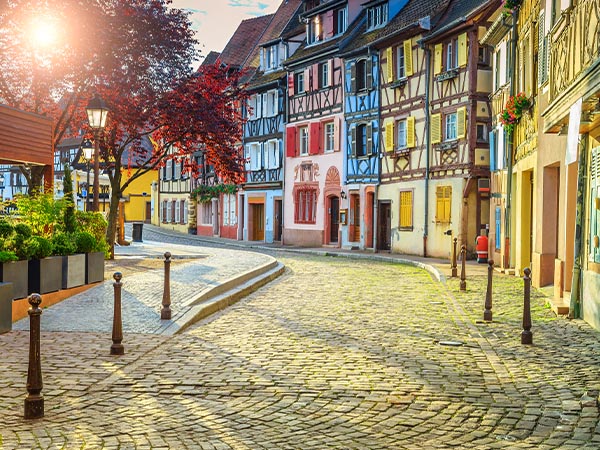
The colourful town of Colmar is a unique Alsatian town in the north-west Alsace region, where the cultures of France and Germany blend. It has been given the moniker ‘Little Venice’ for its network of canals and bridges, which were originally used by fishermen and market gardeners, and are lined with half-timbered houses in an array of pastel colours, their facades adorned in blooms and ornate hanging lamps. The pedestrianised town centre has been carefully preserved with cobblestoned streets and more than 500 years of heritage architecture. Here you’ll find many stores that proudly sell locally made arts, crafts and produce.
Must-do:
Gourmands will particularly enjoy the Le Marche Couvert, an undercover market set in an 1865-built hall where you’ll find merchants selling local goods including cheeses, wines and baked goods such as traditional gingerbread, gugelhupf (Alsatian cake), as well as hot buttered pretzels. Visitors can also explore the scenic and leafy canals in the Fishmonger’s District on a flat-bottomed boat tour.
Rye, England
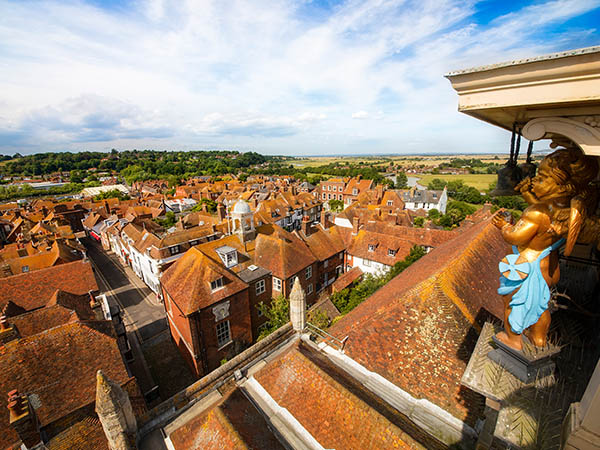
Once surrounded by sea, the hilltop town of Rye in East Sussex was historically one of England’s most important harbour ports, with a tumultuous and fascinating history of maritime conflict, raids and smuggling. Despite this, the town’s medieval town centre is extremely well-preserved and quintessentially English, with a maze of cobbled streets, a hodgepodge of vine-covered half-timbered houses, tea shops, antique stores and a 15th century pub, The Old Bell.
Must-do
Climb the tower of the 900-year-old St Mary’s Church, see how the 16th-century clock works and enjoy views over the town’s terracotta roofs, out to the lush green surrounding countryside and the River Rother.
Assos, Greece
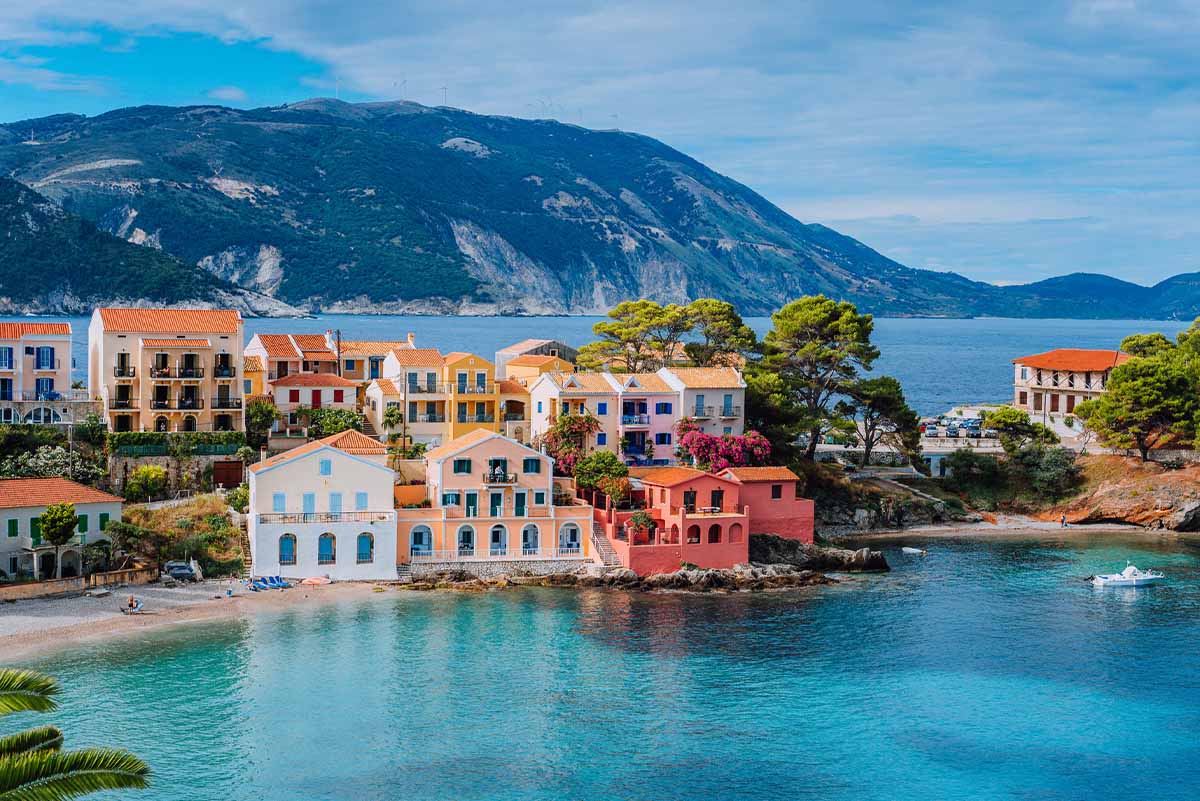
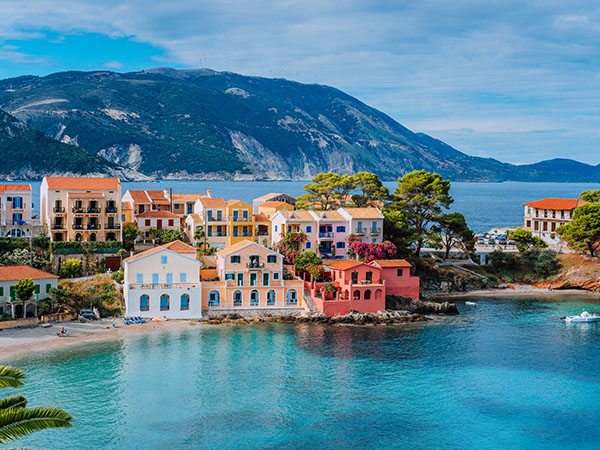
On the paradisiacal island of Kefalonia, the small village of Assos is the stuff of Greek Island dreams. Overlooked by the ruins of a 16th century Venetian fortress, the pastel-coloured village is built around a breathtaking turquoise bay where fishing boats and luxury yachts sway. Assos is home to around just 100 inhabitants and exudes a simplicity and peacefulness that other well-known Greek isles don’t. There’s not a lot to do here but bask in the Ionian sun, feast on traditional Greek seafood and rub your eyes in disbelief at its beauty.
Must-do
You can hike to the top of the terraced hill, which is dotted with olive groves, pine and cypress trees, to where the castle once stood proud – not only to see these ancient ruins up close but for an incredible view over the village and Ionian Sea.
Ronda, Spain
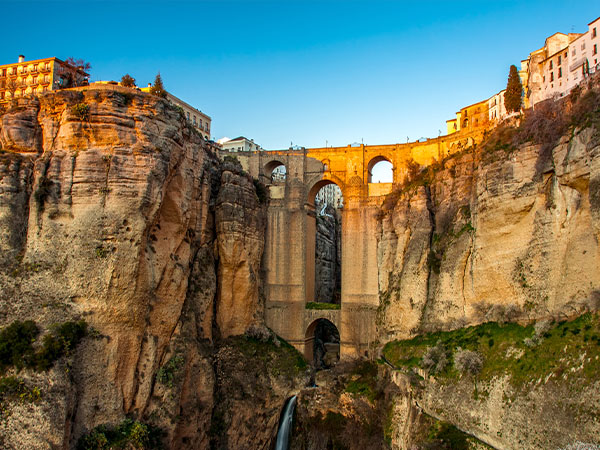
Teetering on a clifftop with the El Tajo Gorge cutting through its centre, Ronda is one of the most dramatic towns in Spain. Its famous bridge Puente Nuevo, which was built in the 18th century to connect the two sides of town, plummets 100 metres into the chasm and is a sight to behold. The Andalusian town is steeped in history: it is located on the site of an ancient Iberian settlement, home to original Arab baths that were used for 600 years, and Spain’s oldest bullfighting ring, which is said to have inspired Ernest Hemingway’s – who had a love affair with Ronda – Death in the Afternoon.
Must-do
There are many scenic walking routes in town such as the El Tajo Gorge Loop, which leads down the gorge into the green valley with the rugged Andalusian Mountains in the background, taking in a view of the towering Puente Nuevo from below before leading back up to the old town. Visitors can also access a museum in the middle of Puente Nuevo that was once used as a prison.
Weekly travel news, experiences
insider tips, offers, and more.
Doolin, Ireland
The tiny fishing village of Doolin sits on the west coast of Ireland where the wild Atlantic Ocean meets dramatic cliffs and rolling green countryside. A collection of traditional thatched cottages painted in an array of bright hues line the main street of the village, which is known as the home of traditional Irish music. Indeed, craic (a good time) is had every night in the lively Irish pubs here and the local characters are as much part of the charm as the natural beauty.
Must-do
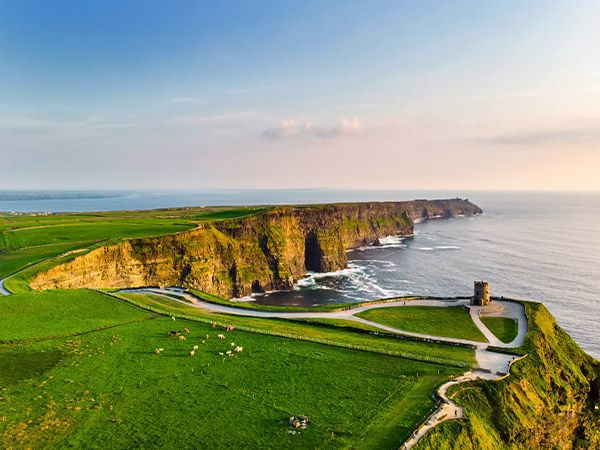
The village is a short drive from the magnificent Cliffs of Moher, which stretch for eight kilometres and have a sheer drop of more than 200 metres to the Atlantic Ocean. The blanket of green atop the cliffs is home to grazing cows and sheep and is often dotted with wildflowers. Between May and June you may even spot the beautiful puffin bird here.
Deauville, France
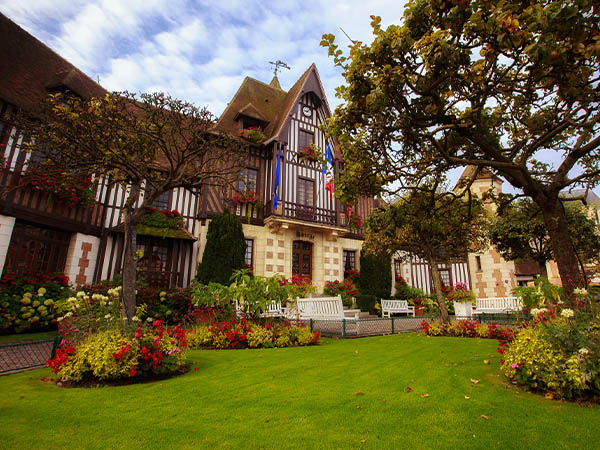
Coco Chanel fell in love with this seaside town, and it’s easy to see why. Located in the north-west of France, on the coast of the English Channel, Deauville is renowned as a resort playground boasting luxurious resorts and casinos, a wide sandy beach dotted with colourful parasols flanked by a 653-metre-long promenade. The ornate town centre is made up of historic architecture in Norman, Art Nouveau and Baroque style, patterned brickwork streets, perfectly manicured gardens and fountains, quaint bistros with alfresco sidewalk dining and chic designer boutiques.
Must-do
Besides gawking at the extravagance of it all, spend the day at the beach by hiring a parasol or beach cabin on the promenade. Or choose to laze around the 1920s-built Pompeian seawater baths, which are resplendent in Art Deco style. If you want to indulge the mind and body, treatments are available at the nearby La Thalasso Deauville.
Pyrgi, Greece
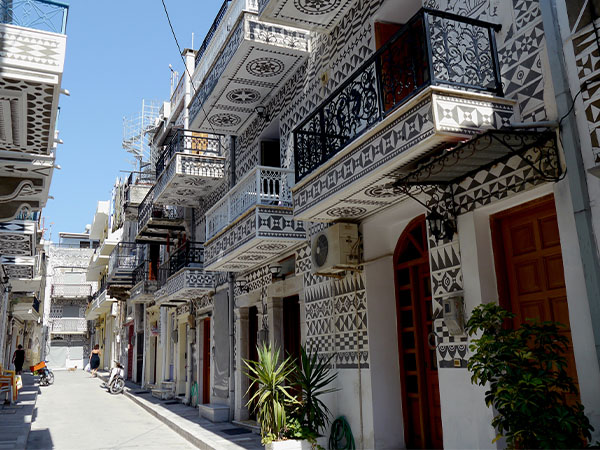
On the Aegean island of Chios, the medieval town of Pyrgi is known as ‘The Painted Town’ – unlike the whitewashed Greek townscapes we’ve come to recognise, the stone buildings in Pyrgi are decorated in striking monochrome geometric patterns. Known as ‘xysta’, this unique style is influenced by Frankish design when Italians occupied the island. The black and white patterns are punctuated by colourful doors, fuchsia bougainvillea and the bright red tomatoes that are strung up outside to dry in the sun.
Must-do
The town is home to the Chios Mastic Museum, dedicated to the natural resin that is cultivated here and is recognised by UNESCO for its cultural heritage. The town is also nearby Vroulidia beach, which is a white pebble beach with turquoise water, and the black pebble volcanic beach Mavra Volia.
Want to see more stories from International Traveller in your Google search results?
- Click here to set International Traveller as a preferred source.
- Tick the box next to "International Traveller". That's it.