hero media

The things every visitor needs to do in Belgium

From Renaissance art to world war history and cutting-edge fashion, discover three incredible experiences not to miss in Belgium.

The Last Post, Ypres

There’s no doubt that the First World War left its mark on many regions in Belgium, but none more so than in Ypres. Not only was the whole medieval city destroyed and completely rebuilt during and after the war, but also the surrounding fields saw some of the toughest fighting.


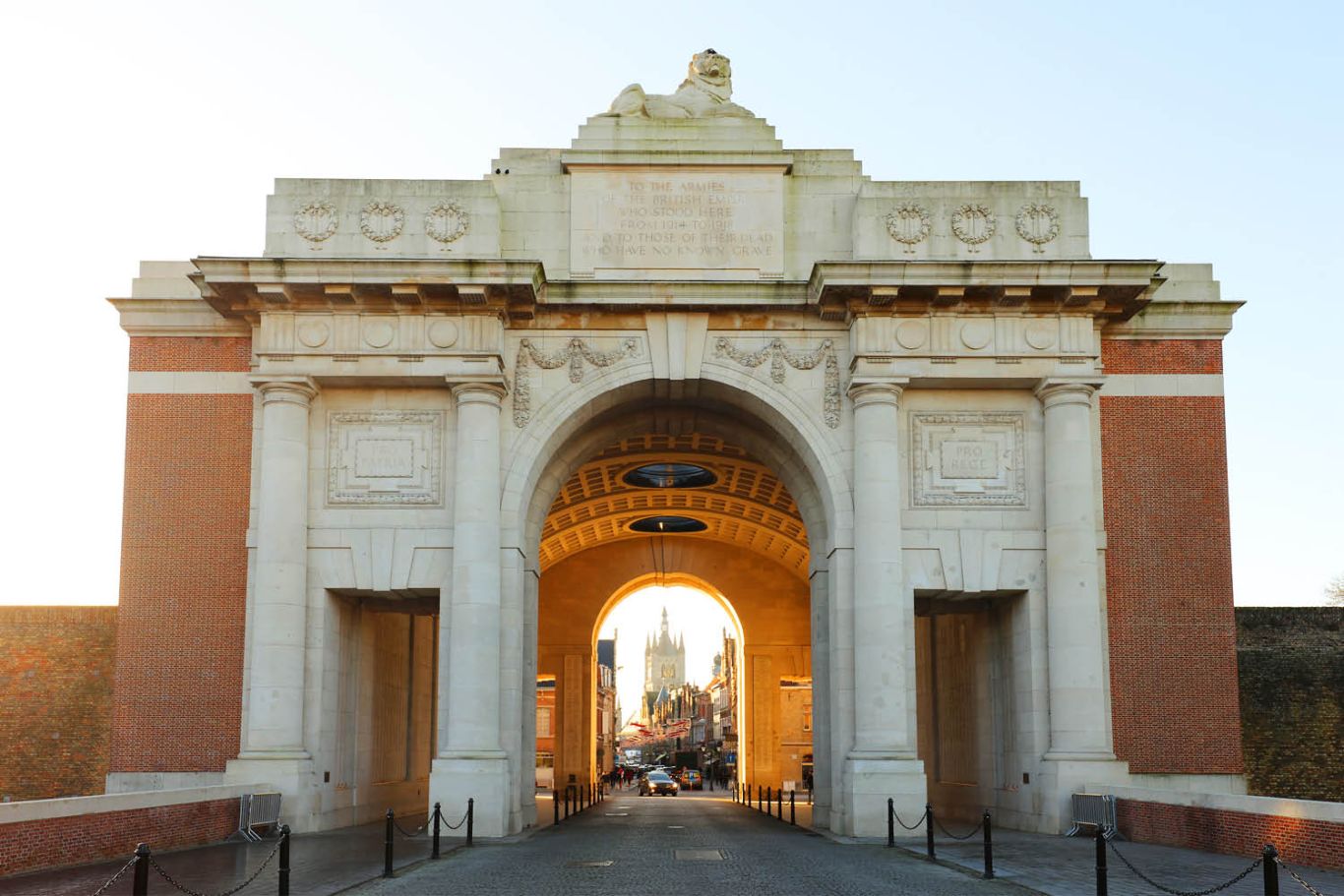
The only part of the city that survived the onslaught almost intact were the medieval ramparts, and it’s through a cutaway in them that thousands of soldiers passed through on their way to the front. So it was a natural choice in 1927 for the location of a memorial, the Menin Gate, to commemorate the missing.


Some 54,896 names of the missing are engraved on the monumental arch, and every night for the past 90 years (except during the Second World War due to German occupation) the town of Ypres has honoured these men with a ceremony known as the Last Post. Held at 8pm and open to anyone, this ceremony is one of the most emotionally charged and thoughtful ways to understand the horrors of this global conflict.


You don’t need to book a spot, but it can be busy on anniversaries and during the summer months so get there before 7.30pm. Some nights five people lay wreaths while other nights can see up to 50 people lay them. If you’d like to lay a wreath, you can either register beforehand to be included on the official program, or you can turn up on the night and speak to the master of ceremonies. The ceremony is free to attend and offers standing room only.
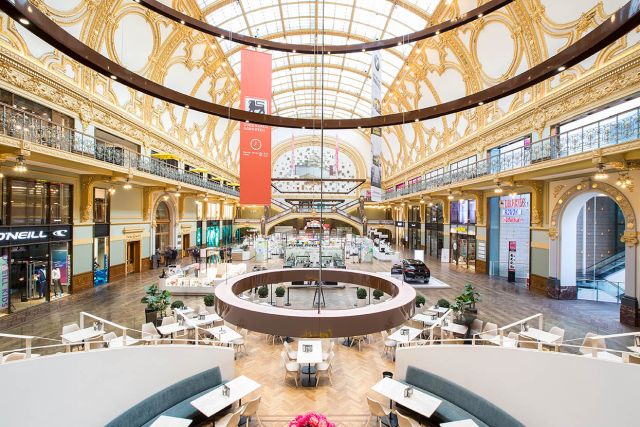
Stadsfeestzaal Antwerpen - Antwerp Shopping Mall
Stadsfeestzaal Antwerpen – Antwerp Shopping Mall

Window shopping in Antwerp

Antwerp first landed on the fashion map back in the ’80s when the so-called ‘Antwerp Six’ featured at London Fashion Week for the first time. The collective of six young designers, who graduated from Royal Academy of Fine Arts of Antwerp in 1980-81, soon helped create a reputation for the city (and the art school) for innovative design, fashion and progressiveness.


Since then Antwerp has grown into somewhat of a ‘capital of cool’ in a country firmly rooted in history, medieval art and trade.


For the best shopping, head to the Sint-Andries quarter and the streets off Nationalestraat. You’ll find local designers side by side with global fashion houses and even one of the most enduring of the Antwerp Six, Dries Van Noten.


Dynamic local designs not to miss include A.F.Vandevorst (whose block-colour leather designs are highly sought-after), Ginger (for bold patterned dresses) and Hutch for men’s fashion. Vintage lovers should head to Labels Inc. for secondhand fashion from Belgium fashion labels, or Think Twice, which has incredibly affordable pre-loved fashion from the 80s and 90s, including handbags and men’s fashion.


The new Fashion in Antwerp app, which highlights five fashion walking routes around the city, taking in shopping, design and fashion history, is a good resource. Note that MoMu, Antwerp’s dynamic fashion museum is currently closed until 2020 for renovations that will add 800 square metres to their already prodigious space.
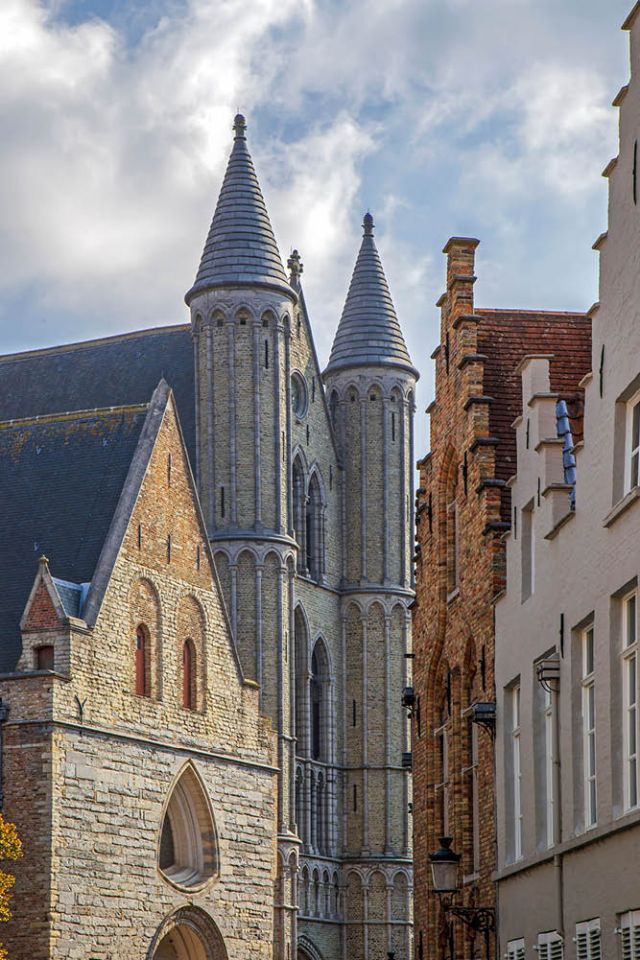
From Renaissance art to world war history and cutting-edge fashion, Antwerp is home to so many incredible experiences…

See Michelangelo’s Madonna, Bruges

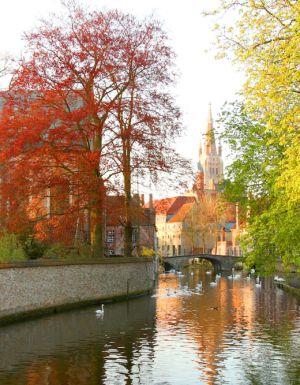
Bruges is one of Belgium’s most beautiful cities, with over 10 kilometres of winding canals, vine-covered cottages, sprawling churches and horse-drawn carriages. It’s easily seen in a day but is most serene when the day-trippers leave and the evenings are still and quiet.


Near the centre of the old town, you’ll find the small and unassuming Church of Our Lady (Onze Lieve Vrouwekerk), where Michelangelo’s famous Madonna and Child statue resides.


Commissioned by a wealthy Bruges family, this statue is remarkable for several reasons. It’s the only statue the artist completed that left Italy during his lifetime, its composition of baby Jesus and Mary is distinctly modern despite its early 16th century provenance and the skill behind the artistry is stunning.


The statue has also been the subject of two art thefts. The first was when a conquering Napoleon took her to France before she was recovered after his defeat in 1816, and the second was by Nazi soldiers, when Hitler ordered the removal of the statue as part of his plan for his Third Reich art museum.


The Allied rescue mission, as depicted in 2014 movie The Monuments Men (directed by, and starring, George Clooney), found the statue factory in a salt mine along with several hundred, if not thousands, of precious artworks in Altaussee, Austria.


Since then the Madonna has had a much quieter life in the small church in Bruges, where you can see her for free. She remains one of Michelangelo’s most inspiring artworks and the only one that you won’t have to line up for hours to see.


Weekly travel news, experiences
insider tips, offers,
and more.

Want to see more stories from International Traveller in your Google search results?

  1. Click here to set International Traveller as a preferred source.
  2. Tick the box next to "International Traveller". That's it.
hero media

What the European heatwave means for your summer travel plans

Temperatures are soaring this summer, breaking records across Europe and the UK. 

Euro summer is a feeling like no other. But when a heatwave hits? The dream trip quickly turns into a sweaty mess. Extreme heat is sweeping Europe and the UK this week, with record-high temperatures impacting travel plans across the continent.

And while Australian summers are typically hotter in absolute temperature, many European cities aren’t equipped for high temperatures, resulting in unbearable weather.

Why is it so hot in Europe?

Signs of a hot summer loomed in May, when the mercury hit unprecedented spring highs. Now, extreme high temperature warning alerts have been issued in countries such as Spain, Italy, France, England, the Netherlands and Germany.

France saw its hottest day on record on Wednesday, with an average temperature of 30°C across the day and night. This surpasses the average temperature for June, which is 15°C to 25°C. Dozens of people have died, including 40 from drowning.

In Spain, 212 deaths have been linked to the heatwave.

The UK recorded its hottest June day ever on Wednesday with temperatures soaring to 36.1°C. In an article published by the Met Office – the UK’s national meteorological service – Professor Stephen Belcher CBE, Met Office Chief Scientist, shared his concerns about June’s heat. “To see temperatures like this in the UK in June is sobering. Events like this bring home the implications of climate change, with very high temperatures and humidity bringing significant health implications from heat stress, as well as impacts to a range of sectors such as transport, energy and water supply,” he said.

Heatwaves are becoming increasingly common in Europe and the UK, neither of which is prepared for such extremes. The World Meteorological Organization reported that in 2025, at least 95% of Europe experienced above-average annual temperatures and that the continent was heating up twice as fast as the global average.

How travel is impacted

A pharmacy sign displaying 40 degrees Celcius
A pharmacy broadcasting local weather data. (Credit: Getty/Dragoncello)

During a heatwave, power grids, water systems and transport networks can be affected, resulting in disrupted itineraries for travellers. In France, power outages have left thousands without electricity and early closures have been implemented for two of Paris’s biggest attractions, the Eiffel Tower (early afternoon rather than late at night) and the Louvre (two hours early). Eurostar cancelled its London to Paris and Paris to London services from the 22nd to the 25th, and major UK rail companies have been advising travellers to avoid using trains where possible, or to travel during early hours.

If a heatwave is predicted, being flexible with your itinerary and having fully refundable/changeable tickets is key, as extreme heat can force the cancellation of outdoor activities, impact rail and flight services and change the opening hours of sites and eateries.

Why does summer in Europe often feel hotter than summer in Australia?

people swimming in the Canal Saint-Martin in Paris
People swimming in the Canal Saint-Martin in Paris to cool off. (Credit: Rachael Thompson)

With some of the highest UV levels in the world, Australians are no strangers to the heat, adapting well to intense weather. But our infrastructure is largely equipped to withstand soaring temperatures with climate-responsive passive design, refrigerated air conditioning or evaporative coolers, as well as swimming spots aplenty.

Buildings in Northern and Western Europe and the UK, however, are constructed to retain heat and handle frosty winters. The lack of universal air conditioning means it generally feels hotter even though the temperature on your app might not look it. During a heatwave, it can feel like you’re in a sauna as cities act like heat traps.

How to stay cool and prepare for another heatwave

Relief is expected across Europe and the UK later this week, but more heatwaves are still possible in the coming months. Summer heat typically peaks in July and August.

Public transport often doesn’t have air conditioning, and buses in particular can be swelteringly hot. If you’re heading outside or your accommodation has no air conditioning, it’s worth buying a spray bottle and a handheld fan from a pharmacy or tourist stand. Check ahead of time if restaurants and cafes have air conditioning and make a booking in advance. The highest temperatures typically hit between 3pm and 6pm, so aim to head outdoors outside of these hours.

Rising temperatures invite travellers to enter a more intentional era of seeing the world. Now more than ever is the time to embrace lower-impact “coolcations” and off-season getaways.

What to do in Belgium - International Traveller