hero media

Beautiful places to stay in Belgium

A stay in one of these stylish Belgian hotels will place you right at the heart of the country’s cultural and historical centres, finds Lucy Cousins.


If you’re planning a trip to Belgium, or merely contemplating adding it to your European itinerary, a stunning hotel can often be the thing that takes you from a ‘maybe’ to putting down your credit card.

With that in mind, this list will bring to the surface some of the top places to rest your head in the beautiful city that is Belgium – all you need to do is choose one.


Bruges

Hotel Monsieur Ernest

Wulfhagestraat 43, 8000 Bruges, Belgium
Hotel Monsieur Ernest, Belgium.


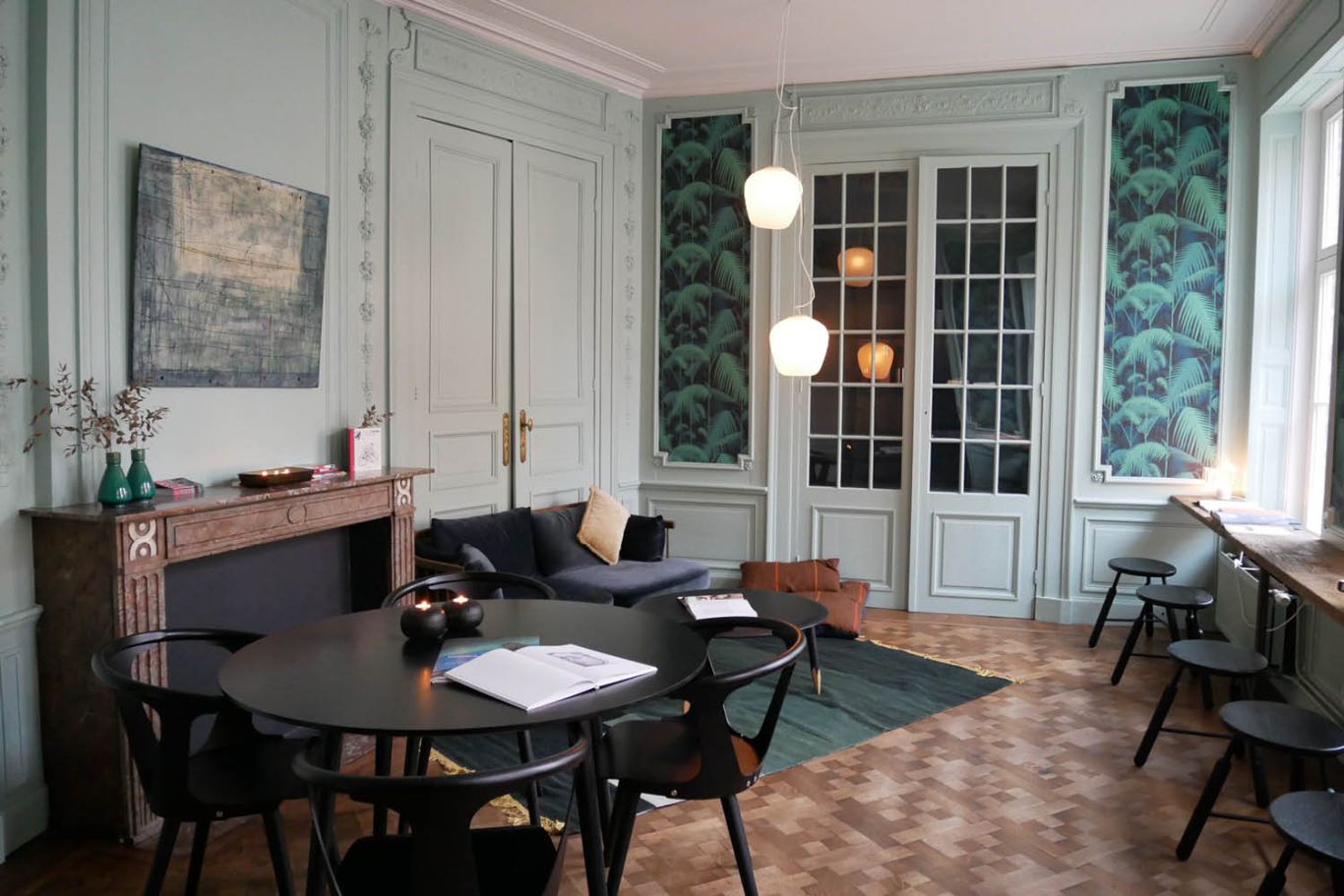
While hordes of tourists descend on the historic centre of Bruges during the day, it’s after dark that the medieval walled city breathes a sigh of relief. With quiet streets and cafes filled with locals, it’s a side of Bruges that fewer travellers see, but with the opening of Hotel Monsieur Ernest and a swathe of other design hotels over the past few years, that could change. Opening onto one of Bruges’ main streets, this small 28-room hotel is housed in a 14th-century home and former brewery. While the rooms all feature large beds, minimal but functional décor and sleek new bathrooms, it’s in the communal areas that this hotel really comes of age.

The winding 19th-century ornate staircase near reception is a reminder of the building’s more opulent past, monotone mosaic tiles lead to a sophisticated modern drawing room and the dining room feels more like a New York cafe than a hotel restaurant. Outside, a set of stairs takes you down to a gravelled deck next to one of Bruges’ beautiful and unused canals, shaded by three-storey-high trees. The whole area is ringed by strings of lights and is an attractive place to sip on a local beer – try the distinct red-brown ale from local brewery, Bourgogne des Flandres. The modest breakfast will set you up for a day of canal boat rides and cobblestone street adventures.


Antwerp

Hotel Rubens

Oude Beurs 29, 2000 Antwerpen, Belgium
Hotel Rubens, Belgium.


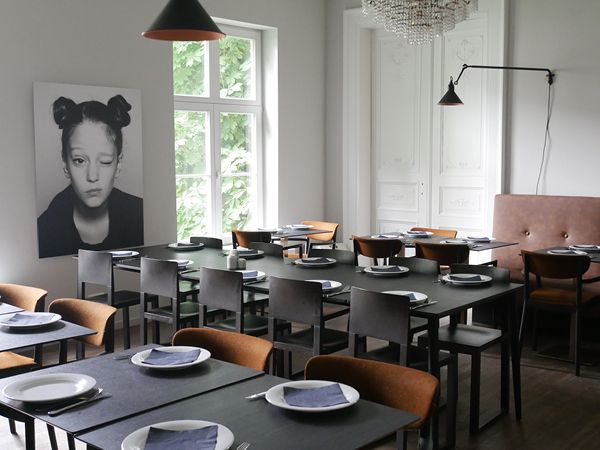
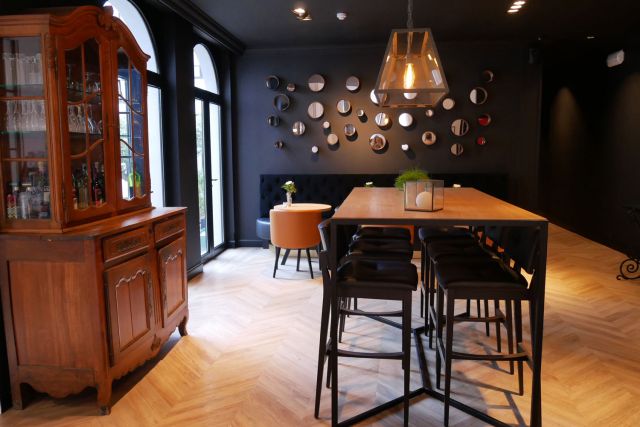
Although Hotel Rubens has actually been around for 25 years or so, you’d never guess. Its recent carefully thought-out refurbishment has placed it firmly back in the mix of Antwerp hotels worth their salt. Apart from a stately courtyard, complete with fire pits for winter and lounge chairs for long summer evenings, the biggest drawcard of this modern hotel is undoubtedly its location. The historic Grote Markt is just two streets away and for those with minimal baggage, the train station is a mere 20-minute walk, as are most of Antwerp’s shopping streets and museums.

Inside the small but design-led lobby there is a small cafe overlooking the courtyard, and an unassuming breakfast room, which doesn’t quite match the rest of the hotel in décor but is comfortable nonetheless. The 36 rooms are modern in feel, despite the hotel’s name and homage to the city’s famous Baroque artist Peter Paul Rubens. Large bathrooms feature dual showerheads and under-tile heating, while the rooms itself hero darker tones and velvet chairs. Rooms towards the back of the hotel overlook an inner garden backing onto a music school, where occasionally opera singers can be heard rehearsing, their voices bouncing off 17th-century architecture like water. The hotel also offers luggage storage and free wi-fi.


Brussels

Weekly travel news, experiences
insider tips, offers,
and more.

The Dominican

Rue Léopold / Leopoldstraat 9, 1000 Brussels, Belgium
Hotel Dominican Brussels, Belgium.


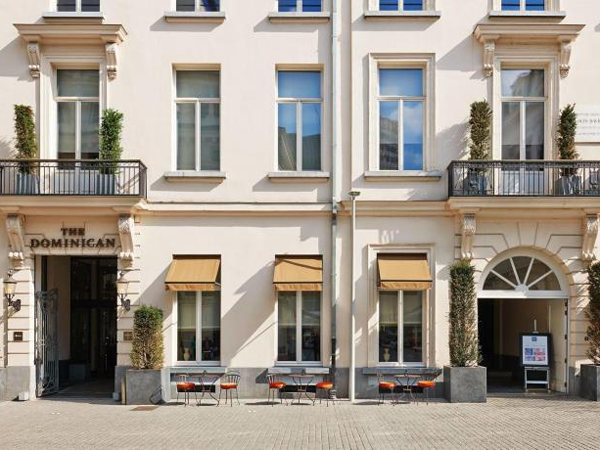
Centred around a medieval courtyard, The Dominican is housed on the site of a 15th-century monastery. The façade and some of the layout have thankfully been kept intact, but if you need reminding there’s always the eerie soundtrack of monks singing in the elevators.

This four-star hotel contrasts its strong sense of history with modern sensibilities and sophisticated aesthetics, and the result is decidedly pleasing. There are 150 rooms, some with views over the courtyard and old town, and nearly all with black-tiled modern bathrooms and rainwater showerheads.
Quiet and close to the Grote Market area, The Dominican has been designed with tourists and business travellers in mind, while those who like to shake their jetlag with exercise can head to the hamman, sauna and boxing room, complete with vintage boxing gloves and bag.
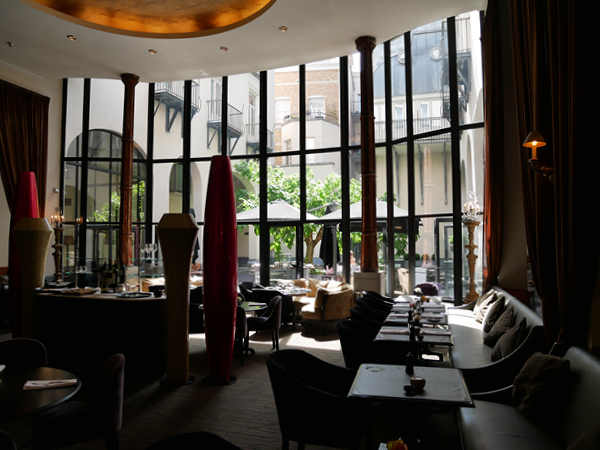
Courtyard of the Hotel Dominican, Belgium.


The highlight is unquestionably the extensive breakfast, which is simultaneously abundant and selective. Fresh salmon, local cheeses and freshly baked bread compete with mini pastries, scrambled eggs and fruit, all served up in view of the medieval courtyard where guests can drink cocktails in summer until the sky finally turns black at about 11pm. Nearby, the famous theatre and opera house Le Monnaie speaks to the city’s cultural heart, while the centre of the old town, which has been unchanged for several centuries, is only a short wander away through waffle-laden streets.

Want to see more stories from International Traveller in your Google search results?

  1. Click here to set International Traveller as a preferred source.
  2. Tick the box next to "International Traveller". That's it.
hero media

What the European heatwave means for your summer travel plans

Temperatures are soaring this summer, breaking records across Europe and the UK. 

Euro summer is a feeling like no other. But when a heatwave hits? The dream trip quickly turns into a sweaty mess. Extreme heat is sweeping Europe and the UK this week, with record-high temperatures impacting travel plans across the continent.

And while Australian summers are typically hotter in absolute temperature, many European cities aren’t equipped for high temperatures, resulting in unbearable weather.

Why is it so hot in Europe?

Signs of a hot summer loomed in May, when the mercury hit unprecedented spring highs. Now, extreme high temperature warning alerts have been issued in countries such as Spain, Italy, France, England, the Netherlands and Germany.

France saw its hottest day on record on Wednesday, with an average temperature of 30°C across the day and night. This surpasses the average temperature for June, which is 15°C to 25°C. Dozens of people have died, including 40 from drowning.

In Spain, 212 deaths have been linked to the heatwave.

The UK recorded its hottest June day ever on Wednesday with temperatures soaring to 36.1°C. In an article published by the Met Office – the UK’s national meteorological service – Professor Stephen Belcher CBE, Met Office Chief Scientist, shared his concerns about June’s heat. “To see temperatures like this in the UK in June is sobering. Events like this bring home the implications of climate change, with very high temperatures and humidity bringing significant health implications from heat stress, as well as impacts to a range of sectors such as transport, energy and water supply,” he said.

Heatwaves are becoming increasingly common in Europe and the UK, neither of which is prepared for such extremes. The World Meteorological Organization reported that in 2025, at least 95% of Europe experienced above-average annual temperatures and that the continent was heating up twice as fast as the global average.

How travel is impacted

A pharmacy sign displaying 40 degrees Celcius
A pharmacy broadcasting local weather data. (Credit: Getty/Dragoncello)

During a heatwave, power grids, water systems and transport networks can be affected, resulting in disrupted itineraries for travellers. In France, power outages have left thousands without electricity and early closures have been implemented for two of Paris’s biggest attractions, the Eiffel Tower (early afternoon rather than late at night) and the Louvre (two hours early). Eurostar cancelled its London to Paris and Paris to London services from the 22nd to the 25th, and major UK rail companies have been advising travellers to avoid using trains where possible, or to travel during early hours.

If a heatwave is predicted, being flexible with your itinerary and having fully refundable/changeable tickets is key, as extreme heat can force the cancellation of outdoor activities, impact rail and flight services and change the opening hours of sites and eateries.

Why does summer in Europe often feel hotter than summer in Australia?

people swimming in the Canal Saint-Martin in Paris
People swimming in the Canal Saint-Martin in Paris to cool off. (Credit: Rachael Thompson)

With some of the highest UV levels in the world, Australians are no strangers to the heat, adapting well to intense weather. But our infrastructure is largely equipped to withstand soaring temperatures with climate-responsive passive design, refrigerated air conditioning or evaporative coolers, as well as swimming spots aplenty.

Buildings in Northern and Western Europe and the UK, however, are constructed to retain heat and handle frosty winters. The lack of universal air conditioning means it generally feels hotter even though the temperature on your app might not look it. During a heatwave, it can feel like you’re in a sauna as cities act like heat traps.

How to stay cool and prepare for another heatwave

Relief is expected across Europe and the UK later this week, but more heatwaves are still possible in the coming months. Summer heat typically peaks in July and August.

Public transport often doesn’t have air conditioning, and buses in particular can be swelteringly hot. If you’re heading outside or your accommodation has no air conditioning, it’s worth buying a spray bottle and a handheld fan from a pharmacy or tourist stand. Check ahead of time if restaurants and cafes have air conditioning and make a booking in advance. The highest temperatures typically hit between 3pm and 6pm, so aim to head outdoors outside of these hours.

Rising temperatures invite travellers to enter a more intentional era of seeing the world. Now more than ever is the time to embrace lower-impact “coolcations” and off-season getaways.

The Best Places To Stay In Belgium





