hero media

Five uniquely Salzburgian experiences

Perched on the border between Austria and Germany lies the city of Salzburg, made famous as the setting of The Sound of Music. But beyond the castles, cathedrals and rolling hills, this alpine town is home to a range of unique experiences, many of which travellers miss says Elizabeth Abbott.

Watch an ice hockey match

Austrians are fiercely proud of their local ice hockey teams; at any match you’re bound to see more brawls than pretzels.

In peak season some 3000 Austrians pack out the Salzburger Eisarena to watch each game, while the energy of the heaving crowd is infectious – it seems whacking pucks really brings locals together.

Grab a hot pretzel, a cup of mulled wine, and cheer for the Red Bull Salzburg: you’ll fit right in.

Hot tip: The ice hockey season runs throughout winter. Check for details of upcoming matches online.

Explore Red Bull Hangar 7

Red Bull’s Hangar 7 museum is undoubtedly a must see for car and aviation enthusiasts alike (stick with us, it gets better), with exhibitions and air shows by the Flying Bulls.

But for the less auto-inclined, it’s also a surprising haven for foodies with an array of bars and cafes, plus the Michelin-starred restaurant Ikarus, featuring a different renowned guest chef each month.

Previous guest chefs have included French actor and celeb chef Gérard Depardieu and Middle Eastern cuisine maestro Greg Malouf, formerly of Melbourne’s MoMo.

There’s also impressive art displays and architectural feats to take in too.

Hot tip: Thanks to its glass-covered design, Hangar 7 also boasts some of the best views of Salzburg with panoramic vistas across the mountains.

Sample Mozartkugel

Have a break from Austria’s widespread Sacher torte dessert with a more local delicacy; Salzburger Mozartkugel.

This sweet treat made of chocolate, marzipan and nougat was invented by Paul Fürst in Salzburg in 1890, but his legacy continues today with each chocolate made by hand and sold only within Salzburg.

The Salzburgers are so proud of their hometown’s handcrafted creations that in 2008 a series of giant Mozartkugelns were placed around the city, some towering three stories high. Fortunately for Austrian waistlines, these weren’t edible.

Hot tip: Try the original Salzburger Mozartkugel at Café Konditorei Fürst in the Old City. For an even more indulgent treat try the Doppler Koneffekt featuring champagne truffle.

Hop into a thermal spa

All too many visitors to Salzburg are so taken by the towering peaks and alpine views across the area that they miss the fact that underneath it all lies a system of hot springs.

Bad Hofgastein village is situated just south of Salzburg and is home to a number of thermal spas that make for an idyllic retreat from Salzburg’s chilly climate.

Here you can make like a local and lounge in the outdoor thermal spas, surrounded by the towering Gastein mountain range.

Some believe that the water contains healing properties but we’re just a fan of how it reenergises any weary traveller.

Hot tip: Spend your morning trekking through the neighbouring national park, Hohe Tauern, before heading into Alpentherme Gastein to unwind.

Weekly travel news, experiences
insider tips, offers,
and more.

Take a boat tour across Lake Königssee

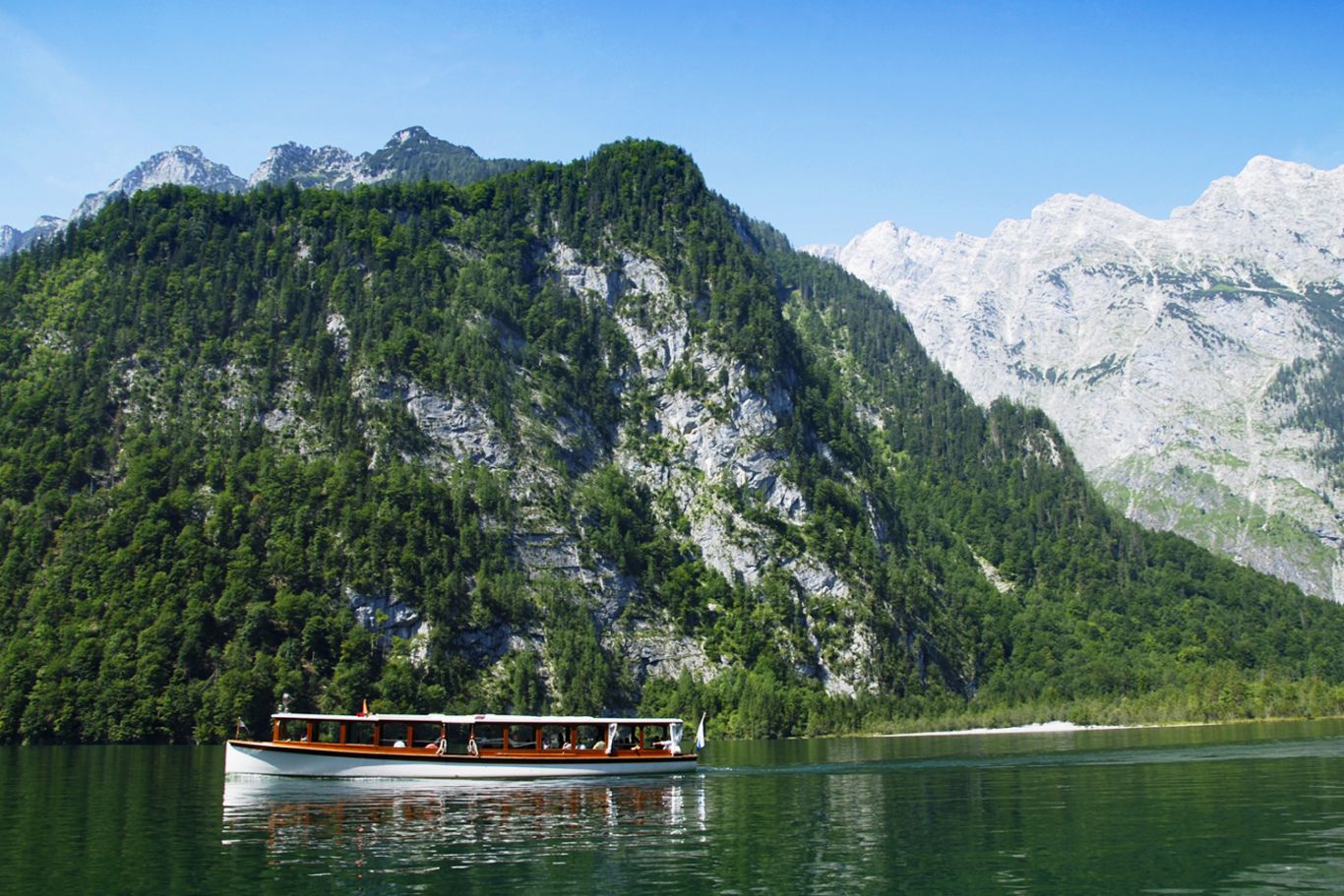
For a truly memorable Salzburg experience you can’t miss Lake Königssee, just an hour by bus from the city.

Admittedly the lake is no secret to tourists but given the views are among the most spectacular in the area, it’d be remiss of us to not mention it.

Boat tours give you the opportunity to take in 360-degree views of the fairytale setting, with crystal clear water framed on all sides by snow-capped peaks.

The boat trip itself takes a little over an hour, but you can hop off halfway St Bartholomä to explore the lush mountainside with a secluded church.

Hot tip: Make sure you have plenty of space on your camera’s memory card!


Want to see more stories from International Traveller in your Google search results?

  1. Click here to set International Traveller as a preferred source.
  2. Tick the box next to "International Traveller". That's it.
hero media

What the European heatwave means for your summer travel plans

Temperatures are soaring this summer, breaking records across Europe and the UK. 

Euro summer is a feeling like no other. But when a heatwave hits? The dream trip quickly turns into a sweaty mess. Extreme heat is sweeping Europe and the UK this week, with record-high temperatures impacting travel plans across the continent.

And while Australian summers are typically hotter in absolute temperature, many European cities aren’t equipped for high temperatures, resulting in unbearable weather.

Why is it so hot in Europe?

Signs of a hot summer loomed in May, when the mercury hit unprecedented spring highs. Now, extreme high temperature warning alerts have been issued in countries such as Spain, Italy, France, England, the Netherlands and Germany.

France saw its hottest day on record on Wednesday, with an average temperature of 30°C across the day and night. This surpasses the average temperature for June, which is 15°C to 25°C. Dozens of people have died, including 40 from drowning.

In Spain, 212 deaths have been linked to the heatwave.

The UK recorded its hottest June day ever on Wednesday with temperatures soaring to 36.1°C. In an article published by the Met Office – the UK’s national meteorological service – Professor Stephen Belcher CBE, Met Office Chief Scientist, shared his concerns about June’s heat. “To see temperatures like this in the UK in June is sobering. Events like this bring home the implications of climate change, with very high temperatures and humidity bringing significant health implications from heat stress, as well as impacts to a range of sectors such as transport, energy and water supply,” he said.

Heatwaves are becoming increasingly common in Europe and the UK, neither of which is prepared for such extremes. The World Meteorological Organization reported that in 2025, at least 95% of Europe experienced above-average annual temperatures and that the continent was heating up twice as fast as the global average.

How travel is impacted

A pharmacy sign displaying 40 degrees Celcius
A pharmacy broadcasting local weather data. (Credit: Getty/Dragoncello)

During a heatwave, power grids, water systems and transport networks can be affected, resulting in disrupted itineraries for travellers. In France, power outages have left thousands without electricity and early closures have been implemented for two of Paris’s biggest attractions, the Eiffel Tower (early afternoon rather than late at night) and the Louvre (two hours early). Eurostar cancelled its London to Paris and Paris to London services from the 22nd to the 25th, and major UK rail companies have been advising travellers to avoid using trains where possible, or to travel during early hours.

If a heatwave is predicted, being flexible with your itinerary and having fully refundable/changeable tickets is key, as extreme heat can force the cancellation of outdoor activities, impact rail and flight services and change the opening hours of sites and eateries.

Why does summer in Europe often feel hotter than summer in Australia?

people swimming in the Canal Saint-Martin in Paris
People swimming in the Canal Saint-Martin in Paris to cool off. (Credit: Rachael Thompson)

With some of the highest UV levels in the world, Australians are no strangers to the heat, adapting well to intense weather. But our infrastructure is largely equipped to withstand soaring temperatures with climate-responsive passive design, refrigerated air conditioning or evaporative coolers, as well as swimming spots aplenty.

Buildings in Northern and Western Europe and the UK, however, are constructed to retain heat and handle frosty winters. The lack of universal air conditioning means it generally feels hotter even though the temperature on your app might not look it. During a heatwave, it can feel like you’re in a sauna as cities act like heat traps.

How to stay cool and prepare for another heatwave

Relief is expected across Europe and the UK later this week, but more heatwaves are still possible in the coming months. Summer heat typically peaks in July and August.

Public transport often doesn’t have air conditioning, and buses in particular can be swelteringly hot. If you’re heading outside or your accommodation has no air conditioning, it’s worth buying a spray bottle and a handheld fan from a pharmacy or tourist stand. Check ahead of time if restaurants and cafes have air conditioning and make a booking in advance. The highest temperatures typically hit between 3pm and 6pm, so aim to head outdoors outside of these hours.

Rising temperatures invite travellers to enter a more intentional era of seeing the world. Now more than ever is the time to embrace lower-impact “coolcations” and off-season getaways.