hero media

Exploring Kyushu: Japan’s southernmost island

On a Japanese island of behemoth volcanic mountains and endless seas, huge allures can be found in the small and the unexpected.

Mifuneyama Rakuen is a pleasure garden sprawling over 500,000 square metres at the base of Mt Mifune in Saga Prefecture on the Japanese island of Kyushu.
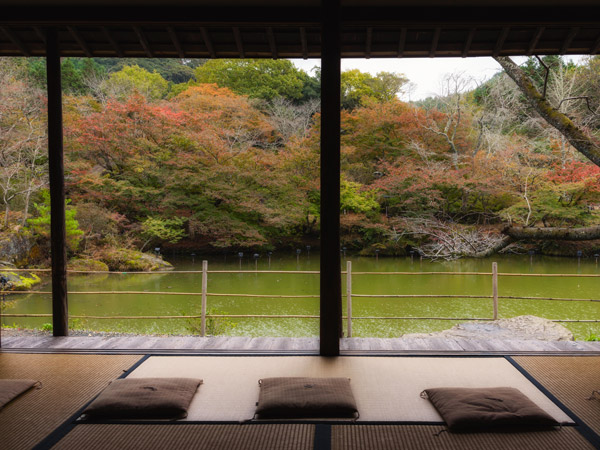
a scenic view of the Mifuneyama Rakuen Gardens
Mifuneyama Rakuen Gardens were created in 1845.

Created for the former feudal lord Shigeyoshi Nabeshima in 1845, the position of the garden was brilliantly calculated; the mountain creates the perfect backdrop, appearing to be part of the garden without the burden – or price tag – of ownership.
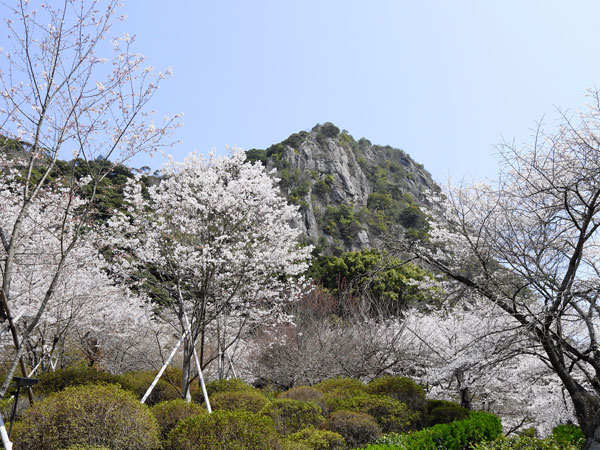
cherry blossom trees blooming in Saga, Kyushu, Japan
Sakura is a famous sight in Mifuneyama Rakuen.

What makes Kyushu a blissful place?

The ‘borrowed’ panorama creates a stunning first impression, and while the azaleas that drench the garden in colour during spring are absent, the vivid autumn hues of orange, yellow and red are equally arresting.
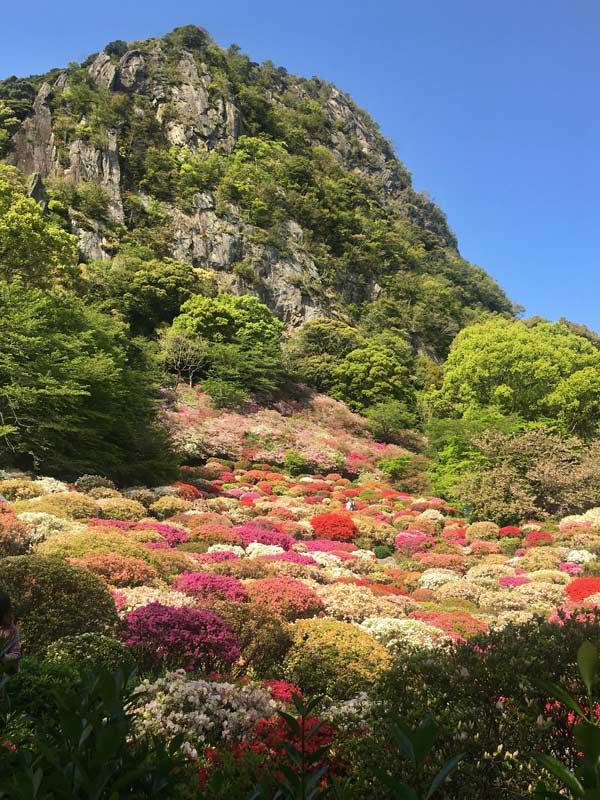
a colourful garden in Kyushu, Japan
The transient garden is captivating in all seasons.

Wandering the tiered terraces, weaving through a maze of low-manicured hedges, I am blissfully engulfed in the silence and solitude of nature, removed from the technology and affections of the modern as if I have stepped back in time.
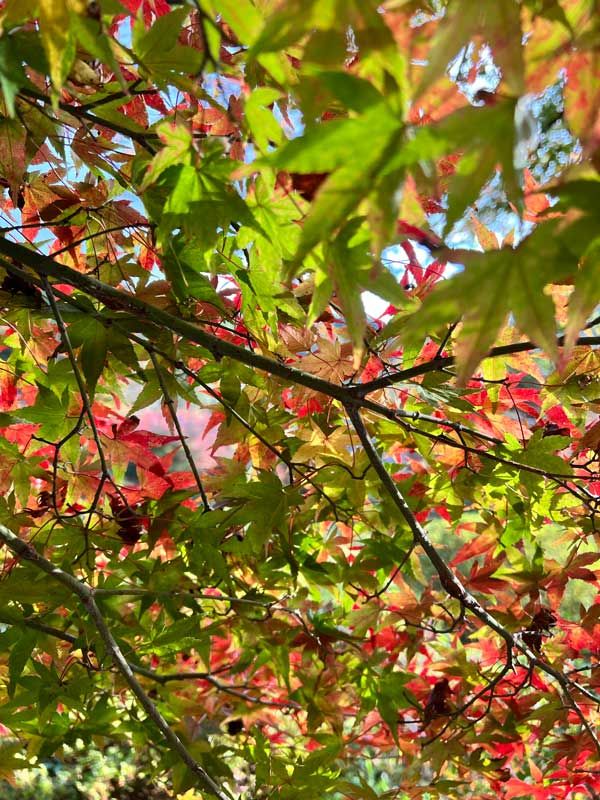
vibrant azaleas blooming in Kyushu, Japan
Vibrant azaleas bloom in spring to rich shades of autumn.

Then I see it, an unassuming sign, almost apologetic in its humbleness: teamLabs Ruins and Heritage. In the middle of a garden in the middle of the mountains in the middle of an island, I happened upon an installation by the hottest digital art collective in the world.
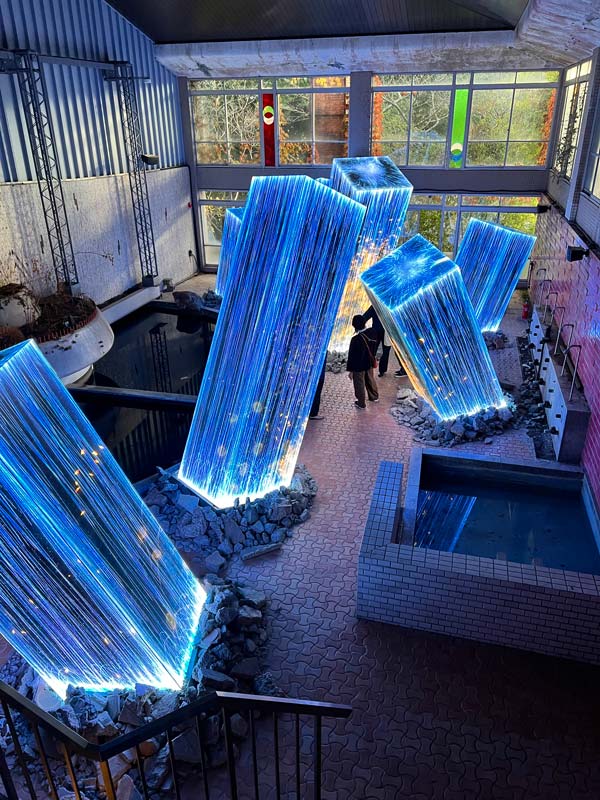
an art installation in a mountain spa, Kyushu
A former mountain spa plays host to an installation by one of the hottest art collectives in the world.

Glistening light displays

I’m amazed, then I am enthralled. The collective’s signature dancing digital light displays have been installed in an abandoned and dilapidated mid-20th-century spa. In an old public bath, the long-empty soaking pools and tiled floors are the canvas for vivid patterns that explode and writhe beneath my feet, as if responding to my presence.

In another room – complete with its original shower heads protruding from the walls – giant columns jut diagonally from the rubble of the site, slowly morphing in colour. I head deeper into the experience, down a dimly lit, alarmingly crumbling, disconcertingly inclined corridor towards a virtual flame at the bottom.
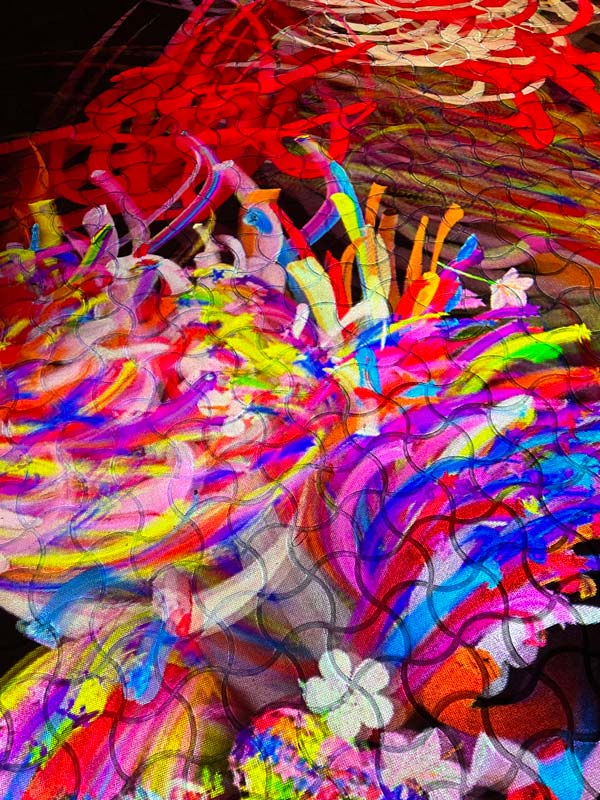
a splash of colours in Kyushu, Japan
The installation is bursting with vivid colours. (Image: Leigh-Ann Pow)

Mirrored art installation

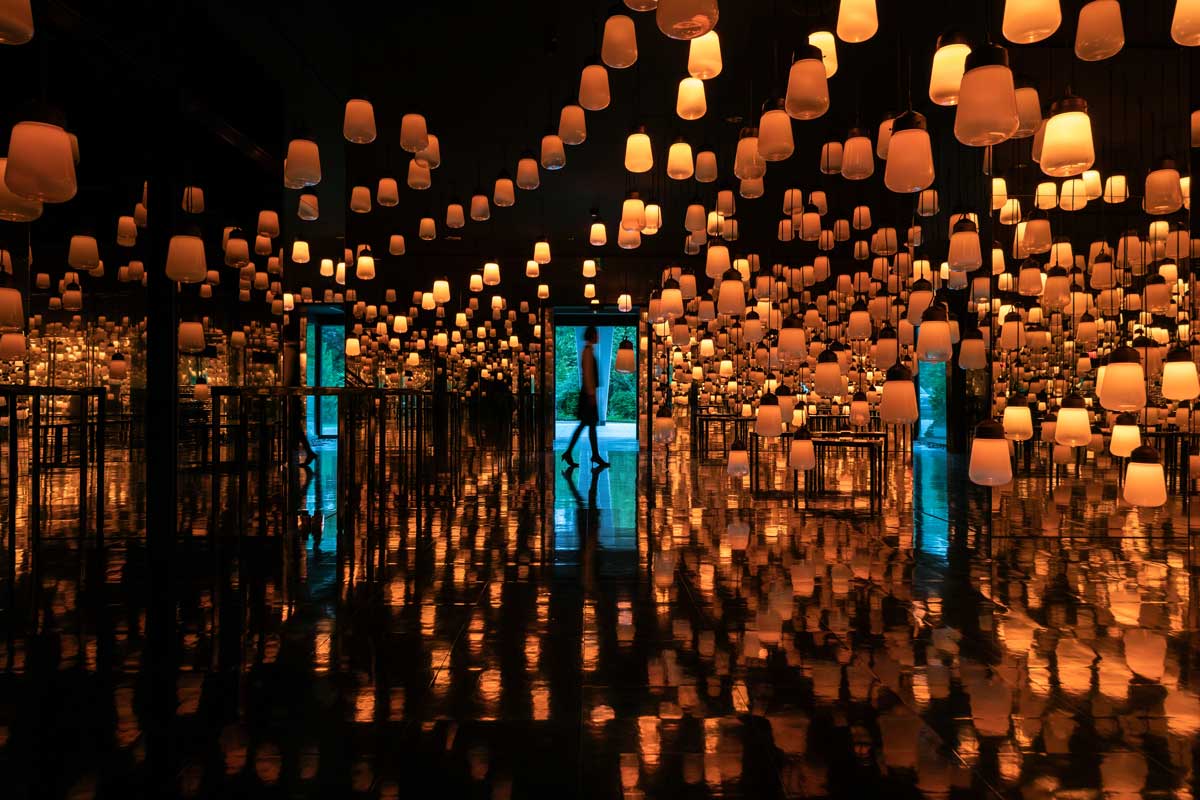
Moving on, I suddenly find myself in a corridor of numbered rooms with people navigating their suitcases through sliding shoji screens; for a split second I think this is all part of the show, but it seems I have breached an invisible line between the ruins and the functional. I follow the arrows marking the route to the next installation, a mirrored room filled with hanging lights that wax and wane between shades of cream, red and soft green.

It takes me a moment to realise that I am standing in the lobby of a functioning mountain retreat, complete with a discreet check-in desk. My unexpected diversion through a world-class art installation in a blissful mountain setting becomes a metaphor for my time in Kyushu.
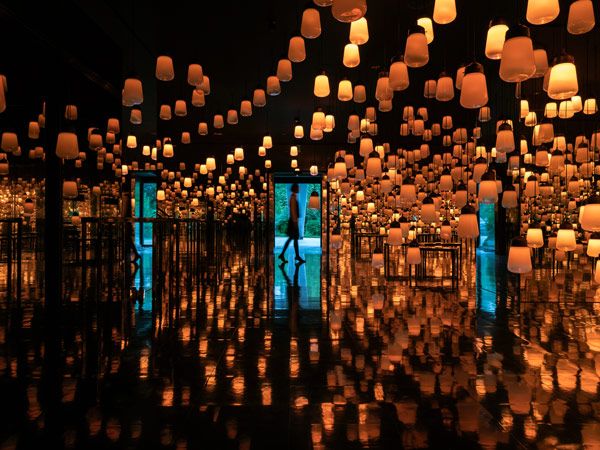
a spectacular hanging lamps display at Mifuneyama Rakuen Hotel in Saga Prefecture
The Main Forest and Spiral of Resonating Lamps – One Stroke is a sight to behold. (Image: Courtesy of teamLab)

What to expect

The third largest in the collection of four main islands that make up Japan, Kyushu is spread over seven prefectures – Fukuoka, Saga, Nagasaki, Kumamoto, Oita, Miyazaki and Kagoshima – but is easily traversed. The island has an outsized reputation, founded in violent volcanic eruptions and seething fissures that cut deep into the flesh of the landscape, but as I explore, I find the immensity of its allures in its finer details; the surprising, the small, the singular.
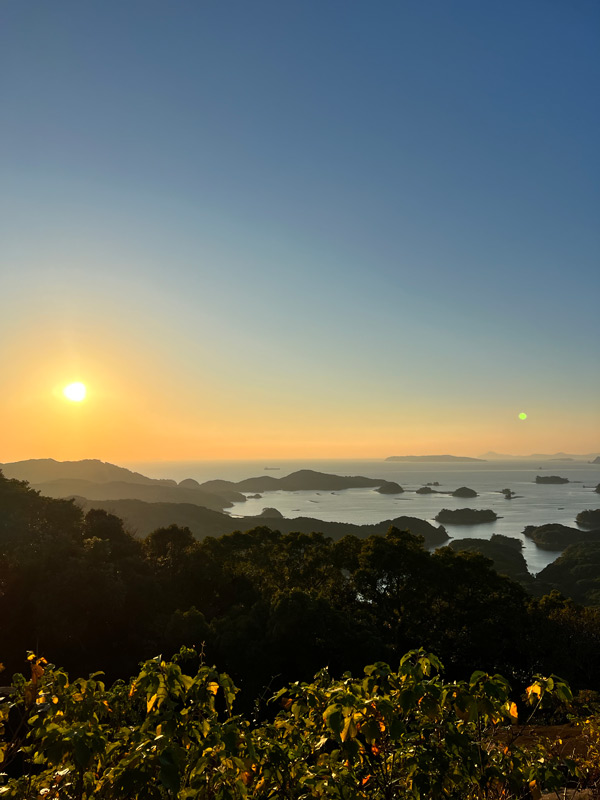
a magnificent sunrise view over the islands in Kyushu
Kyushu is surrounded by endless seas dotted with countless islands, as seen looking out to Kujukushima (Ninety-Nine Islands) at Tenkaiho Observatory, Nagasaki Prefecture. (Image: Leigh-Ann Pow)

The small

Full disclosure: I love Japan. I have been returning to the country as if drawn to it by an invisible thread since my first visit as a teenager. In that time, I have island-hopped in Okinawa Prefecture, woken before the sun to sit in quiet reverence with chanting monks in Koyasan in Wakayama Prefecture, and travelled to the Oga Peninsula in Akita Prefecture to chase ogre (at the annual Namahage Festival).

But surprisingly, I have never been to Kyushu. I’ve dreamed of it though, largely due to its celebrated ceramics fairs, the principal one of which is held in the town of Arita, Saga Prefecture, during Japan’s Golden Week holidays from late April to early May.
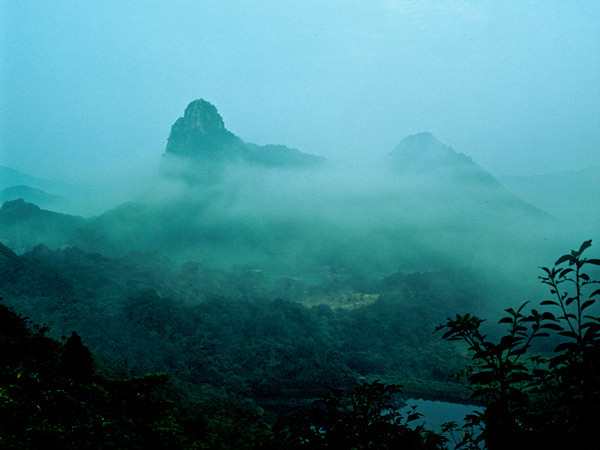
a foggy ambience at Mifuneyama Rakuen
Fog envelops Mifuneyama Rakuen.

Pottery making at Autumn Ceramics Fair

I arrive in the town on the last day of the Autumn Ceramics Fair in late November (all ceramics fairs are good ceramics fairs as far as I am concerned), smaller but no less captivating.

With a storied history of pottery makers and kilns, the main thoroughfare of Arita’s old town is delightful in its modest proportions and Studio Ghibli-esque charm, lined with a hotchpotch of patinaed historic shops, their windows filled with blue and white ceramic designs, their footpaths crowded with baskets and shelves filled with teacups, dishes and bowls in a multitude of patterns.

The largely septuagenarian volunteers, pointing people in the direction of local restaurants and pottery workshops, huddle near a giant 1000-year-old ginkgo tree, its delicate golden leaves creating a luminous halo around its base as they flutter to the ground.

I take a pottery class under the tutelage of a gorgeously enthusiastic young artist at Pottery Studio Rokuroza, where, after donning an apron and wildly unflattering protective trousers and choosing a design (I opt to make a small pouring vessel, which will be glazed a gentle, creamy blue after I leave), I sit at a wheel nervously working the silky local clay this way and that.

In case the result of my handiwork is less than display quality, I rifle through some bargain baskets to find a few Y300 (roughly $3) cups to take home. A resolutely modern end to the quaint delights of Arita comes when I check into Arita Huis, a sleekly minimalist boutique hotel surrounded by a collective of ceramics stores, that would be at home in the design-conscious neighbourhoods of Tokyo or Kyoto.

A riot of concrete and blond wood, the sleek, clean lines in the lobby space are offset by an architectural ikebana (Japanese art of flower arranging) display at the entrance and a pool of small, floating ceramic orbs that create a quietly lyrical soundscape as they gently bounce off each other as the water shifts almost imperceptibly. In my loft-style room, I sleep contentedly, before waking to an exquisitely presented traditional Japanese breakfast of grilled fish and rice served at a communal table in the lobby.
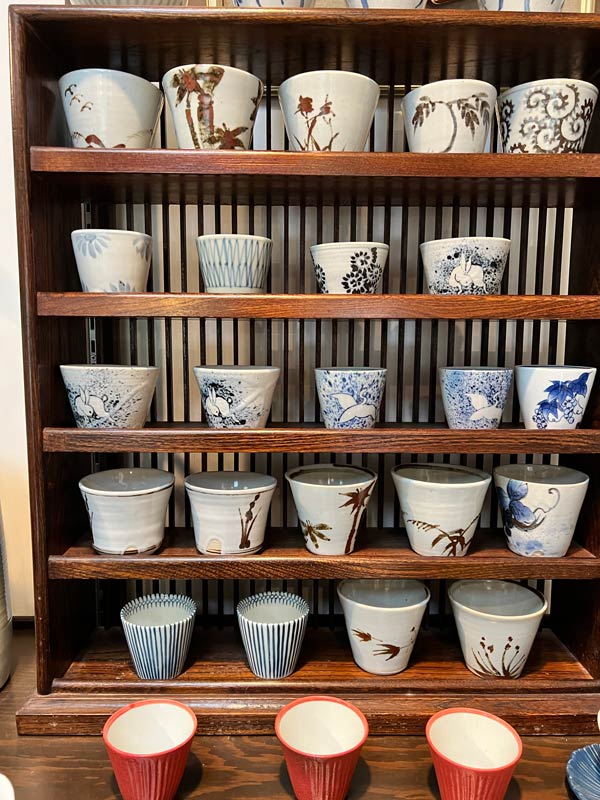
a stack of ceramics used for noodle making in Kyushu, Japan
The artist responsible for crafting these stunning ceramics is also responsible for making the soba noodles served at Noritou, a studio-cum-restaurant near Arita in Saga Prefecture. (Image: Leigh-Ann Pow)

The surprising

Much has been made of Kyushu’s volatile volcanic foundations, with the island continuously bubbling, seething and belching steam and heat. Oita Prefecture’s Chinoike Jigoku or Blood Pond Hell has become the embodiment of the island’s geological capriciousness, but a slightly less ominous take on the constant natural drama can be had in Unzen Onsen in Nagasaki Prefecture.

Part of the sprawling Unzen-Amakusa National Park, even the most cursory walk around this compact hot spring town, with its vintage corner store, toy shop and restaurants serving up colourful bowls of champon, a noodle soup that is a speciality of Nagasaki Prefecture, will offer up the sight (and pungent aroma) of steaming jigoku (hell) hot springs.
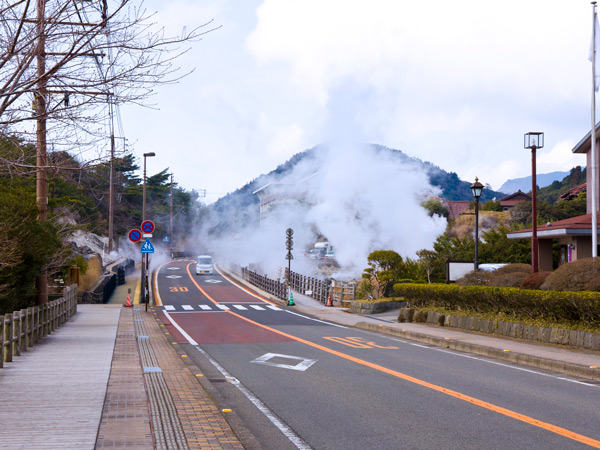
steam rising from Unzen Hot Springs
Steam rises from Unzen Hot Springs near Nagasaki.

Gliding through the Nita Pass Ropeway

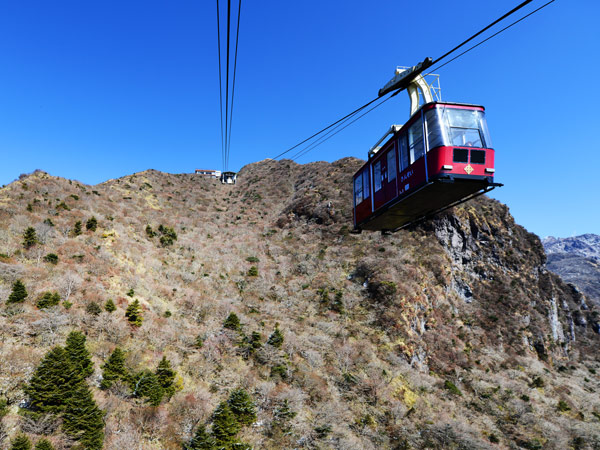
While most come here to soak in the mineral-rich waters, one of the most breathtaking experiences is a ride on the Nita Pass Ropeway. A cable car by any other name, the adorable red cabin of the ropeway is like something straight out of the 1950s, so I appreciate the sartorial efforts of my guide for the day, Mr Tsunoda Shuji, who turns up wearing tweed and a jaunty little hat for our excursion.
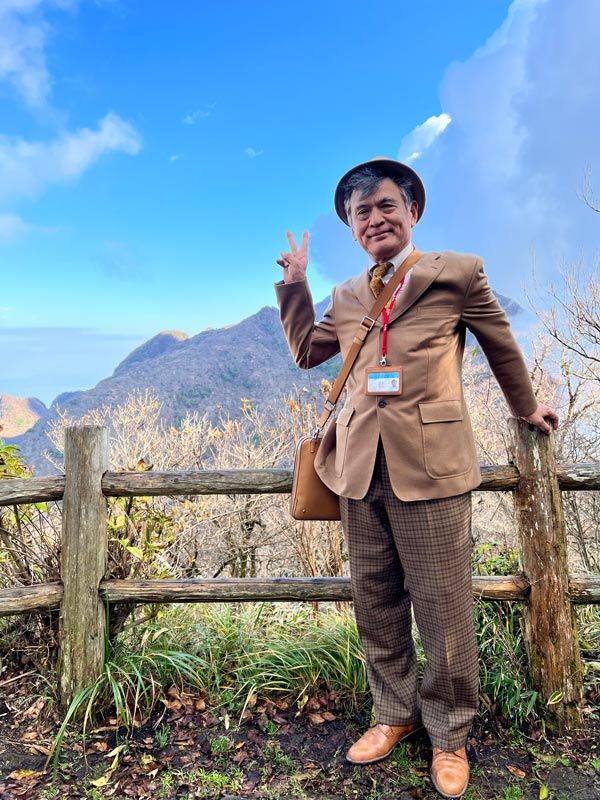
a photo of guide Tsunoda Shuji
The sartorial style of guide Tsunoda Shuji reflects the autumnal colours of Mt Myokendake. (Image: Leigh-Ann Pow)

The 500-metre ride up Mt Myokendake from Nita Pass takes three minutes, delivering me to 1300 metres above sea level. While the low clouds restrict my view on the pass side of the mountain, I find diversion in walking the short, narrow trails that lace the hardy foliage.
the Nita Pass Ropeway heading to Mt Myokendake
Nita Pass Ropeway provides easy access to Mt Myokendake.

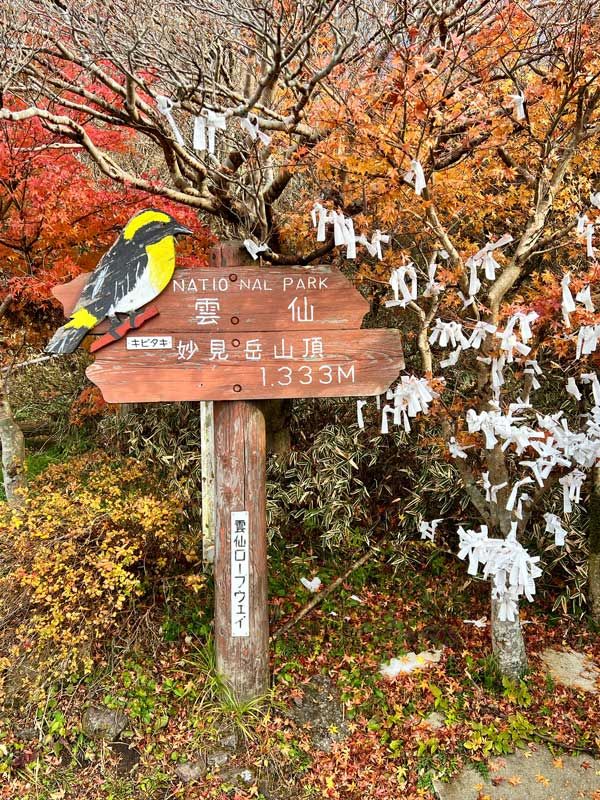
At the end of one, I find a stunning view of an autumn-hued valley and a tiny honour box of fortunes (omikuji). I pay Y100 ($1) and unravel my fortune – a good one according to Shuji-san – and then tie it to the branch of a tree to magnify its effect, allowing the good luck to waft on the mountain breeze to whatever being of providence will now watch over me to make it a reality.

A stop at Fugendake, one of the main peaks of Mt Unzen, provides a view of one of the newest mountain peaks in Japan: Heisei-Shinzan. Formed almost overnight when lava pushed up from the Earth’s core as Mt Unzen rumbled and erupted in the 1990s, the before and after photographs are surprising evidence of Kyushu’s ever-changing topography as a result of fire and fury.
fortunes drifting at Nita Pass, Kyushu, Japan
Fortunes are drifting at the top of Nita Pass.

Weekly travel news, experiences
insider tips, offers,
and more.

The singular

The beauty of travelling in Japan is in the diversity of experiences to be had, often rendered singular by their unique regionality. This thought crosses my mind as I sit on a low, flat boat floating through Fukuoka Prefecture’s ‘Little Venice’.

The quiet, tree-lined waterways of Yanagawa are actually the remnants of the defensive moats that once protected this historic former castle town. The castle, originally built in 1588 and known as the ‘water castle’, was eventually decommissioned in 1873, but the snaking canal system it fostered remains.

Drifting through Little Venice

Settling into place, our expert oarsman launches his boat (donkobune) away from the edge of the water and plunges his long bamboo pole into its depths. As the mellow autumn sunshine glistens and glints off the surface, we glide past waterside parks and walkways, and skinny little houses that represent Yanagawa’s version of waterfront living.

Rambling bushes, weeping willows and flowering trees line the route, introducing delightful bursts of colour, while in other stretches distinctive sea cucumber walls (namako kabe), created in a crosshatch pattern of white and grey, appear at the water’s edge.

Suddenly, our oarsman bursts into song, reciting the melodic poems composed by Hakushu Kitahara. His tenor is matched by his expertise at navigating the many bridges that span the moats, many requiring a low duck to clear; technique is also required to punt the wide bridges without becoming stranded halfway.

My journey comes to an end at the grand Tachinabana Ohana, the traditional home of the Tachinabana family, where I am served a lunch of eel, steamed over rice and presented in a lacquerware box – a Yanagawa speciality – while overlooking a manicured garden.

A small town bustling with creativity, a violent and surprising change to an already dramatic landscape and a singular meal after a unique experience; the glory is indeed in the (finer) detail in Kyushu.
a store in Kyushu offering refreshments
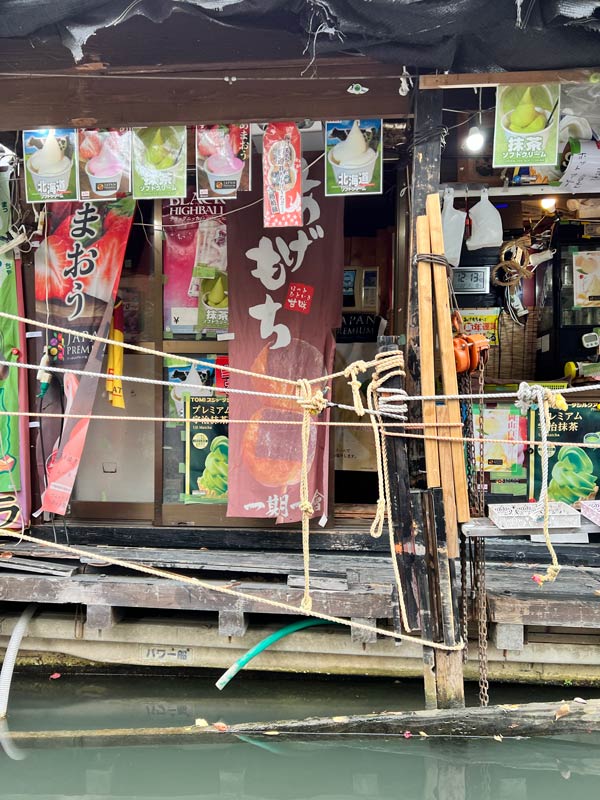
A canal-side store offers refreshments to those cruising Yanagawa’s canals. (Image: Leigh-Ann Pow)

A traveller’s checklist

Getting there

Japan Airlines has daily flights from Sydney to Tokyo (Haneda); JAL and ANA offer regular flights from Haneda to Fukuoka.

Staying there

Choose a trio of design hotels to stay in style: the impactful circular lobby at The Basics Fukuoka is lined from floor to soaring ceiling with books big and small, all of which guests can browse and read; REF Kumamoto by Vessel Hotels is another property that has a focus on books, with the bright and welcoming lobby dominated by a large communal reading table full of books, including plenty of manga.

The two-storey loft rooms at Arita Huis are stylishly simple in execution yet deliciously welcoming, echoing the exquisite Japanese minimalist lines of the lobby, with its eight-seat dinner counter overseen by chef Takashi Ikeda, gallery and shop.

Eating there

Japanese food is often described as a work of art, but at Noritou the chef crafting the bouncy, nutty 100 per cent buckwheat soba noodles (most soba noodles these days are cut with other flours, so these are the gold standard) is the same artist whose ceramics are on display as you sit in this delightful gallery-cum-restaurant.

The cold noodles come accompanied by soba-yu (soba water), which you dip the noodles in before slurping them from your chopsticks.

See noritou.com or visit the Kiln Arita Tourist Information Centre near the station for details and directions.

Want to see more stories from International Traveller in your Google search results?

  1. Click here to set International Traveller as a preferred source.
  2. Tick the box next to "International Traveller". That's it.
hero media

These community homestays are changing how travellers experience Nepal

    After youth-led protests in 2025, this year Nepal elected a 35-year-old former rapper as Prime Minister. In a country where tourism is its biggest industry, what’s next for travellers? 

    In 1986, Nepal changed its clock. It had used India Standard Time since 1920 so, to differentiate, it wound its clock 15 minutes ahead of, not behind, its big-brother neighbour. Boss move. “Nepal is strongly opposed to the idea that our identity is connected to India,” says Community Homestay Network (CHN) guide Bikal Khanal.  

    Tharu dance
    Tharu dance is traditionally set to hand drums. (Credit: Kate Lewis)

    Today, Nepal is the only independent country with a 45-minute deviation to universal time; an oddity that’s become a symbol of national pride. The quirk is nearly as endearing as Kathmandu’s Tribhuvan airport where carved varnished wood and shiny red bricks rule. One sign points to a ‘Travelator’ and another to a ‘Grievance Handling Desk’ while visas are noisily stamped at customs for US dollars, cash only. When am I?  

    Nepal gray langur
    Spot the endemic Nepal gray langur. (Credit: Simon Urwin)

    The 15 or 45 minute anomaly sees me tap out completely on timezone calculations. Why bend my brain calculating if it’s quarter to or quarter past elsewhere when I’m in the honking here and now of Kathmandu where the air is high-altitude crisp, the prayer flags flutter and the street dogs howl?  

    How tourism is changing in Nepal

    Bardiya National Park
    Bardiya National Park is rich with wildlife. (Credit: Simon Urwin)

    India is not the only association many Nepalis would like to shake. With eight of the world’s 10 tallest mountains, including Mount Everest and Annapurna, Nepal has long attracted mountaineers and trekkers, and expedition numbers are continuing to rise.  

    Tourism is one of the country’s biggest sources of foreign currency, so this growth is not negative, per se. But according to Ang Tshering Lama, who co-founded Phaplu Mountain Bike Club, being reduced to a mere trekking destination is limiting.  

    “Trekking is just one layer of our identity,” says Ang. “When it becomes the dominant narrative, it limits how we’re seen and how we see ourselves.” Nepal’s recent success, however, in diverting trekkers to less-trafficked areas such as Manaslu mofuntain, where visitor numbers rose by 117 per cent last year, offers hope that tourism can diversify even more radically.   

    Local men in Bhada village
    Local men in Bhada village. (Credit: Simon Urwin)

    The founder of CHN, Shiva Dhakal, wants that change. “The whole idea of the Community Homestay Network is to promote experiences outside of trekking,” he says. “Community tourism changes lives and helps kids stay home instead of coming to the city or migrating to the Middle East.”  

    Ang grew up seeing people leave, “not because they wanted to but because there weren’t enough opportunities to stay”, he states. Yet from remote villages to living traditions; food, art, music and emerging subcultures, “there’s so much that’s not being seen.” 

    CHN is opening some of those doors. It doesn’t own, or fund, any homes. Rather, it promotes homestays to travellers on a single, slick platform, while fostering entrepreneurship in places where women, marginalised castes, Indigenous people and the youth stand to benefit the most.  

    A new generation demanding more

    Dalla Town Hall
    Dalla Town Hall, where volunteers discuss anti-poaching tactics. (Credit: Bheem Thapa)

    The future prospects of next-gen Nepalis can no longer be ignored. On a Kathmandu tour with 33-year-old guide Monica K.C, we pass buildings torched in the September 2025 ‘Gen Z protests’, including the Supreme Court and Parliament House. Seventy-two people died. “They were anti-corruption protests,” says Monica. “Politicians’ children are living a lavish life but the airports are crowded with youngsters leaving to find work.”  

    We stop in ‘little Tibet’ at the wondrous sixth-century Boudha Stupa. “The wheel of life is Buddhism in a nutshell,” says Monica. “Things such as hate, ignorance and anger keep you rotating around the wheel, so you must follow the principles of Buddhism to detach. If you can’t, there’s no nirvana for you.”  

    Boudha Stupa's prayer wheels
    Boudha Stupa’s prayer wheels are used to recite Buddhist prayers. (Credit: Kate Lewis)

    In a sun-drenched twist to the usual temple visit, we ascend the stupa’s sloping plinth and roam its whitewashed dome. Tendrils of diaphanous prayer flags stream from a steeple-like structure where the Buddha’s unblinking eyes stare out. No nirvana for you… 

    bouda stupa prayer flags
    Tibetan-style prayer flags embellish the whitewashed dome of Bouda Stupa, a Buddhist temple. (Credit: Kate Hennessy)

    The dome is delightfully free of guard rails or chiding from security. There is, however, a stern ‘No TikTok’ sign, perhaps in response to the youth’s newly flexed power. The booted-out Prime Minister, K.P. Sharma Oli, was replaced in a resounding election victory in March by 35-year-old Balendra Shah of the Rastriya Swatantra Party (RSP) – a former rapper and mayor of Kathmandu. The RSP’s manifesto indicates tourism is a priority, and that Nepal’s cultural identity in areas such as gastronomy will be strengthened.  

    Boudha Stupa vendors
    Vibrant souvenir shops and cafes around Boudha Stupa. (Credit: Kate Hennessy)

    A more confronting stop awaits at Pashupatinath Temple. Today is Bala Chaturdashi, a Hindu festival where thousands of devotees gather to honour their dead ancestors. Vendors hauling foam mattresses do a lucrative trade as people set up for a night of vigil. This includes burning the bodies of recently deceased relatives on bamboo pyres in the Bagmati River, which flows into the sacred Ganges.  

    A woman at annual Hindu festival Bala Chaturdashi
    A woman at annual Hindu festival Bala Chaturdashi, in Kathmandu. (Credit: Kate Hennessy)

    Wrapped in a shroud, the bodies are positioned with their heads facing north to the Himalayas where Lord Shiva resides. They’re covered with flowers and straw and set alight by male family members.  

    Hours later, the ashes are swept into the river where devotees will take a holy dip the next day. As much as Monica assures us it’s not voyeuristic to watch, I struggle to do so. “Here you see the reality of life because everyone ends up there,” she says, gesturing to the river.  

    Life unfiltered in the Terai region

    tharu woman
    Tharu woman and master weaver Parbati Chaudhary in Bhada Village. (Credit: Bheem Thapa)

    The reality of life needs processing time, which the western Terai region delivers in spades. The Terai is largely separated from India by the Karnali River and Bardiya National Park, where elephants, rhinos and the elusive Bengal tiger roam.  

    Once a nomadic tribe, the Indigenous Tharu people are now the largest ethnic group here. “They didn’t know their daily life was interesting for international travellers but they’re starting to understand now,” says CHN founder Shiva.  

    safari through Bardiya National Park
    Take a Jeep safari through Bardiya National Park. (Credit: Bheem Thapa)

    We fly Buddha Air to Dhangadhi airport and drive five hours to stay in Tharu homes. The journey to Bhada village is a blur of roadside fruit stalls, traffic-stopping sacred cows and fields sown with wheat, rice, mustard, spinach, cauliflower and potatoes. Nepal’s agriculture feeds only Nepal.  

    Marigolds
    Marigolds are an important part of Hindu rituals. (Credit: Simon Urwin)

    “The only thing we export is young people,” says our guide Bikal. As the light dims and we plunge evermore rural, mysterious mounds of compacted hay – some house-sized – loom like the creatures from Where The Wild Things Are. Even our trusty driver gets flummoxed by a dirt road that abruptly ends and we find ourselves hurtling across a paddock.  

    On arrival, some are ferried to mud-walled cottages greened by gourd creepers, with thatched roofs and rustic-chic mosquito nets. Myself and two others are ushered to the home of corner store owner, mechanic and mushroom farmer Man Kumar Chilaruwa and his wife Rajkumari.  

    community homestay entrance
    A warm welcome at a community homestay. (Credit: Simon Urwin)

    They escort us to a bunker-esque back building with steel doors and a folding security gate, behind which is gleaming linoleum, dolphin-printed tiles and a shower cavity that must be gingerly stepped through to reach the toilet.  

    The ceiling lights emit a rainbow of colours (the bathroom light gets stuck in, frankly, a quite frightening red). We’re nevertheless touched that our hosts invested in all this bling when the average salary is around $275 a month.  

    In the coming days, we participate in Tharu traditions such as making moonshine, dancing, weaving straw handicrafts and gold-panning. We’re fed well with staples of rice, mustard greens, lentil pancakes, daal, curried chicken and tomato chutney served on antibacterial saal leaves.  

    food at community homestay
    Dig in. (Credit: Kate Hennessy)

    Sonara community homestay president Indradevi Tharu tells us river snails are often served, and the boiled and pickled flesh of rats hunted in the rice fields. “Perhaps next time?” we say and all have a laugh.  

    The power of community homestays 

    community homestay owners in Nepal
    Barda community homestay owners Parbati Chaudhary and Ram Krishni Devi Chaudhary. (Credit: Simon Urwin)

    Immersing Western visitors in foreign cultural practices is not new. But with the Tharu, I never get that uneasy sensation that I’m being performed for. Despite being the only tourists, there’s no ‘othering’; just warm, composed and ultra-dignified welcomes. Like we’ve always been here.  

    “I love to have travellers in my village so I can see the world,” says local woman Parbati Chaudhary. “Why would I travel the world when the world comes to me?” 

    The graceful acceptance the Tharu offer, as well as the slow pace, works miracles on my frazzled nervous system. One day I even take a nap on a vacant homestay bed. 

    Sonara community room
    An authentic stay in the Sonara community. (Credit: Kate Hennessy)

    Roosters strut and goats bray as we sit on the ground in al fresco kitchens, rolling rice flour into cylinders steamed to make dhikri (dumplings). When water is needed, we fetch it using a hand-operated pump as a family of ducks strolls by, side-eying us like curious neighbours.  

    Animal lovers will delight in Tharu villages. Kind and resourceful inventions are everywhere, such as snacking stations where two posts lean together, with leafy boughs dangling on rope for baby goats to forage from.  

    CHN’s CEO, Aayusha Prasain, nods knowingly when one in our group says she cried when she left her host, Shayam Chaudhary, in Bhada. Shayam’s 17-year-old son, Prashant, had translated, which deepened the connection.  

    “Community tourism turns travel into a relationship, not a transaction,” says Aayusha. “It places decision-making power in the hands of local communities, especially women and youth.” Since 2018, CHN has hosted more than 4000 travellers from 52 countries in 408 households, and estimates women’s participation has increased by 381 per cent.  

    Elephant watch
    Elephant watch. (Credit: Simon Urwin)

    In the Bardiya community, where vexing human-animal conflict has been a balancing act for decades due to elephants raiding crops, long-time homestay operator Salik Ram Chaudhary says young people keep the older ones on their toes.  

    Gathering greens
    Gathering greens. (Credit: Bheem Thapa)

    “We can’t keep homestays stagnant,” he says. “We have to upgrade our service and redefine our product or young people won’t see it as an attractive business. If we can keep evolving with this travelling trend we’re confident the youths will stay and continue it.” 

    Back in Kathmandu, Monica explains that after the deaths of young protestors in September, a determination had spread to not let their sacrifice be in vain. “We want to keep holding the government accountable,” she says. “We don’t know what situation we’re facing, but we’re ready to face it.”  

    Interested in Nepal but prefer to experience it in total comfort? Read our guide to luxury travel in Nepal