
A luxury journey through the splendours of India unlocks the country’s rich culture and heritage through iconic sights like the Taj Mahal and the palaces of Rajasthan, where the majestic and mystic coalesce.
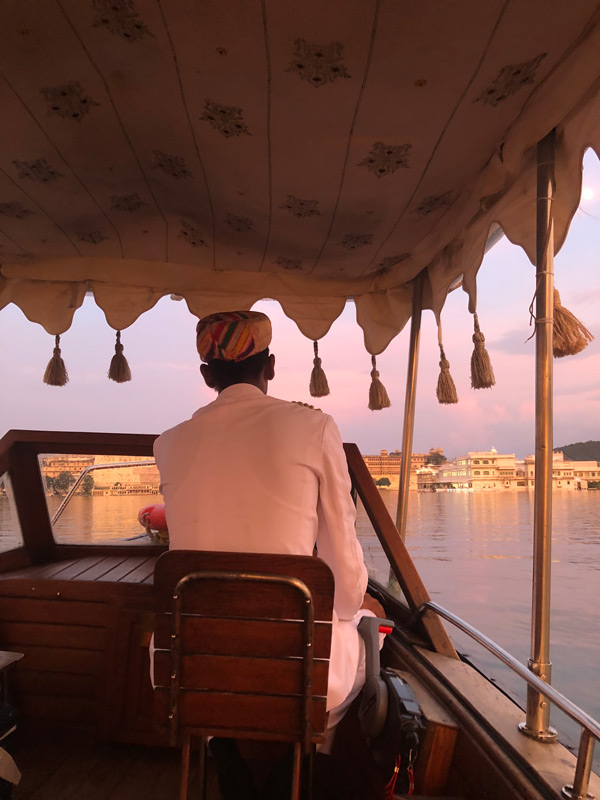
The moon is up, almost full. It’s a chalky thumbprint in a copper-pink sky mottled with sunset and mirrored in the silken water. Our boat glides across Udaipur’s Lake Pichola, washed in gold as the palatial buildings that line its banks cast their own shimmering reflections. We take in the scale of the City Palace, one of the largest in India, as it tumbles towards the water’s edge. And we slip past the white marble edifice of Lake Palace, built in the heart of the lake in the mid-18th century for the pleasure of Maharana Jagat Singh II and now a destination hotel.
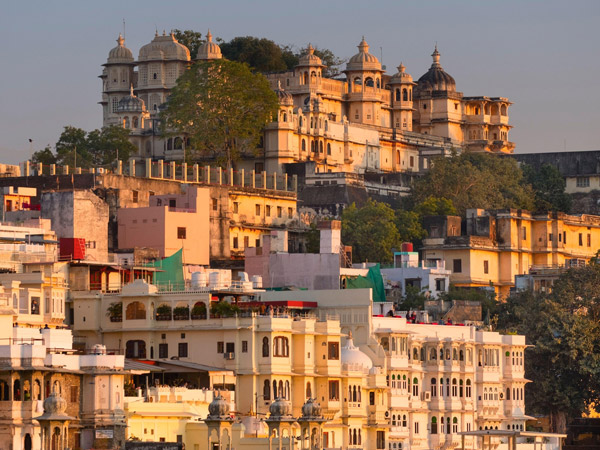
Our small group is so absorbed by this swirling mirror world of liquid light and colour that Sunny’s insights into the fascinating history of Udaipur, the so-called City of Lakes in the north-west state of Rajasthan, are falling on distracted ears. And that’s when, halfway through our Abercrombie & Kent journey, our resident tour director slips into the conversation the small fact that he is royalty. Now he has our undivided attention.
Ex-professional cricket player, PhD student and devout Hindu. Equally proud of India’s forward trajectory as the fastest-growing major economy in the world and the huge potential of its youthful population as he is of the many facets of its ancient culture and heritage.
In demand as a tour guide for his love and knowledge of India and the generosity with which he shares it with guests. Passionate about his role as storyteller to help visitors understand the country in all its richness and complexities. This much we’d gleaned already about Sunny, or Suryaveer Singh Shaktawat, whose name is derived from two Sanskrit words that translate to Brave Sun. But now we are in his hometown and, as we cross the lake from our hotel, The Oberoi Udaivilas, for an evening at his family home, he adds this thread to the tapestry.
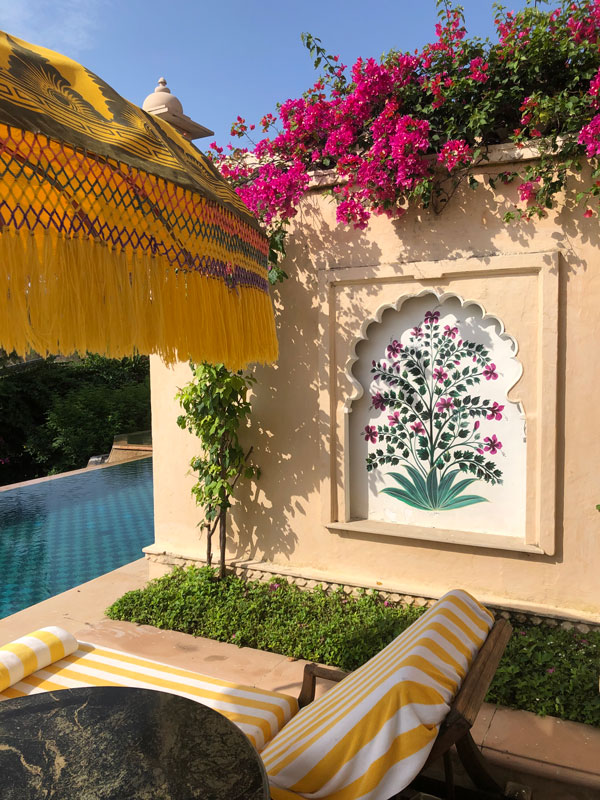
Defined by its lakes, created over centuries and pinned in place by the ancient Aravalli Range, Udaipur was once the capital of the Mewar Kingdom, the founder of which Sunny is a direct descendant. His family is acknowledged as the world’s oldest-serving dynasty, with an unbroken lineage of Maharanas – or kings – that stretches back to 734AD. And he shares the same blood lineage as its 76th custodian, Arvind Singh Mewar.
While India’s monarchies were abolished in 1971 along with access to the privy purse, royal families retain their titles and role in society and generate income through alternative means, such as converting their palaces to heritage hotels. Rajasthan, then Rajputana, was once a land of princely states including Jaipur and Jodhpur where our journey will also take us. And the House of Mewar, known as the Sun Dynasty, remains a vibrant part of India’s cultural and political fabric.
The icon of India – the Taj Mahal
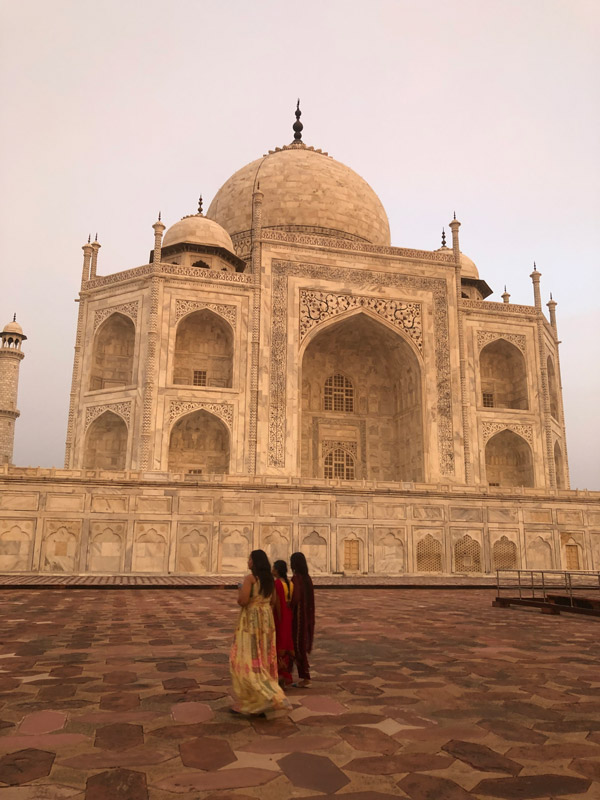
Three sunsets earlier in Agra, I was standing in the aura of the Taj Mahal. The immense monument to love wrought in translucent white marble was built between 1631 and 1648 by order of Shah Jahan in memory of his favourite wife Mumtaz Mahal. I took in its scale and majesty and tried to calibrate the reality of seeing something so iconic in person.
Amid the thrum of others, I took photos as the colour of that timeless facade changed with the fading light, but tried also to commit this feeling to memory: the shared human experience that proves, even in a digital age where overexposure breeds disconnection, we can all still be awed. The Taj Mahal attracts up to 8 million visitors annually, so it’s surprising to find pockets of peace here in its gardens: just you and the parrots flitting among trees in the undeniable but unfathomable presence of the most famous building in the world.
We returned the next morning for sunrise, arriving when the mausoleum was bone white against a milk sky, its dome just beginning to blush pink. Up close, we took in the exquisite inlay work you miss in pictures: intricate floral patterns and Arabic script rendered in gems.
As a red orb sun hovered in the eastern sky we marvelled at the detail on all sides of the mausoleum. I wondered if Sunny ever tires of bringing people here. No, he answered. “I can talk about this building for years. No words can ever do justice to it."
Celebrating the heritage and culture of Old Delhi and beyond
We’d started our journey two days earlier in Delhi, where the sky swirls with black kites that emulate the city’s perpetual motion. We took a rickshaw ride through the markets of 17th-century Chandni Chowk, turning down alleys of ever-decreasing width where stalls of piled-high spices and fabrics or steaming corn and sticky jalebi jostle for every inch.
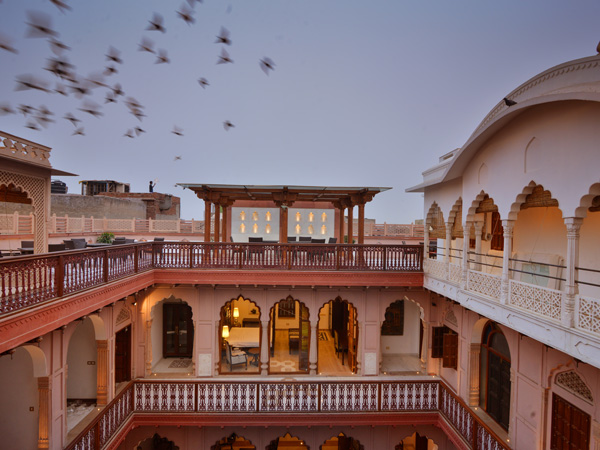
And in the heart of it all, Haveli Dharampura is a salve against the bustle, an oasis of space off the narrowest of streets. This 19th-century mansion was rescued from ruin and transformed into a boutique hotel and restaurant that celebrates the heritage and culture of Old Delhi. We dined on a street-food-inspired lunch at its restaurant Lakhori, named after the burnt-clay bricks of the Mughal architects who built Chandni Chowk and so much of India.
From Delhi we travelled to Agra, where The Oberoi Amarvilas – voted among the World’s 50 Best Hotels in 2023 – rewards travellers with its showstopping swimming pool and views of the Taj Mahal from every guestroom. And from Agra, in the state of Uttar Pradesh, we cross into Rajasthan.
India’s vibrant desert state of Rajasthan
Our coach driver Varender Singh, who we call Malli, has the calmest of temperaments in the face of India’s notorious traffic, where lanes are but a suggestion and there’s always a cow to negotiate round. And we’re well looked after by J.P. Singh, or Mama: affectionately dubbed the ‘mum of the bus’, who welcomes us back from each heady excursion with chilled water and a shy smile.
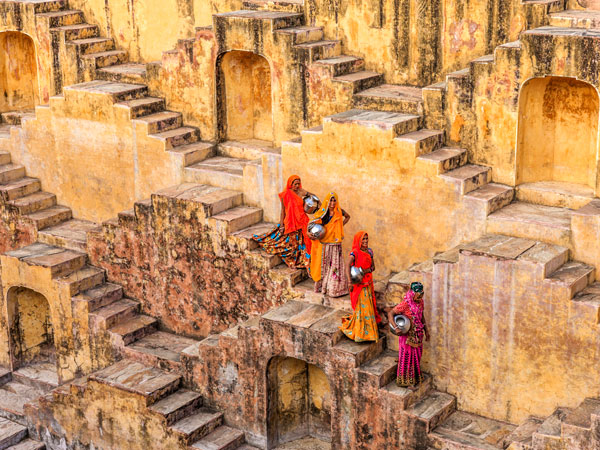
India’s vibrant desert state announces itself on the highway. Red, yellow and citrus fabric flashes brilliant colour in the wake of mopeds and decorated trucks emit musical trills. Peeling off into the countryside, we make a pit stop at Abhaneri village to visit a traditional stepwell used in arid regions like this to store water.
But one should never underestimate a pit stop in India. Chand Baori is an architectural marvel in its own right: built more than 1000 years ago, its geometric pattern comprises 3500 narrow steps and crisscrosses 13 storeys to the bottom of the well like an inverted pyramid. We’re finding extraordinary in the everyday.
India’s fabled Pink City of Jaipur
I’d been tracing the horizon of the ragged Aravalli Range through the window and now, on the outskirts of Jaipur, the mountains have encroached, wrapping around the street scenes I’m glimpsing as a lightning storm moves in. Two elephants appear in my periphery and disappear down a shadowy side street before I have a chance to really see them.
I feel the electricity in the air like a spark of magic as we arrive in India’s fabled Pink City. Our hotel, The Leela Palace, rises majestically from the dark and, when we step off the bus and through its doors, we are showered – quite literally – with rose petals.
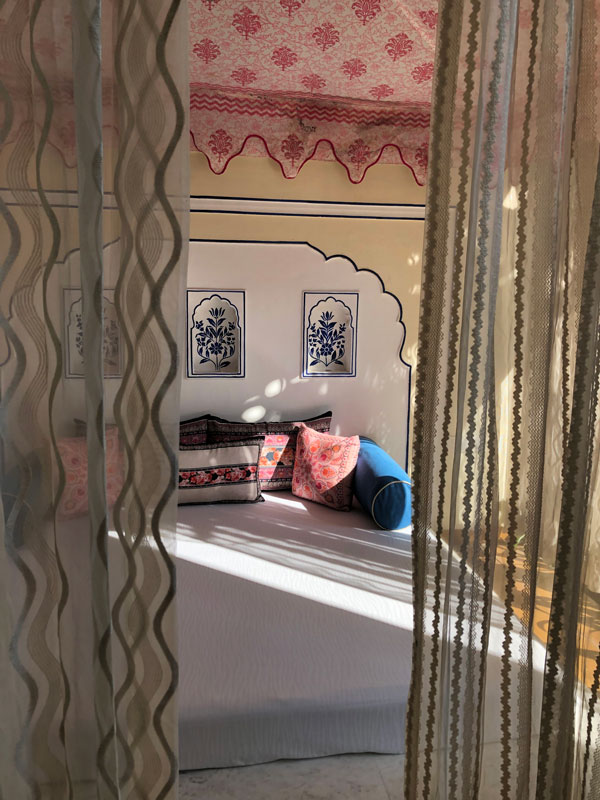
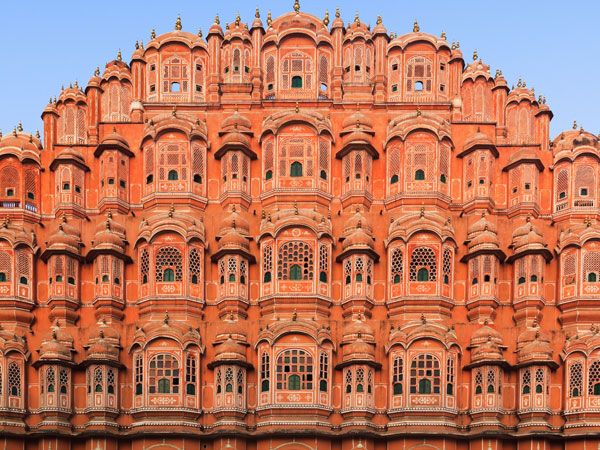
In 1876, Maharaja Ram Singh of Jaipur ordered the city to be painted pink – which symbolised hospitality – to welcome a visiting Prince of Wales. That burnt-brick hue has come to epitomise the city. Some 150 years previously, Jaipur was founded on another creative idea when Sawai Jai Singh invited 36 artisan trades from all across India to make their home here – from kitemakers to chefs to painters to silversmiths. This spirit of creativity still inspires and attracts artists to a city that blends the splendour of its past with the pulse of the present.
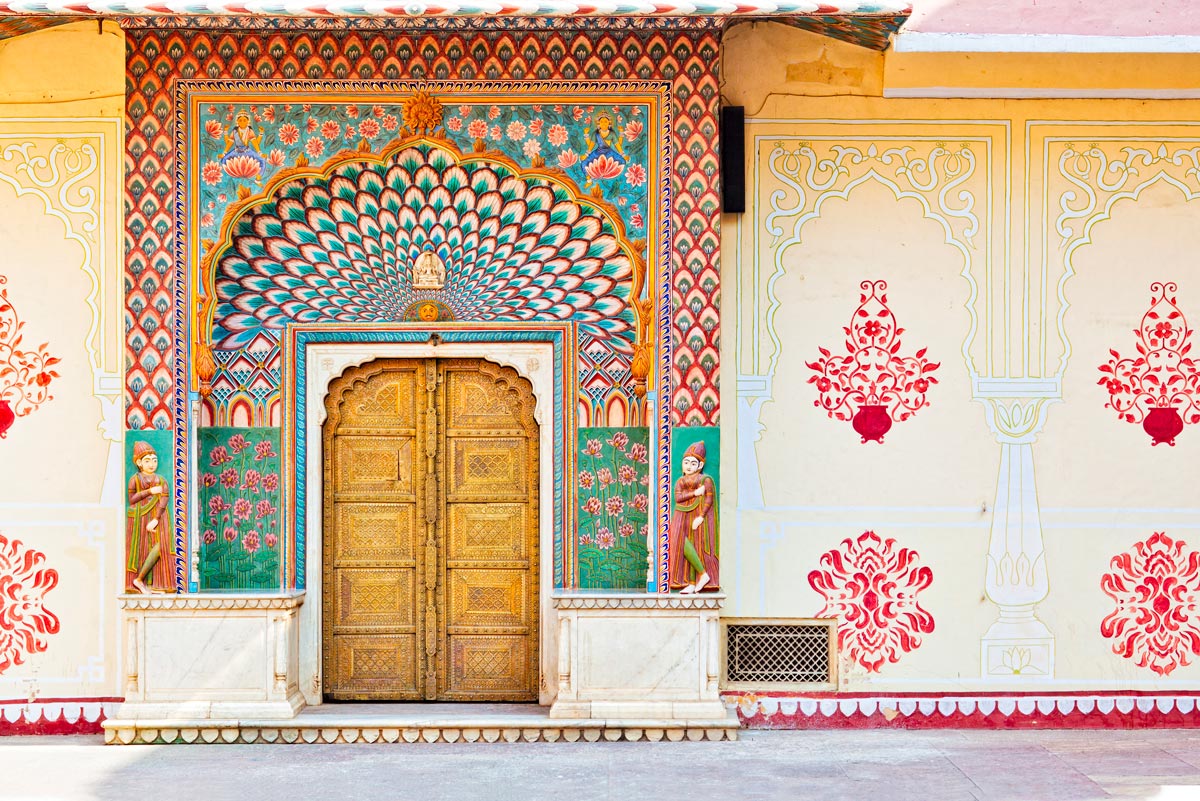
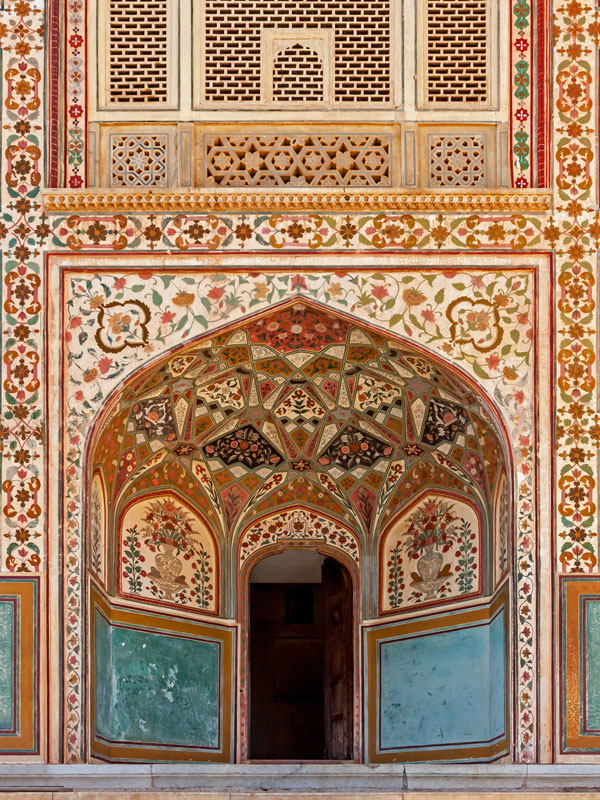
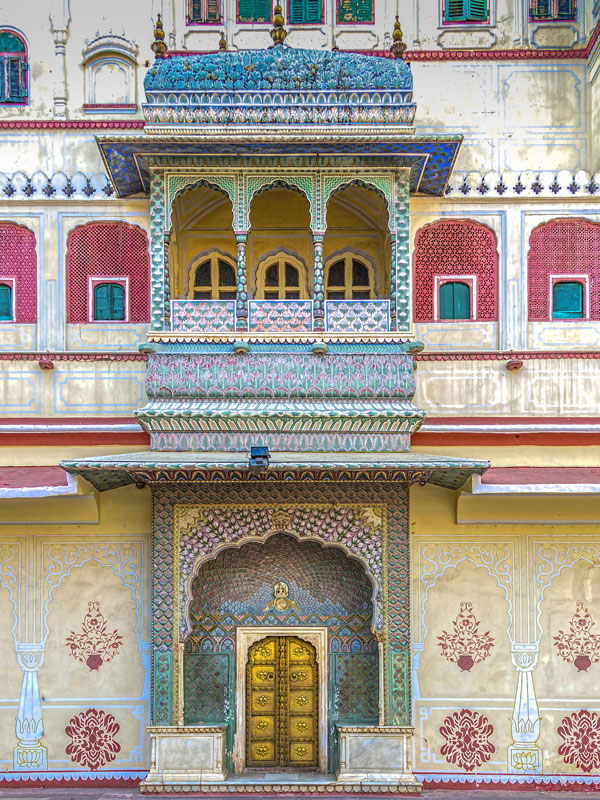
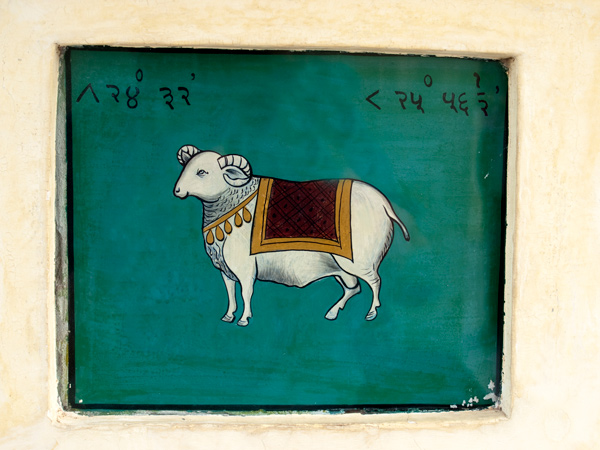
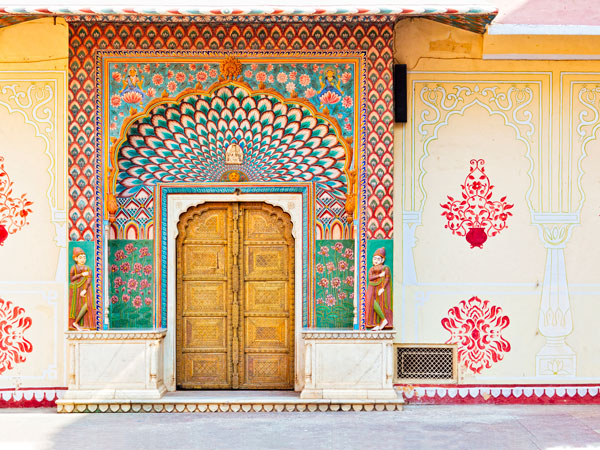
Perched high above Jaipur, the Amber (or Amer) Fort is an exquisite amalgam of Hindu and Mughal architecture. And in the heart of the old town, the City Palace complex reflects Rajput heritage in all its stunning detail: its highlight undoubtedly the Pritam Niwas Chowk courtyard, where four glorious gates represent the seasons: Peacock for autumn, Rose for winter, Green for spring and Lotus for summer.
Revitalised fine-dining restaurant Baradari, within the oldest walled quarter of the City Palace, celebrates the city’s traditional crafts and artisanal skills within the context of contemporary Jaipur.
Nearby Jantar Mantar is an astronomical garden observatory built by the Rajput king Sawai Jai Singh and completed in 1734. The UNESCO World Heritage site features the world’s largest stone sundial alongside other instruments used to observe the movements of the cosmos. India’s ancient rulers were led by the stars, and this sense of mystery and magic entwined with its majesty still percolates through today.
In Rajasthan, royalty and mysticism go hand in hand. Luxury linked with the subliminal. Rambagh Palace is the erstwhile residence of the Maharaja of Jaipur and his style icon queen, Maharani Gayatri Devi, and today operates as a Taj hotel. That evening we dine in opulence at Suvarna Mahal in its original palace dining room on thali served on golden dinnerware with cutlery designed by Versace, while the resident astrologist reads palms on the terrace outside.
Expect the unexpected in Jodhpur
Every day in India is different and unexpected by the country’s very nature. And A&K throws its own surprises into the mix. Deep in a valley in rural Rajasthan, our lunch en route to Jodhpur turns out to be a feast under the canopy of a 300-year-old banyan tree at luxe hideaway Mountbatten Lodge in the company of larger-than-life Reggie Singh, with a predilection for jazz and reverence for the ‘old ways’. We sip gin and tonics and dream of returning to lounge poolside on a daybed and head to the hills on the lodge’s leopard safari.
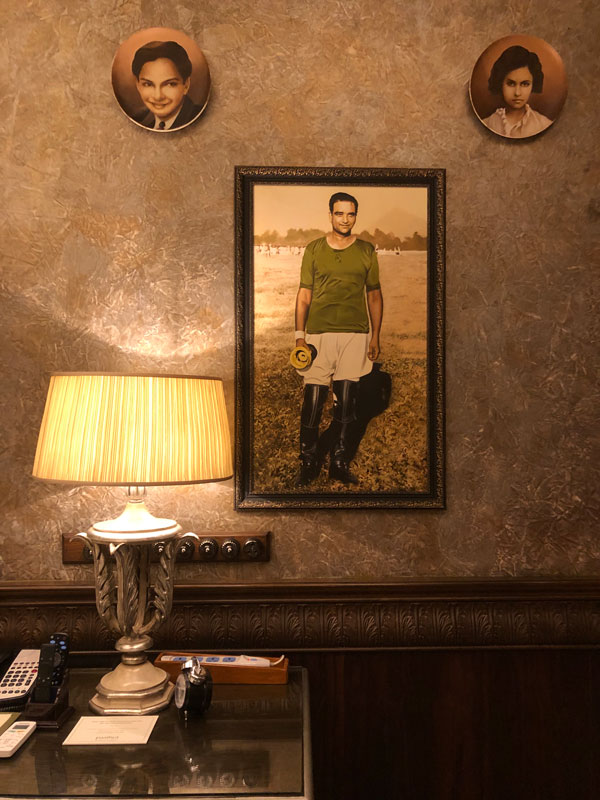
The greatest surprise comes when we arrive in Jodhpur to an audience with the king, Maharaja Gaj Singh II. Built in the Art Deco style of the day between 1928 and 1943, Umaid Bhawan Palace is still a royal residence but doubles as a Taj hotel. Over a drink in its wood-panelled Heritage Room, we meet the 38th ruler of the house of Marwar, who ascended the throne aged just four when his father died in a plane crash. He shares not only tales of his storied life but, in a moment of levity, shopping tips too.
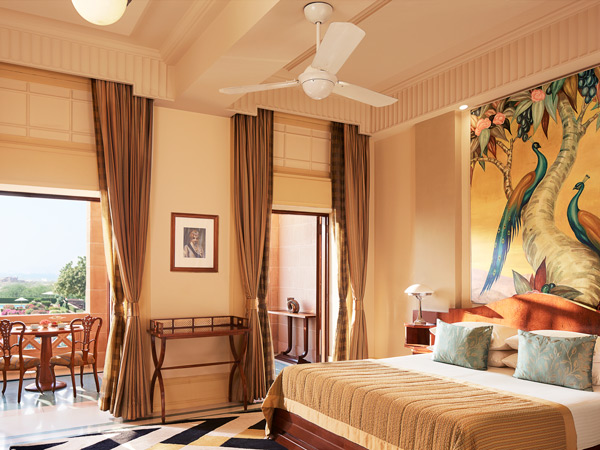
The palace is a landmark on the skyline of Jodhpur, the Blue City in the Thar Desert so called for its buildings painted indigo.
Its other landmark is the imposing Mehrangarh Fort, which stands high on a sandstone cliff – its immense fortifications concealing a number of palaces each more dazzling than the last. It was here in 1952 that Maharaja Gaj Singh II’s Rajtilak, or coronation, took place as a black-and-white photo of the child in regal attire depicts.
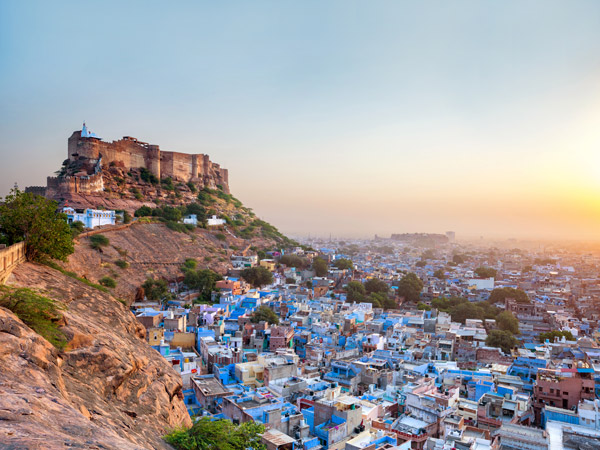
We head to Maharani Textiles and Handicrafts, on recommendation of the king, to lose ourselves in the jungle of fabrics that this family-run textile house manufactures for fashion royalty – the likes of Kenzo and Armani – using the traditional handicrafts Rajasthan is famous for. Then as the sun starts to mellow, we drive into the desert to Salawas for a village safari. Here, we see traditional crafts at play, from potters making hand-hewn mud vessels with skills passed down through generations to expert dhurrie weavers who create colourful rugs in their backyard that present like carpets of wildflowers against the desert landscape.
Coming full circle in Udaipur
Back in Udaipur, it feels only natural when Sunny mentions the fact that he is part of the Mewar dynasty. Richness in all its forms – from cuisine to art to palatial hotels to textiles and the jacket with silk embroidery custom-made for me by a tailor named Prince (who does bear an uncanny resemblance to the mononymous artist) – has been a thread woven throughout the journey.
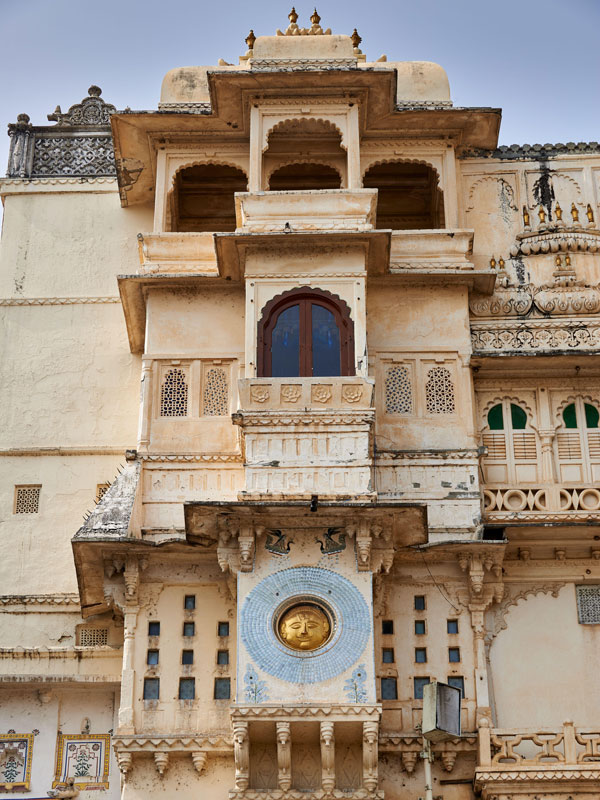
And earlier that day, I’m awed by Udaipur’s City Palace, with its magnificent courtyards and gilded rooms that glimmer with opulence and artistry.
Welcomed by the gleaming sun emblem of the Mewar kings, it’s all marble and thikri mirror work, hand-painted murals, glass that throws out colour like disco lights and walls that shine a shade of champagne thanks to a wash that blends seashell, eggshell, limestone and water.
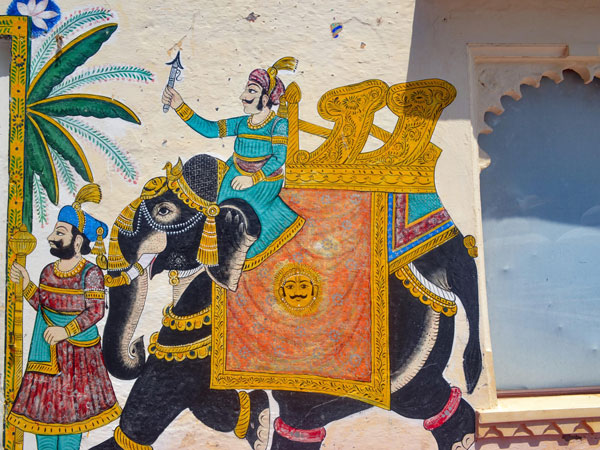
It also has the largest collection of miniature paintings in the world, where artists captured courtlife in intricate, vivid detail with each brushstroke applied using one single hair of a squirrel.
At the complex’s highest point, Badi Mahal, or Garden Palace, was built as a pleasure pavilion with its panoramic views of the city, lakes and hills. While monkeys play in the trees above a pool used for Holi celebrations in the past, I squint and imagine the Rajput kings and queens overseeing festivities from their ornate balconies.
Weekly travel news, experiences
insider tips, offers, and more.
Understanding India
We step off the boat on Lake Pichola and follow Sunny through Udaipur’s old town to his family home, where 36 people live across four generations. At its heart, the hallmarks of a traditional house: a stepwell, an open courtyard, a living temple, a field to grow crops.
We are greeted by Sunny’s wife, two of his three daughters, his mother, nephews and older brother. Over the next few hours we eat and talk: about everything from AI to studying abroad to past lives and how to activate your third eye chakra. And about India, its cultural heritage, spirituality and diversity from state to state, each one reflecting the environment in its tones and textures. “Rajasthan is colour," says Sunny’s wife Shailja Rathore, a graceful and spiritual woman, elegant in the chiffon of the royal Rajputs. It’s a state of red, orange, yellow, “which represent all the beautiful bright flowers that grow here: the marigold, rose and lotus."
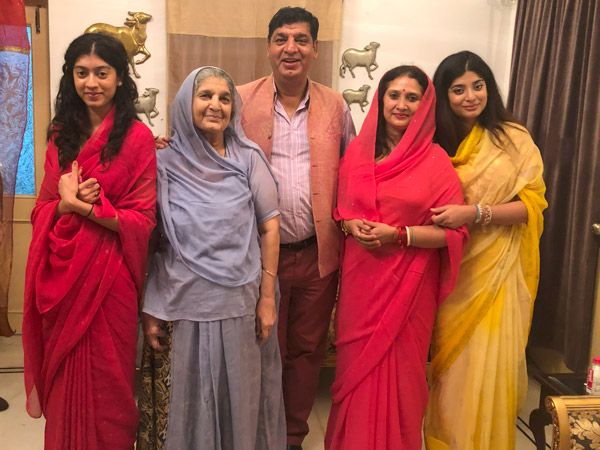
Named after astrological systems, his daughters represent India at the nexus of heritage and the future. Eldest Radhey Kumari Shaktawat is a professional tarotist and her younger sister Swaroop Kumari Shaktawat is a graduate working at Amazon. An aspiring author and inspired by her parents, she dreams of writing about her culture and heritage; the vastness of Hinduism.
I might have had the good fortune of sleeping in a palace or two during this luxurious A&K tour of India, but I leave Sunny’s house with the greatest feeling of privilege at having been invited to share and learn about a country so complex through the portal of one family home. “Family, spirituality and culture," Sunny had said at the start of the adventure, his words resonating now. “Connect the three and then you will understand India."
A traveller’s checklist
For a similar Abercrombie & Kent journey through India, see its nine-day tailor-made Splendours of Rajasthan (from $5795pp) or alternatively A&K can create a bespoke itinerary for your perfect India adventure.
Getting there
Qantas flies direct to Delhi from Melbourne.
Staying there
During an A&K journey through India you will get to stay in some of the country’s finest hotels, including palaces. We started our tour at the historic landmark hotel, The Imperial New Delhi, home to the largest private collection of Indo-European Art in the world as well as a unique pan-Asian restaurant, The Spice Route. The eatery’s unique interiors based on the concept of the stages of life were hand painted by Keralan temple artists.
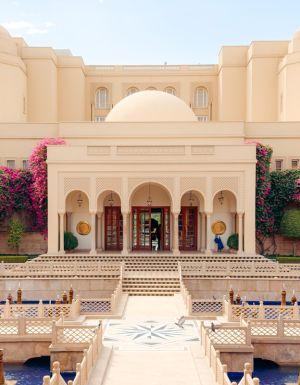
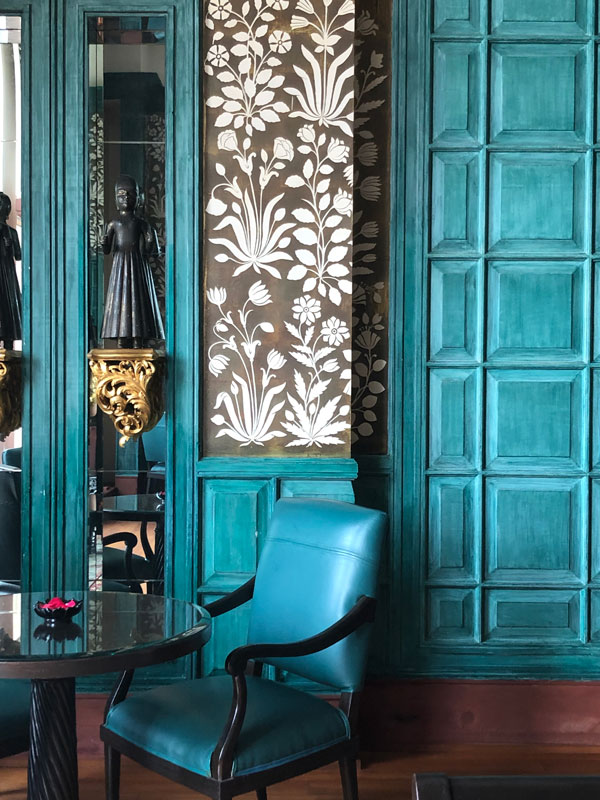
In Agra, The Oberoi Amarvilas first lures with its promise of a view of the Taj Mahal from every room but seduces with its swimming pool and fine-dining tandoor restaurant Esphahan. The hotel is inspired by Mughal palace designs and its jewel colours – teals, saffron yellows and royal purples – are worthy of a Mughal princess and Pinterest board alike. The Oberoi Udaivilas in Udaipur is similarly inspired by the palaces of Rajasthan, embellished with decorative domes, hand-painted frescoes and intricate mirrorwork to emulate the dazzling details of the City Palace on the opposite side of Lake Pichola.
The Leela Palace Jaipur channels Rajputana heritage in its use of traditional thikri, or glass inlay, Shekhawati wall paintings and silver-foiled domes. Meanwhile, its sister property in Udaipur has employed the creative flair of Bill Bensley in its colourful compositing of Rajasthani design.
The jewel in the crown of a luxury journey through India with A&K is at a Taj Palace, a grand living palace where the arrival of guests is marked by a ceremonial welcome and an invitation to key into Indian culture and history through the portal of its age-old dynasties. From Jaipur’s 1835-built Rambagh Palace to Jodhpur’s Art Deco Umaid Bhawan Palace, where the king still resides. And to Taj Lake Palace, one of India’s most romantic hotels, the former summer retreat of the Mewar rulers that floats like a jewel on Udaipur’s Lake Pichola and was used as a location in the 1983 Bond film Octopussy.
Eating there
Dining is a highlight of any A&K trip to India with each breakfast, lunch and dinner table groaning with a fragrant assortment of curries, chutneys, rice, breads and Indian specialties. Vegetarians in particular are well catered for and Western menus are also available during the trip.
A restaurant highlight is Royal Repast in Udaipur, where the Bedla family celebrates its Mewar history by serving revived royal recipes in their ancestral home. Expect fresh, fragrant menus shaped by the seasons. “In summer it’s raw mango, cluster beans, buttermilk preparations," says Shree Bedla, who hosts us along with her husband Karan Singh Bedla. “Monsoon is a lot of fried preparations, gram (dried chickpea) preparations and corn. Winter is a time of abundance: it’s fresh fenugreek, sweet potato, fresh chickpeas and carrots."
And do try the local wine while in India; I loved Sula Vineyards’ peppery shiraz cabernet and the white wine drinkers among us reached for its bright riesling and crisp sauvignon blanc.
Want to see more stories from International Traveller in your Google search results?
- Click here to set International Traveller as a preferred source.
- Tick the box next to "International Traveller". That's it.