
A journey through Kenya, 30 years since its iconic landscapes and wildlife inspired The Lion King, is a trip of a lifetime and a window into conservation and community.
We’d heard lions roar near camp in the morning. Among a dawn chorus of toads, crickets and all manner of birds, the low rumble was unmistakable. So, out on the plains of Ol Pejeta Conservancy, our mission is clear. With the help of Peter Ojuku, our Abercrombie & Kent guide who we will journey through Kenya with for the week, we become experts in animal behaviour.
Circle of life
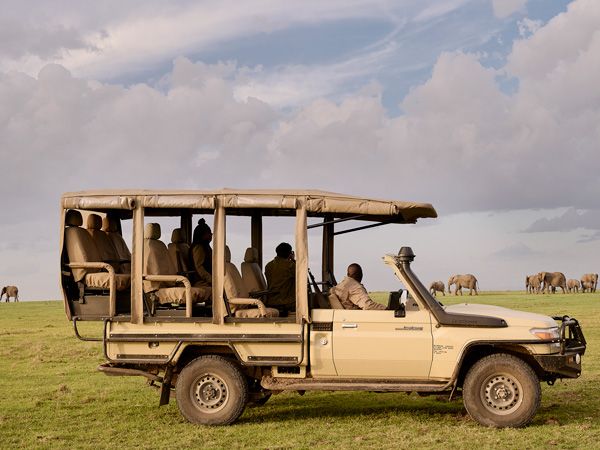
A flock of guinea fowl scurries noisily along the road ahead of us. They are vocal birds that warn of predators, says Peter. The zebras seem wary; maybe they are getting a scent. “But what is it?" he ponders. A herd of impalas takes off suddenly, bounding into a grove of acacia bush. On cue, two hyenas appear (cute and fluffy for such a maligned scavenger, with teddy bear faces). They saunter along curiously. “The cleaning team has arrived," observes Peter. “There must be something here." Our driver stops the safari vehicle and we sit in silence, studying the air, eyes scanning all around: electric with anticipation at the sense of a big cat in our midst.
But we don’t have time to wait and see what might unfold. A rainbow arcs above a huge blue-flint sky and sheets of grey on the horizon indicate we don’t have long before the heavens open. We hurtle across the wide-open plains to the waiting sundowner set-up, at a vantage point that takes in all 360 degrees of the landscape: savannah grassland scattered with acacia trees, Mt Kenya ever present on the horizon. As we are plunged into a fierce blast of golden hour, the sky takes on a violent intensity. The rain holds off as we sip our sundowners, and Peter gazes into the distance. He knows the lions are out there.
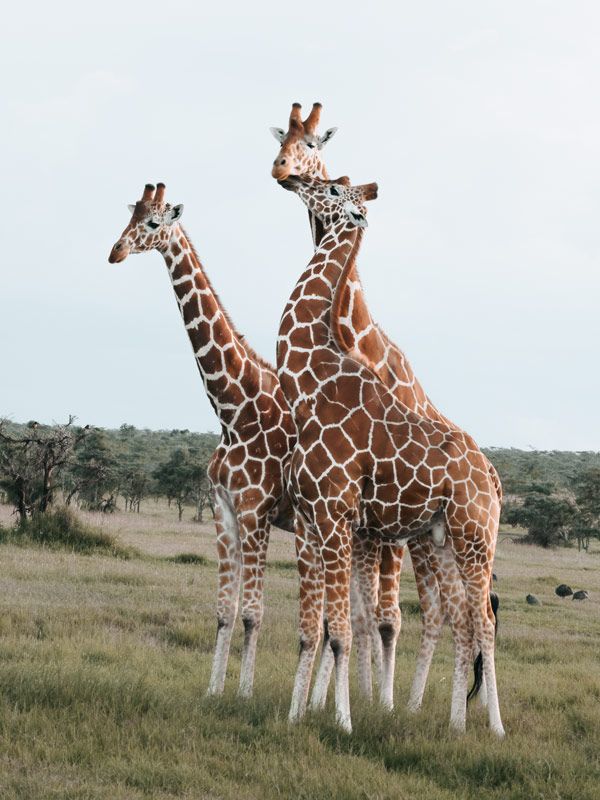
But while the king of the savannah is proving elusive, the rest of its cast is the opposite. We’d arrived yesterday, driving four hours from Nairobi, and within the first few minutes of entering the conservancy, the welcome committee was out in force. We’d seen sun-baking buffaloes and families of warthogs. Dazzles of zebras and journeys of reticulated giraffes with their distinctive fishnet pattern, as elegant as they are surreal.
Home in the African wilderness
After being greeted at Tambarare Sanctuary with a hearty “welcome home" from camp manager Jackson Keiwua, and an iced rooibos tea with ginger and honey – “a good savannah concoction" – we piled into an open-sided 4WD for our first game drive. It was late in the afternoon, when galloping impalas cast long shadows on waving oat grasses. At one point our vehicle had stopped by a pair of park rangers, who murmured something to our guides in a hushed exchange. They’ve spotted a predator, said Peter.
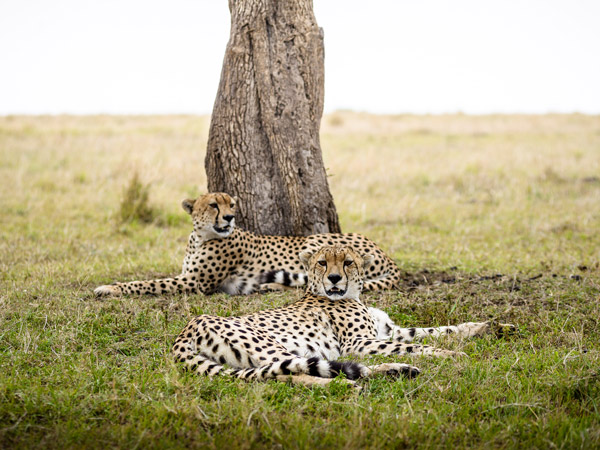
We nudged 50 metres off road and found the world’s fastest animal asleep in the grass. The cheetah woke up and yawned like a house cat before stretching, shifting and walking straight across our path.
Ol Pejeta has the highest density of wildlife in Kenya outside of the Masai Mara, yet it flies under the radar comparatively, and has a conservation story that deserves to be shouted about. This 360-kilometre-square not-for-profit wildlife conservancy in central Kenya’s Laikipia County started life as a working cattle ranch in colonial Kenya. Today it is a trailblazer of conservation innovation, where apex predators live alongside a successful livestock program and a range of activities provides the chance to learn about its various initiatives when not on game drives spotting the Big Five.
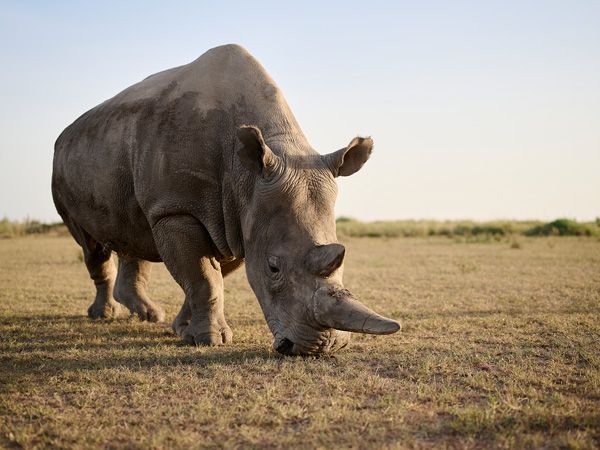
Sweetwaters Chimpanzee Sanctuary opened here in 1993 with the involvement of eminent primatologist Jane Goodall to rehabilitate chimpanzees rescued from the black market. Ol Pejeta is also the largest black rhino sanctuary in East Africa, and home to the world’s last two remaining northern white rhinos. We meet mother and daughter Najin and Fatu in their 283-hectare protected enclosure and learn about the groundbreaking IVF and surrogacy plans afoot to save the subspecies from extinction.
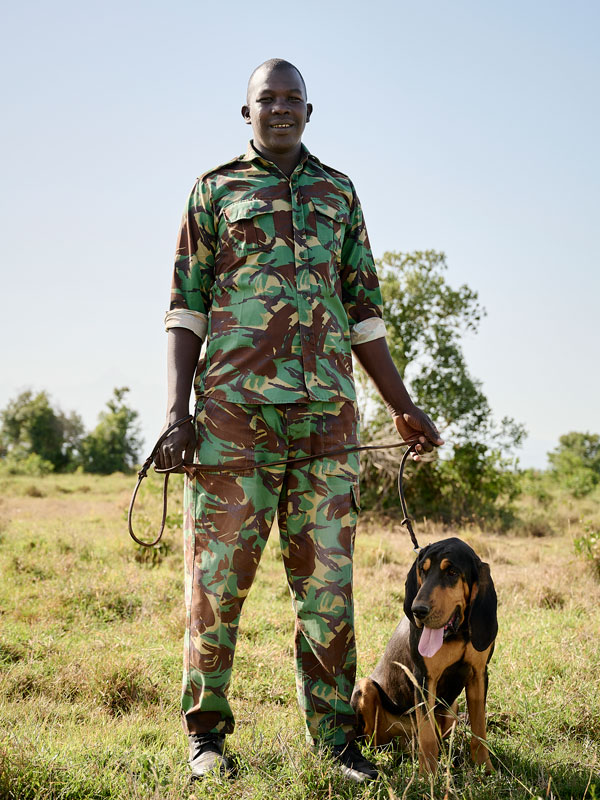
On the same day, we meet the anti-poaching dogs of Ol Pejeta’s K9 unit, one of the first private conservancy dog units in Kenya, who support the armed rangers in their protection of the conservancy’s wildlife. Drum is a bouncy springer spaniel capable of detecting weapons, ammunition and ivory. The friendly bloodhounds, meanwhile, are trained to track the scent of a poacher, as demonstrated with unfaltering precision when one named Sarah finds me hiding behind a bush – having been given my scent on a cloth some 500 metres away.
Wildlife conservation efforts
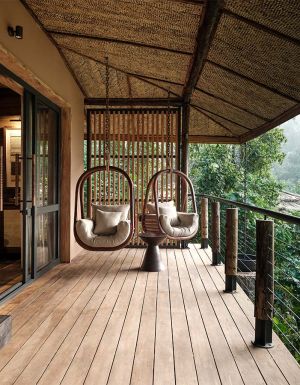
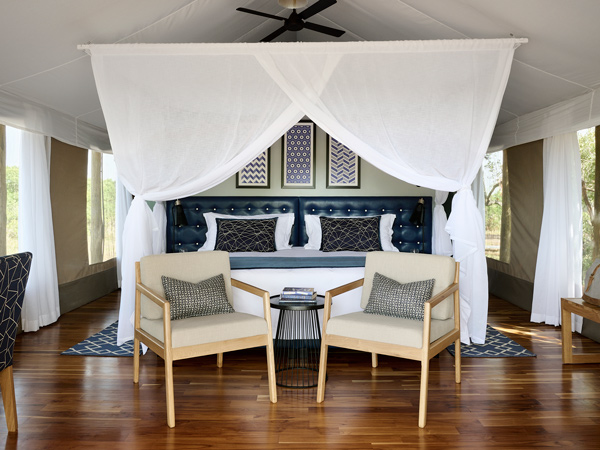
At the heart of Ol Pejeta, Sanctuary Tambarare opened in June 2022 – a boutique-meets-bush camp of luxe canvas tents with teak floors and weightless white curtains. We swap stories over fresh bread and salads and crisp gin and tonics in the lodge’s main tent, with its Maasai-inspired decor and tiny ‘bush boutique’ run by concept store Northern Nomad, which sells local design products.
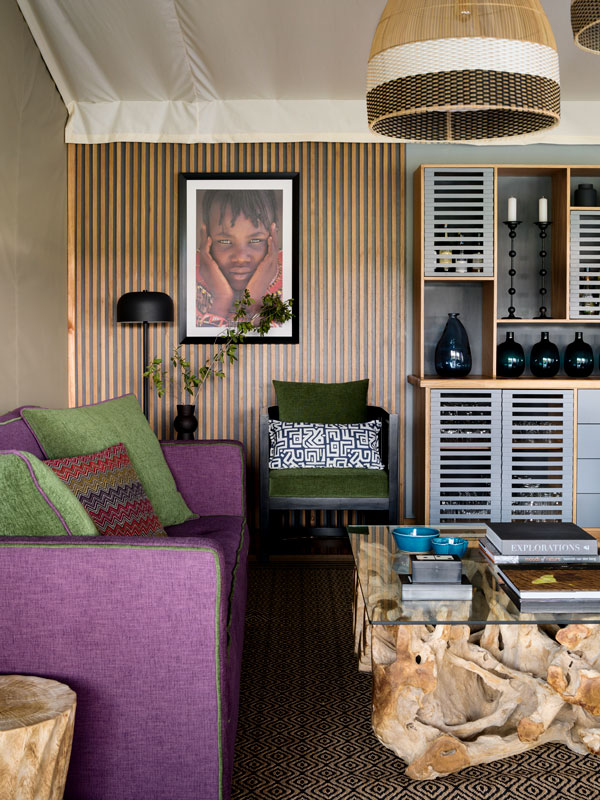
Itself a model of responsible tourism, employing at least 60 per cent of its staff from the surrounding communities, Sanctuary Tambarare reflects the broader values of Ol Pejeta.
It’s a model that progresses conservation efforts but not at the expense of Ol Pejeta’s local farming communities, Sanctuary Retreats manager Azei Lago tells me over a drink at the bush bar. Communities who have long-held traditions on the land and rely on it for their livelihood. Here, wildlife conservation translates to better education, healthcare and infrastructure for the next generation of wildlife guardians. It’s a question of respecting traditions while also evolving with the 21st century, he says. “At Ol Pejeta, conservation has shown the community that the cows can live with the lions and the elephants. They are still able to maintain their traditional way of life, while their kids have more options for the future."
Breakfast in the bush
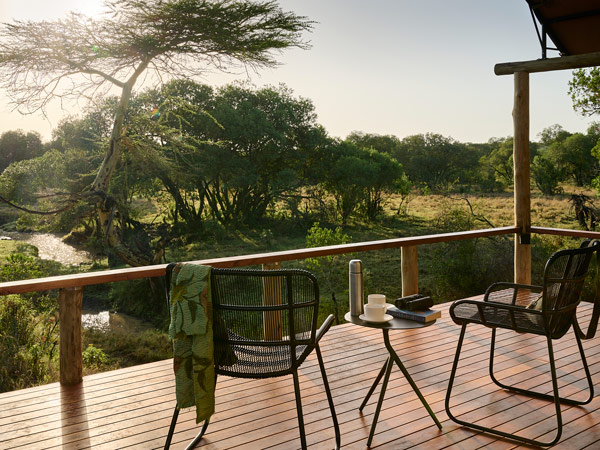
On my final morning at Sanctuary Tambarare, cordial housekeeper Francis Waloi delivers wake-up-call coffee and ginger biscuits to my tent. I sit on the verandah with my face to the sun in the clear light of day and listen to the chirps and birdsong. But I don’t hear any roars; our elusive lions have moved further away. Before we leave, we plant a tree with the team as a symbol of continuity. And then we’re on our way to our next destination.
Masai Mara
Mara means ‘spotted’ in the Maasai (Maa) language. And as we fly over the Masai Mara National Reserve, it’s clear how this savannah wilderness in southwestern Kenya got its name. We take off from the Nanyuki airstrip in our Twin Otter plane and before long the flat patchwork of farmland beneath us gives way to undulating forest as we approach the Great Rift Valley. The cheetah’s coat of the Masai Mara is soon revealed: its plains dotted with acacia scrub. Tiny zebras like miniature models add to the mosaic. Black and white on green.
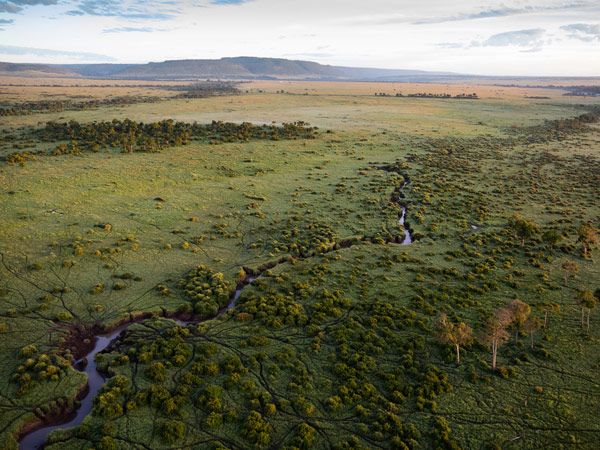
A vast area of lush savannah bushland and open grassland, the Masai Mara is the African safari destination of popular imagination and where the Abercrombie & Kent story began. When Geoffrey Kent founded his travel company out of an old Bedford truck on the plains of the Masai Mara in 1962, he pioneered the idea of ‘shoot with a camera, not a gun’ safaris. The concept of ‘adventure by day, luxury by night’ was new, too, and still runs through every A&K trip around the world.
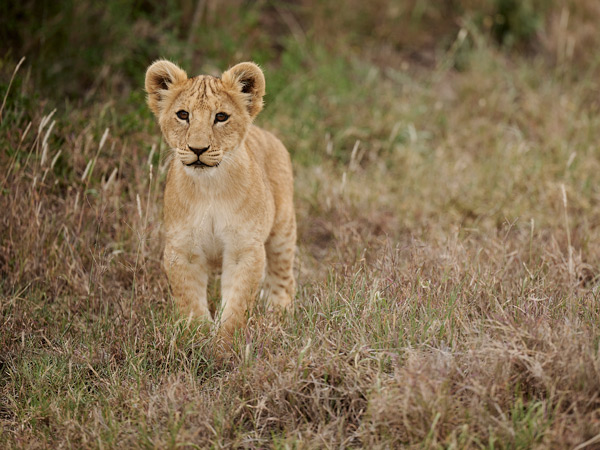
Indelibly linked to that global image is Disney’s animated classic The Lion King, which this year celebrates 30 years since its release and is in turn linked to the A&K legend. It was these very plains, teeming with its cast of animal characters, that inspired DreamWorks co-founder Jeffrey Katzenberg while on safari with Kent in the late 1980s. December marks the release of new live-action prequel, Mufasa: The Lion King.
So it’s fitting that within minutes of touching down, just 150 metres from the airstrip, we see our first lions in Kenya. And we get more than we bargained for when a male makes amorous moves on his female companion, only to be swatted away. “A special welcome to the Mara," says our Maasai safari guide Anthony Lekumok Nune, laughing.
Sanctuary Olonana
Our home for three nights is Sanctuary Olonana, a luxury safari lodge on the banks of the Mara – the same wild river that wildebeest pour across each year in their migration from the Serengeti in Tanzania in search of greener pastures.
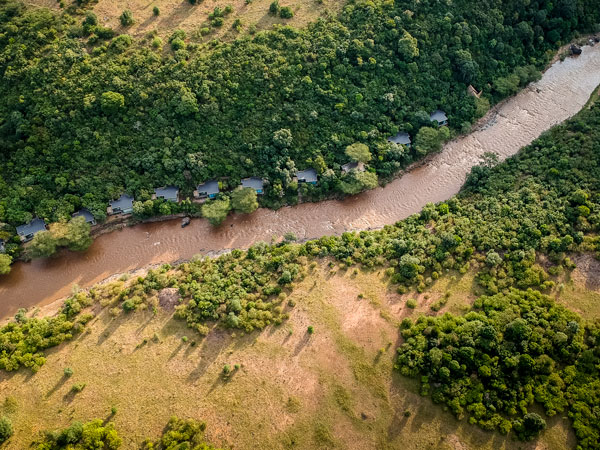
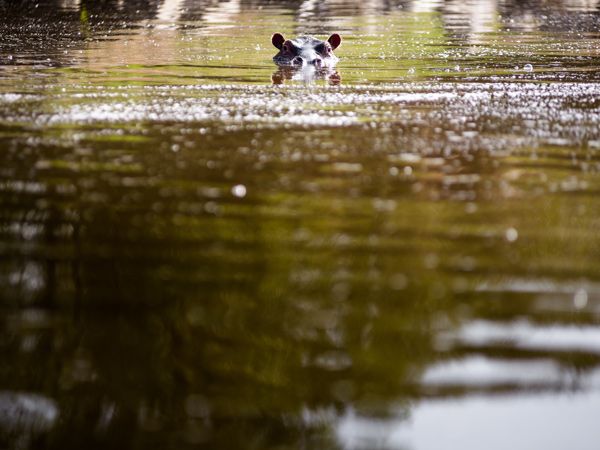
But wildlife moves slower on this stretch of the full, fast-flowing river: here, hippos are the star of the show. “You will be hearing a lot of snorting from the hippos, maybe in the wee hours of the morning," Peter forewarns us.
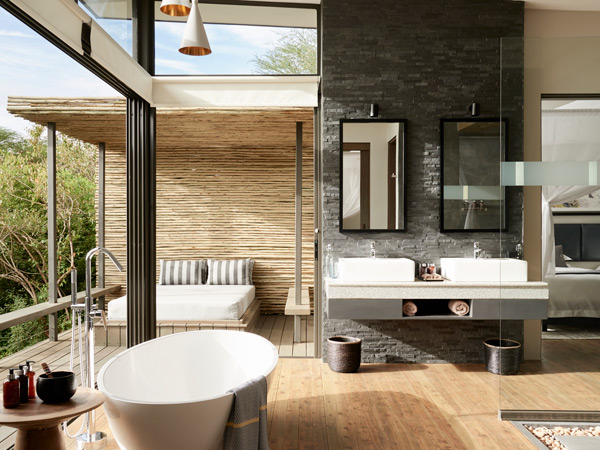
My pinch-me-I’m-dreaming suite is a private sanctuary that gulps in natural light and the river through its three glass sides. It cocoons me with its sunken lounge and earthy, artisanal decor that blends traditional Maasai design elements with a clean-lined contemporaneity.
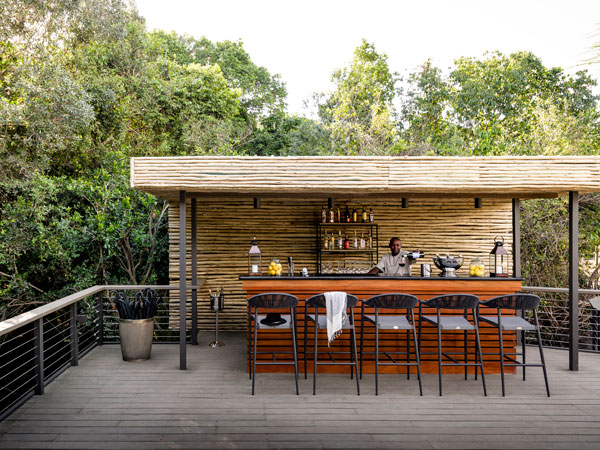
Sanctuary Olonana sits within the Mara Triangle, a conservancy that makes up one third of the Masai Mara and is managed by a not-for-profit organisation; this protection limits development on the river that threatens to alter the course of the migration in other parts of the national reserve.
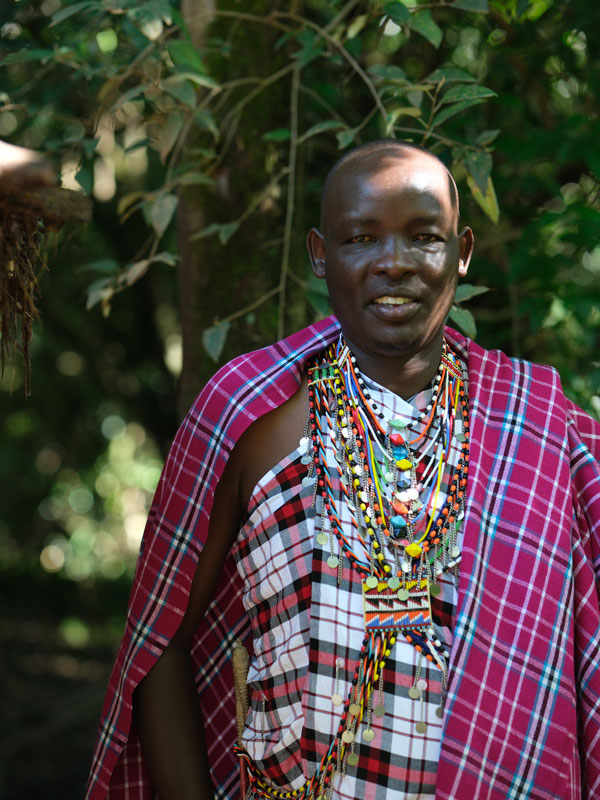
The culture of the Maasai community runs through everything at Sanctuary Olonana: from the people who work here to the interior design to the performance of the traditional Adumu jumping dance we are treated to during a Kenyan barbecue one night. And to the vibrant Maasai beadwork made and sold by local women onsite at the village shop.
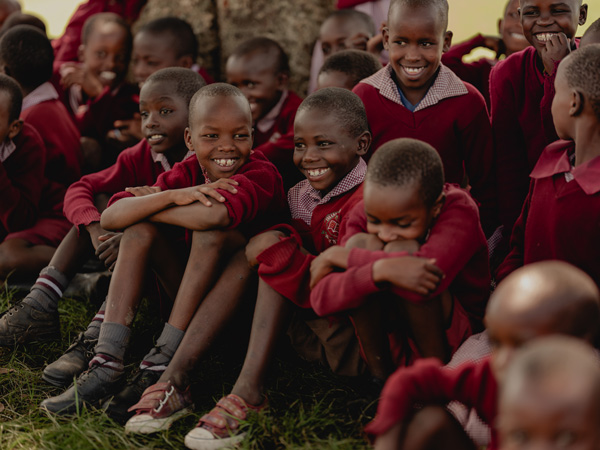
One afternoon we visit nearby Enkereri Primary School, where an accessible water filtering device has made a difference to the lives of its pupils and their families. In 2017, A&K Philanthropy started the Safe Water for Schools Initiative with LifeStraw. By the end of the year it will have installed 1000 filters in countries around the world, including in every school that borders the Masai Mara and neighbouring Serengeti.
Anthony provides us with our own education into the culture of the Maasai, the semi-nomadic and pastoral people who live on the plains of Kenya and Tanzania. Their vibrantly coloured and patterned blankets, or shuka cloth – which cut a contrast against a golden-green land – are worn for many reasons, he says. Not least to fend off unwanted attention from animals. He recalls one fateful day when he crossed paths with an elephant and threw his shuka to the wind to distract it from charging him. Anthony made his escape, but had to walk home naked.
Weekly travel news, experiences
insider tips, offers, and more.
Seeing the real-life cast of The Lion King
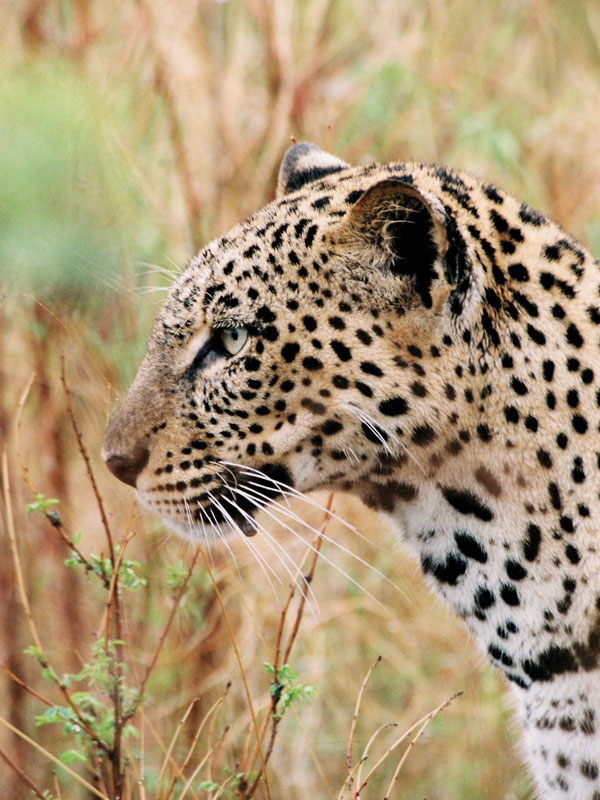
Days on the Mara are spent in a cycle of out-of-this-world animal sightings set against a landscape of cinematic beauty. We venture into ‘leopard country’ and see whiskers lurking in long blades of grass. Do double takes passing ponds to spot hippos submerged in the mud.
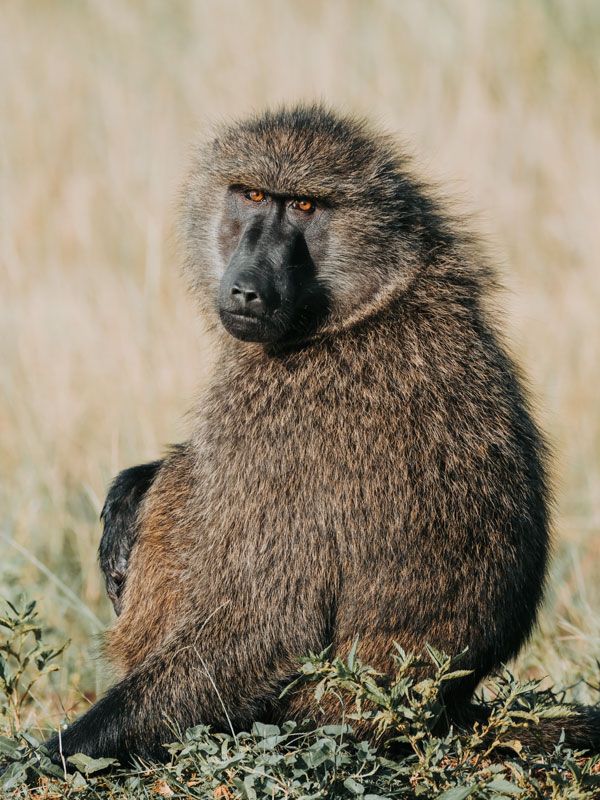
We ponder the majesty of crinkle-skinned elephants. Marvel at the brilliant blue plumage of a superb starling. And glimpse a glorious baboon soaking in the morning sun – with a sparkle in his eye, observes Peter.
And when one game drive takes us to higher ground, we see the expanse of the Mara ripple out before us in a view evocative of Out of Africa – the famous final scene of the 1985 movie was shot on a ridgetop nearby.
“Imagine this place teeming with animals – wildebeest and zebras," says Peter. “During the migration the animals will come and feed on the grass and by the time they come back it will look like a golf course." It’s May, and Peter urges us to come back a few months later during the Great Migration. There’s nothing like it on Earth, he says. And we don’t doubt it. But we are also relishing our off-peak time here in one of the world’s most iconic wildlife destinations, when the drama unfolds almost all to ourselves.

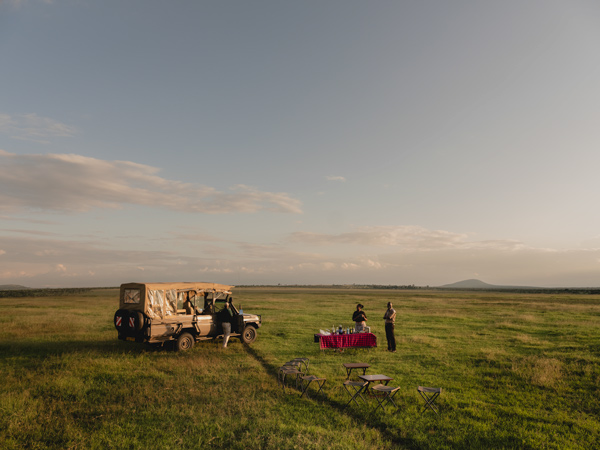
This feels especially true on our last day, when we are treated to an ultra-exclusive lunch. “We’re going to a good savannah restaurant" says Peter. “It was booked long ago," chimes in Anthony, never missing a beat. A message flashes up on my phone from Optus welcoming me to Tanzania. We’re heading for the shade of a tree near the border – the concept of which feels silly out here. The animals of these open plains, where the Masai Mara fades into the Serengeti, know no such thing as borders.
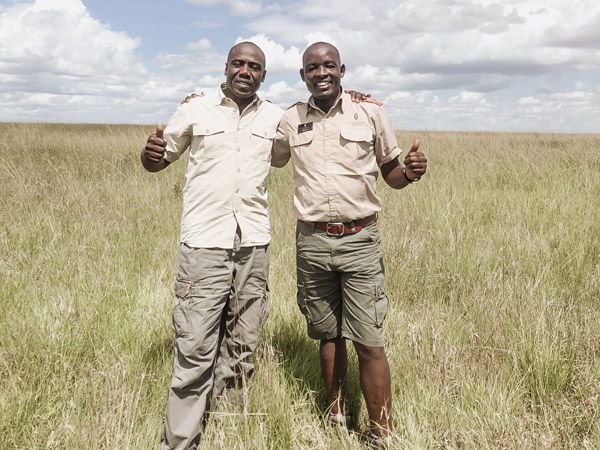
We tuck into an elevated picnic lunch at this most exclusive of bush restaurants. The landscape is a panorama of savannah, studded with acacia trees and capped by mountains in the hazy distance. The breeze whistles gently and Peter and Anthony perfect their double-act. Peter: with his CV that keeps growing with each conversation (goalie, translator, teacher in Hokkaido, a background in industrial development) and an ear for an idiom (“one kick from a giraffe will send you into the next world"). Anthony: a winning smile and wicked sense of humour. Both enjoy regaling us with tales about “weird things in Kenyan culture". We laugh, exchange stories and soak in the setting.
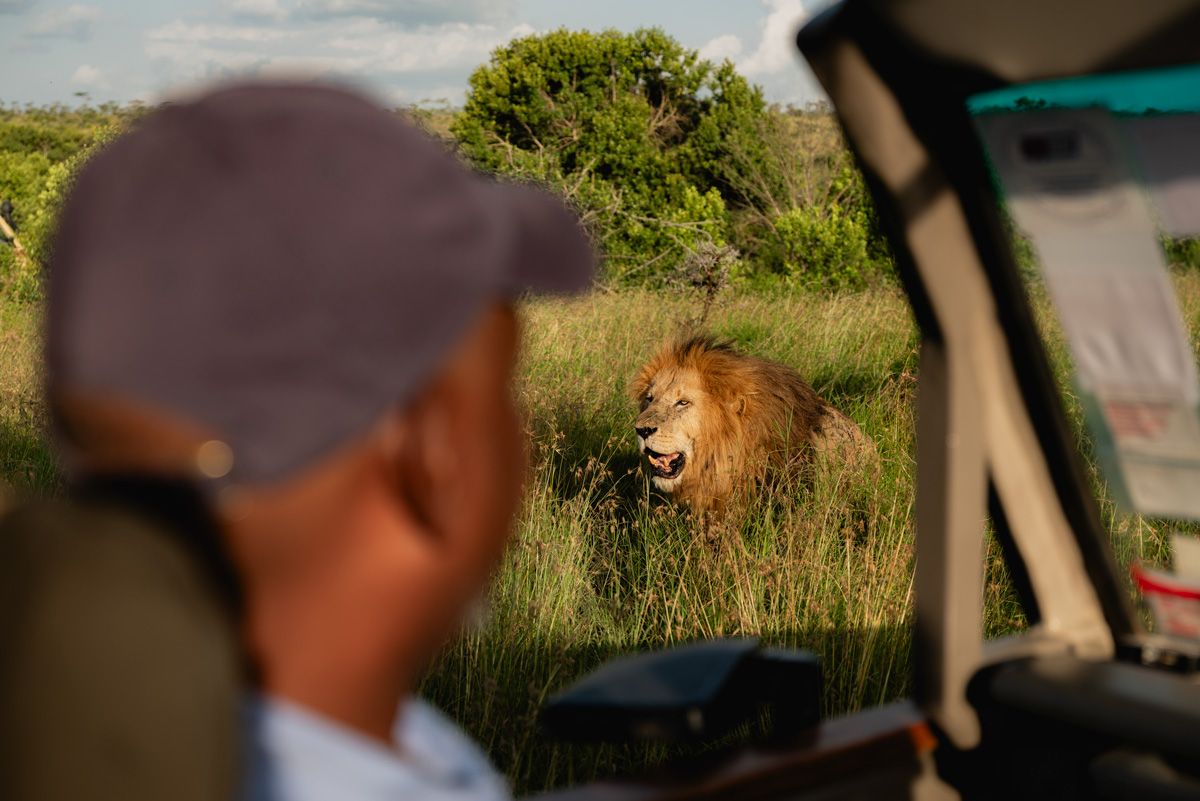
On our final game drive, the rain that has been hovering catches up with us and diverts our sundowner. But we spot a large male lion not far from the track, resplendent and soggy. We improvise instead and sit in our 4WD watching him quietly. Peter schools us on ‘lion language’: “three yawns and then he is ready to move." We wait for that third yawn, sipping wine as the rain falls down around us. It comes, and the lion stirs, shakes his mane, and slinks through the long, wet grass into the fine mist. End scene.
A traveller’s checklist
Getting there
Emirates flies from major Australian cities to Nairobi via Dubai.
Playing there
Abercrombie & Kent’s Classic Kenya 10-day journey includes one night in Nairobi, two nights at Tawi Lodge (Amboseli), three nights at Sanctuary Tambarare (Ol Pejeta) and three nights at Sanctuary Olonana (Masai Mara) from $13,995 per person.
Want to see more stories from International Traveller in your Google search results?
- Click here to set International Traveller as a preferred source.
- Tick the box next to "International Traveller". That's it.