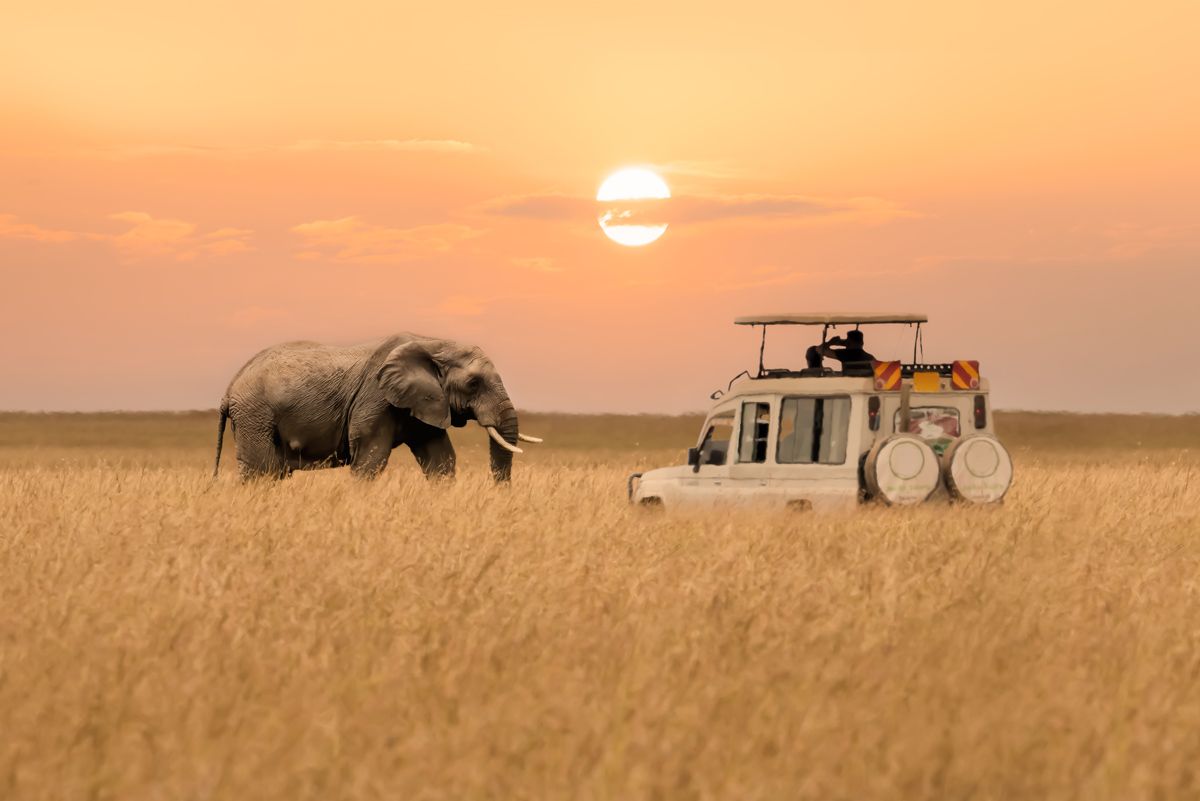

Watching Nature unfold across the wild savannah in Africa‘s Kenya amounts to the greatest show on Earth – especially when the ‘big five’ make up the headline act.
An eye the size of a passionfruit, edged by thick, dark eyelashes and dry, parched skin, is staring directly at me. Our guide, Milton, has cut the engine on our open-sided 4WD and the only audible sound is a long drawn-out swish as elephant trunks sway, effortlessly, through red oat grass. The herd is so close I can almost touch the crevices of their deeply wrinkled skin.
An hour ago our faces were glued to windows in a 12-seater light plane as we descended over zebras and wildebeest, to land at Mara Keekorok Airstrip in the far-reaching plains of the Maasai Mara. Covering over 1510 square kilometres, the Maasai Mara is Kenya’s premier game reserve and home to the ‘Big Five’ – elephant, lion, leopard, buffalo, rhinoceros – and other smaller creatures.
It’s day one of a three-day safari and there’s already a sense of animal checklist gratification in our group of five as we head deeper into the riverine forest. Milton halts, every few hundred metres, to scan the plains. Where we see only tall, dry grass backlit by the fading sun, he sees signs of unscripted drama about to unfold.
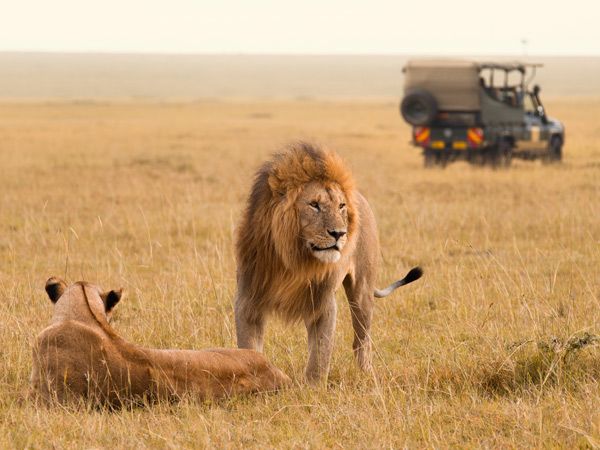
Stopping next to a pride of lions
The shade beside our vehicle rustles; two metres away, a fully grown male lion rises, yawns, baring every razor-sharp tooth before striding across our path to flop back down.
Male lions are notorious for enjoying their catnaps and often sleep up to 20 hours a day, longer after gorging on a meal. Females sleep slightly less when hunting for their cubs. “They have little to fear," Milton tells us as we watch, hoping to witness the hunt. “Sadly, humans are their main predators."
His keen eyes turn to a flattened area of grass. On cue, the show begins from our ringside seats. A pride of lions gather, alert, noses twitching to the scent of dinner. Rarely do they charge unless the kill is close; with small lungs they are not fast runners, relying more on their stalking abilities.
As nature unfolds, the pride seems oblivious to our presence. There is no gory attack, no symphony of lions’ roar, but watching them pursue distant prey at dusk, as they have for hundreds of years, still warrants a final curtain call before we head off towards our safari camp – Mara Ngenche.
Glamping at Mara Ngenche
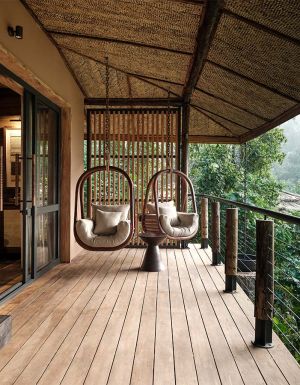
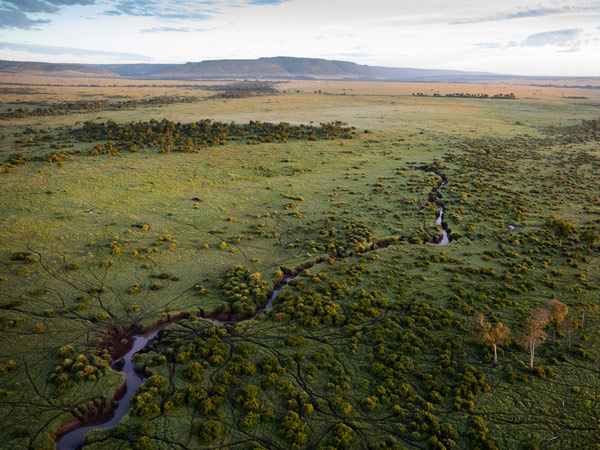
The campsite has prime position where the Talek and Mara Rivers merge. Ten luxurious tents are nestled in their own private garden complete with secluded plunge pool overlooking the river – glamping at its finest. Its warmly infused decor begs a much longer stay.
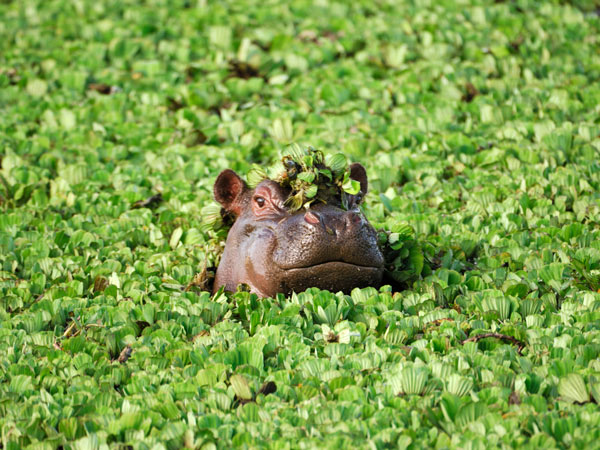
That night, snorting hippos serenade sleep until a soft voice announces morning: “Jambo, jambo." Marco, my personal guard, who has been outside my tent all night, greets me surprisingly fresh-faced with a beaming smile, and a tray of hot tea and pre-game drive cookies.
The camp is unfenced and wildlife can wander freely. While the odd hippo climbs up from the river, disorientated at night, sightings are rare due to human activity; if any assistance is required during the night, a few flashes on the torch alert the guards.
Safari sightings: giraffes, zebras, warthogs and gazelles
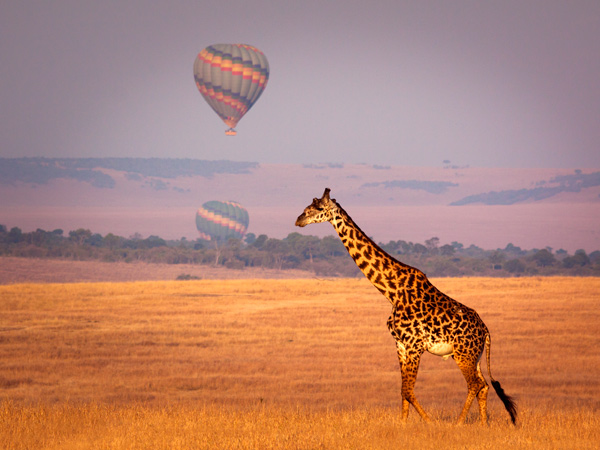
Milton is waiting for us with thick red-checked blankets; being autumn, the predawn air comes with a chill. Cocooned in warmth, we head to a clearing for our first safari sighting: a journey of giraffes. They’re so elegant against the scraggly acacia trees they don’t seem to belong, as if they’ve been randomly dropped into the wrong set. Their calm, graceful movements mirror a carefully choreographed stage production.
As Milton explains, giraffes rarely sleep for more than five minutes at a time. With lions as their main predators, they often keep one eye open, always alert to approaching felines. We carry on and pass the lovable warthog, a safari misfit with its pig-like torso and wart-covered face.
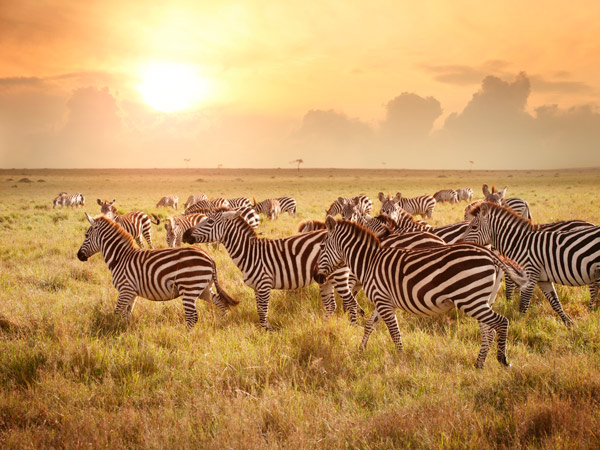
We stop and watch zebras, learning each one is born with a unique pattern, and spot graceful gazelles who unknowingly take centre stage. Watching nature unfold across the wild savannah is the greatest show on Earth.
A traditional Maasai welcome
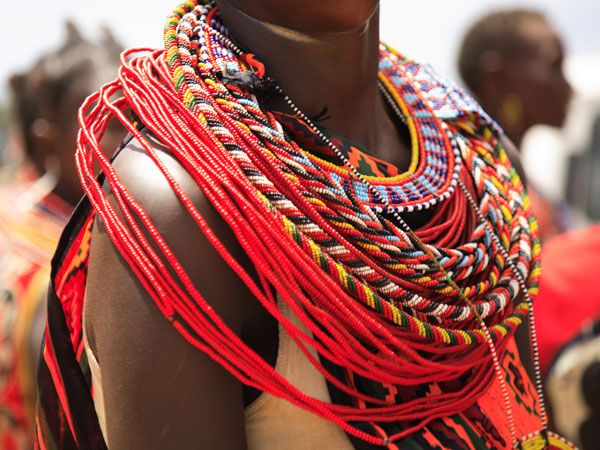
In this far-reaching landscape, the only visible fencing is around the Maasai village we visit. It’s the reverse of the concrete jungle; in the great Maasai Mara, the animals roam free and the people are caged. We’re treated to a traditional Maasai welcome as tall men and women, attired in myriad vibrant cloth and headdresses, stomp towards us.
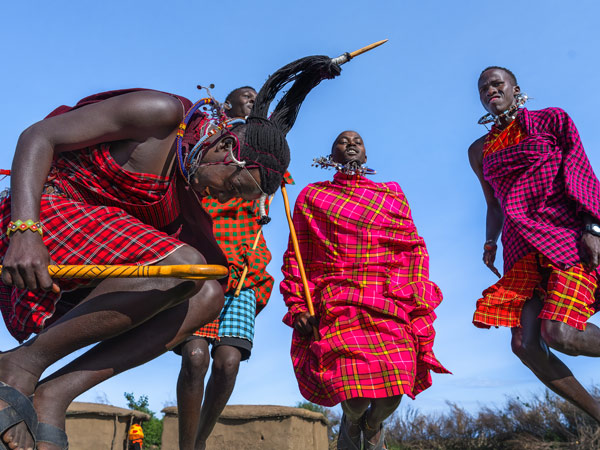
United by a humming rhythmic motion, their deep guttural sounds stir my emotions: the men begin jumping skywards to outspring one another as the women gather in anticipation to watch the victor, and possibly a suitor.
In his thick Kenyan accent, the young people’s chief, John Seki, tells us there is a reward for you to become a winner if you are not already married. With a dimpled smile he explains: “If you are not married, the elders reward you a lady; if already married they reward you 10 cows!"
Jumping high brings respect and status; but if the springs are somewhat sprung and a wife has not been ‘won’ before the age of 30, tribal members gather to choose a wife as it is unbidden to stay single. John, who is a foot shorter and much slighter than most of his tribe, married in his early 20s; height does not necessarily guarantee success in the tribal dating game.
Weekly travel news, experiences
insider tips, offers, and more.
A hot air balloon ride over the savannah
At 3.30 the next morning, I hear Marco’s singsong, “Jambooo, jambooo," coming through the canvas. It definitely beats the insistent buzz of an alarm clock, especially at dark o’clock when you’re heading off on a hot-air balloon ride. As we hurtle along the inky savannah watching for daylight’s first rim of light, we listen to nature’s early morning concerto as the Maasai Mara comes to life.
In Kenya, a hot-air balloon take-off is different from elsewhere in the world. We are instructed to lie horizontally, grip onto the basket’s woven handles, and keep everything secure as the balloon drags along the ground filling with air.
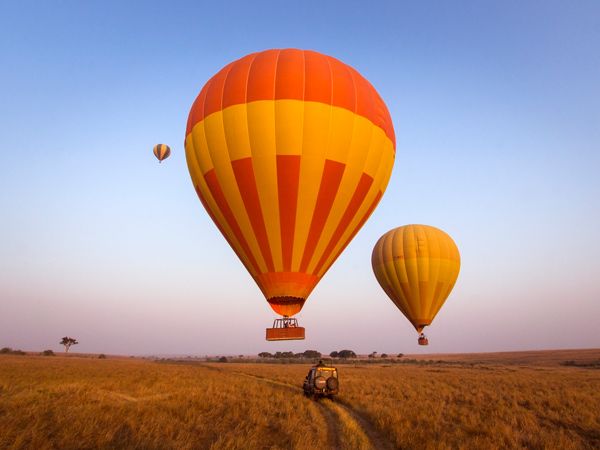
The baskets are so deep it’s difficult to see before we’re airborne. Then we’re up, floating effortlessly like clouds across the extensive plains, as sunrise filters through pastel layers of morning mist.
It’s completely silent, apart from the occasional deafening ‘whoosh’ as flames surge into the balloon, keeping us afloat. As we glide gently up and down, we spot herds of elephants, zebra and wildebeest roaming below. Other balloons dot the backdrop, and I realise how minuscule our massive balloon is in the endless landscape.
One last safari
After our early morning start, we head back and enjoy an early lunch sitting by the Talek River watching hippos slide in and out of the muddy water before taking a pre-safari siesta.
Later, Milton picks us up for our final game drive. In just two days we’ve become a unit, following a routine of immersive safari drives, lazy lunches and long talks about life in Kenya. An approaching storm looms as we search for wildlife against its blanket of steel-grey clouds.
A hungry hyena paces through the grass on the lookout for an easy kill as two ostriches take off like road runners. A secretary bird, so named because their feathers resemble the quill pens secretaries used to tuck behind its ears, takes flight as the sky rumbles.
We find the smiling staff from Mara Ngenche standing in a clearing behind a buffet of hot food and a makeshift bar. It’s a dramatic ending; lightning illuminates nightfall before the first drop of rain sizzles on the flames.
Want to see more stories from International Traveller in your Google search results?
- Click here to set International Traveller as a preferred source.
- Tick the box next to "International Traveller". That's it.