hero media

Here’s what happens to your body during plane turbulence – and how to reduce the discomfort it causes

How to reduce the discomfort of plane turbulence.

This week has seen another barrage of unsettled weather sweep across the UK, with many flights delayed or cancelled. Some of those who were fortunate enough to take off found themselves arriving at destinations that weren’t on their boarding passes – such as passengers travelling from Stansted to Newquay who eventually diverted to Malaga.

One thing that was consistently described by passengers was that parts of the flights and the attempted landings were some of the most unnerving they’d ever experienced, due to turbulence.

Turbulence results from uneven air movement, which is increasing in frequency. If you turn your hair dryer on at home and hold it still, the air moves at a constant rate, but once you begin drying your hair and moving the hairdryer around, the air movement becomes uneven, that is to say, turbulent.

Although turbulence may be unnerving and make you feel unwell, it is important to recognise that it is very common and typically nothing to worry about if you’re in your seat with your seatbelt fastened.

How the body detects and responds to turbulence

The body recognises itself within any environment. Its relationship with objects in terms of distance and direction is called spatial orientation.

When flying, this is typically moving forwards, ascending, some turns and a descent. However, turbulence disrupts this relationship and confuses the sensory information being received by the brain – it makes the body want to respond or recalibrate.

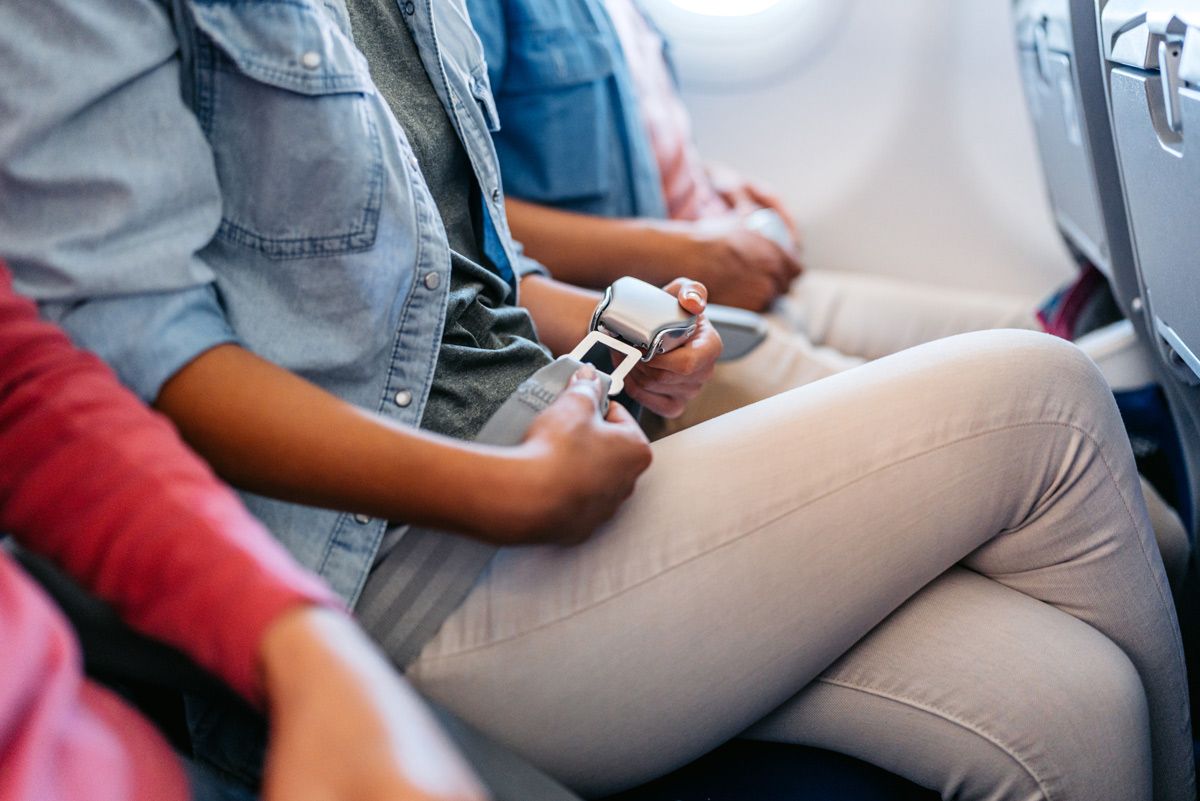
Close-up of a young woman fastening her seatbelt in an airplane.
Recent storms have led to some bumpy flights.

Our inner ears play a pivotal role in all this. It consists of complex apparatuses that undertake more than hearing. These include the cochlea, three semi-circular canals, the utricle and the saccule.

The cochlea is responsible for hearing. It converts sound energy into electrical energy that is then “heard" by the brain. The remaining structures are responsible for the balance and position of the head and body. The semi-circular canals are positioned in a vertical (side to side), horizontal and front-to-back plane, detecting movement in a nodding, shaking and touching ear-to-shoulder direction.

Attached to these canals are the utricle and saccule, which can detect movement and acceleration.

All of these apparatuses use microscopic hair cells in a specialised fluid called endolymph that flows with the head to create a sense of movement. When the plane encounters turbulence, this fluid moves around, but unpredictably. It takes about 10 to 20 seconds for the fluid to recalibrate its position, while the brain struggles to understand what is going on.

When the aircraft hits turbulence, the balance apparatus cannot distinguish the movement of the plane from that of the head, so the brain interprets the aircraft movement as that of the head or body. But this doesn’t match the visual information being received, which causes sensory confusion.

The reason the inner ear causes so much confusion is because during flights you are devoid of your primary sensory tool relative to the external environment – your sight and the horizon.

Eighty per cent of spatial information comes from your eyes during flight. However, you only have the seat in front of you or the cabin as a reference point, which means your inner ear becomes the dominant sensory message to the brain during turbulence and disrupts the “vestibulo-ocular reflex". This reflex keeps your vision aligned with your balance or expected position.

Vision is the most valued of the senses and one-third of the brain is attributed to its function, reinforcing its importance in spatial orientation.

This sensory mixed messaging often results in things like dizziness and sweating as well as gastrointestinal symptoms, such as nausea and vomiting.

Motion sickness can be triggered by turbulence and although research into specific airsickness is limited, other modes that induce motion sickness suggest that women are more susceptible than men, particularly in the early stages of the menstrual cycle.

The turbulence also causes an increase in your heart rate, which is already higher than normal when flying because of a decrease in oxygen saturation.

What about the pilots?

Commercial pilots accrue thousands of hours at the controls, they are subject to the same forces as the passengers.

Over time, they can adapt to these forces and experiences, but they also have a couple of additional resources that most passengers don’t.

They have the view out of the cockpit windows, so have a horizon to use as a reference point and can see what lies immediately ahead.

If it is cloudy or visibility is low, their instruments provide additional visual reference to the position of the aircraft. This doesn’t mean they are immune to the effects of turbulence, with some studies reporting up to 71 per cent of trainee pilots reporting episodes of airsickness.

How to reduce the discomfort

A window seat can help, or even looking out the window. This gives the brain some sensory information through visual pathways, helping calm the brain in response to the vestibular information it is receiving.

If you can get one, a seat towards the front or over the wing reduces the effects of turbulence.

Deep or rhythmical breathing can help reduce motion sickness induced by turbulence. Focusing on your breathing calms the nervous system.

Don’t reach for the alcohol. While you may feel it calms your nerves, if you hit turbulence it’s going to interfere with your visual and auditory processing and increase the likelihood of vomiting.

If you suffer from motion sickness and are worried about turbulence while flying, then there are also drugs that can help, including certain antihistamines.

Finally, it’s important to remember that although turbulence can be unpleasant, aircraft are designed to withstand the forces it generates and many passengers, even frequent fliers, will rarely encounter the most severe categories of turbulence because pilots actively plan routes to avoid it.The Conversation

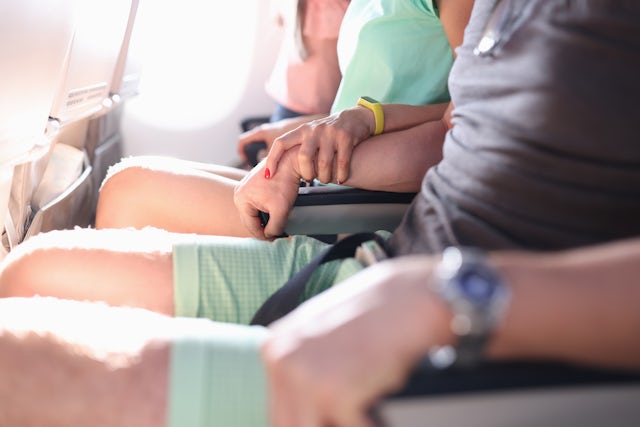
Woman firmly holds man's hand during flight in plane. Aerophobia of altitude concept.

Turbulence is typically nothing to worry about if you’re wearing a seatbelt.

By Adam Taylor, Professor and Director of the Clinical Anatomy Learning Centre, Lancaster University

This article is republished from The Conversation under a Creative Commons license. Read the original article.

Want to see more stories from International Traveller in your Google search results?

  1. Click here to set International Traveller as a preferred source.
  2. Tick the box next to "International Traveller". That's it.
hero media

The golden era of travel is now, and these 13 experiences prove why

    Leanne Archer Leanne Archer
    From sophisticated new sleeper trains and opulent hotel openings to the exploration of new frontiers, we’re now finding ourselves in our own gilded era of travel. These 21st-century travel experiences are leading the way.

    If we were to turn back the clock 100 years, there was a real romance to travel – the dawning of a glamour-filled jet age, refined rail sojourns and first-class cruising where the voyage itself trounced the destination.

    We’re feeling a similar excitement in the air about travel in 2026. Think state-of-the-art cruise liners allowing access to destinations formerly off-limits, resort launches where avant-garde architecture takes centre stage, and a return to the days of luxury locomotives. This reoccurrence of the advances, adventure and elegance of a bygone era has not only come full circle; it’s now superior.

    How? Travel has become more mindful, intentional and accessible. This includes environmental initiatives by operators determined to leave less impact on the planet and a shift towards a deeper cultural exchange with the local communities we visit. Whether it’s exploring previously hard-to-reach cities such as Uzbekistan’s Khiva, staying with a family to experience village life in Nepal or discovering new frontiers in Antarctica, our round-up of ‘new golden age’ travel experiences is a snapshot of how we are travelling today, as well as into promising new horizons.

    Exploring the emerging city of Khiva

    Khiva, Uzbekistan
    The walled inner city of Khiva, Uzbekistan. (Credit: Getty/Mlenny Khiva)

    Uzbekistan’s Silk Road city of Khiva used to be off the radar for many travellers, but 2026 has changed all that. You can thank a new bullet train service connecting Khiva to Bukhara and Samarkand, slashing the trip from the capital of Tashkent from 15 hours to under eight. Add renovations to Urgench International Airport, and interest in this fascinating city is rapidly on the rise.

    Quick to react has been Golden Eagle Luxury Trains and The Samarkand Express which have added Khiva to their 2026 rail itineraries, while Cox & Kings has included the Central Asian city to its multi-country 2027 ‘Stans’ itinerary.

    Check out Khiva’s preserved inner-walled fortress, the first UNESCO site in Uzbekistan, explore ancient minarets and ornate mausoleums, and try traditional fare at Terrassa Cafe & Restaurant. Looking for fancy digs? The Mercure Khiva is due to swing open its doors later in 2026.

    Riding the rails on the Eastern & Oriental Express

    inside the Eastern & Oriental Express
    Onboard the train, rich fabrics are complemented by elm, cherrywood and teak marquetry. (Credit: Ludovic Balay)

    Recapture the romance of rail travel through the tropics of Southeast Asia on the refurbished Eastern & Oriental Express, A Belmond Train, Southeast Asia.

    The resurgence of train travel reflects how we are travelling today – slower and with a new appreciation for both scenery and cultural exchange. Include a large dollop of old-world glamour, and the three-night Wild Malaysia tour truly delivers. Winding its way deep into the Malay jungle, the journey makes plenty of pit stops for exploration along the way.

    Having been resurrected from a 1970s sleeper, the luxury locomotive now comes replete with plush interiors of hand-cut marquetry dressed in oriental silks and embroidery – there’s even a Dior Spa. Watch the world go by from the Observation Car, indulge in fine wining and dining, kick up your heels in the Piano Bar, then snooze it all off in your sumptuous sleeper car.

    Embracing Mother Nature in Peru

    local llamas in Peru
    Befriend local llamas in Peru.

    Travelling to Peru is like stepping into a kaleidoscope of contrasting cultures and landscapes. Whether you’re learning about shamanic natural remedies in the pre-Inca Colca Valley, cruising the wilds of the Amazon on a luxury river ship or discovering firsthand why the contemporary capital of Lima is celebrated for its culinary and artistic scenes, there are myriad reasons why this colourful country is topping wish lists.

    One such experience is the Ultimate Peru by River and Rail journey (five days) by Abercrombie & Kent, available in 2026. This incredible river cruise allows you to truly connect with the jungle rhythms of the Amazon via skiff and on foot with in-the-know local guides, and includes nights onboard newly launched luxury riverboat Pure Amazon, an A&K Sanctuary.

    Spot exotic creatures such as sloths, macaws, piranhas, and pink dolphins on the daily excursions, before juxtaposing these wild encounters with a return to pure pampering on the boat.

    Seeking sustainable community experiences in Nepal

    tharu woman
    Tharu woman and master weaver Parbati Chaudhary in Bhada Village. (Credit: Bheem Thapa)

    While Nepal has traditionally attracted visitors to traverse its majestic mountains – Everest and Annapurna in particular – travel experiences in this beautiful Himalayan nation are expanding.

    Home stays, where you reside with Nepali families and take an active part in their daily lives, are a growing attraction. It’s a win:win for local youths – who took their country back after bloody protests in 2025 – wanting to stay in Nepal rather than moving abroad for work, as well as foreigners seeking a deeper cultural experience. Nepali women, Indigenous people and marginalised castes are also benefitting from home stays, upping the feel-good factor even further.

    Leading the charge is Community Home Stay Network, which links travellers to local-family hosts. Travel off-the-beaten path to homes in areas including Tharu in the south, learn how to cook Nepali style, and take part in traditions such as making moonshine, dancing and weaving straw handicrafts.

    Exploring new frontiers in Antarctica

    an ice window at Wilhelmina Bay
    A breathtaking ice window captured at Wilhelmina Bay on the Antarctic Peninsula. (Credit: Renato Granieri)

    Gone are the days when a trip to Antarctica meant a perilous voyage through the Drake Passage on a vessel holding the mere essentials. Innovative cruise ships now offer a smooth and sophisticated passage to the White Continent, as well as experiences formerly off-limits.

    Abercrombie & Kent’s 19-day Antarctica, South Georgia and Falklands: Holiday Voyage captures it all. Spot breaching whales and gracefully gliding albatrosses from the deck, before stepping onto this Narnia-like landscape with daily Zodiac excursions. Observe adorable penguin and fur seal colonies, visit Antarctic communities that were previously too remote, and get so close to colossal icebergs that you’ll feel humbled by their scale.

    Silversea‘s Antarctica Fly Cruise voyages will soon include a stay at The Cormorant at 55 South, the southernmost hotel on Earth purpose-built to bring uncompromised comfort to guests travelling to Antarctica.

    When it comes to protecting this fragile eco-system, the future is also looking bright: HX Expeditions has partnered with the University of Tasmania to create a world-first educational course allowing cruise guests to dive into Antarctic science and sustainability, while A&K pours funds into conservation efforts and uses energy-efficient hybrid ships – all in trademark luxury, of course.

    Indulging in New Zealand’s exceptional dining

    Ayrburn, Queenstown
    The Ayrburn precinct serves up delicate dishes.

    By welcoming the Michelin Guide to sample Aotearoa/New Zealand’s finest gastronomy for the first time, our cousins across the ditch have now become serious players on the world culinary scene.

    And there’s never been a better time to experience NZ’s greatest gastronomy with the inaugural guide currently going to press. Sample haute cuisine in Queenstown with a side serving of theatrics by culinary director Paul Froggatt at Essence in the new ROKI Collection hotel, and pull up a chair at Amisfield for its delicious degustation experience under new chef Sung Peng, with the world-renowned restaurant slated to reopen in July.

    And it’s not just Queenstown holding all the culinary cards. The Michelin inspectors travelled to rate the best epicurean artistry in Tāmaki Makaurau/Auckland, Te Whanganui a Tara/Wellington and Ōtautahi/Christchurch against the world’s most renowned restaurateurs (bring loose pants).

    Bedding down at design-led hotels and farm stays

    a woodfired sauna at Azuma Farm Koiwai
    A woodfired sauna deepens the meditative state at Azuma Farm Koiwai. (Credit: Azuma Farm Koiwai)

    New grand dames on the global hotel stage are receiving a standing ovation for their triumphant 2026 openings.

    Return to old-world elegance at the Orient Express Venezia, a reimagined former 15th-century royal residence set in Venice’s Palazzo Dona Giovannellii. It certainly makes for a regal stay, with grand Neo-Gothic windows and restored Baroque splendour blending seamlessly with modern luxury flourishes. Also bringing the fantasy factor is France’s Zannier Île de Bendor on a petite private island off the Provençal coast. Overlooking the Mediterranean Sea – and with three luxe, design-led accommodation concepts to choose from – this resort exudes golden-era glamour.

    In a breath of fresh air, we’ve also seen an uptick in farm stays. Trade the urban rush for a rambling rural retreat at Sibbjäns, Sweden’s first boutique farm stay, or opt for horseback riding followed by woodfired saunas on the sprawling eight-hectare Azuma Farm Koiwai in Japan.

    Cruising the Danube on a festive Eastern Euro adventure

    Pécs Christmas Market
    The magical Pécs Christmas Market in Hungary. (Credit: Emily Murphy)

    Dreaming of a white Christmas? While floating past snow-dusted, fairytale cities on a river ship in Eastern Europe makes for an amazing voyage, when you add the magic of Christmas the whole experience becomes, well, more magical.

    From twinkling trees and tinsel to red-nosed reindeer and wreath decorations, the festivities greet you the moment you step aboard AmaMagna by AmaWaterways. The ship then spirits you away along the Lower Danube for a seven-night Gems of Southeast Europe adventure from Romania to Hungary.

    Explore Bulgaria’s medieval city of Veliko Tarnovo, glide into the dramatic Iron Gates crossing into Serbia; and sip on fine wines at Croatia’s Kast Winery (one variety made famous by Queen Elizabeth II). The highlight? For many it’s wandering the shimmering Christmas markets in Hungary’s Pécs. Peruse stalls selling unique handicrafts, try the traditional treat of kürtőskalács (chimney cake), and warm your cockles with a cup of mulled wine.

    Delving into the buzzing city of Beijing

    Lama Temple, Beijing
    Calm and chaos at Lama Temple in Beijing. (Credit: Natasha Bazika)

    Walking the line between its imperial past and a frenetic, futuristic present – Beijing is an exciting city to dive into.

    If you want to be centrally located, the palatial Peninsula Beijing is hard to beat. From here, strap in at street level for a stroll among the city’s famed hutongs (ancient alleyways), pausing to taste traditional delicacies such as jianbing (savoury breakfast crepe) and dumpling soup. Then scope out the narrow lanes dotted with siheyuan courtyard homes (there are only 1000 left), and if you love to shop, head to Taikoo Li Sanlitun for a mix of luxury brands and local labels.

    And it wouldn’t be a well-rounded trip to this history-rich city without experiencing its highlights reel. Admire golden-topped architecture in the Forbidden City, take a hike on the Great Wall of China and pay a visit to Tiananmen Square for both remembrance and observation on how it operates today.

    Embarking on a round-the-world cruise

    Queen Anne cabin
    Sitting pretty in a Queen Anne cabin.

    Can’t decide where to go on a cruise? On a round-the-world voyage you can live out all your dreams at sea.

    It’s not a new idea – the first world cruise occurred more than a century ago on Cunard’s RMS Laconia in 1922 – but a reimagining. If you don’t have a spare year up your sleeve, you can now join for specific legs of the journey (unlike the 1922 trip), and ships have been modernised with sustainability measures, contemporary designs and a less formal feel.

    Queen Anne, also by Cunard, cruised the world in 2026 with guests joining at handpicked ports, including in Central America for the extraordinary experience of crossing the Panama Canal. If you want the full adventure by circumnavigating the globe, Queen Anne will set sail on another world voyage in 2028.

    Discovering the joys of small-group travel in Spain

    Intrepid Travel's olive oil and wine tasting at Molino El Vínculo, Grazalema
    Sample organic wine and olive oil on a tasting tour in Molino El Vínculo in Grazalema with Intrepid Travel. (Credit: Intrepid Travel/Tim Luck)

    Small-group touring is a travel trend currently soaring, with many embracing it as an authentic, intimate and insightful way to visit a country – with VIP benefits to boot.

    The small-group format, typically capped at five to 15 guests, is now accounting for around 62 per cent of group travel worldwide. And operators such as Intrepid Travel, APT Luxury Travel and Janesco Travel are among the frontrunners in this space, handling all navigation and insider experiences within an intimate group led by expert guides.

    Seeking a Spanish sojourn? Small-group journeys to the vibrant southern Andalusia region are now topping bucket lists. Be mesmerised by flamenco dancers from a professional dance school (rather than touristy versions), learn how to make authentic sangria with a private class, skip queues at the Real Alcázar of Seville royal palace, and score a seat at the best Andalusian restaurants, sans waitlist.

    Learning from the past in Japan

    inside the Nagasaki Atomic Bomb Museum
    The Nagasaki Atomic Bomb Museum presents a sobering dive into the nuclear event. (Credit: Eleanor Edström)

    If you’ve ever wondered what it’s like to experience a war-time atomic bomb, hopefully the closest any of us will ever get is a visit to Nagasaki.

    While on a cruise excursion to the Japanese city aboard the Diamond Princess, you can visit the fascinating hypocentre of the Second World War bomb dropped to widespread annihilation in 1945. While there is no doubt this is heavy material to digest on a tour, it comes with a message of hope – that the horror of a nuclear war should never happen again.

    There is also much more to this 11-day Japan Explorer Cherry Blossoms with Princess Cruises voyage. Witness the world’s most active volcano in Kagoshima, join a traditional tea ceremony in Kyoto and marvel at Mt Fuji in Shimizu. Also don’t miss the onsen experiences onboard the ship or its many mouth-watering local culinary offerings. Next departure is March 2027.

    Supporting a typhoon-ravaged community in Vietnam

    Zannier Bai San Ho
    Time to kick back at Zannier Bãi San Hô. (Credit: Amber Hunter)

    When typhoon Typhoon Kalmaegi ripped through Vietnam’s south-central coast in November 2025, it left a devastating trail of destruction.

    And Zannier Bãi San Hô, an expansive 98-hectare beachfront resort, took a direct hit. An incredible five-month clean-up and restoration has now seen the Green Globe-certified retreat reopen, thanks in large part to the local community who rallied to help rebuild it. The support goes both ways; the 180-strong resort staff is made up of 177 locals – their livelihoods dependent on it.

    You can help by simply booking a stay here. It’s hardly a punish, when you consider the beauty and luxury of this place; picture private pool villas and powder-white beaches. Take to the sapphire waters for water sports, visit local fishing villages and sweat it out at the onsite fitness centre. Or, if relaxing’s more your jam, simply loll by the pool with a good book.

    What Happens To Your Body During Plane Turbulence | International Traveller