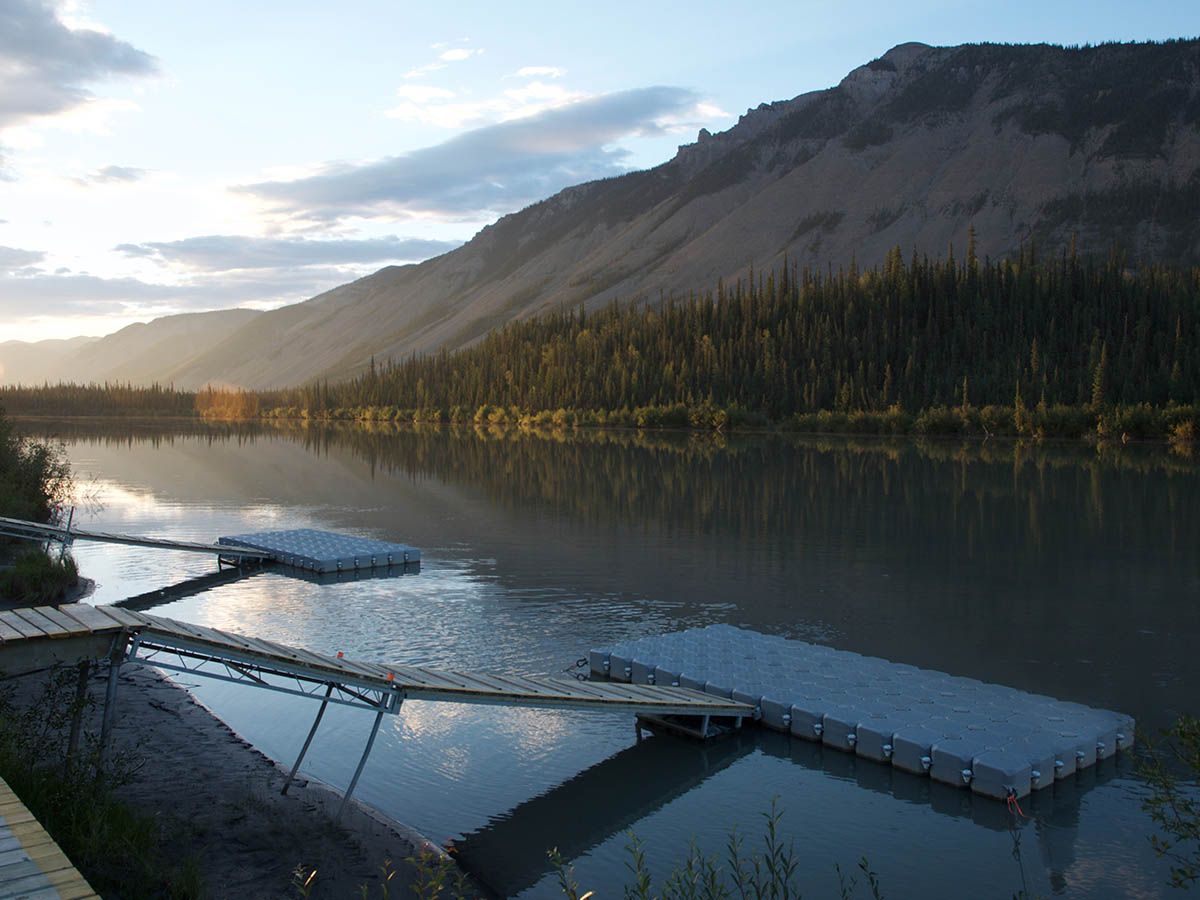
hero media

A rapid journey along Canada’s Nahanni River

The Nahanni river began as a meandering prairie river but, as the mountains formed, it maintained its course and cut canyons into the rock.

Our bush pilot offers zero warning before treating us to a heart-stopping banked flyover of falls twice the height of Niagara. Minutes later, the floatplane touches down on calm waters above the remote 96-metre-high waterfall and we taxi to a pontoon positioned barely more than a kilometre upstream from where every last droplet plunges into thunderous confusion. I’m obviously back in the North of Canada– a place of few words and great intensity. Ahead of me is a week-long journey down the South Nahanni River in Canada’s Northwest Territories, starting from the base of what Europeans named Virginia Falls but is really Náįlįcho (nigh-LEECH-oh) meaning ‘big falls’. Turtle Island – the lands known as North and Central America – has got under my skin over the years, especially these northern extremes, but time on this river seeps right into the very core of my being.
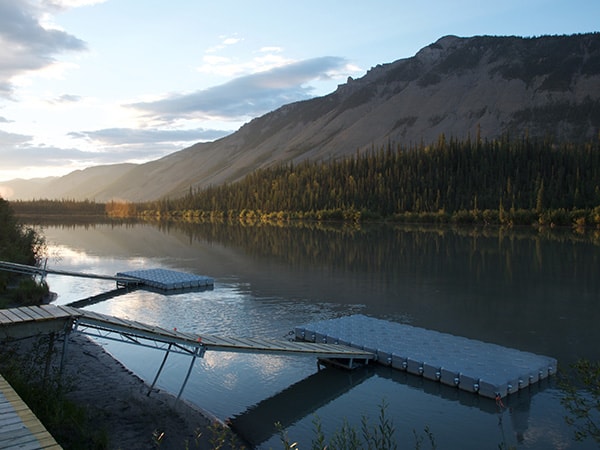
Floatplane Pontoon, Nahanni River Canada
Sunset over the floatplane pontoon near the standing camp on Canada’s Nahanni River. (Image: Elspeth Callender)

Standing in full sunshine against a boreal forest backdrop, waiting for the de Havilland Twin Otter to dock, are our guides Jamie VanDrunen, Margaret Fahey and Ursula Kilbridge. I met all nine other guests yesterday when we converged on Fort Simpson. We range in age from late teens to early seventies and are travelling solo, coupled and as a grandfather and grandson team. I’m the only person on the trip who is not from Canada’s southern provinces.


Our guides appear as relaxed as friends on holiday. In actual fact, they’ve spent 24 hours transferring masses of gear from a nearby standing camp to the base of the falls including the skin of an expedition raft and four double classic canoes. Margaret portages canoes solo by balancing an inverted vessel on her shoulders to negotiate the often slippery and steep 1.7-kilometre trail. Tonight’s camp is nestled among berry-bearing wild-flowered scrub overlooked by stunted spruce and aspen. Although it’s mid-summer, the sparsely treed mountains and barely vegetated plateaus of Nahanni National Park Reserve still support snow in their shadowy crevices. Across the river stands Sunblood Mountain named for its colour-morphing qualities.
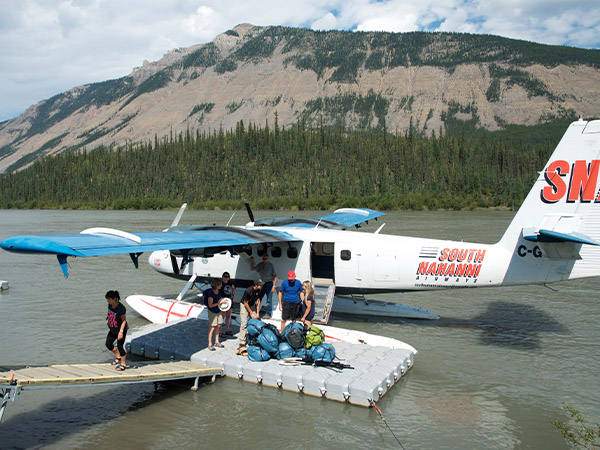
Floatplane arriving at Nailicho, Canada
Guests arrive in a standing camp above Náįlįcho by floatplane. (Image: Elspeth Callender)

Canadian River Expeditions and Nahanni River Adventures have been guiding this river for decades. Nahanni National Park Reserve was one of the first places to become a UNESCO World Heritage Site and the South Nahanni is arguably the most aesthetically dramatic waterway in the Canadian Heritage Rivers System. Yet, first and foremost, this is Dene (deh-nay) territory.
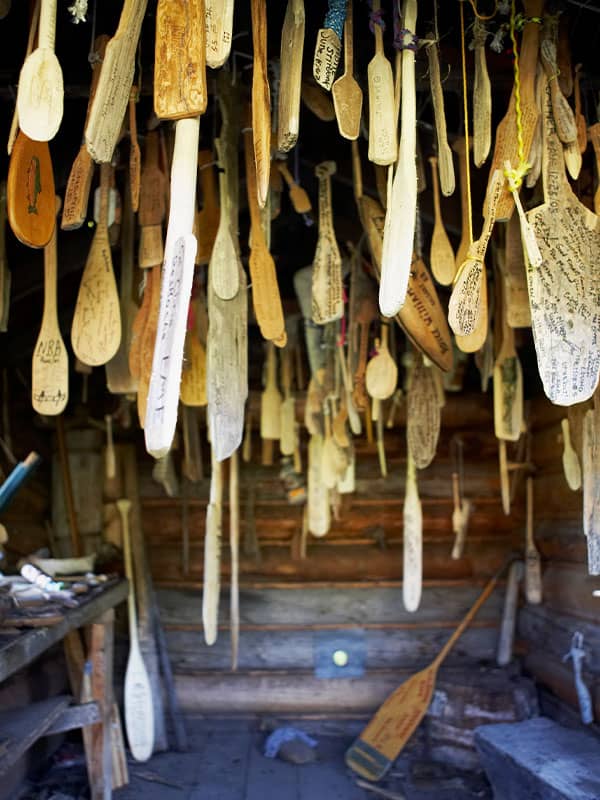
Rustic Cabin, Kraus Hot Springs, Canada
A rustic cabin near Kraus Hot Springs.

“As Dene walk through these mountains, all this is their store," explains Pauline Campbell – a Dene woman and Parks Canada cultural interpretation officer, here exclusively for us today. Pauline carries a handmade canvas and leather bag over one shoulder with a folder and bear spray poking out the top.
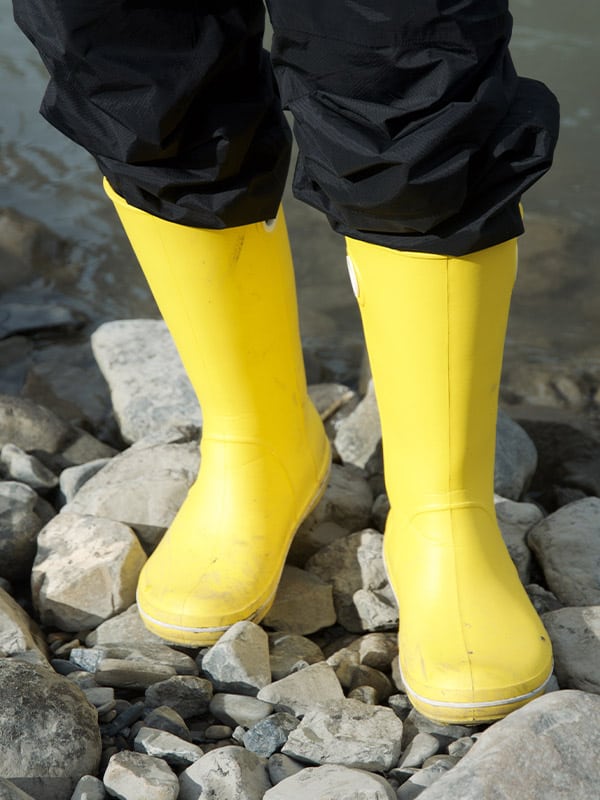
Yellow wool-lined rubber boots
Wool-lined rubber boots are a smart rafting accessory in the Northwest Territories’ climate. (Image: Elspeth Callender)

As Pauline leads us along a timber walkway to overlook Náįlįcho, she points out food, medicines and black spruce ideal for making canoes. The water gushing around the waterfall’s central stack generates excessive light-refracting mist in which the Dene recognise animal shapes.


Pauline is from Nahanni Butte, where our journey will end around 240 kilometres downriver as the South Nahanni drains into the Liard River. The word Nahanni derives from a name in a Dene language that expresses the river’s significance to the traditional people of this place. As a child, Pauline played here among the blueberry bushes and caribou lichen right where a 10,000-year-old moose femur fleshing tool – for removing flesh from hide – was found.

“She’s not speaking of legend, she’s speaking about her life," says Margaret after we part ways with Pauline. At camp, we eat succulent Taku salmon and fresh salads laid out on a wooden barbecue table. From tomorrow, we’ll be back-country camping without Parks infrastructure, but the meal quality won’t diminish. Under a near-midnight sun we crawl into tents we’ve set up ourselves.
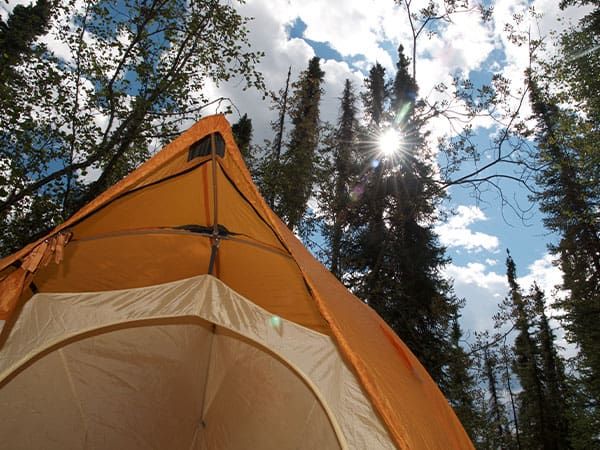
Tent pitched, Nahanni River, Canada
Pitch up tents for the night. (Image: Elspeth Callender)

The next morning, we head to the rocky riverbank and pack our vessels. This particular Nahanni itinerary offers a choice of rafting or canoeing. The river’s Class II and III white water is technical for canoes, but not tricky to raft. Two couples, two guides and the grandfather and grandson, John and Connor, are in double canoes. A guest called Tom, who is on the brink of parenthood, is travelling in his own inflatable kayak packed with fly-fishing gear.

I don’t have white-water canoeing experience or any motivation to become experienced; meeting the dreadful bed of the Colorado River in Class VI rapids a few years back helped me realise that’s not how I want to go. As it turns out, however, there are some glorious half days ahead paddling flat-water sections of the Nahanni when canoers need or want a raft break. And I’ll even get an hour or so on the raft oars.
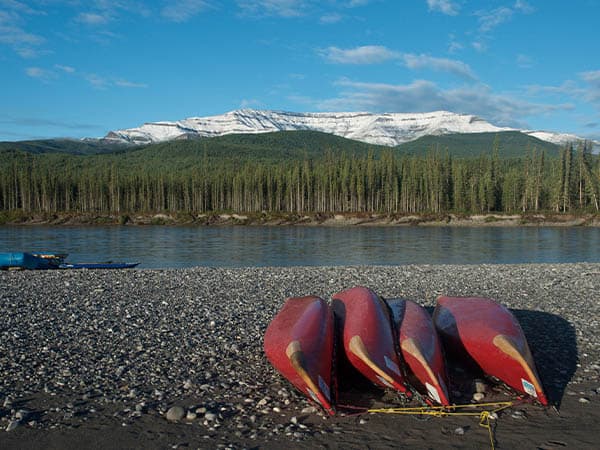
Canoes, Snowy mountains at Prairie Creek
Snowy mountains at Prairie Creek. (Image: Elspeth Callender)

“It’s not a learning river. You’ve got to come with a skill set," says experienced lead guide Jamie. She’s dressed in a dry suit and outlining this morning’s paddling route in the sand for canoers. In terms of white water, she warns, this trip “starts off with a bang". All guests who’ve booked canoes have experience and training but are still challenging themselves and at least one had an extremely restless night’s sleep.

Half an hour after we launch, John and Connor capsize in fast water through a wide canyon. John loses contact with their canoe, but Connor has a bigger problem: one foot is stuck under his seat. Luckily the teenager is tall enough to keep his head above water while Jamie and Margaret race towards him. Meanwhile, the raft intercepts John and I’m able to haul him in by his life jacket.
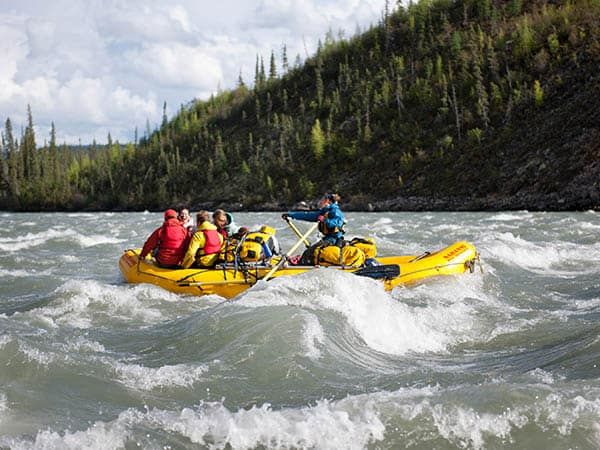
Guests in rafts through rapid waters, Nahanni River, Canada
Moving rapidly along on the Nahanni (Image: Destination Canada)

The Nahanni has seen plenty of action, drama and tragedy in its time, especially since Europeans came here for fur from the early 1800s and gold a century later. Names like Deadmen Valley, Broken Skull River, Hell Roaring Creek and Headless Creek hold some historic horrors. Even today, those who take from the land continue to negatively impact the lives of those who have always valued it. Here, above 60 degrees magnetic north, it’s not like the south of Canada. The climate is far more extreme, the seasons more pronounced and the wildlife more abundant. We roll and float past moose, deer, bison, beaver and black bears, while above us are bald eagles and osprey. At each campsite, animal and bird prints pattern the sand banks and mud flats.
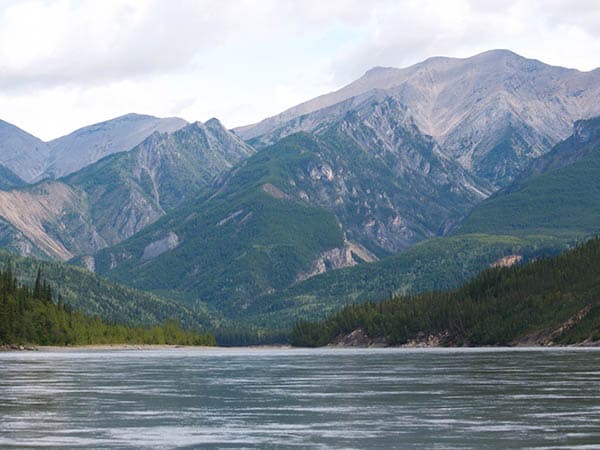
Denendah, Nahanni National Park Reserve, Canada
One of the many faces of Denendah, homeland of the Dene, also known as Nahanni National Park Reserve. (Image: Elspeth Callender)

Designation of a national park in the 1970s halted proposed hydroelectric plans for this wild 563-kilometre waterway. Today, Nahanni National Park Reserve occupies an area of just over 3 million hectares. There are stringent hunting and trapping restrictions in the park, but throwing a line in is fine.


“I got one," shouts Tom in the late glow of the third night when we’re camped at The Gate, where the river sharply corners between sheer cliffs. Jamie and I start to turn our heads until we hear Tom’s reassessment: “I had one." The couple travelling on the raft with me are all about the scenic float and have little interest in paddling; the raft is mainly about drinking coffee, eating trail mix and sharing stories or a comfortable silence. Though with Ursula on the oars, our assistance is barely necessary. She has been guiding since she was 17 and now, at 24, she’s a white-water kayaking junkie and records every river she visits through expressive line drawings.
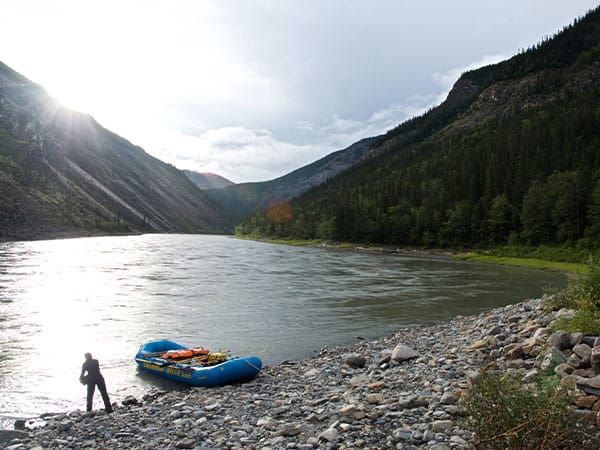
The Gate campsite with guide, Nahanni River, Canada
A guide performs late evening chores as the sun slowly sets over the campsite at The Gate. (Image: Elspeth Callender)

This particular river is geologically eccentric. It began as a meandering prairie river but, as the mountains formed, the Nahanni maintained its course and cut canyons into the rock. It’s called an antecedent river because it predates those mountains. While other rivers meander, the South Nahanni snakes and drops an impressive 396 altitudinal metres between Náįlįcho and Nahanni Butte.
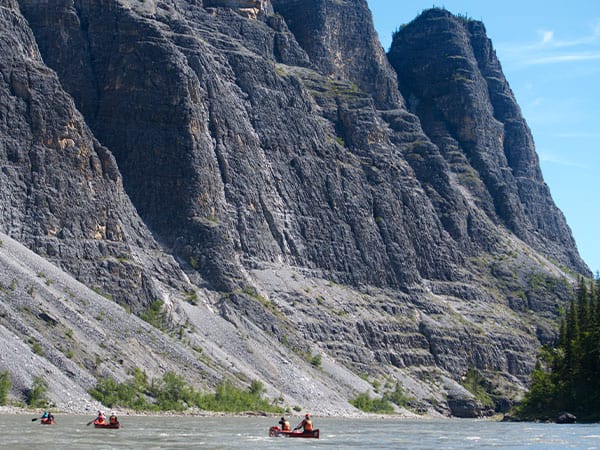
Tourists in Canoes, visiting First Canyon, Canada
The canoes are dwarfed by the massive walls of First Canyon. (Image: Elspeth Callender)

As the trip progresses, the rockscape around us becomes increasingly dramatic. By First Canyon, even our raft is minuscule within this gigantic landscape where, in some places, walls tower more than a kilometre above us. This is part of the world’s most northern known limestone karst. In one of First Canyon’s many cliff-face caves is a pile of around 100 Dall sheep skeletons believed to be more than 2000 years old.


We can’t access that cave, but there’s plenty to see and do around the river such as swimming in Lafferty Creek’s ‘chasm of chills’ and soaking in thermal pools. At Painted Rocks Canyon, it’s a short walk from the riverbank to a wall of fossilised creatures dating back 500 million years to when the area was a tropical sea bed.
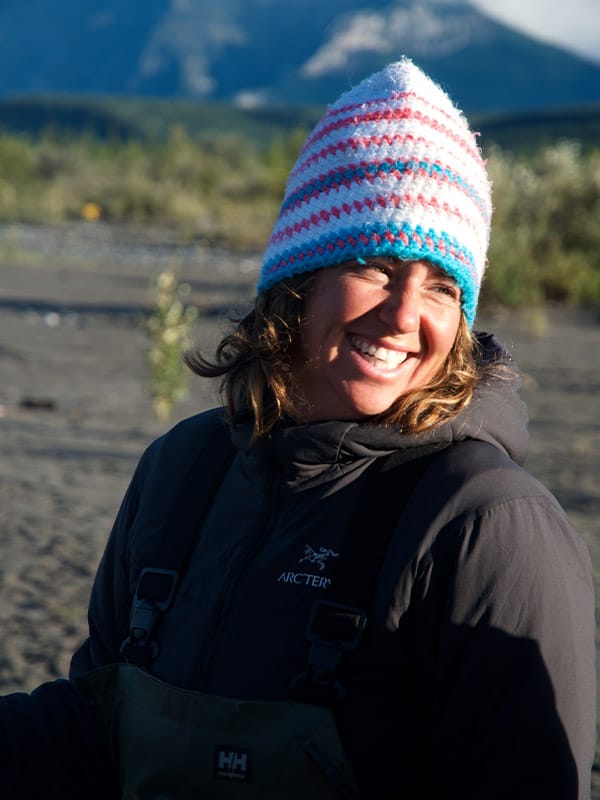
Jamie VanDrunen, Lead Guide, Prairie Creek Camp, Canada
Lead guide Jamie VanDrunen at the Prairie Creek camp in Deadmen Valley. (Image: Elspeth Callender)

In Deadmen Valley, where Prairie Creek meets the Nahanni, the river is slow and braided and becomes the emotional centrepiece of my trip. It’s a blustery afternoon when we arrive at a sandy beach to set up camp. In screaming winds, our guides somehow whip up a steak dinner and dessert with no extra crunch.


After the wind subsides, I lose hours washing, almost ritualistically, in the river and sitting on the pebbled shore lost in thought. Overnight it thunders and rains and blows. I dream wildly then wake to the sound of tents being zipped open and people gasping. When I emerge, I find a blue river under a clear sunny sky and the mountains in every direction caked with fresh snow. The North has done it again; the beauty is intense, and words can’t begin to describe it.
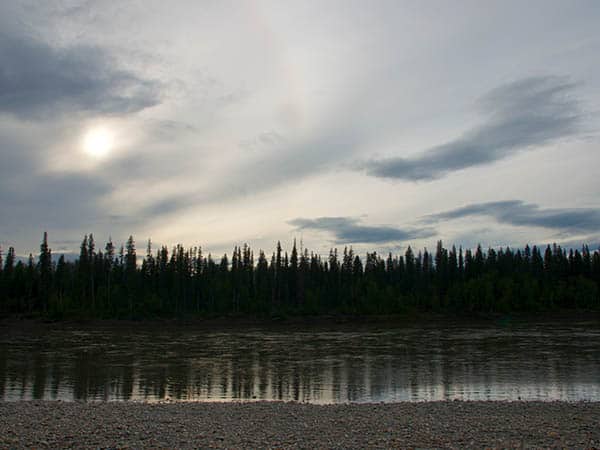
Campsite at The Splits, Nahanni River, Canada
The majestic final campsite at The Splits. (Image: Elspeth Callender)

A traveller’s checklist

Getting there

Air Canada flies direct from Sydney to Vancouver.

Paddling there

Nahanni River Adventures’ seven-day journey Nahanni Canyons from Virginia Falls (Canyon Kingdom) runs from June to late August. Rafters need no experience while canoers require at least Class II white-water experience.

Exploring there

Give yourself time in the Territories’ capital of Yellowknife, which has two aurora seasons. Visit NWT Brewing Co. in the heart of Yellowknife’s historic Old Town.

Weekly travel news, experiences
insider tips, offers,
and more.

Staying there

You will sleep like a log at the Explorer Hotel, Chateau Nova and Capital Suites in downtown Yellowknife.
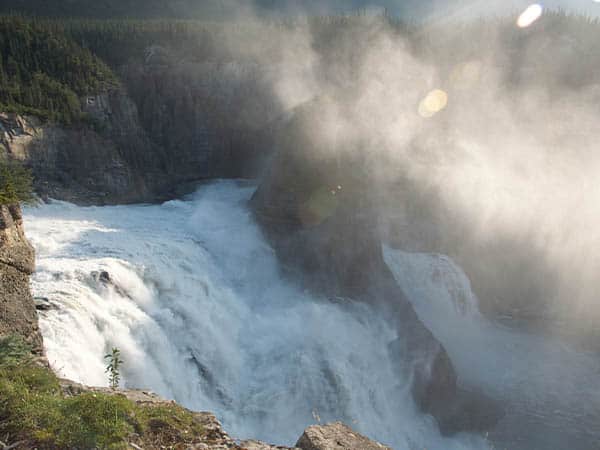
Dene see animal shapes in the Náįlįcho mist
Take a helicopter ride over Náįlįcho. (Image: Elspeth Callender)

Going further

While most visitors come to Nahanni National Park Reserve to canoe or raft along sections of the river, which flows more than 500 kilometres from its headwaters in the Mackenzie Mountains, there is plenty more to do besides. For starters, the Cirque of the Unclimbables is a legendary route that draws adventure travellers for the challenge of climbing its jagged granite spires and for the romance of its spectacular scenery. You can also take a helicopter ride over Náįlįcho (Virginia Falls), one of the most beautiful waterfalls in the world. Fishing in the reserve is also popular for arctic grayling, bull trout, dolly varden and walleye.

Want to see more stories from International Traveller in your Google search results?

  1. Click here to set International Traveller as a preferred source.
  2. Tick the box next to "International Traveller". That's it.
hero media

12 grand journeys throughout North America

    Discover North America’s epic adventures — from Route 66 and Alaska cruises to Hawai‘i road trips, NYC culture, Mexico trails and more.

    1. Route 66, the Main Street of America

    Travelling with: Ricky French

    Sunset on Route 66 in the California Mojave Desert.
    Hit the open road and trace America’s legendary highway. (Image: Getty/Der_Thomasa)

    Dubbed the Main Street of America, Route 66 radiates serious main character energy, cemented into popular culture through everything from John Steinbeck’s novel The Grapes of Wrath to the Disney Pixar film Cars. Spanning nearly 4000 kilometres from Chicago to Los Angeles, the historic highway celebrates its centenary next year, a timely invitation to take the mother of all road trips along the Mother Road. Allow two to three weeks to tackle the full length, or bite off a smaller chunk at either end, cruising the dramatic deserts of California or the more pastoral landscapes of Illinois, lined with neon-lit diners, retro gas stations and quirky roadside attractions.

    2. Mexico’s Día de los Muertos

    Travelling with: Carla Grossetti

    emblematic catrina of mexico with flowers and necklace with sempasuchil flowers
    Celebrate life and honour loved ones in vibrant style. (Image: Getty/Fabian Pacheco)

    You might know Oaxaca as the birthplace of mole and mezcal. But the state in southern Mexico is also where the Día de los Muertos (Day of the Dead) began. Time your visit to coincide with the colourful holiday, on 1–2 November, which honours and celebrates loved ones who have passed away. Oaxaca is also Mexico’s Michelin-starred culinary capital, with 18 restaurants and a humble taco stand listed in the 2025 guide.

    3. Museum-hop in New York City

    Travelling with: Carla Grossetti

    The Guggenheim Museum’s iconic spiralling exterior, a highlight of North America Epic Adventures.
    Step inside and marvel at bold, world-class art. (Image: Damiano Fiore)

    Your map app will look like it’s been scattered with confetti after you’ve dropped pins on all the museums you want to visit in New York City. Must-sees are the Solomon R. Guggenheim Museum, the Metropolitan Museum of Art aka the Met, and the Museum of Modern Art. The American Museum of Natural History is also a draw. It’s also worth venturing into the boroughs to browse institutions such as the Brooklyn Museum, which has a huge permanent collection categorised by culture.

    4. The USA’s music scene

    Travelling with: Elizabeth Whitehead

    The Seattle skyline at night, aglow with city lights on North America Epic Adventures.
    Soak up skyline views and dive into the city’s coffee culture. (Image: Abigail Boone)

    If you’re a muso, chances are you’ve wanted to make a pilgrimage to the United States, the epicentre of so many beloved genres. Whether you’re head-banging your way around the Grunge Circuit in Seattle, chasing the twang of the pedal steel through Tennessee or bouncing between blues bars in the Mississippi Delta, the USA’s rich music culture has something that’ll strike a chord.

    5. Road-tripping Hawai‘i

    Travelling with: Carla Grossetti

    A woman surfing in Hawaii, gliding across turquoise waves on North America Epic Adventures.
    Catch the waves and ride Hawaii’s iconic swells. (Image: Ben Ono)

    Hawai‘i is one of the most diverse US states to road trip around. Of the six major islands to visit, the Island of Hawai‘i packs in everything from the snowy summits of Mauna Kea and Mauna Loa to black-sand beaches and lava fields frozen in the act of flowing forward. Change down a few gears on the island of O‘ahu, too, where you can find your own patch of sand on Waimanalo Beach. Visit poi and pineapple plantations. And hang ten on beginner-friendly waves on the North Shore.

    6. Cruising Alaska

    Travelling with: Carla Grossetti

    Explora Journeys ship cruising in Alaska.
    Sail past glaciers and spot whales in pristine waters.

    Seeing Alaska from the sea allows you to cover a lot of distance quickly. This immersive frontier now beckons more than ever before with Explora Journeys adding the American state to its global destination portfolio. Best of all are the pre-and post-journey immersions that connect the luxury of a cruise onboard Explora III with the rugged grandeur of the Alaskan interior. UnCruise Adventures also weaves in access to remote national parks, legendary wildlife corridors and authentic cultural experiences on its Alaskan itineraries.

    7. The Wixárika Route in Mexico

    Travelling with: Elizabeth Whitehead

    People journeying through the Wixarika Route.
    Journey deep into sacred Huichol traditions and art.

    For generations, the Indigenous Wixárika People of Mexico have walked a sacred path known as Tatehuarí Huajuyé, or ‘The Path of Our Grandfather Fire’. The annual pilgrimage route spans 500 kilometres, taking in significant sites in Wixárika spirituality and cosmology. The route passes through the deserts, mountains and forests of northern Mexico before reaching Wirikuta, believed to be the place the sun first emerged. The route is a living cultural landscape of Indigenous culture pre-Columbian influence and, in July this year, was formally inscribed into UNESCO’s World Heritage List.

    8. Drive the Iceberg Coast in Canada

    Travelling with: Carla Grossetti

    Iceberg off the east coast of Canada
    Chase icebergs along Expedition 51 on Canada’s east coast. (Image: Canadian Tourism Commission/ Chris Hendrickson)

    Download the icebergfinder.com map to better plan your road trip along Canada’s Iceberg Coast. The new highway, which has been nearly 25 years and CAD$1.1 billion in the making, threads through the country’s pleated coastlines around Quebec, Newfoundland, Labrador, Nova Scotia and New Brunswick before looping in the French islands of St Pierre and Miquelon. As well as chasing icebergs along Expedition 51, travellers will have the opportunity to engage with cultures that have thrived in the pristine provinces for thousands of years.

    9. A foodie tour of Nova Scotia

    Travelling with: Katie Carlin

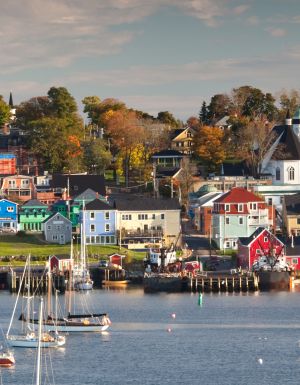
    Lunenberg Nova Scotia
    Try lobster rolls in Lunenburg on the east coast of Canada in Nova Scotia. (Image: Natalia Kvitovska/ Unsplash)

    World-famous for its lobster, Nova Scotia is a Canadian province best savoured through its culinary clout shaped by sea and terroir. Bite into lobster rolls at historic Lunenburg’s Salt Shaker Deli & Inn and sip maple rum at Ironworks Distillery. Winery-hop around Wolfville’s rising vineyards (don’t miss Lightfoot & Wolfville). Take a maple syrup tour at Sugar Moon Farm near Earltown. And pull up a seat at waterfront Bar Sofia in Halifax, where Nova Scotia oysters aguachile arrive bright with cucumber, lime and pickled onion.

    10. Soak up the sun in the Caribbean

    Travelling with: Carla Grossetti

    Overwater bungalows off a beach in the Caribbean
    Experience the white-sand beaches and cerulean seas of the Caribbean on board a cruise.

    The Caribbean is on the radar for seasoned cruisers. And it’s easy to see why, with white-sand beaches, cerulean seas and swaying palms so picture-perfect they look AI-generated. Cruise with Windstar, Royal Caribbean, and Celebrity on its inaugural Xcel season to the Caribbean to enjoy action-packed excursions such as snorkelling coral reefs and shopping for local trinkets. And those sea days? Spectacular.

    11. Red Chair Hikes of Canada

    Travelling with: Kassia Byrnes

    Red Adirondack chairs overlooking Lake Minnewanka in Canada
    Take a seat at Lake Minnewanka, one of more than 400 red Adirondack chairs scattered across Canada’s hiking routes. (Image: Getty Images/ Autumn Sky Photography)

    No one appreciates the great outdoors more than Canadians, emerging from snow-covered winters to tread glacial rivers and snowshoe through forests, or to hike mighty mountains and wildflower-strewn valleys come spring. Along popular hikes around the country, more than 400 red Adirondack chairs have been placed in peaceful, breathtaking locations. What started as a social media contest now sees hikers soaking in classic Canadian lake and mountain vistas, overlooking historic sites or gazing down on the mountainous path they just travelled.

    12. Ride the Rocky Mountaineer from Denver to Moab, USA

    Travelling with: Carla Grossetti

    Sweeping views from the Rocky Mountaineer.
    The Rocky Mountaineer will continue as the Canyon Spirit in 2026, seen here carving through Ruby Canyon.

    Sighting wild animals is one of many incredible thrills along the two-day luxury Rockies to the Red Rocks route onboard the Rocky Mountaineer across America’s Southwest between mid-April and mid-October. In addition to the lone bear, we spot bighorn sheep, elk, beavers, pronghorn antelope, bald eagles and ospreys. Riding the rails onboard the luxury train, which was founded in Canada in 1990 and has been awarded the prestigious World’s Leading Travel Experience by Train several times, has never been about just getting from A to B. Ride the train from Denver to Moab and you will see the scenery change from snow-capped peaks to meadows, red-rock canyons and soaring cliffs that resemble ornate Gaudí-esque cathedrals. But it’s not until you get off the train that you can produce the ultimate Venn diagram, with nature and adventure in the intersecting spheres.

    A rapid journey along Canada’s Nahanni River - International Traveller