hero media

Gros Morne: Atlantic Canada’s second largest national park

Extending far out beyond Canada’s lonely east coast, Newfoundland’s Gros Morne National Park protects a rugged landscape unlike anywhere else on Earth.

“This is my favourite view in the park because you can see two planets at once," Brad Young announces as we stride forth under a clear blue sky. “You’ve got Earth to your right," he explains, gesturing towards a granite dome poking out above thickly wooded slopes. “And then there’s Mars on the left."

Instead of looking up to the heavens, I’m gazing in wonder at the most distinctive part of Newfoundland’s World Heritage-listed Gros Morne National Park.

The Tablelands

The Tablelands is a barren plateau that formed when two continents collided and forced Earth’s mantle up to the surface. One of only a few places in the world where you can observe this phenomenon, it played a crucial role in confirming the theory of plate tectonics but is far from fertile ground for the local fauna.
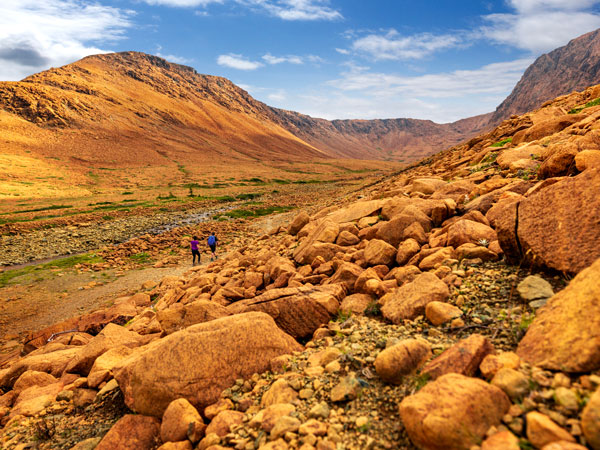
a barren plateau at The Tablelands, Gros Morne Mountain
The Tablelands is a barren plateau formed by two colliding continents. (Image: Dru Kennedy)

The rocks of the Tablelands are so rich in heavy metals that “it’s basically a polluted junkyard for most plants". Nearly 500 million years after that initial continental clash, the slopes are still almost entirely devoid of flora, save a few maroon pitcher plants that get their nutrients by capturing unwitting insects.

Instead, the iron-rich rocks have rusted to a dark orange that creates a distinctly Martian landscape. And it’s not just film crews that think so – NASA scientists have visited several times to test their Mars Exploration Rovers.

The absence of any vegetation above ankle height means it’s almost impossible to get a sense of scale as we slowly climb upwards, so I don’t realise how far we’ve ascended until I turn around. And when I do, the otherworldly appearance of the Tablelands is amplified by the contrast between the bare orange rock and the rest of the park. Below me, the cobalt-blue waters of Bonne Bay fjord split into two arms that stretch out towards jagged mountain peaks, broad grassy meadows and dense forests of spruce, larch, balsam and fir.
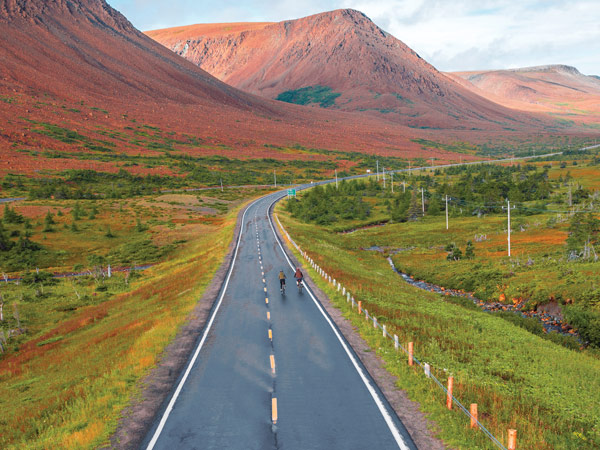
Gros Morne road with a red landscape in the background
The red landscape is made up of the Earth’s exposed mantle. (Image: Barrett & MacKay Photo)

An eye-popping landscape

I’m visiting as part of World Expeditions’ Gros Morne Adventure, a week-long walking trip that takes me to the heart of this remote and staggeringly beautiful park perched high up on the north-western tip of Newfoundland. Adrift in the wild Atlantic Ocean, this remote island didn’t join Canada until 1949 and the locals still have a fiercely independent streak and take evident pride in the beauty of their surroundings.

Newfoundland’s Gros Morne National Park in Fall
Bask in the colours of fall at Newfoundland’s Gros Morne National Park.

“How can you tell the Newfoundlanders in heaven?" Brad asks at one point, before hitting us with the punchline: “They’re the ones who want to go home." A long-time local who lives in a cabin in the woods and refers to nearby Corner Brook (pop. 20,000) as a big city, he’s equipped with an endless supply of one-liners delivered in the broad maritime accent of a Bostonian who’s just had a shot of Novocaine to the gums.

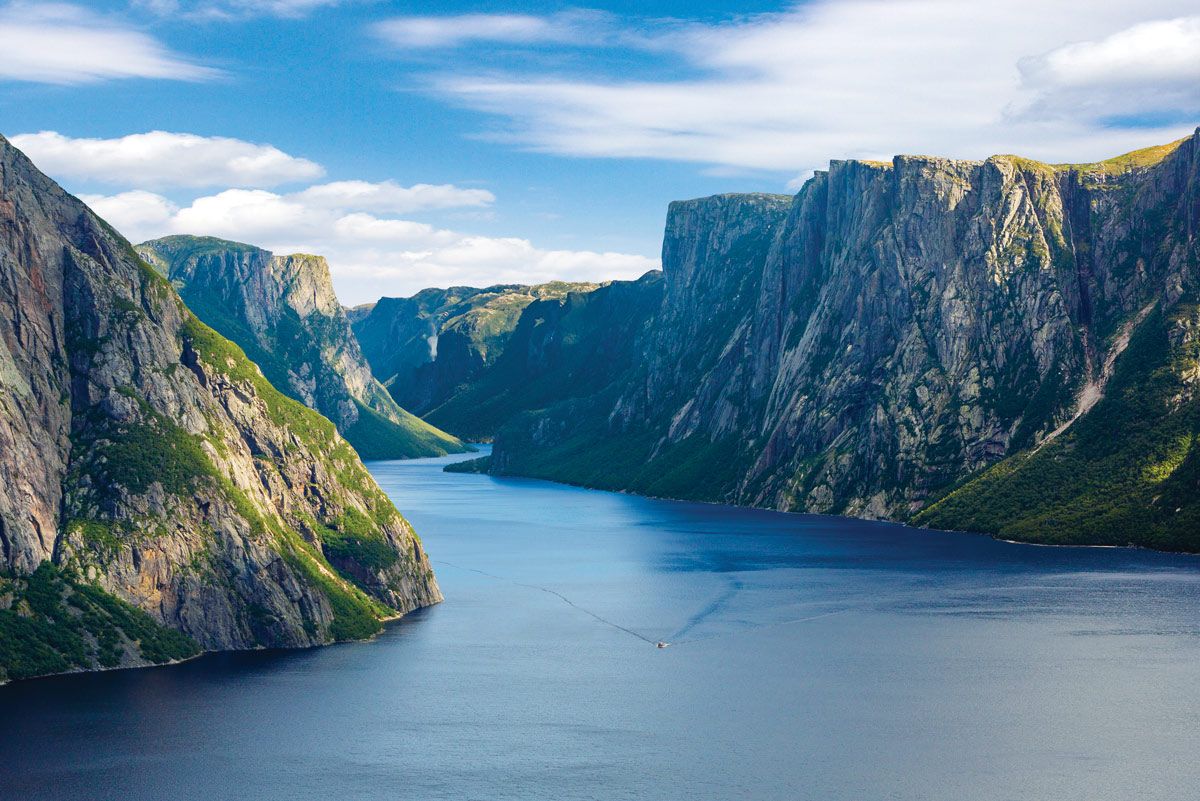
One of the features of the local dialect is that any body of water between two metres and 20 kilometres across is a pond (pronounced “pahnd"), and by far the most beautiful is Western Brook Pond. In any other place this would be the headline act, a stunningly beautiful freshwater fjord gouged from towering cliffs of weathered granite and gneiss that disappear into the clouds.
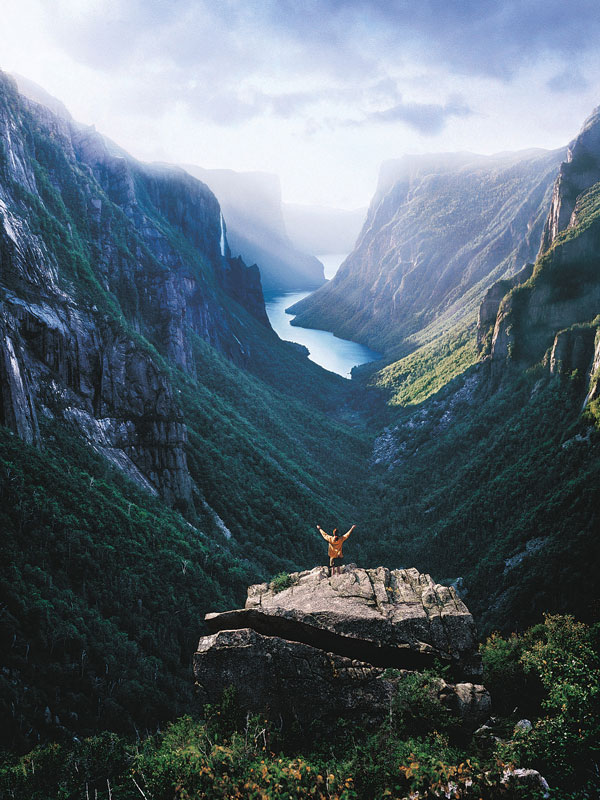
a person standing on top of Western Brook Pond, Gros Morne National Park
Hike to the top of Western Brook Pond for dramatic views.

Lush forests and freshwater fjords

Even in late June, patches of white dot the upper reaches and the snowmelt feeds roaring waterfalls that rush down the cliff faces in billowing clouds. And, like the Tablelands, this is a peculiarly harsh environment; the small drainage basin and non-reactive granite keep the water so pure that it won’t conduct electricity and it lacks the nutrients to support much marine life.
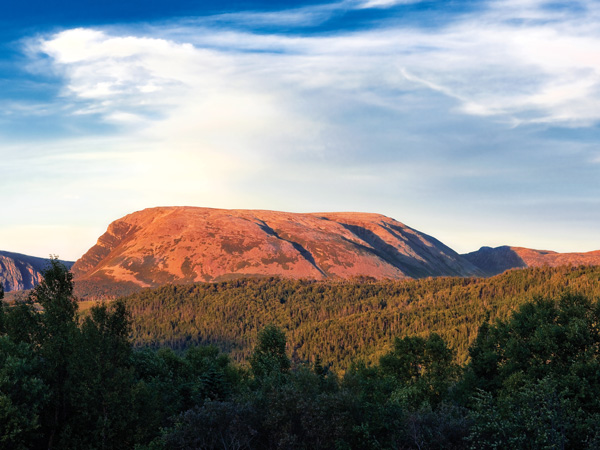
the granite dome of Gros Morne Mountain
Light touches the granite dome of Gros Morne Mountain. (Image: Barrett & MacKay Photo)

Fortunately, not all our surroundings are so unforgiving. For 500 years Newfoundland was the base for fishers plying the Grand Banks, one of the richest fishing grounds in the world, and each night after our walk we have a chance to sample the sea’s bounty.

We feast on sweet, pickled herring and plump steamed mussels in the idyllic fishing community of Trout River, tuck into pan-fried cod in a former fishing loft and taste the most famous local catch prepared in every way imaginable. There are lobster dumplings, lobster bisque, whole lobsters and even the scallop and shrimp risotto is garnished with lobster caviar.
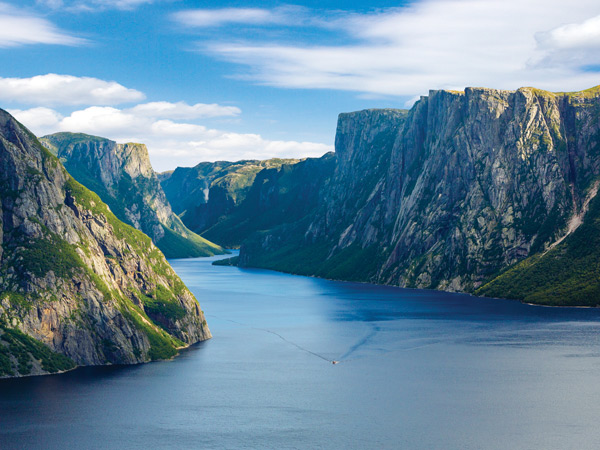
the Western Brook Pond in Gros Morne National Park
Western Brook Pond is a spectacular glacier-cut freshwater fjord. (Image: Barrett & MacKay Photo)

Coastal walking trails

I’m sure that eventually I’d tire of such a diet, but that would take far longer than a single week. And while a daily dose of lobster sounds like gold-plated opulence, the real luxury of this trip lies in its intimate scale. Walking groups are limited to six people, which means we can fit around a table at even the cosiest local restaurants. And that size makes it easy to take in the natural beauty undisturbed on our daily walks that range from eight to 16 kilometres, each taking us into an entirely new environment.

Coastal trails pass forests of wind-blasted “tuckamore" trees that grow almost sideways to form impenetrable tangles of branches. And a bank of fossil-rich shale stands vertically above a rocky beach at Green Point. “Every layer is like a page in a story," our guide tells us, “and one millimetre represents 100 years of sedimentation. That means each step you take along the beach is like travelling 60,000 years through time."
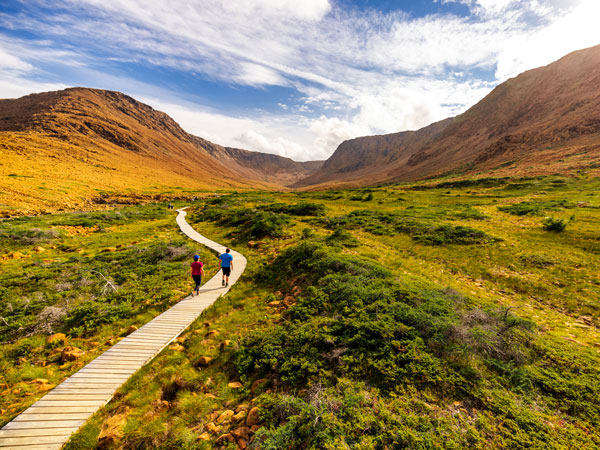
traversing the trail through the Tablelands
A trail through the Tablelands. (Image: Dru Kennedy)

Skyscraping peaks

At 700 metres above sea level, the aptly named Big Lookout gazes out from a flower-filled alpine bog over brooding mountain ranges, windswept volcanic beaches and glacier-carved fjords. Across the bay lies a tall granite dome erupting from a sea of trees. This is the mountain that gives the park its name, and on sunny days Brad says the quartzite that covers the upper sections turns it into “a sheet of glass in the middle of the forest".
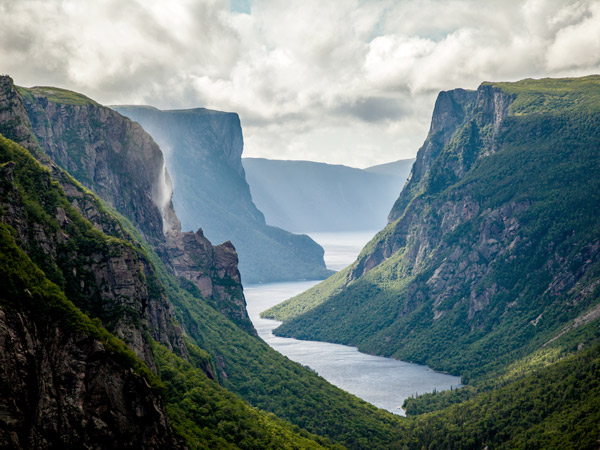
dramatic views on top of Western Brook Pond
This national park in north-west Newfoundland is UNESCO-listed.

Gros Morne Inn

And yet none of these can compete with my favourite view of the park. That would be from Gros Morne Inn, the former hunting lodge perched above the charming town of Woody Point that serves as our home for the week.

I head to one of the cedar hot tubs looking out over Bonne Bay each night after dinner, determined to stay up and see what I am certain will be epic night skies. But the rich lobster dinners and days that seem to stretch out indefinitely so close to the summer solstice mean that I’m always asleep long before the stars come out.
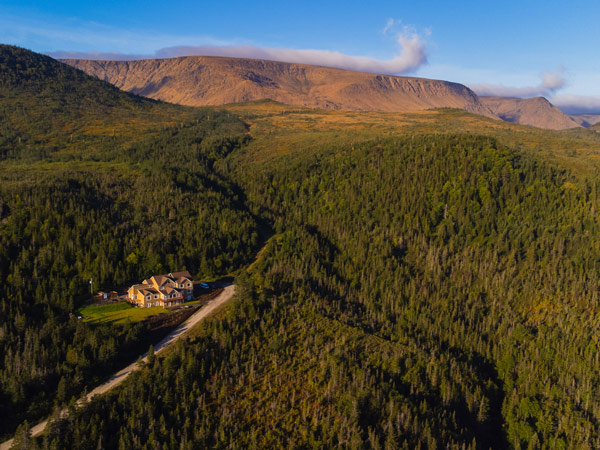
a drone view of Gros Morne Inn and The Tablelands
Gros Morne Inn from above.

Under my goose-down doona, I dream of being a child in Adelaide and trying to dig a hole all the way to China, a notion that seems even more fanciful now than it did then. In truth, I’d have to dig deeper than anyone ever has just to reach the Earth’s mantle, and if I kept going I’d eventually pop out somewhere off the coast of Newfoundland.

The island’s largest settlement, St Johns, lies 18,320 kilometres away from my hometown. But even that doesn’t fully capture just how remote it is. Gros Morne doesn’t just feel like another planet; it contains multiple worlds, each of them somehow more beautiful than the last.
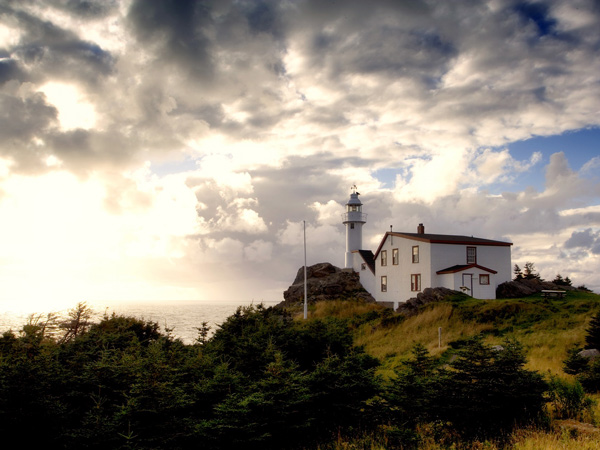
the Lobster Cove HeadLighthouse
Climb up the Lobster Cove Head Lighthouse.

Weekly travel news, experiences
insider tips, offers,
and more.

Conscious traveller

Gros Morne Inn co-owner Rebecca Brushett is a marine biologist and founder of AHOI (Atlantic Healthy Oceans Initiative), a non-profit that conducts marine life surveys, clears marine debris and upcycles it into building materials. All the seafood on the Inn’s seasonal menu is Ocean Wise-certified and the kitchen uses locally sourced produce wherever possible (including jam made by the local mayor).

Newfoundland’s remoteness makes waste management an important issue, so locally made soap, shampoo and conditioner all come in bar form to eliminate packaging, and the Inn is on the path to becoming an entirely waste-free business. For now, all recycling categories are weighed and measured and thin plastic that can’t be recycled is turned into eco-bricks for future construction projects.
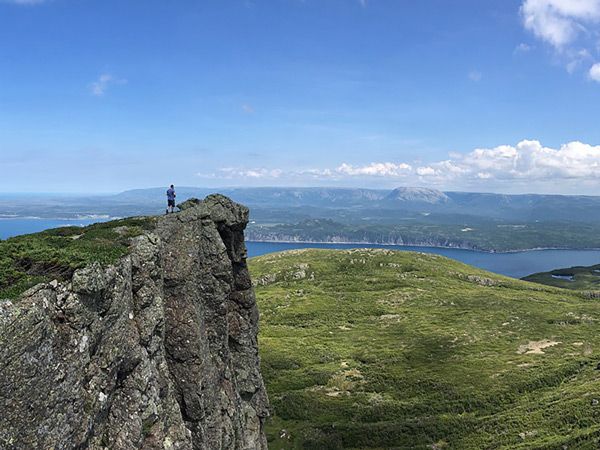
The Big Lookout with views of The Tablelands
The Big Lookout offers spectacular views of The Tablelands.

A traveller’s checklist:

The seven-day Gros Morne Adventure runs between June and September and includes airport transfers, guides, accommodation and all meals.

Getting there

Guests are picked up from Deer Lake Regional Airport, which has multiple daily connections to Toronto, Montreal and Halifax.

Staying there

The base package includes accommodation at Bonne Bay Inn, with an option to upgrade to Gros Morne Inn.
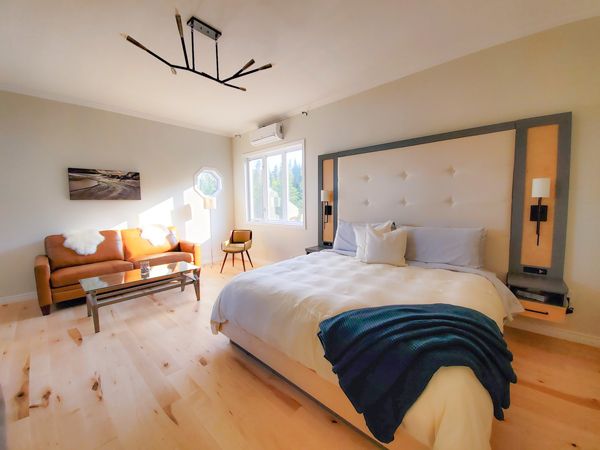
a king room inside the Gros Morne Inn
Sleep in the Gros Morne Inn king room.

Want to see more stories from International Traveller in your Google search results?

  1. Click here to set International Traveller as a preferred source.
  2. Tick the box next to "International Traveller". That's it.
Alexis Buxton-Collins
Alexis Buxton-Collins spent his twenties working as a music journalist and beer taster before somehow landing an even dreamier job as a freelance travel writer. Now he travels the world from his base in Adelaide and contributes to publications including Qantas, Escape, The Guardian and Lonely Planet. Alexis has never seen a hill he didn't want to climb and specialises in outdoor adventures (he won the 2022 ASTW award for best nature/wildlife story for a feature on Kangaroo Island). When he's not scouring South Australia for the newest wineries and hikes, he's looking for excuses to get back to spots like Karijini and Ningaloo.
View profile and articles
hero media

5 things every hotel needs for a more restorative stay

    Kate Bettes Kate Bettes
    Wellbeing means different things to different travellers. Here’s how to pick a hotel that gets it right for you.

    The best wellness holidays aren’t necessarily spent wrapped in a spa robe. Sometimes they’re found around a dinner table in Cambodia, on a hiking trail in New Zealand or after finally beating jet lag on the other side of the world. The hotel you choose is what makes them happen.

    1. Easy access to good food

    meals from Novotel Bangkok Sukhumvit 20
    Taste delicious meals at Novotel Bangkok Sukhumvit 20.

    One of the quickest ways to derail healthy habits on holiday is to spend half of it working out where to eat instead of digging into the culture around you. Thankfully, Novotel has done much of the hard work already, with chefs building menus that lean into the flavours, ingredients and traditions of each destination.

    In Sihanoukville, Cambodia, Korkor soup – often dubbed ‘Cambodian ratatouille’ – sits alongside raw blue crab dressed with lime and chilli, best enjoyed with views across the Gulf of Thailand.

    In the lovingly chaotic city of Bangkok, the presence of food cranks up the sociability. At Novotel Bangkok Sukhumvit 20, you can settle in with mango sticky rice and stranger-turned-friends beside the pool at Sky on 20 rooftop bar, or bring them along to tackle river prawns and stir-fried crab with holy basil at the buzzing Crab Paradise Dinner Buffet.

    Then Novotel Dubai Al Barsha welcomes you with a laidback twist on the level of indulgence the Middle Eastern city is best known for up on Deck Se7en. Looking towards Burj Al Arab, the rooftop lounge has everything from Mediterranean-style dishes like seabass ceviche to Italian prosecco sundowners.

    At the other end of the scale, in the hills that surround the Novotel Bali Ubud Resort, calm comes from nature. At Siralada restaurant, Balinese traditions shape the menu while thunder rumbles over the surrounding jungle – proving the setting is as nourishing as the food itself.

    While at Novotel Nha Trang, chef Kieu Thi My Hanh and her team showcase Vietnam’s knack for balancing freshness, texture and fragrant herbs. Pho remains a favourite, while seafood salad with pomelo and mango brings those flavours together in one bright dish.

    It’s all an approach backed by partnerships with expert food creators such as Alfie Steiner, whose plant-forward recipes prove healthy food should never taste plain.

    2. Better sleep options

    Novotel Bali Ubud Resort room
    Sleep deeply with Novotel.

    There are few travel experiences more disappointing than arriving in a new country, determined to seize the day, only to fall asleep fully clothed by 3pm.

    For Australian travellers, jet lag is often an unavoidable part of the journey. That’s one reason Novotel runs sleep-focused initiatives that help guests adjust quickly without compromising on health. We’re talking partnerships with Sydney-based sleep specialist Olivia Arezzolo, known for her advice on everything from better sleep habits to beating jet lag, alongside features like pillow menus, in-room yoga content and tailored sleep guidance.

    The sooner you’re operating on local time, the sooner you can get back to more pressing matters – like deciding which spa treatment to book.

    3. More ways to move

    woman hiking around queenstown new zealand
    Stay at Novotel Queenstown Lakeside and explore local hiking trails. (Credit: GettyI mages/ naruedom)

    Every place in the world has its own way of getting you moving: whether that’s hiking up ice-bitten mountains before a sauna or gentle stretching by the pool before a facial. From fitness centres to spas, Novotel recognises that wellbeing rarely looks the same.

    At Novotel Queenstown Lakeside, activity is inescapable. Here, hiking trails, ski fields, bungee jumps, and white-water rafting have made the region famous. The hotel’s location on the shores of Lake Wakatipu means less time spent organising yourself and more time out there experiencing them. To top it all off, you can book a private hot tub for the evening before heading back into the wilderness tomorrow.

    Bali, of course, takes a softer approach. At Novotel Bali Ubud Resort or Novotel Bali Nusa Dua, movement is less about conquering a mountain and more about a dance class between the tropical gardens and lagoon pools. Afterwards, the spa takes over, with traditional treatments like a Lulur body scrub: a combination of rice, turmeric, sandalwood, ginger and jasmine that’ll soothe muscles already relaxed by the Balinese heat.

    4. Better connections

    Novotel Sharm El Sheikh
    Kids will love a stay at Novotel Sharm El Sheikh.

    One of the best things about travel is that it gives your family stories you’ll be telling for years. Novotel helps create them with activities that bring everyone together, whether that’s trying something new, learning a local skill, or simply spending more time together.

    Go for a distinctly Thai twist at Novotel Phuket Vintage Park, where many of the family activities draw on local culture. Kids can try everything from beginner Thai boxing and language lessons to umbrella painting and – a pastime beloved by children the world over – pool foam parties. Everyone is welcome to join in, whether that’s getting splashed, covered in paint, or simply watching their children discover a new side of Thailand during the dedicated Family & Kids Day.

    A different adventure awaits at Novotel Sharm El Sheikh. Kids could be perfectly content with discos, drawing classes and new holiday friends, but the Red Sea has other ideas. Sitting on the edge of Naama Bay, days here might involve snorkelling colourful reefs, taking a boat trip to Ras Mohammed National Park or heading into the desert by quad bike or camel for a Bedouin-style dinner beneath the stars.

    5. Location is everything

    Surin Beach, Choeng Thale, Thalang District, Phuket, Thaiföld
    Explore Phuket’s gorgeous beaches. (Credit: Bence Biczo)

    Everyone’s idea of wellness looks a little different. With more than 600 hotels across 65 countries, Novotel gives guests the freedom to choose the destination that suits them best. Whether that’s a beachside escape in Phuket, an alpine expedition in Queenstown or a city break in Bangkok, there’s a good chance a Novotel isn’t far away.

    All that’s left? Choosing your version of wellbeing.

    Discover stays to inspire your everyday at novotel.accor.com.