hero media

A Maritime cruise to convert all former landlubbers

An island with wild ponies, a little piece of France, a site where the earth’s mantle is visible these are just a few of the highlights of this adventure cruise through some of eastern Canada’s most remote island communities. By Nikki Bayley.

A helicopter swoops above our Zodiac as we putter past cliffs of prime nesting real estate off the coast of Saint-Pierre et Miquelon.

It starts an incredible chain reaction – first a cloud of Atlantic puffins zoom across the sky, their yellow feet glinting in the sun, then the sky turns black as about half a million birds join the fray.

Jacques Sirois, One Ocean’s resident naturalist, excitedly rattles off names faster than a footie commentator: guillemots, razorbills, herring gulls, kittiwakes; it’s a dazzling aerial display which has me converted from ‘Birds? Meh.’ to ‘OMYGOD! BIRDS!’ in a trice.

One Ocean’s Fins and Fiddles expedition around Canada’s Maritimes is described as an ‘expedition with a hot tub’.

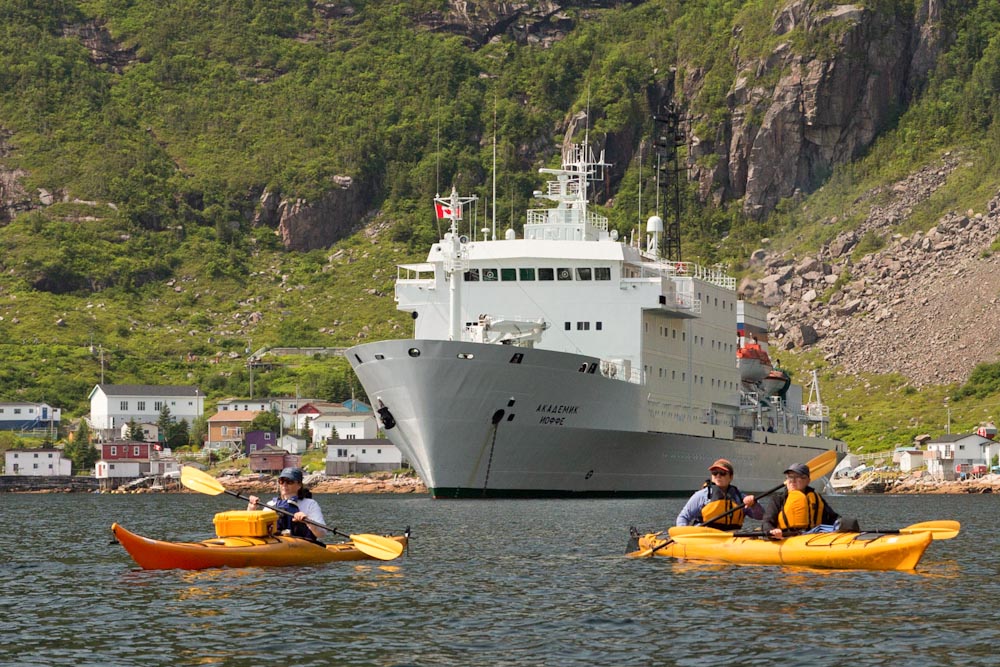
A Russian polar research vessel that has been repurposed for passenger voyages, the Ioffe (with an ‘i’) has a mostly Canadian crew of ‘adventure concierges’ on hand to help passengers get the most from their 10-day cruise, whether that’s delving into the history of the islands, getting pro-tips on photography or learning to kayak, paddleboard or guiding mountain-bike expeditions.

Our first taste of adventure comes in the ship’s mud room as we get decked out in waterproofs, disinfect our boots and vacuum kit to make sure no stray grass or seeds make it onto the protected sands of our first destination.

Sable Island sounds like a fairy tale – an ever-shifting sandbank shaped like a crooked smile where wild horses live.

Known as the ‘Graveyard of the Atlantic’, its treacherous shores have claimed the wrecks of more than 350 ships since 1583.

Now one of Canada’s newest National Parks, fewer people have stood on its distant shores than the Arctic.

I feel privileged as I clumsily roll out of the Zodiac (it takes a few days to do it like a pro) on to the dunes.

This freshwater oasis is Canada’s largest breeding colony of grey seals, boasts 18 species of shark off its coastline and is home to five Parks Canada staff and some 350 wild horses.

It’s tough walking in soft sand in gum boots, but I fall in step with Jonathan Sheppard, Sable Island’s Parks Canada Manager, as we go searching for the island’s famous equine residents.

I wonder how they cope in winter and shiver at his reply: “Winds of 150 miles per hour (240 kilometres per hour) pummel the islands. The horses grow shaggy coats and huddle together to stay warm."

We pass gleaming white bones sinking into the sand, and Jonathan points out the lusher patches of vegetation – they’re horse’s graves.

We stagger to the top of a Sahara-like dune and look down – the Ioffe looks tiny below and sand sharply pings me in the face in the wind.

And then we see them, looking for all the world like glossy show ponies.

We have to stay 20 metres away from them but, as I walk down the dunes, we’re close enough to watch them shake their manes as they nibble grass and drink from the freshwater pools.

I take off alone to explore the island, reveling in its curious geography, the flowers in the barren landscape, and how cold it is, even in summer.

The next day brings bags of fresh-made cheese curds from the Pied-de-Vent fromagerie to snack on as we take a whistle-stop bus tour around one of the impossibly picturesque Iles de la Madeleine with its iron-red sandy beaches and floral-painted cottages.

We take in the marine museum and a traditional smokehouse, where the Arseneau family smoke everything from cheese to malt to make beer.

Felix Arseneau, the great-grandson of its founder shows us around and we hear the sadly familiar story of how overfishing decimated fish stocks in eastern Canada in the 1970s.

But there’s a happy ending here, with the slow return of herring thanks to better management in the 1990s and the re-opening of the traditional smokehouse.

Back on board, ship life revolves around meal times and, with just 96 passengers, there’s room for everyone to eat at one serving with generous multi-course meals.

Thanks to the Russian kitchen team, Russian flavours feature with fragrant borscht appearing alongside more Canadian fare such as salmon and lobster.

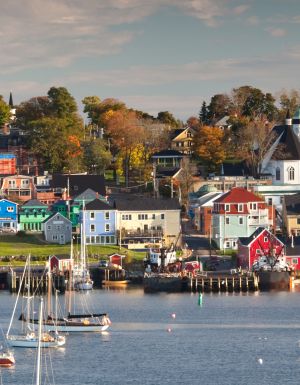
My shipmates vary in age from 17-month old Caitlin to 92-year old Harvey, a former mayor of Louisbourg, the historic spot from which we set sail, and which boasts a superb recreation of an 18th-century French fortress.

We soon fall into a routine, with morning briefings on where we’ll sail each day, along with nightly announcements for those who want to kayak, paddleboard or cycle the next day.

You can be as active, or lazy, as you feel. I skip a bike ride in favour of a long soak in the rooftop hot tub and a session in the library, curled up studying maps of the region feeling no guilt.

My school teachers would not recognise me later in the week as I decide against playing cards in the bar.

I head instead to the lower deck to hear a lecture by Dr Sean Cadigan, one of the ship’s experts, on the geological marvels of Gros Morne National Park where we’re heading the next day.

The park is home to the oldest animal ecosystem in the world and it’s thanks to the Precambrian fossils (which I now know means they have no shells) embedded on its seafloor, that we can prove Darwin’s Theory of Evolution.

Armed with my new knowledge, exploring the following day with Kevin Barnes, the Vice Chief of the Qalipu Mi’kmaq First Nation, and a Parks Canada interpreter is a joy.

I can understand so much more of this extraordinary place, one of the few spots on Earth where you can see the earth’s mantle-tectonic plate theory at work.

I head to a small fishing community, Trout River, for lunch which turns out to be a creamy bowl of chowder, bobbing with fat chunks of freshly caught seafood, and a juicy cod burger.

Later I meet one of the residents, Helen Howe hanging out hand-knitted socks and hats on her washing line to sell.

“This is on-line shopping in Trout Lake," she chortles as I pick a soft pink knitted hat to take home.

The 10 days pass too fast, paddling remote shores by kayak, finally becoming a pro at the ‘sailor’s grip’ required to get in and out of the bobbing Zodiacs lashed to the side of the ship and learning to enjoy life with no wi-fi or phone service.

It turns out you can have fascinating conversations when you can’t just Google something you’re not sure of!

We visit the tiny community of Francois (pronounced France-way) with a population of 80, perched on a cliff at the end of a long fjord off Newfoundland’s south coast.

This isolated ex-fishing village welcomes us with a tour of their (single) street and, that night, throws a ‘kitchen party’ for us in their community centre, the locals favouring an arms-to-the-side take on traditional Irish step dancing, and us One Oceanites, arms flailing alongside.

The last day takes us to another country, thanks to the quirks of Canada’s embattled past between the French and the English.

Saint Pierre et Miquelon is both a tiny archipelago and the last remnant of New France. This curious colonial quirk is a facsimile of France, just south of Newfoundland.

You need euros to pay for the buttery croissants and we are visited by French passport control before we’re allowed to visit, but the wine is cheap, the pastries delicious, and its streets are filled with Renault and Peugeot cars.

It is one more Maritimes miracle that few have even heard of, never mind visited, and the perfect illustration of One Ocean’s Fins and Fiddles trip: quirky, off the beaten path and pretty much guaranteed to fill you with astonished delight.

GET GOING:

One Ocean Expeditions offers an 11-day Canadian Maritimes Fins and Fiddles trip on board Akademik Sergey Vavilov.

The ship makes two sailings from Louisbourg in July 2017, for ports including Sable Island, Gros Morne National Park, Newfoundland and Saint-Pierre et Miquelon.

The cruise is full-board, with 24-hour tea, coffee and hot chocolate, and juice at breakfast (other drinks cost extra).

Interested in more unique Canadian experiences?

Here are some of our favourite picks from our list of 100 Things to do in Canada Before You Die:


Want to see more stories from International Traveller in your Google search results?

  1. Click here to set International Traveller as a preferred source.
  2. Tick the box next to "International Traveller". That's it.
hero media

12 grand journeys throughout North America

    Discover North America’s epic adventures — from Route 66 and Alaska cruises to Hawai‘i road trips, NYC culture, Mexico trails and more.

    1. Route 66, the Main Street of America

    Travelling with: Ricky French

    Sunset on Route 66 in the California Mojave Desert.
    Hit the open road and trace America’s legendary highway. (Image: Getty/Der_Thomasa)

    Dubbed the Main Street of America, Route 66 radiates serious main character energy, cemented into popular culture through everything from John Steinbeck’s novel The Grapes of Wrath to the Disney Pixar film Cars. Spanning nearly 4000 kilometres from Chicago to Los Angeles, the historic highway celebrates its centenary next year, a timely invitation to take the mother of all road trips along the Mother Road. Allow two to three weeks to tackle the full length, or bite off a smaller chunk at either end, cruising the dramatic deserts of California or the more pastoral landscapes of Illinois, lined with neon-lit diners, retro gas stations and quirky roadside attractions.

    2. Mexico’s Día de los Muertos

    Travelling with: Carla Grossetti

    emblematic catrina of mexico with flowers and necklace with sempasuchil flowers
    Celebrate life and honour loved ones in vibrant style. (Image: Getty/Fabian Pacheco)

    You might know Oaxaca as the birthplace of mole and mezcal. But the state in southern Mexico is also where the Día de los Muertos (Day of the Dead) began. Time your visit to coincide with the colourful holiday, on 1–2 November, which honours and celebrates loved ones who have passed away. Oaxaca is also Mexico’s Michelin-starred culinary capital, with 18 restaurants and a humble taco stand listed in the 2025 guide.

    3. Museum-hop in New York City

    Travelling with: Carla Grossetti

    The Guggenheim Museum’s iconic spiralling exterior, a highlight of North America Epic Adventures.
    Step inside and marvel at bold, world-class art. (Image: Damiano Fiore)

    Your map app will look like it’s been scattered with confetti after you’ve dropped pins on all the museums you want to visit in New York City. Must-sees are the Solomon R. Guggenheim Museum, the Metropolitan Museum of Art aka the Met, and the Museum of Modern Art. The American Museum of Natural History is also a draw. It’s also worth venturing into the boroughs to browse institutions such as the Brooklyn Museum, which has a huge permanent collection categorised by culture.

    4. The USA’s music scene

    Travelling with: Elizabeth Whitehead

    The Seattle skyline at night, aglow with city lights on North America Epic Adventures.
    Soak up skyline views and dive into the city’s coffee culture. (Image: Abigail Boone)

    If you’re a muso, chances are you’ve wanted to make a pilgrimage to the United States, the epicentre of so many beloved genres. Whether you’re head-banging your way around the Grunge Circuit in Seattle, chasing the twang of the pedal steel through Tennessee or bouncing between blues bars in the Mississippi Delta, the USA’s rich music culture has something that’ll strike a chord.

    5. Road-tripping Hawai‘i

    Travelling with: Carla Grossetti

    A woman surfing in Hawaii, gliding across turquoise waves on North America Epic Adventures.
    Catch the waves and ride Hawaii’s iconic swells. (Image: Ben Ono)

    Hawai‘i is one of the most diverse US states to road trip around. Of the six major islands to visit, the Island of Hawai‘i packs in everything from the snowy summits of Mauna Kea and Mauna Loa to black-sand beaches and lava fields frozen in the act of flowing forward. Change down a few gears on the island of O‘ahu, too, where you can find your own patch of sand on Waimanalo Beach. Visit poi and pineapple plantations. And hang ten on beginner-friendly waves on the North Shore.

    6. Cruising Alaska

    Travelling with: Carla Grossetti

    Explora Journeys ship cruising in Alaska.
    Sail past glaciers and spot whales in pristine waters.

    Seeing Alaska from the sea allows you to cover a lot of distance quickly. This immersive frontier now beckons more than ever before with Explora Journeys adding the American state to its global destination portfolio. Best of all are the pre-and post-journey immersions that connect the luxury of a cruise onboard Explora III with the rugged grandeur of the Alaskan interior. UnCruise Adventures also weaves in access to remote national parks, legendary wildlife corridors and authentic cultural experiences on its Alaskan itineraries.

    7. The Wixárika Route in Mexico

    Travelling with: Elizabeth Whitehead

    People journeying through the Wixarika Route.
    Journey deep into sacred Huichol traditions and art.

    For generations, the Indigenous Wixárika People of Mexico have walked a sacred path known as Tatehuarí Huajuyé, or ‘The Path of Our Grandfather Fire’. The annual pilgrimage route spans 500 kilometres, taking in significant sites in Wixárika spirituality and cosmology. The route passes through the deserts, mountains and forests of northern Mexico before reaching Wirikuta, believed to be the place the sun first emerged. The route is a living cultural landscape of Indigenous culture pre-Columbian influence and, in July this year, was formally inscribed into UNESCO’s World Heritage List.

    8. Drive the Iceberg Coast in Canada

    Travelling with: Carla Grossetti

    Iceberg off the east coast of Canada
    Chase icebergs along Expedition 51 on Canada’s east coast. (Image: Canadian Tourism Commission/ Chris Hendrickson)

    Download the icebergfinder.com map to better plan your road trip along Canada’s Iceberg Coast. The new highway, which has been nearly 25 years and CAD$1.1 billion in the making, threads through the country’s pleated coastlines around Quebec, Newfoundland, Labrador, Nova Scotia and New Brunswick before looping in the French islands of St Pierre and Miquelon. As well as chasing icebergs along Expedition 51, travellers will have the opportunity to engage with cultures that have thrived in the pristine provinces for thousands of years.

    9. A foodie tour of Nova Scotia

    Travelling with: Katie Carlin

    Lunenberg Nova Scotia
    Try lobster rolls in Lunenburg on the east coast of Canada in Nova Scotia. (Image: Natalia Kvitovska/ Unsplash)

    World-famous for its lobster, Nova Scotia is a Canadian province best savoured through its culinary clout shaped by sea and terroir. Bite into lobster rolls at historic Lunenburg’s Salt Shaker Deli & Inn and sip maple rum at Ironworks Distillery. Winery-hop around Wolfville’s rising vineyards (don’t miss Lightfoot & Wolfville). Take a maple syrup tour at Sugar Moon Farm near Earltown. And pull up a seat at waterfront Bar Sofia in Halifax, where Nova Scotia oysters aguachile arrive bright with cucumber, lime and pickled onion.

    10. Soak up the sun in the Caribbean

    Travelling with: Carla Grossetti

    Overwater bungalows off a beach in the Caribbean
    Experience the white-sand beaches and cerulean seas of the Caribbean on board a cruise.

    The Caribbean is on the radar for seasoned cruisers. And it’s easy to see why, with white-sand beaches, cerulean seas and swaying palms so picture-perfect they look AI-generated. Cruise with Windstar, Royal Caribbean, and Celebrity on its inaugural Xcel season to the Caribbean to enjoy action-packed excursions such as snorkelling coral reefs and shopping for local trinkets. And those sea days? Spectacular.

    11. Red Chair Hikes of Canada

    Travelling with: Kassia Byrnes

    Red Adirondack chairs overlooking Lake Minnewanka in Canada
    Take a seat at Lake Minnewanka, one of more than 400 red Adirondack chairs scattered across Canada’s hiking routes. (Image: Getty Images/ Autumn Sky Photography)

    No one appreciates the great outdoors more than Canadians, emerging from snow-covered winters to tread glacial rivers and snowshoe through forests, or to hike mighty mountains and wildflower-strewn valleys come spring. Along popular hikes around the country, more than 400 red Adirondack chairs have been placed in peaceful, breathtaking locations. What started as a social media contest now sees hikers soaking in classic Canadian lake and mountain vistas, overlooking historic sites or gazing down on the mountainous path they just travelled.

    12. Ride the Rocky Mountaineer from Denver to Moab, USA

    Travelling with: Carla Grossetti

    Sweeping views from the Rocky Mountaineer.
    The Rocky Mountaineer will continue as the Canyon Spirit in 2026, seen here carving through Ruby Canyon.

    Sighting wild animals is one of many incredible thrills along the two-day luxury Rockies to the Red Rocks route onboard the Rocky Mountaineer across America’s Southwest between mid-April and mid-October. In addition to the lone bear, we spot bighorn sheep, elk, beavers, pronghorn antelope, bald eagles and ospreys. Riding the rails onboard the luxury train, which was founded in Canada in 1990 and has been awarded the prestigious World’s Leading Travel Experience by Train several times, has never been about just getting from A to B. Ride the train from Denver to Moab and you will see the scenery change from snow-capped peaks to meadows, red-rock canyons and soaring cliffs that resemble ornate Gaudí-esque cathedrals. But it’s not until you get off the train that you can produce the ultimate Venn diagram, with nature and adventure in the intersecting spheres.

    Adventure cruising Canada's Maritime Provinces - International Traveller