hero media

What’s it like to live in Oman?

What’s it like to move your family all the way across the world to Muscat, Oman? One expat gives us an insight on the best bits and the challenges of living in this Middle East oasis.

Where are you originally from?

I grew up in outback New South Wales and went to boarding school in Adelaide, where I also attended the University of Adelaide and completed my BA and Law degrees. Since then I’ve moved about, but Brisbane is where we call home.

Where are you living now?

My husband, two young boys and I are now based in Muscat, Oman. Close to 10 months.

What’s the best thing about living in Oman?

oman muscat australian expat family
Victoria Miller is an Australian living with her family in Muscat, Oman.

Everything is dramatic and extreme – the climate, the spicy food, the heady aromas of oud, shisha and frankincense and, of course, the landscape.


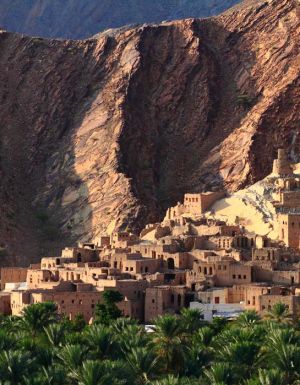
Rugged mountains squeezed out of the earth by millennia of seismic events and ravaged by ice ages overlook pristine coastlines; it is truly breathtaking.


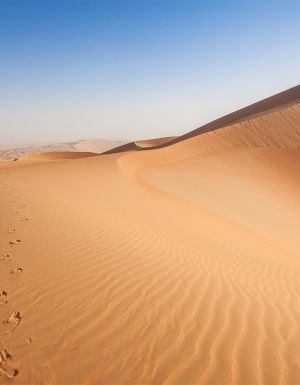
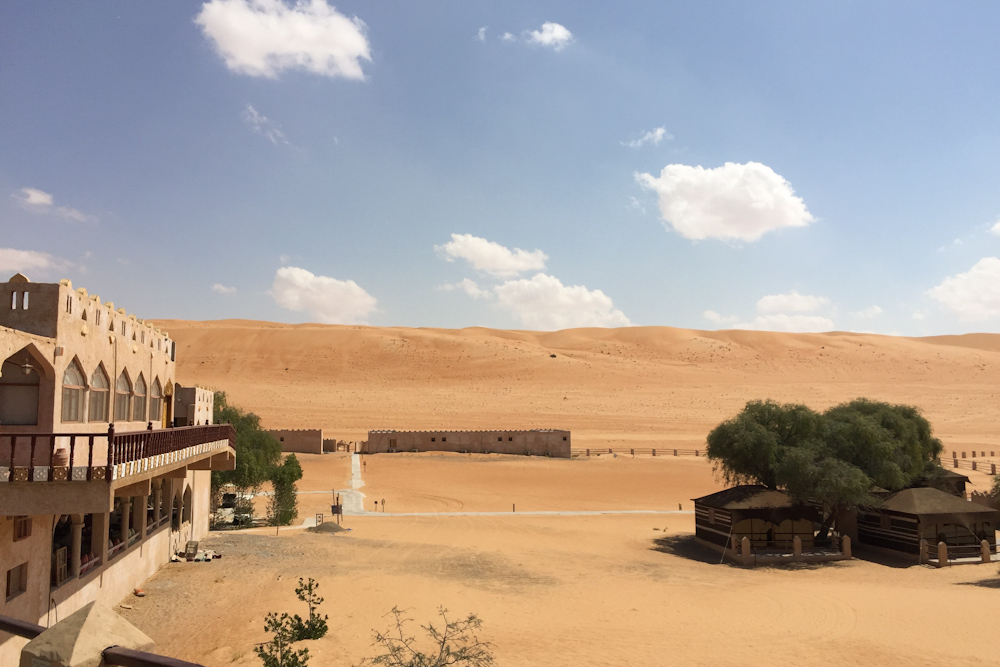
Beyond the mountains is the Empty Quarter: thousands of kilometres of desert sand dunes speckled with palm-lined oases fed by natural springs.


In the cooler months from November to April, you can explore the great outdoors, but if you prefer more luxurious options you can attend a ballet or opera at the Royal Opera House, or lounge poolside at any number of five-star resorts.

What’s the hardest about living in Oman?
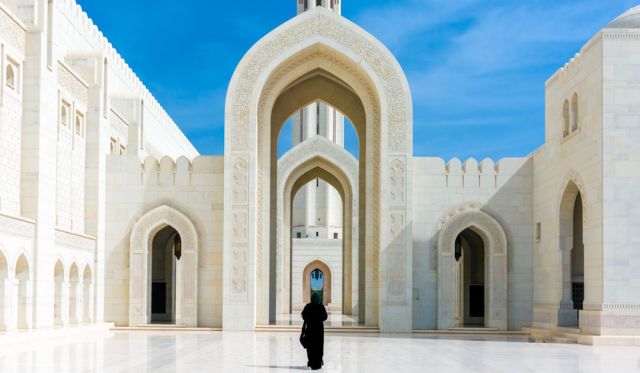
oman travel middle east culture Muscat Al jabal al Akhdar
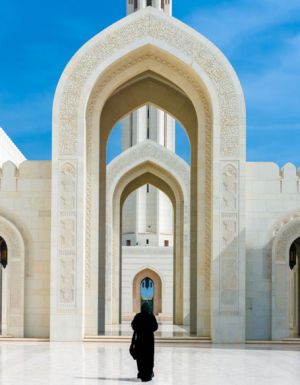
The magnificent sultan Qaboos Grand Mosque, Muscat (photo: Leigh-Ann Pow).

The heat here between May and November is like no other. The mercury might read 45°C, but it’s more like 55°C due to the humidity. It is like a tropical heat without the relief of a thunderstorm. The only way to escape it is to stay indoors or to leave the country!

What’s one thing people should do that only locals know about?

In the narrow backstreets of Madinat al Sultan Qaboos, one of the older suburbs here, we recently stumbled upon some secluded little shisha bars, shawarma (an Arabic meat wrap) houses, and small traditional restaurants predominantly frequented by locals.


The tagines are amazing as is the famous ‘lemon and mint’ drink; the perfect thirst quencher on a sweltering day.

Where is the best place in Muscat to get a coffee?

The Ritz offers a high tea with petit fours. The coffee is intense and smooth.

Your favourite place to eat in Oman?

Mumtaz, a famous Indian restaurant perched on a hill overlooking the city. We’ve tried pretty much everything on the menu. Another plus is that it’s licensed (not all restaurants are here) with an impressive international wine list.

Where do you go shopping in Oman?

Dubai; Muscat has a long way to go in that department!

Weekly travel news, experiences
insider tips, offers,
and more.

What’s your favourite place in the city?

Crowne Plaza pool bar with a cocktail in hand, watching the sunset is a definite favourite. The view over the bay and mountains is gorgeous.

What would you recommend doing for the perfect Sunday in Oman?
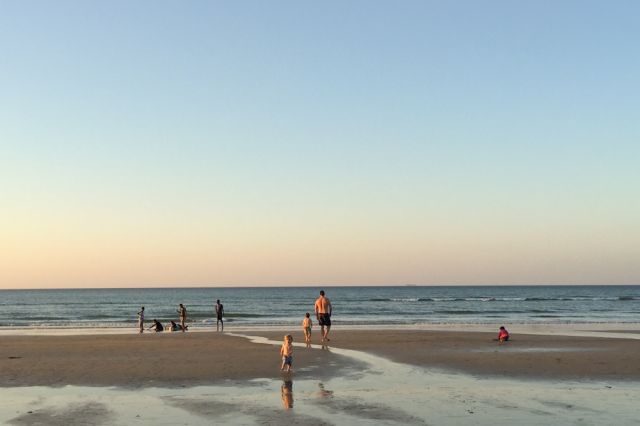
oman muscat InterContinental beach club family weekend
The InterContinental beach club offers the perfect weekend experience for the family.

Weekends here are Friday and Saturday, so Saturday is really our Sunday. Our perfect Saturday would involve heading to the InterContinental’s beach club, reading the paper while the boys frolic in the pool and having a lazy lunch, maybe with a cheeky cocktail.

How has living in Oman changed your life?
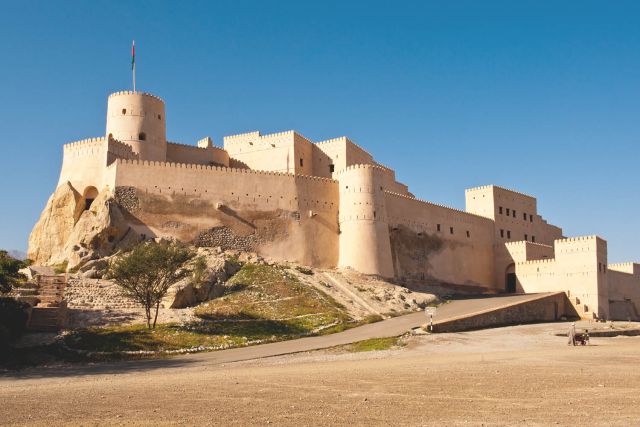
The Oman landscape is dotted with evocative castles and forts to explore; the hulking Nakhal Fort in the Al Batinah region is one of the most prominent historical monuments in the Sultanate.

I see more opera and ballet here than I ever did in Australia! And we travel more.


Because of our central location (my husband and I like to refer to it as ‘Middle Earth’), we are no more than a few hours’ flying time from Africa, Asia and Europe, and flights are inexpensive.


Fancy seeing Oman for yourself? Check out our comprehensive travel guide. 

Want to see more stories from International Traveller in your Google search results?

  1. Click here to set International Traveller as a preferred source.
  2. Tick the box next to "International Traveller". That's it.
hero media

BREAKING: Australia lowers travel warning for Middle Eastern countries

In big news, the Australian government has officially changed its travel advice for five Middle Eastern countries from ‘do not travel’ (Level 4) to ‘reconsider your need to travel’ (Level 3). Here’s what it means for travellers.

Australia has downgraded its travel advice for five Middle Eastern countries, including Bahrain, Israel, Kuwait, Qatar and the United Arab Emirates. However, some areas within Israel remain a ‘do not travel status’.

The announcement comes ahead of the USA and Iran’s formal signing of a peace deal on Friday, and is expected to have a significant positive impact on travellers’ confidence.

In a joint media release published this morning, Minister for Foreign Affairs Penny Wong and Assistant Foreign Affairs Minister Matt Thistlethwaite said that, while the security situation in the Middle East could rapidly change or decline, the Department of Foreign Affairs and Trade (DFAT) has assessed the conditions and judged it appropriate to change Bahrain, Israel, Kuwait, Qatar and the United Arab Emirates to a Level 3 or ‘reconsider your need to travel’.

What does this mean for travellers?

passport
The announcement comes ahead of the formal signing of a peace deal between the USA and Iran. (Credit: Unsplash/Kit Formerley Convertkit)

With Level 4 locations highly unlikely to be covered by travel insurers, travellers from Australia can now travel through and to the Arabian Peninsula with travel insurance protection. The change clears a major hurdle for Australians transiting through the Middle East to reach the United Kingdom, Europe, India and Africa. These travellers will no longer face some of the complications that the Level 4 warning created for transit travel, particularly those related to insurance.

As a result, we may soon be seeing a surge in travellers finally setting off on the trips they have been postponing as a result of the Middle East conflict.

There could also be some welcome relief for travellers’ wallets. Middle Eastern carriers such as Qatar Airways and Emirates account for a significant share of Australia–Europe/UK flight capacity, and when concerns about regional conflict prompted many travellers to avoid Gulf transit hubs, demand shifted to alternative routes via Singapore, Bangkok and other Asian cities. This meant prices for flights transiting through Asia increased. As confidence in those Middle Eastern connections returns, increased competition between airlines could help keep a lid on airfares – particularly on popular Europe-bound routes.

middle east travel
The change in travel advice could see a surge in travellers’ confidence. (Credit: Unsplash/Rocker Sta)

Smartraveller states that Level 3 or ‘reconsider your need to travel’ means avoiding or postponing non-essential travel, and taking extra precautions to protect yourself against security and health risks. These destinations are still classed as unstable, with DFAT warning that circumstances can shift abruptly.

The government urges travellers to obtain travel insurance and ensure they have carefully read the product conditions so they understand what is and isn’t covered. Not all travel insurance policies may cover Level 3 locations.

DFAT continues to advise ‘do not travel’ to Iran, Iraq, Lebanon, Palestine, Syria and Yemen, and ‘reconsider your need to travel’ to Jordan, Oman and Saudi Arabia. The body will continue to monitor the conditions closely and keep all Smartraveller advisories under review.

What it's Like to Live in Muscat, Oman - International Traveller