hero media

Live like a Sheikh in Abu Dhabi

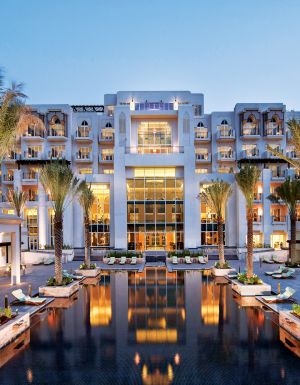
Live like a sheikh in Abu Dhabi and find out exactly why this mesmerising Emirate deserves your attention, and your time.

Abu Dhabi is a world full of golden glamour, problem is, where do you start?  We have put together a guide of the best stays, eats and buy’s Abu Dhabi has to offer.

Where to stay: Luxe to super luxe

A chic island resort, an evocative desert camp, and luxury on a grand scale.


Zaya Nurai Island Resort

Zaya Nurai Island Resort, Water Villa
A quick 10 minute boat ride away


This laid-back island resort is a world away from the high rises of downtown Abu Dhabi. A quick 10-minute boat ride from Saadiyat Island, the island boasts 32 villas and 23 private residences and water villas, all of which have stunning views out to the Arabian Gulf. There are five restaurants, including a buzzy beach club, Smokin’ Pineapple, and a modern Mexican offering, while the Friday brunch here is renowned for its generosity and fun.


Emirates Palace Abu Dhabi
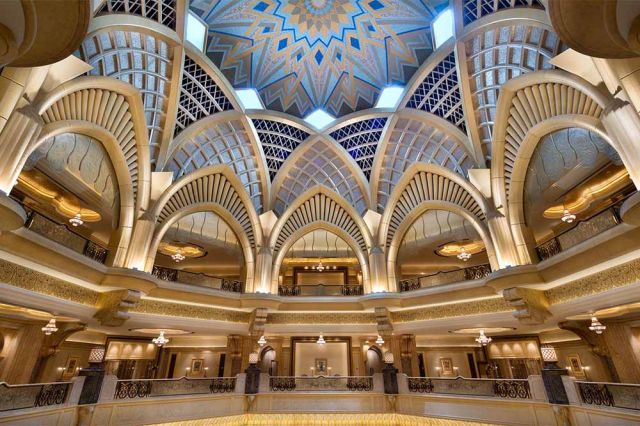
Emirates Palace Lobby Dome Abu Dhabi
Look up and be blown away


If you want to experience other-level opulence this is the place to do it. There is silk, brocade and gilding absolutely everywhere, while a staff of around 2000 busy themselves servicing 394 rooms, 12 restaurants and bars, a spa and extensive gardens and grounds; the general manager admits to sometimes getting lost in its labyrinthine wings. There’s also pools, a kids’ club, fitness centre and a pristine private beach complete with camel rides!

Qasr Al Sarab Desert Resort by Anantara
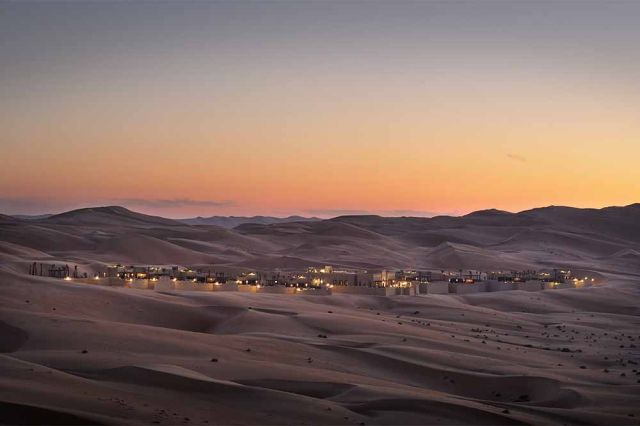
Desert camp located in the heart of the Empty Quarter


A 90-minute drive through a mesmerising desert landscape delivers you to this exquisite desert camp, located in the heart of the Empty Quarter (Rub Al Khali), the largest uninterrupted sand desert in the world. Days here are spent navigating the sparse dune landscape by camel, horse, 4WD or on foot, reclining on daybeds, and getting a taste for traditional pursuits like falconry and archery, while at night you dine under Arabian skies.


On your plate

What to eat and where, from local delicacies to the best haute cuisine.

Delicious middle eastern food platter
Eat up

Weekly travel news, experiences
insider tips, offers,
and more.

What to try

Traditional Emirati cuisine reflects the UAE’s trading traditions, with lots of exotic spices involved. Here are the signature dishes that you should definitely try: served on special occasions such as weddings, Eid and Ramadan, Al Harees is a slow-cooked meat and wheat dish cooked in a clay pot and served with ghee; Al Majboos is made up of meat and rice which are infused with spices and dried limes; salted fish is the main ingredient of Al Madrooba, infused with spices to make a rich sauce. And there is absolutely no chance during a visit to Abu Dhabi that you will not be offered Arabic coffee (a light blend infused with saffron and cardamom and served in small cups) and dates; this timeless combination is a symbol of hospitality and welcome.

Where to eat

Abu Dhabi’s dining scene is diverse and sophisticated, with many of the five-star hotels boasting fine-dining restaurants: Bord Eau at Shangri-La Hotel, Qaryat Al Beri, for French cuisine; award-winning Lebanese at Li Beirut in Jumeirah at Etihad Towers; an outpost of the London hotspot Hakkasan at Emirates Palace; Marco Pierre White has two ventures at Fairmont Bab Al Bahr, Marco Pierre White Steakhouse & Grill and Frankie’s; and Mezlai at Emirates Palace serves Emirati cuisine in style.


What to bring back

Pack light because you’ll want to bring these goodies home with you:-

  1. Sticky, sweet dates
  2. An Arabic coffee pot or dallah
  3. Oud, a warm and heady Arabic perfume
  4. Ghutra headscarves, traditionally worn by men
  5. Gold jewellery


For more information visit: https://visitabudhabi.ae/au-en/

Want to see more stories from International Traveller in your Google search results?

  1. Click here to set International Traveller as a preferred source.
  2. Tick the box next to "International Traveller". That's it.
hero media

BREAKING: Australia lowers travel warning for Middle Eastern countries

In big news, the Australian government has officially changed its travel advice for five Middle Eastern countries from ‘do not travel’ (Level 4) to ‘reconsider your need to travel’ (Level 3). Here’s what it means for travellers.

Australia has downgraded its travel advice for five Middle Eastern countries, including Bahrain, Israel, Kuwait, Qatar and the United Arab Emirates. However, some areas within Israel remain a ‘do not travel status’.

The announcement comes ahead of the USA and Iran’s formal signing of a peace deal on Friday, and is expected to have a significant positive impact on travellers’ confidence.

In a joint media release published this morning, Minister for Foreign Affairs Penny Wong and Assistant Foreign Affairs Minister Matt Thistlethwaite said that, while the security situation in the Middle East could rapidly change or decline, the Department of Foreign Affairs and Trade (DFAT) has assessed the conditions and judged it appropriate to change Bahrain, Israel, Kuwait, Qatar and the United Arab Emirates to a Level 3 or ‘reconsider your need to travel’.

What does this mean for travellers?

passport
The announcement comes ahead of the formal signing of a peace deal between the USA and Iran. (Credit: Unsplash/Kit Formerley Convertkit)

With Level 4 locations highly unlikely to be covered by travel insurers, travellers from Australia can now travel through and to the Arabian Peninsula with travel insurance protection. The change clears a major hurdle for Australians transiting through the Middle East to reach the United Kingdom, Europe, India and Africa. These travellers will no longer face some of the complications that the Level 4 warning created for transit travel, particularly those related to insurance.

As a result, we may soon be seeing a surge in travellers finally setting off on the trips they have been postponing as a result of the Middle East conflict.

There could also be some welcome relief for travellers’ wallets. Middle Eastern carriers such as Qatar Airways and Emirates account for a significant share of Australia–Europe/UK flight capacity, and when concerns about regional conflict prompted many travellers to avoid Gulf transit hubs, demand shifted to alternative routes via Singapore, Bangkok and other Asian cities. This meant prices for flights transiting through Asia increased. As confidence in those Middle Eastern connections returns, increased competition between airlines could help keep a lid on airfares – particularly on popular Europe-bound routes.

middle east travel
The change in travel advice could see a surge in travellers’ confidence. (Credit: Unsplash/Rocker Sta)

Smartraveller states that Level 3 or ‘reconsider your need to travel’ means avoiding or postponing non-essential travel, and taking extra precautions to protect yourself against security and health risks. These destinations are still classed as unstable, with DFAT warning that circumstances can shift abruptly.

The government urges travellers to obtain travel insurance and ensure they have carefully read the product conditions so they understand what is and isn’t covered. Not all travel insurance policies may cover Level 3 locations.

DFAT continues to advise ‘do not travel’ to Iran, Iraq, Lebanon, Palestine, Syria and Yemen, and ‘reconsider your need to travel’ to Jordan, Oman and Saudi Arabia. The body will continue to monitor the conditions closely and keep all Smartraveller advisories under review.